
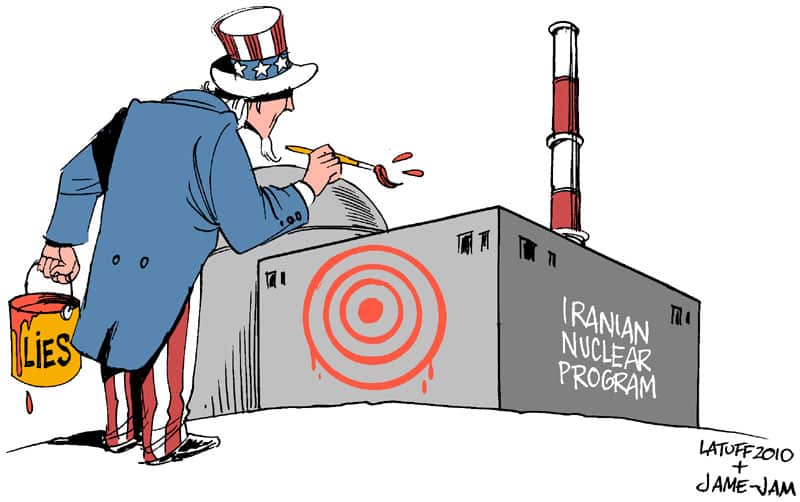
An American attack on Iran would be an unmitigated disaster for the US, Iran and the world

The following statement on US warmongering in relation to Iran was prepared by Mark LeVine, Professor of History, University of California, Irvine and myself. Some of the early signatories are among the leading scholars in the field of Middle East Studies. Their names are listed below.

It seeks to make two major arguments:

First, that the unlawful threats and coercive moves made by the United States point toward a political disaster that would include the commission of the most serious of international crimes, that of aggression via threats and uses of force that do not constitute self-defense under international law; and

Secondly, that it is essential to shift the relationship with Iran from one based on coercive to an approach resting on restorative diplomacy involving a deliberate reversal of American Foreign Policy with the overriding objective of normalization of relations between our two countries.

Statement by leading Middle East/Islamic studies scholars, June 22, 2019

We, the undersigned scholars of the Middle East and North Africa and broader Muslim world, call on President Trump immediately to pull back from the brink of a war with the Islamic Republic of Iran.

It is clear to us that the human, diplomatic, legal, political, and economic costs to both countries, the Persian Gulf and larger Middle East, the global economy and the global system of international humanitarian law of a US attack would be even more devastating than was the US invasion of Iraq sixteen years ago. 

We call upon the political leadership of the country, with a sense of urgency, not only to refrain from any further threats and uses of force against Iran, but also to put forward a new American diplomacy that takes steps to achieve a sustainable peace between our two countries and within the larger region.

We bring to the public’s attention the following points:

• The US-led Iraqi invasion, whose financial toll has exceeded $2 trillion in the US and at least that much in its adverse economic impact on the affected countries, led to the deaths of over 600,000 Iraqis, largely destroyed the Iraqi state and much of the country’s infrastructure, produced devastating immediate and long-term impact on the health of Iraqis and the environment, directly contributed to the rise of the Islamic State and its conquest and occupation and destruction of a huge swath of Iraq and neighboring countries (especially Syria), and produced a series of governments in the region which, even when there is a veneer of democracy, are incredibly corrupt and unable effectively to govern fractured societies, while continuing routinely to commit large scale human rights violations against their citizens.

• Like the Iraqi invasion before it, an attack on Iran under the present circumstances would be a clear violation of international law – a crime against peace, which is an international crime of the highest order, and delineated as such in the Nuremberg Judgement.

Indeed, absent a valid claim of self-defense any attack on Iran, never mind a full-scale invasion and occupation by the United States, would violate the core articles of the UN Charter (Articles 2(4), 33, 39 & 51) as well as the legal imperative to seek a peaceful settlement of all international disputes.

Such “breaches of the peace” are the most serious violations of international law a country can commit, and the US doing so again less than a generation after the Iraqi invasion would situate it outside the community of nations, making it widely regarded as a dangerous and destabilizing rogue actor whose behavior is the very opposite of the self-understanding and justifications of the Trump Administration for its actions.

In this regard the recent array of threats, sanctions, and provocations are themselves flagrant violations of international law even without any direct recourse to force; only self defense against a prior armed attack across as international border legally justifies a claim of self-defense.

Absent this, all threats, as well as uses of force, are considered severe violations of international law.

Particularly in the context of the United States’ unilateral withdrawal from the 2015 Joint Comprehensive Plan of Action, which verifiably halted the potential for Iran to pursue a nuclear weapons program, and the imposition of crippling economic sanctions against the government and people of Iran without a UN Security Council mandate, the present policy of increasing pressure on Iran and irresponsibly raising risks violent confrontation that could quickly escalate to an all-out war, coupled with the inflammatory discourse of regime change championed by National Security Advisor John Bolton and Secretary of State Mike Pompeo, constitute clear interference with Iranian sovereignty rights as well as with the inalienable right of self-determination enjoyed by the Iranian people.

As such, these policies are violations of international law and of the UN Charter, inherently destabilizing, and themselves pose unacceptable threat to peace.

Recent events have alarmed us, demonstrating how ill-defined policy goals, bellicose rhetoric, policies and brinkmanship, and operating outside the well-defined framework of international law can easily bring countries to the brink of mutual disaster.

The ongoing global impact of the Iraqi invasion (from the rise of ISIS to the aborted Arab Spring, greater support for authoritarian rulers, and the civil wars in Libya, Syria and Yemen and the massive wave of refugees these dynamics have caused) reminds us that the Middle East, and the world at large, cannot afford another major war in the region.

Such a conflict would undoubtedly lead to a horrific toll of dead and injured, major environmental destruction, large scale forced migration, world-wide recession, as well as producing other equally dangerous and unintended consequences.

Finally, we note here that the Trump Administration’s bellicose policies towards Iran are inseparable from its uncritical and unrestrained support of authoritarian and repressive policies across the region, from the ever-deepening Israeli occupation to the Saudi and UAE war in Yemen, the destruction of democracy in Egypt and the frustration of democratic aspirations of citizens across the Middle East and North Africa, all of which contribute to the immiseration and increasingly forced migration of millions of people across the region and the unjustified repression of their legitimate aspirations for freedom, justice, democracy and sustainable development.

We therefore call upon President Trump, first, to pull back from any thought of an unsanctioned attack; second, to rejoin and implement the 2015 nuclear agreement; third, to terminate the enhanced sanctions he continues to impose on Iran; and fourth, to enter into immediate and good faith negotiations towards a normalization of relations with the Islamic Republic.

Along with these immediate steps, we call for an honest appraisal of the costs of historic and current American policies in the Middle East and North Africa, and their reorientation towards support for freedom and democracy.

In the absence of these steps, we call on the US Congress to act swiftly and decisively to prevent the President from leading the United States into war, and call on our fellow academics, policymakers, diplomats, military officials, elected representatives, and concerned citizens to assert whatever pressure necessary to prevent the Administration from engaging in any kind of attack on Iran, or any other country, outside the bounds of international law and without the clear and explicit authorization of the UN Security Council.

Signed (partial list, as of June 21):

Beth Baron, Distinguished Professor, Director, Middle East and Middle Eastern American Center, Graduate Center, City University of New York, past President of the Middle East Studies Association

Joel Beinin, Donald J. McLachlan Professor of History and Professor of Middle East History, Emeritus Stanford University, past President of the Middle East Studies Association

Laurie A. Brand, Robert Grandford Wright Professor of International Relations and Middle East Studies University of Southern California, past President of the Middle East Studies Association

Charles E. Butterworth, Emeritus Professor, Department of Government & Politics, University of Maryland

Juan R. Cole, Richard P. Mitchell Collegiate Professor of History at the University of Michigan, past President of Middle East Studies Association

John Esposito, University Professor, Professor of Religion & International Affairs and Islamic Studies, Georgetown University, past President of the Middle East Studies Association and American Academy of Religion

Richard Falk, Professor of International Law Emeritus, Princeton University, former, UN Special Rapporteur on Human Rights in the Occupied Territories

Nader Hashemi, Professor of Middle East and Islamic Politics, Josef Korbel School of International Studies, University of Denver, Director of the Center for Middle East Studies

Suad Joseph, Professor of Anthropology and Women and Gender Studies at the University of California, Davis, past President of the Middle East Studies Association

Mark LeVine, Professor of History, UC Irvine, Chair, Program in Global Middle East Studies

Zachary Lockman, Professor of Middle Eastern and Islamic Studies, and History, past President of the Middle East Studies Association

Valentine M. Moghadam, Professor of Sociology and International Affairs, Northeastern University, past President of the Middle East Studies Association

Ahmad Sadri, Gorter Chair of Islamic World Studies, Professor of Sociology, Lake Forest College
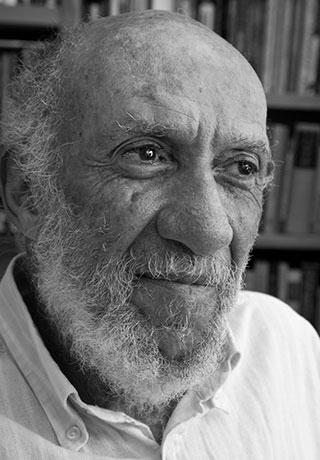
Professor Falk became an adviser to TFF when it was established in 1985.

Related Posts

It’s a matter of principles, courage, vision and pulling together – while the militarist world is falling apart… Peter Langille October 3, 2026 “Here, then, is the problem which we present to you, stark and dreadful and inescapable: Shall we put an end to the human race; or shall mankind renounce war?”The Bertrand Russell—Albert Einstein Manifesto, July 9, 1955 ⁕ The forecast for what’s ahead is worrisome. The sharp rise in armed conflicts over the past three years is adding to what was already the highest level in over seventy years. Genocides, which should be prevented are supported. A shared climate emergency that jeopardises survival is ignored. Diverse polls now suggest that people are war-weary, worried and interested in a more effective United Nations. And, there are viable policy options for a more secure world! Yet governments are doubling-down, betting on more war and investing heavily. If current trends persist,...
Johan Galtung 1930-2024October 2015 Published here on October 3, 2026 Let us focus on Civilization for conflict analysis and remedies. Major forms of disorder use violence; war is state organized violence. The most belligerent states are the United States of America and Israel, both with civilization roots. National Evangelism, the US Protestant Christian civilization– more national than evangelical–justifies US warfare as exceptionalism of a people chosen by God, with a manifest destiny to run the world. Orthodox Judaism justifies Israeli warfare to conquer and expand from Nile to Euphrates as a religious right and duty to the Eternal One. The third most belligerent country, the UK, no longer believes it is God-chosen but chosen by the USA; not quite the same but something. But the root cause of global disorder lies in the Occident–with Islam–seeing itself as the single, universal civilization valid for all at all times, all others being...
Jan ObergPhD, director, The Transnational Foundation for Peace and Future Research, TFFLund, Sweden October 2, 2026 This is my full original manuscript. The Chinese Academy of Social Science, CASS, makes two publications out if it. 1. China’s Five-year plan emphasized the capabilities of basic research and original innovation. It is regarded as the goal of the future social development, which, as required, should be significantly enhanced. Can you comment on the importance of original innovation in research and academic study? I believe it is easier to define “original innovation” in the natural sciences than in social sciences. The breaking points of what constitutes something new, or innovative, are not quite as sharp in the latter. But in both fields it is about opening up something that was closed, unseen, unexplored before – making manifest what was earlier latent. Innovations come in many forms and shapes – naming something that was not...

Recent Articles

Tony Robinson October 4, 2026 Violence is easy to recognise when someone is being beaten, shot or killed. It becomes more difficult when nobody is holding a weapon. Poverty, discrimination, exploitation and repression can restrict a human life just as effectively, although they do so in very different ways and with very different consequences. Simply adding more categories to an ever-growing list of forms of violence does not really solve the problem. The more interesting question is what all these different situations have in common and why it makes sense to describe them using the same word. Human beings do not simply react to what happens around them. They remember the past, imagine things that do not yet exist, make plans and undertake projects. Workers organise because they imagine different working conditions; people migrate because they imagine another life somewhere else; social movements emerge because people refuse to accept the...
It’s a matter of principles, courage, vision and pulling together – while the militarist world is falling apart… Peter Langille October 3, 2026 “Here, then, is the problem which we present to you, stark and dreadful and inescapable: Shall we put an end to the human race; or shall mankind renounce war?”The Bertrand Russell—Albert Einstein Manifesto, July 9, 1955 ⁕ The forecast for what’s ahead is worrisome. The sharp rise in armed conflicts over the past three years is adding to what was already the highest level in over seventy years. Genocides, which should be prevented are supported. A shared climate emergency that jeopardises survival is ignored. Diverse polls now suggest that people are war-weary, worried and interested in a more effective United Nations. And, there are viable policy options for a more secure world! Yet governments are doubling-down, betting on more war and investing heavily. If current trends persist,...
Johan Galtung 1930-2024October 2015 Published here on October 3, 2026 Let us focus on Civilization for conflict analysis and remedies. Major forms of disorder use violence; war is state organized violence. The most belligerent states are the United States of America and Israel, both with civilization roots. National Evangelism, the US Protestant Christian civilization– more national than evangelical–justifies US warfare as exceptionalism of a people chosen by God, with a manifest destiny to run the world. Orthodox Judaism justifies Israeli warfare to conquer and expand from Nile to Euphrates as a religious right and duty to the Eternal One. The third most belligerent country, the UK, no longer believes it is God-chosen but chosen by the USA; not quite the same but something. But the root cause of global disorder lies in the Occident–with Islam–seeing itself as the single, universal civilization valid for all at all times, all others being...

TFF on Substack

Discover and subscribe to more peace materials on TFF Substack

Most Popular

Tony Robinson October 4, 2026 Violence is easy to recognise when someone is being beaten, shot or killed. It becomes more difficult when nobody is holding a weapon. Poverty, discrimination, exploitation and repression can restrict a human life just as effectively, although they do so in very different ways and with very different consequences. Simply adding more categories to an ever-growing list of forms of violence does not really solve the problem. The more interesting question is what all these different situations have in common and why it makes sense to describe them using the same word. Human beings do not simply react to what happens around them. They remember the past, imagine things that do not yet exist, make plans and undertake projects. Workers organise because they imagine different working conditions; people migrate because they imagine another life somewhere else; social movements emerge because people refuse to accept the...
It’s a matter of principles, courage, vision and pulling together – while the militarist world is falling apart… Peter Langille October 3, 2026 “Here, then, is the problem which we present to you, stark and dreadful and inescapable: Shall we put an end to the human race; or shall mankind renounce war?”The Bertrand Russell—Albert Einstein Manifesto, July 9, 1955 ⁕ The forecast for what’s ahead is worrisome. The sharp rise in armed conflicts over the past three years is adding to what was already the highest level in over seventy years. Genocides, which should be prevented are supported. A shared climate emergency that jeopardises survival is ignored. Diverse polls now suggest that people are war-weary, worried and interested in a more effective United Nations. And, there are viable policy options for a more secure world! Yet governments are doubling-down, betting on more war and investing heavily. If current trends persist,...
Johan Galtung 1930-2024October 2015 Published here on October 3, 2026 Let us focus on Civilization for conflict analysis and remedies. Major forms of disorder use violence; war is state organized violence. The most belligerent states are the United States of America and Israel, both with civilization roots. National Evangelism, the US Protestant Christian civilization– more national than evangelical–justifies US warfare as exceptionalism of a people chosen by God, with a manifest destiny to run the world. Orthodox Judaism justifies Israeli warfare to conquer and expand from Nile to Euphrates as a religious right and duty to the Eternal One. The third most belligerent country, the UK, no longer believes it is God-chosen but chosen by the USA; not quite the same but something. But the root cause of global disorder lies in the Occident–with Islam–seeing itself as the single, universal civilization valid for all at all times, all others being...
Read More
Living-Peace-Sign-Budapest-copy
Tony Robinson October 4, 2026 Violence is easy to recognise when someone is being beaten, shot or killed. It becomes more difficult when nobody is holding a weapon. Poverty, discrimination, exploitation and repression can restrict a human life just as effectively, although they do so in very different ways and with very different consequences. Simply adding more categories to an ever-growing list of forms of violence does not really solve the problem. The more interesting question is what all these different situations have in common and why it makes sense to describe them using the same word. Human beings do not simply react to what happens around them. They remember the past, imagine things that do not yet exist, make plans and undertake projects. Workers organise because they imagine different working conditions; people migrate because they imagine another life somewhere else; social movements emerge because people refuse to accept the...
b54a1f10-8c65-4f0b-9dd5-4abc0a7d04cc_2659x2659
It’s a matter of principles, courage, vision and pulling together – while the militarist world is falling apart… Peter Langille October 3, 2026 “Here, then, is the problem which we present to you, stark and dreadful and inescapable: Shall we put an end to the human race; or shall mankind renounce war?”The Bertrand Russell—Albert Einstein Manifesto, July 9, 1955 ⁕ The forecast for what’s ahead is worrisome. The sharp rise in armed conflicts over the past three years is adding to what was already the highest level in over seventy years. Genocides, which should be prevented are supported. A shared climate emergency that jeopardises survival is ignored. Diverse polls now suggest that people are war-weary, worried and interested in a more effective United Nations. And, there are viable policy options for a more secure world! Yet governments are doubling-down, betting on more war and investing heavily. If current trends persist,...
010
Johan Galtung 1930-2024October 2015 Published here on October 3, 2026 Let us focus on Civilization for conflict analysis and remedies. Major forms of disorder use violence; war is state organized violence. The most belligerent states are the United States of America and Israel, both with civilization roots. National Evangelism, the US Protestant Christian civilization– more national than evangelical–justifies US warfare as exceptionalism of a people chosen by God, with a manifest destiny to run the world. Orthodox Judaism justifies Israeli warfare to conquer and expand from Nile to Euphrates as a religious right and duty to the Eternal One. The third most belligerent country, the UK, no longer believes it is God-chosen but chosen by the USA; not quite the same but something. But the root cause of global disorder lies in the Occident–with Islam–seeing itself as the single, universal civilization valid for all at all times, all others being...
Screenshot 2026-10-02 011738
Jan ObergPhD, director, The Transnational Foundation for Peace and Future Research, TFFLund, Sweden October 2, 2026 This is my full original manuscript. The Chinese Academy of Social Science, CASS, makes two publications out if it. 1. China’s Five-year plan emphasized the capabilities of basic research and original innovation. It is regarded as the goal of the future social development, which, as required, should be significantly enhanced. Can you comment on the importance of original innovation in research and academic study? I believe it is easier to define “original innovation” in the natural sciences than in social sciences. The breaking points of what constitutes something new, or innovative, are not quite as sharp in the latter. But in both fields it is about opening up something that was closed, unseen, unexplored before – making manifest what was earlier latent. Innovations come in many forms and shapes – naming something that was not...
arctic-circle-map
The agreement is catastrophic both because of what it says and what it doesn’t mention. It reduces further the major asset of security policies: Freedom of action. Jan Oberg TFF director September 25, 2026 A couple of hours before the agreement was signed on September 22, 2026, I published the following 13 hypotheses about what it would most likely contain on TFF Substack (in English). I was wrong on only the first point. Contrary to what Trump had written on his Truth Social platform, it does not appear to come into force immediately. In fact, it turned out to be worse than even I had anticipated. After these hypotheses now come a number of reflections in light of what the agreement actually contains, and does not contain, as well as the way in which it has generally been presented by major media outlets and by the public-service broadcaster DR. My...
girl-5894831_1280
Below are TFF-related media mentions, comments, videos and social media posts published elsewhere but not on this homepage. We happen to catch and list only a fraction. Regarding video comments and debates, we recommend that you go to the TFF Video Channel on Substack where many of them are reproduced. Jan Oberg is a contributor to China Daily – 52 million daily clicks – and Global Times, CGTN and CCTV (the national television), China Investment, Xinhua News Agency and several others. Articles and videos on these media very often multiply into countless Chinese (and Western media) that re-post them from these main media. Thanks to The China Academy, his analyses, interviews and comments are frequently posted on YouTube channels such as Thinkers Forum and Wave Media. These videos are often re-posted on Bilibili (China’s YouTube), the China Content Center on TikTok, and on the Chinese edition of TikTok, Douyin.com. This means reaching hundreds of millions of viewers worldwide over a year. While there are too many to catch on all these...





