

TFF’s changing publishing policy – Why we reduce social media presence and what we’ll do instead

For more than a decade, I’ve been enthusiastic about social media as a new, potentially more people-powered phenomenon that could serve change for the common good of humankind.

Not so today. Sadly, social media have come to resemble fast-food chain restaurants – no taste, no joy, no quality, unhealthy, unsophisticated and boringly predictive.

Homepages and blogs, on the contrary, still hold a potential resembling gourmet restaurants with lots of joys, health, innovation and sophistication as well as delicious surprises (and good wines instead of Coca Cola).

TFF – the peace and future research foundation I am co-founder and director of – still reach thousands of people every day on social media but what does that mean?

Too many have cared far too much about quantities of friends, followers, likes and shares – and far too little with quality of content.

And a Like from someone who has not bothered to read the article but likes only the headline on Facebook or Twitter is a very poor substitute for in-depth reading, well-intended dialogue and serious knowledge-creation.

A dialogue means conversation, listening and exploring together where every sentence ends with a question mark. It’s win-win and mutual learning. How exciting and meaningful!

A debate or discussion is always about positioning oneself, contrasting, fighting and about winning over the other, the looser. Every sentence ends with an exclamation mark. How boring and meaningless!

Some of TFF’s followers on social media (two Facebook pages, Google+, Twitter, etc) have asked why we write at each and every TFF post that the debate shall take place on our homepage, under the post article, and not on the social media. And why we are reducing our presence on Facebook, Twitter and Medium and all things Google.

As the editor of TFF’s homepage, The Transnational, I want to share with you the reasons and the future priorities as I see them.

And it is not only about TFF. It’s also about what all change-makers ought to conduct a serious discussion about, internally as well as with their supporters.

Taking the conversation out of some social media

We spend considerable energy on making The Transnational serve primarily research and educational needs among concerned citizens, students, other academic and media. We do not do news; we publish analyses that we judge will stand the test over time whether created by TFF Associates or by others.

We want the debate that our posts create to be where we post them. That is not about vanity. Many years ahead, visitors shall be able to see both the article and the debate and assess “What was it people discussed back then about this or that matter?” Or, “what did TFF actually say when Yugoslavia dissolved? Or “how right and wrong was it at the time of the Iraq invasion and occupation”?

When you watch the debate on social media, you find that most will be forgotten after a few days. It’s useless also from an educational viewpoint and for future research and studies.

Secondly, we are interested in developing a meaningful dialogue about global affairs. Frankly, we are not the slightest interested in people discussing an article they have not read. Many have never accessed the link they comment on on, say, Facebook. It’s a kind of new illiteracy. It’s incompatible with public education.

If you are only on social media and make a comment without having seen the original article, your comment will likely be irrelevant, about something you may want to say and just uses the headline as a pretext. Or s/he asks a question that is already answered in the article.

TFF and its Associates are too committed to solid research and have long experienced (TFF was established back in 1985) the development of these futile trends of our times – fleeting, superficial and post-literary.

If people are not willing to focus and concentrate on reading an argument, it’s OK. But we simply do not bother to serve them either.

Years ago we were very enthusiastic too about Facebook’s potential

Third, we publish important quality materials to be read and studied. It’s fine if it leads also to discussion but not on, say, Facebook. Why?

Because Facebook, Twitter, Goggle and others:

a) track everything you and we do and say,
b) censor various stuff which they believe to be politically incorrect,
c) cooperate with authorities that TFF struggles against,
d) profit from us being there and
e) have seriously reduced organic spread and want us to pay more and more to reach people. We won’t pay! Why not, you may ask?

Simply because we are people-funded and we do not transfer support from good-hearted, peace-concerned citizens to these profit-making, wealthy corporations that work in favour of the Empire, intervention and war and are US government-influenced.

Fourth, we do not want Facebook to benefit from the quality debates we may produce and we do not want to risk censorship by decision and/or by mysterious logarithms. If you are there all the time, you help them, legitimize them and confirm them in being good, social and pursuing the right policies.

Therefore, we use social media as a shop window: People can get a sense of what is inside, i.e. on our homepage. If they don’t want to go there and see, they are hardly seriously interested. We use social media as a billboard to tell what we do and how people can benefit from TFF’s work – not from Facebook or other a-social media.

It has, since we started out in 1986, been absolutely basic to TFF to remain independent of corporate and government support. We’re 100% people-financed. We will never be dependent on the existence of social media. As long as they exist or exert influence, we will let them assist us, not the other way around. Extremely scarce peace funds shall never end up in such hands.

The day some of these media may disappear, or have their importance reduced – which I consider quite likely – we shall be elsewhere, proudly continuing to do what we have always done: Work for peace – and not go down because some social media did.

When it comes to Google+ – well, we never got the response or saw the benefits and it is going to be closed down shortly anyhow. Twitter is too superficial for meaningful dialogue and education. We have discontinued our presence on it blog platform, Medium, because there is some kind of manipulation going on; TFF immediately achieved 262 followers and then, for about two years, not one new and not one lost. And repeatedly it has been difficult to even access our page!

We never posted stuff on these media one-by-one. We use a publishing management tool called Sendible which allows us to press just one button and publish to a series of social media on one go. We’re there by automatic technology, not because of individual curation.

Facebook and Google – a chapter of their own

Up until spring 2017, after I had returned from fact-finding in Damascus and Aleppo in Syria and published a series of politically in-correct articles, TFF and I got thousands of new and active friends on Facebook from around the world.

Then during that spring, we experienced a huge reduction – much fewer responses (likes, shares and comments) on any subject. And those that appeared were 90% by people in Denmark and Sweden.

To us the algorithm suddenly looked like political censorship: from a wide reach on a controversial global issues to – boom! – losing almost all of it. When I access my Facebook feed, it is filled with stuff by people who are neither my friends nor share my or TFF’s interests. Here is a technical article on what seems to have happened then.

Step-by-step, Facebook became virtually useless for us at The Transnational.

In 2018, Facebook rolled out a new algorithm which gives priority to family, friends and groups and made itself irrelevant from the perspectives of policy-oriented users, education, brands and much else. If you are trying to advance a cause – like we do the cause of peace by peaceful means – the whole thing has become a walk in the desert. Here is another technical article about the 2018 changes.

Facebook also insists on advancing “meaningful interactions” – whatever that is! But how meaningful is it when you’ve been geographically circumscribed and your social media are suddenly narrowed down to friends, family and groups?

We have tried all kinds of things to boost our “organic reach” but: There is no way you can advance global causes unless you are willing to pay lots of dollars. And we are not for the reasons stated earlier.

During the last few years, we’ve witnessed more than enough of political Facebook scandals. Thus, for instance, that it deletes accounts at the direction of the Israeli and U.S. governments. There was the Cambridge Analytical scandal. And the partnership with the Atlantic Council that promotes NATO policies, the New Cold War and Russophobia in the extreme. And, oh yes, it shares users’ personal data with tech giants to an extent never disclosed, according to New York Times.

And now to Google! Google Search has been so kind to de-rank a series of “leftist”, critical and anti-militarist sites. Eric Schmidt of Google’s parent company Alphabet is known to gladly admit it. See hour 2017 analysis here.
How amazing, Google, we have about 7000 posts on our old and new homepages!

For all we can see, Google’s “de-ranking” policy has hit TFF too. That is one more reason that I recommend wherever I can: Boycott Google Search and use one of the man other engines; don’t use Google’s Chrome browser but one of the others such as Firefox; boycott YouTube when you can and enjoy Vimeo instead; and drop every other relation to Google such as ads and statistics that you can avoid. You probably can’t do it 100 % – I can’t – but you can do a lot. Because:

They want to know everything about us and we never permitted them to. Shamelessly they do what they please and violate every definition of the right to privacy. Associated Press has told us that.

And, as if this was not enough, Alphabet/Google’s Eric Schmidt is related to the US military intelligence establishment.

See also how Facebook has censored sensitive info about Google’s relations with Pentagon here. (Fortunately, Google employees protested).

But virtually everybody ignores these facts when they “google” something! Or use Chrome and YouTube etc.

There may be security reasons for this, but is this where we want to be?

Isn’t it time to show just a bit of internet ethics? Boycott the unethical super-profiting and censoring/tracking social media that, for all practical purposes reduce freedom of speech, ally with neo-liberal warmongering and – paradoxically, in fact, undermine democracy.

The dangers of such policies were well spelt out years ago. Here a very good example.

Instead TFF invests its energies here

Of course, the most important place is The Transnational. But here is how we will prioritize in the future while reducing our reliance on the mentioned social media above:

Flipboard magazine
More and more people read their news on phones and tablet. So TFF is there. Our choice is Flipboard where we have never experienced any attempt at censorship and where you’ll also find virtually all other important media and institutions.

Good news is that we have re-started our Transnational Peace Affairs magazine on Flipboard. It’s a quick and easy design at which you “flip” through our posts directly on your phone and can read everything and comment there too. And it is on your desktop too. More about Flipboard.


This is a news platform that has sky-rocketed in recent years in a highly attractive design. You can customize it to select the isssues you are particularly interested in – TFF and all the rest you love.

And very importantly: We do not only post stuff that you can also find on our homepage, we publish much more than we do there – things we find important, worth remembering and educational but which we do not have the resources or right to post on The Transnational.
And more good news: It’s free, so subscribe!

Linkedin
We believe Linkedin is a serious network for professionals, students, researchers and concerned citizens. And it is much less “political” and cluttered than the others and it practises no censorship.

I have been on Linkedin for years mainly with a focus on my art photography and so far with about 2600 connections.

Good news is that it is now also a place where you find TFF’s articles and videos and other stuff we consider essentially important in terms of global affairs with a touch of peace.

So connect with TFF and myself on Linkedin and contribute to the debate.

More videos
Even the shortest glance at marketing sites today will bring home one major point for the future: Use video to reach your audience and your future, potential audience!

TFF has done that all along – on YouTube, on the more serious Vimeo and on TFF Live on Facebook. Regrettably, we have not done it regularly.
But now technology has advanced and it is possible to make small videos without investing days and weeks. So, we are going to step it up and publish them on The Transnational and less on Facebook and Google’s YouTube.

We’ll also publish more education-oriented videos by others and not only TFF Associates.

The day it becomes more easy to use, you will find us on the amazing Chinese WeChat and Russian VK too and whatever non-Western future platforms and apps that appear.

Last but not least: Different contents

Most people today hardly believe it but – yes, beyond the social media and fads, pop and fleeting mainstream media news, there are some interesting fields and we shall meet other interested, curious travelers there. (Yes Rumi inspired that sentence!).

From 2019, you’ll find that The Transnational and our social media outreach carry:

• More background, explainers and other stuff of long-term quality, less topical news-related stuff.

• More constructive alternatives and, in particular, facts and perspectives omitted by mainstream research, think tanks and media.

• More about the non-Western world – China, BRICS, Belt and Road Initiative (BRI) – and less about the decline and decay of the West whose navel-gazing and militarism seem to be the only things not crumbling.

• More about peace, less about violence (violence gets far too much attention because it is assumed to catch more attention and sell better).

• There will be research, yes, but we shall increase the sections on values, ethics, theories, art, philosophy, cultural ways of thinking, and offer less hard-fact political analyses.

In short, more positive energy, vision and hope for us all.

Welcome onboard at The Transnational – the intellectual gourmet restaurant that serves intelligent peace-oriented knowledge, thinking and policy proposals.

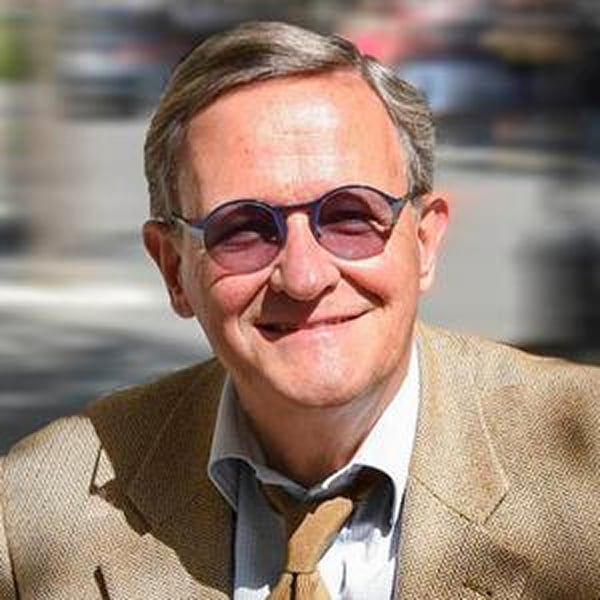


Peace & future researcher + ‌Art Photographer

Related Posts

Tony Robinson October 4, 2026 Violence is easy to recognise when someone is being beaten, shot or killed. It becomes more difficult when nobody is holding a weapon. Poverty, discrimination, exploitation and repression can restrict a human life just as effectively, although they do so in very different ways and with very different consequences. Simply adding more categories to an ever-growing list of forms of violence does not really solve the problem. The more interesting question is what all these different situations have in common and why it makes sense to describe them using the same word. Human beings do not simply react to what happens around them. They remember the past, imagine things that do not yet exist, make plans and undertake projects. Workers organise because they imagine different working conditions; people migrate because they imagine another life somewhere else; social movements emerge because people refuse to accept the...
Johan Galtung 1930-2024October 2015 Published here on October 3, 2026 Let us focus on Civilization for conflict analysis and remedies. Major forms of disorder use violence; war is state organized violence. The most belligerent states are the United States of America and Israel, both with civilization roots. National Evangelism, the US Protestant Christian civilization– more national than evangelical–justifies US warfare as exceptionalism of a people chosen by God, with a manifest destiny to run the world. Orthodox Judaism justifies Israeli warfare to conquer and expand from Nile to Euphrates as a religious right and duty to the Eternal One. The third most belligerent country, the UK, no longer believes it is God-chosen but chosen by the USA; not quite the same but something. But the root cause of global disorder lies in the Occident–with Islam–seeing itself as the single, universal civilization valid for all at all times, all others being...
Jan ObergPhD, director, The Transnational Foundation for Peace and Future Research, TFFLund, Sweden October 2, 2026 This is my full original manuscript. The Chinese Academy of Social Science, CASS, makes two publications out if it. 1. China’s Five-year plan emphasized the capabilities of basic research and original innovation. It is regarded as the goal of the future social development, which, as required, should be significantly enhanced. Can you comment on the importance of original innovation in research and academic study? I believe it is easier to define “original innovation” in the natural sciences than in social sciences. The breaking points of what constitutes something new, or innovative, are not quite as sharp in the latter. But in both fields it is about opening up something that was closed, unseen, unexplored before – making manifest what was earlier latent. Innovations come in many forms and shapes – naming something that was not...

Recent Articles

Tony Robinson October 4, 2026 Violence is easy to recognise when someone is being beaten, shot or killed. It becomes more difficult when nobody is holding a weapon. Poverty, discrimination, exploitation and repression can restrict a human life just as effectively, although they do so in very different ways and with very different consequences. Simply adding more categories to an ever-growing list of forms of violence does not really solve the problem. The more interesting question is what all these different situations have in common and why it makes sense to describe them using the same word. Human beings do not simply react to what happens around them. They remember the past, imagine things that do not yet exist, make plans and undertake projects. Workers organise because they imagine different working conditions; people migrate because they imagine another life somewhere else; social movements emerge because people refuse to accept the...
It’s a matter of principles, courage, vision and pulling together – while the militarist world is falling apart… Peter Langille October 3, 2026 “Here, then, is the problem which we present to you, stark and dreadful and inescapable: Shall we put an end to the human race; or shall mankind renounce war?”The Bertrand Russell—Albert Einstein Manifesto, July 9, 1955 ⁕ The forecast for what’s ahead is worrisome. The sharp rise in armed conflicts over the past three years is adding to what was already the highest level in over seventy years. Genocides, which should be prevented are supported. A shared climate emergency that jeopardises survival is ignored. Diverse polls now suggest that people are war-weary, worried and interested in a more effective United Nations. And, there are viable policy options for a more secure world! Yet governments are doubling-down, betting on more war and investing heavily. If current trends persist,...
Johan Galtung 1930-2024October 2015 Published here on October 3, 2026 Let us focus on Civilization for conflict analysis and remedies. Major forms of disorder use violence; war is state organized violence. The most belligerent states are the United States of America and Israel, both with civilization roots. National Evangelism, the US Protestant Christian civilization– more national than evangelical–justifies US warfare as exceptionalism of a people chosen by God, with a manifest destiny to run the world. Orthodox Judaism justifies Israeli warfare to conquer and expand from Nile to Euphrates as a religious right and duty to the Eternal One. The third most belligerent country, the UK, no longer believes it is God-chosen but chosen by the USA; not quite the same but something. But the root cause of global disorder lies in the Occident–with Islam–seeing itself as the single, universal civilization valid for all at all times, all others being...

TFF on Substack

Discover and subscribe to more peace materials on TFF Substack

Most Popular

Tony Robinson October 4, 2026 Violence is easy to recognise when someone is being beaten, shot or killed. It becomes more difficult when nobody is holding a weapon. Poverty, discrimination, exploitation and repression can restrict a human life just as effectively, although they do so in very different ways and with very different consequences. Simply adding more categories to an ever-growing list of forms of violence does not really solve the problem. The more interesting question is what all these different situations have in common and why it makes sense to describe them using the same word. Human beings do not simply react to what happens around them. They remember the past, imagine things that do not yet exist, make plans and undertake projects. Workers organise because they imagine different working conditions; people migrate because they imagine another life somewhere else; social movements emerge because people refuse to accept the...
It’s a matter of principles, courage, vision and pulling together – while the militarist world is falling apart… Peter Langille October 3, 2026 “Here, then, is the problem which we present to you, stark and dreadful and inescapable: Shall we put an end to the human race; or shall mankind renounce war?”The Bertrand Russell—Albert Einstein Manifesto, July 9, 1955 ⁕ The forecast for what’s ahead is worrisome. The sharp rise in armed conflicts over the past three years is adding to what was already the highest level in over seventy years. Genocides, which should be prevented are supported. A shared climate emergency that jeopardises survival is ignored. Diverse polls now suggest that people are war-weary, worried and interested in a more effective United Nations. And, there are viable policy options for a more secure world! Yet governments are doubling-down, betting on more war and investing heavily. If current trends persist,...
Johan Galtung 1930-2024October 2015 Published here on October 3, 2026 Let us focus on Civilization for conflict analysis and remedies. Major forms of disorder use violence; war is state organized violence. The most belligerent states are the United States of America and Israel, both with civilization roots. National Evangelism, the US Protestant Christian civilization– more national than evangelical–justifies US warfare as exceptionalism of a people chosen by God, with a manifest destiny to run the world. Orthodox Judaism justifies Israeli warfare to conquer and expand from Nile to Euphrates as a religious right and duty to the Eternal One. The third most belligerent country, the UK, no longer believes it is God-chosen but chosen by the USA; not quite the same but something. But the root cause of global disorder lies in the Occident–with Islam–seeing itself as the single, universal civilization valid for all at all times, all others being...
Read More
Living-Peace-Sign-Budapest-copy
Tony Robinson October 4, 2026 Violence is easy to recognise when someone is being beaten, shot or killed. It becomes more difficult when nobody is holding a weapon. Poverty, discrimination, exploitation and repression can restrict a human life just as effectively, although they do so in very different ways and with very different consequences. Simply adding more categories to an ever-growing list of forms of violence does not really solve the problem. The more interesting question is what all these different situations have in common and why it makes sense to describe them using the same word. Human beings do not simply react to what happens around them. They remember the past, imagine things that do not yet exist, make plans and undertake projects. Workers organise because they imagine different working conditions; people migrate because they imagine another life somewhere else; social movements emerge because people refuse to accept the...
b54a1f10-8c65-4f0b-9dd5-4abc0a7d04cc_2659x2659
It’s a matter of principles, courage, vision and pulling together – while the militarist world is falling apart… Peter Langille October 3, 2026 “Here, then, is the problem which we present to you, stark and dreadful and inescapable: Shall we put an end to the human race; or shall mankind renounce war?”The Bertrand Russell—Albert Einstein Manifesto, July 9, 1955 ⁕ The forecast for what’s ahead is worrisome. The sharp rise in armed conflicts over the past three years is adding to what was already the highest level in over seventy years. Genocides, which should be prevented are supported. A shared climate emergency that jeopardises survival is ignored. Diverse polls now suggest that people are war-weary, worried and interested in a more effective United Nations. And, there are viable policy options for a more secure world! Yet governments are doubling-down, betting on more war and investing heavily. If current trends persist,...
010
Johan Galtung 1930-2024October 2015 Published here on October 3, 2026 Let us focus on Civilization for conflict analysis and remedies. Major forms of disorder use violence; war is state organized violence. The most belligerent states are the United States of America and Israel, both with civilization roots. National Evangelism, the US Protestant Christian civilization– more national than evangelical–justifies US warfare as exceptionalism of a people chosen by God, with a manifest destiny to run the world. Orthodox Judaism justifies Israeli warfare to conquer and expand from Nile to Euphrates as a religious right and duty to the Eternal One. The third most belligerent country, the UK, no longer believes it is God-chosen but chosen by the USA; not quite the same but something. But the root cause of global disorder lies in the Occident–with Islam–seeing itself as the single, universal civilization valid for all at all times, all others being...
Screenshot 2026-10-02 011738
Jan ObergPhD, director, The Transnational Foundation for Peace and Future Research, TFFLund, Sweden October 2, 2026 This is my full original manuscript. The Chinese Academy of Social Science, CASS, makes two publications out if it. 1. China’s Five-year plan emphasized the capabilities of basic research and original innovation. It is regarded as the goal of the future social development, which, as required, should be significantly enhanced. Can you comment on the importance of original innovation in research and academic study? I believe it is easier to define “original innovation” in the natural sciences than in social sciences. The breaking points of what constitutes something new, or innovative, are not quite as sharp in the latter. But in both fields it is about opening up something that was closed, unseen, unexplored before – making manifest what was earlier latent. Innovations come in many forms and shapes – naming something that was not...
arctic-circle-map
The agreement is catastrophic both because of what it says and what it doesn’t mention. It reduces further the major asset of security policies: Freedom of action. Jan Oberg TFF director September 25, 2026 A couple of hours before the agreement was signed on September 22, 2026, I published the following 13 hypotheses about what it would most likely contain on TFF Substack (in English). I was wrong on only the first point. Contrary to what Trump had written on his Truth Social platform, it does not appear to come into force immediately. In fact, it turned out to be worse than even I had anticipated. After these hypotheses now come a number of reflections in light of what the agreement actually contains, and does not contain, as well as the way in which it has generally been presented by major media outlets and by the public-service broadcaster DR. My...
girl-5894831_1280
Below are TFF-related media mentions, comments, videos and social media posts published elsewhere but not on this homepage. We happen to catch and list only a fraction. Regarding video comments and debates, we recommend that you go to the TFF Video Channel on Substack where many of them are reproduced. Jan Oberg is a contributor to China Daily – 52 million daily clicks – and Global Times, CGTN and CCTV (the national television), China Investment, Xinhua News Agency and several others. Articles and videos on these media very often multiply into countless Chinese (and Western media) that re-post them from these main media. Thanks to The China Academy, his analyses, interviews and comments are frequently posted on YouTube channels such as Thinkers Forum and Wave Media. These videos are often re-posted on Bilibili (China’s YouTube), the China Content Center on TikTok, and on the Chinese edition of TikTok, Douyin.com. This means reaching hundreds of millions of viewers worldwide over a year. While there are too many to catch on all these...



