
By Gordon M. Hahn
January 29, 2019

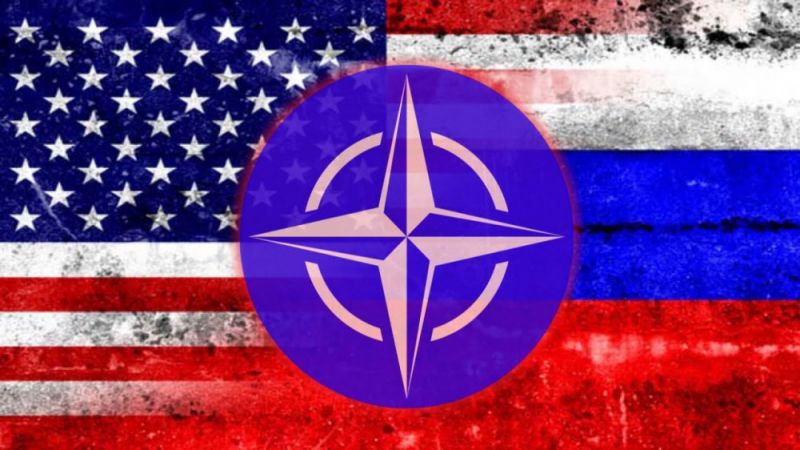
The alienation of post-Cold War Russia has proceeded in waves. Each successive Western overreach for not just maintaining but expanding its global hegemony has produced a new wave of Russian alienation.
What will probably be the last wave, one that might help spark a wave of ultra-nationalism afterward has begun. This new wave is alienating the West’s last base of support for Russian democratization and international cooperation: Russia’s liberals.
The first wave: The alienation of Russia began with the West’s failure to significantly assist Russia during its very great depression and talk of NATO expansion in the early 1990s but was staunched somewhat by the then still unbroken Western promise not to expand NATO beyond reunited Germany. This alienated a large part of the elite.
Originally published on Gordon M. Hahn’s excellent blog here
The second wave of Russian alienation began with the first round of NATO expansion in 1997. This wave alienated a large minority to slim majority of the Russian population, depending on which opinion surveys one looks at.
A third wave was sparked by the West’s bombing of Belgrade in 1999, which incited alienation among a strong majority to overwhelming majority of the population, depending again on which polls one sites.
In the 2000s, during the Putin era, each succeeding small wave of Russian alienation and opposition to NATO — such as those sparked by additional rounds of NATO expansion, Western meddling in Georgia and Ukraine, including the Maidan revolt — the level of alienation and opposition bumped up a bit and then receded a to its previous level, making few inroads among Russian liberals, the last bastion of pro-Western sentiment in Russia today.
And now, with the recent largely American hysteria regarding Putin trolls being behind every Facebook post, Tweet, and Christmas tree (not to mention every Democratic party election failure and Clinton expose’), even Russian liberals are waking up to the West’s double standards and even to the West’s provocation of, and cover up of the dark side of the Maidan revolt (the neofascists’s snipers massacre of their ‘own’ demonstrators) efforts to remove Syrian President Bashar Assad by using jihadists.
Now, the unprecedented US media disinformation campaign has portrayed a Russia that even Russian liberals cannot recognize: Putin is Hitler, Russia is fascist, they want to conquer all of Europe. Who knew?
Russian Liberals’ Eyes Pried Open
In at least two instances now, Russian opposition journalist Oleg Kashin has castigated Western media coverage of his country. In the first, published on the Russian opposition website Republic in November 2017, Kashin, after listing a series of “problems” with the American media’s hysterical treatment of the news that a Russian oligarch had invested in Facebook noted:
“And yet the main problem with the allegations against Milner are his very accusers. Those writing that the Kremlin acted through him are the same outlets and individuals that have already demonstrated convincingly that anything they publish about Russia is, as a general rule, total garbage.
The image of Putin’s Russia constructed by Western and, above all, American media outlets over the past 18 months shocks even the most anti-Putin reader in Russia. Maybe separately all the stories about Russia wouldn’t trigger this response, but it’s different when looking at the coverage combined:
Moscow suburban “power broker” Natalia Veselniktskaya playing the part of Putin’s agent, Dr. Rodchenkov’s tales of test tubes for doped urine, singer Emin Agalarov acting in the Kremlin’s interests, and Russian ads on social media — bought for pennies compared to the millions spent by the Clinton and Trump campaigns — that supposedly influenced American voters.
There’s more, of course, and in this context the claims that Milner was working on behalf of the Kremlin become a joke by default — where there’s no need to refute or dispute anything, and the only thing Russians can do is laugh. …The Western press has already reported so many inaccurate, exaggerated, knowingly untrue things about Russia that today the Russian reader who seriously starts talking about Yuri Milner as an agent of the Kremlin is either a very naive person or a cynical hypocrite. Until now, this characterization has applied mainly to the audience of Russia’s state television networks.
Today, it also works with those who look for truth about Russia in the Western media. It’s probably still too soon to call this a tectonic shift, but it’s nonetheless important to note this potentially important factor: the crisis of faith (the faith of us provincial Russians) in the Western news media will inevitably affect Russia’s public atmosphere.”
Source: https://republic.ru/posts/87516 for an English version, see https://meduza.io/en/feature/2017/11/13/the-day-russians-stopped-believing-the-western-media).
More recently, other Russian liberals have had their eyes pried open. St. Petersburg political scientist Dmitrii Travin, writing in the same Republic, turned to criticism of Western governments’ hypocrisy rather than the media: “From time to time foreign journalists ask me about the influence of sanctions on the situation in Russia. Usually I answer to question directly that they seriously have fortified Putin’s regime, and if your country wanted to support a Russian authoritarian leader, then, it can be said, they have fully achieved it…Sanctions, you see, are no more than a formal reaction to the Kremlin’s policies. (Western) Politicians need to react so the opposition does not criticize them for inaction and so they reacted. But what can be done to really make the West attractive to us again requires from foreign statesmen not reactions “according to obligation” but the deepest transformations.”
Travin then expanded his analysis to a more comparative approach noting, as I have, the deepening Western decay and deviations from its own standards, which it earnestly punishes Russia for not living up to.
Referring to the Spanish court’s sentencing a Catalonian vice-premier to 25 years in prison for inciting a peaceful separatist movement, Travin wrote:
“On the background of the actions by ‘Spanish democracy’ the Kremlin’s actions for the strengthening of ‘united and indivisible’ (Russia) seem completely acceptable. One of the leading European countries by its actions is legitimizing in fact any suppression of separatism in developing countries.”
Regarding Ukraine’s Maidan regime, Travin badly understates matters, calling it an “ineffective” government rather than a weak and potentially failed democracy, riven through with ultra-nationalists and neofascists.
But at least acknowledges indirectly the mistake of supporting revolution rather than evolution in Ukraine: “No one has done so much for the strengthening of the Putin regime that Ukraine’s statesmen of recent years. By their absolute ineffectiveness the have created practically an ideal example, which Russian television can trash without end, terrifying people with what will happen in our country, if instead of the ‘great Putin’ a Maidan and anti-state elite comes to us aspiring to society’s democratization.”
Travin also hints at the need for a more internally-focused America less obsessed with exporting ‘democratic’ revolutions:
“(T)he main blow to (the United States’) reputation was delivered by the Americans themselves. The war in Iraq and the active pursuit of its political influence in various regions of the world replaced the accent of discussion of the successes of the American economy.”
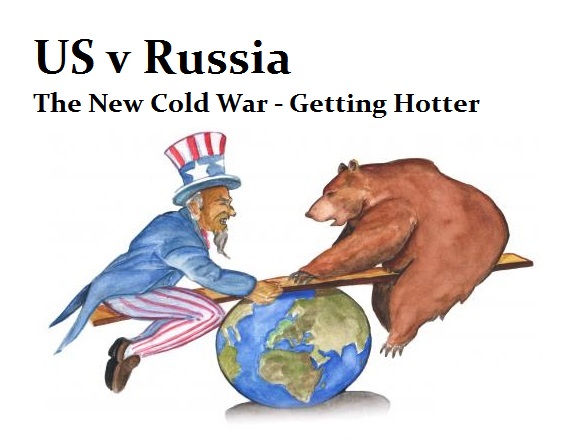
Finally, Travin warns: “Our choice of path will depend much on whether Western countries can bring order to their own home at the moment when the Putin regime undergoes a crisis, and Russia is thinking about new changes. More than once in Russian history it has happened both that positive European experience stimulated Westernization and then the negative moved the country to a search for a special path. …If by the time when they begin to reform the Putin system the West is not a good example, the search for a special path will begin anew”. (See the source here).
More recently still, analyst and director of the Carnegie Moscow website, Alexander Baunov, has expressed more dismay, in particular with the US’s indictment for unregistered foreign agent and Russian citizen Maria Butina.
Baunov criticized the US for deviating from its own democratic standards and tradition. Criticizing the US for “imprisoning a Russian girl — before trial until sentencing — for phone calls and emails. He lamented:
“Thus, the organization of meetings with the goal of moving relations (during the time of perestroika and new thinking this was called ‘people’s diplomacy, but has since been redefined as espionage) — this is bad enough and only allowed with registration with the Justice Ministry as a foreign agent. And without registration – prison. … All contacts with incorrect foreigners it turns out can only go through the state. This is in America, which always prided itself by the fact that it was a society of individuals and where there is little of the state.”
Baunov adds: “Here there are four regrets. First, that such an indictment is possible. Second, that for this one can end up in prison even before a trial. Before a guilty verdict, that is no having been found guilty for emails. Third, that in America where there are so many NGOs, which no one is oppressing and as many find journalists, who annually deserve Pulitzers, and this has not moved any of these (to act). … And the fourth regret is that here in her defense not one private person or organization concerned with human rights and freedoms came forward.” Source: On Facebook and here.
One of Russian Vladimir Putin’s democratic opposition opponents in the March 2018 presidential election, Kseniya Sobchak, had an instructive run-in with agitated Western, in particular British media. Sobchak had her eyes pried opened at a forum organized by The Spectator in which the litmus test for being considered something other than a ‘Putin agent’ was to acknowledge that “Putin is the Hitler of today.”
Sobchak noted about the forum: “With chagrin I must note that propaganda from both sides began to bear fruit–both sides radicalized., and if you are not prepared to agree that Putin is the Hitler of Today then you are almost immediately written off as an agent of the Kremlin. … (I) will never agree with the many, to say the least, ‘exaggerated’ assessments of our Western colleagues, when I see that the facts are consciously manipulated for the sake of heightening the confrontation”. Source.
Russian journalist Andrei Babitskii was treated to a similar view of the West’s abandonment of its most sacred principles last year. Babitskii who fled Russia in the 1990s because of his sympathetic reporting on the ultra-nationalist (later turned jihadists) Chechen rebels and his criticism of the Russian army’s frequent brutality, was fired from US government-funded Radio Free Europe Radio Liberty for having improper views on the Maidan revolt and the subsequent oligarchic-ultranationalist Ukrainian regime. See source here.

Conclusion
I have been writing about the US media biases and disinformation for over a decade on and off. I am glad that now some Russian liberals are waking up to the truth. Perhaps this will help produce a more realistic and constructive democratic opposition that can find a peaceful way of bringing democracy to their great country. The danger, however, is that the last vestiges of a simultaneously pro-Western and pro-democracy movement will not survive in any significant way.
Although that could have the positive effect of pro-democracy liberals ceasing to ape Western media and political practices, it could also lead to empowering a movement seeking, as Travin warns, a special Russian path or third way. This has never led to anything good in Russian history, usually producing an adoption of a bad Western influence — such as ultra-nationalism (the Black Hundreds) or communism (the Bolsheviks).
What Russia needs is an indigenous pro-democracy movement that eschews neither democracy because it is Western nor the West because it is democratic or more contemporarily, a hollowed out democracy that serves special rather than national interests, including the avoidance of unnecessary wars and the causes that produce necessary wars.
Thus, for our, the American/Western, part – I can only hope that some day we will revive the political culture of tolerance, rule of law, freedom of speech, which is slowly but surely being lost in good part for the sake of our efforts at democracy-promotion and NATO expansion.
A failure to do so will result in more overreactive American and Western Russia policies, increasing polarization between the West and Russia (and China), the strengthening of an anti-Western alliance led by China and Russia, an economic war in a world split apart damaging the global economy, and finally more political violence and even war between East and West.
About the author

Gordon M. Hahn, Ph.D., is an Expert Analyst at Corr Analytics, http://www.canalyt.com and a Senior Researcher at the Center for Terrorism and Intelligence Studies (CETIS), Akribis Group, www.cetisresearch.org. Dr. Hahn’s most recent book is Ukraine Over the Edge: Russia, the West, and the “New Cold War”. He has authored three previous, well-received books: The Caucasus Emirate Mujahedin: Global Jihadism in Russia’s North Caucasus and Beyond (McFarland Publishers, 2014), Russia’s Islamic Threat (Yale University Press, 2007), and Russia’s Revolution From Above: Reform, Transition and Revolution in the Fall of the Soviet Communist Regime, 1985-2000 (Transaction Publishers, 2002). He also has published numerous think tank reports, academic articles, analyses, and commentaries in both English and Russian language media.
Dr. Hahn also has taught at Boston, American, Stanford, San Jose State, and San Francisco State Universities and as a Fulbright Scholar at Saint Petersburg State University, Russia and has been a senior associate and visiting fellow at the Center for Strategic and International Studies, the Kennan Institute in Washington DC, and the Hoover Institution.





