
Democracy, Development and Reputation: Vietnam and Turkey


By Richard Falk

• More than 25 years ago I took part in a major conference in Kuala Lumpur affirming the importance of human rights. At the end of the second day, the convener of the conference, Chandra Muzaffar, a leading advocate of human rights and democracy in Malaysia, arranged for a few of the speakers to meet with the controversial leader of the country, Prime Minister, Mahathir. I was the only Westerner among the 4 or 5 of us given this opportunity.

As soon as we entered the room, Mahathir looked straight at me while posing a rhetorical question: “Why do Western human rights NGOs and experts look only at our performance with respect to civil and political rights when our natural preoccupation is the promotion of economic and social rights?”

Of course, his assertion was meant to challenge the complacent Orientalizing conventional wisdom, reducing the practice of human rights to whether or not a government is doing well or poorly on such issues as free elections and freedom of expression.

No one denies the relevance and core vitality of rights, but not more so than whether the bottom strata of the citizenry, as measured by standard of living, can meet their basic material needs.

This outlook remains dominant in the West, coloring condescending comments on non-Western human rights failures,, and persisting despite the West’s own downward spiral into the dark domains of illiberalism.

I was reminded of this meeting while in Vietnam for two weeks recently. Several Vietnamese intellectuals as well as the rather large Western expat community contended that the government of Vietnam had become repressive in the period since its extraordinarily victory in the Vietnam War.

It was accused of harshly punishing critics and dissenters as if more scared of domestic protest than they had been of American B-52 carpet bombing. Such critics were right, of course, to lament this fall from grace on the part of Vietnam’s leaders, who also lacked the charisma and inspirational leadership of their wartime predecessors.

At the same time it was unfortunate to fall into the Western trap of focusing on the failures of glasnost, while overlooking the achievements of perestroika, that is, judging political performance as the ACLU might rather than by reference to the overall wellbeing of the Vietnamese people.

•

What I am trying to draw attention to is the remarkable story of Vietnamese economic and social achievements, which center on drastically reducing extreme poverty and stimulating agricultural growth to such a level that Vietnam, previously frequently at the edge of massive famine, had become the third leading rice exporter in the world (after the U.S. and Thailand).

In effect, the government of Vietnam, while failing to live up to expectations when it comes to such liberal ideals as transparency, participation, and accountability of their citizenry, was nevertheless successfully building a needs based economy in which there were relatively few below the poverty line and where almost everyone had their health, education, and housing needs met by the state.

Not only was this an impressive profile of current Vietnamese society, but it represented a trajectory of steadily improving achievement.

Since the 1990s, Vietnamese poverty rate had fallen from about 50% to 7% in 2015 in a period during which roughly 1/3 of the population overcame conditions of food insecurity, according to the UN Special Rapporteur for the Right to Food.

•

These Vietnamese national accomplishments are the normative realities obscured or ignored by the regressive kinds of thinking that validates and invalidates performance in leading capitalist societies of the West – selective quantitative indicators of economic growth and stock market performance.

Let us remember that rich countries in the West are at ease living with large pockets of extreme poverty in their own affluent societies as measured by homelessness and extreme poverty, including the absence of health care, educational opportunity, and even food and housing necessities.

Shocking figures of inequality are hardly ever taken into serious account. For example, the fact that the three richest Americans – Bill Gates, Jeff Bezos, and Warren Buffet – possess wealth that exceeds the earnings of the entire American working class should occasion revolutionary incitement, but actually it is put to one side as a neutral outcome of moving beyond industrial capitalism.

The same one-sidedness is present in the discussion of another of my favorite countries in the world: Turkey – where I have spent several months each year for the last twenty.

Of course, the dynamics are very different within each national setting. The discourse in Turkey resembles that of Vietnam far more than that of the United States. The critical focus of anti-government forces has been the democratic failings of AKP since it assumed power in 2002; this criticism has sharpened since a drift toward more authoritarian rule in 2011, the 2013 Gezi Park demonstrations, and spiked sharply, especially in international circles, after the failed FETO coup of 2016 and the often crude and often cruelly implemented overreactions of the Erdogan government to threats that it was entitled to perceive as dangerous.

The purge in universities and media of those whose views and activities were deemed unacceptable by the Turkish government, as well as the moves against specific journalists and politicians, especially those associated with supporting the struggle of the Kurdish people, are deeply troubling developments, should worry the society as a whole, and do warrant international criticism.

But these negative developments should not be presented as the whole story about Turkey and the AKP/Erdogan leadership.

Part of the Turkish problem of perception and accuracy is a tendency of debate toward polarizations of good and evil, secular and religious, and even truth and falsity. This has led negative criticism of Turkish governmental behavior to be misleadingly expressed in the form of unbalanced criticism.

In the early phase of AKP governance of the country the standard complaints of an unrelenting opposition were directed at Erdogan as dictatorial and leading the country away from Ataturk secular legacy and toward a religious polity similar to that in the Islamic Republic of Iran. Of course, this line of attack was totally wrong.

The early policy priority of the AKP consisted of satisfying European Union criteria for membership, which was actually a major step in the Ataturk direction of Europeanizing the country as the best path to economic modernization. During these early AKP years, the government in Ankara made a parallel effort to get the military out of politics and back in their barracks.

Fairly considered, the first decade of AKP leadership dating from say 2002 was notable for achieving fundamental democratizing reforms that many knowledgeable observers of the country could never happen in Turkey.

For example, Eric Rouleau, the eminent French journalist of Middle Eastern politics and later French ambassador to Turkey, believed that the Turkish military would never give up its tutelage role that was not only well entrenched in the government bureaucracy, but also considered part of the hallowed legacy of Ataturk, as to be unchallengeable.

Erdogan’s leadership achieved the impossible. Additionally in this period Turkey managed to break free of its Cold War straight jacket as a NATO pawn pursuing an independent and sensibly assertive foreign policy throughout the Middle East and beyond. The country also achieved a series of successes in trade and investment that led Turkey to be considered one of the most promising of emerging economies.

•

As things got worse from the perspective of political and civil rights, it was difficult for critics to express accurately these disappointments and criticism because the earlier negative comments of the opposition had earlier been so exaggerated. Some of the harshest critics, claiming with varying degrees of accuracy that they had applauded what the Erdogan leadership achieved in its early years, but in recent years the management of the Turkish state had fallen from grace.

Recent exaggerations claim ‘there are no longer any newspapers in Turkey worth reading’ and the like. I would argue that there has been some decline in the range of media coverage and some lessening of criticism, yet several English language newspapers, including Sabah and Daily Hurryiet remain well worth reading, have useful critical commentaries on government policies and are informative about the major issues of domestic and international policy facing the country.

If international assessments were more balanced and less polarized, the AKP leadership would receive considerable credit in domestic and foreign policy from better educated and informed observers of the political scene in Turkey.

Criticisms of Turkey’s failed Syrian policies would be set off against the success of Ankara’s African diplomacy, the vitality of its economy despite the obstacles created by the anti-Turkish international campaign, the robustness of its foreign assistance program (second only to that of the U.S., and highest in per capita terms), the care it has accorded over 3 million Syrian (and some Iraqi) refugees, the global attention it has brought to the plight of the Rohingya, and its various regional efforts at conflict resolution (including Cyprus; Israel/Syria; Iran’s nuclear program; Balkan and Caucuses internal relations within their respective regions).

Turkey, unlike either Saudi Arabia or Iran, has mostly promoted a politics of reconciliation in the region, and unlike Egypt has done a great deal to help raise the standard of living of its most disadvantaged citizenry.

The Turkish government has made Istanbul a global city in many respects, a center for inter-civilizational dialogue and alliance, and a sponsor of conferences dedicated to a more peaceful, prosperous, and humane global future. The TRT World Forum a couple of months ago in Istanbul featured presentations at the opening by the Turkish Prime Minister and at the closing by Erdogan, and in between panels on a variety of world order issues with a fairly wide range of speakers (including myself).

•

My most basic criticism of the anti-government discourse in and about Turkey is along the lines of my sense of what is right in Vietnam.

For the bottom 50% or so of Turks the policies of the government have enhanced greatly their material life circumstances when it comes to health, security, housing, public transportation, as well as improved participatory rights of those outside the Western urban sectors.

Talking with ‘ordinary’ Turkish workers during this period, such as private car drivers, apartment managers, barbers, fruit sellers, suggest that since the AKP has governed, their lives and that of their families has steadily improved, especially with respect to basic material needs, daily life, and enjoyment of what a modern society has to offer.

Often ‘secularists’ deride these AKP supporters, and Erdogan enthusiasts, as uneducated and stupid. Their response when asked why they vote Erdogan adopts the opposite line: ‘Are we stupid?’ Many of these persons actually dislike the Islamic edge of the government identity or think the Syrian policies were a huge mistake, but for what is important for them, the AKP is far superior to alternatives. In effect, there’s nothing the matter with Anatolia, unlike Kansas!

•

It is not at all like the Trump base in America where the policies adopt by the elected leaders are in general materially harmful to much of this angry and alienated American underclass, and what they get from Trump are signals encouraging racism, xenophobia, and nativist patriotism, which seem to generate strong feelings of cultural satisfaction, especially when he punctures political balloons, many of which in any event were filled with liberal hot air as suggested by the many glaring human rights failures during the long period of secular hegemony.

In the end we would all like to live in humane societies but in the interim it would diminish polarization and enhance understanding to balance strengths and weaknesses in a more balanced manner, especially with respect to class interests. The weakening of free expression, especially by punishing dissent and treating criticism as subversion, has horrible effects for the intellectual and creative life that affects especially the sense of wellbeing of the upper echelons of society, but also weakens the innovativeness of those working in the private sector.

The material neglect of the underclass causes fundamental deprivations in the daily life of the most economically marginalized portions of societies, hitting minorities especially hard. What I am objecting to is the invisibility of the suffering of the very poor (as in America) and the refusals to acknowledge the public achievement of their improved circumstances (as in Turkey or Vietnam).

•

My argument is not meant to be a reworking of the Huntington argument in the 1970s that developmental priorities tend to make authoritarian rule a palatable prelude to democratically oriented modes of governance. I am not suggesting that it makes sense to defer concerns with democratic practices and human rights, but that normative backsliding should not be the occasion for overlooking how well or badly a government behaves in other spheres of activity.

In a sense, this is a search for balance and moderation, and a plea against using ideological brickbats to tear down legitimate governing processes, which undoubtedly need reforms, but do not deserve to be blacklisted except in the most extreme cases, and this is not happening.

For instance, the human rights record of Turkey and Vietnam is the target of far more insistent criticism and attack than is the far worse records of Saudi Arabia or Sisi’s Egypt.

Again, it is not that being worse elsewhere does not excuse being bad, but it does raise questions about motivation and geopolitical motivation. Vietnam is in a more fortunate position than Turkey because it is valued as part of the U.S. effort to contain Chinese influence, while Turkey is increasingly seen as a thorn in the side of such American allies in the region as Israel, Saudi Arabia, and Egypt.

In effect, bashing countries for their poor human rights records needs to be geopolitically decoded if it is to be taken seriously.    
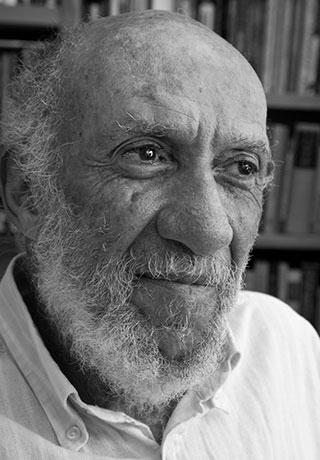


Professor Falk became an adviser to TFF when it was established in 1985.

Related Posts

Johan Galtung 1930-2024October 2015 Published here on October 3, 2026 Let us focus on Civilization for conflict analysis and remedies. Major forms of disorder use violence; war is state organized violence. The most belligerent states are the United States of America and Israel, both with civilization roots. National Evangelism, the US Protestant Christian civilization– more national than evangelical–justifies US warfare as exceptionalism of a people chosen by God, with a manifest destiny to run the world. Orthodox Judaism justifies Israeli warfare to conquer and expand from Nile to Euphrates as a religious right and duty to the Eternal One. The third most belligerent country, the UK, no longer believes it is God-chosen but chosen by the USA; not quite the same but something. But the root cause of global disorder lies in the Occident–with Islam–seeing itself as the single, universal civilization valid for all at all times, all others being...
Jan ObergPhD, director, The Transnational Foundation for Peace and Future Research, TFFLund, Sweden October 2, 2026 This is my full original manuscript. The Chinese Academy of Social Science, CASS, makes two publications out if it. 1. China’s Five-year plan emphasized the capabilities of basic research and original innovation. It is regarded as the goal of the future social development, which, as required, should be significantly enhanced. Can you comment on the importance of original innovation in research and academic study? I believe it is easier to define “original innovation” in the natural sciences than in social sciences. The breaking points of what constitutes something new, or innovative, are not quite as sharp in the latter. But in both fields it is about opening up something that was closed, unseen, unexplored before – making manifest what was earlier latent. Innovations come in many forms and shapes – naming something that was not...
The agreement is catastrophic both because of what it says and what it doesn’t mention. It reduces further the major asset of security policies: Freedom of action. Jan Oberg TFF director September 25, 2026 A couple of hours before the agreement was signed on September 22, 2026, I published the following 13 hypotheses about what it would most likely contain on TFF Substack (in English). I was wrong on only the first point. Contrary to what Trump had written on his Truth Social platform, it does not appear to come into force immediately. In fact, it turned out to be worse than even I had anticipated. After these hypotheses now come a number of reflections in light of what the agreement actually contains, and does not contain, as well as the way in which it has generally been presented by major media outlets and by the public-service broadcaster DR. My...

Recent Articles

Tony Robinson October 4, 2026 Violence is easy to recognise when someone is being beaten, shot or killed. It becomes more difficult when nobody is holding a weapon. Poverty, discrimination, exploitation and repression can restrict a human life just as effectively, although they do so in very different ways and with very different consequences. Simply adding more categories to an ever-growing list of forms of violence does not really solve the problem. The more interesting question is what all these different situations have in common and why it makes sense to describe them using the same word. Human beings do not simply react to what happens around them. They remember the past, imagine things that do not yet exist, make plans and undertake projects. Workers organise because they imagine different working conditions; people migrate because they imagine another life somewhere else; social movements emerge because people refuse to accept the...
It’s a matter of principles, courage, vision and pulling together – while the militarist world is falling apart… Peter Langille October 3, 2026 “Here, then, is the problem which we present to you, stark and dreadful and inescapable: Shall we put an end to the human race; or shall mankind renounce war?”The Bertrand Russell—Albert Einstein Manifesto, July 9, 1955 ⁕ The forecast for what’s ahead is worrisome. The sharp rise in armed conflicts over the past three years is adding to what was already the highest level in over seventy years. Genocides, which should be prevented are supported. A shared climate emergency that jeopardises survival is ignored. Diverse polls now suggest that people are war-weary, worried and interested in a more effective United Nations. And, there are viable policy options for a more secure world! Yet governments are doubling-down, betting on more war and investing heavily. If current trends persist,...
Johan Galtung 1930-2024October 2015 Published here on October 3, 2026 Let us focus on Civilization for conflict analysis and remedies. Major forms of disorder use violence; war is state organized violence. The most belligerent states are the United States of America and Israel, both with civilization roots. National Evangelism, the US Protestant Christian civilization– more national than evangelical–justifies US warfare as exceptionalism of a people chosen by God, with a manifest destiny to run the world. Orthodox Judaism justifies Israeli warfare to conquer and expand from Nile to Euphrates as a religious right and duty to the Eternal One. The third most belligerent country, the UK, no longer believes it is God-chosen but chosen by the USA; not quite the same but something. But the root cause of global disorder lies in the Occident–with Islam–seeing itself as the single, universal civilization valid for all at all times, all others being...

TFF on Substack

Discover and subscribe to more peace materials on TFF Substack

Most Popular

Tony Robinson October 4, 2026 Violence is easy to recognise when someone is being beaten, shot or killed. It becomes more difficult when nobody is holding a weapon. Poverty, discrimination, exploitation and repression can restrict a human life just as effectively, although they do so in very different ways and with very different consequences. Simply adding more categories to an ever-growing list of forms of violence does not really solve the problem. The more interesting question is what all these different situations have in common and why it makes sense to describe them using the same word. Human beings do not simply react to what happens around them. They remember the past, imagine things that do not yet exist, make plans and undertake projects. Workers organise because they imagine different working conditions; people migrate because they imagine another life somewhere else; social movements emerge because people refuse to accept the...
It’s a matter of principles, courage, vision and pulling together – while the militarist world is falling apart… Peter Langille October 3, 2026 “Here, then, is the problem which we present to you, stark and dreadful and inescapable: Shall we put an end to the human race; or shall mankind renounce war?”The Bertrand Russell—Albert Einstein Manifesto, July 9, 1955 ⁕ The forecast for what’s ahead is worrisome. The sharp rise in armed conflicts over the past three years is adding to what was already the highest level in over seventy years. Genocides, which should be prevented are supported. A shared climate emergency that jeopardises survival is ignored. Diverse polls now suggest that people are war-weary, worried and interested in a more effective United Nations. And, there are viable policy options for a more secure world! Yet governments are doubling-down, betting on more war and investing heavily. If current trends persist,...
Johan Galtung 1930-2024October 2015 Published here on October 3, 2026 Let us focus on Civilization for conflict analysis and remedies. Major forms of disorder use violence; war is state organized violence. The most belligerent states are the United States of America and Israel, both with civilization roots. National Evangelism, the US Protestant Christian civilization– more national than evangelical–justifies US warfare as exceptionalism of a people chosen by God, with a manifest destiny to run the world. Orthodox Judaism justifies Israeli warfare to conquer and expand from Nile to Euphrates as a religious right and duty to the Eternal One. The third most belligerent country, the UK, no longer believes it is God-chosen but chosen by the USA; not quite the same but something. But the root cause of global disorder lies in the Occident–with Islam–seeing itself as the single, universal civilization valid for all at all times, all others being...
Read More
Living-Peace-Sign-Budapest-copy
Tony Robinson October 4, 2026 Violence is easy to recognise when someone is being beaten, shot or killed. It becomes more difficult when nobody is holding a weapon. Poverty, discrimination, exploitation and repression can restrict a human life just as effectively, although they do so in very different ways and with very different consequences. Simply adding more categories to an ever-growing list of forms of violence does not really solve the problem. The more interesting question is what all these different situations have in common and why it makes sense to describe them using the same word. Human beings do not simply react to what happens around them. They remember the past, imagine things that do not yet exist, make plans and undertake projects. Workers organise because they imagine different working conditions; people migrate because they imagine another life somewhere else; social movements emerge because people refuse to accept the...
b54a1f10-8c65-4f0b-9dd5-4abc0a7d04cc_2659x2659
It’s a matter of principles, courage, vision and pulling together – while the militarist world is falling apart… Peter Langille October 3, 2026 “Here, then, is the problem which we present to you, stark and dreadful and inescapable: Shall we put an end to the human race; or shall mankind renounce war?”The Bertrand Russell—Albert Einstein Manifesto, July 9, 1955 ⁕ The forecast for what’s ahead is worrisome. The sharp rise in armed conflicts over the past three years is adding to what was already the highest level in over seventy years. Genocides, which should be prevented are supported. A shared climate emergency that jeopardises survival is ignored. Diverse polls now suggest that people are war-weary, worried and interested in a more effective United Nations. And, there are viable policy options for a more secure world! Yet governments are doubling-down, betting on more war and investing heavily. If current trends persist,...
010
Johan Galtung 1930-2024October 2015 Published here on October 3, 2026 Let us focus on Civilization for conflict analysis and remedies. Major forms of disorder use violence; war is state organized violence. The most belligerent states are the United States of America and Israel, both with civilization roots. National Evangelism, the US Protestant Christian civilization– more national than evangelical–justifies US warfare as exceptionalism of a people chosen by God, with a manifest destiny to run the world. Orthodox Judaism justifies Israeli warfare to conquer and expand from Nile to Euphrates as a religious right and duty to the Eternal One. The third most belligerent country, the UK, no longer believes it is God-chosen but chosen by the USA; not quite the same but something. But the root cause of global disorder lies in the Occident–with Islam–seeing itself as the single, universal civilization valid for all at all times, all others being...
Screenshot 2026-10-02 011738
Jan ObergPhD, director, The Transnational Foundation for Peace and Future Research, TFFLund, Sweden October 2, 2026 This is my full original manuscript. The Chinese Academy of Social Science, CASS, makes two publications out if it. 1. China’s Five-year plan emphasized the capabilities of basic research and original innovation. It is regarded as the goal of the future social development, which, as required, should be significantly enhanced. Can you comment on the importance of original innovation in research and academic study? I believe it is easier to define “original innovation” in the natural sciences than in social sciences. The breaking points of what constitutes something new, or innovative, are not quite as sharp in the latter. But in both fields it is about opening up something that was closed, unseen, unexplored before – making manifest what was earlier latent. Innovations come in many forms and shapes – naming something that was not...
arctic-circle-map
The agreement is catastrophic both because of what it says and what it doesn’t mention. It reduces further the major asset of security policies: Freedom of action. Jan Oberg TFF director September 25, 2026 A couple of hours before the agreement was signed on September 22, 2026, I published the following 13 hypotheses about what it would most likely contain on TFF Substack (in English). I was wrong on only the first point. Contrary to what Trump had written on his Truth Social platform, it does not appear to come into force immediately. In fact, it turned out to be worse than even I had anticipated. After these hypotheses now come a number of reflections in light of what the agreement actually contains, and does not contain, as well as the way in which it has generally been presented by major media outlets and by the public-service broadcaster DR. My...
girl-5894831_1280
Below are TFF-related media mentions, comments, videos and social media posts published elsewhere but not on this homepage. We happen to catch and list only a fraction. Regarding video comments and debates, we recommend that you go to the TFF Video Channel on Substack where many of them are reproduced. Jan Oberg is a contributor to China Daily – 52 million daily clicks – and Global Times, CGTN and CCTV (the national television), China Investment, Xinhua News Agency and several others. Articles and videos on these media very often multiply into countless Chinese (and Western media) that re-post them from these main media. Thanks to The China Academy, his analyses, interviews and comments are frequently posted on YouTube channels such as Thinkers Forum and Wave Media. These videos are often re-posted on Bilibili (China’s YouTube), the China Content Center on TikTok, and on the Chinese edition of TikTok, Douyin.com. This means reaching hundreds of millions of viewers worldwide over a year. While there are too many to catch on all these...





