The geopolitical right of exception at the United Nations

Richard Falk

By Richard Falk

The notorious, yet influential, German jurist, Carl Schmitt famously insisted that ‘a right of exception’ was the core reality of national sovereignty. By this he meant that internal law could be put aside by ‘the sovereign,’ inhering as the crux of the relationship between state and society. In this regard international law has no overriding claim of authority with respect to sovereign states, at least from the perspective of statist jurisprudence.

This discretion to ignore or violate law is distinct from submission to law as a realistic adaptation by weak states to political realities or compliance undertaken voluntarily for pragmatic reasons of convenience and mutual benefit.

When the UN was established, it was configured, to appeal both to realist minds who were eager to show that they had learned the lesson of Munich and to those architects of international cooperation that did not want the folly of the League of Nations, seen as a politically irrelevant sanctuary for utopians and dreamers to be repeated in this newly created organization.

To achieve these ends the UN Charter vested only the UN Security Council with the power of decision (as distinct from recommendations), and limited its membership originally to nine states of which the five designated winners of World War II were given both permanent membership, and more importantly, a right of veto.

In effect, the right of veto was a constitutional right of exception embedded in the UN Charter. It formulated the master procedural rule of the Charter as one that allowed permanent members of the Security Council to block any decision that was perceived to be sufficiently against their national interests or those of its friends.

Just as Woodrow Wilson falsely misled the world with his pledge after World War I of ‘making the world safe for democracy’ the UN was more effectively manipulated into the actuality of ‘making the world safe for geopolitics.’

In effect, the UN was set up on the basis that it would never be strong enough to challenge these five major states, and that its effectiveness would rest on two possibilities: sustaining the voluntary cooperation that had worked successfully during World War II to thwart European fascism and Japanese imperialism or cooperating on issues of secondary concern in the peace and security area on which the permanent members could agree and persuade enough non-permanent term members to lend support.

As was discovered several decades ago, these permanent members could only agree on what to do in the Security Council on the rarest of occasions, and that decisions relating to secondary issues, although often useful, left the really dangerous conflicts beyond the reach of the UN. The UN also committed itself to respect territorial sovereignty of its members, and by virtue of Article 2(7) of the Charter, placed all forms of civil strife beyond its writ unless the Security Council agreed that there were present substantial threats to international peace and security.

This constitutional right of exception to some extent contradicts the basic imperative of the Organization “to save succeeding generations from the scourge of war” that is set forth in the Preamble to the Charter. To the extent that major wars have been avoided during the lifetime of the UN it is not due to the efforts of the Organization. It is rather a consequence of deterrence, and geopolitical self-restraint and prudence, which were greatly encouraged by the awareness that any war fought with nuclear weapons would be a catastrophe regardless of which side prevailed.

Major wars were prevented by a reliance on traditional notions of balance, containment, and countervailing power fine tuned for the realities of the nuclear age. These were realist instruments of statecraft associated with the European state system as adapted to the distinctive contemporary challenges. In the over 400 pages of his 2014 book, World Order, Henry Kissinger, the realist par excellence of this era, hardly mentions the UN, and accords it no significant role in shaping or even misshaping the ‘world order’ in the 21st century.

The UN is simply seen as a diplomatic sideshow. He sees the present world order need to be primarily concerned with incorporating the non-Western major states, especially China, in an enlarged conception of a state system that is based on European ideas. For this process of incorporation to occur smoothly it will be essential that Westphalian logic of statism be newly perceived as reflecting the values and worldview of these diverse civilizations, and no longer be understood as an integral aspect of the Western world domination project.

Although the UN is a disappointment when it comes to ‘war prevention’ or the encouragement of a global rule of law, it has managed to achieve universality of membership. Unlike the League that failed to induce the United States to join and lost along the way several important members, the UN has neither expelled countries from its ranks nor have states withdrawn.

The Organization has proved sufficiently useful as a site of diplomatic interaction and contestation that every government regardless of ideology or outlook finds it useful to participate in its activities. Even Israel that consistently complains loudly about the flawed and biased character of the UN, still tries with all its diplomatic ingenuity to influence its various activities in directions consistent with its foreign policy.

What has received too little attention so far is what I would call ‘the geopolitical right of exception’ that is quite distinct from the constitutional veto, but at least as pernicious from the perspective of enabling the UN to promote the human interest in its actions throughout the world.

The geopolitical right of exception reflects the ability of one or more political actors in the world to promote or undermine policies that express its particular interest. In UN contexts the geopolitical right of exception allows a state to prevent the implementation of behavior that has been otherwise given formal approval. For instance, in the UN Human Rights Council there is no operative constitutional right of exception, and this allows certain steps to be taken on the basis of majority approval.

Yet when it comes to implementation or enforcement, acting behind the scenes, threatening funding cuts and actions for and against a high official, the political will of the Organization is effectively resisted and controlled.

For instance, Israel despite ignoring strongly backed UN General Assembly resolutions dealing with such matters as refugees, Jerusalem, the separation wall, has been able to be defiant over the course of decades without experiencing any inter-governmental adverse consequences, and this is because it is protected by the United States exercise of its geopolitical right of exception on its behalf.

The availability of such a geopolitical right is in direct proportion to the perceived hierarchy of hard and soft power in the world, which has meant that since World War II, the United States far more than any other political actor has enjoyed a geopolitical right of exception within the UN.

The existence of this geopolitical right of exception undermines the legitimacy and effectiveness of the UN. It is integral to regimes of double standards, and cuts directly against the grain of global justice that seeks to treat equals as equally as possible. It also implicitly endorses backroom strong arm tactics and procedural manipulation, as well as modifies and distorts the rights and duties of membership in the UN.

Overcoming the geopolitical right of exception would require its repudiation by the United States, in particular, through a recognition that its exercise is incompatible with the search for a peaceful, just, sustainable, and more participatory form of world order. Because it is often exercised invisibly, this geopolitical right is also a vehicle of influence relied upon by private sector corporate and financial interests that are contrary to the global public interest.

At present, it seems hopelessly out of touch to expect any moves by the American and other powerful governments to forego the benefits of the geopolitical right of veto.

Because its exercise is neither claimed nor acknowledged, there can be no accountability, thus operating in a manner that is contrary to the democratic spirit. The constitutional veto has the benefit of discourse and debate as various political actors try to offer convincing reasons for casting a veto to block a Security Council decision. For this very reason the geopolitical right of exception is often a more desirable option than the constitutional right if the policy or position being promoted is unpopular with public opinion and other governments.

The U.S. Government struggles often behind the scenes at the UN to provide effective support for Israel in ways that get the job done without having to achieve such an unpopular result by a seemingly arbitrary reliance on its veto.

Unless a full-fledged world government were to be established, which seems slightly less likely than awarding the Nobel Peace Prize to Vladamir Putin, there is no prospect of any renunciation of the geopolitical right of exception at the UN in the foreseeable future. The best that can be hoped for is a recognition of its existence and role, some sort of greater self-restraint exhibited in its exercise, and critical commentary by those who conceive of their political identity as that of ‘citizen pilgrims.’
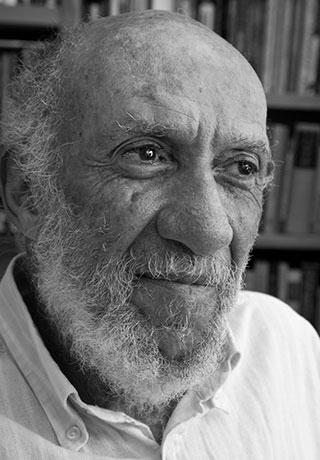

Professor Falk became an adviser to TFF when it was established in 1985.

Related Posts

It’s a matter of principles, courage, vision and pulling together – while the militarist world is falling apart… Peter Langille October 3, 2026 “Here, then, is the problem which we present to you, stark and dreadful and inescapable: Shall we put an end to the human race; or shall mankind renounce war?”The Bertrand Russell—Albert Einstein Manifesto, July 9, 1955 ⁕ The forecast for what’s ahead is worrisome. The sharp rise in armed conflicts over the past three years is adding to what was already the highest level in over seventy years. Genocides, which should be prevented are supported. A shared climate emergency that jeopardises survival is ignored. Diverse polls now suggest that people are war-weary, worried and interested in a more effective United Nations. And, there are viable policy options for a more secure world! Yet governments are doubling-down, betting on more war and investing heavily. If current trends persist,...
Johan Galtung 1930-2024October 2015 Published here on October 3, 2026 Let us focus on Civilization for conflict analysis and remedies. Major forms of disorder use violence; war is state organized violence. The most belligerent states are the United States of America and Israel, both with civilization roots. National Evangelism, the US Protestant Christian civilization– more national than evangelical–justifies US warfare as exceptionalism of a people chosen by God, with a manifest destiny to run the world. Orthodox Judaism justifies Israeli warfare to conquer and expand from Nile to Euphrates as a religious right and duty to the Eternal One. The third most belligerent country, the UK, no longer believes it is God-chosen but chosen by the USA; not quite the same but something. But the root cause of global disorder lies in the Occident–with Islam–seeing itself as the single, universal civilization valid for all at all times, all others being...
How Oxford University Press allowed a personality‑driven narrative to masquerade as scholarship. Jan Oberg, dr hc, TFF director This article has also been published on TFF Substack where more readers react and withdraw their interviews from the project. A Special Issue in a scholarly journal is not an ordinary publication. It is a collective, curated […]

Recent Articles

Tony Robinson October 4, 2026 Violence is easy to recognise when someone is being beaten, shot or killed. It becomes more difficult when nobody is holding a weapon. Poverty, discrimination, exploitation and repression can restrict a human life just as effectively, although they do so in very different ways and with very different consequences. Simply adding more categories to an ever-growing list of forms of violence does not really solve the problem. The more interesting question is what all these different situations have in common and why it makes sense to describe them using the same word. Human beings do not simply react to what happens around them. They remember the past, imagine things that do not yet exist, make plans and undertake projects. Workers organise because they imagine different working conditions; people migrate because they imagine another life somewhere else; social movements emerge because people refuse to accept the...
It’s a matter of principles, courage, vision and pulling together – while the militarist world is falling apart… Peter Langille October 3, 2026 “Here, then, is the problem which we present to you, stark and dreadful and inescapable: Shall we put an end to the human race; or shall mankind renounce war?”The Bertrand Russell—Albert Einstein Manifesto, July 9, 1955 ⁕ The forecast for what’s ahead is worrisome. The sharp rise in armed conflicts over the past three years is adding to what was already the highest level in over seventy years. Genocides, which should be prevented are supported. A shared climate emergency that jeopardises survival is ignored. Diverse polls now suggest that people are war-weary, worried and interested in a more effective United Nations. And, there are viable policy options for a more secure world! Yet governments are doubling-down, betting on more war and investing heavily. If current trends persist,...
Johan Galtung 1930-2024October 2015 Published here on October 3, 2026 Let us focus on Civilization for conflict analysis and remedies. Major forms of disorder use violence; war is state organized violence. The most belligerent states are the United States of America and Israel, both with civilization roots. National Evangelism, the US Protestant Christian civilization– more national than evangelical–justifies US warfare as exceptionalism of a people chosen by God, with a manifest destiny to run the world. Orthodox Judaism justifies Israeli warfare to conquer and expand from Nile to Euphrates as a religious right and duty to the Eternal One. The third most belligerent country, the UK, no longer believes it is God-chosen but chosen by the USA; not quite the same but something. But the root cause of global disorder lies in the Occident–with Islam–seeing itself as the single, universal civilization valid for all at all times, all others being...

TFF on Substack

Discover and subscribe to more peace materials on TFF Substack

Most Popular

Tony Robinson October 4, 2026 Violence is easy to recognise when someone is being beaten, shot or killed. It becomes more difficult when nobody is holding a weapon. Poverty, discrimination, exploitation and repression can restrict a human life just as effectively, although they do so in very different ways and with very different consequences. Simply adding more categories to an ever-growing list of forms of violence does not really solve the problem. The more interesting question is what all these different situations have in common and why it makes sense to describe them using the same word. Human beings do not simply react to what happens around them. They remember the past, imagine things that do not yet exist, make plans and undertake projects. Workers organise because they imagine different working conditions; people migrate because they imagine another life somewhere else; social movements emerge because people refuse to accept the...
It’s a matter of principles, courage, vision and pulling together – while the militarist world is falling apart… Peter Langille October 3, 2026 “Here, then, is the problem which we present to you, stark and dreadful and inescapable: Shall we put an end to the human race; or shall mankind renounce war?”The Bertrand Russell—Albert Einstein Manifesto, July 9, 1955 ⁕ The forecast for what’s ahead is worrisome. The sharp rise in armed conflicts over the past three years is adding to what was already the highest level in over seventy years. Genocides, which should be prevented are supported. A shared climate emergency that jeopardises survival is ignored. Diverse polls now suggest that people are war-weary, worried and interested in a more effective United Nations. And, there are viable policy options for a more secure world! Yet governments are doubling-down, betting on more war and investing heavily. If current trends persist,...
Johan Galtung 1930-2024October 2015 Published here on October 3, 2026 Let us focus on Civilization for conflict analysis and remedies. Major forms of disorder use violence; war is state organized violence. The most belligerent states are the United States of America and Israel, both with civilization roots. National Evangelism, the US Protestant Christian civilization– more national than evangelical–justifies US warfare as exceptionalism of a people chosen by God, with a manifest destiny to run the world. Orthodox Judaism justifies Israeli warfare to conquer and expand from Nile to Euphrates as a religious right and duty to the Eternal One. The third most belligerent country, the UK, no longer believes it is God-chosen but chosen by the USA; not quite the same but something. But the root cause of global disorder lies in the Occident–with Islam–seeing itself as the single, universal civilization valid for all at all times, all others being...
Read More
Living-Peace-Sign-Budapest-copy
Tony Robinson October 4, 2026 Violence is easy to recognise when someone is being beaten, shot or killed. It becomes more difficult when nobody is holding a weapon. Poverty, discrimination, exploitation and repression can restrict a human life just as effectively, although they do so in very different ways and with very different consequences. Simply adding more categories to an ever-growing list of forms of violence does not really solve the problem. The more interesting question is what all these different situations have in common and why it makes sense to describe them using the same word. Human beings do not simply react to what happens around them. They remember the past, imagine things that do not yet exist, make plans and undertake projects. Workers organise because they imagine different working conditions; people migrate because they imagine another life somewhere else; social movements emerge because people refuse to accept the...
b54a1f10-8c65-4f0b-9dd5-4abc0a7d04cc_2659x2659
It’s a matter of principles, courage, vision and pulling together – while the militarist world is falling apart… Peter Langille October 3, 2026 “Here, then, is the problem which we present to you, stark and dreadful and inescapable: Shall we put an end to the human race; or shall mankind renounce war?”The Bertrand Russell—Albert Einstein Manifesto, July 9, 1955 ⁕ The forecast for what’s ahead is worrisome. The sharp rise in armed conflicts over the past three years is adding to what was already the highest level in over seventy years. Genocides, which should be prevented are supported. A shared climate emergency that jeopardises survival is ignored. Diverse polls now suggest that people are war-weary, worried and interested in a more effective United Nations. And, there are viable policy options for a more secure world! Yet governments are doubling-down, betting on more war and investing heavily. If current trends persist,...
010
Johan Galtung 1930-2024October 2015 Published here on October 3, 2026 Let us focus on Civilization for conflict analysis and remedies. Major forms of disorder use violence; war is state organized violence. The most belligerent states are the United States of America and Israel, both with civilization roots. National Evangelism, the US Protestant Christian civilization– more national than evangelical–justifies US warfare as exceptionalism of a people chosen by God, with a manifest destiny to run the world. Orthodox Judaism justifies Israeli warfare to conquer and expand from Nile to Euphrates as a religious right and duty to the Eternal One. The third most belligerent country, the UK, no longer believes it is God-chosen but chosen by the USA; not quite the same but something. But the root cause of global disorder lies in the Occident–with Islam–seeing itself as the single, universal civilization valid for all at all times, all others being...
Screenshot 2026-10-02 011738
Jan ObergPhD, director, The Transnational Foundation for Peace and Future Research, TFFLund, Sweden October 2, 2026 This is my full original manuscript. The Chinese Academy of Social Science, CASS, makes two publications out if it. 1. China’s Five-year plan emphasized the capabilities of basic research and original innovation. It is regarded as the goal of the future social development, which, as required, should be significantly enhanced. Can you comment on the importance of original innovation in research and academic study? I believe it is easier to define “original innovation” in the natural sciences than in social sciences. The breaking points of what constitutes something new, or innovative, are not quite as sharp in the latter. But in both fields it is about opening up something that was closed, unseen, unexplored before – making manifest what was earlier latent. Innovations come in many forms and shapes – naming something that was not...
arctic-circle-map
The agreement is catastrophic both because of what it says and what it doesn’t mention. It reduces further the major asset of security policies: Freedom of action. Jan Oberg TFF director September 25, 2026 A couple of hours before the agreement was signed on September 22, 2026, I published the following 13 hypotheses about what it would most likely contain on TFF Substack (in English). I was wrong on only the first point. Contrary to what Trump had written on his Truth Social platform, it does not appear to come into force immediately. In fact, it turned out to be worse than even I had anticipated. After these hypotheses now come a number of reflections in light of what the agreement actually contains, and does not contain, as well as the way in which it has generally been presented by major media outlets and by the public-service broadcaster DR. My...
girl-5894831_1280
Below are TFF-related media mentions, comments, videos and social media posts published elsewhere but not on this homepage. We happen to catch and list only a fraction. Regarding video comments and debates, we recommend that you go to the TFF Video Channel on Substack where many of them are reproduced. Jan Oberg is a contributor to China Daily – 52 million daily clicks – and Global Times, CGTN and CCTV (the national television), China Investment, Xinhua News Agency and several others. Articles and videos on these media very often multiply into countless Chinese (and Western media) that re-post them from these main media. Thanks to The China Academy, his analyses, interviews and comments are frequently posted on YouTube channels such as Thinkers Forum and Wave Media. These videos are often re-posted on Bilibili (China’s YouTube), the China Content Center on TikTok, and on the Chinese edition of TikTok, Douyin.com. This means reaching hundreds of millions of viewers worldwide over a year. While there are too many to catch on all these...