
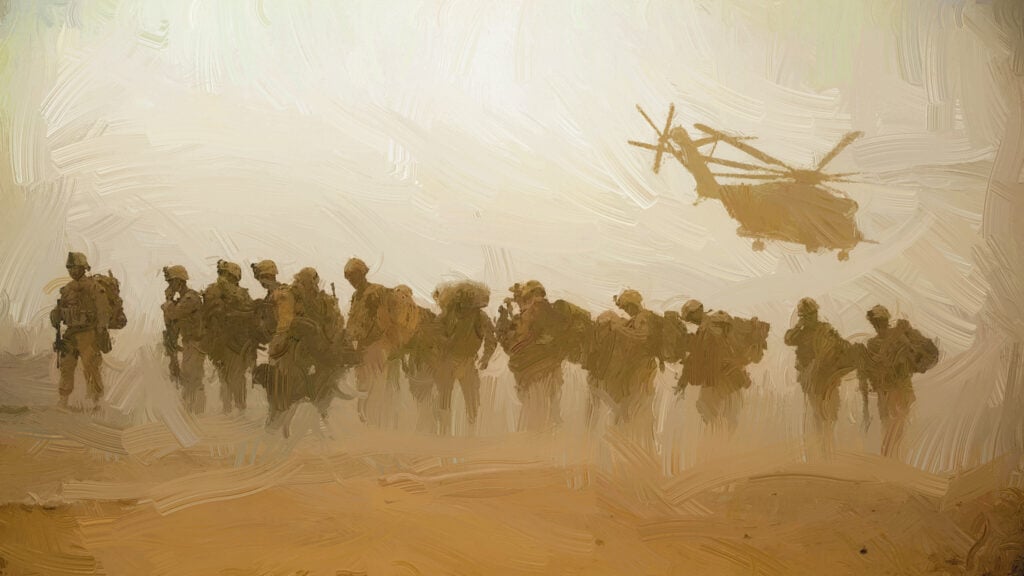
How the news media promotes war. It’s a constant

“Long before Trump and “deep state” became an expression, I produced one ginormous investigation — Top Secret America — for the Washington Post and I wrote a nasty book — American Coup — about the creeping fascism of homeland security.”

William M. Arkin

June 5, 2023

(When I wrote this open letter in January 2019, decrying NBC and the news media’s singular focus on Trump and their subsequent cheerleading for the state of perpetual war, I didn’t think that much would change, and indeed it hasn’t. When the letter went viral (thanks to Glenn Greenwald), all the news media could talk about was my attack on the news media, missing the basic point that we’d built a system of subservience and even subordination to the war machine, one that the news media fed. I wrote: “NBC and much of the rest of the news media has somehow become a defender of Washington and the system.”

This article is republished from Bill Arkin’s Substack page here

In my letter, I also said that “the national security leaders and generals … are allowed to do their thing unmolested,” that is, without real accountability, and even (as Trump said) though they were largely losers. “We’ve had more than a generation of national security leaders who sadly and fraudulently have done little of consequence,” I wrote, and I particularly decried the TV generals who not only cheerlead for war but also provided poor advice and insights.

The only thing that’s changed since 2019 is the Ukraine war, which not surprisingly has been poorly reported. But there’s another aspect of the Ukraine war that has changed the national security calculus, one that we still haven’t digested let alone recognize. Zelensky and company are demanding victory (and seem willing to fight to the end until they defeat Russia). It’s not stubborness on the Ukrainian part, it is what war is about. I know that such an objective grates against the American habit, which as I said in my letter was: “No wars won but the ball is kept in play.” What will happen with Ukraine and Russia, and what it will mean, is in some ways the story of our near future.)

The text of my letter, January 3, 2019:

January 4 is my last day at NBC News and I’d like to say goodbye to my friends, hopefully not for good. This isn’t the first time I’ve left NBC, but this time the parting is more bittersweet, the world and the state of journalism in tandem crisis. My expertise, though seeming to be all the more central to the challenges and dangers we face, also seems to be less valued at the moment. And I find myself completely out of synch with the network, being neither a day-to-day reporter nor interested in the Trump circus.

I first started my association with NBC 30 years ago, feeding Cold War stories to Bob Windrem and Fred Francis at the Pentagon. I became an on-air analyst during the 1999 Kosovo War, continuing to work thereafter with Nightly News, delighting and oftentimes annoying in my peculiar position of being a mere civilian amongst THE GENERALS and former government officials. A scholar at heart, I also found myself an often lone voice that was anti-nuclear and even anti-military, anti-military for me meaning opinionated but also highly knowledgeable, somewhat akin to a movie critic, loving my subject but also not shy about making judgements regarding the flops and the losers.

When the attacks of 9/11 came, I was called back to NBC. I spent weeks on and off the air talking about al Qaeda and the various wars we were rushing into, arguing that airpower and drones would be the centerpiece not troops. In the new martial environment where only one war cry was sanctioned I was out of sync then as well. I retreated somewhat to writing a column for the Los Angeles Times, but even there I had to fight editors who couldn’t believe that there would be a war in Iraq. And I spoke up about the absence of any sort of strategy for actually defeating terrorism, annoying the increasing gaggles of those who seemed to accept that a state of perpetual war was a necessity.

I thought then that there was great danger in the embrace of process and officialdom over values and public longing, and I wrote about the increasing power of the national security community. Long before Trump and “deep state” became an expression, I produced one ginormous investigation — Top Secret America — for the Washington Post and I wrote a nasty book — American Coup — about the creeping fascism of homeland security.

Looking back now they were both harbingers for what President Obama (and then Trump) faced in terms of largely failing to make enduring change.

Somewhere in all of that, and particularly as the social media wave began, it was clear that NBC (like the rest of the news media) could no longer keep up with the world. Added to that was the intellectual challenge of how to report our new kind of wars when there were no real fronts and no actual measures of success. To me there is also a larger problem: though they produce nothing that resembles actual safety and security, the national security leaders and generals we have are allowed to do their thing unmolested. Despite being at “war,” no great wartime leaders or visionaries are emerging. There is not a soul in Washington who can say that they have won or stopped any conflict. And though there might be the beloved perfumed princes in the form of the Petraeus’ and Wes Clarks’, or the so-called warrior monks like Mattis and McMaster, we’ve had more than a generation of national security leaders who sadly and fraudulently have done little of consequence. And yet we (and others) embrace them, even the highly partisan formers who masquerade as “analysts”. We do so ignoring the empirical truth of what they have wrought: There is not one county in the Middle East that is safer today than it was 18 years ago. Indeed the world becomes ever more polarized and dangerous.

As perpetual war has become accepted as a given in our lives, I’m proud to say that I’ve never deviated in my argument at NBC (or at my newspaper gigs) that terrorists will never bedefeated until we better understand why they are driven to fighting. And I have maintained my central view that airpower (in its broadest sense including space and cyber) is not just the future but the enabler and the tool of war today.

Seeking refuge in its political horse race roots, NBC (and others) meanwhile report the story of war as one of Rumsfeld vs. the Generals, as Wolfowitz vs. Shinseki, as the CIA vs. Cheney, as the bad torturers vs. the more refined, about numbers of troops and number of deaths, and even then Obama vs. the Congress, poor Obama who couldn’t close Guantanamo or reduce nuclear weapons or stand up to Putin because it was just so difficult. We have contributed to turning the world national security into this sort of political story. I find it disheartening that we do not report the failures of the generals and national security leaders. I find it shocking that we essentially condone continued American bumbling in the Middle East and now Africa through our ho-hum reporting.

I’m a difficult guy, not prone to either protocol or procedure and I give NBC credit that it tolerated me through my various incarnations. I hope people will say in the early days that I made Brokaw and company smarter about nuclear weapons, about airpower, and even about al Qaeda. And I’m proud to say that I also was one of the few to report that there weren’t any WMD in Iraq and remember fondly presenting that conclusion to an incredulous NBC editorial board. I argued endlessly with MSNBC about all things national security for years, doing the daily blah, blah, blah in Secaucus, but also poking at the conventional wisdom of everyone from Matthews to Hockenberry. And yet I feel like I’ve failed to convey this larger truth about the hopelessness of our way of doing things, especially disheartened to watch NBC and much of the rest of the news media somehow become a defender of Washington and the system.

Windrem again convinced me to return to NBC to join the new investigative unit in the early days of the 2016 presidential campaign. I thought that the mission was to break through the machine of perpetual war acceptance and conventional wisdom to challenge Hillary Clinton’s hawkishness. It was also an interesting moment at NBC because everyone was looking over their shoulder at Vice and other upstarts creeping up on the mainstream. But then Trump got elected and Investigations got sucked into the tweeting vortex, increasingly lost in a directionless adrenaline rush, the national security and political version of leading the broadcast with every snow storm. And I would assert that in many ways NBC just began emulating the national security state itself — busy and profitable.

I’d argue that under Trump, the national security establishment not only hasn’t missed a beat but indeed has gained dangerous strength. Now it is ever more autonomous and practically impervious to criticism. I’d also argue, ever so gingerly, that NBC has become somewhat lost in its own verve, proxies of boring moderation and conventional wisdom, defender of the government against Trump, cheerleader for open and subtle threat mongering, in love with procedure and protocol over all else (including results). I accept that there’s a lot to report here, but I’m more worried about how much we are missing. Hence my desire to take a step back and think why so little changes with regard to America’s wars.

I know it is characteristic of our overexcited moment to blast away at former employers and mainstream institutions, but all I can say is that despite many frustrations, my time at NBC has been gratifying. Working with Cynthia McFadden has been the experience of a lifetime. I’ve learned a ton about television from her and Kevin Monahan, the secret insider tricks of the trade and the very big picture of what makes for original stories (and how powerful they can be). The young reporters at NBC are also universally excellent. Thanks to Noah Oppenheim for his support of my contrarian and disruptive presence. And to Janelle Rodriguez, who supported deep expertise. The Nightly crew has also been a constant fan of my too long stories and a great team. I continue to marvel as Phil Griffin carries out his diabolical plan for the cable network to take over the world.

I’m proud of the work I’ve done with my team and know that there’s more to do. But for now it’s time to take a break. I’m ever so happy to return to writing and thinking without the officiousness of editorial tyrants or corporate standards. And of course I yearn to go back to my first love, which is writing boring reports about secret programs, grateful that the American government so graciously obliges in its constant supply. And I particularly feel like the world is moving so quickly that even in just the little national security world I inhabit, I need more time to sit back and think. And to replenish.

In our day-to-day whirlwind and hostage status as prisoners of Donald Trump, I think — like everyone else does — that we miss so much. People who don’t understand the medium, or the pressures, loudly opine that it’s corporate control or even worse, that it’s partisan. Sometimes I quip in response to friends on the outside (and to government sources) that if they mean by the word partisan that it is New Yorkers and Washingtonians against the rest of the country then they are right.

For me I realized how out of step I was when I looked at Trump’s various bumbling intuitions: his desire to improve relations with Russia, to denuclearize North Korea, to get out of the Middle East, to question why we are fighting in Africa, even in his attacks on the intelligence community and the FBI. Of course he is an ignorant and incompetent impostor. And yet I’m alarmed at how quick NBC is to mechanically argue the contrary, to be in favor of policies that just spell more conflict and more war. Really? We shouldn’t get out Syria? We shouldn’t go for the bold move of denuclearizing the Korean peninsula? Even on Russia, though we should be concerned about the brittleness of our democracy that it is so vulnerable to manipulation, do we really yearn for the Cold War? And don’t even get me started with the FBI: What? We now lionize this historically destructive institution?

Even without Trump, our biggest challenge as we move forward is that we have become exhausted parents of our infant (and infantile) social media children. And because of the “cycle,” we at NBC (and all others in the field of journalism) suffer from a really bad case of not being able to ever take a breath. We are a long way from resolving the rules of the road in this age, whether it be with regard to our personal conduct or anything related to hard news. I also don’t think that we are on a straight line towards digital nirvana, that is, that all of this information will democratize and improve society. I sense that there is already smartphone and social media fatigue creeping across the land, and my guess is that nothing we currently see — nothing that is snappy or chatty — will solve our horrific challenges of information overload or the role (and nature) of journalism. And I am sure that once Trump leaves center stage, society will have a gigantic media hangover. Thus for NBC — and for everyone else — there is challenge and opportunity ahead. I’d particularly like to think and write more about that.

There’s a saying about consultants, that organizations hire them to hear exactly what they want to hear. I’m proud to say that NBC didn’t do that when it came to me. Similarly I can say that I’m proud that I’m not guilty of giving my employers what they wanted. Still, the things this and most organizations fear most — variability, disturbance, difference — those things that are also the primary drivers of creativity — are not really the things that I see valued in the reporting ranks.

I’m happy to go back to writing and commentary. This winter, I’m proud to say that I’ve put the finishing touches on a 9/11 conspiracy novel that I’ve been toiling on for over a decade. It’s a novel, but it meditates on the question of how to understand terrorists in a different way. And I’m undertaking two new book-writing projects, one fiction about a lone reporter and his magical source that hopes to delve into secrecy and the nature of television. And, If you read this far, I am writing a non-fiction book, an extended essay about national security and why we never seem to end our now perpetual state of war. There is lots of media critique out there, tons of analysis of leadership and the Presidency. But on the state of our national security? Not so much. Hopefully I will find myself thinking beyond the current fire and fury and actually suggest a viable alternative. Wish me luck.

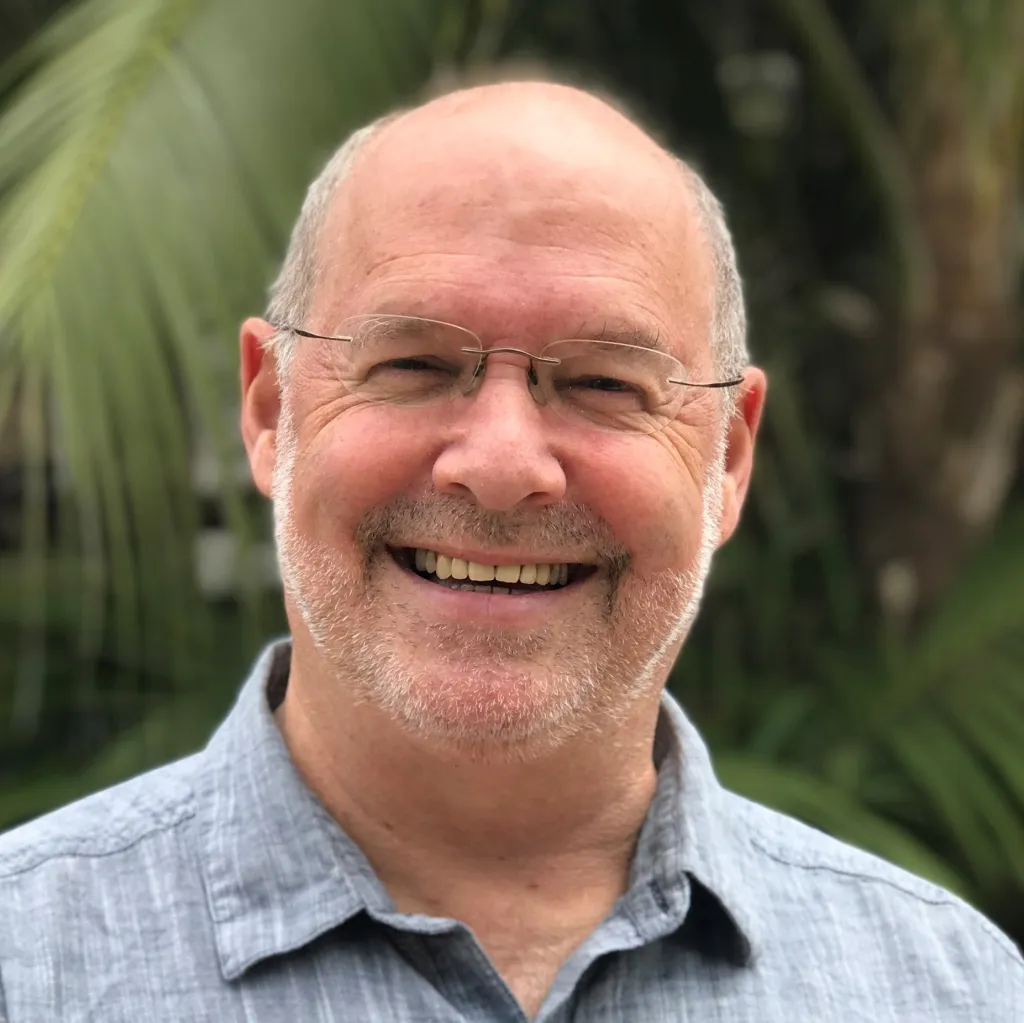
About Bill Arkin

Here his older homepage, his Substack and the Wikipedia entry about him.
Related Posts

Advocates of nuclear disarmament are regularly dismissed by the champions of nuclear deterrence as naïve and unrealistic, utopian or even irresponsible. Yet this ‘doctrine’ of deterrence, regarded by France as the ‘cornerstone’ of its national security, is based on quasi-religious beliefs, a theory that cannot be proven, risky gambles and fragile assumptions. So much so that one might legitimately ask which side the ‘Care Bears’ are on. Marc FinaudVice-President of Initiatives for Nuclear Disarmament (IDN) October 9, 2026 This article was originally published on Pressenza When it comes to these things being treated as religious concepts, look here. Idealists and realists It was Hubert Védrine, François Mitterrand’s former Foreign Minister, who repeatedly coined the phrase: ‘Europeans are a sort of Care Bears who don’t realise they’re living in Jurassic Park’. He applies this reference to the cartoon for well-behaved children not only to what he regards as weakness or idealism...
Small and different + among the 10% most active + 9,000 texts + 150 Associates + 60 000 a day — and a stubborn belief that peace is smarter and must be secured by peaceful means. In 2026, the Transnational Foundation for Peace and Future Research (TFF) turns 40. On Monday, October 5, 2026, a new TFF homepage will go live — a new gateway to more than 9,000 articles, analyses, research papers and other contributions produced over four decades of independent peace research. But this is not simply a new website. For four decades, TFF has worked from a simple conviction: peace is smarter than militarism and can be brought about by peaceful means. This is not merely an aspiration. It is the principle expressed in the UN Charter and the Gandhian tradition that has guided our work from the beginning. TFF is a research-based, independent and people-financed foundation....
Tony Robinson October 4, 2026 Violence is easy to recognise when someone is being beaten, shot or killed. It becomes more difficult when nobody is holding a weapon. Poverty, discrimination, exploitation and repression can restrict a human life just as effectively, although they do so in very different ways and with very different consequences. Simply adding more categories to an ever-growing list of forms of violence does not really solve the problem. The more interesting question is what all these different situations have in common and why it makes sense to describe them using the same word. Human beings do not simply react to what happens around them. They remember the past, imagine things that do not yet exist, make plans and undertake projects. Workers organise because they imagine different working conditions; people migrate because they imagine another life somewhere else; social movements emerge because people refuse to accept the...

Recent Articles

Below are TFF-related media mentions, comments, videos and social media posts published elsewhere but not on this homepage. We happen to catch and list only a fraction. Regarding video comments and debates, we recommend that you go to the TFF Video Channel on Substack where many of them are reproduced. Jan Oberg is a contributor to China Daily – 52 million daily clicks – and Global Times, CGTN and CCTV (the national television), China Investment, Xinhua News Agency and several others. Articles and videos on these media very often multiply into countless Chinese (and Western media) that re-post them from these main media. Thanks to The China Academy, his analyses, interviews and comments are frequently posted on YouTube channels such as Thinkers Forum and Wave Media. These videos are often re-posted on Bilibili (China’s YouTube), the China Content Center on TikTok, and on the Chinese edition of TikTok, Douyin.com. This means reaching hundreds of millions of viewers worldwide over a year. While there are too many to catch on all these...
Jan Oberg TFF director October 13, 2026 According to Alfred Nobel’s will, the Nobel Peace Prize shall be awarded: ”to the person who has done the most or best to advance fellowship among nations, the abolition or reduction of standing armies, and the establishment and promotion of peace congresses.” Further down, he also expresses how the prize for the “champions of peace” shall be decided: “that for champions of peace by a committee of five persons to be selected by the Norwegian Storting. Alfred Nobel’s will is remarkably short and clear. But few seem to have read it. Nobel did not say that the committee itself should consist of members of parliament. He entrusted the Storting with appointing five persons. In principle, it could have selected diplomats, mediators, peace researchers, conflict-resolution specialists, or other individuals with recognised expertise in matters of peace from around the world. Instead, the Storting gradually...
The Quest for Humane Survival Richard Falk Professor emeritus, Princeton UniversityTFF Associate since 1986October 12, 2026 After decades of teaching and writing about international law in academic frameworks that were not institutionally situated within law school environments—at Princeton and the University of California, Santa Barbara—I found myself most receptive to the TWAIL outlook. It has been especially illuminating in clarifying the extent to which international law evolved as a dialogical critique of Europe’s efforts to legitimize its colonial undertakings. In particular, TWAIL has exposed how international law has functioned to legalize the subjugation of Third World peoples, securing conditions for exploitative investment and trade relations, the coercive enforcement of public debts, and an ideology of cultural superiority. TWAIL’s exposure of these economic legacies of colonialism has influenced my understanding of the history and development of international law, broadly conceived, as an ideological project of the Western sub-system of the world...

TFF on Substack

Discover and subscribe to more peace materials on TFF Substack

Most Popular

Below are TFF-related media mentions, comments, videos and social media posts published elsewhere but not on this homepage. We happen to catch and list only a fraction. Regarding video comments and debates, we recommend that you go to the TFF Video Channel on Substack where many of them are reproduced. Jan Oberg is a contributor to China Daily – 52 million daily clicks – and Global Times, CGTN and CCTV (the national television), China Investment, Xinhua News Agency and several others. Articles and videos on these media very often multiply into countless Chinese (and Western media) that re-post them from these main media. Thanks to The China Academy, his analyses, interviews and comments are frequently posted on YouTube channels such as Thinkers Forum and Wave Media. These videos are often re-posted on Bilibili (China’s YouTube), the China Content Center on TikTok, and on the Chinese edition of TikTok, Douyin.com. This means reaching hundreds of millions of viewers worldwide over a year. While there are too many to catch on all these...
Jan Oberg TFF director October 13, 2026 According to Alfred Nobel’s will, the Nobel Peace Prize shall be awarded: ”to the person who has done the most or best to advance fellowship among nations, the abolition or reduction of standing armies, and the establishment and promotion of peace congresses.” Further down, he also expresses how the prize for the “champions of peace” shall be decided: “that for champions of peace by a committee of five persons to be selected by the Norwegian Storting. Alfred Nobel’s will is remarkably short and clear. But few seem to have read it. Nobel did not say that the committee itself should consist of members of parliament. He entrusted the Storting with appointing five persons. In principle, it could have selected diplomats, mediators, peace researchers, conflict-resolution specialists, or other individuals with recognised expertise in matters of peace from around the world. Instead, the Storting gradually...
The Quest for Humane Survival Richard Falk Professor emeritus, Princeton UniversityTFF Associate since 1986October 12, 2026 After decades of teaching and writing about international law in academic frameworks that were not institutionally situated within law school environments—at Princeton and the University of California, Santa Barbara—I found myself most receptive to the TWAIL outlook. It has been especially illuminating in clarifying the extent to which international law evolved as a dialogical critique of Europe’s efforts to legitimize its colonial undertakings. In particular, TWAIL has exposed how international law has functioned to legalize the subjugation of Third World peoples, securing conditions for exploitative investment and trade relations, the coercive enforcement of public debts, and an ideology of cultural superiority. TWAIL’s exposure of these economic legacies of colonialism has influenced my understanding of the history and development of international law, broadly conceived, as an ideological project of the Western sub-system of the world...
Read More
girl-5894831_1280
Below are TFF-related media mentions, comments, videos and social media posts published elsewhere but not on this homepage. We happen to catch and list only a fraction. Regarding video comments and debates, we recommend that you go to the TFF Video Channel on Substack where many of them are reproduced. Jan Oberg is a contributor to China Daily – 52 million daily clicks – and Global Times, CGTN and CCTV (the national television), China Investment, Xinhua News Agency and several others. Articles and videos on these media very often multiply into countless Chinese (and Western media) that re-post them from these main media. Thanks to The China Academy, his analyses, interviews and comments are frequently posted on YouTube channels such as Thinkers Forum and Wave Media. These videos are often re-posted on Bilibili (China’s YouTube), the China Content Center on TikTok, and on the Chinese edition of TikTok, Douyin.com. This means reaching hundreds of millions of viewers worldwide over a year. While there are too many to catch on all these...
Nobel-Prize-Plaque
Jan Oberg TFF director October 13, 2026 According to Alfred Nobel’s will, the Nobel Peace Prize shall be awarded: ”to the person who has done the most or best to advance fellowship among nations, the abolition or reduction of standing armies, and the establishment and promotion of peace congresses.” Further down, he also expresses how the prize for the “champions of peace” shall be decided: “that for champions of peace by a committee of five persons to be selected by the Norwegian Storting. Alfred Nobel’s will is remarkably short and clear. But few seem to have read it. Nobel did not say that the committee itself should consist of members of parliament. He entrusted the Storting with appointing five persons. In principle, it could have selected diplomats, mediators, peace researchers, conflict-resolution specialists, or other individuals with recognised expertise in matters of peace from around the world. Instead, the Storting gradually...
law-419057_1280
The Quest for Humane Survival Richard Falk Professor emeritus, Princeton UniversityTFF Associate since 1986October 12, 2026 After decades of teaching and writing about international law in academic frameworks that were not institutionally situated within law school environments—at Princeton and the University of California, Santa Barbara—I found myself most receptive to the TWAIL outlook. It has been especially illuminating in clarifying the extent to which international law evolved as a dialogical critique of Europe’s efforts to legitimize its colonial undertakings. In particular, TWAIL has exposed how international law has functioned to legalize the subjugation of Third World peoples, securing conditions for exploitative investment and trade relations, the coercive enforcement of public debts, and an ideology of cultural superiority. TWAIL’s exposure of these economic legacies of colonialism has influenced my understanding of the history and development of international law, broadly conceived, as an ideological project of the Western sub-system of the world...
images-2
Advocates of nuclear disarmament are regularly dismissed by the champions of nuclear deterrence as naïve and unrealistic, utopian or even irresponsible. Yet this ‘doctrine’ of deterrence, regarded by France as the ‘cornerstone’ of its national security, is based on quasi-religious beliefs, a theory that cannot be proven, risky gambles and fragile assumptions. So much so that one might legitimately ask which side the ‘Care Bears’ are on. Marc FinaudVice-President of Initiatives for Nuclear Disarmament (IDN) October 9, 2026 This article was originally published on Pressenza When it comes to these things being treated as religious concepts, look here. Idealists and realists It was Hubert Védrine, François Mitterrand’s former Foreign Minister, who repeatedly coined the phrase: ‘Europeans are a sort of Care Bears who don’t realise they’re living in Jurassic Park’. He applies this reference to the cartoon for well-behaved children not only to what he regards as weakness or idealism...
8824b09f-33a5-43f9-9fd0-550f28cda24d_1536x1024
What the West Borrowed from Asia and What It Left Behind Jan Krikke October 8, 2026 The article was originally published here In the late 1960s, the musical Hair announced that the Age of Aquarius was dawning. Its opening anthem promised a transformation of human consciousness: an era of peace, harmony and understanding. Half a century later, a familiar echo of that promise is a meditation app offered by your employer. You can find it in the same list of benefits as the pension plan and the gym discount. How did a spiritual revolution become an employee benefit? The answer lies in the history of the movement known as New Age: where it came from, what it borrowed from Asia, and why the meaning of what it borrowed changed in the process. Two definitions will help. New Age is a loose label for a wide range of spiritual practices and...
Screenshot 2026-10-04 210142
Small and different + among the 10% most active + 9,000 texts + 150 Associates + 60 000 a day — and a stubborn belief that peace is smarter and must be secured by peaceful means. In 2026, the Transnational Foundation for Peace and Future Research (TFF) turns 40. On Monday, October 5, 2026, a new TFF homepage will go live — a new gateway to more than 9,000 articles, analyses, research papers and other contributions produced over four decades of independent peace research. But this is not simply a new website. For four decades, TFF has worked from a simple conviction: peace is smarter than militarism and can be brought about by peaceful means. This is not merely an aspiration. It is the principle expressed in the UN Charter and the Gandhian tradition that has guided our work from the beginning. TFF is a research-based, independent and people-financed foundation....





