A Nordic Initiative for Peace in Ukraine and Lasting World Peace

Nobel Peace Prize Watch, Oslo

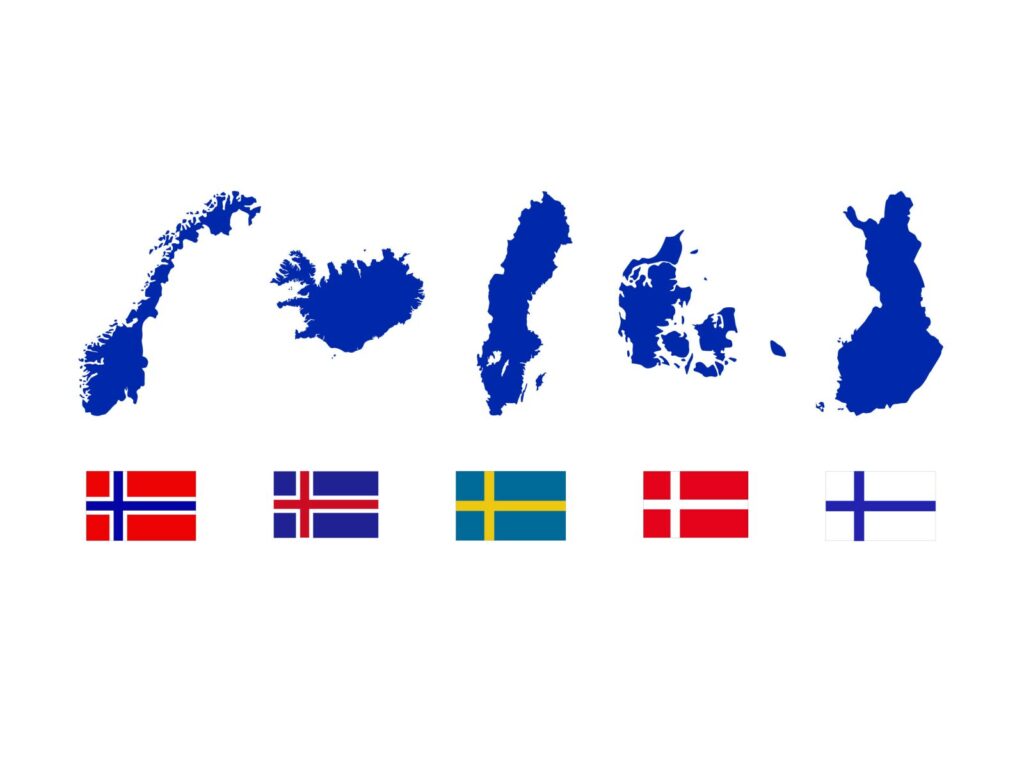
Honourable Prime Ministers of the five Nordic countries

Magdalena Anderson, Sweden

Mette Frederiksen, Denmark

Katrín Jakobsdóttir, Iceland

Sanna Marin, Finland

Jonas Gahr Støre, Norway

A  NORDIC  INITIATIVE FOR  PEACE 
IN  UKRAINE  AND  LASTING  WORLD  PEACE

The war in Ukraine once again shows that the world is like a city with brutal gangs constantly roaming the streets, looting and fighting with loads of heavy weapons. No one will ever feel safe in such a city. The same applies at the international level. No amount of weaponry can make us safe.

No country will be safe until also neighbouring countries can feel safe. The present international system is broken, to avoid future wars we need deep reforms.

Once again, now in Ukraine, we have seen that arms cannot prevent war. We should not, in the present state of shock, expand or prolong the militarist traditions that guarantee eternal war and, in the nuclear age, a constant risk of annihilation.

Our recommendation is that the five Nordic countries together take the initiative to activate the UN goals of global democracy and collective security.

In a renewed UN, the member nations should act in loyal co-operation and take their charter obligations seriously.

A most promising step here was the resolution in the General Assembly curbing the Security Council veto.

A way out of stalled negotiations can be a major shift of perspective or arena.

Mindful that Mikhail Gorbachev called for a disarmament race, and Vladimir Putin has repeatedly proposed a law-based international order, it seems to us that an end to the Ukraine war might be reached by making it part of ending the wider, geopolitical war between the US and Russia.

Fear of US expansion does, of course, not justify Russia´s attack on Ukraine. And yet, it is troubling that the US, with a 40% share of the world’s military budgets and 97% of the military bases abroad, seems to be seeking more influence.

The Nordic countries should carefully consider whether four US bases (Norway), NATO membership (Finland, Sweden), and further arms purchases (all), will improve their security.

Only a year ago the outgoing US president released an attack on Congress. The US power of coercive diplomacy is waning. It is imperative to take the time necessary to thoroughly evaluate the developing world situation and the legitimacy and dangers of taking irreversible steps to increase US power.

Facing a stream of global crises, humanity can no longer afford wars.

We need to cooperate, build solidarity and trust with effective, common enforcement of international law. Instead of complicity in future war crimes, how much more tempting must it not be to instead engineer a Nordic initiative to realize the collective security provisions of the UN Charter?

The Nordic countries enjoy trust and credibility in the world. They are particularly well-positioned for an initiative to empower the Security Council and enable it to fulfil its responsibility for maintaining peace. This will require nations to transfer a part of their sovereignty, which Norway and Denmark already have prepared for.*

Instead of more NATO, the world urgently needs to unite across all borders, ethnic and religious divisions, political and economic systems, to rebuild, empower and recommit to the United Nations, build peace, and reallocate the expenditures for war to serve the needs of people and nature.

We agree in the essence and would welcome a Nordic peace initiative:

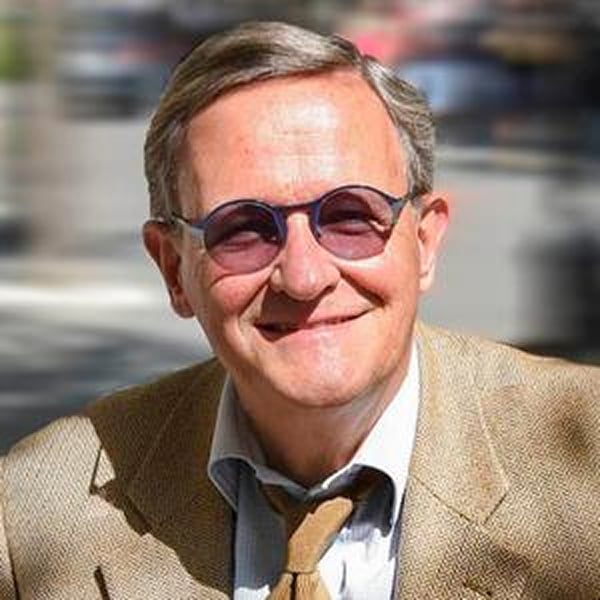
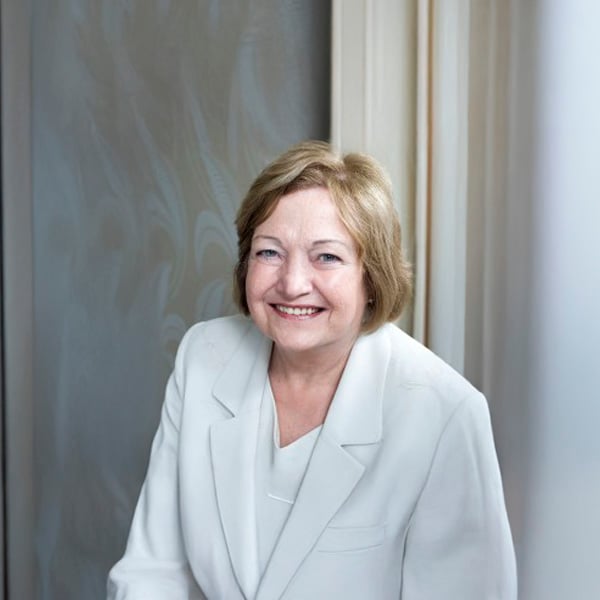
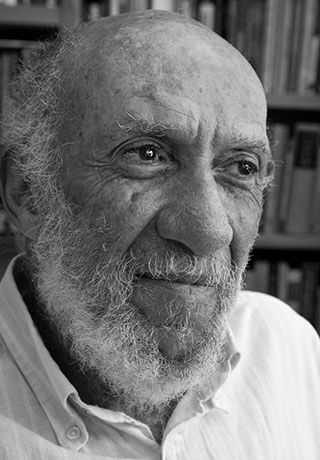
Richard Falk, Santa Barbara

Bruce Kent, London

Tomas Magnusson, Gothenburg

Mairead Maguire, Belfast

Klaus Schlichtmann, Tokyo

Alfred de Zayas, Geneva

*) Two of the Nordic countries already have provisions enabling such transfers of power in their constitutions, Denmark (§ 20), and Norway (§ 115). Similar provisions have also been adopted by Austria (§ 9), Belgium (§ 25), Germany (§ 24), Greece (§ 28), Italy (§ 11), Portugal (§ 7), Spain (§ 93). In Asia: India (§ 51), and Japan (§ 9).
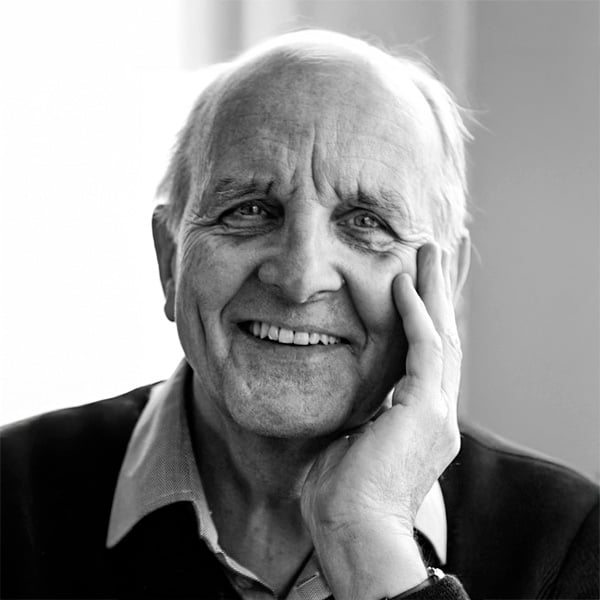
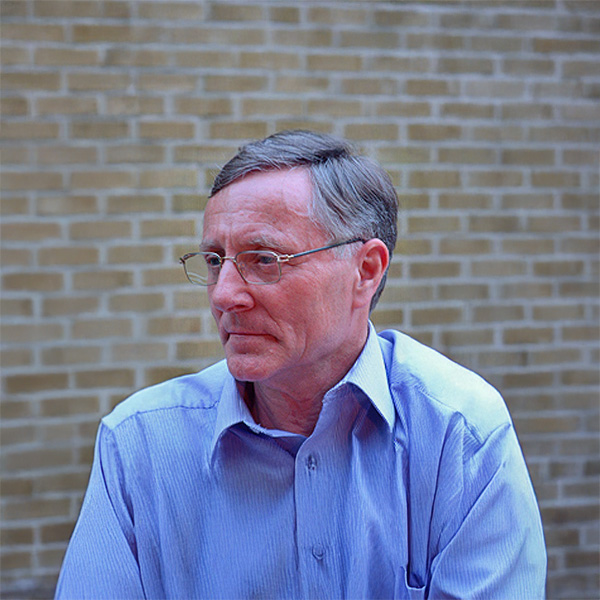
PhD, Peace & future researcher + ‌Art Photographer, Professor Emeritus and media commentator

Nobel Peace LaureateCo-founder, Peace People – Northern Ireland l976.

Professor Falk became an adviser to TFF when it was established in 1985.

3 Responses

  1. The udea of the 5 Nordic countrues standing together for peace is a very appealing idea…. quite an sizable Block, also strategicaly. It would definitely give peace on Russia’s and Europes North West flank … it feels right with me… we are in a unique position and could do it, and it would make a huge difference for our collective future… on the planet…

Related Posts

Serious but also a lot of laughs and positive energy. Because peace is also about conviviality and enchantment… Jan Oberg, TFF director November 16, 2026 This is a long (129 minutes) conversation with me. We cover very many, also personal, issues that makes a somewhat unusual media event. I am very grateful to Flemming Blicher for giving me this opportunity. I can’t remember any channel or editor who spent as much time as he did preparing it – including also asking me to answer a series of pre-interview questions, which are now posted under the conversation. If you sympathise with its content, please share it. Watch it here
A Message from Jan Oberg November 6, 2026 Over the past fifty years, I have devoted roughly 175,000 hours to research and public education for a more peaceful world: thinking, researching, writing, organising, publishing, debating, maintaining websites, corresponding, reaching out, leading a foundation, work in conflict and war zones, professorships, teaching courses and giving public lectures and doing media work. In short, ten hours a day, seven days a week, for half a century. The focus was on international political peace – analysing and trying to stop wars, address underlying conflicts and making alternative peace plans – at the desk and on the ground. Important as that has been and remains, it is only one kind of peace and it is now in a tragic militarist state compared with what it could have been.  Lately, however, I have found myself thinking about a concept from economics as well as everyday...
Photo above: Carl Fredrik Reuterswärd’s Non-Violence outside UN Headquarters in New York. Kirill Levin, CC BY-NC-SA 2. Jan Oberg November 3, 2026 I am happy to be published in Horizons which is produced by the Center for International Relations and Sustainable Development, CIRSD, in Belgrade. My contribution brings out a radical re-thinking of what concepts such as defence, security, deterrence – and peace – may mean if we want to create a more peaceful world. It also summarises a few things I have been working with the last few decades. Please read it here Og her er den på dansk, takket være Johnny Baltzersens lynhurtige oversættelse

Recent Articles

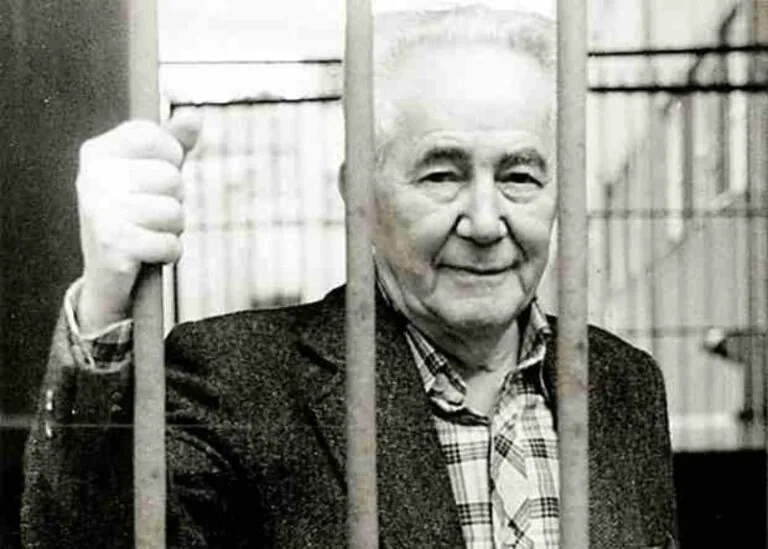
“The untiring insistence upon freedom and truth, the community of the worker and the intellectual (who are still stupidly warring here, as tyranny aims to keep them doing), and, finally, political democracy as a necessary and indispensable (though surely not sufficient) condition of economic democracy – that is what Budapest was defending.” Albert Camus November 19, 2026, marks the 70th anniversary of the arrest of Milovan Djilas (1911-1995, see photo above), one of – if not the – most consequential and historically significant dissidents of Eastern Europe – manifesting his civil courage way before Václav Havel, Adam Michnik, Aleksandr Solzhenitsyn, Andrei Sakharov, and Lech Wałęsa. Djilas had been a leading Yugoslav Partisan and communist revolutionary, one of Tito’s closest political associates, a senior member of the Yugoslav Communist Party leadership, and Vice-President of Yugoslavia. He was a prolific writer of politics, philsophy and history and a poet who spent years...
Serious but also a lot of laughs and positive energy. Because peace is also about conviviality and enchantment… Jan Oberg, TFF director November 16, 2026 This is a long (129 minutes) conversation with me. We cover very many, also personal, issues that makes a somewhat unusual media event. I am very grateful to Flemming Blicher for giving me this opportunity. I can’t remember any channel or editor who spent as much time as he did preparing it – including also asking me to answer a series of pre-interview questions, which are now posted under the conversation. If you sympathise with its content, please share it. Watch it here
A Message from Jan Oberg November 6, 2026 Over the past fifty years, I have devoted roughly 175,000 hours to research and public education for a more peaceful world: thinking, researching, writing, organising, publishing, debating, maintaining websites, corresponding, reaching out, leading a foundation, work in conflict and war zones, professorships, teaching courses and giving public lectures and doing media work. In short, ten hours a day, seven days a week, for half a century. The focus was on international political peace – analysing and trying to stop wars, address underlying conflicts and making alternative peace plans – at the desk and on the ground. Important as that has been and remains, it is only one kind of peace and it is now in a tragic militarist state compared with what it could have been.  Lately, however, I have found myself thinking about a concept from economics as well as everyday...

TFF on Substack

Discover and subscribe to more peace materials on TFF Substack

Most Popular

“The untiring insistence upon freedom and truth, the community of the worker and the intellectual (who are still stupidly warring here, as tyranny aims to keep them doing), and, finally, political democracy as a necessary and indispensable (though surely not sufficient) condition of economic democracy – that is what Budapest was defending.” Albert Camus November 19, 2026, marks the 70th anniversary of the arrest of Milovan Djilas (1911-1995, see photo above), one of – if not the – most consequential and historically significant dissidents of Eastern Europe – manifesting his civil courage way before Václav Havel, Adam Michnik, Aleksandr Solzhenitsyn, Andrei Sakharov, and Lech Wałęsa. Djilas had been a leading Yugoslav Partisan and communist revolutionary, one of Tito’s closest political associates, a senior member of the Yugoslav Communist Party leadership, and Vice-President of Yugoslavia. He was a prolific writer of politics, philsophy and history and a poet who spent years...
Serious but also a lot of laughs and positive energy. Because peace is also about conviviality and enchantment… Jan Oberg, TFF director November 16, 2026 This is a long (129 minutes) conversation with me. We cover very many, also personal, issues that makes a somewhat unusual media event. I am very grateful to Flemming Blicher for giving me this opportunity. I can’t remember any channel or editor who spent as much time as he did preparing it – including also asking me to answer a series of pre-interview questions, which are now posted under the conversation. If you sympathise with its content, please share it. Watch it here
A Message from Jan Oberg November 6, 2026 Over the past fifty years, I have devoted roughly 175,000 hours to research and public education for a more peaceful world: thinking, researching, writing, organising, publishing, debating, maintaining websites, corresponding, reaching out, leading a foundation, work in conflict and war zones, professorships, teaching courses and giving public lectures and doing media work. In short, ten hours a day, seven days a week, for half a century. The focus was on international political peace – analysing and trying to stop wars, address underlying conflicts and making alternative peace plans – at the desk and on the ground. Important as that has been and remains, it is only one kind of peace and it is now in a tragic militarist state compared with what it could have been.  Lately, however, I have found myself thinking about a concept from economics as well as everyday...
Read More
Milovan_Djilas.jpg
“The untiring insistence upon freedom and truth, the community of the worker and the intellectual (who are still stupidly warring here, as tyranny aims to keep them doing), and, finally, political democracy as a necessary and indispensable (though surely not sufficient) condition of economic democracy – that is what Budapest was defending.” Albert Camus November 19, 2026, marks the 70th anniversary of the arrest of Milovan Djilas (1911-1995, see photo above), one of – if not the – most consequential and historically significant dissidents of Eastern Europe – manifesting his civil courage way before Václav Havel, Adam Michnik, Aleksandr Solzhenitsyn, Andrei Sakharov, and Lech Wałęsa. Djilas had been a leading Yugoslav Partisan and communist revolutionary, one of Tito’s closest political associates, a senior member of the Yugoslav Communist Party leadership, and Vice-President of Yugoslavia. He was a prolific writer of politics, philsophy and history and a poet who spent years...
Screenshot 2026-11-10 174455
Serious but also a lot of laughs and positive energy. Because peace is also about conviviality and enchantment… Jan Oberg, TFF director November 16, 2026 This is a long (129 minutes) conversation with me. We cover very many, also personal, issues that makes a somewhat unusual media event. I am very grateful to Flemming Blicher for giving me this opportunity. I can’t remember any channel or editor who spent as much time as he did preparing it – including also asking me to answer a series of pre-interview questions, which are now posted under the conversation. If you sympathise with its content, please share it. Watch it here
AbstractVision_2017_#1_800 (kopia)
A Message from Jan Oberg November 6, 2026 Over the past fifty years, I have devoted roughly 175,000 hours to research and public education for a more peaceful world: thinking, researching, writing, organising, publishing, debating, maintaining websites, corresponding, reaching out, leading a foundation, work in conflict and war zones, professorships, teaching courses and giving public lectures and doing media work. In short, ten hours a day, seven days a week, for half a century. The focus was on international political peace – analysing and trying to stop wars, address underlying conflicts and making alternative peace plans – at the desk and on the ground. Important as that has been and remains, it is only one kind of peace and it is now in a tragic militarist state compared with what it could have been.  Lately, however, I have found myself thinking about a concept from economics as well as everyday...
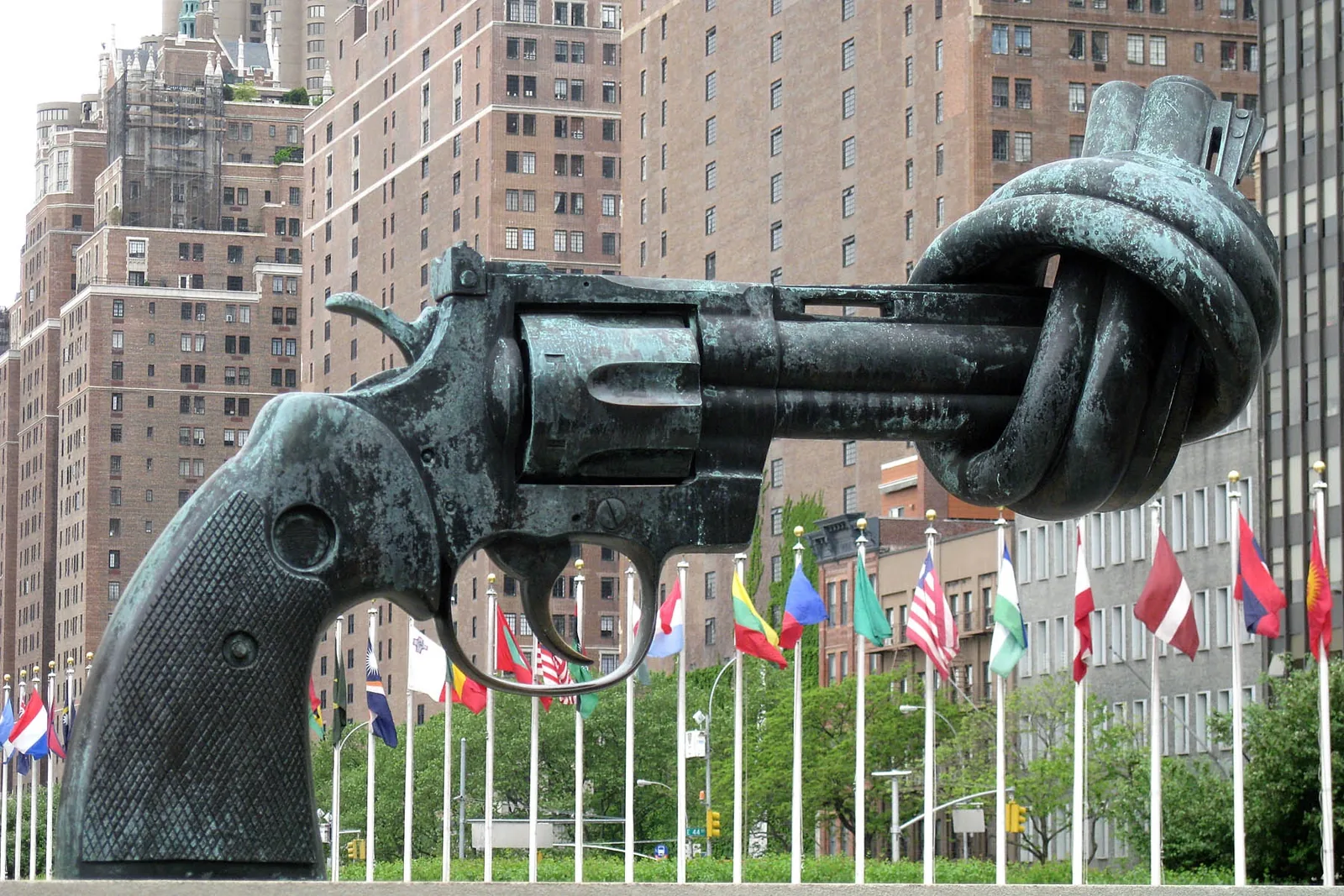
knotted gun
Photo above: Carl Fredrik Reuterswärd’s Non-Violence outside UN Headquarters in New York. Kirill Levin, CC BY-NC-SA 2. Jan Oberg November 3, 2026 I am happy to be published in Horizons which is produced by the Center for International Relations and Sustainable Development, CIRSD, in Belgrade. My contribution brings out a radical re-thinking of what concepts such as defence, security, deterrence – and peace – may mean if we want to create a more peaceful world. It also summarises a few things I have been working with the last few decades. Please read it here Og her er den på dansk, takket være Johnny Baltzersens lynhurtige oversættelse
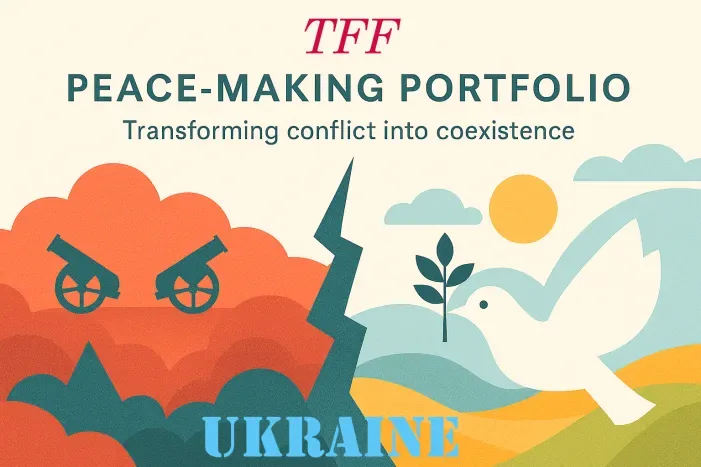
TFFPortfolioVign
UNITE-tillid, DREAM-velstand og andre konstruktive komponenter Normally we publish articles in English here. But this is a translation of a very important TFF document that should reach as many as possible in Denmark since this country’s government has been one of the most hardline in Europe and, up till now at least, has refused to use diplomacy and, instead, spent tremendous sums on arming Ukraine with the express goal of defeating Russia. Thus this – unique – article is in Danish. Vi er Johnny Baltzersen og hans Fælles Sikkerhed – Fælles Fremtid på Substack overmåde taknemmelige for at have oversat og publiceret TFF’s 2025-portfølje for fredsidéer med henblik på Ukraines fremtid. Vi håber den nu kan nå mange flere danskere – som også vil sprede den og skabe debat – nu den danske regerings og folketingspartiernes politik på dette område siden 2022 står nu – forudsigeligt – ved vejs ende....
JoGSS-Silent
Jan Oberg TFF director October 28, 2026 Exactly one month has now passed since I published my criticism of the introduction to the special issue on Johan Galtung published by the Journal of Global Security Studies, JoGSS, and of Tor Egil Førland’s chapter about Galtung which serves as a preview to his forthcoming biography of Galtung to be published by PRIO. See the original on The Transnational here and the same article on TFF Substack with many general and critical comments and, in particular, the people who decided to withdraw from the biography project in protest. The special issue itself was extraordinary. It was devoted to the intellectual legacy of one of the founders of peace research and contained a number of strong assessments of his personality, scholarship, intellectual trajectory, and public role. Such assessments are, of course, entirely legitimate. No scholar is beyond criticism, and neither was Johan Galtung....