
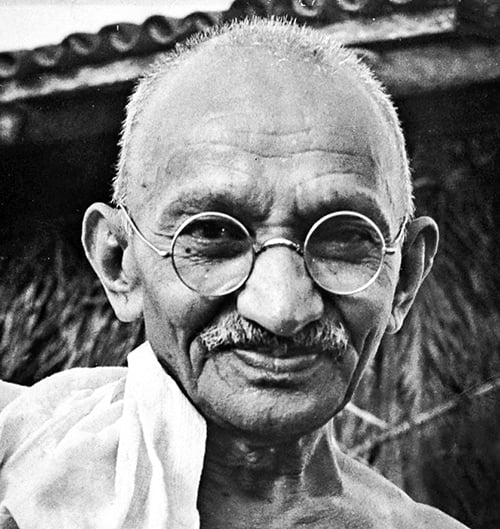
Recalling Gandhi’s Vision of Freedom and Liberty as Creating an Inclusive, Plural, Tolerant India with a Sense of Humour!

 People’s Union For Civil Liberties

May 16, 2021

On 30th January, 2021, we marked the 73rd anniversary of the very date when Mahatma Gandhi was assassinated by someone who did not share his vision of an inclusive and plural India. The PUCL – People’s Union for Civil Liberties – would like to mark this important date by remembering the values which Gandhiji stood for which are under threat today.

We want to remember a Gandhiji which the current establishment would rather forget, namely someone who was deeply committed to the ideal of ‘political freedom’ which was not just ‘freedom from the British’ but a commitment to fundamental values and principles.

For Gandhiji, “Civil liberties consistent with the observance of non-violence are the first step towards Swaraj. It is the breath of political and social life. It is the foundation of freedom. There is no room there for dilution or compromise. It is the water of life”.

Originally published at Countercurrents.org

It is this commitment to civil liberties which we need to uphold in the contemporary context. An essential dimension of civil liberties is the freedom of speech, expression and association- all of which are under attack today. We live in an egg shell democracy where ‘hurt sentiments of a community’ as well as state intolerance of criticism are reasons to shut down speech.

The words of Gandhiji give us a sense of moral clarity on how we should approach this question of a state and community quick to take offence to speech they consider ‘offensive’ or ‘seditious’. As Gandhiji put it:

“Liberty of speech means that it is unassailed even when the speech hurts; liberty of the press can be said to be truly respected only when the press can comment in the severest terms upon and even misrepresent matters…. Freedom of association is truly respected when assemblies of people can discuss even revolutionary projects”.

This commitment to speech as form of truth telling to the state, where the individual lays bare the injustices of the state is best seen in the famous Ahmedabad trial when Gandhiji was prosecuted for sedition.

Gandiji had written a series of articles lambasting the colonial state making the case that, ‘We are challenging the might of this Government because we consider its activity to be wholly evil. We want to overthrow the Government. We want to compel its submission to the peoples will. We desire to show that the Government exists to serve the people, not the people the government”.

For this writing Gandhiji was prosecuted under Sec. 124-A IPC, for sedition, which under law is ‘exciting disaffection against the state’. Gandhiji’s response in Court was to plead guilty and make a statement which challenges the sedition law under which he was prosecuted. He says:

“Section 124-A under which I am happily charged is perhaps the prince among the political sections of the Indian Penal Code designed to suppress the liberty of the citizen. Affection cannot be manufactured or regulated by law. If one has no affection for a person or system, one should be free to give the fullest expression to his disaffection, so long as he does not contemplate, promote or incite violence… But I hold it to be a virtue to be disaffected towards a Government which in its totality had done more harm to India than any previous system”.

One hopes that the message of Gandhiji resonates far and wide, reaching the ears of those in power that ‘affection cannot be manufactured by law’ and that if the citizen has ‘no affection’ towards the state, she must be free to give vent to that ‘disaffection’ as long the expression is non-violent.

Another aspect of Gandhiji we wish to remember is that when the British enacted the Rowlatt Act which authorized preventive detention and denied detainees the right to legal representation, Gandhiji was outraged. He began the nationwide civil disobedience movement to repeal the draconian Rowlatt Act as according to Gandhiji the state had no right to lock up its opponents without trial and without legal representation.

Today we have in place a law which in every way parallels the Rowlatt Act, namely the Unlawful Activities Prevention Act (UAPA). The state has used it as a tool to detain its critics as seen by the arbitrary and malicious arrest of sixteen human rights activists in the Bhima Koregaon incident as well as the continued detention of the constitutionally minded and democratically committed anti-CAA activists as well as human rights activists in all parts of the country including Kashmir.

The state has more recently invoked these provisions against the farmers who are protesting against the farm laws as well. In short, the message is clear. Opponents of the state will be targeted with the draconian UAPA.

Those arrested have not been released on bail and some of them have spent over two years and more in jail. Remembering Gandhiji today is to commit ourselves to fighting against this unjust law and demanding `repeal of the UAPA’ and the release of those unjustly incarcerated.

Finally, in remembering Gandhiji we would not like to forget that Gandhiji was not just a brave freedom fighter with an indomitable commitment to the basic freedoms which define what it is to be human, namely the freedom to think, the freedom to protest and the freedom to worship, but also a human being with an impish sense of humour.

Sarojini Naidu jokingly called him ‘Mickey Mouse’ because of the way his ears stuck out and he himself was not averse to cracking jokes. When he met King George V and a reporter reputedly asked him why he had so little clothes on, Gandhi is said to have remarked, ‘The King has enough clothes on for both of us’.

Why we would like to remember the mischievous Gandhiji especially today is because, Munawar Farooqui, a young comedian from Gandhiji’s own state, languishes in jail because he dares to crack jokes at the current political establishment.

Ironically Munawar was arrested by the MP police for a comedy programme which did not even take place! The dark tragedy of the police abuse of law is mirrored by the High Court refusal of bail on the ground that no one can be permitted to offend religious sentiments, unmindful of the fact that the alleged offensive statements had not been made.

It is a sad commentary of our democracy that today comedians of all stripes and hues find themselves under unprecedented attack as the state has lost its sense of humour and comedy is criminalised.

We would like to commemorate the values Gandhi stood for by demanding that the state

· Repeal the UAPA

· Release all those falsely arrested under UAPA

· Stop using UAPA as a tool of harassment

· Respect the constitutional right to freedom of speech and expression

· Develop a sense of humour


Dr. V. Suresh, General Secretary, PUCL &
On behalf of PUCL, #StandWithStan and over a hundred organizations and #REPEALUAPA

More about Dr. V. Suresh here.

Originally published at Countercurrents.org

Please help TFF remain truly independent by contributing if you benefited from this article

Related Posts

Jan Oberg TFF director October 13, 2026 According to Alfred Nobel’s will, the Nobel Peace Prize shall be awarded: ”to the person who has done the most or best to advance fellowship among nations, the abolition or reduction of standing armies, and the establishment and promotion of peace congresses.” Further down, he also expresses how the prize for the “champions of peace” shall be decided: “that for champions of peace by a committee of five persons to be selected by the Norwegian Storting. Alfred Nobel’s will is remarkably short and clear. But few seem to have read it. Nobel did not say that the committee itself should consist of members of parliament. He entrusted the Storting with appointing five persons. In principle, it could have selected diplomats, mediators, peace researchers, conflict-resolution specialists, or other individuals with recognised expertise in matters of peace from around the world. Instead, the Storting gradually...
Advocates of nuclear disarmament are regularly dismissed by the champions of nuclear deterrence as naïve and unrealistic, utopian or even irresponsible. Yet this ‘doctrine’ of deterrence, regarded by France as the ‘cornerstone’ of its national security, is based on quasi-religious beliefs, a theory that cannot be proven, risky gambles and fragile assumptions. So much so that one might legitimately ask which side the ‘Care Bears’ are on. Marc FinaudVice-President of Initiatives for Nuclear Disarmament (IDN) October 9, 2026 This article was originally published on Pressenza When it comes to these things being treated as religious concepts, look here. Idealists and realists It was Hubert Védrine, François Mitterrand’s former Foreign Minister, who repeatedly coined the phrase: ‘Europeans are a sort of Care Bears who don’t realise they’re living in Jurassic Park’. He applies this reference to the cartoon for well-behaved children not only to what he regards as weakness or idealism...
What the West Borrowed from Asia and What It Left Behind Jan Krikke October 8, 2026 The article was originally published here In the late 1960s, the musical Hair announced that the Age of Aquarius was dawning. Its opening anthem promised a transformation of human consciousness: an era of peace, harmony and understanding. Half a century later, a familiar echo of that promise is a meditation app offered by your employer. You can find it in the same list of benefits as the pension plan and the gym discount. How did a spiritual revolution become an employee benefit? The answer lies in the history of the movement known as New Age: where it came from, what it borrowed from Asia, and why the meaning of what it borrowed changed in the process. Two definitions will help. New Age is a loose label for a wide range of spiritual practices and...

Recent Articles

Below are TFF-related media mentions, comments, videos and social media posts published elsewhere but not on this homepage. We happen to catch and list only a fraction. Regarding video comments and debates, we recommend that you go to the TFF Video Channel on Substack where many of them are reproduced. Jan Oberg is a contributor to China Daily – 52 million daily clicks – and Global Times, CGTN and CCTV (the national television), China Investment, Xinhua News Agency and several others. Articles and videos on these media very often multiply into countless Chinese (and Western media) that re-post them from these main media. Thanks to The China Academy, his analyses, interviews and comments are frequently posted on YouTube channels such as Thinkers Forum and Wave Media. These videos are often re-posted on Bilibili (China’s YouTube), the China Content Center on TikTok, and on the Chinese edition of TikTok, Douyin.com. This means reaching hundreds of millions of viewers worldwide over a year. While there are too many to catch on all these...
Jan Oberg TFF director October 13, 2026 According to Alfred Nobel’s will, the Nobel Peace Prize shall be awarded: ”to the person who has done the most or best to advance fellowship among nations, the abolition or reduction of standing armies, and the establishment and promotion of peace congresses.” Further down, he also expresses how the prize for the “champions of peace” shall be decided: “that for champions of peace by a committee of five persons to be selected by the Norwegian Storting. Alfred Nobel’s will is remarkably short and clear. But few seem to have read it. Nobel did not say that the committee itself should consist of members of parliament. He entrusted the Storting with appointing five persons. In principle, it could have selected diplomats, mediators, peace researchers, conflict-resolution specialists, or other individuals with recognised expertise in matters of peace from around the world. Instead, the Storting gradually...
The Quest for Humane Survival Richard Falk Professor emeritus, Princeton UniversityTFF Associate since 1986October 12, 2026 After decades of teaching and writing about international law in academic frameworks that were not institutionally situated within law school environments—at Princeton and the University of California, Santa Barbara—I found myself most receptive to the TWAIL outlook. It has been especially illuminating in clarifying the extent to which international law evolved as a dialogical critique of Europe’s efforts to legitimize its colonial undertakings. In particular, TWAIL has exposed how international law has functioned to legalize the subjugation of Third World peoples, securing conditions for exploitative investment and trade relations, the coercive enforcement of public debts, and an ideology of cultural superiority. TWAIL’s exposure of these economic legacies of colonialism has influenced my understanding of the history and development of international law, broadly conceived, as an ideological project of the Western sub-system of the world...

TFF on Substack

Discover and subscribe to more peace materials on TFF Substack

Most Popular

Below are TFF-related media mentions, comments, videos and social media posts published elsewhere but not on this homepage. We happen to catch and list only a fraction. Regarding video comments and debates, we recommend that you go to the TFF Video Channel on Substack where many of them are reproduced. Jan Oberg is a contributor to China Daily – 52 million daily clicks – and Global Times, CGTN and CCTV (the national television), China Investment, Xinhua News Agency and several others. Articles and videos on these media very often multiply into countless Chinese (and Western media) that re-post them from these main media. Thanks to The China Academy, his analyses, interviews and comments are frequently posted on YouTube channels such as Thinkers Forum and Wave Media. These videos are often re-posted on Bilibili (China’s YouTube), the China Content Center on TikTok, and on the Chinese edition of TikTok, Douyin.com. This means reaching hundreds of millions of viewers worldwide over a year. While there are too many to catch on all these...
Jan Oberg TFF director October 13, 2026 According to Alfred Nobel’s will, the Nobel Peace Prize shall be awarded: ”to the person who has done the most or best to advance fellowship among nations, the abolition or reduction of standing armies, and the establishment and promotion of peace congresses.” Further down, he also expresses how the prize for the “champions of peace” shall be decided: “that for champions of peace by a committee of five persons to be selected by the Norwegian Storting. Alfred Nobel’s will is remarkably short and clear. But few seem to have read it. Nobel did not say that the committee itself should consist of members of parliament. He entrusted the Storting with appointing five persons. In principle, it could have selected diplomats, mediators, peace researchers, conflict-resolution specialists, or other individuals with recognised expertise in matters of peace from around the world. Instead, the Storting gradually...
The Quest for Humane Survival Richard Falk Professor emeritus, Princeton UniversityTFF Associate since 1986October 12, 2026 After decades of teaching and writing about international law in academic frameworks that were not institutionally situated within law school environments—at Princeton and the University of California, Santa Barbara—I found myself most receptive to the TWAIL outlook. It has been especially illuminating in clarifying the extent to which international law evolved as a dialogical critique of Europe’s efforts to legitimize its colonial undertakings. In particular, TWAIL has exposed how international law has functioned to legalize the subjugation of Third World peoples, securing conditions for exploitative investment and trade relations, the coercive enforcement of public debts, and an ideology of cultural superiority. TWAIL’s exposure of these economic legacies of colonialism has influenced my understanding of the history and development of international law, broadly conceived, as an ideological project of the Western sub-system of the world...
Read More
girl-5894831_1280
Below are TFF-related media mentions, comments, videos and social media posts published elsewhere but not on this homepage. We happen to catch and list only a fraction. Regarding video comments and debates, we recommend that you go to the TFF Video Channel on Substack where many of them are reproduced. Jan Oberg is a contributor to China Daily – 52 million daily clicks – and Global Times, CGTN and CCTV (the national television), China Investment, Xinhua News Agency and several others. Articles and videos on these media very often multiply into countless Chinese (and Western media) that re-post them from these main media. Thanks to The China Academy, his analyses, interviews and comments are frequently posted on YouTube channels such as Thinkers Forum and Wave Media. These videos are often re-posted on Bilibili (China’s YouTube), the China Content Center on TikTok, and on the Chinese edition of TikTok, Douyin.com. This means reaching hundreds of millions of viewers worldwide over a year. While there are too many to catch on all these...
Nobel-Prize-Plaque
Jan Oberg TFF director October 13, 2026 According to Alfred Nobel’s will, the Nobel Peace Prize shall be awarded: ”to the person who has done the most or best to advance fellowship among nations, the abolition or reduction of standing armies, and the establishment and promotion of peace congresses.” Further down, he also expresses how the prize for the “champions of peace” shall be decided: “that for champions of peace by a committee of five persons to be selected by the Norwegian Storting. Alfred Nobel’s will is remarkably short and clear. But few seem to have read it. Nobel did not say that the committee itself should consist of members of parliament. He entrusted the Storting with appointing five persons. In principle, it could have selected diplomats, mediators, peace researchers, conflict-resolution specialists, or other individuals with recognised expertise in matters of peace from around the world. Instead, the Storting gradually...
law-419057_1280
The Quest for Humane Survival Richard Falk Professor emeritus, Princeton UniversityTFF Associate since 1986October 12, 2026 After decades of teaching and writing about international law in academic frameworks that were not institutionally situated within law school environments—at Princeton and the University of California, Santa Barbara—I found myself most receptive to the TWAIL outlook. It has been especially illuminating in clarifying the extent to which international law evolved as a dialogical critique of Europe’s efforts to legitimize its colonial undertakings. In particular, TWAIL has exposed how international law has functioned to legalize the subjugation of Third World peoples, securing conditions for exploitative investment and trade relations, the coercive enforcement of public debts, and an ideology of cultural superiority. TWAIL’s exposure of these economic legacies of colonialism has influenced my understanding of the history and development of international law, broadly conceived, as an ideological project of the Western sub-system of the world...
images-2
Advocates of nuclear disarmament are regularly dismissed by the champions of nuclear deterrence as naïve and unrealistic, utopian or even irresponsible. Yet this ‘doctrine’ of deterrence, regarded by France as the ‘cornerstone’ of its national security, is based on quasi-religious beliefs, a theory that cannot be proven, risky gambles and fragile assumptions. So much so that one might legitimately ask which side the ‘Care Bears’ are on. Marc FinaudVice-President of Initiatives for Nuclear Disarmament (IDN) October 9, 2026 This article was originally published on Pressenza When it comes to these things being treated as religious concepts, look here. Idealists and realists It was Hubert Védrine, François Mitterrand’s former Foreign Minister, who repeatedly coined the phrase: ‘Europeans are a sort of Care Bears who don’t realise they’re living in Jurassic Park’. He applies this reference to the cartoon for well-behaved children not only to what he regards as weakness or idealism...
8824b09f-33a5-43f9-9fd0-550f28cda24d_1536x1024
What the West Borrowed from Asia and What It Left Behind Jan Krikke October 8, 2026 The article was originally published here In the late 1960s, the musical Hair announced that the Age of Aquarius was dawning. Its opening anthem promised a transformation of human consciousness: an era of peace, harmony and understanding. Half a century later, a familiar echo of that promise is a meditation app offered by your employer. You can find it in the same list of benefits as the pension plan and the gym discount. How did a spiritual revolution become an employee benefit? The answer lies in the history of the movement known as New Age: where it came from, what it borrowed from Asia, and why the meaning of what it borrowed changed in the process. Two definitions will help. New Age is a loose label for a wide range of spiritual practices and...
Screenshot 2026-10-04 210142
Small and different + among the 10% most active + 9,000 texts + 150 Associates + 60 000 a day — and a stubborn belief that peace is smarter and must be secured by peaceful means. In 2026, the Transnational Foundation for Peace and Future Research (TFF) turns 40. On Monday, October 5, 2026, a new TFF homepage will go live — a new gateway to more than 9,000 articles, analyses, research papers and other contributions produced over four decades of independent peace research. But this is not simply a new website. For four decades, TFF has worked from a simple conviction: peace is smarter than militarism and can be brought about by peaceful means. This is not merely an aspiration. It is the principle expressed in the UN Charter and the Gandhian tradition that has guided our work from the beginning. TFF is a research-based, independent and people-financed foundation....




