TFF Deklarationen “Omstil militære udgifter til global problemløsning”

Lund, Sverige – 22. december, 2020

Deklarationen for TFFs Globale Omstillings-kampagne

Vær rar at skrive på!
Sammen med millioner kan du gør en forskel.
Og bed dine familie og venner om at skrive på den også (længst nede).

Hvis du ikke vil læse hele deklarationen, så læs blot denne korte udgave og gå ned til “Jeg støtter forslaget…”

Kort udgave
Oveni de store globale problemer, vi skal have løst, er så kommet Coronaen. Deklarationen argumenterer for at verdens prioriteter er – lad os sige, perverse. For eksempel så koster alt hvad FN gør bare 3% af verdens militære udgifter.
TFF – Den Transnationale Stiftelse for Freds- og Fremtidsforskning i Lund – foreslår derfor at alle lande omgående reducerer militærudgifterne med 50%. Det vil frigøre 1000 milliarder dollar – ja, du læste rigtigt.

Dette ufatteligt store beløb skal bruges til at få løst de globale problemer – som klimaforandringen, fattigdommen, sulten etc – og hjælpe os med at komme igennem den omfattende økonomiske krise, som Coronaen forårsager.
Et sådan skift vil også vise at verdens regeringer er villige til at gennemføre en politik for virkelig nedrustning og samtidig skabe reel menneskelig og fælles sikkerhed til gavn for hele menneskeheden.
I en civiliseret verden burde dette være sund fornuft.

Her kommer så argumenterne og nogle detaljer. Men hvis du ikke har brug for dem, så bare gå ned til “Jeg støtter forslaget” og skriv din emailadresse.
Du har dermed gjort noget vigtigt for freden. Mange tak!

“Vi har formodentlig kun set begyndelsen på de verdensomspændende økonomiske konsekvenser af coronakrisen. For dem, som ønsker at se, står der varsler om en dyb økonomisk krise skrevet på alle vægge.

Før coronaen stod verden over for massive problemer, som kræver penge – blandt andre ressourcer – for at blive løst: Enorme summer. Bare tænk på FN’s 17 udviklingsmål, tænk på teknologisk udvikling, tænk på den globale klima/opvarmningskrise, tænk på genopbygningen af lande hærget af krig og tænk på en omfattende reduktion af antallet af verdens 80 millioner fordrevne og på deres genbosættelse.

Og tænk på midler til at ændre de nuværende militære systemer til en anden, mindre kostbar vej til at skabe sikkerhed. Vi har lige oplevet, hvordan den forældede rent militære sikkerhedspolitik har forhindret os i at have de nødvendige ressourcer, da coronaen ramte. Hensynsløst har stort set alle regeringer ignoreret en forudsigelig menneskelig udfordring og spildt milliarder af skatteborgernes penge på våben og krig.  

Coronaen burde være et ”sidste udkald”.
Så vi spørger: Hvor får vi pengene fra til at løse menneskehedens alvorligste problemer, inden de bliver for store til at blive løst?

Det ser ud til, at de fleste regeringer tror, at de årlige militærudgifter – svarende til ca. 2.000 milliarder US dollars, det højeste nogen sinde, kan opretholdes. Der er endda nogle, der tror, at deres nationale militærudgifter bør stige væsentligt.

De samme regeringer tror, at verdens mest betydningsfulde organisation, som de alle er medlemmer af, De Forenede Nationer – FN – og dens organisationer kan udrette det, de skal, med et grundbudget på 3 milliarder US dollars og samlede årlige udgifter på 50-60 milliarder US dollars.

Det er 3 procent af udgifterne til den globale militarisme!

Sådan prioriteres der i vores verden. Det er ikke bæredygtigt i coronatider, hvis det nogen sinde har været det. Etisk kan det heller ikke forsvares. Og det skaber hverken sikkerhed eller fred.

Måske kunne den ufattelige sum på 2.000 milliarder US dollars retfærdiggøres, hvis verden oplevede et solidt fungerende forsvar og sikkerhed sammen med tillid, samarbejde og fred. Men realiteten er, at der er mere spænding, had, forsøg på undertrykkelse, nye måder at føre krig på oveni de gamle og meget mere terrorisme end før den globale krig mod terror, som USA hele tiden har stået i spidsen for.

Derudover er det ene land efter det andet blevet ødelagt efter afslutningen af den første kolde krig i 1989-90. Det har være muligt takket være systematiske brud på folkeretten, i særdeleshed FN-pagten.

• •

Hvad skal der gøres?

Hvis hvert eneste land i verden ville spare mindst 50 % på deres militærudgifter, ville man have 1.000 milliarder US dollars til rådighed.

Er dét mange eller få penge?

Det svarer til, hvad Kina i 2013 afsatte til Silkevejsprojektet (Belt and Road Initiative, BRI). Et fælles samarbejde om infrastruktur, hurtig fysisk og digital kommunikation, sø- og landtransport, uddannelse og kulturel udveksling og meget mere. I dag er ca. 80 lande involveret, fordelt på alle kontinenter, og projektet er åbent for alle.

Tankegangen bag projektet er, i det mindste teoretisk, baseret på en fredsfilosofi. Den stammer fra Panchsheel Traktaten fra 1954, de fem principper for fredelig sameksistens

Uden tvivl er dette det største og mest positive samarbejdsprojekt i vore dages verden. Det er det projekt, som vil føde – hvis det ikke allerede har gjort det? – en ny multipolær verdensorden, som er baseret mere på samarbejde end konfrontation.

Der er derfor ikke tvivl om, at en væsentlig overførsel af f.eks. 1.000 milliarder US dollars fra militæret til løsning af menneskehedens fælles problemer vil betyde et vældigt og påtrængende nødvendigt løft til vores fælles bedste.

(Dette argument baserer sig ikke på en antagelse af, at penge er det væsentligste værktøj, når der skal løses problemer. Det kræver masser af ikke-materielle kompetencer. Men på et tidspunkt, hvor økonomierne bryder sammen, og hvor de har brug for midler til at ”genstarte menneskeheden” er dette indlysende at gennemføre, og det vil betyde en kæmpe tilførsel til pengekassen)

Dertil kommer, at store mængder af andre ressourcer, viden, erfaring og udstyr, som i dag bruges af militæret, kan omdannes til brug for civile opgaver. En sådan omstilling vil betyde stor vækst i beskæftigelsen – der eksisterer derimod ikke dokumentation for den ofte gentagne påstand, at militære investeringer giver mere beskæftigelse end civile investeringer. De er mere uøkonomiske netop fordi de er kapital- og ikke menneske-intensive.

• •
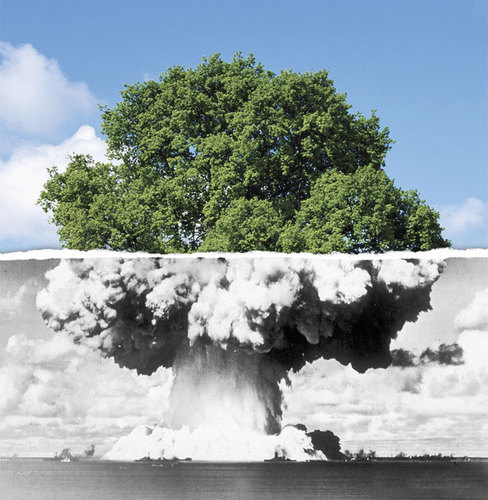
Det er tid for mere samarbejde
og mindre konfrontation

Vor tid er ikke til endnu mere militarisme, krigsførelse og fjendskab.

Den samlede virkning af militære investeringer er lidelse, ødelæggelse (af liv, kapital og ejendom) og uundgåelige miljøødelæggelser.

Derudover står enhver dollar, der investeres i militæret, i vejen for det globale samarbejde, som vi vil være dødsdømte hvis vi ignorerer. Og det giver ikke nogen sikkerheds- eller fredseffekt.

Tiden er udløbet for dem, som vil dominere og forsøger at beherske andre med vold eller trusler om vold. Militarisme og krigsførelse er nu lige så forældet og umuligt at forsvare som slaveri, enevældigt monarki, diktatur, børnearbejde, voldtægt og diskrimination.

Det er fænomener, som vi i civilisationens navn har besluttet at afskaffe eller fordømme.

Hvis du mener, at vi ikke meget hurtigt kan reducere eller afskaffe militarisme, atomvåben og krigsførsel, og at vi i det mindste skal opretholde en vis militær kapacitet beregnet på selvforsvar, så skal det skam overvejes. Det er i overensstemmelse med artikel 51 i FN’s pagt om retten til selvforsvar.

Det kunne indebære meget mere nedrustning end de foreslåede 50% samt en om-rustning i retning af en ny måde at håndtere uundgåelige konflikter på, skabe sikkerhed trods alle forskelligheder ved brug defensive militære og civile midler og dermed realisere den fredelige fremtid, som 99% af verdens befolkning ønsker meget stærkt.

Der er selvfølgelig andre muligheder. Men der er brug for en frisættelse af tankemåder såvel som andre ressourcer, før det er for sent.

Så, til at begynde med: Skær alles militære udgifter lige meget ned, lad os sige med 50%. Og se de utrolige positive effekter af det – politisk, økonomisk og i forhold til fred. Og gå så videre. En bedre verden er mulig.

Og corona er et godartet ”wake-up call” sammenlignet med en 3.  Verdenskrig.

Vi må bruge coronakrisen konstruktivt. I denne 11. time vidner menneskehedens situation til overflod om, at det drejer sig om samarbejde og sameksistens eller ødelæggelse og ingen eksistens.”

[civist src=”https://widget.civist.cloud/?api_url=https%3A%2F%2Fapi.civist.cloud%2Ft%2F3d7f148e-35e8-42d9-a505-815e8dceef9c%2F#/RW1iZWRkaW5nOjFjZmVmOGQ5LWFmYjctNDQ5YS05MDgwLTMyYjQ4ZTQ1NTBhNA==”]


Peace & future researcher + ‌Art Photographer

Related Posts

The Quest for Humane Survival Richard Falk Professor emeritus, Princeton UniversityTFF Associate since 1986October 12, 2026 After decades of teaching and writing about international law in academic frameworks that were not institutionally situated within law school environments—at Princeton and the University of California, Santa Barbara—I found myself most receptive to the TWAIL outlook. It has been especially illuminating in clarifying the extent to which international law evolved as a dialogical critique of Europe’s efforts to legitimize its colonial undertakings. In particular, TWAIL has exposed how international law has functioned to legalize the subjugation of Third World peoples, securing conditions for exploitative investment and trade relations, the coercive enforcement of public debts, and an ideology of cultural superiority. TWAIL’s exposure of these economic legacies of colonialism has influenced my understanding of the history and development of international law, broadly conceived, as an ideological project of the Western sub-system of the world...
Advocates of nuclear disarmament are regularly dismissed by the champions of nuclear deterrence as naïve and unrealistic, utopian or even irresponsible. Yet this ‘doctrine’ of deterrence, regarded by France as the ‘cornerstone’ of its national security, is based on quasi-religious beliefs, a theory that cannot be proven, risky gambles and fragile assumptions. So much so that one might legitimately ask which side the ‘Care Bears’ are on. Marc FinaudVice-President of Initiatives for Nuclear Disarmament (IDN) October 9, 2026 This article was originally published on Pressenza When it comes to these things being treated as religious concepts, look here. Idealists and realists It was Hubert Védrine, François Mitterrand’s former Foreign Minister, who repeatedly coined the phrase: ‘Europeans are a sort of Care Bears who don’t realise they’re living in Jurassic Park’. He applies this reference to the cartoon for well-behaved children not only to what he regards as weakness or idealism...
Small and different + among the 10% most active + 9,000 texts + 150 Associates + 60 000 a day — and a stubborn belief that peace is smarter and must be secured by peaceful means. In 2026, the Transnational Foundation for Peace and Future Research (TFF) turns 40. On Monday, October 5, 2026, a new TFF homepage will go live — a new gateway to more than 9,000 articles, analyses, research papers and other contributions produced over four decades of independent peace research. But this is not simply a new website. For four decades, TFF has worked from a simple conviction: peace is smarter than militarism and can be brought about by peaceful means. This is not merely an aspiration. It is the principle expressed in the UN Charter and the Gandhian tradition that has guided our work from the beginning. TFF is a research-based, independent and people-financed foundation....

Recent Articles

The Quest for Humane Survival Richard Falk Professor emeritus, Princeton UniversityTFF Associate since 1986October 12, 2026 After decades of teaching and writing about international law in academic frameworks that were not institutionally situated within law school environments—at Princeton and the University of California, Santa Barbara—I found myself most receptive to the TWAIL outlook. It has been especially illuminating in clarifying the extent to which international law evolved as a dialogical critique of Europe’s efforts to legitimize its colonial undertakings. In particular, TWAIL has exposed how international law has functioned to legalize the subjugation of Third World peoples, securing conditions for exploitative investment and trade relations, the coercive enforcement of public debts, and an ideology of cultural superiority. TWAIL’s exposure of these economic legacies of colonialism has influenced my understanding of the history and development of international law, broadly conceived, as an ideological project of the Western sub-system of the world...
Advocates of nuclear disarmament are regularly dismissed by the champions of nuclear deterrence as naïve and unrealistic, utopian or even irresponsible. Yet this ‘doctrine’ of deterrence, regarded by France as the ‘cornerstone’ of its national security, is based on quasi-religious beliefs, a theory that cannot be proven, risky gambles and fragile assumptions. So much so that one might legitimately ask which side the ‘Care Bears’ are on. Marc FinaudVice-President of Initiatives for Nuclear Disarmament (IDN) October 9, 2026 This article was originally published on Pressenza When it comes to these things being treated as religious concepts, look here. Idealists and realists It was Hubert Védrine, François Mitterrand’s former Foreign Minister, who repeatedly coined the phrase: ‘Europeans are a sort of Care Bears who don’t realise they’re living in Jurassic Park’. He applies this reference to the cartoon for well-behaved children not only to what he regards as weakness or idealism...
What the West Borrowed from Asia and What It Left Behind Jan Krikke October 8, 2026 The article was originally published here In the late 1960s, the musical Hair announced that the Age of Aquarius was dawning. Its opening anthem promised a transformation of human consciousness: an era of peace, harmony and understanding. Half a century later, a familiar echo of that promise is a meditation app offered by your employer. You can find it in the same list of benefits as the pension plan and the gym discount. How did a spiritual revolution become an employee benefit? The answer lies in the history of the movement known as New Age: where it came from, what it borrowed from Asia, and why the meaning of what it borrowed changed in the process. Two definitions will help. New Age is a loose label for a wide range of spiritual practices and...

TFF on Substack

Discover and subscribe to more peace materials on TFF Substack

Most Popular

The Quest for Humane Survival Richard Falk Professor emeritus, Princeton UniversityTFF Associate since 1986October 12, 2026 After decades of teaching and writing about international law in academic frameworks that were not institutionally situated within law school environments—at Princeton and the University of California, Santa Barbara—I found myself most receptive to the TWAIL outlook. It has been especially illuminating in clarifying the extent to which international law evolved as a dialogical critique of Europe’s efforts to legitimize its colonial undertakings. In particular, TWAIL has exposed how international law has functioned to legalize the subjugation of Third World peoples, securing conditions for exploitative investment and trade relations, the coercive enforcement of public debts, and an ideology of cultural superiority. TWAIL’s exposure of these economic legacies of colonialism has influenced my understanding of the history and development of international law, broadly conceived, as an ideological project of the Western sub-system of the world...
Advocates of nuclear disarmament are regularly dismissed by the champions of nuclear deterrence as naïve and unrealistic, utopian or even irresponsible. Yet this ‘doctrine’ of deterrence, regarded by France as the ‘cornerstone’ of its national security, is based on quasi-religious beliefs, a theory that cannot be proven, risky gambles and fragile assumptions. So much so that one might legitimately ask which side the ‘Care Bears’ are on. Marc FinaudVice-President of Initiatives for Nuclear Disarmament (IDN) October 9, 2026 This article was originally published on Pressenza When it comes to these things being treated as religious concepts, look here. Idealists and realists It was Hubert Védrine, François Mitterrand’s former Foreign Minister, who repeatedly coined the phrase: ‘Europeans are a sort of Care Bears who don’t realise they’re living in Jurassic Park’. He applies this reference to the cartoon for well-behaved children not only to what he regards as weakness or idealism...
What the West Borrowed from Asia and What It Left Behind Jan Krikke October 8, 2026 The article was originally published here In the late 1960s, the musical Hair announced that the Age of Aquarius was dawning. Its opening anthem promised a transformation of human consciousness: an era of peace, harmony and understanding. Half a century later, a familiar echo of that promise is a meditation app offered by your employer. You can find it in the same list of benefits as the pension plan and the gym discount. How did a spiritual revolution become an employee benefit? The answer lies in the history of the movement known as New Age: where it came from, what it borrowed from Asia, and why the meaning of what it borrowed changed in the process. Two definitions will help. New Age is a loose label for a wide range of spiritual practices and...
Read More
law-419057_1280
The Quest for Humane Survival Richard Falk Professor emeritus, Princeton UniversityTFF Associate since 1986October 12, 2026 After decades of teaching and writing about international law in academic frameworks that were not institutionally situated within law school environments—at Princeton and the University of California, Santa Barbara—I found myself most receptive to the TWAIL outlook. It has been especially illuminating in clarifying the extent to which international law evolved as a dialogical critique of Europe’s efforts to legitimize its colonial undertakings. In particular, TWAIL has exposed how international law has functioned to legalize the subjugation of Third World peoples, securing conditions for exploitative investment and trade relations, the coercive enforcement of public debts, and an ideology of cultural superiority. TWAIL’s exposure of these economic legacies of colonialism has influenced my understanding of the history and development of international law, broadly conceived, as an ideological project of the Western sub-system of the world...
images-2
Advocates of nuclear disarmament are regularly dismissed by the champions of nuclear deterrence as naïve and unrealistic, utopian or even irresponsible. Yet this ‘doctrine’ of deterrence, regarded by France as the ‘cornerstone’ of its national security, is based on quasi-religious beliefs, a theory that cannot be proven, risky gambles and fragile assumptions. So much so that one might legitimately ask which side the ‘Care Bears’ are on. Marc FinaudVice-President of Initiatives for Nuclear Disarmament (IDN) October 9, 2026 This article was originally published on Pressenza When it comes to these things being treated as religious concepts, look here. Idealists and realists It was Hubert Védrine, François Mitterrand’s former Foreign Minister, who repeatedly coined the phrase: ‘Europeans are a sort of Care Bears who don’t realise they’re living in Jurassic Park’. He applies this reference to the cartoon for well-behaved children not only to what he regards as weakness or idealism...
8824b09f-33a5-43f9-9fd0-550f28cda24d_1536x1024
What the West Borrowed from Asia and What It Left Behind Jan Krikke October 8, 2026 The article was originally published here In the late 1960s, the musical Hair announced that the Age of Aquarius was dawning. Its opening anthem promised a transformation of human consciousness: an era of peace, harmony and understanding. Half a century later, a familiar echo of that promise is a meditation app offered by your employer. You can find it in the same list of benefits as the pension plan and the gym discount. How did a spiritual revolution become an employee benefit? The answer lies in the history of the movement known as New Age: where it came from, what it borrowed from Asia, and why the meaning of what it borrowed changed in the process. Two definitions will help. New Age is a loose label for a wide range of spiritual practices and...
Screenshot 2026-10-04 210142
Small and different + among the 10% most active + 9,000 texts + 150 Associates + 60 000 a day — and a stubborn belief that peace is smarter and must be secured by peaceful means. In 2026, the Transnational Foundation for Peace and Future Research (TFF) turns 40. On Monday, October 5, 2026, a new TFF homepage will go live — a new gateway to more than 9,000 articles, analyses, research papers and other contributions produced over four decades of independent peace research. But this is not simply a new website. For four decades, TFF has worked from a simple conviction: peace is smarter than militarism and can be brought about by peaceful means. This is not merely an aspiration. It is the principle expressed in the UN Charter and the Gandhian tradition that has guided our work from the beginning. TFF is a research-based, independent and people-financed foundation....
Living-Peace-Sign-Budapest-copy
Tony Robinson October 4, 2026 Violence is easy to recognise when someone is being beaten, shot or killed. It becomes more difficult when nobody is holding a weapon. Poverty, discrimination, exploitation and repression can restrict a human life just as effectively, although they do so in very different ways and with very different consequences. Simply adding more categories to an ever-growing list of forms of violence does not really solve the problem. The more interesting question is what all these different situations have in common and why it makes sense to describe them using the same word. Human beings do not simply react to what happens around them. They remember the past, imagine things that do not yet exist, make plans and undertake projects. Workers organise because they imagine different working conditions; people migrate because they imagine another life somewhere else; social movements emerge because people refuse to accept the...
b54a1f10-8c65-4f0b-9dd5-4abc0a7d04cc_2659x2659
It’s a matter of principles, courage, vision and pulling together – while the militarist world is falling apart… Peter Langille October 3, 2026 “Here, then, is the problem which we present to you, stark and dreadful and inescapable: Shall we put an end to the human race; or shall mankind renounce war?”The Bertrand Russell—Albert Einstein Manifesto, July 9, 1955 ⁕ The forecast for what’s ahead is worrisome. The sharp rise in armed conflicts over the past three years is adding to what was already the highest level in over seventy years. Genocides, which should be prevented are supported. A shared climate emergency that jeopardises survival is ignored. Diverse polls now suggest that people are war-weary, worried and interested in a more effective United Nations. And, there are viable policy options for a more secure world! Yet governments are doubling-down, betting on more war and investing heavily. If current trends persist,...