
TFF PressInfo # 370: If Obama visits Hiroshima (Part 1)

There are mounting hopes that Barack Obama will use the occasion of the Group of 7 meeting in Japan next month to visit Hiroshima, and become the first American president to do so.

It is remarkable that it required a wait of over 60 years until John Kerry became the first high American official to make such a visit, which he termed ‘gut-wrenching,’ while at the same time purposely refraining from offering any kind of apology to the Japanese people for one of the worse acts of state terror against a defenseless population in all of human history.

Let’s hope that Obama goes, and displays more remorse than Kerry who at least deserves some credit for paving the way.

The contrast between the many pilgrimages of homage by Western leaders, including those of Germany, to Auschwitz and other notorious death camps, and the absence of comparable pilgrimages to Hiroshima and Nagasaki underscores the difference between winning and losing a major war. This contrast cannot be properly accounted for by insisting on a hierarchy of evils that the Holocaust dominates.

The United States, in particular, has a more generalized aversion to revisiting its darker hours, although recent events have illuminated some of the shadows cast by the racist legacies of slavery.

The decimation of native Americans has yet to be properly addressed at official levels, and recent reports of soaring suicide rates suggests that the native American narrative continues to unfold tragically.

The New York Times in an unsigned editorial on April 12 urged President Obama to make this symbolic visit to Hiroshima, and in their words “to make it count” by doing more than making a ritual appearance. Recalling accurately that Obama “won the Nobel Peace Prize in 2009 largely because of his nuclear agenda” the editorial persuasively criticized Obama for failing to follow through on his Prague vision of working toward a world free of nuclear weapons.

A visit to Hiroshima is, in effect, a second chance, perhaps a last chance, to satisfy the expectation created early in his presidency.

When it came to specifics as to what Obama might do the Times offered a typical arms control set of recommendations of what it called “small but doable advances”: canceling the new air-launched, nuclear-armed cruise missile and ensuring greater compliance with the prohibition on nuclear testing by its endorsement coupled with a recommendation that future compliance be monitored by the UN Security Council.

The Times leaves readers with the widely shared false impression that such measures can be considered incremental steps that will lead the world over time to a nuclear-free world. Such a view is unconvincing, and diversionary.

In opposition, I believe these moves serve to stabilize the nuclear status quo have a negative effect on disarmament prospects. By making existing realities somewhat less prone to accidents and irresponsibly provocative weapons innovations, the posture of living with nuclear weapons gains credibility and the arguments for nuclear disarmament are weakened even to the extent of being irrelevant.

I believe that it is a dangerous fallacy to suppose that arms control measures, even if beneficial in themselves, can be thought of as moving the world closer to nuclear disarmament.

Instead, what such measures do, and have been doing for decades, is to reinforce nuclear complacency by making nuclear disarmament either seem unnecessary or utopian, and to some extent even undesirably destabilizing. In other words, contrary to conventional wisdom, moving down the arms control path is a sure way to make certain that disarmament will never occur!

As mentioned, many arms control moves are inherently worthwhile. It is only natural to favor initiatives that cancel the development of provocative weapons systems, disallow weapons testing, and cut costs. Without such measures there would occur a dangerous erosion of the de facto taboo that has prevented (so far) any use of nuclear weaponry since 1945.

At the same time it is vital to understand that the taboo and the arms control regime of managing the nuclear weapons environment does not lead to the realization of disarmament and the vision of a world without nuclear weapons.

Let me put it this way, if arms control is affirmed for its own sake or as the best way to put the world on a path of incremental steps that will lead over time to disarmament, then such an approach is nurturing the false consciousness that has unfortunately prevailed in public discourse ever since the Nonproliferation Treaty came into force in 1970.

The point can be express in more folksy language: we have been acting for decades as if the horse of disarmament is being pulled by the cart of arms control. In fact, it is the horse of disarmament that should be pulling the cart of arms control, which would make arms control measures welcome as place holders while the primary quest for nuclear disarmament was being toward implementation.

There is no reason to delay putting the horse in front of the cart, and Obama’s failure to do so at Prague was the central flaw of his otherwise justly applauded speech.

Where Obama went off the tracks in my view was when he consigned nuclear disarmament to the remote future, and proposed in the interim reliance on the deterrent capability of the nuclear weapons arsenal and this alleged forward momentum of incremental arms control steps.

What is worse, Obama uncritically endorsed the nonproliferation treaty regime, lamenting only that it is being weakened by breakout countries, especially North Korea, and this partly explains why he felt it necessary back in 2009 to consider nuclear disarmament as a practical alternative to a continued reliance on nonproliferation, although posited disarmament more as a goal beyond reach and not as a serious present political option.

He expressed this futuristic outlook in these words: “I am not naïve. This goal will not be reached quickly – perhaps not in my lifetime.” He never clarifies why such a goal is not attainable within the term of his presidency, or at least its explicit pursuit.

In this regard, and with respect to Obama’s legacy, the visit to Hiroshima provides an overdue opportunity to disentangle nuclear disarmament from arms control.


Part 2

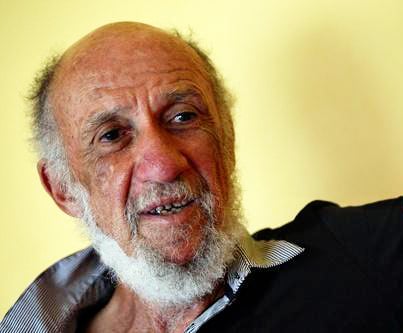
Professor Falk became an adviser to TFF when it was established in 1985.

Related Posts

Photo above: Carl Fredrik Reuterswärd’s Non-Violence outside UN Headquarters in New York. Kirill Levin, CC BY-NC-SA 2. Jan Oberg November 3, 2026 I am happy to be published in Horizons which is produced by the Center for International Relations and Sustainable Development, CIRSD, in Belgrade. My contribution brings out a radical re-thinking of what concepts such as defence, security, deterrence – and peace – may mean if we want to create a more peaceful world. It also summarises a few things I have been working with the last few decades. Please read it here Og her er den på dansk, takket være Johnny Baltzersens lynhurtige oversættelse
UNITE-tillid, DREAM-velstand og andre konstruktive komponenter Normally we publish articles in English here. But this is a translation of a very important TFF document that should reach as many as possible in Denmark since this country’s government has been one of the most hardline in Europe and, up till now at least, has refused to use diplomacy and, instead, spent tremendous sums on arming Ukraine with the express goal of defeating Russia. Thus this – unique – article is in Danish. Vi er Johnny Baltzersen og hans Fælles Sikkerhed – Fælles Fremtid på Substack overmåde taknemmelige for at have oversat og publiceret TFF’s 2025-portfølje for fredsidéer med henblik på Ukraines fremtid. Vi håber den nu kan nå mange flere danskere – som også vil sprede den og skabe debat – nu den danske regerings og folketingspartiernes politik på dette område siden 2022 står nu – forudsigeligt – ved vejs ende....
Jan Oberg TFF director October 28, 2026 Exactly one month has now passed since I published my criticism of the introduction to the special issue on Johan Galtung published by the Journal of Global Security Studies, JoGSS, and of Tor Egil Førland’s chapter about Galtung which serves as a preview to his forthcoming biography of Galtung to be published by PRIO. See the original on The Transnational here and the same article on TFF Substack with many general and critical comments and, in particular, the people who decided to withdraw from the biography project in protest. The special issue itself was extraordinary. It was devoted to the intellectual legacy of one of the founders of peace research and contained a number of strong assessments of his personality, scholarship, intellectual trajectory, and public role. Such assessments are, of course, entirely legitimate. No scholar is beyond criticism, and neither was Johan Galtung....

Recent Articles

Photo above: Carl Fredrik Reuterswärd’s Non-Violence outside UN Headquarters in New York. Kirill Levin, CC BY-NC-SA 2. Jan Oberg November 3, 2026 I am happy to be published in Horizons which is produced by the Center for International Relations and Sustainable Development, CIRSD, in Belgrade. My contribution brings out a radical re-thinking of what concepts such as defence, security, deterrence – and peace – may mean if we want to create a more peaceful world. It also summarises a few things I have been working with the last few decades. Please read it here Og her er den på dansk, takket være Johnny Baltzersens lynhurtige oversættelse
UNITE-tillid, DREAM-velstand og andre konstruktive komponenter Normally we publish articles in English here. But this is a translation of a very important TFF document that should reach as many as possible in Denmark since this country’s government has been one of the most hardline in Europe and, up till now at least, has refused to use diplomacy and, instead, spent tremendous sums on arming Ukraine with the express goal of defeating Russia. Thus this – unique – article is in Danish. Vi er Johnny Baltzersen og hans Fælles Sikkerhed – Fælles Fremtid på Substack overmåde taknemmelige for at have oversat og publiceret TFF’s 2025-portfølje for fredsidéer med henblik på Ukraines fremtid. Vi håber den nu kan nå mange flere danskere – som også vil sprede den og skabe debat – nu den danske regerings og folketingspartiernes politik på dette område siden 2022 står nu – forudsigeligt – ved vejs ende....
Jan Oberg TFF director October 28, 2026 Exactly one month has now passed since I published my criticism of the introduction to the special issue on Johan Galtung published by the Journal of Global Security Studies, JoGSS, and of Tor Egil Førland’s chapter about Galtung which serves as a preview to his forthcoming biography of Galtung to be published by PRIO. See the original on The Transnational here and the same article on TFF Substack with many general and critical comments and, in particular, the people who decided to withdraw from the biography project in protest. The special issue itself was extraordinary. It was devoted to the intellectual legacy of one of the founders of peace research and contained a number of strong assessments of his personality, scholarship, intellectual trajectory, and public role. Such assessments are, of course, entirely legitimate. No scholar is beyond criticism, and neither was Johan Galtung....

TFF on Substack

Discover and subscribe to more peace materials on TFF Substack

Most Popular

Photo above: Carl Fredrik Reuterswärd’s Non-Violence outside UN Headquarters in New York. Kirill Levin, CC BY-NC-SA 2. Jan Oberg November 3, 2026 I am happy to be published in Horizons which is produced by the Center for International Relations and Sustainable Development, CIRSD, in Belgrade. My contribution brings out a radical re-thinking of what concepts such as defence, security, deterrence – and peace – may mean if we want to create a more peaceful world. It also summarises a few things I have been working with the last few decades. Please read it here Og her er den på dansk, takket være Johnny Baltzersens lynhurtige oversættelse
UNITE-tillid, DREAM-velstand og andre konstruktive komponenter Normally we publish articles in English here. But this is a translation of a very important TFF document that should reach as many as possible in Denmark since this country’s government has been one of the most hardline in Europe and, up till now at least, has refused to use diplomacy and, instead, spent tremendous sums on arming Ukraine with the express goal of defeating Russia. Thus this – unique – article is in Danish. Vi er Johnny Baltzersen og hans Fælles Sikkerhed – Fælles Fremtid på Substack overmåde taknemmelige for at have oversat og publiceret TFF’s 2025-portfølje for fredsidéer med henblik på Ukraines fremtid. Vi håber den nu kan nå mange flere danskere – som også vil sprede den og skabe debat – nu den danske regerings og folketingspartiernes politik på dette område siden 2022 står nu – forudsigeligt – ved vejs ende....
Jan Oberg TFF director October 28, 2026 Exactly one month has now passed since I published my criticism of the introduction to the special issue on Johan Galtung published by the Journal of Global Security Studies, JoGSS, and of Tor Egil Førland’s chapter about Galtung which serves as a preview to his forthcoming biography of Galtung to be published by PRIO. See the original on The Transnational here and the same article on TFF Substack with many general and critical comments and, in particular, the people who decided to withdraw from the biography project in protest. The special issue itself was extraordinary. It was devoted to the intellectual legacy of one of the founders of peace research and contained a number of strong assessments of his personality, scholarship, intellectual trajectory, and public role. Such assessments are, of course, entirely legitimate. No scholar is beyond criticism, and neither was Johan Galtung....
Read More
knotted gun
Photo above: Carl Fredrik Reuterswärd’s Non-Violence outside UN Headquarters in New York. Kirill Levin, CC BY-NC-SA 2. Jan Oberg November 3, 2026 I am happy to be published in Horizons which is produced by the Center for International Relations and Sustainable Development, CIRSD, in Belgrade. My contribution brings out a radical re-thinking of what concepts such as defence, security, deterrence – and peace – may mean if we want to create a more peaceful world. It also summarises a few things I have been working with the last few decades. Please read it here Og her er den på dansk, takket være Johnny Baltzersens lynhurtige oversættelse
TFFPortfolioVign
UNITE-tillid, DREAM-velstand og andre konstruktive komponenter Normally we publish articles in English here. But this is a translation of a very important TFF document that should reach as many as possible in Denmark since this country’s government has been one of the most hardline in Europe and, up till now at least, has refused to use diplomacy and, instead, spent tremendous sums on arming Ukraine with the express goal of defeating Russia. Thus this – unique – article is in Danish. Vi er Johnny Baltzersen og hans Fælles Sikkerhed – Fælles Fremtid på Substack overmåde taknemmelige for at have oversat og publiceret TFF’s 2025-portfølje for fredsidéer med henblik på Ukraines fremtid. Vi håber den nu kan nå mange flere danskere – som også vil sprede den og skabe debat – nu den danske regerings og folketingspartiernes politik på dette område siden 2022 står nu – forudsigeligt – ved vejs ende....
JoGSS-Silent
Jan Oberg TFF director October 28, 2026 Exactly one month has now passed since I published my criticism of the introduction to the special issue on Johan Galtung published by the Journal of Global Security Studies, JoGSS, and of Tor Egil Førland’s chapter about Galtung which serves as a preview to his forthcoming biography of Galtung to be published by PRIO. See the original on The Transnational here and the same article on TFF Substack with many general and critical comments and, in particular, the people who decided to withdraw from the biography project in protest. The special issue itself was extraordinary. It was devoted to the intellectual legacy of one of the founders of peace research and contained a number of strong assessments of his personality, scholarship, intellectual trajectory, and public role. Such assessments are, of course, entirely legitimate. No scholar is beyond criticism, and neither was Johan Galtung....
Screenshot 2026-10-26 115647
An aspect of Iran’s culture and civilisation you’ve probably never heard about. Don’t be surprised if the US and Israel also try to bomb them. Jan ObergTFF director October 26, 2026 Today – under the “USraeli” threat of new “annihilating” bombings – opens the 7th International Conference on Peace and Conflict Resolution at Tehran’s University. As far as I can tell, this is the only permanent, advanced peace research institution in West Asia/the Middle East. Perhaps more countries in that region could be inspired? I mean, how many military “security” institutes and military academies do they have? Many peace research institutes and university departments have been established since the 1950s in the West. They are now all under attack; some have closed down, some have gone mainstream, yet others kept the name but do nothing to research peace and disseminate results or advice; instead, they cooperate with militarism’s platforms such...
Screenshot 2026-10-15 141837
Let’s discuss using AI to create peace – in contrast to boring geopolitics devoid of creative healing and visions. Jan Oberg TFF director October 15, 2026 I asked VEED to create a short video exemplifying how peace is preferable to war, then chose the lady as a template. Simple as that. In less than a minute, it produced this video, which any peace-loving person would appreciate. The only problem is that human intelligence (HI), at least the one that exists among Western decision-makers, isn’t half as moral or smart as AI. I have used AI to dialogue about peace and peace plans, creative conflict resolution and visions of a better future for humankind. It so happens that I am having more stimulating, intelligent, creative and moral discussions with AI than I could possibly have with any EU or NATO leader today. Yes, AI has very problematic and dangerous aspects; used...
girl-5894831_1280
Below are TFF-related media mentions, comments, videos and social media posts published elsewhere but not on this homepage. We happen to catch and list only a fraction. Regarding video comments and debates, we recommend that you go to the TFF Video Channel on Substack where many of them are reproduced. Jan Oberg is a contributor to China Daily – 52 million daily clicks – and Global Times, CGTN and CCTV (the national television), China Investment, Xinhua News Agency and several others. Articles and videos on these media very often multiply into countless Chinese (and Western media) that re-post them from these main media. Thanks to The China Academy, his analyses, interviews and comments are frequently posted on YouTube channels such as Thinkers Forum and Wave Media. These videos are often re-posted on Bilibili (China’s YouTube), the China Content Center on TikTok, and on the Chinese edition of TikTok, Douyin.com. This means reaching hundreds of millions of viewers worldwide over a year. While there are too many to catch on all these...




