
PressInfo #347 – The world beyond global disorder

johangaltung

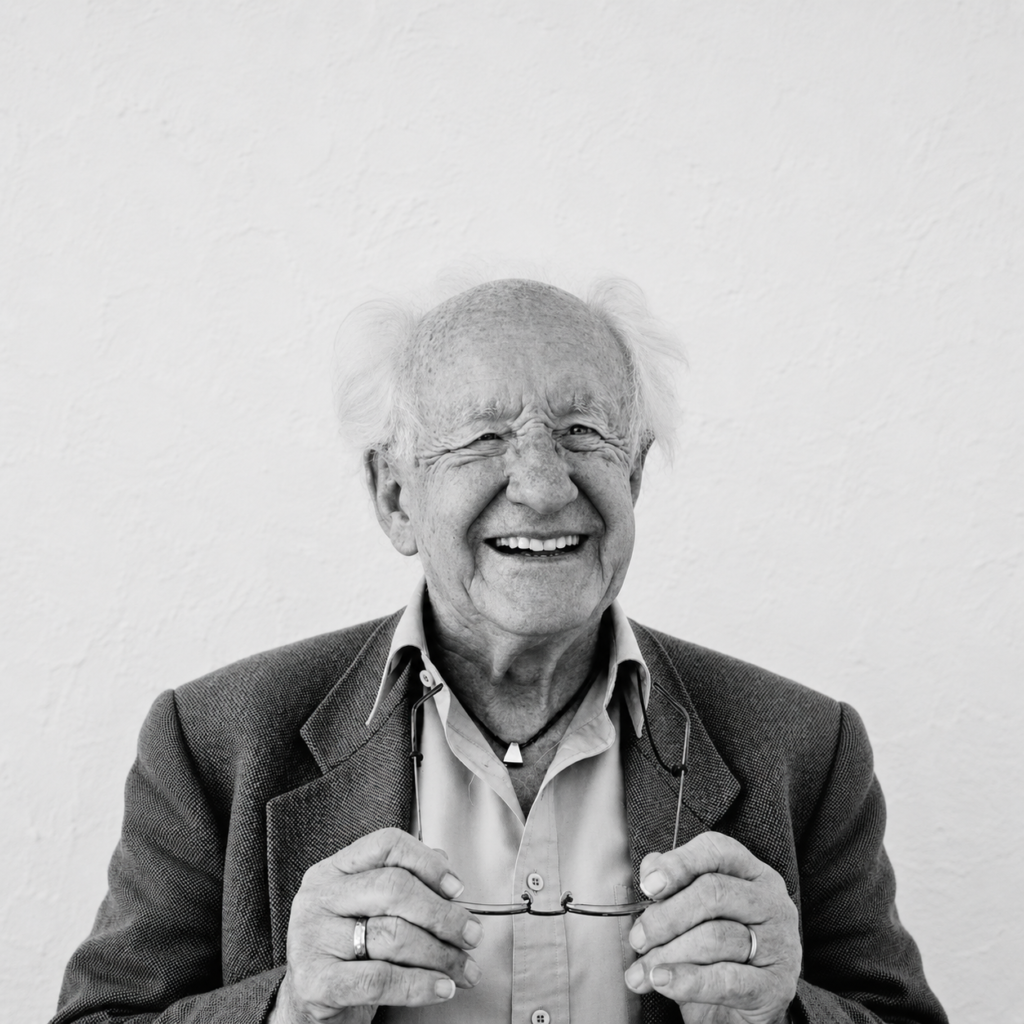
Johan Galtung turns 85 on UN Day 2015

The global nation-state based system is in deep crisis. The West’s relative decline is obvious, except to the West itself. This multi-dimensional crisis will, of course, give way to something new – but what?

Lack of vision – sometimes even of knowledge and empathy – among those in power seems a defining characteristics of our times.

Individually as well as nationally, we are living in iTimes, not weTimes. Add to that blowbacks from history and Western knee-jerk militarist responses – and the next few years will be tough.

The creativity and innovation we find in commercial and social entrepreneurship and in the arts, seem frighteningly absent in the world of politics.

Who would get elected anywhere on having an exciting vision for the the world the next 25 or 40 years? No, you must know about national affairs and economy – while, by the way, national economy doesn’t exist anymore.

Few young people, including students or young scholars, find it attractive to join party politics.

But can humanity survive with only criticism, negative energy, bad news and no vision?

Will we work for a better world if we can’t see it?

Dr. Johan Galtung has devoted his life to the vision of a less violent, more peaceful world – from the local to the civilisational level – implementing the norm of the Charter of the UN – turning 70 on October 24, 2015 – that peace shall be established by peaceful means.

Galtung – one of a handful of peace visionaries with a macro perspective – himself turns 85 on UN Day. He has mediated in more than 100 conflicts since 1957 and published 164 books. And he still travels the world speaking and writing. More about him here by Antonio. C. S. Rosa.

He is one of the youngest and most innovative minds in world affairs, always asking the essential, healing question: What can be done?

That’s what the good doctor does – helps conflicting parties address their problems, reduce their violence and develop a vision of a better future – together or side-by-side with respect.

Making the seemingly incompatible more compatible through creativity, dialogue, vision.

Here is his latest column – which TFF publishes every week. It synthesizes where we stand and ought to go.

As humanity.

And with humanity.

– Jan Oberg

And now Galtung himself…

Keynote, 13th Session World Public Forum “Dialogue of Civilizations” – Rhodes, Greece, 9 Oct 2015

The strength of this forum is its civilization focus; let us use it for analysis and remedies. Major forms of disorder use violence; war is state organized violence. The most belligerent states are the United States of America and Israel, both with civilization roots.

National Evangelism, the US Protestant Christian civilization – more national than evangelical – justifies US warfare as exceptionalism of a people chosen by God, with a manifest destiny to run the world. Orthodox Judaism justifies Israeli warfare to conquer and expand from Nile to Euphrates as a religious right and duty to the Eternal One.

The third most belligerent country, the UK, no longer believes it is God-chosen but chosen by the USA; not quite the same but something.

The root causes – and soften the ideas

But the root cause of global disorder lies in the Occident – with Islam – seeing itself as the single, universal civilization valid for all at all times, all others being mistakes. Missionary activity, slavery, colonialism, exploitative trade, robbery capitalism, follow.

The USA got from Judaism the idea of Chosen People-Promised Land. Yet Israel is actually the opposite of the USA: a land for Jews only, for 0.2% of humanity; not a world for everybody run by US hegemony.

These anomalies must come to an end. They spell disaster for whoever stands in the way of the Chosen Ones, with USA killing in 100+ countries and Israel into a Third Intifada after cruel attacks on Gaza. Both with nuclear bombs, at God’s level of destruction, on the ready.

The ways out pass through softer Christianities and Judaisms, through no military aid for the USA or Israel, through boycott and other forms of resistance; but above all through alternative policies. For the USA to retreat to a North American Mex-Us-Can, for Israel to a UN-guaranteed state in the WANA, West Asia-North Africa region, in the old millet autonomy tradition of the Ottoman Empire.

Like people informed of impending death they both deny any crisis in their world and regional empires. But reality strikes back, denying the denial.

More adequate steps will be taken, maybe before 2020.

Regions will be more important, nation-states less

This perspective locates solutions in regions, not in inter-state relations; more particularly WANA and North America. With mechanisms for trauma conciliation, conflict solution, cooperation for mutual and equal benefit, harmony, sharing up and downs–four tasks!–veto-free regions can do very well. Their relation could be handled by a United Regions parallel to United Nations; but with no region above others.

Look at the map: three more regions missing. Two in Asia: a Central Asian region centered on Afghanistan-Pakistan with the Durand 1893 line gaping wound removed by open borders; and a Northeast Asian Community, NEAC, for cooperation between Japan and Russia Far East, two Chinas and two Koreas, sharing disputed islands and sovereignties.

In Europe a European House for the European Union and the large Russia+, for the four tasks. In that House U-kraina – at the 1600 years old Catholic-Orthodox border – could be a federation with rotating presidents, neutral, gas-oil flowing from East to West, EU trade from West to East, and Crimea 2014 understood as a correction of 1954.

This leads to an important point for mediation: identify major trends and build solutions on them. A swimmer who wants to swim a long way fast should swim with, not against, the river’s current. In a world with states withering away into regions–except for the five, six biggest–solve conflicts in regions; like in the four proposed here.

The Islamic State is a region. Russia makes a mistake killing them: kill one, get 10 more, also from inside Russia. Like the attack on Afghanistan 1978-79: “There they go again“, Muslims say.

But the states also yield to local communities and civil society. Build on that, more of the economies in local hands, fight inequality by lifting up the most miserable in the most miserable communities.

Macro – the civilizational level

Then the civilizations, but not as clashes; the word Huntington’s publisher took from Bernard Lewis for a book about regions. Let us focus on their positive aspects, for cooperation, not for clashes:

• Judaism: dialogues as truth not final declarations; intellectuality;

• Orthodoxy: long term optimism Sunday Christianity-“Christ arisen”;

• Catholicism: forgiving the sinner who confesses and rejects his sin;

• Protestantism: individualism/I-culture Individual responsibility

• Americanism: freedom to innovate in science, culture, economy;

• Islam: collectivism/We-culture submission sharing rich to poor;

• Africanism: women in power distribution more than growth ubuntu;

• Hinduism: celebrating birth-protection-death linguistic communities; *Buddhism: society as nets of relations-networks not individual knots;

• Daoism: reality as holisms forces/counterforces yin/yang dialectics

• Confucianism: both rights and duties, both at the top and the bottom;

• Chinaism: synergy buddhism-daoism-confucianism lifting the bottom up;

• Humanism: humans as the measure of all things (Protagoras);

• Naturism: nature–diversity-symbiosis – as the measure of all things;

Stimulate cooperation based on positives, and not paranoid security based on negatives: “security studies” being academic paranoia.

What a rich world!

Example: China and India could exchange lifting the bottom up for true federalism; Protestantism-Americanism could soften individualism learning from Islam-Buddhism, in turn learning freedom and innovation.

And they could all learn never-ending dynamism from Daoism. And a basic key to stability from naturism: diversity with symbiosis.

What a rich world!

Something for everybody to learn everywhere.

The refugee crisis – it’s our turn and regional solutions

Today’s refugees, migrants?

A Völkerwanderung; whole peoples on the move – 50 million, for 50 years? From Africa devastated by slavery, colonialism, trade, capitalism, from Africa and West-Central Asia from wars mainly by the West. We get a search for livelihood, for maternal care from colonial Mother Countries, as uninvited settlers like the colonizers, but willing to abide by local norms.

Now it is our turn.

The solution? Africa develops itself, like East Asia once did using the Japanese model, not Smith-Ricardo but Kaname Akamatsu used by China, but unacknowledged. Gaddafi favored that model but was killed.

The role of the EU? Host millions even if only to compensate for low European fertility; otherwise stay off, apologize, compensate.

The West has done enough damage in the world! It’s time and much better – that it reinvents itself.

Originally published by Transcend Media Service here.

Related Posts

Johan Galtung 1930-2024October 2015 Published here on October 3, 2026 Let us focus on Civilization for conflict analysis and remedies. Major forms of disorder use violence; war is state organized violence. The most belligerent states are the United States of America and Israel, both with civilization roots. National Evangelism, the US Protestant Christian civilization– more national than evangelical–justifies US warfare as exceptionalism of a people chosen by God, with a manifest destiny to run the world. Orthodox Judaism justifies Israeli warfare to conquer and expand from Nile to Euphrates as a religious right and duty to the Eternal One. The third most belligerent country, the UK, no longer believes it is God-chosen but chosen by the USA; not quite the same but something. But the root cause of global disorder lies in the Occident–with Islam–seeing itself as the single, universal civilization valid for all at all times, all others being...
The agreement is catastrophic both because of what it says and what it doesn’t mention. It reduces further the major asset of security policies: Freedom of action. Jan Oberg TFF director September 25, 2026 A couple of hours before the agreement was signed on September 22, 2026, I published the following 13 hypotheses about what it would most likely contain on TFF Substack (in English). I was wrong on only the first point. Contrary to what Trump had written on his Truth Social platform, it does not appear to come into force immediately. In fact, it turned out to be worse than even I had anticipated. After these hypotheses now come a number of reflections in light of what the agreement actually contains, and does not contain, as well as the way in which it has generally been presented by major media outlets and by the public-service broadcaster DR. My...
Photos © TFF 2000 Read PressInfo 90 “Lift the Sanctions and Bring More Aid to Yugoslavia” See Pictures from Belgrade © TFF 2000 Please reprint, copy, archive, quote or re-post this item, but please retain the source.

Recent Articles

Below are TFF-related media mentions, comments, videos and social media posts published elsewhere but not on this homepage. We happen to catch and list only a fraction. Regarding video comments and debates, we recommend that you go to the TFF Video Channel on Substack where many of them are reproduced. Jan Oberg is a contributor to China Daily – 52 million daily clicks – and Global Times, CGTN and CCTV (the national television), China Investment, Xinhua News Agency and several others. Articles and videos on these media very often multiply into countless Chinese (and Western media) that re-post them from these main media. Thanks to The China Academy, his analyses, interviews and comments are frequently posted on YouTube channels such as Thinkers Forum and Wave Media. These videos are often re-posted on Bilibili (China’s YouTube), the China Content Center on TikTok, and on the Chinese edition of TikTok, Douyin.com. This means reaching hundreds of millions of viewers worldwide over a year. While there are too many to catch on all these...
Jan Oberg TFF director October 13, 2026 According to Alfred Nobel’s will, the Nobel Peace Prize shall be awarded: ”to the person who has done the most or best to advance fellowship among nations, the abolition or reduction of standing armies, and the establishment and promotion of peace congresses.” Further down, he also expresses how the prize for the “champions of peace” shall be decided: “that for champions of peace by a committee of five persons to be selected by the Norwegian Storting. Alfred Nobel’s will is remarkably short and clear. But few seem to have read it. Nobel did not say that the committee itself should consist of members of parliament. He entrusted the Storting with appointing five persons. In principle, it could have selected diplomats, mediators, peace researchers, conflict-resolution specialists, or other individuals with recognised expertise in matters of peace from around the world. Instead, the Storting gradually...
The Quest for Humane Survival Richard Falk Professor emeritus, Princeton UniversityTFF Associate since 1986October 12, 2026 After decades of teaching and writing about international law in academic frameworks that were not institutionally situated within law school environments—at Princeton and the University of California, Santa Barbara—I found myself most receptive to the TWAIL outlook. It has been especially illuminating in clarifying the extent to which international law evolved as a dialogical critique of Europe’s efforts to legitimize its colonial undertakings. In particular, TWAIL has exposed how international law has functioned to legalize the subjugation of Third World peoples, securing conditions for exploitative investment and trade relations, the coercive enforcement of public debts, and an ideology of cultural superiority. TWAIL’s exposure of these economic legacies of colonialism has influenced my understanding of the history and development of international law, broadly conceived, as an ideological project of the Western sub-system of the world...

TFF on Substack

Discover and subscribe to more peace materials on TFF Substack

Most Popular

Below are TFF-related media mentions, comments, videos and social media posts published elsewhere but not on this homepage. We happen to catch and list only a fraction. Regarding video comments and debates, we recommend that you go to the TFF Video Channel on Substack where many of them are reproduced. Jan Oberg is a contributor to China Daily – 52 million daily clicks – and Global Times, CGTN and CCTV (the national television), China Investment, Xinhua News Agency and several others. Articles and videos on these media very often multiply into countless Chinese (and Western media) that re-post them from these main media. Thanks to The China Academy, his analyses, interviews and comments are frequently posted on YouTube channels such as Thinkers Forum and Wave Media. These videos are often re-posted on Bilibili (China’s YouTube), the China Content Center on TikTok, and on the Chinese edition of TikTok, Douyin.com. This means reaching hundreds of millions of viewers worldwide over a year. While there are too many to catch on all these...
Jan Oberg TFF director October 13, 2026 According to Alfred Nobel’s will, the Nobel Peace Prize shall be awarded: ”to the person who has done the most or best to advance fellowship among nations, the abolition or reduction of standing armies, and the establishment and promotion of peace congresses.” Further down, he also expresses how the prize for the “champions of peace” shall be decided: “that for champions of peace by a committee of five persons to be selected by the Norwegian Storting. Alfred Nobel’s will is remarkably short and clear. But few seem to have read it. Nobel did not say that the committee itself should consist of members of parliament. He entrusted the Storting with appointing five persons. In principle, it could have selected diplomats, mediators, peace researchers, conflict-resolution specialists, or other individuals with recognised expertise in matters of peace from around the world. Instead, the Storting gradually...
The Quest for Humane Survival Richard Falk Professor emeritus, Princeton UniversityTFF Associate since 1986October 12, 2026 After decades of teaching and writing about international law in academic frameworks that were not institutionally situated within law school environments—at Princeton and the University of California, Santa Barbara—I found myself most receptive to the TWAIL outlook. It has been especially illuminating in clarifying the extent to which international law evolved as a dialogical critique of Europe’s efforts to legitimize its colonial undertakings. In particular, TWAIL has exposed how international law has functioned to legalize the subjugation of Third World peoples, securing conditions for exploitative investment and trade relations, the coercive enforcement of public debts, and an ideology of cultural superiority. TWAIL’s exposure of these economic legacies of colonialism has influenced my understanding of the history and development of international law, broadly conceived, as an ideological project of the Western sub-system of the world...
Read More
girl-5894831_1280
Below are TFF-related media mentions, comments, videos and social media posts published elsewhere but not on this homepage. We happen to catch and list only a fraction. Regarding video comments and debates, we recommend that you go to the TFF Video Channel on Substack where many of them are reproduced. Jan Oberg is a contributor to China Daily – 52 million daily clicks – and Global Times, CGTN and CCTV (the national television), China Investment, Xinhua News Agency and several others. Articles and videos on these media very often multiply into countless Chinese (and Western media) that re-post them from these main media. Thanks to The China Academy, his analyses, interviews and comments are frequently posted on YouTube channels such as Thinkers Forum and Wave Media. These videos are often re-posted on Bilibili (China’s YouTube), the China Content Center on TikTok, and on the Chinese edition of TikTok, Douyin.com. This means reaching hundreds of millions of viewers worldwide over a year. While there are too many to catch on all these...
Nobel-Prize-Plaque
Jan Oberg TFF director October 13, 2026 According to Alfred Nobel’s will, the Nobel Peace Prize shall be awarded: ”to the person who has done the most or best to advance fellowship among nations, the abolition or reduction of standing armies, and the establishment and promotion of peace congresses.” Further down, he also expresses how the prize for the “champions of peace” shall be decided: “that for champions of peace by a committee of five persons to be selected by the Norwegian Storting. Alfred Nobel’s will is remarkably short and clear. But few seem to have read it. Nobel did not say that the committee itself should consist of members of parliament. He entrusted the Storting with appointing five persons. In principle, it could have selected diplomats, mediators, peace researchers, conflict-resolution specialists, or other individuals with recognised expertise in matters of peace from around the world. Instead, the Storting gradually...
law-419057_1280
The Quest for Humane Survival Richard Falk Professor emeritus, Princeton UniversityTFF Associate since 1986October 12, 2026 After decades of teaching and writing about international law in academic frameworks that were not institutionally situated within law school environments—at Princeton and the University of California, Santa Barbara—I found myself most receptive to the TWAIL outlook. It has been especially illuminating in clarifying the extent to which international law evolved as a dialogical critique of Europe’s efforts to legitimize its colonial undertakings. In particular, TWAIL has exposed how international law has functioned to legalize the subjugation of Third World peoples, securing conditions for exploitative investment and trade relations, the coercive enforcement of public debts, and an ideology of cultural superiority. TWAIL’s exposure of these economic legacies of colonialism has influenced my understanding of the history and development of international law, broadly conceived, as an ideological project of the Western sub-system of the world...
images-2
Advocates of nuclear disarmament are regularly dismissed by the champions of nuclear deterrence as naïve and unrealistic, utopian or even irresponsible. Yet this ‘doctrine’ of deterrence, regarded by France as the ‘cornerstone’ of its national security, is based on quasi-religious beliefs, a theory that cannot be proven, risky gambles and fragile assumptions. So much so that one might legitimately ask which side the ‘Care Bears’ are on. Marc FinaudVice-President of Initiatives for Nuclear Disarmament (IDN) October 9, 2026 This article was originally published on Pressenza When it comes to these things being treated as religious concepts, look here. Idealists and realists It was Hubert Védrine, François Mitterrand’s former Foreign Minister, who repeatedly coined the phrase: ‘Europeans are a sort of Care Bears who don’t realise they’re living in Jurassic Park’. He applies this reference to the cartoon for well-behaved children not only to what he regards as weakness or idealism...
8824b09f-33a5-43f9-9fd0-550f28cda24d_1536x1024
What the West Borrowed from Asia and What It Left Behind Jan Krikke October 8, 2026 The article was originally published here In the late 1960s, the musical Hair announced that the Age of Aquarius was dawning. Its opening anthem promised a transformation of human consciousness: an era of peace, harmony and understanding. Half a century later, a familiar echo of that promise is a meditation app offered by your employer. You can find it in the same list of benefits as the pension plan and the gym discount. How did a spiritual revolution become an employee benefit? The answer lies in the history of the movement known as New Age: where it came from, what it borrowed from Asia, and why the meaning of what it borrowed changed in the process. Two definitions will help. New Age is a loose label for a wide range of spiritual practices and...
Screenshot 2026-10-04 210142
Small and different + among the 10% most active + 9,000 texts + 150 Associates + 60 000 a day — and a stubborn belief that peace is smarter and must be secured by peaceful means. In 2026, the Transnational Foundation for Peace and Future Research (TFF) turns 40. On Monday, October 5, 2026, a new TFF homepage will go live — a new gateway to more than 9,000 articles, analyses, research papers and other contributions produced over four decades of independent peace research. But this is not simply a new website. For four decades, TFF has worked from a simple conviction: peace is smarter than militarism and can be brought about by peaceful means. This is not merely an aspiration. It is the principle expressed in the UN Charter and the Gandhian tradition that has guided our work from the beginning. TFF is a research-based, independent and people-financed foundation....





