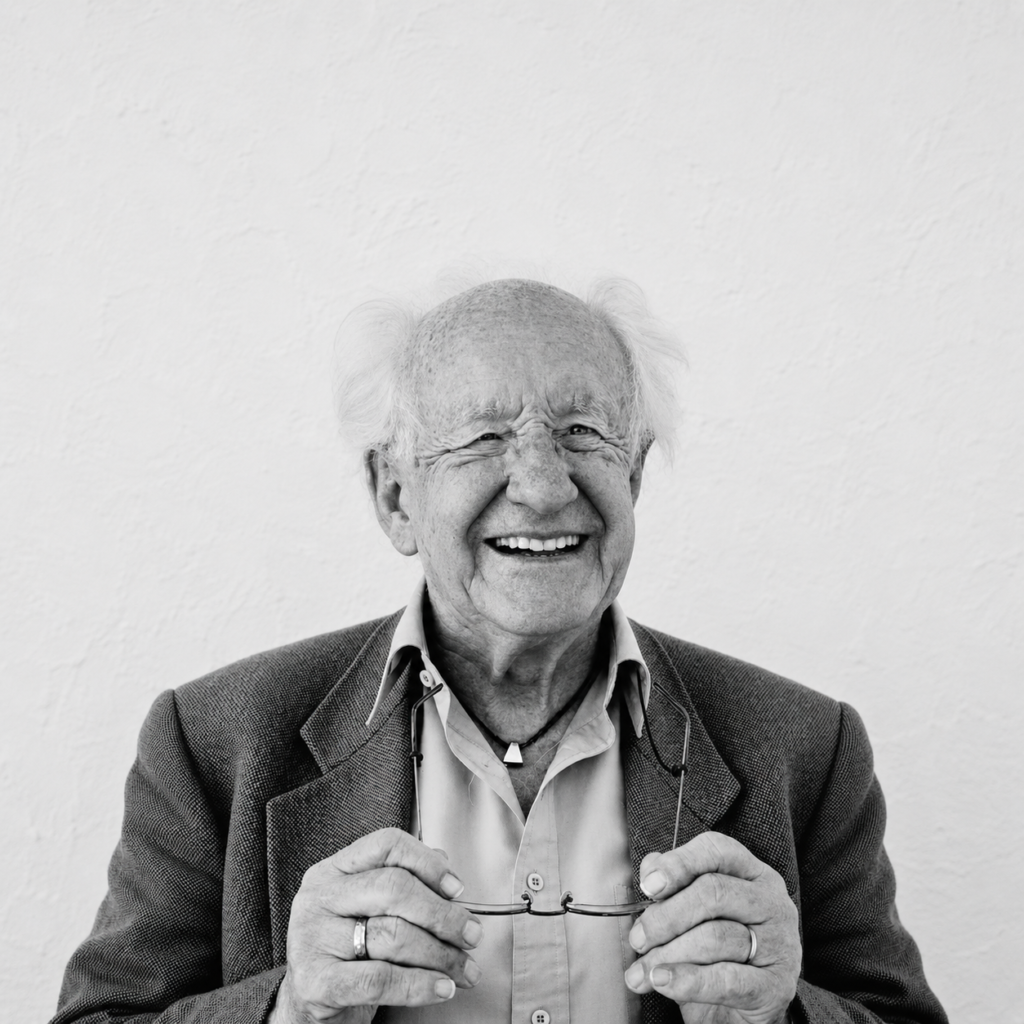
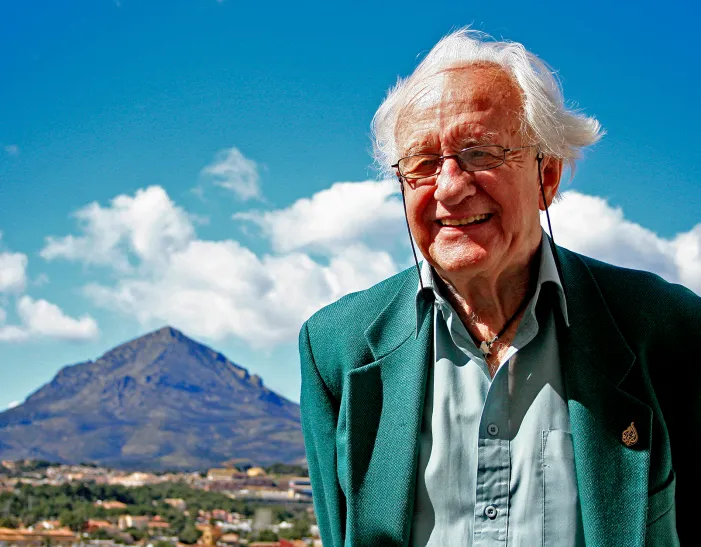
johangaltung

Talk at the Université de Strasbourg, France

Important is not only to think peace, but to speak, write and contribute to making, building and keeping it.

For that purpose a little formula might be useful:

+ Positive Peace Equity X Harmony

Peace = ________________ = _________________

– Negative Peace Trauma X Conflict

There is positive peace in the numerator: the more the better. And key factors leading to direct, structural and cultural violence–the opposite of negative peace–in the denominator: the less the better. What is gained in peace is easily lost through inattention to negative pace. But there is a zone of stability by compensation.

According to the formula there are four basic tasks; all of them difficult but not impossible, all requiring training, skills.

[1] Constructing Equity: cooperation for mutual and equal benefit, or at least not flagrantly unequal getting worse, is basic. The West and capitalism want an extra cut, thereby doing structural violence.

[2] Constructing Harmony: in the daoist sense of enjoying the joy and suffer the suffering of Other. Emotional resonance, sympathy.

[3] Reconciling Past Trauma: clearing the past, acknowledging wrongs, wishing them undone, dialogues about why and how, building a future.

[4] Resolving Present Conflict: working on overcoming Contradiction-incompatibility but also on negative Attitudes and Behavior. ABC.

For equity: the 1950-1958-1992 French-German, then EEC, then EU cooperation on equal terms initiated masterly by Robert Schuman and Jean Monnet. A major peace project, today threatened by the economic inequality between Germany and the EU G-I-P-S-I periphery (Greece-Italy-Portugal-Spain-Ireland).

For harmony: human history is also the history of expanding zones of resonance up to some tipping edge – using another French genius, René Thom’s catastrophe theory. Suffering the suffering of others is today limited by clashes, by civilizations, and by both.

For trauma reconciliation: Truth and Reconciliation of South Africa, and German rewriting of textbooks, are excellent examples.

For conflict resolution: the liberal mistake of seeing conflict only as Attitude in need of religious-psychological therapy; or the conservative mistake of controlling Behavior only by military or police; or the marxist mistake of only solving Contradictions, like between Capital and Labor must be avoided. We need to understand and work on all three, ABC.[i]

Test the formula with marital conflict in mind. As feminists have thought, said, written and enacted: parity, another word for equity, is the way. The harmony is also known as love. But both can be overpowered, negated by traumas persons close to each other can cause, inadvertently or not, and the rolling agenda of conflicts bound to come up. Reconciliation and resolution are skills to be learnt, they are not inborn. Much education is needed.

Test the formula on a cousin of peace: health. Denominator: chronic and acute illnesses, which can be reduced through care and diagnosis-prognosis-therapy. Numerator: preventive medicine; the balance – another word for equity – between physical and mental aspects of human beings–psycho-somatic–and the social harmony with others. The “physical, mental and social well-being” of the World Health Organization, WHO.

This meeting happens to be in Salle Pasteur. He focused on one external cause, the micro-organism. Another French genius, rival Antoine Béchamps, also Université de Strasbourg, on the “milieu intérieur“; immunity, balance. Obviously we need both perspectives.

Take Israel-Arab-Muslim states. Using Europe as model, a resolution might be a two-state Israel-Palestine formula, within a six-state community of Israel with the five Arab border countries, within an Organization for Security and Cooperation in the Middle East.

The harmony might come from mutual and equal benefit, and it would be a conflict resolution of the post-World War II magnitude.

What stands in the way is the deep culture of traumas suffered by Jews-Israelis, and the European, particularly German-Austrian, traumas of having caused those traumas. This has to be approached.

War is a social evil, causing untold suffering like slavery, colonialism, patriarchy, preventable-curable diseases; soon to join the others in the cemetery for social evils. And talk about “just war” is like talking about just slavery, just colonialism, just patriarchy, and disease as God’s or Nature’s cleansing humanity of those unfit for salvation-survival.

Clausewitz’ modernization of war “by all necessary means” has yielded to a post-modern warfare against civilians; by state terrorists in uniform–first from the air by the Italians in Libya 1911, followed by Anglo-Americans, Hamburg-Hiroshima, Iraq, Afghanistan–and by terrorists, like 9/11. His “politics by other means” is intellectually flawed, insensitive to human suffering. But there are Western alternatives.

Hegemonic peace, like the UN Security Council, depends on the hegemons: Anglo-Americans who confuse peace with their interests. Balance of power leads to arms races unless the arms are purely non-provocative, defensive. Federation and confederation are within the formula under equity; but there are three more jobs to do, at least.

Rule of law? Western law forbids acts of commission, permits acts of omission, and opens for huge structural-cultural violence, with nobody doing anything. And social ills, and illness, were not outlawed, but overtaken by other approaches, some research based.

Human rights? Better, but add to the individualist Western focus a focus on collective, peoples’ rights.

Democracy? Fine, but add to the individualist one person-one vote majority rule the Western formula of dialogue to consensus, more satisfactory to the we-cultures in which the human majority live. And add a democratic UN, with an elected UN Peoples’ Assembly.

NOTE:

[i]. For some of my work as mediator, see 50 Years: 100 Peace & Conflict Perspectives, TRANSCEND University Press, 2008; TRANSCEND Peace University–based on diagnosis-prognosis-therapy. Forthcoming this summer 2012: A Theory of Peace.
Related Posts

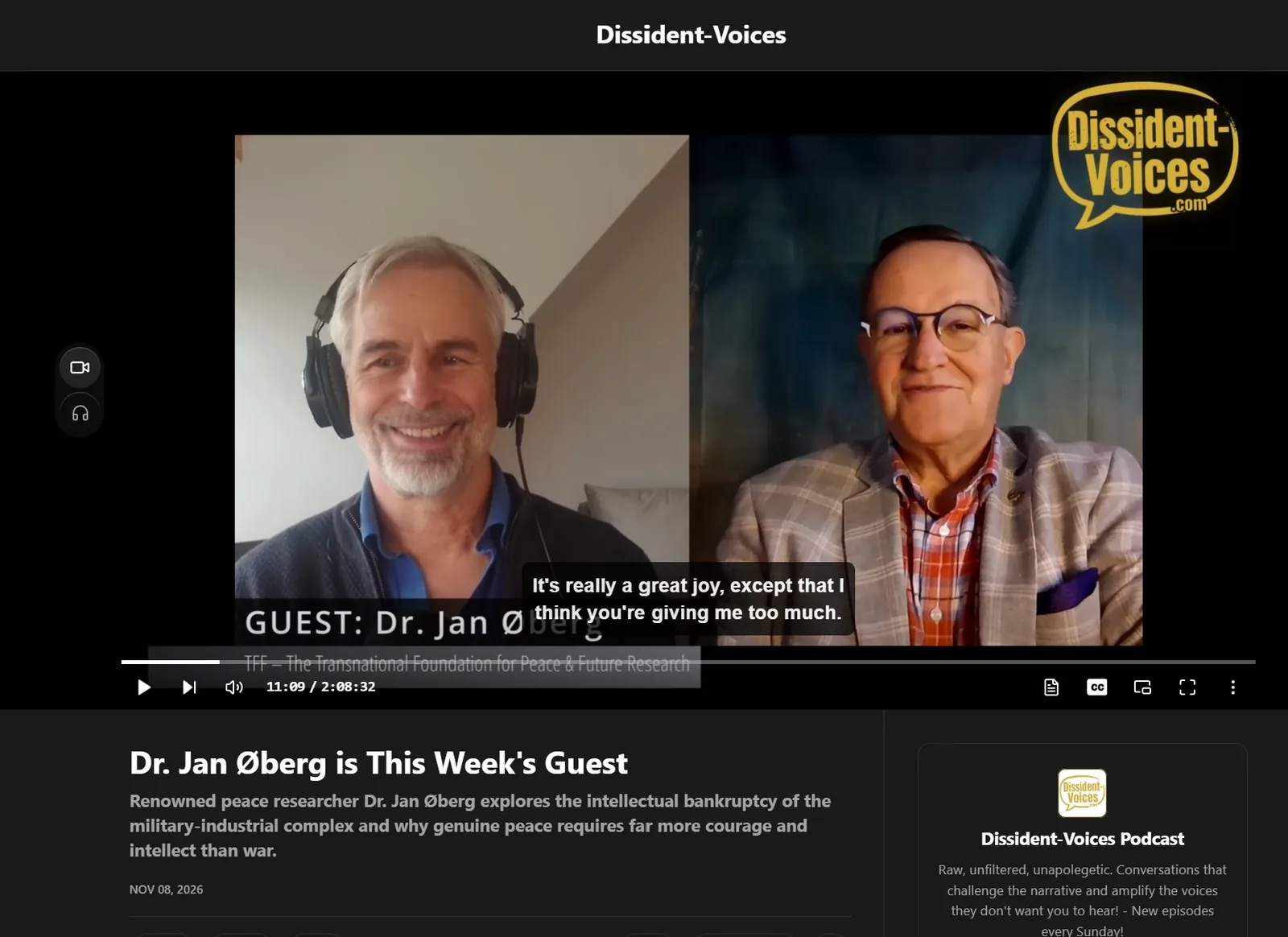
Serious but also a lot of laughs and positive energy. Because peace is also about conviviality and enchantment… Jan Oberg, TFF director November 16, 2026 This is a long (129 minutes) conversation with me. We cover very many, also personal, issues that makes a somewhat unusual media event. I am very grateful to Flemming Blicher for giving me this opportunity. I can’t remember any channel or editor who spent as much time as he did preparing it – including also asking me to answer a series of pre-interview questions, which are now posted under the conversation. If you sympathise with its content, please share it. Watch it here
A Message from Jan Oberg November 6, 2026 Over the past fifty years, I have devoted roughly 175,000 hours to research and public education for a more peaceful world: thinking, researching, writing, organising, publishing, debating, maintaining websites, corresponding, reaching out, leading a foundation, work in conflict and war zones, professorships, teaching courses and giving public lectures and doing media work. In short, ten hours a day, seven days a week, for half a century. The focus was on international political peace – analysing and trying to stop wars, address underlying conflicts and making alternative peace plans – at the desk and on the ground. Important as that has been and remains, it is only one kind of peace and it is now in a tragic militarist state compared with what it could have been.  Lately, however, I have found myself thinking about a concept from economics as well as everyday...
Photo above: Carl Fredrik Reuterswärd’s Non-Violence outside UN Headquarters in New York. Kirill Levin, CC BY-NC-SA 2. Jan Oberg November 3, 2026 I am happy to be published in Horizons which is produced by the Center for International Relations and Sustainable Development, CIRSD, in Belgrade. My contribution brings out a radical re-thinking of what concepts such as defence, security, deterrence – and peace – may mean if we want to create a more peaceful world. It also summarises a few things I have been working with the last few decades. Please read it here Og her er den på dansk, takket være Johnny Baltzersens lynhurtige oversættelse

Recent Articles

Serious but also a lot of laughs and positive energy. Because peace is also about conviviality and enchantment… Jan Oberg, TFF director November 16, 2026 This is a long (129 minutes) conversation with me. We cover very many, also personal, issues that makes a somewhat unusual media event. I am very grateful to Flemming Blicher for giving me this opportunity. I can’t remember any channel or editor who spent as much time as he did preparing it – including also asking me to answer a series of pre-interview questions, which are now posted under the conversation. If you sympathise with its content, please share it. Watch it here
A Message from Jan Oberg November 6, 2026 Over the past fifty years, I have devoted roughly 175,000 hours to research and public education for a more peaceful world: thinking, researching, writing, organising, publishing, debating, maintaining websites, corresponding, reaching out, leading a foundation, work in conflict and war zones, professorships, teaching courses and giving public lectures and doing media work. In short, ten hours a day, seven days a week, for half a century. The focus was on international political peace – analysing and trying to stop wars, address underlying conflicts and making alternative peace plans – at the desk and on the ground. Important as that has been and remains, it is only one kind of peace and it is now in a tragic militarist state compared with what it could have been.  Lately, however, I have found myself thinking about a concept from economics as well as everyday...
Photo above: Carl Fredrik Reuterswärd’s Non-Violence outside UN Headquarters in New York. Kirill Levin, CC BY-NC-SA 2. Jan Oberg November 3, 2026 I am happy to be published in Horizons which is produced by the Center for International Relations and Sustainable Development, CIRSD, in Belgrade. My contribution brings out a radical re-thinking of what concepts such as defence, security, deterrence – and peace – may mean if we want to create a more peaceful world. It also summarises a few things I have been working with the last few decades. Please read it here Og her er den på dansk, takket være Johnny Baltzersens lynhurtige oversættelse

TFF on Substack

Discover and subscribe to more peace materials on TFF Substack

Most Popular

Serious but also a lot of laughs and positive energy. Because peace is also about conviviality and enchantment… Jan Oberg, TFF director November 16, 2026 This is a long (129 minutes) conversation with me. We cover very many, also personal, issues that makes a somewhat unusual media event. I am very grateful to Flemming Blicher for giving me this opportunity. I can’t remember any channel or editor who spent as much time as he did preparing it – including also asking me to answer a series of pre-interview questions, which are now posted under the conversation. If you sympathise with its content, please share it. Watch it here
A Message from Jan Oberg November 6, 2026 Over the past fifty years, I have devoted roughly 175,000 hours to research and public education for a more peaceful world: thinking, researching, writing, organising, publishing, debating, maintaining websites, corresponding, reaching out, leading a foundation, work in conflict and war zones, professorships, teaching courses and giving public lectures and doing media work. In short, ten hours a day, seven days a week, for half a century. The focus was on international political peace – analysing and trying to stop wars, address underlying conflicts and making alternative peace plans – at the desk and on the ground. Important as that has been and remains, it is only one kind of peace and it is now in a tragic militarist state compared with what it could have been.  Lately, however, I have found myself thinking about a concept from economics as well as everyday...
Photo above: Carl Fredrik Reuterswärd’s Non-Violence outside UN Headquarters in New York. Kirill Levin, CC BY-NC-SA 2. Jan Oberg November 3, 2026 I am happy to be published in Horizons which is produced by the Center for International Relations and Sustainable Development, CIRSD, in Belgrade. My contribution brings out a radical re-thinking of what concepts such as defence, security, deterrence – and peace – may mean if we want to create a more peaceful world. It also summarises a few things I have been working with the last few decades. Please read it here Og her er den på dansk, takket være Johnny Baltzersens lynhurtige oversættelse
Read More
Screenshot 2026-11-10 174455
Serious but also a lot of laughs and positive energy. Because peace is also about conviviality and enchantment… Jan Oberg, TFF director November 16, 2026 This is a long (129 minutes) conversation with me. We cover very many, also personal, issues that makes a somewhat unusual media event. I am very grateful to Flemming Blicher for giving me this opportunity. I can’t remember any channel or editor who spent as much time as he did preparing it – including also asking me to answer a series of pre-interview questions, which are now posted under the conversation. If you sympathise with its content, please share it. Watch it here
AbstractVision_2017_#1_800 (kopia)
A Message from Jan Oberg November 6, 2026 Over the past fifty years, I have devoted roughly 175,000 hours to research and public education for a more peaceful world: thinking, researching, writing, organising, publishing, debating, maintaining websites, corresponding, reaching out, leading a foundation, work in conflict and war zones, professorships, teaching courses and giving public lectures and doing media work. In short, ten hours a day, seven days a week, for half a century. The focus was on international political peace – analysing and trying to stop wars, address underlying conflicts and making alternative peace plans – at the desk and on the ground. Important as that has been and remains, it is only one kind of peace and it is now in a tragic militarist state compared with what it could have been.  Lately, however, I have found myself thinking about a concept from economics as well as everyday...
knotted gun
Photo above: Carl Fredrik Reuterswärd’s Non-Violence outside UN Headquarters in New York. Kirill Levin, CC BY-NC-SA 2. Jan Oberg November 3, 2026 I am happy to be published in Horizons which is produced by the Center for International Relations and Sustainable Development, CIRSD, in Belgrade. My contribution brings out a radical re-thinking of what concepts such as defence, security, deterrence – and peace – may mean if we want to create a more peaceful world. It also summarises a few things I have been working with the last few decades. Please read it here Og her er den på dansk, takket være Johnny Baltzersens lynhurtige oversættelse
TFFPortfolioVign
UNITE-tillid, DREAM-velstand og andre konstruktive komponenter Normally we publish articles in English here. But this is a translation of a very important TFF document that should reach as many as possible in Denmark since this country’s government has been one of the most hardline in Europe and, up till now at least, has refused to use diplomacy and, instead, spent tremendous sums on arming Ukraine with the express goal of defeating Russia. Thus this – unique – article is in Danish. Vi er Johnny Baltzersen og hans Fælles Sikkerhed – Fælles Fremtid på Substack overmåde taknemmelige for at have oversat og publiceret TFF’s 2025-portfølje for fredsidéer med henblik på Ukraines fremtid. Vi håber den nu kan nå mange flere danskere – som også vil sprede den og skabe debat – nu den danske regerings og folketingspartiernes politik på dette område siden 2022 står nu – forudsigeligt – ved vejs ende....
JoGSS-Silent
Jan Oberg TFF director October 28, 2026 Exactly one month has now passed since I published my criticism of the introduction to the special issue on Johan Galtung published by the Journal of Global Security Studies, JoGSS, and of Tor Egil Førland’s chapter about Galtung which serves as a preview to his forthcoming biography of Galtung to be published by PRIO. See the original on The Transnational here and the same article on TFF Substack with many general and critical comments and, in particular, the people who decided to withdraw from the biography project in protest. The special issue itself was extraordinary. It was devoted to the intellectual legacy of one of the founders of peace research and contained a number of strong assessments of his personality, scholarship, intellectual trajectory, and public role. Such assessments are, of course, entirely legitimate. No scholar is beyond criticism, and neither was Johan Galtung....
Screenshot 2026-10-26 115647
An aspect of Iran’s culture and civilisation you’ve probably never heard about. Don’t be surprised if the US and Israel also try to bomb them. Jan ObergTFF director October 26, 2026 Today – under the “USraeli” threat of new “annihilating” bombings – opens the 7th International Conference on Peace and Conflict Resolution at Tehran’s University. As far as I can tell, this is the only permanent, advanced peace research institution in West Asia/the Middle East. Perhaps more countries in that region could be inspired? I mean, how many military “security” institutes and military academies do they have? Many peace research institutes and university departments have been established since the 1950s in the West. They are now all under attack; some have closed down, some have gone mainstream, yet others kept the name but do nothing to research peace and disseminate results or advice; instead, they cooperate with militarism’s platforms such...