December 2004

Category

Year

Author / Contributor

Region

Sort by

Showing 1-10 of 5830 stories

ObergPhoto2cmB-W-3
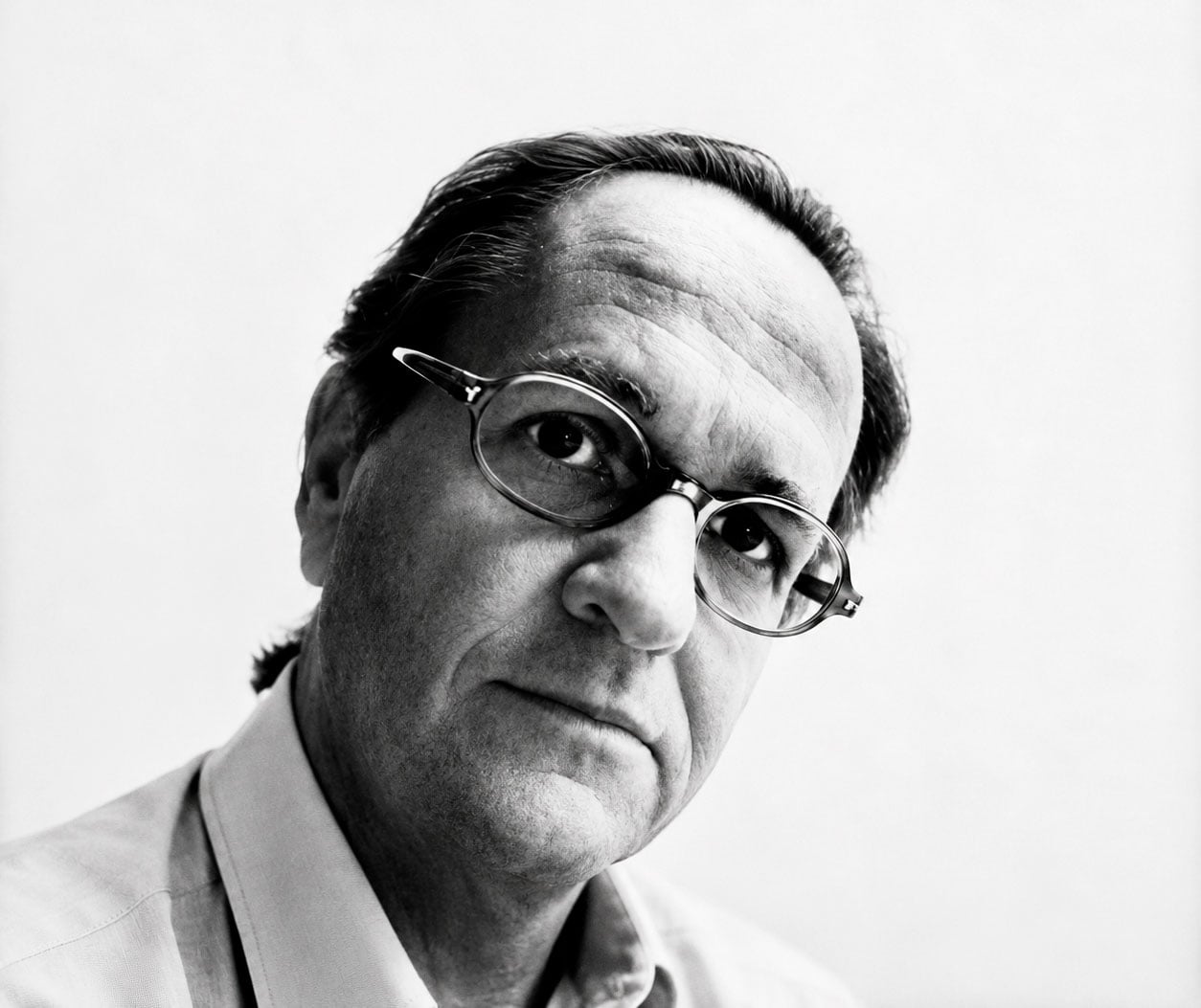
Socialpsykologiske Essays Af Rolf Kuschel og Faezeh Zand med bidrag af Jan Øberg Den 30. august 2004 udkom “Ondskabens Psykologi” på Frydenlund. Den er i hovedsagen forfattet af Rolf Kuschel og Faezeh Zand og afsluttes med et bidrag af Jan Øberg om ondskaben i det internationale samfund. Læs om bogen hér – hvor du også kan bestille den. Se iøvrigtBerlingske Tidende 26. september 2004 “I mit bidrag forsøger jeg at drøfte om ondskab måske kan være en egenskab ved systemer og ikke bare individer. I vores kultur lokaliseres det onde jo som regel i enkeltindivider eller større eller mindre grupper, der udpeges som onde af dem, der mener de selv er gode. Jeg syntes det kunne være interessant med en drøftelse af hvorvidt man kan tale om at det verdens udviklingssystem og krigssystem kan kaldes ondt. Det kan jo sådan enkelt udtrykt ikke være godt når 100.000 mennesker dør unødvendigt på vor klode...
ChatGPT Image 9 jun 2026, 11_11_33
LONDON – Eight years ago this week, after 200,000 unnecessary deaths, 40,000 “disappearances” and 440 decimated villages, peace formally came to the last redoubt of the Central American war zone, Guatemala. Put it up there with Rwanda, Cambodia, ex-Yugoslavia and today the Congo, as one of the great killing fields of the “post-war” world. The violence never reached the crescendo it did in neighboring El Salvador, nor did as many people just “disappear” as happened in Chile and Argentina, nor did the war stretch on and on as long as in Peru and Colombia, but no country in Latin America came near Guatemala for long-term systematic assassination and torture. Before my first trip to this heart-torn country in 1980 I went for a briefing in London from the secretary-general of Amnesty International. I had asked him to point me in the direction of the worst country on their books and...
Imagen-thumbnail-The-Transnational
Vice President, Strategic Nonviolence Committee National Security Council One of the most important features of the present violence in Southern Thailand is its sustained deadliness which engenders the state’s violent responses. The phenomenon is fast becoming normalized due to its continuing violence. A possible consequence of this normalization of violence is that Thai society risks losing its capability to find political solutions to violence and being suffocated in the pool of violence itself. The Queen’s speech on November 16, 2004 was a remarkable wake-up call for the whole Thai society about the seriousness of violence in Southern Thailand. Heeding Her Majesty’s admonitions from a nonviolence perspective, some concrete nonviolent alternatives, necessary if this deadly conflict is to be mitigated and the prognosis of deepening violence and hatred in Thai society altered, will be proposed here. Nonviolence Perspective It goes without saying that there are a number of ways “a nonviolence...
ChatGPT Image 9 jun 2026, 11_11_33
LONDON – “Some frontiers are only in the imagination”, wrote Jan Morris in her remarkable book, “Fifty Years of Europe”. Prince Metternich used to say the frontier of Asia was at the Landstrasse, the street which ran towards Hungary, away from Vienna’s city walls. It was also said that Konrad Adenauer, the first chancellor of Germany after World War 11, held similar feelings about Prussia. He was a Rhinelander, and whenever his train crossed the Elbe, on its way eastward to Berlin, he too would groan, “Hier beginnt Asia”, and pull the blinds down. We cannot help but ask, “What is Europe?” Geographically, it is no more than a peninsula protruding from the landmass of Asia. Culturally it has always been a potage of peoples, languages and traditions. Politically it is a moveable feast- of the 35 sovereign states in post Iron Curtain Europe, nine have been created or resurrected...
ChatGPT Image 9 jun 2026, 11_11_33
LONDON – If they say in Mexico, “How far from God and how close to the United States” it is even truer for El Salvador, another 600 kilometers away down the isthmus of Central America. El Salvador’ s currency is now the U.S. dollar, 1.5 million of its over 6 million people work both legally and illegally in the U.S. and the American embassy is a massive fortress, perhaps architecture to intimidate as well as to protect, a reminder that the U.S. is ready if necessary to throw its weight about as it did earlier this year with the involvement of the ambassador in its recent election. This is the U.S.’s “near abroad”. Of all Central America’s civil wars, wars that dominated the headlines almost as much as Iraq’s does today, Salvador’s in terms of killings was the worst. But today the lion has lain down with the lamb. In...
Imagen-thumbnail-The-Transnational-1
Tom H. Hastings Nonviolent Response to Terrorism Jefferson, NC: McFarland & Co., Inc., 2004$39.95. 244 pp. ISBN 0786418745 This imminently readable, informed, and well-documented survey of the best thinking about nonviolent responses to terrorism combines the concrete experience of an activist and the theoretical knowledge of a scholar. It emphasizes the intimate connection between developing and using nonviolent structures and between short-term and long-term responses. In four chapters devoted to immediate nonviolent response, it describes the strengths and limitations of smart sanctions, meditation, law, and nonviolent resistance, including nonviolent interposition. Similarly, the final four chapters discuss long-term nonviolent response, such as halting the arms race, building sustainable economies, educating about peace cultures, and repatriating refugees. The author indicates how recent experience and research around the globe have increased activists‚ skills in international negotiation, mediation, and adjudication. Three insightful reflections on terrorism, in an appendix, along with appropriate references and a...

ObergPhoto2cmB-W-3
Margaret Hassan has been murdered. That is the most probable conclusion from a video given to Al Jazeera yesterday. For one who met her and got to know her, even if just a little, it is hard to write and read that sentence. But Margaret Hassan – Umm Margaret – in Baghdad has been murdered. Who killed her? Desperate, fanatic people who thereby casts a dark shadow over their nationality, organisation, religion and philosophy. People who mistakenly believe that a better Iraq will emerge from such a crime and who cares nil for the welfare of the Iraqi people to whom she devoted most of her life and work. Or someone related to the occupation forces seeking to discredit the image of all Iraqi resistance. Why she of all? Because she was a courageous, principled and determined humanist who defied danger and could not be intimidated. She represented the best...
Imagen-thumbnail-The-Transnational
Margaret Hassan has been murdered. That is the most probable conclusion from a video given to Al Jazeera yesterday. For one who met her and got to know her, even if just a little, it is hard to write and read that sentence. But Margaret Hassan – Umm Margaret – in Baghdad has been murdered. Who killed her? Desperate, fanatic people who thereby casts a dark shadow over their nationality, organisation, religion and philosophy. People who mistakenly believe that a better Iraq will emerge from such a crime and who cares nil for the welfare of the Iraqi people to whom she devoted most of her life and work. Or someone related to the occupation forces seeking to discredit the image of all Iraqi resistance. Why she of all? Because she was a courageous, principled and determined humanist who defied danger and could not be intimidated. She represented the best...
ObergPhoto2cmB-W-3
We’ve selected a few rather different articles about the elections in Ukraine. We hope this will be pedagogically useful for teachers, students, journalists and media critics. Again, there may be many aspects of truth in what is basically the same story. Together these articles offer important insights into what happened and happens in Ukraine – but also into the variety of approaches and lenses. Analyse what you believe in yourself – and why! March Almond in the GuardianThe price of People Power APF – The Turkish PressUS pro-democracy programme looks further east after Ukraine Nadia Diuk in The Christian Science MonitorIn Ukraine – homegrown freedom Jackson Diehl in The Christian Science MonitorPutin’s unchallenged imperialism moves to Ukraine Larry Chin at GlobalResearch.caThe Cold War Crisis in the Ukraine.Control of Oil: Grand Chessboard “Pivot” at Stake Joel Brinkley in The International Herald TribunePowell rejects claim by Russia that West meddled in Ukraine
Logo-Transnational
Would you be browsing this Feature Collection now, if it wasn’t useful to you? Support TFF and get more quality articles like this in the future
ChatGPT Image 9 jun 2026, 11_11_33
LONDON – Imagine for a moment that the U.S. gave up all its nuclear weapons, a totally farfetched idea but one supported by such luminaries as former secretary for defense, Robert McNamara, the late Paul Nitze, Ronald Reagan’s hard-line negotiator on nuclear arms and General George Lee Butler, the former chief of U.S. strategic (i.e. nuclear) forces. As his successor, General Eugene Habiger, has said, “We have reached the point where the senior military generals responsible for nuclear forces are advocating more vocally, more vehemently, than our politicians, to get down to lower and lower weapons”. But imagine if it did happen what effect this would have on Russia. It would then move immediately to close down its decaying early warning system and its hair-trigger nuclear posture, which former senator Sam Nunn sees as a likely cause of accidental nuclear war. Imagine what effect it would have on Iran, Syria,...
Logo-Transnational
Lidt om bogen Bogens indhold Bestil bogen her Anmeldelser Siden den kolde krigs afslutning har dansk udenrigs- og sikkerhedspolitik bevæget sig langt ind i en politisk og moralsk blindgyde. Men det tjener hverken os eller verden at Danmark er blevet en krigs- og besættelsesmagt, viser den internationalt respekterede danske freds- og fremtidsforsker, Jan Øberg i denne bog. Tværtimod mindsker det vores og andres sikkerhed og bidrager til at øge, snarere end at mindske, terrortruslen. Forudsigelig fiasko – der udkommer 4. juni 2004 – sætter fokus på det irakiske samfund og Vestens måde at betragte og behandle Irak på. Jan Øberg kombinerer konkret konfliktanalyse med et personligt engagement, og underbygger overbevisende og konsekvent det synspunkt, at Vestens mangelfulde konfliktforståelse og ukyndige konflikthåndtering måtte ende med den ulykkelige krig. Det er en krig, som efter forfatterens opfattelse hverken kan fremme ædle motiver – etablere et demokratisk Irak – eller økonomisk-kulturelle interesser, men...