
Zivadin Jovanovic: The West’s ultimatum to Serbia won’t work

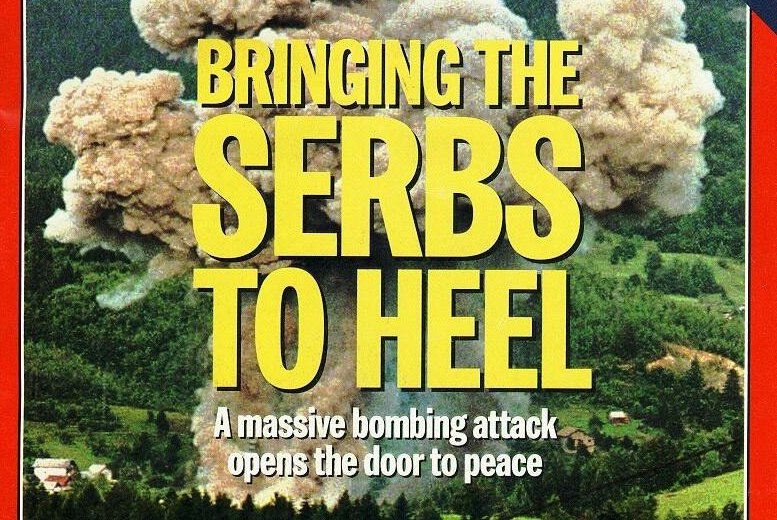
Time magazine, March 24, 1999

Živadin Jovanović,

Yugoslav Minister of Foreign Affairs 1998-2000

January 29, 2023

If the wording of the ‘Basic Agreement’ presented by the western “Great Five” (EU, USA, Germany, France, Italy) on Kosovo and Metohija, which has been circulated for a while in the Albanian media and as of January 20 in the Serbian social networks as well, is anywhere close to the authentic one, it cannot be viewed as any sort of an agreement. It’s rather an ultimatum compelling Serbia to de facto recognize the enforced secession of her Province.

The document, originally attributed to French President Macron and German Chancellor Scholz (1), leaders of two largest European democracies, stands out as another gross violation of UN Security Council Resolution 1244, the basic principles of democratic international relations, the UN Charter, the Paris Charter, and the OSCE’s Helsinki Final Act.
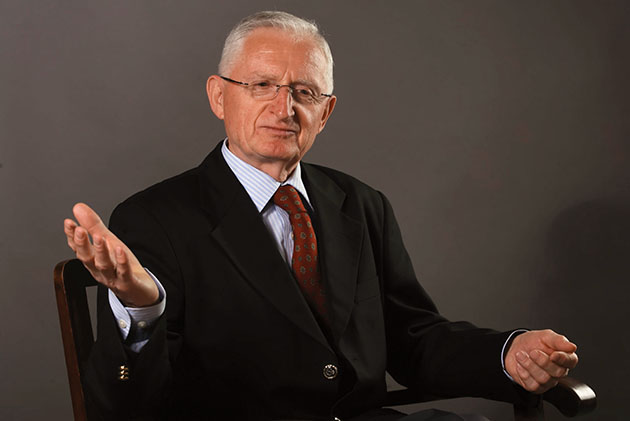
The author. Read more about him here.

Inspired by their own power and greatness, this text humiliates Serbia and the Serbian nation by telling Serbia to observe equality, sovereignty, territorial integrity and state insignia of the so-called Kosovo and, for that matter, of all other states except her own sovereignty, territorial integrity and her internationally recognized borders confirmed as such by the UN, the OSCE, other international organizations, and the Badinter Arbitration Committee.

The Scholz-Macron paper demands Serbia not to oppose so-called Kosovo’s membership in all international organizations, including the United Nations. Therein, Serbia is expected to cooperate in deconstruction of her own integrity, own Constitutional order and international standing so that the ‘Kosovo case’ subsequently could not be utilized by any party as a precedent for future unilateral secessions.

The authors intend to use Serbia’s yielding to such an ultimatum as a way for non-recognizers (Spain, Romania, Slovakia, Greece, and Cyprus), which involve five EU and four NATO members, to recognize so-called Kosovo and thus heal internal disunity within both the EU and NATO.

Their other objective is to transfer all responsibility for casualties, devastation and consequences of using weapons with depleted uranium during NATO’s 1999 aggression onto Serbia, even though Serbia herself was its victim.

Their final objective is to incorporate Serbia into a so-called ‘alliance of democracies’ set up to confront Russia’s and China’s alleged “autocratic” governments.

This shameful paper will stay in the future as an illustration of how the expansionist objectives of the military NATO aggression against Serbia (FRY) in 1999 had for decades been continued by other means such as ultimatums and threats of economic and political coercion.

The Scholz-Macron proposal has now turned into a US-backed EU initiative, coupled with the latest activities of the ‘Big Five’ in Belgrade, are nothing short of usurpation and prejudging the prerogatives and decision of the UN Security Council as the only body in charge of deciding on issues pertaining to peace and security; they ignore UN Security Council Resolution 1244 as a universally binding legal act of the highest order and seek to drag Serbia, a peaceful and militarily neutral country, into a global confrontation. This reckless, one-sided and arbitrary course of action, in addition to being anti-Serb, is fraught with unforeseeable consequences.

Kosovo and Metohija is not a frozen conflict, as purported by the West and echoed in Belgrade, nor can it be resolved by presenting an ultimatum to Serbia. A hypothetical acceptance of the ultimatum would not save either peace or safety of Serbs in the Province, only help the conflict potential accumulate, encourage other separatisms and humiliate Serbia and the Serbian nation.

The root cause and the essence of the problem concerning Kosovo and Metohija lies in the geopolitics determined by the dominance of the leading Western powers and their expansion to the East. NATO does its utmost to turn Kosovo and Metohija, as well as the entire Serbia, into a springboard for its incursion eastwards, to pit Serbia against Russia and China.

The issue of the status of the Province of Kosovo and Metohija, however, cannot be resolved by accepting any ultimatum but instead by insisting on the observance of the Constitution, as well as of the internationally recognized borders and UN SC Resolution 1244.

Even if Serbia surrendered to the ultimatum, the Serbs in Kosovo and Metohija would remain unsafe, their illegally occupied property would not be repossessed, some 250,000 expelled Serbs and other non-Albanians would remain unable to return to their homes freely and safely, Serbian state-owned and socially-owned property would remain usurped.

If anything, Serbia should be aware that yielding to an ultimatum could only result in speeding up dangerous trends of confrontation and escalation, at the regional and the European level, just the same.

A potential consent given by Serbia to the so-called Kosovo joining the United Nations and other international organizations would be tantamount to the recognition of the latter’s international legal personality, entailing all sorts of consequences, beginning with an escalation and going all the way to the creation of Greater Albania at the expense of state territories not only of Serbia but also of few other Balkan states.

Is there a single soul in Serbia who believes in new guarantees and promises given by the West? Was it not Angela Merkel who recently cautioned us to not trust their assurances! Or has our gullibility already entered the stage of no limits!

The promises involving self-governance for Serbs, the Community of Serbian Municipalities (albeit one established ‘pursuant to the Kosovo Constitution’, according to Chollet), and ‘formalizing the status of the Serbian Orthodox Church’, do not in the least alter the true character of the Scholz-Macron (EU’s) ultimatum. Why?

Because its essence lies in the request that Serbia first and tacitly and later on formally also legally, recognize the independence of so-called Kosovo and accept its membership in the United Nations and other international organizations. The rest is merely a part of a more or less convincing diplomatic cosmetics and the tactics to ‘save the face’ of the victim.

History warns that peace, stability, and better life cannot be preserved by means of conceding to ultimatums at the expense of sovereignty and territorial integrity. Let us recall that the Munich Agreement of 1938 on carving out the Sudetenland from Czechoslovakia, an ultimatum made behind Russia’s back, which was also publicly touted by the then-leaders of Germany, France, Italy and the United Kingdom as the one saving peace in Europe. It is very perilous that those countries’ contemporary leaders are unaware of past lessons.

The position taken vis-à-vis the Constitution, UN SC Resolution 1244, internationally recognized borders of Serbia, and international law, is not a matter of an ultimatum or of a one-off deal, but rather the matter of the position taken vis-à-vis the survival of Serbia as an old European state, and of Serbian nation as a factor contributing to peace, stability and progress in the Balkans, Europe, and the world.

Such status and reputation of Serbia are reaffirmed by the majority of countries in the world, by some two-thirds of the planet’s population, who did not and wish not to recognize this illegal construct as a state; among those is a not so small number of countries which, at Serbia’s request, withdrew their previous recognitions without fearing ultimatum-fashioned pressures from the West when doing so. 

Note

  1. No official version of the “Basic Agreement” in any language has been published. I have only an unofficial text in Serbian composed of the preamble and 10 articles, which are widely circulated by electronic mass media.
  2. Jovanovic is also President of the Belgrade Forum for a World of Equals.
  3. As of January 2023, 99 countries have recognised the Republic of Kosovo, down from 119 in 2015. See all details and countries here.


Related Posts

The issue of state sovereignty under international law and its inconsistencies and duplicities has become more complex than ever, especially after the outbreak of the Ukraine war and the “Ukrainization” of the Taiwan issue (even though Taiwan is not a sovereign state like Ukraine). However, the focus of this analysis is relatively modest: we examine a region of the Western Balkans in which the countries have already (more or less voluntarily) lost or given up their statehood and sovereignty. The concept of the so-called “Western Balkans” (WB) – comprising Serbia, Montenegro, Albania, Kosovo, North Macedonia, and Bosnia and Herzegovina – was concocted in the corridors of power in Brussels and Washington. This artificial sub-region, with its flexible geography and borders, lacks logical coherence. It effectively creates a buffer zone of weak states that are unlikely to ever meet the criteria for EU integration despite being offered European perspectives and hopes. However, these...
. He first tells why he was in Belgrade during the bombing and then explains how that bombing was a turning point towards the new multipolar – and better – world we are now approaching. First Beoforum’s version on YouTube. Then you can always find it on TFF’s Vimeo Channel – because we boycott Goggle-owned YouTube as much as we can.
Neutrality Studies is an excellent YouTube platform and homepage. TFF recommends it highly. NATO turned 75 on April 4, 2024. The only problem is that it should have been dissolved when its historical raisin d’etre – the Soviet Union and the Warsaw Pact – disappeared completely. But Western militarists exploited the opportunity and expanded it right up to the border of Russia – while Russia was on its knees. Against all Western promises to Mikhail Gorbachev that NATO would not expand “one inch,” NATO helped greatly in destroying neutral Yugoslavia. Then it wooed the former Warsaw Pact countries to join, the 11th in that process being Ukraine. The autistic hubris alliance listened to no warnings from Western experts, former US ambassadors in Moscow or scholars. While Russia’s invasion of Ukraine was certainly a counterproductive move that NATO could use to its own advantage, it doesn’t take a professor of political...

Recent Articles

Photo above: Carl Fredrik Reuterswärd’s Non-Violence outside UN Headquarters in New York. Kirill Levin, CC BY-NC-SA 2. Jan Oberg November 3, 2026 I am happy to be published in Horizons which is produced by the Center for International Relations and Sustainable Development, CIRSD, in Belgrade. My contribution brings out a radical re-thinking of what concepts such as defence, security, deterrence – and peace – may mean if we want to create a more peaceful world. It also summarises a few things I have been working with the last few decades. Please read it here Og her er den på dansk, takket være Johnny Baltzersens lynhurtige oversættelse
UNITE-tillid, DREAM-velstand og andre konstruktive komponenter Normally we publish articles in English here. But this is a translation of a very important TFF document that should reach as many as possible in Denmark since this country’s government has been one of the most hardline in Europe and, up till now at least, has refused to use diplomacy and, instead, spent tremendous sums on arming Ukraine with the express goal of defeating Russia. Thus this – unique – article is in Danish. Vi er Johnny Baltzersen og hans Fælles Sikkerhed – Fælles Fremtid på Substack overmåde taknemmelige for at have oversat og publiceret TFF’s 2025-portfølje for fredsidéer med henblik på Ukraines fremtid. Vi håber den nu kan nå mange flere danskere – som også vil sprede den og skabe debat – nu den danske regerings og folketingspartiernes politik på dette område siden 2022 står nu – forudsigeligt – ved vejs ende....
Jan Oberg TFF director October 28, 2026 Exactly one month has now passed since I published my criticism of the introduction to the special issue on Johan Galtung published by the Journal of Global Security Studies, JoGSS, and of Tor Egil Førland’s chapter about Galtung which serves as a preview to his forthcoming biography of Galtung to be published by PRIO. See the original on The Transnational here and the same article on TFF Substack with many general and critical comments and, in particular, the people who decided to withdraw from the biography project in protest. The special issue itself was extraordinary. It was devoted to the intellectual legacy of one of the founders of peace research and contained a number of strong assessments of his personality, scholarship, intellectual trajectory, and public role. Such assessments are, of course, entirely legitimate. No scholar is beyond criticism, and neither was Johan Galtung....

TFF on Substack

Discover and subscribe to more peace materials on TFF Substack

Most Popular

Photo above: Carl Fredrik Reuterswärd’s Non-Violence outside UN Headquarters in New York. Kirill Levin, CC BY-NC-SA 2. Jan Oberg November 3, 2026 I am happy to be published in Horizons which is produced by the Center for International Relations and Sustainable Development, CIRSD, in Belgrade. My contribution brings out a radical re-thinking of what concepts such as defence, security, deterrence – and peace – may mean if we want to create a more peaceful world. It also summarises a few things I have been working with the last few decades. Please read it here Og her er den på dansk, takket være Johnny Baltzersens lynhurtige oversættelse
UNITE-tillid, DREAM-velstand og andre konstruktive komponenter Normally we publish articles in English here. But this is a translation of a very important TFF document that should reach as many as possible in Denmark since this country’s government has been one of the most hardline in Europe and, up till now at least, has refused to use diplomacy and, instead, spent tremendous sums on arming Ukraine with the express goal of defeating Russia. Thus this – unique – article is in Danish. Vi er Johnny Baltzersen og hans Fælles Sikkerhed – Fælles Fremtid på Substack overmåde taknemmelige for at have oversat og publiceret TFF’s 2025-portfølje for fredsidéer med henblik på Ukraines fremtid. Vi håber den nu kan nå mange flere danskere – som også vil sprede den og skabe debat – nu den danske regerings og folketingspartiernes politik på dette område siden 2022 står nu – forudsigeligt – ved vejs ende....
Jan Oberg TFF director October 28, 2026 Exactly one month has now passed since I published my criticism of the introduction to the special issue on Johan Galtung published by the Journal of Global Security Studies, JoGSS, and of Tor Egil Førland’s chapter about Galtung which serves as a preview to his forthcoming biography of Galtung to be published by PRIO. See the original on The Transnational here and the same article on TFF Substack with many general and critical comments and, in particular, the people who decided to withdraw from the biography project in protest. The special issue itself was extraordinary. It was devoted to the intellectual legacy of one of the founders of peace research and contained a number of strong assessments of his personality, scholarship, intellectual trajectory, and public role. Such assessments are, of course, entirely legitimate. No scholar is beyond criticism, and neither was Johan Galtung....
Read More
knotted gun
Photo above: Carl Fredrik Reuterswärd’s Non-Violence outside UN Headquarters in New York. Kirill Levin, CC BY-NC-SA 2. Jan Oberg November 3, 2026 I am happy to be published in Horizons which is produced by the Center for International Relations and Sustainable Development, CIRSD, in Belgrade. My contribution brings out a radical re-thinking of what concepts such as defence, security, deterrence – and peace – may mean if we want to create a more peaceful world. It also summarises a few things I have been working with the last few decades. Please read it here Og her er den på dansk, takket være Johnny Baltzersens lynhurtige oversættelse
TFFPortfolioVign
UNITE-tillid, DREAM-velstand og andre konstruktive komponenter Normally we publish articles in English here. But this is a translation of a very important TFF document that should reach as many as possible in Denmark since this country’s government has been one of the most hardline in Europe and, up till now at least, has refused to use diplomacy and, instead, spent tremendous sums on arming Ukraine with the express goal of defeating Russia. Thus this – unique – article is in Danish. Vi er Johnny Baltzersen og hans Fælles Sikkerhed – Fælles Fremtid på Substack overmåde taknemmelige for at have oversat og publiceret TFF’s 2025-portfølje for fredsidéer med henblik på Ukraines fremtid. Vi håber den nu kan nå mange flere danskere – som også vil sprede den og skabe debat – nu den danske regerings og folketingspartiernes politik på dette område siden 2022 står nu – forudsigeligt – ved vejs ende....
JoGSS-Silent
Jan Oberg TFF director October 28, 2026 Exactly one month has now passed since I published my criticism of the introduction to the special issue on Johan Galtung published by the Journal of Global Security Studies, JoGSS, and of Tor Egil Førland’s chapter about Galtung which serves as a preview to his forthcoming biography of Galtung to be published by PRIO. See the original on The Transnational here and the same article on TFF Substack with many general and critical comments and, in particular, the people who decided to withdraw from the biography project in protest. The special issue itself was extraordinary. It was devoted to the intellectual legacy of one of the founders of peace research and contained a number of strong assessments of his personality, scholarship, intellectual trajectory, and public role. Such assessments are, of course, entirely legitimate. No scholar is beyond criticism, and neither was Johan Galtung....
Screenshot 2026-10-26 115647
An aspect of Iran’s culture and civilisation you’ve probably never heard about. Don’t be surprised if the US and Israel also try to bomb them. Jan ObergTFF director October 26, 2026 Today – under the “USraeli” threat of new “annihilating” bombings – opens the 7th International Conference on Peace and Conflict Resolution at Tehran’s University. As far as I can tell, this is the only permanent, advanced peace research institution in West Asia/the Middle East. Perhaps more countries in that region could be inspired? I mean, how many military “security” institutes and military academies do they have? Many peace research institutes and university departments have been established since the 1950s in the West. They are now all under attack; some have closed down, some have gone mainstream, yet others kept the name but do nothing to research peace and disseminate results or advice; instead, they cooperate with militarism’s platforms such...
Screenshot 2026-10-15 141837
Let’s discuss using AI to create peace – in contrast to boring geopolitics devoid of creative healing and visions. Jan Oberg TFF director October 15, 2026 I asked VEED to create a short video exemplifying how peace is preferable to war, then chose the lady as a template. Simple as that. In less than a minute, it produced this video, which any peace-loving person would appreciate. The only problem is that human intelligence (HI), at least the one that exists among Western decision-makers, isn’t half as moral or smart as AI. I have used AI to dialogue about peace and peace plans, creative conflict resolution and visions of a better future for humankind. It so happens that I am having more stimulating, intelligent, creative and moral discussions with AI than I could possibly have with any EU or NATO leader today. Yes, AI has very problematic and dangerous aspects; used...
girl-5894831_1280
Below are TFF-related media mentions, comments, videos and social media posts published elsewhere but not on this homepage. We happen to catch and list only a fraction. Regarding video comments and debates, we recommend that you go to the TFF Video Channel on Substack where many of them are reproduced. Jan Oberg is a contributor to China Daily – 52 million daily clicks – and Global Times, CGTN and CCTV (the national television), China Investment, Xinhua News Agency and several others. Articles and videos on these media very often multiply into countless Chinese (and Western media) that re-post them from these main media. Thanks to The China Academy, his analyses, interviews and comments are frequently posted on YouTube channels such as Thinkers Forum and Wave Media. These videos are often re-posted on Bilibili (China’s YouTube), the China Content Center on TikTok, and on the Chinese edition of TikTok, Douyin.com. This means reaching hundreds of millions of viewers worldwide over a year. While there are too many to catch on all these...



