Why won’t the US help negotiate a peaceful end to the war in Ukraine?

Jeffrey Sachs

June 23, 2024

For goodness’ sake, negotiate!

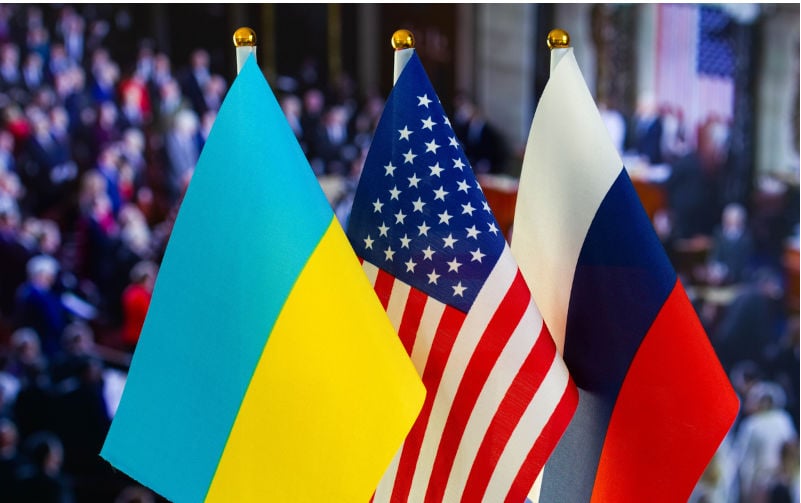
For the fifth time since 2008, Russia has proposed to negotiate with the U.S. over security arrangements, this time in proposals made by President Vladimir Putin on June 14, 2024. Four previous times, the U.S. rejected the offer of negotiations in favour of a neocon strategy to weaken or dismember Russia through war and covert operations. The U.S. neocon tactics have failed disastrously, devastating Ukraine in the process, and endangering the whole world. After all the warmongering, it’s time for Biden to open negotiations for peace with Russia.

Since the end of the Cold War, the U.S. grand strategy has been to weaken Russia. As early as 1992, then Defence Secretary Richard Cheney opined that following the 1991 demise of the Soviet Union, Russia too should be dismembered. Zbigniew Brzezinski opined in 1997 that Russia should be divided into three loosely confederated entities in Russian Europe, Siberia, and the Far East. In 1999, the U.S.-led NATO alliance bombed Russia’s ally, Serbia, for 78 days in order to break Serbia apart and install a massive NATO military base in breakaway Kosovo. Leaders of the U.S. military-industrial complex vociferously supported the Chechen war against Russia in the early 2000s.

To secure these U.S. advances against Russia, Washington aggressively pushed NATO enlargement, despite promises to Mikhail Gorbachev and Boris Yeltsin that NATO would not move one inch eastward from Germany. Most tendentiously, the U.S. pushed NATO enlargement to Ukraine and Georgia, with the idea of surrounding Russia’s naval fleet in Sevastopol, Crimea with NATO states: Ukraine, Romania (NATO member 2004), Bulgaria (NATO member 2004), Turkey (NATO member 1952), and Georgia, an idea straight from the playbook of the British Empire in the Crimean War (1853-6).

Brzezinski spelled out a chronology of NATO enlargement in 1997, including NATO membership of Ukraine during 2005-2010. The U.S. in fact proposed NATO membership for Ukraine and Georgia at the 2008 NATO Bucharest Summit. By 2020, NATO had in fact enlarged by 14 countries in Central Europe, Eastern Europe, and the former Soviet Union (Czech Republic, Hungary, and Poland in 1999; Bulgaria, Estonia, Latvia, Lithuania, Romania, Slovakia, and Slovenia in 2004; Albania and Croatia, 2009; Montenegro, 2017; and Northern Macedonia, 2020), while promising future membership to Ukraine and Georgia.

In short, the 30-year U.S. project, hatched originally by Cheney and the neocons, and carried forward consistently since then, has been to weaken or even dismember Russia, surround Russia with NATO forces, and depict Russia as the belligerent power.

It is against this grim backdrop that Russian leaders have repeatedly proposed to negotiate security arrangements with Europe and the U.S. that would provide security for all countries concerned, not just the NATO bloc. Guided by the neocon game plan, the U.S. has refused to negotiate on every occasion, while trying to pin the blame on Russia for the lack of negotiations.

In June 2008, as the U.S. prepared to expand NATO to Ukraine and Georgia, Russian President Dmitry Medvedev proposed a European Security Treaty, calling for collective security and an end to NATO’s unilateralism. Suffice it to say, the U.S. showed no interest whatsoever in Russia’s proposals, and instead proceeded with its long-held plans for NATO enlargement.

The second Russian proposal for negotiations came from Putin following the violent overthrow of Ukraine’s President Viktor Yanukovych in February 2014, with the active complicity if not outright leadership of the U.S. government. I happened to see the U.S. complicity up close, as the post-coup government invited me for urgent economic discussions. When I arrived in Kiev, I was taken to the Maidan, where I was told directly about U.S. funding of the Maidan protest.

The evidence of U.S. complicity in the coup is overwhelming. Assistant Secretary of State Victoria Nuland was caught on a phone line in January 2014 plotting the change of government in Ukraine. Meanwhile, U.S. Senators went personally to Kiev to stir up the protests (akin to Chinese or Russian political leaders coming to DC on January 6, 2021, to rile up the crowds). On February 21, 2014, the Europeans, U.S., and Russia brokered a deal with Yanukovych in which Yanukovich agreed to early elections. Yet the coup leaders reneged on the deal the same day, took over government buildings, threatened more violence, and deposed Yanukovych the next day. The U.S. supported the coup and immediately extended recognition to the new government.

In my view, this was a standard CIA-led covert regime change operation, of which there have been several dozen around the world, including sixty-four episodes between 1947 and 1989 meticulously documented by Professor Lindsey O’Rourke. Covert regime-change operations are of course not really hidden from view, but the U.S. government vociferously denies its role, keeps all documents highly confidential, and systematically gaslights the world: “Do not believe what you see plainly with your own eyes! The U.S. had nothing to do with this.” Details of the operations eventually emerge, however, through eyewitnesses, whistleblowers, the forced release of documents under the Freedom of Information Act, declassification of papers after years or decades, and memoirs, but all far too late for real accountability.

In any event, the violent coup induced the ethnic-Russia Donbas region of Eastern Ukraine to break from the coup leaders, many of whom were extreme Russophobic nationalists, and some in violent groups with a history of Nazi SS links in the past. Almost immediately, the coup leaders took steps to repress the use of the Russian language even in the Russian-speaking Donbas. In the following months and years, the government in Kiev launched a military campaign to retake the breakaway regions, deploying neo-Nazi paramilitary units and U.S. arms.

In the course of 2014, Putin called repeatedly for a negotiated peace, and this led to the Minsk II Agreement in February 2015 based on autonomy of the Donbas and an end to violence by both sides. Russia did not claim the Donbas as Russian territory, but instead called for autonomy and the protection of ethnic Russians within Ukraine. The UN Security Council endorsed the Minsk II agreement, but the U.S. neocons privately subverted it. Years later, Chancellor Angela Merkel blurted out the truth. The Western side treated the agreement not as a solemn treaty but as a delaying tactic to “give Ukraine time” to build its military strength. In the meantime, around 14,000 people died in the fighting in Donbas between 2014 and 2021.

Following the definitive collapse of the Minsk II agreement, Putin again proposed negotiations with the U.S. in December 2021. By that point, the issues went even beyond NATO enlargement to include fundamental issues of nuclear armaments. Step by step, the U.S. neocons had abandoned nuclear arms control with Russia, with the U.S. unilaterally abandoning the Anti-Ballistic Missile (ABM) Treaty in 2002, placing Aegis missiles in Poland and Romania in 2010 onwards, and walking out of the Intermediate Nuclear Force (INF) Treaty in 2019.

In view of these dire concerns, Putin put on the table on December 15, 2021 a draft “Treaty between the United States of America and the Russian Federation on Security Guarantees.” The most immediate issue on the table (Article 4 of the draft treaty) was the end of the U.S. attempt to expand NATO to Ukraine. I called U.S. National Security Advisor Jake Sullivan at the end of 2021 to try to convince the Biden White House to enter the negotiations. My main advice was to avoid a war in Ukraine by accepting Ukraine’s neutrality, rather than NATO membership, which was a bright red line for Russia.

The White House flatly rejected the advice, claiming remarkably (and obtusely) that NATO’s enlargement to Ukraine was none of Russia’s business! Yet what would the U.S. say if some country in the Western hemisphere decided to host Chinese or Russian bases? Would the White House, State Department, or Congress say, “That’s just fine, that’s a matter of concern only to Russia or China and the host country?” No. The world nearly came to nuclear Armageddon in 1962 when the Soviet Union placed nuclear missiles in Cuba and the U.S. imposed a naval quarantine and threatened war unless the Russians removed the missiles. The U.S. military alliance does not belong in Ukraine any more than the Russian or Chinese military belongs close to the U.S. border.

The fourth offer of Putin to negotiate came in March 2022, when Russia and Ukraine nearly closed a peace deal just weeks after the start of Russia’s special military operation that began on February 24, 2022. Russia, once again, was after one big thing: Ukraine’s neutrality, i.e., no NATO membership and no hosting of U.S. missiles on Russia’s border.

Ukraine’s President Vladimir Zelensky quickly accepted Ukraine’s neutrality, and Ukraine and Russia exchanged papers, with the skillful mediation of the Foreign Ministry of Turkey. Then suddenly, at the end of March, Ukraine abandoned the negotiations.

U.K. Prime Minister Boris Johnson, following in the tradition of British anti-Russian war-mongering dating back to the Crimean War (1853-6), actually flew to Kiev to warn Zelensky against neutrality and the importance of Ukraine defeating Russia on the battlefield. Since that date, Ukraine has lost around 500,000 dead and is on the ropes on the battlefield.

Now we have Russia’s fifth offer of negotiations, explained clearly and cogently by Putin himself in his speech to diplomats at the Russian Foreign Ministry on June 14. Putin laid out Russia’s proposed terms to end the war in Ukraine.

“Ukraine should adopt a neutral, non-aligned status, be nuclear- free, and undergo demilitarization and de-nazification,” Putin said. “These parameters were broadly agreed upon during the Istanbul negotiations in 2022, including specific details on demilitarization such as the agreed numbers of tanks and other military equipment. We reached consensus on all points.

“Certainly, the rights, freedoms, and interests of Russian-speaking citizens in Ukraine must be fully protected,” he continued. “The new territorial realities, including the status of Crimea, Sevastopol, Donetsk and Lugansk people’s republics, Kherson, and Zaporozhye regions as parts of the Russian Federation, should be acknowledged. These foundational principles need to be formalized through fundamental international agreements in the future. Naturally, this entails the removal of all Western sanctions against Russia as well.”

Let me say a few words about negotiating.

Russia’s proposals should now be met at the negotiating table by proposals from the U.S. and Ukraine. The White House is dead wrong to evade negotiations just because of disagreements with Russia’s proposals. It should put up its own proposals and get down to the business of negotiating an end to the war.

There are three core issues for Russia: Ukraine’s neutrality (non-NATO enlargement), Crimea remaining in Russian hands, and boundary changes in Eastern and Southern Ukraine. The first two are almost surely non-negotiable. The end of NATO enlargement is the fundamental casus belli. Crimea is also core for Russia, as Crimea has been home to Russia’s Black Sea fleet since 1783 and is fundamental to Russia’s national security.

The third core issue, the borders of Eastern and Southern Ukraine, will be a key point of negotiations. The U.S. cannot pretend that borders are sacrosanct after NATO bombed Serbia in 1999 to relinquish Kosovo, and after the U.S. pressured Sudan to relinquish South Sudan. Yes, Ukraine’s borders will be redrawn as the result of the 10 years of war, the situation on the battlefield, the choices of the local populations, and tradeoffs made at the negotiating table.

Biden needs to accept that negotiations are not a sign of weakness. As Kennedy put it, “Never negotiate out of fear, but never fear to negotiate.” Ronald Reagan famously described his own negotiating strategy using a Russian proverb, “Trust but verify.”

The neocon approach to Russia, delusional and hubristic from the start, lies in ruins. NATO will never enlarge to Ukraine and Georgia. Russia will not be toppled by a CIA covert operation. Ukraine is being horribly bloodied on the battlefield, often losing 1,000 or more dead and wounded in a single day. The failed neocon game plan brings us closer to nuclear Armageddon.

Yet Biden still refuses to negotiate. Following Putin’s speech, the U.S., NATO, and Ukraine firmly rejected negotiations once again. Biden and his team have still not relinquished the neocon fantasy of defeating Russia and expanding NATO to Ukraine.

The Ukrainian people have been lied to time and again by Zelensky and Biden and other leaders of NATO countries, who told them falsely and repeatedly that Ukraine would prevail on the battlefield and that there were no options to negotiate. Ukraine is now under martial law. The public is given no say about its own slaughter.

For the sake of Ukraine’s very survival, and to avoid nuclear war, the President of the United States has one overriding responsibility today: Negotiate.

Republished from Sach’s homepage, June 19, 2024.

Related Posts

The agreement is catastrophic both because of what it says and what it doesn’t mention. It reduces further the major asset of security policies: Freedom of action. Jan Oberg TFF director September 25, 2026 A couple of hours before the agreement was signed on September 22, 2026, I published the following 13 hypotheses about what it would most likely contain on TFF Substack (in English). I was wrong on only the first point. Contrary to what Trump had written on his Truth Social platform, it does not appear to come into force immediately. In fact, it turned out to be worse than even I had anticipated. After these hypotheses now come a number of reflections in light of what the agreement actually contains, and does not contain, as well as the way in which it has generally been presented by major media outlets and by the public-service broadcaster DR. My...
Lena Petrova of “World Affairs In Context” with more than half a million subscribers on YouTube wanted to explore what a peace researcher like me has to say about, among other things, the First and the Second Cold War and why eethics has disappeared from politics. I am particularly happy about this conversation that also yielded an amazing number of very appreciative comments on YouTube. No doubt, people are longing for alternatives, including peace perspectives.
In contrast to most, we’ll bring alternatives, solutions, hope and strategies for a better future. Times are dangerous, yes, but that only intensifies the need for constructive thinking and action! Jan Oberg, TFF director April 13, 2026 The new TFF Peace Pulse uses video messages in a new way: Max 3-5-minute-long comments, ideas or perhaps mini-lectures, all about peace – positive peace. We launch them today on April 13, 2026 with a carefully crafted visual aesthetic fitting the content. We hope to publish them regularly from now on. We launch Peace Pulse (PP) – for a number of reasons. The world is in chaos, and there are countless reasons to feel concerned, frustrated, even angry. The atmosphere is saturated with doom and gloom, with negative energy and rear‑mirror thinking, while vision, imagination, alternatives, strategies and genuine future‑mindedness remain in short supply. And without them, we simply can’t save the world. Looking at problems from a hundred angles will...

Recent Articles

Tony Robinson October 4, 2026 Violence is easy to recognise when someone is being beaten, shot or killed. It becomes more difficult when nobody is holding a weapon. Poverty, discrimination, exploitation and repression can restrict a human life just as effectively, although they do so in very different ways and with very different consequences. Simply adding more categories to an ever-growing list of forms of violence does not really solve the problem. The more interesting question is what all these different situations have in common and why it makes sense to describe them using the same word. Human beings do not simply react to what happens around them. They remember the past, imagine things that do not yet exist, make plans and undertake projects. Workers organise because they imagine different working conditions; people migrate because they imagine another life somewhere else; social movements emerge because people refuse to accept the...
It’s a matter of principles, courage, vision and pulling together – while the militarist world is falling apart… Peter Langille October 3, 2026 “Here, then, is the problem which we present to you, stark and dreadful and inescapable: Shall we put an end to the human race; or shall mankind renounce war?”The Bertrand Russell—Albert Einstein Manifesto, July 9, 1955 ⁕ The forecast for what’s ahead is worrisome. The sharp rise in armed conflicts over the past three years is adding to what was already the highest level in over seventy years. Genocides, which should be prevented are supported. A shared climate emergency that jeopardises survival is ignored. Diverse polls now suggest that people are war-weary, worried and interested in a more effective United Nations. And, there are viable policy options for a more secure world! Yet governments are doubling-down, betting on more war and investing heavily. If current trends persist,...
Johan Galtung 1930-2024October 2015 Published here on October 3, 2026 Let us focus on Civilization for conflict analysis and remedies. Major forms of disorder use violence; war is state organized violence. The most belligerent states are the United States of America and Israel, both with civilization roots. National Evangelism, the US Protestant Christian civilization– more national than evangelical–justifies US warfare as exceptionalism of a people chosen by God, with a manifest destiny to run the world. Orthodox Judaism justifies Israeli warfare to conquer and expand from Nile to Euphrates as a religious right and duty to the Eternal One. The third most belligerent country, the UK, no longer believes it is God-chosen but chosen by the USA; not quite the same but something. But the root cause of global disorder lies in the Occident–with Islam–seeing itself as the single, universal civilization valid for all at all times, all others being...

TFF on Substack

Discover and subscribe to more peace materials on TFF Substack

Most Popular

Tony Robinson October 4, 2026 Violence is easy to recognise when someone is being beaten, shot or killed. It becomes more difficult when nobody is holding a weapon. Poverty, discrimination, exploitation and repression can restrict a human life just as effectively, although they do so in very different ways and with very different consequences. Simply adding more categories to an ever-growing list of forms of violence does not really solve the problem. The more interesting question is what all these different situations have in common and why it makes sense to describe them using the same word. Human beings do not simply react to what happens around them. They remember the past, imagine things that do not yet exist, make plans and undertake projects. Workers organise because they imagine different working conditions; people migrate because they imagine another life somewhere else; social movements emerge because people refuse to accept the...
It’s a matter of principles, courage, vision and pulling together – while the militarist world is falling apart… Peter Langille October 3, 2026 “Here, then, is the problem which we present to you, stark and dreadful and inescapable: Shall we put an end to the human race; or shall mankind renounce war?”The Bertrand Russell—Albert Einstein Manifesto, July 9, 1955 ⁕ The forecast for what’s ahead is worrisome. The sharp rise in armed conflicts over the past three years is adding to what was already the highest level in over seventy years. Genocides, which should be prevented are supported. A shared climate emergency that jeopardises survival is ignored. Diverse polls now suggest that people are war-weary, worried and interested in a more effective United Nations. And, there are viable policy options for a more secure world! Yet governments are doubling-down, betting on more war and investing heavily. If current trends persist,...
Johan Galtung 1930-2024October 2015 Published here on October 3, 2026 Let us focus on Civilization for conflict analysis and remedies. Major forms of disorder use violence; war is state organized violence. The most belligerent states are the United States of America and Israel, both with civilization roots. National Evangelism, the US Protestant Christian civilization– more national than evangelical–justifies US warfare as exceptionalism of a people chosen by God, with a manifest destiny to run the world. Orthodox Judaism justifies Israeli warfare to conquer and expand from Nile to Euphrates as a religious right and duty to the Eternal One. The third most belligerent country, the UK, no longer believes it is God-chosen but chosen by the USA; not quite the same but something. But the root cause of global disorder lies in the Occident–with Islam–seeing itself as the single, universal civilization valid for all at all times, all others being...
Read More
Living-Peace-Sign-Budapest-copy
Tony Robinson October 4, 2026 Violence is easy to recognise when someone is being beaten, shot or killed. It becomes more difficult when nobody is holding a weapon. Poverty, discrimination, exploitation and repression can restrict a human life just as effectively, although they do so in very different ways and with very different consequences. Simply adding more categories to an ever-growing list of forms of violence does not really solve the problem. The more interesting question is what all these different situations have in common and why it makes sense to describe them using the same word. Human beings do not simply react to what happens around them. They remember the past, imagine things that do not yet exist, make plans and undertake projects. Workers organise because they imagine different working conditions; people migrate because they imagine another life somewhere else; social movements emerge because people refuse to accept the...
b54a1f10-8c65-4f0b-9dd5-4abc0a7d04cc_2659x2659
It’s a matter of principles, courage, vision and pulling together – while the militarist world is falling apart… Peter Langille October 3, 2026 “Here, then, is the problem which we present to you, stark and dreadful and inescapable: Shall we put an end to the human race; or shall mankind renounce war?”The Bertrand Russell—Albert Einstein Manifesto, July 9, 1955 ⁕ The forecast for what’s ahead is worrisome. The sharp rise in armed conflicts over the past three years is adding to what was already the highest level in over seventy years. Genocides, which should be prevented are supported. A shared climate emergency that jeopardises survival is ignored. Diverse polls now suggest that people are war-weary, worried and interested in a more effective United Nations. And, there are viable policy options for a more secure world! Yet governments are doubling-down, betting on more war and investing heavily. If current trends persist,...
010
Johan Galtung 1930-2024October 2015 Published here on October 3, 2026 Let us focus on Civilization for conflict analysis and remedies. Major forms of disorder use violence; war is state organized violence. The most belligerent states are the United States of America and Israel, both with civilization roots. National Evangelism, the US Protestant Christian civilization– more national than evangelical–justifies US warfare as exceptionalism of a people chosen by God, with a manifest destiny to run the world. Orthodox Judaism justifies Israeli warfare to conquer and expand from Nile to Euphrates as a religious right and duty to the Eternal One. The third most belligerent country, the UK, no longer believes it is God-chosen but chosen by the USA; not quite the same but something. But the root cause of global disorder lies in the Occident–with Islam–seeing itself as the single, universal civilization valid for all at all times, all others being...
Screenshot 2026-10-02 011738
Jan ObergPhD, director, The Transnational Foundation for Peace and Future Research, TFFLund, Sweden October 2, 2026 This is my full original manuscript. The Chinese Academy of Social Science, CASS, makes two publications out if it. 1. China’s Five-year plan emphasized the capabilities of basic research and original innovation. It is regarded as the goal of the future social development, which, as required, should be significantly enhanced. Can you comment on the importance of original innovation in research and academic study? I believe it is easier to define “original innovation” in the natural sciences than in social sciences. The breaking points of what constitutes something new, or innovative, are not quite as sharp in the latter. But in both fields it is about opening up something that was closed, unseen, unexplored before – making manifest what was earlier latent. Innovations come in many forms and shapes – naming something that was not...
arctic-circle-map
The agreement is catastrophic both because of what it says and what it doesn’t mention. It reduces further the major asset of security policies: Freedom of action. Jan Oberg TFF director September 25, 2026 A couple of hours before the agreement was signed on September 22, 2026, I published the following 13 hypotheses about what it would most likely contain on TFF Substack (in English). I was wrong on only the first point. Contrary to what Trump had written on his Truth Social platform, it does not appear to come into force immediately. In fact, it turned out to be worse than even I had anticipated. After these hypotheses now come a number of reflections in light of what the agreement actually contains, and does not contain, as well as the way in which it has generally been presented by major media outlets and by the public-service broadcaster DR. My...
girl-5894831_1280
Below are TFF-related media mentions, comments, videos and social media posts published elsewhere but not on this homepage. We happen to catch and list only a fraction. Regarding video comments and debates, we recommend that you go to the TFF Video Channel on Substack where many of them are reproduced. Jan Oberg is a contributor to China Daily – 52 million daily clicks – and Global Times, CGTN and CCTV (the national television), China Investment, Xinhua News Agency and several others. Articles and videos on these media very often multiply into countless Chinese (and Western media) that re-post them from these main media. Thanks to The China Academy, his analyses, interviews and comments are frequently posted on YouTube channels such as Thinkers Forum and Wave Media. These videos are often re-posted on Bilibili (China’s YouTube), the China Content Center on TikTok, and on the Chinese edition of TikTok, Douyin.com. This means reaching hundreds of millions of viewers worldwide over a year. While there are too many to catch on all these...