

Why Western mudslinging has failed to dampen Xinjiang cotton

By Xinhua writers Tao Fangwei and Gu Yu

July 20, 2021

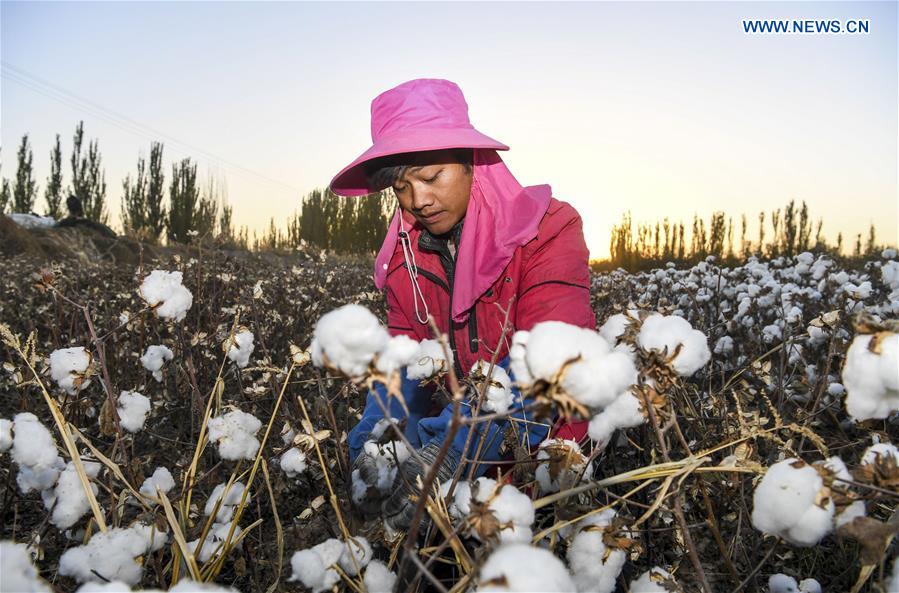
— Despite the Xinjiang cotton boycott instigated by some Western politicians under the pretext of “forced labor,” the region’s cotton and textile industry has shown resilience by further tapping markets and winning over more customers with its superior quality.
— In the first four months of this year, China’s export volume of cotton textiles and garments hit 19.7 billion U.S. dollars, up 44 percent year on year.

— “China’s cotton has contributed a lot to the global cotton industry and we deserve fair treatment and due respect,” said Gao Fang, director of the China Cotton Association.

Originally posted on CCTV’s English website on July 9th, 2021

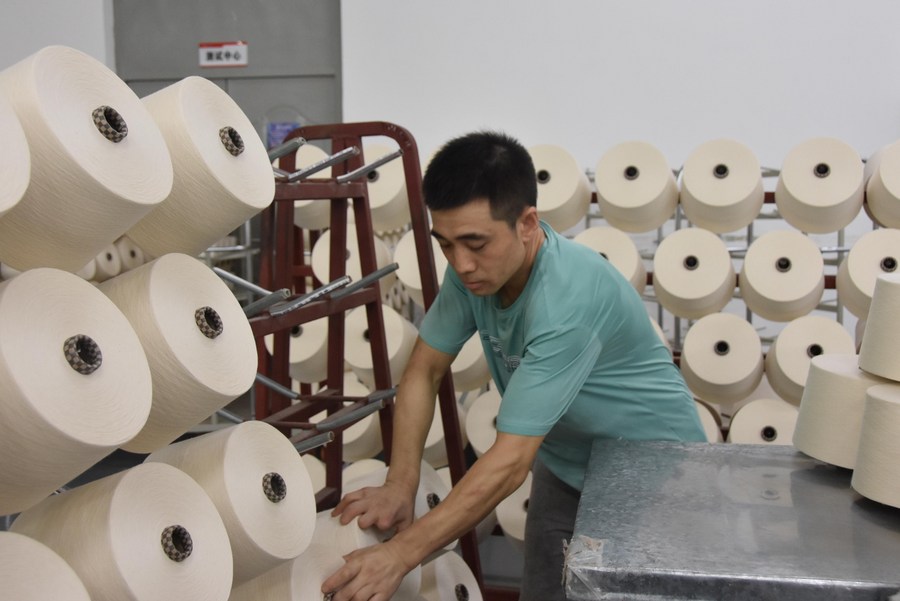
URUMQI, July 8 (Xinhua) — In a textile plant in the city of Shihezi, northwest China’s Xinjiang Uygur Autonomous Region, machines with 100,000 spindles rumbled to spin cotton into yarn.

“We are producing at full capacity as Xinjiang yarn is in heavy demand from downstream companies,” said the production director of the plant. “Our yarn sales have rebounded markedly in the past few months and we have little inventory left.”

Despite the Xinjiang cotton boycott instigated by some Western politicians under the pretext of ‘forced labor,’ the region’s cotton and textile industry has shown resilience by further tapping markets and winning over more customers with its superior quality.

FREE PUBLICITY

Xinjiang is the largest cotton growing area in China. The region’s cotton output hit 5.16 million tonnes in 2020, accounting for 87.3 percent of the total in the country, according to the National Bureau of Statistics.

Demand for Xinjiang cotton has continued to increase as stocks decreased in recent months, according to the China Cotton Association (CCA).

By the end of May, the inventory turnover of commodity cotton in 43 warehouses in Xinjiang stood at 1.97 million tonnes, down by 502,700 tonnes over end-April.

“There’s an upside about Western boycott of Xinjiang cotton: it gets a lot of free publicity,” Zhou Run, head of a cotton farmers’ cooperative in Shihezi, said in a lighter vein.

“Many farmers are willing to grow cotton because of the handsome income and the high mechanical picking rate,” said Zhou, noting that a member of his cooperative rented 133 hectares of cotton farmland this year.

STRONG DOMESTIC SUPPORT

The West’s mudslinging campaign has not only put Xinjiang cotton under the global spotlight but also drawn many consumers to its high quality, which is attributed to ample sunshine, arid weather and significant temperature differences between day and night.

Many apparel companies are proud to show off their use of Xinjiang cotton as a signature of high quality. Chinese brand Li-Ning has been putting “made of Xinjiang cotton” on their price tags. A cotton sample is even attached to some products.

“After the boycott, many teenagers have come to our store specifically asking for clothes made of Xinjiang cotton. Sales can go over 100 pieces a day,” said Huang Qiuyan, a saleswoman in a Li-Ning store in Shihezi.

Textile products made of Xinjiang cotton are also popular at Chinese stores of Japanese retailer Muji, which has said it would continue to use Xinjiang cotton as no proof of forced labor has been found. On many e-commerce platforms, “made in Xinjiang” or “shipped from Xinjiang” were highlighted as sales boosters.

The CCA expected the country’s cotton consumption to expand about 5.9 percent year on year in the 2020-2021 period.

GROWING OVERSEAS DEMAND

In the first four months of this year, China’s export volume of cotton textiles and garments hit 19.7 billion U.S. dollars, up 44 percent year on year, according to China Chamber of Commerce for Import and Export of Textiles.

The growth rate is also 11 percentage points higher than that of total textiles and garments exports over the same period.

“Despite the impact of the Xinjiang cotton boycott, the demand for Chinese cotton products in the international market is very strong,” said Zhang Xi’an, deputy director of the chamber.

In late April, the CCA launched an initiative to promote the sustainable development of China’s cotton, after signing deals with leading domestic cotton producers, some of them in Xinjiang.

The initiative aims to establish China’s sustainable cotton standard and certification system, promote domestic cotton consumption and expand its global market share.

“China’s cotton has contributed a lot to the global cotton industry and we deserve fair treatment and due respect,” said CCA director Gao Fang.

We bring you high-quality analyses and documents like this on a permanent basis. Why not appreciate TFF’s true independence and productivity by contributing if you benefited from this article? Thanks.

Xinhua News Agency or New China News Agency is the official state-run press agency of the People’s Republic of China. Xinhua is the biggest and most influential media organization in China, as well as the largest news agency in the world in terms of worldwide correspondents.


Related Posts

A friendly quarrel while we agree that the US sanctions are a weapon of mass destruction and kill more people than wars do. And that we must talk much more about sanctions than we have so far. Jan Oberg, TFF director March 16, 2026 John Mearsheimer recently stated that U.S. sanctions murdered around 38 million people between 1971 and 2021 – see the video below. It is a dramatic figure, and it has spread quickly because it captures, in one sentence, the enormous human cost of modern sanctions. I share his concern about the destructive effects of economic coercion. But the specific number he cites — and the way he attributes it — deserves a friendly academic clarification. The figure comes from a 2023 Lancet Global Health article estimating the mortality effects of unilateral U.S. and EU sanctions over the past half‑century. This is the first point where Mearsheimer’s shorthand diverges from the text: the study...
TFF’s comprehensive proposal for dialogue about true peace in Ukraine is due in a day or two Jan Oberg November 20, 2025 What is being whispered through diplomatic corridors today is not peace, but quackery. The alleged 28‑point plan drafted in Washington and Moscow is mentioned as a solution to the Ukraine war. It is being negotiated by US businessman, real estate developer and Trump ally, Steve Witkoff, and by Kirill Dmitriev, who is CEO of the Russian Direct Investment Fund and a close ally of Putin, according to India’s Economic Times. For presumably good reasons, their education, qualifications and experience in international conflict analysis and peace-making remain untold. They look like surgeons who have never opened a medical textbook. It is nothing more than a mirage: a framework of concessions imposed on Ukraine’s citizens, negotiated without Kyiv, and excluding Europe. Like Gaza, it promises “peace” while institutionalising injustice. If half of what is available about...
This is the third appeal from TFF. The first and the second here. On August 22, 2025, the UN officially declared famine in Gaza. The world’s top authority on food security called for help and said starvation will spread further within the Strip unless fighting stops and much more aid is allowed in. More than half a million people in the Gaza Strip are facing catastrophic hunger conditions, while more than a million more are in a food emergency phase, the report states. This man-made catastrophic famine could have been prevented by a steady flow of humanitarian aid into the enclave, relief chief Tom Fletcher pointed out. “Yet food stacks up at borders because of systematic obstruction by Israel,” Mr. Fletcher said. “It is a famine within a few 100 meters of food in a fertile land.” The UN’s top aid official underscored that the famine in Gaza is “caused by cruelty, justified...

Recent Articles

Tony Robinson October 4, 2026 Violence is easy to recognise when someone is being beaten, shot or killed. It becomes more difficult when nobody is holding a weapon. Poverty, discrimination, exploitation and repression can restrict a human life just as effectively, although they do so in very different ways and with very different consequences. Simply adding more categories to an ever-growing list of forms of violence does not really solve the problem. The more interesting question is what all these different situations have in common and why it makes sense to describe them using the same word. Human beings do not simply react to what happens around them. They remember the past, imagine things that do not yet exist, make plans and undertake projects. Workers organise because they imagine different working conditions; people migrate because they imagine another life somewhere else; social movements emerge because people refuse to accept the...
It’s a matter of principles, courage, vision and pulling together – while the militarist world is falling apart… Peter Langille October 3, 2026 “Here, then, is the problem which we present to you, stark and dreadful and inescapable: Shall we put an end to the human race; or shall mankind renounce war?”The Bertrand Russell—Albert Einstein Manifesto, July 9, 1955 ⁕ The forecast for what’s ahead is worrisome. The sharp rise in armed conflicts over the past three years is adding to what was already the highest level in over seventy years. Genocides, which should be prevented are supported. A shared climate emergency that jeopardises survival is ignored. Diverse polls now suggest that people are war-weary, worried and interested in a more effective United Nations. And, there are viable policy options for a more secure world! Yet governments are doubling-down, betting on more war and investing heavily. If current trends persist,...
Johan Galtung 1930-2024October 2015 Published here on October 3, 2026 Let us focus on Civilization for conflict analysis and remedies. Major forms of disorder use violence; war is state organized violence. The most belligerent states are the United States of America and Israel, both with civilization roots. National Evangelism, the US Protestant Christian civilization– more national than evangelical–justifies US warfare as exceptionalism of a people chosen by God, with a manifest destiny to run the world. Orthodox Judaism justifies Israeli warfare to conquer and expand from Nile to Euphrates as a religious right and duty to the Eternal One. The third most belligerent country, the UK, no longer believes it is God-chosen but chosen by the USA; not quite the same but something. But the root cause of global disorder lies in the Occident–with Islam–seeing itself as the single, universal civilization valid for all at all times, all others being...

TFF on Substack

Discover and subscribe to more peace materials on TFF Substack

Most Popular

Tony Robinson October 4, 2026 Violence is easy to recognise when someone is being beaten, shot or killed. It becomes more difficult when nobody is holding a weapon. Poverty, discrimination, exploitation and repression can restrict a human life just as effectively, although they do so in very different ways and with very different consequences. Simply adding more categories to an ever-growing list of forms of violence does not really solve the problem. The more interesting question is what all these different situations have in common and why it makes sense to describe them using the same word. Human beings do not simply react to what happens around them. They remember the past, imagine things that do not yet exist, make plans and undertake projects. Workers organise because they imagine different working conditions; people migrate because they imagine another life somewhere else; social movements emerge because people refuse to accept the...
It’s a matter of principles, courage, vision and pulling together – while the militarist world is falling apart… Peter Langille October 3, 2026 “Here, then, is the problem which we present to you, stark and dreadful and inescapable: Shall we put an end to the human race; or shall mankind renounce war?”The Bertrand Russell—Albert Einstein Manifesto, July 9, 1955 ⁕ The forecast for what’s ahead is worrisome. The sharp rise in armed conflicts over the past three years is adding to what was already the highest level in over seventy years. Genocides, which should be prevented are supported. A shared climate emergency that jeopardises survival is ignored. Diverse polls now suggest that people are war-weary, worried and interested in a more effective United Nations. And, there are viable policy options for a more secure world! Yet governments are doubling-down, betting on more war and investing heavily. If current trends persist,...
Johan Galtung 1930-2024October 2015 Published here on October 3, 2026 Let us focus on Civilization for conflict analysis and remedies. Major forms of disorder use violence; war is state organized violence. The most belligerent states are the United States of America and Israel, both with civilization roots. National Evangelism, the US Protestant Christian civilization– more national than evangelical–justifies US warfare as exceptionalism of a people chosen by God, with a manifest destiny to run the world. Orthodox Judaism justifies Israeli warfare to conquer and expand from Nile to Euphrates as a religious right and duty to the Eternal One. The third most belligerent country, the UK, no longer believes it is God-chosen but chosen by the USA; not quite the same but something. But the root cause of global disorder lies in the Occident–with Islam–seeing itself as the single, universal civilization valid for all at all times, all others being...
Read More
Living-Peace-Sign-Budapest-copy
Tony Robinson October 4, 2026 Violence is easy to recognise when someone is being beaten, shot or killed. It becomes more difficult when nobody is holding a weapon. Poverty, discrimination, exploitation and repression can restrict a human life just as effectively, although they do so in very different ways and with very different consequences. Simply adding more categories to an ever-growing list of forms of violence does not really solve the problem. The more interesting question is what all these different situations have in common and why it makes sense to describe them using the same word. Human beings do not simply react to what happens around them. They remember the past, imagine things that do not yet exist, make plans and undertake projects. Workers organise because they imagine different working conditions; people migrate because they imagine another life somewhere else; social movements emerge because people refuse to accept the...
b54a1f10-8c65-4f0b-9dd5-4abc0a7d04cc_2659x2659
It’s a matter of principles, courage, vision and pulling together – while the militarist world is falling apart… Peter Langille October 3, 2026 “Here, then, is the problem which we present to you, stark and dreadful and inescapable: Shall we put an end to the human race; or shall mankind renounce war?”The Bertrand Russell—Albert Einstein Manifesto, July 9, 1955 ⁕ The forecast for what’s ahead is worrisome. The sharp rise in armed conflicts over the past three years is adding to what was already the highest level in over seventy years. Genocides, which should be prevented are supported. A shared climate emergency that jeopardises survival is ignored. Diverse polls now suggest that people are war-weary, worried and interested in a more effective United Nations. And, there are viable policy options for a more secure world! Yet governments are doubling-down, betting on more war and investing heavily. If current trends persist,...
010
Johan Galtung 1930-2024October 2015 Published here on October 3, 2026 Let us focus on Civilization for conflict analysis and remedies. Major forms of disorder use violence; war is state organized violence. The most belligerent states are the United States of America and Israel, both with civilization roots. National Evangelism, the US Protestant Christian civilization– more national than evangelical–justifies US warfare as exceptionalism of a people chosen by God, with a manifest destiny to run the world. Orthodox Judaism justifies Israeli warfare to conquer and expand from Nile to Euphrates as a religious right and duty to the Eternal One. The third most belligerent country, the UK, no longer believes it is God-chosen but chosen by the USA; not quite the same but something. But the root cause of global disorder lies in the Occident–with Islam–seeing itself as the single, universal civilization valid for all at all times, all others being...
Screenshot 2026-10-02 011738
Jan ObergPhD, director, The Transnational Foundation for Peace and Future Research, TFFLund, Sweden October 2, 2026 This is my full original manuscript. The Chinese Academy of Social Science, CASS, makes two publications out if it. 1. China’s Five-year plan emphasized the capabilities of basic research and original innovation. It is regarded as the goal of the future social development, which, as required, should be significantly enhanced. Can you comment on the importance of original innovation in research and academic study? I believe it is easier to define “original innovation” in the natural sciences than in social sciences. The breaking points of what constitutes something new, or innovative, are not quite as sharp in the latter. But in both fields it is about opening up something that was closed, unseen, unexplored before – making manifest what was earlier latent. Innovations come in many forms and shapes – naming something that was not...
arctic-circle-map
The agreement is catastrophic both because of what it says and what it doesn’t mention. It reduces further the major asset of security policies: Freedom of action. Jan Oberg TFF director September 25, 2026 A couple of hours before the agreement was signed on September 22, 2026, I published the following 13 hypotheses about what it would most likely contain on TFF Substack (in English). I was wrong on only the first point. Contrary to what Trump had written on his Truth Social platform, it does not appear to come into force immediately. In fact, it turned out to be worse than even I had anticipated. After these hypotheses now come a number of reflections in light of what the agreement actually contains, and does not contain, as well as the way in which it has generally been presented by major media outlets and by the public-service broadcaster DR. My...
girl-5894831_1280
Below are TFF-related media mentions, comments, videos and social media posts published elsewhere but not on this homepage. We happen to catch and list only a fraction. Regarding video comments and debates, we recommend that you go to the TFF Video Channel on Substack where many of them are reproduced. Jan Oberg is a contributor to China Daily – 52 million daily clicks – and Global Times, CGTN and CCTV (the national television), China Investment, Xinhua News Agency and several others. Articles and videos on these media very often multiply into countless Chinese (and Western media) that re-post them from these main media. Thanks to The China Academy, his analyses, interviews and comments are frequently posted on YouTube channels such as Thinkers Forum and Wave Media. These videos are often re-posted on Bilibili (China’s YouTube), the China Content Center on TikTok, and on the Chinese edition of TikTok, Douyin.com. This means reaching hundreds of millions of viewers worldwide over a year. While there are too many to catch on all these...



