
Twists and turns beneath the Cairo skies

By Richard Falk, writing from Cairo

A confusing controversy between the United States and Egypt is unfolding. It has already raised tensions in the relationship between the two countries to a level that has not existed for decades.

It results from moves by the military government in Cairo to go forward with the criminal prosecution of 43 foreigners, including 19 Americans, for unlawfully carrying on the work of unlicensed public interest organizations that improperly, according to Egyptian law, depend for their budget on foreign funding. Much has been made in American press coverage that one of the Americans charged happens to be Sam LaHood, son of the present American Secretary of Transportation, adopting a tone that seems to imply that at least one connected by blood to an important government official deserves immunity from prosecution.

Washington has responded with high minded and high profile expressions of consternation, including a warning from Hilary Clinton that the annual aid package for Egypt of $1.5 billion (of which $1.3 billion goes to the military) is in jeopardy unless the case against these NGO workers is dropped and their challenged organizations are allowed to carry on with their work of promoting democracy in Egypt. And indeed the U.S. Congress may yet refuse to authorize the release of these funds unless the State Department is willing to certify that Egypt is progressing toward greater democratization.

President Obama has indicated his intention to continue with the aid at past levels, given the importance of Egypt in relation to American Middle Eastern interests, but as in so many other instances, he may give way if the pressure mounts. The outcome is not yet clear as an ultra-nationalistic Congress may yet thwart Obama’s seemingly more sensible response to what should have been treated as a tempest in a teapot, but for reasons to be discussed, has instead become a cause celebre.

The Americans charged are on the payroll of three organizations: International Republican Institute (IRI), Democratic National Institute (DNI), and Freedom House. The first two organizations get all of their funding from the U.S. Government, and were originally founded in 1983 after Ronald Reagan’s speech to the British Parliament in which he urged that help be given to build the democratic infrastructure of newly independent countries in the non-Western world put forward as a Cold War counter-measure to the continuing appeal of Marxist ideologies.

From the moment of their founding IRI and DNI were abundantly funded by annual multi-million grants from Congress, either directly or by way of such governmental entities as the U.S. Assistance for International Development (USAID) and the National Endowment for Democracy. IRI and DNI claim to be non-partisan yet both are explicitly affiliated with each of the two political parties dominant in the United States, with boards, staffs, and consultants drawn overwhelmingly from former government workers and officials who are associated with these two American political parties.

The ideological and governmental character of the two organizations is epitomized by the nature of their leadership. Madeline Albright, Secretary of State during the Clinton presidency, is chair of the DNI Board, while former Republican presidential candidate and currently a prominent senator, John McCain, holds the same position in the IRI. Freedom House, the third main organization that is the target of the Egyptian crackdown also depends for more than 80% of its funding from the National Endowment for Democracy and is similarly rooted in American party politics. It was founded in 1941 as a bipartisan initiative during the Cold War by two stalwarts of their respective political parties, Wendell Wilkie and Eleanor Roosevelt.

Against this background the protests from Washington and the media assessments of the controversy seem willfully misleading. Since when does Washington become so agitated on behalf of NGOs under attack in a foreign country?

Even mainstream eyebrows should have been raised sky high when Martin Demsey, currently the Chairman of the Joint Chiefs, while visiting Cairo was reported to have interceded with his military counterparts on behalf of these Americans made subject to a travel ban and faced with the threat of prosecution. When was the last time you can recall an American military commander interceding on behalf of a genuine NGO? To paraphrase Bob Dylan, ‘the answer my friends, is never.’ So even the most naïve among us should be asking ‘what is really going on here?’

The spokespersons for the organizations treat the allegations as a simple case of interference with the activities of apolitical and benevolent NGOs innocently engaged in helping Egyptians receive needed training and guidance with respect to democratic practices, especially those relating to elections and the rule of law. Substantively such claims seem more or less true at present, at least here in Egypt.

Sometimes these entities are even referred to by the media as ‘civil society institutions,’ which reflects, at best, a woeful state of unknowing, or worse, deliberate deception. Whatever one thinks of the activities of these actors, it is simply false to conceive of them as ‘nongovernmental’ or as emanations of civil society. It would be more responsive to their nature if such entities were described as ‘informal governmental organizations.’ (IGOs)

It is hardly surprising that a more honest label is avoided as its use would call attention to the problematic character of the undertakings: namely, disguised intrusions by a foreign government in the internal politics of a foreign country with fragile domestic institutions of government by way of behavior that poses at the very least a potential threat to its political independence.

With such an altered interpretation of the controversy assumes a different character. It becomes quite understandable for the Egyptian government seeking to move beyond its authoritarian past to feel the need to tame these Trojan Horses outfitted by Washington.

It would seem sensible and prudent for Egypt to insist that such organizations, and especially those associated with the U.S. Government, be registered and properly licensed in Egypt as a minimum precondition for receiving permission to carry on their activities in the country, especially on matters as sensitive as are elections, political parties, and the shaping of the legal system. Surely the United States, despite its long uninterrupted stable record of constitutional governance, would not even consider allowing such ‘assistance’ from abroad.

If it had been proposed by, say, Sweden, an offer of help with democracy would have been immediately rebuffed, and rudely dismissed as an insult to the sovereignty of the United States despite Sweden being a geopolitical midget and U.S. being the gorilla on the global stage.

And these Washington shrieks of wounded innocence, as if Cairo had no grounds whatsoever for concern, are either the memory lapses of a senile bureaucracy or totally disingenuous.

In the past it has been well documented that IRI and DNI were active in promoting the destabilization of foreign governments that were deemed to be hostile to the then American foreign policy agenda. The Reagan presidency made no secret of its commitment to lend all means of support to political movements dedicated to the overthrow of left-leaning governments in Latin America and Asia.

The most notorious instances involving the use of IRI to destabilize a foreign government is well known among students of American interventionist diplomacy. For instance IRI funds were extensively distributes to anti-regime forces to get rid of the Aristide government in Haiti, part of a dynamic that did lead to a coup in 2004 that brought to power reactionary political forces that were welcomed and seemed far more congenial to Washington’s ideas of ‘good governance’ at the time. IRI was openly self-congratulatory about its role in engineering a successful effort to strengthen ‘center and center/right’ political parties in Poland several years ago, which amounts to a virtual confession of interference with the dynamics of Polish self-determination.

Although spokespersons for these organizations piously claim in their responses to these recent Egyptian moves against them to respect the sovereignty of the countries within which they operate, and especially so in Egypt. Even if these claims are generally true, ample grounds remain for suspicion and regulation, if not exclusion, on the part of a territorial government. An insistence upon proper regulation seems entirely reasonable if due account is taken of the numerous instances of covert and overt intervention by the United States in the political life of non-Western countries.

Against such a background, several conclusions follow: first, the individuals being charged by Egypt are not working for genuine NGOs or civil society institutions, but are acting on behalf of informal government organizations or IGOs; secondly, the specific organizations being targeted, especially the DNI and IRI are overtly ideological in their makeup, funding base, and orientation; and thirdly, there exist compelling grounds for a non-Western government to regulate or exclude such political actors when due account is taken of a long American record of interventionary diplomacy.

Thus the Washington posture of outrage seems entirely inappropriate once the actions of the Egyptian government are contextually interpreted.

Yet the full story is not so simple or one-sided.

It needs to be remembered that the Egyptian governing process in the year since the uprising that led to the collapse of the Mubarak regime has been controlled by the Supreme Council of the Armed Forces (SCAP), which is widely believed by the Egyptian public to be responsible for a wave of repressive violence associated with its fears that some democratic demands are threatening their position and interests in the country.

A variety of severe abuses of civilian society have been convincingly attributed to the military. As well the military is responsible for a series of harsh moves against dissenters who blog or otherwise act in a manner deemed critical of military rule. In effect, the Egyptian government, although admittedly long concerned about these spurious NGOs operating within its territory even during the period of Mubarak rule, is itself seemingly disingenuous, using the licensing and funding technicalities as a pretext for a wholesale crackdown on dissent and human rights so as to discipline and intimidate a resurgent civil society and a radical opposition movement that remains committed to realizing the democratic promise of the Arab Spring.

There is another seemingly strange part of the puzzle.

Would we not expect the United States to side with the Egyptian military with which it worked in close harmony during the Mubarak period. Why would Washington not welcome this apparent slide toward Mubarakism without Mubarak? Was this not America’s preferred outcome in Egypt all along, being the only outcome that would allow Washington to be confident that the new Egypt would not rock the Israeli boat or otherwise disturb American interests in the region.

There is no disclosure of U.S. motives at this time for its present seemingly pro-democracy approach, but there are grounds for thinking Washington may be reacting to the success of the Muslim Brotherhood and the Nour (Salafi) Party in the Egyptian parliamentary elections and even more so to the apparent collaboration between these parties and the SCAF in planning Egypt’s immediate political future.

In such a setting it seems plausible that sharpening state/society tensions in Egypt by siding with the democratic opposition would keep alive the possibility of a secular governing process less threatening to U.S./Israeli interests, as well as inducing Egypt itself to adopt a cautious approach to democratic reform. Maybe there are different explanations more hidden from view, but what seems clear is that both governmental in this kafuffle have dirty hands and are fencing in the dark at this point, that is, mounting arguments and counter-arguments that obscure rather than reveal their true motivations.

In the end, Egypt, along with other countries, is likely to be far better off if it prohibits American IGOs from operating freely within its national territorial space, especially if their supposed mandate is to promote democracy as defined and funded by Washington.

This is not to say that Egyptians would not be far better off if the SCAF allowed civilian rule to emerge in the country and acted in a manner respectful of human rights and democratic values.

In other words what is at stake in this seemingly trivial controversy lies hidden by the smokescreens relied upon by both sides in the dispute: weighty matters of governance and democracy that could determine whether the remarkable glories of the Arab Spring mutate in the direction of a dreary Egyptian Autumn, or even Winter.
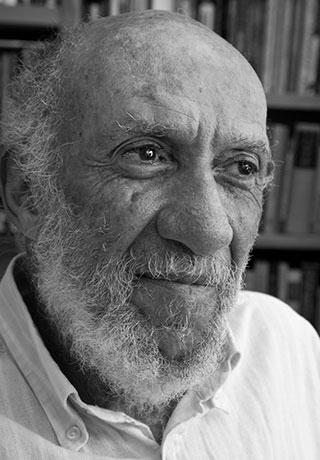

Professor Falk became an adviser to TFF when it was established in 1985.

Related Posts

Photos © TFF 2000 Read PressInfo 90 “Lift the Sanctions and Bring More Aid to Yugoslavia” See Pictures from Belgrade © TFF 2000 Please reprint, copy, archive, quote or re-post this item, but please retain the source.
LONDON – So far so good, at least on the wider level. While internally Iraq seems on the edge of chaos, the much heralded clash of civilizations between the Muslim and Judaeo-Christian worlds has yet to become apparent. We have anger and despair aplenty in the Arab and Muslim worlds. But very little rushing to the standard and there was no great pilgrimage of warriors to join the fight, as happened when the Soviet Union invaded Afghanistan twenty years ago, and then, having driven the Red Army out, were left to ferment in that mountainous redoubt. With the armaments supplied by the CIA the mujahidin were transformed into Al Qaeda that became, for a relatively brief moment as these things go, ‘the greatest threat to the homeland that America has ever known.’ Nevertheless a ‘Cold War’ between much of the Muslim world and the West is certainly in full swing. Winston...
The Challenge of Nuclear Weaponsin the Twenty-first CenturyA Path Forward The peoples and governments of the world face an urgent challenge relating to weaponry of mass destruction and particularly to nuclear weaponry.  At the crossroads of technology, terrorism, geopolitical ambition, and policies of preemption are new and potent dangers for humanity. Despite ending the nuclear standoff of the Cold War era, nuclear weaponry is again menacing the peoples of the world with catastrophic possibilities.  We recognize the need for any government to pursue its security interests in accordance with international law; and further, we recognize that distinctive threats to these interests now exist as a result of an active international terrorist network having declared war on the United States and its allies. Nonetheless, we reject the assessment of the current US administration that upgrading a reliance on nuclear weapons is in any sense justified as a response. We find it...

Recent Articles

Tony Robinson October 4, 2026 Violence is easy to recognise when someone is being beaten, shot or killed. It becomes more difficult when nobody is holding a weapon. Poverty, discrimination, exploitation and repression can restrict a human life just as effectively, although they do so in very different ways and with very different consequences. Simply adding more categories to an ever-growing list of forms of violence does not really solve the problem. The more interesting question is what all these different situations have in common and why it makes sense to describe them using the same word. Human beings do not simply react to what happens around them. They remember the past, imagine things that do not yet exist, make plans and undertake projects. Workers organise because they imagine different working conditions; people migrate because they imagine another life somewhere else; social movements emerge because people refuse to accept the...
It’s a matter of principles, courage, vision and pulling together – while the militarist world is falling apart… Peter Langille October 3, 2026 “Here, then, is the problem which we present to you, stark and dreadful and inescapable: Shall we put an end to the human race; or shall mankind renounce war?”The Bertrand Russell—Albert Einstein Manifesto, July 9, 1955 ⁕ The forecast for what’s ahead is worrisome. The sharp rise in armed conflicts over the past three years is adding to what was already the highest level in over seventy years. Genocides, which should be prevented are supported. A shared climate emergency that jeopardises survival is ignored. Diverse polls now suggest that people are war-weary, worried and interested in a more effective United Nations. And, there are viable policy options for a more secure world! Yet governments are doubling-down, betting on more war and investing heavily. If current trends persist,...
Johan Galtung 1930-2024October 2015 Published here on October 3, 2026 Let us focus on Civilization for conflict analysis and remedies. Major forms of disorder use violence; war is state organized violence. The most belligerent states are the United States of America and Israel, both with civilization roots. National Evangelism, the US Protestant Christian civilization– more national than evangelical–justifies US warfare as exceptionalism of a people chosen by God, with a manifest destiny to run the world. Orthodox Judaism justifies Israeli warfare to conquer and expand from Nile to Euphrates as a religious right and duty to the Eternal One. The third most belligerent country, the UK, no longer believes it is God-chosen but chosen by the USA; not quite the same but something. But the root cause of global disorder lies in the Occident–with Islam–seeing itself as the single, universal civilization valid for all at all times, all others being...

TFF on Substack

Discover and subscribe to more peace materials on TFF Substack

Most Popular

Tony Robinson October 4, 2026 Violence is easy to recognise when someone is being beaten, shot or killed. It becomes more difficult when nobody is holding a weapon. Poverty, discrimination, exploitation and repression can restrict a human life just as effectively, although they do so in very different ways and with very different consequences. Simply adding more categories to an ever-growing list of forms of violence does not really solve the problem. The more interesting question is what all these different situations have in common and why it makes sense to describe them using the same word. Human beings do not simply react to what happens around them. They remember the past, imagine things that do not yet exist, make plans and undertake projects. Workers organise because they imagine different working conditions; people migrate because they imagine another life somewhere else; social movements emerge because people refuse to accept the...
It’s a matter of principles, courage, vision and pulling together – while the militarist world is falling apart… Peter Langille October 3, 2026 “Here, then, is the problem which we present to you, stark and dreadful and inescapable: Shall we put an end to the human race; or shall mankind renounce war?”The Bertrand Russell—Albert Einstein Manifesto, July 9, 1955 ⁕ The forecast for what’s ahead is worrisome. The sharp rise in armed conflicts over the past three years is adding to what was already the highest level in over seventy years. Genocides, which should be prevented are supported. A shared climate emergency that jeopardises survival is ignored. Diverse polls now suggest that people are war-weary, worried and interested in a more effective United Nations. And, there are viable policy options for a more secure world! Yet governments are doubling-down, betting on more war and investing heavily. If current trends persist,...
Johan Galtung 1930-2024October 2015 Published here on October 3, 2026 Let us focus on Civilization for conflict analysis and remedies. Major forms of disorder use violence; war is state organized violence. The most belligerent states are the United States of America and Israel, both with civilization roots. National Evangelism, the US Protestant Christian civilization– more national than evangelical–justifies US warfare as exceptionalism of a people chosen by God, with a manifest destiny to run the world. Orthodox Judaism justifies Israeli warfare to conquer and expand from Nile to Euphrates as a religious right and duty to the Eternal One. The third most belligerent country, the UK, no longer believes it is God-chosen but chosen by the USA; not quite the same but something. But the root cause of global disorder lies in the Occident–with Islam–seeing itself as the single, universal civilization valid for all at all times, all others being...
Read More
Living-Peace-Sign-Budapest-copy
Tony Robinson October 4, 2026 Violence is easy to recognise when someone is being beaten, shot or killed. It becomes more difficult when nobody is holding a weapon. Poverty, discrimination, exploitation and repression can restrict a human life just as effectively, although they do so in very different ways and with very different consequences. Simply adding more categories to an ever-growing list of forms of violence does not really solve the problem. The more interesting question is what all these different situations have in common and why it makes sense to describe them using the same word. Human beings do not simply react to what happens around them. They remember the past, imagine things that do not yet exist, make plans and undertake projects. Workers organise because they imagine different working conditions; people migrate because they imagine another life somewhere else; social movements emerge because people refuse to accept the...
b54a1f10-8c65-4f0b-9dd5-4abc0a7d04cc_2659x2659
It’s a matter of principles, courage, vision and pulling together – while the militarist world is falling apart… Peter Langille October 3, 2026 “Here, then, is the problem which we present to you, stark and dreadful and inescapable: Shall we put an end to the human race; or shall mankind renounce war?”The Bertrand Russell—Albert Einstein Manifesto, July 9, 1955 ⁕ The forecast for what’s ahead is worrisome. The sharp rise in armed conflicts over the past three years is adding to what was already the highest level in over seventy years. Genocides, which should be prevented are supported. A shared climate emergency that jeopardises survival is ignored. Diverse polls now suggest that people are war-weary, worried and interested in a more effective United Nations. And, there are viable policy options for a more secure world! Yet governments are doubling-down, betting on more war and investing heavily. If current trends persist,...
010
Johan Galtung 1930-2024October 2015 Published here on October 3, 2026 Let us focus on Civilization for conflict analysis and remedies. Major forms of disorder use violence; war is state organized violence. The most belligerent states are the United States of America and Israel, both with civilization roots. National Evangelism, the US Protestant Christian civilization– more national than evangelical–justifies US warfare as exceptionalism of a people chosen by God, with a manifest destiny to run the world. Orthodox Judaism justifies Israeli warfare to conquer and expand from Nile to Euphrates as a religious right and duty to the Eternal One. The third most belligerent country, the UK, no longer believes it is God-chosen but chosen by the USA; not quite the same but something. But the root cause of global disorder lies in the Occident–with Islam–seeing itself as the single, universal civilization valid for all at all times, all others being...
Screenshot 2026-10-02 011738
Jan ObergPhD, director, The Transnational Foundation for Peace and Future Research, TFFLund, Sweden October 2, 2026 This is my full original manuscript. The Chinese Academy of Social Science, CASS, makes two publications out if it. 1. China’s Five-year plan emphasized the capabilities of basic research and original innovation. It is regarded as the goal of the future social development, which, as required, should be significantly enhanced. Can you comment on the importance of original innovation in research and academic study? I believe it is easier to define “original innovation” in the natural sciences than in social sciences. The breaking points of what constitutes something new, or innovative, are not quite as sharp in the latter. But in both fields it is about opening up something that was closed, unseen, unexplored before – making manifest what was earlier latent. Innovations come in many forms and shapes – naming something that was not...
arctic-circle-map
The agreement is catastrophic both because of what it says and what it doesn’t mention. It reduces further the major asset of security policies: Freedom of action. Jan Oberg TFF director September 25, 2026 A couple of hours before the agreement was signed on September 22, 2026, I published the following 13 hypotheses about what it would most likely contain on TFF Substack (in English). I was wrong on only the first point. Contrary to what Trump had written on his Truth Social platform, it does not appear to come into force immediately. In fact, it turned out to be worse than even I had anticipated. After these hypotheses now come a number of reflections in light of what the agreement actually contains, and does not contain, as well as the way in which it has generally been presented by major media outlets and by the public-service broadcaster DR. My...
girl-5894831_1280
Below are TFF-related media mentions, comments, videos and social media posts published elsewhere but not on this homepage. We happen to catch and list only a fraction. Regarding video comments and debates, we recommend that you go to the TFF Video Channel on Substack where many of them are reproduced. Jan Oberg is a contributor to China Daily – 52 million daily clicks – and Global Times, CGTN and CCTV (the national television), China Investment, Xinhua News Agency and several others. Articles and videos on these media very often multiply into countless Chinese (and Western media) that re-post them from these main media. Thanks to The China Academy, his analyses, interviews and comments are frequently posted on YouTube channels such as Thinkers Forum and Wave Media. These videos are often re-posted on Bilibili (China’s YouTube), the China Content Center on TikTok, and on the Chinese edition of TikTok, Douyin.com. This means reaching hundreds of millions of viewers worldwide over a year. While there are too many to catch on all these...




