

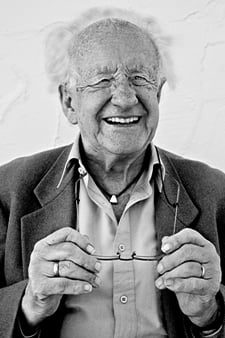
Uniting for Peace, Building Sustainable Peace through Universal Values at the Centenary of World War I: Criminalizing War

johangaltung

Keynote, 25th International Peace Research Association (IPRA) Conference
Istanbul, 11-14 August 2014

We have come of age, at 50; and I am the only surviving founder from 1964 in London, capital of a foggy island in the North Sea. Now we meet in the sunny capital of another empire; bridging three continents. One cloned itself all over; the other was more an Islamic umma, a community of togetherness-and-sharing, with millet islands of tolerance. And now: the superb IPRA program.

Uniting for peace. But we differ, disagree? Incredible how far we can come if we identify and focus on the good and the positive in Kiev, Donetsk and Moscow, or husband and wife in broken marriages rather than what is wrong, and build new relations on that.

Peace is a relation, not attributes of the parties. So also for conferences: focus on the best in paper, praise it; not on the dubious and missing.

Building sustainable peace. My formula in A Theory of Peace is:

Equity X Harmony

Peace = ———————

Trauma X Conflict

Four Roots of Peace

• for positive peace: 1) cooperation for mutual and equal benefit, and 2) empathy for the harmony of sorrow at other’s sorrow and joy at other’s joy;

• for negative peace: 1) reconciling trauma, and 2) resolving conflicts–avoiding violence, through skills.

Expansion of interaction – through means of communication and transportation – with rights and obligations has created vast zones with less direct violence. But without equity: more inequality, more structural violence, killing even more. Identifying violence with bullets is as naive as identifying disease with microbes, overlooking structural diseases like cancer, heart; and overlooking chronic violence, like the security state and security world, by the US National Security Agency. Better: make Ukraine a federation, relate West-North to EU and South-East to Eurasia, with both having access to the other! And clone Snowden.

Through universal values. I know only two for sure, basic to Buddhism: reduce dukkha, suffering, and increase sukha, fulfillment (wellbeing). Emotions more than cognitive values? Yes, hence more basic. Negative and positive peace. Be aware of both-and and neither-nor, the ambiguous and the bland, more frequent than either-or.

Democracy? As rule by the consent of the ruled, maybe; but not as multiparty state elections, too easily corrupted into bankocracy. As dialogue to consensus in smaller units? But many rule themselves or go for those smaller units, uninterested in “states” and “regions”.

Human rights? If enriched with collective, people’s rights, yes; but be careful. They are excellent goal-formulations for underdogs but very one-sided as conflict discourse. Where are the goals of the topdogs? Only to remain on top? Only their perennial “if underdogs come up they will treat us like we treated them?” Or also some justified skepticism about an alternative order with former underdogs on top in a majority democracy, given their numbers? We do not know in advance; give them a hearing – not guaranteed by Human Rights. Solve problems.

To be ruled by somebody of your own kind? Universal. Even if one’s own kind is unkind, it is better than the benevolence of somebody else.

The First World War at 100: To see the Sarajevo’s shots on 28 June 1914 as the cause of the Hapsburg Empire attacking Serbia on 28 July overlooks Austria-Hungary annexing Bosnia-Herzegovina in 1908. The Serbs wanted to be ruled by their own kind. Self-determination was key. Nor was this a world war, all major battles were in Europe (17 of them in the French-Belgian corner). The massive killing was so insane that Europeans pushed it on the world.

The Second European war, rather, the First being the Napoleonic. The First World was, of course, Western colonialism from 4 May 1493 (Pope Alexander VI)–another atrocity to conceal.

IPRA at 50

What we wanted in 1964 was peace research recognized as a social science, member of the UNESCO International Social Science Council, bypassing turf-concerned Western universities. We got it.

Elise Boulding – role of culture, women – very active at the founding, saving IPRA several times afterward. Her husband Kenneth – the Image, stable peace, economic evolution – was in the background and Bert Röling – the youngest judge at the Tokyo Tribunal, disarmament, law for peace–became the first IPRA Secretary General. And then Galtung – at the time the health studies parallel and positive/negative peace.

We were from the world Northwest and IPRA has, like the world, moved East and South, with a Turkish Delight and a Sierra Leone Diamond as secretaries!

Prognosis: we will move on to Islam and China–India still needs time to grow with our Guiding Spirit: Gandhi. Then back to a more modest Northwest, circling on, as we should.

Criminalizing War

Massive murder, dukkha, inequity, disharmony, trauma leading to revenge, solving nothing in the longer run. The 1648 Westphalia Peace stabilized two Christianities at the price of a state system with the “right to war”. That institutional mandate has to go.

A centuries long process – jus ad bellum, jus in bello, human rights – to outlaw war except for defense, peace-keeping and “peace-enforcement” – recently as R2P (Responsibility to Protect) – opens countless loopholes, protected by anonymity and collectivity.

Personalize by naming the massive killers from top politicians to bottom soldiers – Nürnberg, Tokyo. Individualize by making them responsible, maybe following the Trans-National Corporations with amnesty in return for confession-contrition-compensation.

And remove that mandate from the Abrahamic god’s countless massacres via rex gratia dei – the King by God’s grace – transferred to the state – and via vox popoli vox dei – the voice of people being the voice of god–perverting democracies into killing machines.

Be careful! They may kill even more in order not to be arrested.

And we get further with positive and negative peace, and by fighting war as a social evil.

But the three approaches add up. We have work to do!

Originally published by Transcend Media Service here.

Related Posts

Jan Oberg TFF director October 13, 2026 According to Alfred Nobel’s will, the Nobel Peace Prize shall be awarded: ”to the person who has done the most or best to advance fellowship among nations, the abolition or reduction of standing armies, and the establishment and promotion of peace congresses.” Further down, he also expresses how the prize for the “champions of peace” shall be decided: “that for champions of peace by a committee of five persons to be selected by the Norwegian Storting. Alfred Nobel’s will is remarkably short and clear. But few seem to have read it. Nobel did not say that the committee itself should consist of members of parliament. He entrusted the Storting with appointing five persons. In principle, it could have selected diplomats, mediators, peace researchers, conflict-resolution specialists, or other individuals with recognised expertise in matters of peace from around the world. Instead, the Storting gradually...
The Quest for Humane Survival Richard Falk Professor emeritus, Princeton UniversityTFF Associate since 1986October 12, 2026 After decades of teaching and writing about international law in academic frameworks that were not institutionally situated within law school environments—at Princeton and the University of California, Santa Barbara—I found myself most receptive to the TWAIL outlook. It has been especially illuminating in clarifying the extent to which international law evolved as a dialogical critique of Europe’s efforts to legitimize its colonial undertakings. In particular, TWAIL has exposed how international law has functioned to legalize the subjugation of Third World peoples, securing conditions for exploitative investment and trade relations, the coercive enforcement of public debts, and an ideology of cultural superiority. TWAIL’s exposure of these economic legacies of colonialism has influenced my understanding of the history and development of international law, broadly conceived, as an ideological project of the Western sub-system of the world...
Advocates of nuclear disarmament are regularly dismissed by the champions of nuclear deterrence as naïve and unrealistic, utopian or even irresponsible. Yet this ‘doctrine’ of deterrence, regarded by France as the ‘cornerstone’ of its national security, is based on quasi-religious beliefs, a theory that cannot be proven, risky gambles and fragile assumptions. So much so that one might legitimately ask which side the ‘Care Bears’ are on. Marc FinaudVice-President of Initiatives for Nuclear Disarmament (IDN) October 9, 2026 This article was originally published on Pressenza When it comes to these things being treated as religious concepts, look here. Idealists and realists It was Hubert Védrine, François Mitterrand’s former Foreign Minister, who repeatedly coined the phrase: ‘Europeans are a sort of Care Bears who don’t realise they’re living in Jurassic Park’. He applies this reference to the cartoon for well-behaved children not only to what he regards as weakness or idealism...

Recent Articles

Below are TFF-related media mentions, comments, videos and social media posts published elsewhere but not on this homepage. We happen to catch and list only a fraction. Regarding video comments and debates, we recommend that you go to the TFF Video Channel on Substack where many of them are reproduced. Jan Oberg is a contributor to China Daily – 52 million daily clicks – and Global Times, CGTN and CCTV (the national television), China Investment, Xinhua News Agency and several others. Articles and videos on these media very often multiply into countless Chinese (and Western media) that re-post them from these main media. Thanks to The China Academy, his analyses, interviews and comments are frequently posted on YouTube channels such as Thinkers Forum and Wave Media. These videos are often re-posted on Bilibili (China’s YouTube), the China Content Center on TikTok, and on the Chinese edition of TikTok, Douyin.com. This means reaching hundreds of millions of viewers worldwide over a year. While there are too many to catch on all these...
Jan Oberg TFF director October 13, 2026 According to Alfred Nobel’s will, the Nobel Peace Prize shall be awarded: ”to the person who has done the most or best to advance fellowship among nations, the abolition or reduction of standing armies, and the establishment and promotion of peace congresses.” Further down, he also expresses how the prize for the “champions of peace” shall be decided: “that for champions of peace by a committee of five persons to be selected by the Norwegian Storting. Alfred Nobel’s will is remarkably short and clear. But few seem to have read it. Nobel did not say that the committee itself should consist of members of parliament. He entrusted the Storting with appointing five persons. In principle, it could have selected diplomats, mediators, peace researchers, conflict-resolution specialists, or other individuals with recognised expertise in matters of peace from around the world. Instead, the Storting gradually...
The Quest for Humane Survival Richard Falk Professor emeritus, Princeton UniversityTFF Associate since 1986October 12, 2026 After decades of teaching and writing about international law in academic frameworks that were not institutionally situated within law school environments—at Princeton and the University of California, Santa Barbara—I found myself most receptive to the TWAIL outlook. It has been especially illuminating in clarifying the extent to which international law evolved as a dialogical critique of Europe’s efforts to legitimize its colonial undertakings. In particular, TWAIL has exposed how international law has functioned to legalize the subjugation of Third World peoples, securing conditions for exploitative investment and trade relations, the coercive enforcement of public debts, and an ideology of cultural superiority. TWAIL’s exposure of these economic legacies of colonialism has influenced my understanding of the history and development of international law, broadly conceived, as an ideological project of the Western sub-system of the world...

TFF on Substack

Discover and subscribe to more peace materials on TFF Substack

Most Popular

Below are TFF-related media mentions, comments, videos and social media posts published elsewhere but not on this homepage. We happen to catch and list only a fraction. Regarding video comments and debates, we recommend that you go to the TFF Video Channel on Substack where many of them are reproduced. Jan Oberg is a contributor to China Daily – 52 million daily clicks – and Global Times, CGTN and CCTV (the national television), China Investment, Xinhua News Agency and several others. Articles and videos on these media very often multiply into countless Chinese (and Western media) that re-post them from these main media. Thanks to The China Academy, his analyses, interviews and comments are frequently posted on YouTube channels such as Thinkers Forum and Wave Media. These videos are often re-posted on Bilibili (China’s YouTube), the China Content Center on TikTok, and on the Chinese edition of TikTok, Douyin.com. This means reaching hundreds of millions of viewers worldwide over a year. While there are too many to catch on all these...
Jan Oberg TFF director October 13, 2026 According to Alfred Nobel’s will, the Nobel Peace Prize shall be awarded: ”to the person who has done the most or best to advance fellowship among nations, the abolition or reduction of standing armies, and the establishment and promotion of peace congresses.” Further down, he also expresses how the prize for the “champions of peace” shall be decided: “that for champions of peace by a committee of five persons to be selected by the Norwegian Storting. Alfred Nobel’s will is remarkably short and clear. But few seem to have read it. Nobel did not say that the committee itself should consist of members of parliament. He entrusted the Storting with appointing five persons. In principle, it could have selected diplomats, mediators, peace researchers, conflict-resolution specialists, or other individuals with recognised expertise in matters of peace from around the world. Instead, the Storting gradually...
The Quest for Humane Survival Richard Falk Professor emeritus, Princeton UniversityTFF Associate since 1986October 12, 2026 After decades of teaching and writing about international law in academic frameworks that were not institutionally situated within law school environments—at Princeton and the University of California, Santa Barbara—I found myself most receptive to the TWAIL outlook. It has been especially illuminating in clarifying the extent to which international law evolved as a dialogical critique of Europe’s efforts to legitimize its colonial undertakings. In particular, TWAIL has exposed how international law has functioned to legalize the subjugation of Third World peoples, securing conditions for exploitative investment and trade relations, the coercive enforcement of public debts, and an ideology of cultural superiority. TWAIL’s exposure of these economic legacies of colonialism has influenced my understanding of the history and development of international law, broadly conceived, as an ideological project of the Western sub-system of the world...
Read More
girl-5894831_1280
Below are TFF-related media mentions, comments, videos and social media posts published elsewhere but not on this homepage. We happen to catch and list only a fraction. Regarding video comments and debates, we recommend that you go to the TFF Video Channel on Substack where many of them are reproduced. Jan Oberg is a contributor to China Daily – 52 million daily clicks – and Global Times, CGTN and CCTV (the national television), China Investment, Xinhua News Agency and several others. Articles and videos on these media very often multiply into countless Chinese (and Western media) that re-post them from these main media. Thanks to The China Academy, his analyses, interviews and comments are frequently posted on YouTube channels such as Thinkers Forum and Wave Media. These videos are often re-posted on Bilibili (China’s YouTube), the China Content Center on TikTok, and on the Chinese edition of TikTok, Douyin.com. This means reaching hundreds of millions of viewers worldwide over a year. While there are too many to catch on all these...
Nobel-Prize-Plaque
Jan Oberg TFF director October 13, 2026 According to Alfred Nobel’s will, the Nobel Peace Prize shall be awarded: ”to the person who has done the most or best to advance fellowship among nations, the abolition or reduction of standing armies, and the establishment and promotion of peace congresses.” Further down, he also expresses how the prize for the “champions of peace” shall be decided: “that for champions of peace by a committee of five persons to be selected by the Norwegian Storting. Alfred Nobel’s will is remarkably short and clear. But few seem to have read it. Nobel did not say that the committee itself should consist of members of parliament. He entrusted the Storting with appointing five persons. In principle, it could have selected diplomats, mediators, peace researchers, conflict-resolution specialists, or other individuals with recognised expertise in matters of peace from around the world. Instead, the Storting gradually...
law-419057_1280
The Quest for Humane Survival Richard Falk Professor emeritus, Princeton UniversityTFF Associate since 1986October 12, 2026 After decades of teaching and writing about international law in academic frameworks that were not institutionally situated within law school environments—at Princeton and the University of California, Santa Barbara—I found myself most receptive to the TWAIL outlook. It has been especially illuminating in clarifying the extent to which international law evolved as a dialogical critique of Europe’s efforts to legitimize its colonial undertakings. In particular, TWAIL has exposed how international law has functioned to legalize the subjugation of Third World peoples, securing conditions for exploitative investment and trade relations, the coercive enforcement of public debts, and an ideology of cultural superiority. TWAIL’s exposure of these economic legacies of colonialism has influenced my understanding of the history and development of international law, broadly conceived, as an ideological project of the Western sub-system of the world...
images-2
Advocates of nuclear disarmament are regularly dismissed by the champions of nuclear deterrence as naïve and unrealistic, utopian or even irresponsible. Yet this ‘doctrine’ of deterrence, regarded by France as the ‘cornerstone’ of its national security, is based on quasi-religious beliefs, a theory that cannot be proven, risky gambles and fragile assumptions. So much so that one might legitimately ask which side the ‘Care Bears’ are on. Marc FinaudVice-President of Initiatives for Nuclear Disarmament (IDN) October 9, 2026 This article was originally published on Pressenza When it comes to these things being treated as religious concepts, look here. Idealists and realists It was Hubert Védrine, François Mitterrand’s former Foreign Minister, who repeatedly coined the phrase: ‘Europeans are a sort of Care Bears who don’t realise they’re living in Jurassic Park’. He applies this reference to the cartoon for well-behaved children not only to what he regards as weakness or idealism...
8824b09f-33a5-43f9-9fd0-550f28cda24d_1536x1024
What the West Borrowed from Asia and What It Left Behind Jan Krikke October 8, 2026 The article was originally published here In the late 1960s, the musical Hair announced that the Age of Aquarius was dawning. Its opening anthem promised a transformation of human consciousness: an era of peace, harmony and understanding. Half a century later, a familiar echo of that promise is a meditation app offered by your employer. You can find it in the same list of benefits as the pension plan and the gym discount. How did a spiritual revolution become an employee benefit? The answer lies in the history of the movement known as New Age: where it came from, what it borrowed from Asia, and why the meaning of what it borrowed changed in the process. Two definitions will help. New Age is a loose label for a wide range of spiritual practices and...
Screenshot 2026-10-04 210142
Small and different + among the 10% most active + 9,000 texts + 150 Associates + 60 000 a day — and a stubborn belief that peace is smarter and must be secured by peaceful means. In 2026, the Transnational Foundation for Peace and Future Research (TFF) turns 40. On Monday, October 5, 2026, a new TFF homepage will go live — a new gateway to more than 9,000 articles, analyses, research papers and other contributions produced over four decades of independent peace research. But this is not simply a new website. For four decades, TFF has worked from a simple conviction: peace is smarter than militarism and can be brought about by peaceful means. This is not merely an aspiration. It is the principle expressed in the UN Charter and the Gandhian tradition that has guided our work from the beginning. TFF is a research-based, independent and people-financed foundation....





