Towards a Gandhian geopolitics: A feasible utopia?

There has been serious confusion associated with the widespread embrace of ‘soft power’ as a preferred form of diplomacy for the 21st century. Joseph Nye introduced and popularized the concept, and later it was adopted and applied in a myriad of settings that are often contradictory from the perspective of international law and morality.

I write in the belief that soft power as a force multiplier for imperial geopolitics is to be viewed with the greatest suspicion, but as an alternative to militarism and violence is to be valued and adopted as a potential political project that could turn out to be the first feasible utopia of the 21st century.

Significantly, Nye first introduced the concept of soft power in Bound to Lead, published in 1990, reaffirming confidence in the United States as the self-anointed leader of the world for the foreseeable future based on its military and economic prowess, as well as due to its claimed status as an exemplary democracy and the global outreach of its popular culture from jeans to Michael Jackson.

Nye has been a consistent advocate of what Michael Ignatieff christened as ‘empire lite’ a decade or so ago, and Nye’s invocation of soft power is essentially calling our attention to a cluster of instruments useful in projecting American influence throughout the world, and in his view under utilized. Although less so, perhaps, since the advent of drones.

It should be appreciated that Nye’s influential career as a prominent Harvard specialist in international relations was climaxed in the 1990s by serving the government in Washington both as Chair of the National Intelligence Council, making policy recommendations on foreign policy issues to the American president, and as Assistant Secretary of Defense for International Security Affairs during the Clinton presidency.

He is an unabashed charter member of and valuable apologist for the American foreign policy establishment in its current embodiment, although the policies of the Bush presidency often displeased him.

The idea of soft power was unveiled for the benefit of the American establishment in Nye’s 1996 Foreign Affairs article, “America’s Information Edge,” appropriately written in collaboration with Admiral William Owens, a leading navy planner who rose to be Vice Chairman of the Joint Chiefs of Staff. The main argument of the article was the need to realize the revolutionary relevance of mastering the technologies of information if the American global domination project was to be successful in the years ahead.

This emphasis on the role of information and networking was also certain to lead to a ‘revolution in military technology.’ Soft power was not, as the words seem to suggest, a turn away from imperial geopolitics in the aftermath of the Cold War, but rather the opposite. It was more in the spirit of a geopolitical cookbook on how to remain in control globally despite a rapidly changing political and technological environment. The recommended soft power breakthrough can be summarized as the recognition of the role to be played by non-military forms of global influence and capabilities in reinforcing and complementing the mandate of hard power.

The final section of the Nye/Owens article is aptly title “The Coming American Century,” insisting that the famous claim made a generation earlier by Time publisher, Henry Luce, that the 20th century was ‘the American century,’ would turn out to be a gross understatement when it came to describing the 21st century.

Their expectation is that America will be more dominant internationally in the emerging future, thanks mainly to this superiority in information technology, anticipating that if their views are adopted by robust military applications of soft power it will have a huge foreign policy payoff for the country: “The beauty of information as a power resource is that, while it can enhance the effectiveness of raw military power, it ineluctably democratizes societies.”

This unabashed avowal of imperial goals is actually the main thesis of the article, perhaps most graphically expressed in the following words – “The United States can increase the effectiveness of its military forces and make the world safe for soft power, America’s inherent comparative advantage.”

As the glove fits the hand, soft power complements hard power within the wider enterprise of transforming the world in America’s image, as well as embodying the ideal version of America’s sense of self.

Nye/Owens acknowledge a major caveat rather parenthetically by admitting that their strategy will not work if America continues much longer to be perceived unfavorably abroad as a national abode of drugs, crime, violence, fiscal irresponsibility, family breakdown, political gridlock.

They make a rather empty and apolitical plea to restore “a healthy democracy” at home as a prelude to the heavy lifting of democratizing the world, but they do not pretend medical knowledge of how national health might be restored, offering no prescriptions. And now sixteen years after their article appeared, it would seem that the Burmese adage applies: “disease unknown, cure unknown.”

There is much that I would object to about this line of advocacy that waves the banner of soft power so triumphantly. First of all, the idea of using power of any kind to democratize other sovereign states is an imperial undertaking at its core, and completely disregards the post-colonial ethos of self-determination widely affirmed as the inalienable right of all peoples.

This right of self-determination is given pride of place in common Article 1 of the two major international human rights covenants. The Nye/Owens assumption that ‘democracy’ means ‘made in the USA’ is an ideological claim that seems increasingly questionable given the reality of political life in America. This is the case even if the country somehow miraculously heeds the Nye/Owens call to restore national health to its democracy.

Is it open to doubt as to whether an elective plutocracy, which America has surely become, can qualify as the sort of democracy that merits being exported abroad. And since the 9/11 attacks the corporatizing of democratic space has been complemented by a series of governmental encroachments on traditional liberties in the name of ‘homeland security.’

While it might have seemed unproblematic in 1996 for Nye/Owens to write about planting the seeds of American democracy throughout the world, by 2012 such a project has become nothing less than diabolical. The best the world can hope for at this point is not a somewhat less aggressive version of soft power geopolitics but an American turn toward passivity, what used to be called ‘isolationism,’ and was perhaps briefly abortively reborn by the Obama posture during the 2011 Libyan intervention of ‘leading from behind,’ as if that is leading at all.

Of course, such a realistic retreat begets the fury of the Republicans who seem to have not lost any of their appetite for the red meat of military adventures despite a string of defeats and their constant wailing about the fiscal deficit. When it comes to militarism their firepower is directed at the alleged defeatism and softness of American foreign policy in the hands of a Democratic president.

There is a second sense of soft power that I advocate, which is in its most maximal form, represents the extension of Gandhian principles to the practice of diplomacy. A weaker form of Gandhian geopolitics may seem more consistent with the world as it is, restricting the role of hard power to self-defense as strictly limited in the UN Charter and to UN humanitarian interventions in exceptional circumstances of genocidal behavior or the repeated commission of crimes against humanity. In such instances uses of hard power would remain under the operational control of the UN Security Council, and enacted by a UN Peace Force especially trained in conflict resolution to minimize recourse to violence.

If we decide to respect the politics of self-determination (as the preferred alternative to military intervention) then we need to be prepared to accept the prospect of some tragic struggles for control of national space. Geopolitical passivity, as validated by international law, needs to be recognized as an essential political virtue in this century.

Such an imperative also mandates reliance on the greater wisdom of collective procedures subject to constitutional constraints as a necessary adjustment to the realities of a globalizing world, and offers an alternative to unilateralist and oligarchic claims (‘coalitions of the willing’) to act in defiance of law and world public opinion.

Such an empowerment of ‘the global community’ may go awry on some occasions but it seems a far preferable risk than continuing to entrust world peace and security to the untender mercies of global and regional hegemonic sovereign states even should their domestic democratic credentials are in good order, which happens not to be the case.

There is no doubt that I would like to live in a borderless soft power world that was consistently attentive to human suffering, protective of the global commons, and subject to the discipline of global constitutional democracy. As global conditions now confirm, such a benign fantasy lacks political traction at present, and is thus an irresponsible worldview from the perspective of humane problem solving.

The most we can currently hope for is a more moderate regime of global governance presided over by sovereign states that exhibits a greater sense of responsibility toward the well-being of the peoples of the world, identifies and works to correct dysfunction and corruption, and is thus less swayed by the reigning plutocracy that now sets global policy.

Such moderate global governance, while far from the desired Gandhian model would at least become more respectful of international law and responsive to transnational movements dedicated to human rights and the preservation of the global commons.

Nye’s soft power geopolitics provides a roadmap for those comfortable with currents hierarchies of dominance and privilege, while even the minimal version of a nonviolent and non-imperial alternative could help humanity greatly in the deepening struggle to find a world order path that leads to peace, justice, and development.
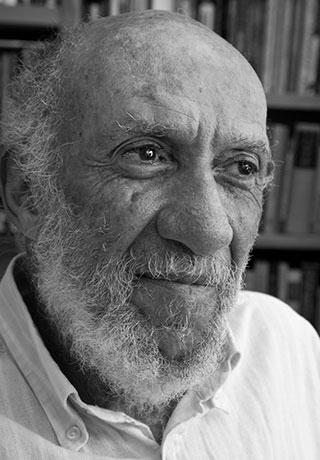

Professor Falk became an adviser to TFF when it was established in 1985.

Related Posts

Tony Robinson October 4, 2026 Violence is easy to recognise when someone is being beaten, shot or killed. It becomes more difficult when nobody is holding a weapon. Poverty, discrimination, exploitation and repression can restrict a human life just as effectively, although they do so in very different ways and with very different consequences. Simply adding more categories to an ever-growing list of forms of violence does not really solve the problem. The more interesting question is what all these different situations have in common and why it makes sense to describe them using the same word. Human beings do not simply react to what happens around them. They remember the past, imagine things that do not yet exist, make plans and undertake projects. Workers organise because they imagine different working conditions; people migrate because they imagine another life somewhere else; social movements emerge because people refuse to accept the...
It’s a matter of principles, courage, vision and pulling together – while the militarist world is falling apart… Peter Langille October 3, 2026 “Here, then, is the problem which we present to you, stark and dreadful and inescapable: Shall we put an end to the human race; or shall mankind renounce war?”The Bertrand Russell—Albert Einstein Manifesto, July 9, 1955 ⁕ The forecast for what’s ahead is worrisome. The sharp rise in armed conflicts over the past three years is adding to what was already the highest level in over seventy years. Genocides, which should be prevented are supported. A shared climate emergency that jeopardises survival is ignored. Diverse polls now suggest that people are war-weary, worried and interested in a more effective United Nations. And, there are viable policy options for a more secure world! Yet governments are doubling-down, betting on more war and investing heavily. If current trends persist,...
Johan Galtung 1930-2024October 2015 Published here on October 3, 2026 Let us focus on Civilization for conflict analysis and remedies. Major forms of disorder use violence; war is state organized violence. The most belligerent states are the United States of America and Israel, both with civilization roots. National Evangelism, the US Protestant Christian civilization– more national than evangelical–justifies US warfare as exceptionalism of a people chosen by God, with a manifest destiny to run the world. Orthodox Judaism justifies Israeli warfare to conquer and expand from Nile to Euphrates as a religious right and duty to the Eternal One. The third most belligerent country, the UK, no longer believes it is God-chosen but chosen by the USA; not quite the same but something. But the root cause of global disorder lies in the Occident–with Islam–seeing itself as the single, universal civilization valid for all at all times, all others being...

Recent Articles

Tony Robinson October 4, 2026 Violence is easy to recognise when someone is being beaten, shot or killed. It becomes more difficult when nobody is holding a weapon. Poverty, discrimination, exploitation and repression can restrict a human life just as effectively, although they do so in very different ways and with very different consequences. Simply adding more categories to an ever-growing list of forms of violence does not really solve the problem. The more interesting question is what all these different situations have in common and why it makes sense to describe them using the same word. Human beings do not simply react to what happens around them. They remember the past, imagine things that do not yet exist, make plans and undertake projects. Workers organise because they imagine different working conditions; people migrate because they imagine another life somewhere else; social movements emerge because people refuse to accept the...
It’s a matter of principles, courage, vision and pulling together – while the militarist world is falling apart… Peter Langille October 3, 2026 “Here, then, is the problem which we present to you, stark and dreadful and inescapable: Shall we put an end to the human race; or shall mankind renounce war?”The Bertrand Russell—Albert Einstein Manifesto, July 9, 1955 ⁕ The forecast for what’s ahead is worrisome. The sharp rise in armed conflicts over the past three years is adding to what was already the highest level in over seventy years. Genocides, which should be prevented are supported. A shared climate emergency that jeopardises survival is ignored. Diverse polls now suggest that people are war-weary, worried and interested in a more effective United Nations. And, there are viable policy options for a more secure world! Yet governments are doubling-down, betting on more war and investing heavily. If current trends persist,...
Johan Galtung 1930-2024October 2015 Published here on October 3, 2026 Let us focus on Civilization for conflict analysis and remedies. Major forms of disorder use violence; war is state organized violence. The most belligerent states are the United States of America and Israel, both with civilization roots. National Evangelism, the US Protestant Christian civilization– more national than evangelical–justifies US warfare as exceptionalism of a people chosen by God, with a manifest destiny to run the world. Orthodox Judaism justifies Israeli warfare to conquer and expand from Nile to Euphrates as a religious right and duty to the Eternal One. The third most belligerent country, the UK, no longer believes it is God-chosen but chosen by the USA; not quite the same but something. But the root cause of global disorder lies in the Occident–with Islam–seeing itself as the single, universal civilization valid for all at all times, all others being...

TFF on Substack

Discover and subscribe to more peace materials on TFF Substack

Most Popular

Tony Robinson October 4, 2026 Violence is easy to recognise when someone is being beaten, shot or killed. It becomes more difficult when nobody is holding a weapon. Poverty, discrimination, exploitation and repression can restrict a human life just as effectively, although they do so in very different ways and with very different consequences. Simply adding more categories to an ever-growing list of forms of violence does not really solve the problem. The more interesting question is what all these different situations have in common and why it makes sense to describe them using the same word. Human beings do not simply react to what happens around them. They remember the past, imagine things that do not yet exist, make plans and undertake projects. Workers organise because they imagine different working conditions; people migrate because they imagine another life somewhere else; social movements emerge because people refuse to accept the...
It’s a matter of principles, courage, vision and pulling together – while the militarist world is falling apart… Peter Langille October 3, 2026 “Here, then, is the problem which we present to you, stark and dreadful and inescapable: Shall we put an end to the human race; or shall mankind renounce war?”The Bertrand Russell—Albert Einstein Manifesto, July 9, 1955 ⁕ The forecast for what’s ahead is worrisome. The sharp rise in armed conflicts over the past three years is adding to what was already the highest level in over seventy years. Genocides, which should be prevented are supported. A shared climate emergency that jeopardises survival is ignored. Diverse polls now suggest that people are war-weary, worried and interested in a more effective United Nations. And, there are viable policy options for a more secure world! Yet governments are doubling-down, betting on more war and investing heavily. If current trends persist,...
Johan Galtung 1930-2024October 2015 Published here on October 3, 2026 Let us focus on Civilization for conflict analysis and remedies. Major forms of disorder use violence; war is state organized violence. The most belligerent states are the United States of America and Israel, both with civilization roots. National Evangelism, the US Protestant Christian civilization– more national than evangelical–justifies US warfare as exceptionalism of a people chosen by God, with a manifest destiny to run the world. Orthodox Judaism justifies Israeli warfare to conquer and expand from Nile to Euphrates as a religious right and duty to the Eternal One. The third most belligerent country, the UK, no longer believes it is God-chosen but chosen by the USA; not quite the same but something. But the root cause of global disorder lies in the Occident–with Islam–seeing itself as the single, universal civilization valid for all at all times, all others being...
Read More
Living-Peace-Sign-Budapest-copy
Tony Robinson October 4, 2026 Violence is easy to recognise when someone is being beaten, shot or killed. It becomes more difficult when nobody is holding a weapon. Poverty, discrimination, exploitation and repression can restrict a human life just as effectively, although they do so in very different ways and with very different consequences. Simply adding more categories to an ever-growing list of forms of violence does not really solve the problem. The more interesting question is what all these different situations have in common and why it makes sense to describe them using the same word. Human beings do not simply react to what happens around them. They remember the past, imagine things that do not yet exist, make plans and undertake projects. Workers organise because they imagine different working conditions; people migrate because they imagine another life somewhere else; social movements emerge because people refuse to accept the...
b54a1f10-8c65-4f0b-9dd5-4abc0a7d04cc_2659x2659
It’s a matter of principles, courage, vision and pulling together – while the militarist world is falling apart… Peter Langille October 3, 2026 “Here, then, is the problem which we present to you, stark and dreadful and inescapable: Shall we put an end to the human race; or shall mankind renounce war?”The Bertrand Russell—Albert Einstein Manifesto, July 9, 1955 ⁕ The forecast for what’s ahead is worrisome. The sharp rise in armed conflicts over the past three years is adding to what was already the highest level in over seventy years. Genocides, which should be prevented are supported. A shared climate emergency that jeopardises survival is ignored. Diverse polls now suggest that people are war-weary, worried and interested in a more effective United Nations. And, there are viable policy options for a more secure world! Yet governments are doubling-down, betting on more war and investing heavily. If current trends persist,...
010
Johan Galtung 1930-2024October 2015 Published here on October 3, 2026 Let us focus on Civilization for conflict analysis and remedies. Major forms of disorder use violence; war is state organized violence. The most belligerent states are the United States of America and Israel, both with civilization roots. National Evangelism, the US Protestant Christian civilization– more national than evangelical–justifies US warfare as exceptionalism of a people chosen by God, with a manifest destiny to run the world. Orthodox Judaism justifies Israeli warfare to conquer and expand from Nile to Euphrates as a religious right and duty to the Eternal One. The third most belligerent country, the UK, no longer believes it is God-chosen but chosen by the USA; not quite the same but something. But the root cause of global disorder lies in the Occident–with Islam–seeing itself as the single, universal civilization valid for all at all times, all others being...
Screenshot 2026-10-02 011738
Jan ObergPhD, director, The Transnational Foundation for Peace and Future Research, TFFLund, Sweden October 2, 2026 This is my full original manuscript. The Chinese Academy of Social Science, CASS, makes two publications out if it. 1. China’s Five-year plan emphasized the capabilities of basic research and original innovation. It is regarded as the goal of the future social development, which, as required, should be significantly enhanced. Can you comment on the importance of original innovation in research and academic study? I believe it is easier to define “original innovation” in the natural sciences than in social sciences. The breaking points of what constitutes something new, or innovative, are not quite as sharp in the latter. But in both fields it is about opening up something that was closed, unseen, unexplored before – making manifest what was earlier latent. Innovations come in many forms and shapes – naming something that was not...
arctic-circle-map
The agreement is catastrophic both because of what it says and what it doesn’t mention. It reduces further the major asset of security policies: Freedom of action. Jan Oberg TFF director September 25, 2026 A couple of hours before the agreement was signed on September 22, 2026, I published the following 13 hypotheses about what it would most likely contain on TFF Substack (in English). I was wrong on only the first point. Contrary to what Trump had written on his Truth Social platform, it does not appear to come into force immediately. In fact, it turned out to be worse than even I had anticipated. After these hypotheses now come a number of reflections in light of what the agreement actually contains, and does not contain, as well as the way in which it has generally been presented by major media outlets and by the public-service broadcaster DR. My...
girl-5894831_1280
Below are TFF-related media mentions, comments, videos and social media posts published elsewhere but not on this homepage. We happen to catch and list only a fraction. Regarding video comments and debates, we recommend that you go to the TFF Video Channel on Substack where many of them are reproduced. Jan Oberg is a contributor to China Daily – 52 million daily clicks – and Global Times, CGTN and CCTV (the national television), China Investment, Xinhua News Agency and several others. Articles and videos on these media very often multiply into countless Chinese (and Western media) that re-post them from these main media. Thanks to The China Academy, his analyses, interviews and comments are frequently posted on YouTube channels such as Thinkers Forum and Wave Media. These videos are often re-posted on Bilibili (China’s YouTube), the China Content Center on TikTok, and on the Chinese edition of TikTok, Douyin.com. This means reaching hundreds of millions of viewers worldwide over a year. While there are too many to catch on all these...