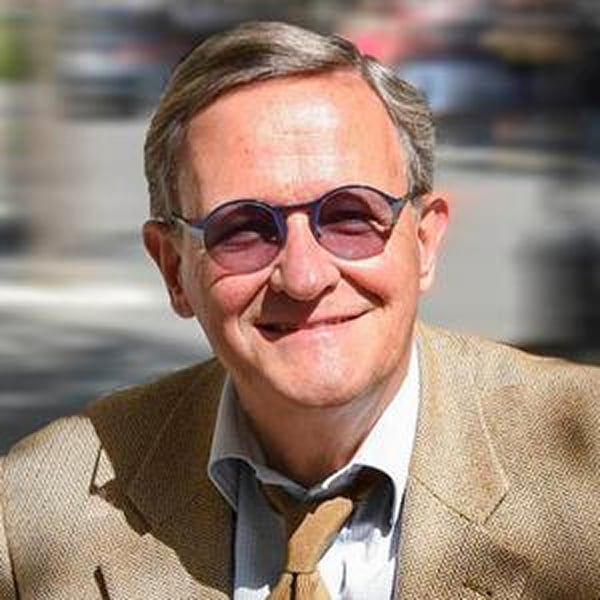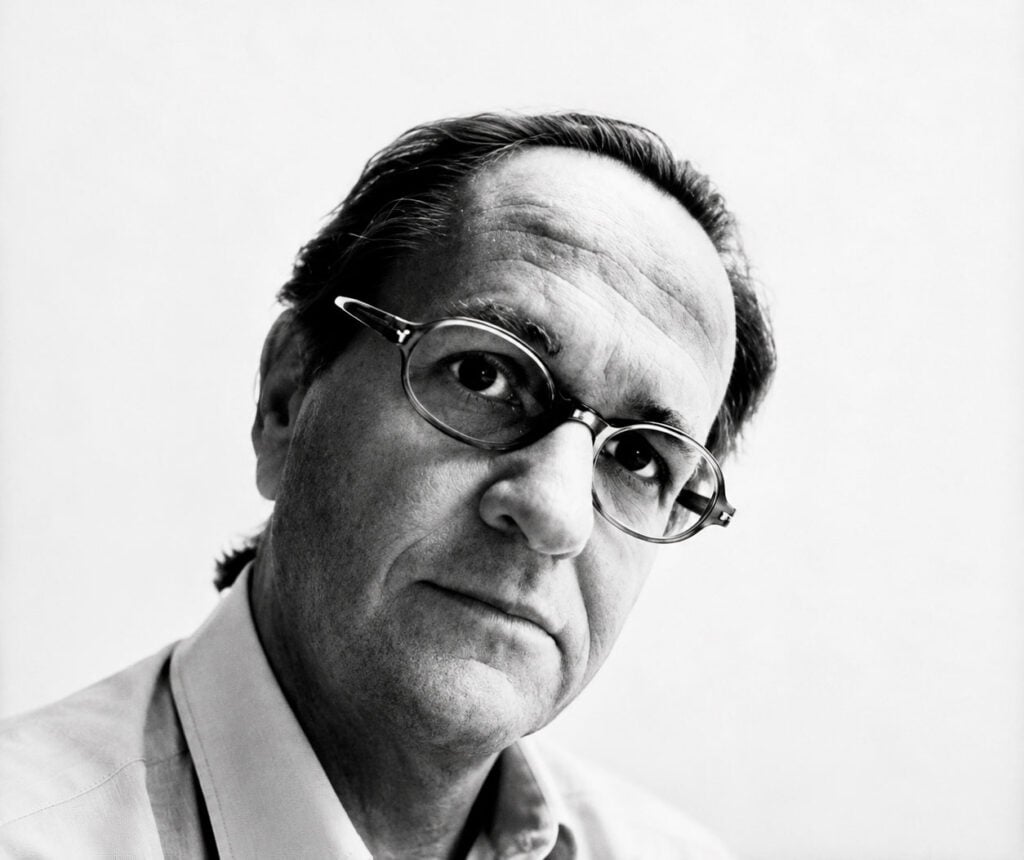
PressInfo #83 – Time For Forgiveness End-of-the-Year Statement

This is the founders’ end-of-the-year statement and a few highlights of our activities this year.

It suggests that TFF will promote reconciliation and forgiveness in the year 2000 and beyond. We suggest this theme because it has been singularly missing in the century and the very decade we are now leaving behind. We agree with Desmond Tutu that there can be no future without forgiveness.

Hope for change and reconciliation are now the lenses through which the future must be imagined. Why? Because if we let the present global system of violence — against other humans, other cultures and Nature — continue unabated, it is unlikely that there will be anybody around to celebrate New Year 2100.

The wonderful thing about forgiveness, reconciliation and hope is that we have to take the initiative ourselves; they cannot be demanded of somebody else. You cannot force another human being to forgive you; it comes from inside, from an inner struggle — and it is a struggle of liberation from hate, fear, revenge and worse. Without that, both the victim’s and the perpetrator’s life will be miserable.

Millions of times a day, in big and small affairs, we see people all over the world use violence because “that is what ‘they’ did and — no, it isn’t right, but ‘they’ were the ones who began, we only reciprocated in kind.” But remember Gandhi, the towering figure of this century: “An eye for an eye makes the whole world blind.” This paradigm must be destroyed before it destroys the world.

A better world would emerge if more people took the first step and forgave “the other”; that other would then say, we reconciled because “they” forgave us. Instead of locking each other up in the vicious circle of violence and hate, they liberated themselves through inner struggle followed by mutual reconciliation — atonement: at-one-ment. Any normal human being is more proud to have taken the first step toward peace at heart than to have thrown the first stone. One day, perhaps, even the media will focus on the world’s peace lords and not only on war lords.

No, none of it is easy. Reconciliation and peace take preparation and soul-searching — and then the miracle happens quickly. With violence it is the opposite: it is easy and quick, it distances us from our souls and hearts; and the repair — if at all possible — may take a lifetime or more.

Next year TFF will continue to develop ideas, strategies and policy proposals for genuine peace: peace brought about through soft power based on hearts and brains, not on muscles alone. But we will also continue to criticize human folly — the structures and ways of thinking that maintain violence, injustice, peacelessness and war as an institution — as all of it creates unnecessary suffering and environmental degradation, making the world increasingly blind and poor.

And we will continue to highlight the central role in all this of Western culture — in honour of Gandhi who, when asked what he thought about Western civilization, roguishly answered that it would be a great idea…

We wish every one of you a challenging and peaceful New Year 2000.


Lost Opportunities Since 1989

If the West “won” the Cold War, the loss of its favorite enemy — the Soviet Union and Communism — deprived it of vital elements of its own identity. Incapable of living without enemies, its depressive side created rogue states, dictators and terrorists, while its manic, messianic side invented grandiose projects: Western-controlled globalization, disciplining interventions, cultural supremacy and renewed militarism. It is a profound paranoia of the privileged — fearing to lose what others rightfully envy.

Liberalism, human rights and democracy, “humanitarian” interventions, peace — all this idealism risks turning ugly and disguising pathology. They signal not the “end of ideology” but an ideology that brings us to the end. What civilizational grief was all this supposed to cure?

Two Western-based world wars, nuclear bombings and overkill, some 150 wars since 1945 — most fought with Western arms — have not persuaded those in power that war as a legitimate social institution must go. Or we must. In 1989 billions yearned for the post-Cold War peace dividend, justice, closing the gap between rich and poor, a nuclear-free world and partnership with Nature — all perfectly possible. Democracy should have been the least violent and most efficient way to achieve it. But American and other Western leadership failed abysmally.

The West is neither at peace with itself nor with the rest of the world. We still see enemies instead of human beings, use control before compassion and try greed before generosity. But we can decide to see the future as a space and time for forgiveness and reconciliation — building soft power through humility, tolerance and nonviolence. For nations, soft power may open gateways to hope and freedom as powerful as love is to the individual. Peace would then mean the melting of the individual with the global.


Soft Power Is Stronger

Economics and politics — theory and practice — must be rethought and rooted in global care, preservation of choice and humility vis-à-vis the larger whole. There are limits to quantity and materialism, but not to quality and wisdom. We are not saying no to growth; we are saying yes to another growth ignored by mainstream science, politics and economics.

When everybody claims their human rights without a parallel sense of human duty, hard power and interventionism will follow. Human rights must go hand in hand with the duty not to risk humanity’s survival through nuclear weapons; to preserve biodiversity and societal pluralism; and to cultivate compassion for non-human life and the yet unborn.

The West itself needs a humanitarian intervention. It needs glasnost and perestroika. It needs to listen and learn, not speak and teach. It needs reconciliation with itself and the world.

Globalization based on hard economics, hard technology and hard information — sold as “the only alternative” — may produce authoritarianism with a global reach far beyond Nazism or Communism.

Soft power means global development with human beings, Nature and culture as goals — and capital, technology and organization as means. Hard power is a zero-sum game rooted in verticality and violence. Soft power is positive-sum and rooted in cooperation and horizontality — a sharing of weakness and strength.


What About Human Evil and Conflicts?

Violence is rooted less in human evil than in ignored or mismanaged conflicts.

Conflicts are neither good nor bad — they happen. They reside in relationships, situations and structures, manifesting when deep needs and rights are frustrated.

Human evil exists. But those who see themselves as eradicating evil often deny their own. If the West is bent on eradicating evil, it risks becoming evil — winning itself to death. The alternative is not passivity but the timely use of soft power — addressing how the West itself contributes to suffering. We should attack problems together with people, not attack people with problems.

Is it naïve to believe people kill more because they have problems than because they are evil? When we do not understand problems or respect people, we kill.


Learning Forgiveness and Reconciliation

How ignored is “soul reconstruction” in post-war missions! Money alone will not create peace. We must address the human dimensions of conflict.

Forgiveness is an individual act of freeing oneself from hate and the desire for revenge. It potentially frees the other side from guilt and fear. Reconciliation requires at least two; it seeks something constructive from a painful past. It does not mean forgetting but remembering in order to live more fully in the future. We forgive because we cannot forget.

The West does not yet know how to move from punitive to restorative justice, from imposed aid to spiritual mutual learning. It has much to learn from Buddhism, African healing traditions and Gandhian thought.

Violence humiliates both perpetrator and victim. They are linked in a cycle of revenge. Forgiveness and reconciliation break that cycle through truth-seeking, recognition, repentance and inner work.

Reconciliation means “calling a council again.” Atonement means being at-one. It empowers both sides. Acceptance of limitless revenge is misguided compassion and breeds inhuman society.

Civilized society understands the victim’s desire for revenge but encourages a path from dark past to brighter future — soft power shared even with former enemies.

Therein lies a seldom beauty.

Gandhi summarized it succinctly: An eye for an eye makes the whole world blind. A new soft power may help us avoid that fate.

Time For Forgiveness is now a central theme in TFF’s work beyond 2000.


The Founders


Highlights of TFF 1998–1999

The last eighteen months have seen eight publications from the foundation:

  1. Violence, Post-War Reconstruction and Civil Society. Theory and Yugoslavia
  2. Peace Prevention. Sixty Examples of Conflict Mismanagement in Former Yugoslavia since 1991
  3. The World Needs Reconciliation and Forgiveness Centres
  4. From Agenda for Peace to UNMIK in Kosovo
  5. Peace Work for the Next Millennium; Reconciliation in Global Perspective
  6. Peace Bombs over the Balkans (Swedish)
  7. Conflict and Reconciliation (Danish)
  8. The Future of the United Nations System

We conducted five missions to the Balkans; one to Burundi; study visits to Ireland and Northern Cyprus.

We continued cooperation with the European Peace University (Austria), IUPIP (Italy), and Transcend and the Peace and Development Institute (Geneva).

We worked in Eastern Slavonia, Croatia, helping establish a Citizens Network now financed by the Council of Europe.

We were present before and during the NATO bombings, analyzing the Rambouillet Dictate and reaching both state-controlled and free media in Serbia.

TFF associates gave over 100 interviews worldwide. Hundreds of articles were produced. The website reached up to 1500 visitors per day during the crisis.

Since mid-1998, 40 TFF PressInfos have been distributed to 7000 direct subscribers and many more readers worldwide.

WWW.transnational.org now hosts 700 documents, 350 daily visitors, updated weekly, with features such as Peace Browser and Transnational WIRE.

We added Burundi as a new program country.

We welcomed 12 new advisers and established the TFF Peace Antennas network of young scholars and NGO peace workers.

We thank the Swedish Ministry of Foreign Affairs for its annual grant (approx. US$35,000) and Soka Gakkai International for its generous support.

All we do for peace in a year costs about 2 percent of the price of a single cruise missile.

And we do no harm.

© TFF 1999
Related Posts

The agreement is catastrophic both because of what it says and what it doesn’t mention. It reduces further the major asset of security policies: Freedom of action. Jan Oberg TFF director September 25, 2026 A couple of hours before the agreement was signed on September 22, 2026, I published the following 13 hypotheses about what it would most likely contain on TFF Substack (in English). I was wrong on only the first point. Contrary to what Trump had written on his Truth Social platform, it does not appear to come into force immediately. In fact, it turned out to be worse than even I had anticipated. After these hypotheses now come a number of reflections in light of what the agreement actually contains, and does not contain, as well as the way in which it has generally been presented by major media outlets and by the public-service broadcaster DR. My...
Below are TFF-related media mentions, comments, videos and social media posts published elsewhere but not on this homepage. We happen to catch and list only a fraction. Regarding video comments and debates, we recommend that you go to the TFF Video Channel on Substack where many of them are reproduced. Jan Oberg is a contributor to China Daily – 52 million daily clicks – and Global Times, CGTN and CCTV (the national television), China Investment, Xinhua News Agency and several others. Articles and videos on these media very often multiply into countless Chinese (and Western media) that re-post them from these main media. Thanks to The China Academy, his analyses, interviews and comments are frequently posted on YouTube channels such as Thinkers Forum and Wave Media. These videos are often re-posted on Bilibili (China’s YouTube), the China Content Center on TikTok, and on the Chinese edition of TikTok, Douyin.com. This means reaching hundreds of millions of viewers worldwide over a year. While there are too many to catch on all these...
Jan Oberg May 15, 2026 Go to this Fox News page and scroll the whole way down: President Donald Trump tells the world that his meeting with President Xi Jinping yielded a lot of very concrete political and economic results – of course, only where the Chinese side, according to him, agreed with him. He does not mention the Taiwan issue, but Secretary of State, Marco Rubio, says that it did not feature prominently in their talks and that the US policy on Taiwan has not changed. Then go to China Daily – or Global Times – and you will see that for the Chinese it is framework, principles, structure of cooperation etc. that matters – all embedded in the overall idea of “constructive bilateral relationship of strategic stability.” Nowhere is any concrete agreement or deal – all that Trump refers to – mentioned. At the general level, this gives you insights into the very different social...

Recent Articles

Tony Robinson October 4, 2026 Violence is easy to recognise when someone is being beaten, shot or killed. It becomes more difficult when nobody is holding a weapon. Poverty, discrimination, exploitation and repression can restrict a human life just as effectively, although they do so in very different ways and with very different consequences. Simply adding more categories to an ever-growing list of forms of violence does not really solve the problem. The more interesting question is what all these different situations have in common and why it makes sense to describe them using the same word. Human beings do not simply react to what happens around them. They remember the past, imagine things that do not yet exist, make plans and undertake projects. Workers organise because they imagine different working conditions; people migrate because they imagine another life somewhere else; social movements emerge because people refuse to accept the...
It’s a matter of principles, courage, vision and pulling together – while the militarist world is falling apart… Peter Langille October 3, 2026 “Here, then, is the problem which we present to you, stark and dreadful and inescapable: Shall we put an end to the human race; or shall mankind renounce war?”The Bertrand Russell—Albert Einstein Manifesto, July 9, 1955 ⁕ The forecast for what’s ahead is worrisome. The sharp rise in armed conflicts over the past three years is adding to what was already the highest level in over seventy years. Genocides, which should be prevented are supported. A shared climate emergency that jeopardises survival is ignored. Diverse polls now suggest that people are war-weary, worried and interested in a more effective United Nations. And, there are viable policy options for a more secure world! Yet governments are doubling-down, betting on more war and investing heavily. If current trends persist,...
Johan Galtung 1930-2024October 2015 Published here on October 3, 2026 Let us focus on Civilization for conflict analysis and remedies. Major forms of disorder use violence; war is state organized violence. The most belligerent states are the United States of America and Israel, both with civilization roots. National Evangelism, the US Protestant Christian civilization– more national than evangelical–justifies US warfare as exceptionalism of a people chosen by God, with a manifest destiny to run the world. Orthodox Judaism justifies Israeli warfare to conquer and expand from Nile to Euphrates as a religious right and duty to the Eternal One. The third most belligerent country, the UK, no longer believes it is God-chosen but chosen by the USA; not quite the same but something. But the root cause of global disorder lies in the Occident–with Islam–seeing itself as the single, universal civilization valid for all at all times, all others being...

TFF on Substack

Discover and subscribe to more peace materials on TFF Substack

Most Popular

Tony Robinson October 4, 2026 Violence is easy to recognise when someone is being beaten, shot or killed. It becomes more difficult when nobody is holding a weapon. Poverty, discrimination, exploitation and repression can restrict a human life just as effectively, although they do so in very different ways and with very different consequences. Simply adding more categories to an ever-growing list of forms of violence does not really solve the problem. The more interesting question is what all these different situations have in common and why it makes sense to describe them using the same word. Human beings do not simply react to what happens around them. They remember the past, imagine things that do not yet exist, make plans and undertake projects. Workers organise because they imagine different working conditions; people migrate because they imagine another life somewhere else; social movements emerge because people refuse to accept the...
It’s a matter of principles, courage, vision and pulling together – while the militarist world is falling apart… Peter Langille October 3, 2026 “Here, then, is the problem which we present to you, stark and dreadful and inescapable: Shall we put an end to the human race; or shall mankind renounce war?”The Bertrand Russell—Albert Einstein Manifesto, July 9, 1955 ⁕ The forecast for what’s ahead is worrisome. The sharp rise in armed conflicts over the past three years is adding to what was already the highest level in over seventy years. Genocides, which should be prevented are supported. A shared climate emergency that jeopardises survival is ignored. Diverse polls now suggest that people are war-weary, worried and interested in a more effective United Nations. And, there are viable policy options for a more secure world! Yet governments are doubling-down, betting on more war and investing heavily. If current trends persist,...
Johan Galtung 1930-2024October 2015 Published here on October 3, 2026 Let us focus on Civilization for conflict analysis and remedies. Major forms of disorder use violence; war is state organized violence. The most belligerent states are the United States of America and Israel, both with civilization roots. National Evangelism, the US Protestant Christian civilization– more national than evangelical–justifies US warfare as exceptionalism of a people chosen by God, with a manifest destiny to run the world. Orthodox Judaism justifies Israeli warfare to conquer and expand from Nile to Euphrates as a religious right and duty to the Eternal One. The third most belligerent country, the UK, no longer believes it is God-chosen but chosen by the USA; not quite the same but something. But the root cause of global disorder lies in the Occident–with Islam–seeing itself as the single, universal civilization valid for all at all times, all others being...
Read More
Living-Peace-Sign-Budapest-copy
Tony Robinson October 4, 2026 Violence is easy to recognise when someone is being beaten, shot or killed. It becomes more difficult when nobody is holding a weapon. Poverty, discrimination, exploitation and repression can restrict a human life just as effectively, although they do so in very different ways and with very different consequences. Simply adding more categories to an ever-growing list of forms of violence does not really solve the problem. The more interesting question is what all these different situations have in common and why it makes sense to describe them using the same word. Human beings do not simply react to what happens around them. They remember the past, imagine things that do not yet exist, make plans and undertake projects. Workers organise because they imagine different working conditions; people migrate because they imagine another life somewhere else; social movements emerge because people refuse to accept the...
b54a1f10-8c65-4f0b-9dd5-4abc0a7d04cc_2659x2659
It’s a matter of principles, courage, vision and pulling together – while the militarist world is falling apart… Peter Langille October 3, 2026 “Here, then, is the problem which we present to you, stark and dreadful and inescapable: Shall we put an end to the human race; or shall mankind renounce war?”The Bertrand Russell—Albert Einstein Manifesto, July 9, 1955 ⁕ The forecast for what’s ahead is worrisome. The sharp rise in armed conflicts over the past three years is adding to what was already the highest level in over seventy years. Genocides, which should be prevented are supported. A shared climate emergency that jeopardises survival is ignored. Diverse polls now suggest that people are war-weary, worried and interested in a more effective United Nations. And, there are viable policy options for a more secure world! Yet governments are doubling-down, betting on more war and investing heavily. If current trends persist,...
010
Johan Galtung 1930-2024October 2015 Published here on October 3, 2026 Let us focus on Civilization for conflict analysis and remedies. Major forms of disorder use violence; war is state organized violence. The most belligerent states are the United States of America and Israel, both with civilization roots. National Evangelism, the US Protestant Christian civilization– more national than evangelical–justifies US warfare as exceptionalism of a people chosen by God, with a manifest destiny to run the world. Orthodox Judaism justifies Israeli warfare to conquer and expand from Nile to Euphrates as a religious right and duty to the Eternal One. The third most belligerent country, the UK, no longer believes it is God-chosen but chosen by the USA; not quite the same but something. But the root cause of global disorder lies in the Occident–with Islam–seeing itself as the single, universal civilization valid for all at all times, all others being...
Screenshot 2026-10-02 011738
Jan ObergPhD, director, The Transnational Foundation for Peace and Future Research, TFFLund, Sweden October 2, 2026 This is my full original manuscript. The Chinese Academy of Social Science, CASS, makes two publications out if it. 1. China’s Five-year plan emphasized the capabilities of basic research and original innovation. It is regarded as the goal of the future social development, which, as required, should be significantly enhanced. Can you comment on the importance of original innovation in research and academic study? I believe it is easier to define “original innovation” in the natural sciences than in social sciences. The breaking points of what constitutes something new, or innovative, are not quite as sharp in the latter. But in both fields it is about opening up something that was closed, unseen, unexplored before – making manifest what was earlier latent. Innovations come in many forms and shapes – naming something that was not...
arctic-circle-map
The agreement is catastrophic both because of what it says and what it doesn’t mention. It reduces further the major asset of security policies: Freedom of action. Jan Oberg TFF director September 25, 2026 A couple of hours before the agreement was signed on September 22, 2026, I published the following 13 hypotheses about what it would most likely contain on TFF Substack (in English). I was wrong on only the first point. Contrary to what Trump had written on his Truth Social platform, it does not appear to come into force immediately. In fact, it turned out to be worse than even I had anticipated. After these hypotheses now come a number of reflections in light of what the agreement actually contains, and does not contain, as well as the way in which it has generally been presented by major media outlets and by the public-service broadcaster DR. My...
girl-5894831_1280
Below are TFF-related media mentions, comments, videos and social media posts published elsewhere but not on this homepage. We happen to catch and list only a fraction. Regarding video comments and debates, we recommend that you go to the TFF Video Channel on Substack where many of them are reproduced. Jan Oberg is a contributor to China Daily – 52 million daily clicks – and Global Times, CGTN and CCTV (the national television), China Investment, Xinhua News Agency and several others. Articles and videos on these media very often multiply into countless Chinese (and Western media) that re-post them from these main media. Thanks to The China Academy, his analyses, interviews and comments are frequently posted on YouTube channels such as Thinkers Forum and Wave Media. These videos are often re-posted on Bilibili (China’s YouTube), the China Content Center on TikTok, and on the Chinese edition of TikTok, Douyin.com. This means reaching hundreds of millions of viewers worldwide over a year. While there are too many to catch on all these...