You want to find interesting analyses, reports, articles and papers on peace and conflict issues from around the world?
Now we do the job for you. This page provides links to a selection of the best critical and constructive materials – the essential stuff we benefit from ourselves and want to share.
Just click below at what catches your interest – read, download or send on to a friend.
Peace & nonviolence
• The New Civilization NetworkThe New Civilization Network (NCN) is a global network of people visualizing a better world and working on building it. A world of increased quality of life, freedom, fun and inspiration for all. A world where the needs of all of humanity are met. We work independently or in teams on activities of our choice, and we coordinate and cooperate amongst ourselves when appropriate.
• Practise random kindness and senseless acts of beauty It’s a crisp winter day in San Francisco. A woman in a red Honda, Christmas presents piled in the back, drives up to the Bay Bridge tollbooth. ‘I’m paying for myself, and for the six cars behind me,’ she says with a smile, handing over seven commuter tickets. One after another, the next six drivers arrive at the tollbooth, dollars in hand, only to be told, ‘Some lady up ahead already paid your fare. Have a nice day.’
• (Martin Luther) King Spin He has been made a saint – and that’s exactly the problem, explains a new book.
Armament and the new Cold War
• Russia increases its arms exports Russia’s deputy prime minister for military-industrial affairs said Jan. 31 that Russian arms manufacturers are expecting to export arms valued at more than $4 billion in 2000. This increase will reverse the stagnant trend of Russian arms exports throughout the 1990s, since the collapse of the Soviet Union. It will also fit well into Russian moves to boost its economic situation and expand its strategic relationships abroad.
• Russia’s – dangerous – response to Western expansion Throughout the Cold War, the Soviet Union supported a number of weak, corrupt states &endash; from Angola to North Korea &endash; in order to offset the West. When the Cold War ended, Russia no longer needed or wanted to maintain its global confrontation with the West, and it cut these allies loose. Now, however, after a decade of diplomatic and economic silence between Moscow and its former client states, Russia is reactivating some of its old relationships. This will ultimately help rewrite the rules of relations with the West.
• Chinese Army revises the art of war – with an eye to the West ‘Asymmetrical’ warfare &endash; terrorism, computer hacking, economic sabotage, assassination of U.S. citizens &endash; is the Chinese military’s strategy to defeat the United States. Should U.S. financiers whose trading adversely affects Chinese “red-chip” companies be assassinated? China’s People’s Liberation Army, or PLA, is discussing the concept. Should Beijing covertly fund political-influence operations in the United States? A new PLA book openly asks the question.
• Pentagon finds China preparing for war with the United States Some 600 translations of internal Chinese writings by 200 authors reveal China’s strategy to defeat a superior foe, using both military and nonmilitary means, such as propaganda, deception and covert action. They also reveal the extreme distrust of the United States by China’s military and party leaders. Chinese generals state that the United States intentionally bombed the Chinese Embassy in Belgrade, Yugoslavia, last May as part of a long-term strategy to prompt an arms race that will cause China’s collapse.
• Clinton plans to increase the US military budget even further President Bill Clinton’s budget calls for new spending on a wide array of military and foreign affairs priorities, including military equipment, more pay for soldiers, and special funding for a controversial new missile defence programme. The new budget plan for 2000/2001 proposes to allocate $292.2bn to national defence, up $11.3bn from the 2000 level.
• China: We are not Yugoslavia The mouthpiece of the People’s Liberation Army, furious over U.S. legislation to boost military ties with Taiwan, warned the United States on Friday not to mistake China for Yugoslavia. “China is not Yugoslavia. And Taiwan is not Kosovo,” the Liberation Army Daily said in a commentary, referring to the U.S.-led NATO bombing of Yugoslavia last year over atrocities against ethnic Albanians in the southern province of Kosovo.
Globalisation
• NATO killed at least 500 civilians in YugoslaviaThe investigation concluded that NATO committed violations of international humanitarian law. Human Rights Watch called on NATO governments to establish an independent and impartial commission to investigate these violations and issue its findings publicly. NATO governments should also alter targeting and bombing doctrine to ensure compliance with international humanitarian law, Human Rights Watch said.
• Galeano’s moving essay on media, culture and globalization Exaggerated though it may sound, I’m convinced the mercantile despotism of the mass-media entertainment industry is inflicting cultural damage on the world at least as devastating as the ethnic cleansing of Kosovo, invoked these days as justification for bombing Yugoslavia. From the Media Channel.
Kosovo/a…Chaosovo
• The U.S. in Kosovo: seeking an exit strategyWith no end in sight to the violence in Kosovo, the Pentagon has begun efforts to relieve the pressure on US peacekeepers in the breakaway province. Defense secretary Cohen: “This is a responsibility of the international community,” Cohen said about maintaining law and order in Kosovo. “The Europeans must also bear a fair share of that responsibility and they have yet to do so.”
• NATO killed 500 civilians in YugoslaviaThe investigation concluded that NATO committed violations of international humanitarian law. Human Rights Watch called on NATO governments to establish an independent and impartial commission to investigate these violations and issue its findings publicly. NATO governments should also alter targeting and bombing doctrine to ensure compliance with international humanitarian law, Human Rights Watch said.
• Anarchy & Madness in Kosovo Timothy Garton Ash’s report on the chaos in Kosovo/a tells the truth – and ends on a funny note about the liberal, Western paradise the locals long to be part of while forgetting that it was this order which did nothing between 1989 and 1999 to help them…But what do you do in a one-dimensional world where “there is no choice”. From the New York Review of Books.
• Report detailing weapons exports to human rights abusersThe Council for a Livable World Education Fund released its new report detailing various weapons sold by the U.S. to selected abusive governments around the world. Entitled “Human Rights and Weapons: Records of Selected U.S. Arms Clients,” this study not only describes the type, number, and dollar value of some of the weapons sold to these countries by the U.S., but also in what kinds of abusive practices the security forces of those nations engage.
• Human rights imperialismU.S. interests are not universal interests; its courts are not World Courts; its law is not international law. But there are indeed universal human rights that have emerged in the global struggle to acknowledge our common humanity. As Uwe-Jens Heuer and Gregor Schirmer argue, they are those rights set out in international law by the treaties and declarations that have obtained the concurrence of the states of the world. We must fight for the recognition in practice of these human rights worldwide.
What was the truth then? What is it today?
• CIA and the Cold War on culture and deceptionThis book provides a detailed account of the ways in which the CIA penetrated and influenced a vast array of cultural organizations, through its front groups and via friendly philanthropic organizations like the Ford and Rockefeller Foundations. The author, Frances Stonor Saunders, details how and why the CIA ran cultural congresses, mounted exhibits, and organized concerts.This piece took us by surprise! How much do you think CIA and similar organisations influence our understanding of today’s wold news, culture and changes?
EU militarisation
• If so, what’s the difference between the EU and NATO?European Commission President Romano Prodi surprised his Latvian audience Feb. 10 by declaring that “any attack or aggression against an EU [European Union] member nation would be an attack or aggression against the whole EU, this is the highest guarantee.” If implemented as stated, this marks a quantum shift in EU policies, states Stratfor.
LONDON – So far so good, at least on the wider level. While internally Iraq seems on the edge of chaos, the much heralded clash of civilizations between the Muslim and Judaeo-Christian worlds has yet to become apparent. We have anger and despair aplenty in the Arab and Muslim worlds. But very little rushing to the standard and there was no great pilgrimage of warriors to join the fight, as happened when the Soviet Union invaded Afghanistan twenty years ago, and then, having driven the Red Army out, were left to ferment in that mountainous redoubt. With the armaments supplied by the CIA the mujahidin were transformed into Al Qaeda that became, for a relatively brief moment as these things go, ‘the greatest threat to the homeland that America has ever known.’ Nevertheless a ‘Cold War’ between much of the Muslim world and the West is certainly in full swing. Winston...
The Challenge of Nuclear Weaponsin the Twenty-first CenturyA Path Forward The peoples and governments of the world face an urgent challenge relating to weaponry of mass destruction and particularly to nuclear weaponry. At the crossroads of technology, terrorism, geopolitical ambition, and policies of preemption are new and potent dangers for humanity. Despite ending the nuclear standoff of the Cold War era, nuclear weaponry is again menacing the peoples of the world with catastrophic possibilities. We recognize the need for any government to pursue its security interests in accordance with international law; and further, we recognize that distinctive threats to these interests now exist as a result of an active international terrorist network having declared war on the United States and its allies. Nonetheless, we reject the assessment of the current US administration that upgrading a reliance on nuclear weapons is in any sense justified as a response. We find it...
By Karin Wegestal MP, the Social Democratic Partyon behalf of the Swedish Committee for Solidarity with the Yugoslav People During the last decade, the Federal Republic of Yugoslavia has received more than 500,000 refugees from Croatia and Bosnia, and another 300,000 internally displaced persons, mainly from the province Kosovo and Metohia. For a country with about ten million inhabitants, such an influx of homeless people is obviously a very heavy burden – even under peaceful conditions. But in addition to that, the Federal Republic of Yugoslavia has been the subject to sanctions from the western powers for close to ten years and its infrastructure was badly hurt through Nato’s intense bombardment during 78 days in 1999. The result of all this is that Yugoslavia, once the most developed industrial country in Eastern Europe, is today the poorest country in Europe. In Serbia excluding Kosovo, with about ten million inhabitants and...
Below are TFF-related media mentions, comments, videos and social media posts published elsewhere but not on this homepage. We happen to catch and list only a fraction. Regarding video comments and debates, we recommend that you go to the TFF Video Channel on Substack where many of them are reproduced. Jan Oberg is a contributor to China Daily – 52 million daily clicks – and Global Times, CGTN and CCTV (the national television), China Investment, Xinhua News Agency and several others. Articles and videos on these media very often multiply into countless Chinese (and Western media) that re-post them from these main media. Thanks to The China Academy, his analyses, interviews and comments are frequently posted on YouTube channels such as Thinkers Forum and Wave Media. These videos are often re-posted on Bilibili (China’s YouTube), the China Content Center on TikTok, and on the Chinese edition of TikTok, Douyin.com. This means reaching hundreds of millions of viewers worldwide over a year. While there are too many to catch on all these...
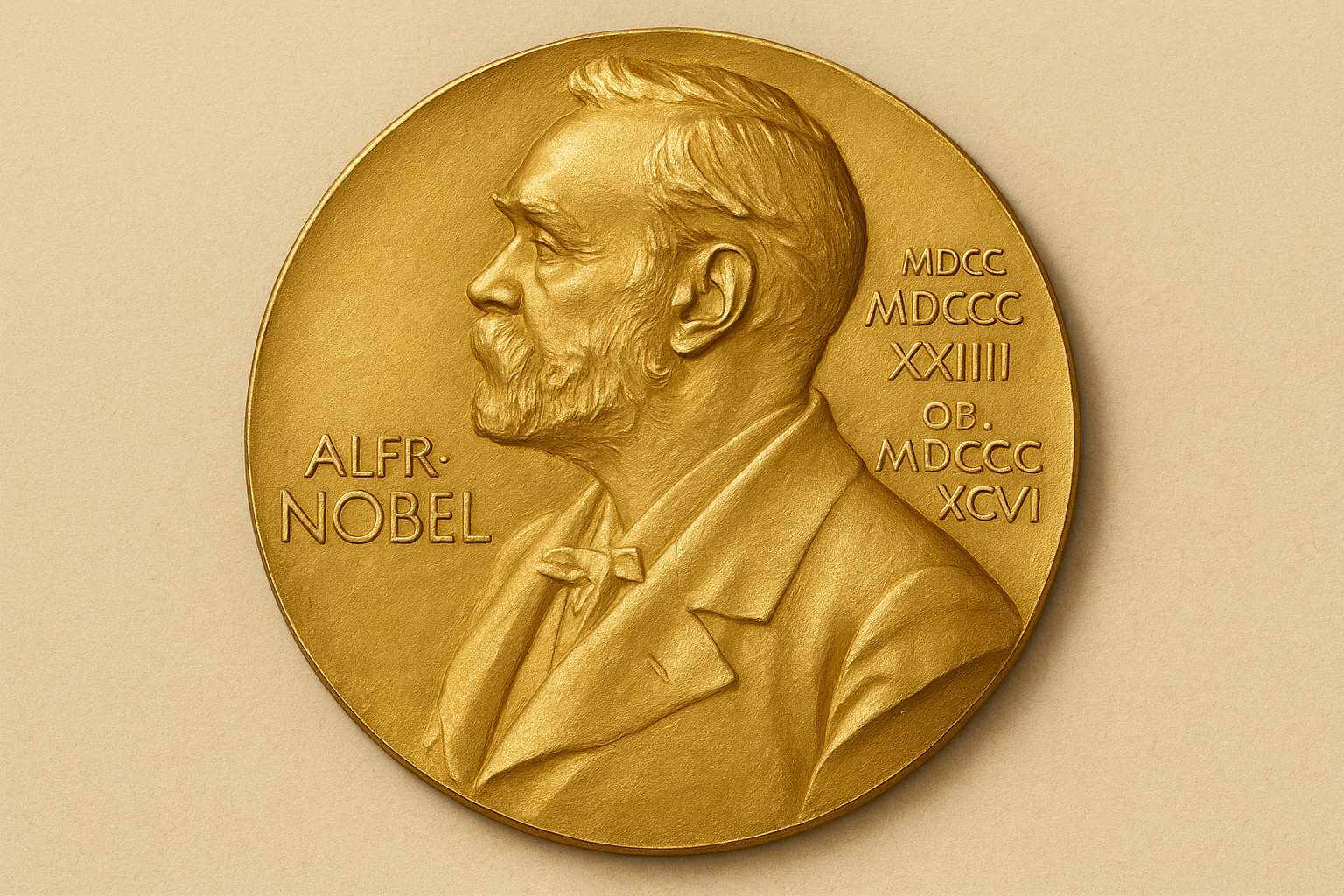
Jan Oberg TFF director October 13, 2026 According to Alfred Nobel’s will, the Nobel Peace Prize shall be awarded: ”to the person who has done the most or best to advance fellowship among nations, the abolition or reduction of standing armies, and the establishment and promotion of peace congresses.” Further down, he also expresses how the prize for the “champions of peace” shall be decided: “that for champions of peace by a committee of five persons to be selected by the Norwegian Storting. Alfred Nobel’s will is remarkably short and clear. But few seem to have read it. Nobel did not say that the committee itself should consist of members of parliament. He entrusted the Storting with appointing five persons. In principle, it could have selected diplomats, mediators, peace researchers, conflict-resolution specialists, or other individuals with recognised expertise in matters of peace from around the world. Instead, the Storting gradually...
The Quest for Humane Survival Richard Falk Professor emeritus, Princeton UniversityTFF Associate since 1986October 12, 2026 After decades of teaching and writing about international law in academic frameworks that were not institutionally situated within law school environments—at Princeton and the University of California, Santa Barbara—I found myself most receptive to the TWAIL outlook. It has been especially illuminating in clarifying the extent to which international law evolved as a dialogical critique of Europe’s efforts to legitimize its colonial undertakings. In particular, TWAIL has exposed how international law has functioned to legalize the subjugation of Third World peoples, securing conditions for exploitative investment and trade relations, the coercive enforcement of public debts, and an ideology of cultural superiority. TWAIL’s exposure of these economic legacies of colonialism has influenced my understanding of the history and development of international law, broadly conceived, as an ideological project of the Western sub-system of the world...
TFF on Substack
Discover and subscribe to more peace materials on TFF Substack
Below are TFF-related media mentions, comments, videos and social media posts published elsewhere but not on this homepage. We happen to catch and list only a fraction. Regarding video comments and debates, we recommend that you go to the TFF Video Channel on Substack where many of them are reproduced. Jan Oberg is a contributor to China Daily – 52 million daily clicks – and Global Times, CGTN and CCTV (the national television), China Investment, Xinhua News Agency and several others. Articles and videos on these media very often multiply into countless Chinese (and Western media) that re-post them from these main media. Thanks to The China Academy, his analyses, interviews and comments are frequently posted on YouTube channels such as Thinkers Forum and Wave Media. These videos are often re-posted on Bilibili (China’s YouTube), the China Content Center on TikTok, and on the Chinese edition of TikTok, Douyin.com. This means reaching hundreds of millions of viewers worldwide over a year. While there are too many to catch on all these...
Jan Oberg TFF director October 13, 2026 According to Alfred Nobel’s will, the Nobel Peace Prize shall be awarded: ”to the person who has done the most or best to advance fellowship among nations, the abolition or reduction of standing armies, and the establishment and promotion of peace congresses.” Further down, he also expresses how the prize for the “champions of peace” shall be decided: “that for champions of peace by a committee of five persons to be selected by the Norwegian Storting. Alfred Nobel’s will is remarkably short and clear. But few seem to have read it. Nobel did not say that the committee itself should consist of members of parliament. He entrusted the Storting with appointing five persons. In principle, it could have selected diplomats, mediators, peace researchers, conflict-resolution specialists, or other individuals with recognised expertise in matters of peace from around the world. Instead, the Storting gradually...
The Quest for Humane Survival Richard Falk Professor emeritus, Princeton UniversityTFF Associate since 1986October 12, 2026 After decades of teaching and writing about international law in academic frameworks that were not institutionally situated within law school environments—at Princeton and the University of California, Santa Barbara—I found myself most receptive to the TWAIL outlook. It has been especially illuminating in clarifying the extent to which international law evolved as a dialogical critique of Europe’s efforts to legitimize its colonial undertakings. In particular, TWAIL has exposed how international law has functioned to legalize the subjugation of Third World peoples, securing conditions for exploitative investment and trade relations, the coercive enforcement of public debts, and an ideology of cultural superiority. TWAIL’s exposure of these economic legacies of colonialism has influenced my understanding of the history and development of international law, broadly conceived, as an ideological project of the Western sub-system of the world...
Below are TFF-related media mentions, comments, videos and social media posts published elsewhere but not on this homepage. We happen to catch and list only a fraction. Regarding video comments and debates, we recommend that you go to the TFF Video Channel on Substack where many of them are reproduced. Jan Oberg is a contributor to China Daily – 52 million daily clicks – and Global Times, CGTN and CCTV (the national television), China Investment, Xinhua News Agency and several others. Articles and videos on these media very often multiply into countless Chinese (and Western media) that re-post them from these main media. Thanks to The China Academy, his analyses, interviews and comments are frequently posted on YouTube channels such as Thinkers Forum and Wave Media. These videos are often re-posted on Bilibili (China’s YouTube), the China Content Center on TikTok, and on the Chinese edition of TikTok, Douyin.com. This means reaching hundreds of millions of viewers worldwide over a year. While there are too many to catch on all these...
Jan Oberg TFF director October 13, 2026 According to Alfred Nobel’s will, the Nobel Peace Prize shall be awarded: ”to the person who has done the most or best to advance fellowship among nations, the abolition or reduction of standing armies, and the establishment and promotion of peace congresses.” Further down, he also expresses how the prize for the “champions of peace” shall be decided: “that for champions of peace by a committee of five persons to be selected by the Norwegian Storting. Alfred Nobel’s will is remarkably short and clear. But few seem to have read it. Nobel did not say that the committee itself should consist of members of parliament. He entrusted the Storting with appointing five persons. In principle, it could have selected diplomats, mediators, peace researchers, conflict-resolution specialists, or other individuals with recognised expertise in matters of peace from around the world. Instead, the Storting gradually...
The Quest for Humane Survival Richard Falk Professor emeritus, Princeton UniversityTFF Associate since 1986October 12, 2026 After decades of teaching and writing about international law in academic frameworks that were not institutionally situated within law school environments—at Princeton and the University of California, Santa Barbara—I found myself most receptive to the TWAIL outlook. It has been especially illuminating in clarifying the extent to which international law evolved as a dialogical critique of Europe’s efforts to legitimize its colonial undertakings. In particular, TWAIL has exposed how international law has functioned to legalize the subjugation of Third World peoples, securing conditions for exploitative investment and trade relations, the coercive enforcement of public debts, and an ideology of cultural superiority. TWAIL’s exposure of these economic legacies of colonialism has influenced my understanding of the history and development of international law, broadly conceived, as an ideological project of the Western sub-system of the world...
Advocates of nuclear disarmament are regularly dismissed by the champions of nuclear deterrence as naïve and unrealistic, utopian or even irresponsible. Yet this ‘doctrine’ of deterrence, regarded by France as the ‘cornerstone’ of its national security, is based on quasi-religious beliefs, a theory that cannot be proven, risky gambles and fragile assumptions. So much so that one might legitimately ask which side the ‘Care Bears’ are on. Marc FinaudVice-President of Initiatives for Nuclear Disarmament (IDN) October 9, 2026 This article was originally published on Pressenza When it comes to these things being treated as religious concepts, look here. Idealists and realists It was Hubert Védrine, François Mitterrand’s former Foreign Minister, who repeatedly coined the phrase: ‘Europeans are a sort of Care Bears who don’t realise they’re living in Jurassic Park’. He applies this reference to the cartoon for well-behaved children not only to what he regards as weakness or idealism...
What the West Borrowed from Asia and What It Left Behind Jan Krikke October 8, 2026 The article was originally published here In the late 1960s, the musical Hair announced that the Age of Aquarius was dawning. Its opening anthem promised a transformation of human consciousness: an era of peace, harmony and understanding. Half a century later, a familiar echo of that promise is a meditation app offered by your employer. You can find it in the same list of benefits as the pension plan and the gym discount. How did a spiritual revolution become an employee benefit? The answer lies in the history of the movement known as New Age: where it came from, what it borrowed from Asia, and why the meaning of what it borrowed changed in the process. Two definitions will help. New Age is a loose label for a wide range of spiritual practices and...
Small and different + among the 10% most active + 9,000 texts + 150 Associates + 60 000 a day — and a stubborn belief that peace is smarter and must be secured by peaceful means. In 2026, the Transnational Foundation for Peace and Future Research (TFF) turns 40. On Monday, October 5, 2026, a new TFF homepage will go live — a new gateway to more than 9,000 articles, analyses, research papers and other contributions produced over four decades of independent peace research. But this is not simply a new website. For four decades, TFF has worked from a simple conviction: peace is smarter than militarism and can be brought about by peaceful means. This is not merely an aspiration. It is the principle expressed in the UN Charter and the Gandhian tradition that has guided our work from the beginning. TFF is a research-based, independent and people-financed foundation....