
The second anniversary of the Tahrir Square Rising

The rising in Tahrir Square two years ago electrified the world and achieved the impossible: forcing the departure of Hosni Mubarak, the harsh and corrupt dictator of Egypt for the prior 30 years. What inspired the world was the spontaneous spirit of unity, a movement guided by exhilarating visions of democracy and freedom and hope, generating a new kind of populism that dispensed with ideology and leaders, a sense that the people of Egypt had acted creatively and bravely to recover their country from the clutches of neoliberal predators and their domestic collaborators. Even the armed forces had seemed mainly to welcome these developments, partly because of their own fears that Mubarak harbored dynastic dreams. Although the Jasmine Revolution in Tunisia preceded Tahrir Square, it was the developments in Egypt that made it plausible back in 2011 to speak about and to dream of the ‘Arab Spring.’

A year later in 2012 there was still some afterglow from the drama of Tahrir Square, but there were also growing signs of disunity. It was becoming clear that Muslim Brotherhood, as well as the Salafis, enjoyed the benefits of grassroots organizing and support, which translated into electoral dominance. It was also evident that the Supreme Council of the Armed Forces (SCAF) that was providing governmental authority was not clearly committed to the values and practices of constitutional democracy and human rights.

For many Egyptians, SCAF was becoming a threat of new structure of governance describable as ‘Mubarakism without Mubarak.’ Labor unions, minorities, and special interest groups were all seeking to put forward their grievances. There was a growing concern in some economic sectors that the new situation was unable to revive confidence and trust, creating a kind of backlash, ‘nothing has changed,’ and ‘we are worse off than when the Mubarak regime was in power.’

At least, before the rising of 2011, tourists came, and shop owners in the cities flourished. After one year, the excitement had died down, and there were severe worries about political leadership, human rights, and economic revival, and many of those that had been in the front lines of the challenge to Mubarak were no longer politically active and visible, or were now confronting the Morsi government.

On this second anniversary the situation has definitely deteriorated. Tahrir Square and other city centers around the country are increasingly sites of struggle between the governing Islamic Brotherhood and discontented liberal, secular, and minority forces. On this day of anniversary early reports indicate that there were clashes in many cities throughout the country, which resulted in at least one death and 186 reported injuries.

Mohammed Morsi has pleaded for unity, but his leadership has been widely perceived by his adversaries as pushing the country in the direction of Islamism, which is serving as the ideological vehicle for the hegemony of the Muslim Brotherhood. There is also a growing atmosphere of polarization in which it has become express policy that for the anti-Morsi opposition nothing less than the removal of Morsi from the presidency of Egypt will quiet their opposition.

There are also a variety of hostile claims that the proposed new Egyptian Constitution embodies a deal with the armed forces, which jeopardizes democracy by ensuring SCAF’s economic private sector interests and gives it wide ranging powers to interfere in the political life of the country without even providing mechanisms to guard accountability to the constitution.

Not all Egyptians buy into the politics of polarization. There are a few, too few, who stand above the fray, pointing to the exaggerations on both the Morsi and the opposition side. Their contention is that Morsi is implementing a generally inclusive constitutional scheme under difficult economic circumstances and that the secularists have reason for concern about Islamic influence and ambitions, but not for seeking to produce chaos in the country by challenging after the fact outcomes of democratic elections. The damage done by this polarization is to strengthen extremists on both sides, and to render problematic prospects for either humane governance or economic recovery. Unfortunately, the intensification of polarization in recent months is approaching a point of no return, which inevitably casts a dark cloud over the future of Egypt.

There are some younger activists who are more hopeful, partly because they are looking away from Tahrir Square, and find encouraging a variety of local developments throughout the country. These developments take the form of labor and environmental activism, the organization of local markets, and a lowering of expectations with respect to the central government in Cairo. In effect, this perspective sees a trend toward the invention of democratization-from-below that is working toward a just and fair society outside the conventional framings of political parties and elections. Such populism in one sense keeps the flame of Tahrir Square burning, but not on the square itself, which has been taken over by secular/Islamist ugly encounters.

At this point in Egypt’s evolution, there are plenty of reasons for concern, but also for patience. It may be that the opposition forces will tire of confrontation and that the governing authorities will moderate their policies in ways that credibly heed the promise of inclusivity.

Let us hope that some of these reasons for worry will no longer be present a year hence when the third anniversary of the 2011 rising will be celebrated. It is already clear that this rising did not produce a ‘revolution,’ but it is not yet evident whether what is emerging in Egypt can be welcomed as fundamental ‘reform’ of state/society, civilian/military, and public sector/private sector relations, a program of reform that protects and promotes human rights, including economic, social, and cultural, as well as political and civil rights.

For now, it is best for people of good will to withhold judgment, and wish the people of Egypt success in their ongoing struggle for justice, freedom, dignity, and substantive democracy (that is, rights and justice, as well as the procedures of elections and institutions).

Originally posted on Richard Falk’s blog here.
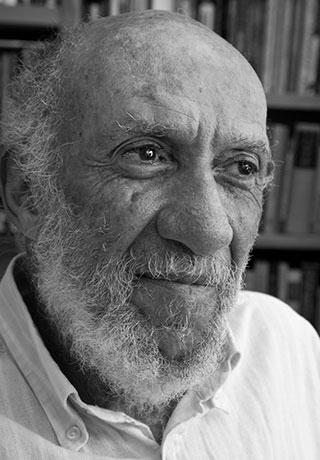
Professor Falk became an adviser to TFF when it was established in 1985.

Related Posts

Farhang Jahanpour TFF Associate, former Board member February 11, 2026 Oxford (Special to Informed Comment; Feature) – Today, 11 February, marks the 47th anniversary of the victory of the Islamic Revolution in Iran, and coincidentally, it also marks the 15th anniversary of the ousting of Hosni Mubarak after 30 years of oppressive rule. There were some other uprisings during what came to be known as the Arab Spring, which resulted in the ousting of ruling dictators. Undeterred, Iranian leaders, after the terrible carnage in January this year, are making big plans to celebrate the anniversary of the 1979 Islamic Revolution. Many people optimistically assume that massive popular revolutions against dictators will automatically result in the establishment of democratic governments. Unfortunately, the aftermath of the Iranian revolution and the massive uprisings by Arab masses during the so-called Arab Spring have led to the establishment of even worse regimes. Far from resulting...
LONDON – So far so good, at least on the wider level. While internally Iraq seems on the edge of chaos, the much heralded clash of civilizations between the Muslim and Judaeo-Christian worlds has yet to become apparent. We have anger and despair aplenty in the Arab and Muslim worlds. But very little rushing to the standard and there was no great pilgrimage of warriors to join the fight, as happened when the Soviet Union invaded Afghanistan twenty years ago, and then, having driven the Red Army out, were left to ferment in that mountainous redoubt. With the armaments supplied by the CIA the mujahidin were transformed into Al Qaeda that became, for a relatively brief moment as these things go, ‘the greatest threat to the homeland that America has ever known.’ Nevertheless a ‘Cold War’ between much of the Muslim world and the West is certainly in full swing. Winston...
Eastern Aleppo. al-Nusra occupation. Photo © Jan Oberg 2016 TFF is also your go-to source for understanding the Syria catastrophe in the making from now on. Jan Oberg December 9, 2024 Introduction: The colonialist mentality Few things should surprise us anymore regarding the un-principled nature of the contemporary Western world. One day it sees a genocide and keeps supporting its ongoing barbarism. The next day – actually December 8 in the early morning – it fully supports terrorism, which, allegedly, it has been fighting since September 11, 2001. NATO countries such as the US and Turkey are the main supporters of the terrorist movements that have now occupied the cultured country, Syria, home to 25 million extremely mixed people. As far as I have looked into it, no Western leader has pointed out that taking over an entire country and sending its leadership fleeing is a violation of international law;...

Recent Articles

Tony Robinson October 4, 2026 Violence is easy to recognise when someone is being beaten, shot or killed. It becomes more difficult when nobody is holding a weapon. Poverty, discrimination, exploitation and repression can restrict a human life just as effectively, although they do so in very different ways and with very different consequences. Simply adding more categories to an ever-growing list of forms of violence does not really solve the problem. The more interesting question is what all these different situations have in common and why it makes sense to describe them using the same word. Human beings do not simply react to what happens around them. They remember the past, imagine things that do not yet exist, make plans and undertake projects. Workers organise because they imagine different working conditions; people migrate because they imagine another life somewhere else; social movements emerge because people refuse to accept the...
It’s a matter of principles, courage, vision and pulling together – while the militarist world is falling apart… Peter Langille October 3, 2026 “Here, then, is the problem which we present to you, stark and dreadful and inescapable: Shall we put an end to the human race; or shall mankind renounce war?”The Bertrand Russell—Albert Einstein Manifesto, July 9, 1955 ⁕ The forecast for what’s ahead is worrisome. The sharp rise in armed conflicts over the past three years is adding to what was already the highest level in over seventy years. Genocides, which should be prevented are supported. A shared climate emergency that jeopardises survival is ignored. Diverse polls now suggest that people are war-weary, worried and interested in a more effective United Nations. And, there are viable policy options for a more secure world! Yet governments are doubling-down, betting on more war and investing heavily. If current trends persist,...
Johan Galtung 1930-2024October 2015 Published here on October 3, 2026 Let us focus on Civilization for conflict analysis and remedies. Major forms of disorder use violence; war is state organized violence. The most belligerent states are the United States of America and Israel, both with civilization roots. National Evangelism, the US Protestant Christian civilization– more national than evangelical–justifies US warfare as exceptionalism of a people chosen by God, with a manifest destiny to run the world. Orthodox Judaism justifies Israeli warfare to conquer and expand from Nile to Euphrates as a religious right and duty to the Eternal One. The third most belligerent country, the UK, no longer believes it is God-chosen but chosen by the USA; not quite the same but something. But the root cause of global disorder lies in the Occident–with Islam–seeing itself as the single, universal civilization valid for all at all times, all others being...

TFF on Substack

Discover and subscribe to more peace materials on TFF Substack

Most Popular

Tony Robinson October 4, 2026 Violence is easy to recognise when someone is being beaten, shot or killed. It becomes more difficult when nobody is holding a weapon. Poverty, discrimination, exploitation and repression can restrict a human life just as effectively, although they do so in very different ways and with very different consequences. Simply adding more categories to an ever-growing list of forms of violence does not really solve the problem. The more interesting question is what all these different situations have in common and why it makes sense to describe them using the same word. Human beings do not simply react to what happens around them. They remember the past, imagine things that do not yet exist, make plans and undertake projects. Workers organise because they imagine different working conditions; people migrate because they imagine another life somewhere else; social movements emerge because people refuse to accept the...
It’s a matter of principles, courage, vision and pulling together – while the militarist world is falling apart… Peter Langille October 3, 2026 “Here, then, is the problem which we present to you, stark and dreadful and inescapable: Shall we put an end to the human race; or shall mankind renounce war?”The Bertrand Russell—Albert Einstein Manifesto, July 9, 1955 ⁕ The forecast for what’s ahead is worrisome. The sharp rise in armed conflicts over the past three years is adding to what was already the highest level in over seventy years. Genocides, which should be prevented are supported. A shared climate emergency that jeopardises survival is ignored. Diverse polls now suggest that people are war-weary, worried and interested in a more effective United Nations. And, there are viable policy options for a more secure world! Yet governments are doubling-down, betting on more war and investing heavily. If current trends persist,...
Johan Galtung 1930-2024October 2015 Published here on October 3, 2026 Let us focus on Civilization for conflict analysis and remedies. Major forms of disorder use violence; war is state organized violence. The most belligerent states are the United States of America and Israel, both with civilization roots. National Evangelism, the US Protestant Christian civilization– more national than evangelical–justifies US warfare as exceptionalism of a people chosen by God, with a manifest destiny to run the world. Orthodox Judaism justifies Israeli warfare to conquer and expand from Nile to Euphrates as a religious right and duty to the Eternal One. The third most belligerent country, the UK, no longer believes it is God-chosen but chosen by the USA; not quite the same but something. But the root cause of global disorder lies in the Occident–with Islam–seeing itself as the single, universal civilization valid for all at all times, all others being...
Read More
Living-Peace-Sign-Budapest-copy
Tony Robinson October 4, 2026 Violence is easy to recognise when someone is being beaten, shot or killed. It becomes more difficult when nobody is holding a weapon. Poverty, discrimination, exploitation and repression can restrict a human life just as effectively, although they do so in very different ways and with very different consequences. Simply adding more categories to an ever-growing list of forms of violence does not really solve the problem. The more interesting question is what all these different situations have in common and why it makes sense to describe them using the same word. Human beings do not simply react to what happens around them. They remember the past, imagine things that do not yet exist, make plans and undertake projects. Workers organise because they imagine different working conditions; people migrate because they imagine another life somewhere else; social movements emerge because people refuse to accept the...
b54a1f10-8c65-4f0b-9dd5-4abc0a7d04cc_2659x2659
It’s a matter of principles, courage, vision and pulling together – while the militarist world is falling apart… Peter Langille October 3, 2026 “Here, then, is the problem which we present to you, stark and dreadful and inescapable: Shall we put an end to the human race; or shall mankind renounce war?”The Bertrand Russell—Albert Einstein Manifesto, July 9, 1955 ⁕ The forecast for what’s ahead is worrisome. The sharp rise in armed conflicts over the past three years is adding to what was already the highest level in over seventy years. Genocides, which should be prevented are supported. A shared climate emergency that jeopardises survival is ignored. Diverse polls now suggest that people are war-weary, worried and interested in a more effective United Nations. And, there are viable policy options for a more secure world! Yet governments are doubling-down, betting on more war and investing heavily. If current trends persist,...
010
Johan Galtung 1930-2024October 2015 Published here on October 3, 2026 Let us focus on Civilization for conflict analysis and remedies. Major forms of disorder use violence; war is state organized violence. The most belligerent states are the United States of America and Israel, both with civilization roots. National Evangelism, the US Protestant Christian civilization– more national than evangelical–justifies US warfare as exceptionalism of a people chosen by God, with a manifest destiny to run the world. Orthodox Judaism justifies Israeli warfare to conquer and expand from Nile to Euphrates as a religious right and duty to the Eternal One. The third most belligerent country, the UK, no longer believes it is God-chosen but chosen by the USA; not quite the same but something. But the root cause of global disorder lies in the Occident–with Islam–seeing itself as the single, universal civilization valid for all at all times, all others being...
Screenshot 2026-10-02 011738
Jan ObergPhD, director, The Transnational Foundation for Peace and Future Research, TFFLund, Sweden October 2, 2026 This is my full original manuscript. The Chinese Academy of Social Science, CASS, makes two publications out if it. 1. China’s Five-year plan emphasized the capabilities of basic research and original innovation. It is regarded as the goal of the future social development, which, as required, should be significantly enhanced. Can you comment on the importance of original innovation in research and academic study? I believe it is easier to define “original innovation” in the natural sciences than in social sciences. The breaking points of what constitutes something new, or innovative, are not quite as sharp in the latter. But in both fields it is about opening up something that was closed, unseen, unexplored before – making manifest what was earlier latent. Innovations come in many forms and shapes – naming something that was not...
arctic-circle-map
The agreement is catastrophic both because of what it says and what it doesn’t mention. It reduces further the major asset of security policies: Freedom of action. Jan Oberg TFF director September 25, 2026 A couple of hours before the agreement was signed on September 22, 2026, I published the following 13 hypotheses about what it would most likely contain on TFF Substack (in English). I was wrong on only the first point. Contrary to what Trump had written on his Truth Social platform, it does not appear to come into force immediately. In fact, it turned out to be worse than even I had anticipated. After these hypotheses now come a number of reflections in light of what the agreement actually contains, and does not contain, as well as the way in which it has generally been presented by major media outlets and by the public-service broadcaster DR. My...
girl-5894831_1280
Below are TFF-related media mentions, comments, videos and social media posts published elsewhere but not on this homepage. We happen to catch and list only a fraction. Regarding video comments and debates, we recommend that you go to the TFF Video Channel on Substack where many of them are reproduced. Jan Oberg is a contributor to China Daily – 52 million daily clicks – and Global Times, CGTN and CCTV (the national television), China Investment, Xinhua News Agency and several others. Articles and videos on these media very often multiply into countless Chinese (and Western media) that re-post them from these main media. Thanks to The China Academy, his analyses, interviews and comments are frequently posted on YouTube channels such as Thinkers Forum and Wave Media. These videos are often re-posted on Bilibili (China’s YouTube), the China Content Center on TikTok, and on the Chinese edition of TikTok, Douyin.com. This means reaching hundreds of millions of viewers worldwide over a year. While there are too many to catch on all these...





