

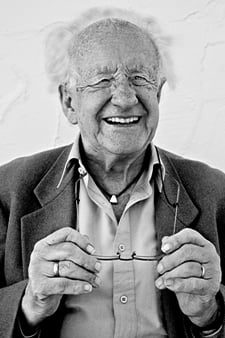
johangaltung

Both, of course. Well deserved for EU’s past and for relations within, in the tradition of West rewarding West. But critics are right about relations without and the present; like debt bondage of GIPSI–Greece-Italy-Portugal-Spain-Ireland/EU periphery–to Germany.

But first, the arguments in favor.

Two French politicians, Jean Monnet and Robert Schuman, declared that Germany had been so atrocious that it had to become member of the family, and then created the family: Genius, peace genius. On 1 Jan, 1958 the European Community embodied the Treaty of Rome, which was signed in 1957 by a horde of men. It certainly fulfilled Nobel’s testament for reducing standing armies against each other and increasing understanding. The prize did not live up to the condition of the preceding year though. But events need some time to prove themselves, like Obama’s rhetoric – and, more importantly: a major omission; but better late than never.

Look at the TRANSCEND formula for peace, highly compatible:

EQUITY x HARMONY

PEACE = —————-

TRAUMA x CONFLICT

The EC-EU satisfied all four. One state one vote, no veto; ahead of the Big-Power, feudal UN. Both territorial and functional integration; territorial equity for power, functional efforts to cooperate for mutual and equal benefit. Much empathy across borders, also with the nazi-fascist countries; much harmony, reflected today in the efforts to help the victims of hypercapitalism (even the delinquent Greece). The integration of Germany in the family released the German textbook acknowledging and rejecting the past, setting a new course. Furthermore, the EU machinery handled the running and growing agenda of conflicts.

In addition, the regional, sub-state approach of the EC-EU softened the many contradictions between the states and the nations in the UK, in the Basque two-state region, and others.

An act of omission corrected. There are many of them. Here is a list from a decade ago, topped by Gandhi, so priceless, not merely reducing but negating violence and improving understanding across conflict borders. Gandhi, however, died prizeless. The Nobel Prize consultant, Jacob Worm Müller, told this author in 1953 that Gandhi was not a real pacifist. He fought the British Empire, “a gift to civilization.”

The following is a short list of some other non-laureates:

[1] Jose Figueres, president of Costa Rica, for abolishing the army.

[2] Jean Monnet & Robert Schuman for creating peace by making former Nazi Germany a “member of the family” in the European Community.

[3] Soekarno-Nasser-Tito for the first Asian-African Conference in Bandung, Indonesia in 1955 and then again in Beograd, Yugoslavia in 1961; for the Nonaligned Movement and its members’ refusal to be part of two blocs on a potentially disastrous collision course.

[4] Nehru & Zhou Enlai for the Panch Sheela Treaty with its five pillars of peaceful coexistence, maintaining peace between the world’s largest countries.

[5] Urho Kekkonen, president of Finland, for the creation of the Conference on Security and Co-operation in Europe-CSCE (Helsinki Accords), 1972-1975.

[6] Olof Palme, prime minister of Sweden, for the Five Countries Initiative for denuclearization.

[7] The churches in Leipzig, particularly Nikolai-kirche, for the Montags-Demonstrationen of 1989, which ended the Cold War on 9/11 1989.

[8] Pope John Paul II for his untiring work on reconciliation through apology and dialogue across religious borders–also in history.

[9] Hans Küng for his work on a global ethic to bridge all religions.

Like Gandhi, they compare favorably with most of the 94 persons and 19 organizations that received the prize at the time of this list.

What do Gandhi and the names on this short list have in common? Answer: An incompatibility with Norway’s foreign policy. Aligned with the USA, that most violent country in modern history, three US presidents and five US secretaries of state were awarded the prize. The European Community was something that the Norwegian government wanted to join but which was defeated by referenda in 1972 and 1994 with the ambiguity of being a potential competitor to USA-NATO.

Nobel’s criteria for peace are still relevant. Candidates are numerous. Human rights, environment and development should also be praised, but not at the expense of peace prizes in Nobel’s spirit.

Take another look at the formula and compare it with the way the West, including the now prized EU, relates to the rest of the world.

Of equity and cooperation for equal and mutual benefit there is almost nothing. The West always wants an edge, something extra; and their capitalism gives them mutual and highly unequal benefits. So does their peace theory: rule of law, human rights and democracy, with no reflection on Western rule of law being so weak on acts of omission, the human rights so weak on collective rights, and democracy so weak on dialogue and consensus. Western individualism writ large but it is blind to we-cultures so prevalent all over the world.

Of empathy there is little or nothing; whatever stands in the way is not understood but stamped out as terrorist, fundamentalist, or what not. Of course, the still leader of the West, the USA, is No. 1 in this lack of empathy; but the others seem not to dare challenge the USA publicly in its myopia. Take the prize to Liu Xiaobo, the Charter less problematic than a man so enthused with Western colonialism that he wanted 300 years for China and praised US-led warfare all over. No understanding among nations from that one, nor reduction of armies.

Of reconciliation after the countless traumas that the West has inflicted on the world there is little or nothing; rather, the West walks out of conferences (with Israel, the latecomer in settler colonialism) denying the victims their dignity.

And of handling conflicts, creatively? Next to nothing; look at the scandals, soon dubbed “tragedies” like Vietnam, in Iraq and Afghanistan. For the capacity of Western diplomacy to bridge the gap and handle conflicts creatively, consult WikiLeaks.

Yet, the EU has a model character instead of the quartet-good-for-nothing propagating a Middle East Community along EU lines for Israel with the five Arab neighbors; a Central Asian community around Afghanistan; an East Asian Community. With that we would be in peace business.

Originally published here.

Related Posts

Photos © TFF 2000 Read PressInfo 90 “Lift the Sanctions and Bring More Aid to Yugoslavia” See Pictures from Belgrade © TFF 2000 Please reprint, copy, archive, quote or re-post this item, but please retain the source.
LONDON – So far so good, at least on the wider level. While internally Iraq seems on the edge of chaos, the much heralded clash of civilizations between the Muslim and Judaeo-Christian worlds has yet to become apparent. We have anger and despair aplenty in the Arab and Muslim worlds. But very little rushing to the standard and there was no great pilgrimage of warriors to join the fight, as happened when the Soviet Union invaded Afghanistan twenty years ago, and then, having driven the Red Army out, were left to ferment in that mountainous redoubt. With the armaments supplied by the CIA the mujahidin were transformed into Al Qaeda that became, for a relatively brief moment as these things go, ‘the greatest threat to the homeland that America has ever known.’ Nevertheless a ‘Cold War’ between much of the Muslim world and the West is certainly in full swing. Winston...
The Challenge of Nuclear Weaponsin the Twenty-first CenturyA Path Forward The peoples and governments of the world face an urgent challenge relating to weaponry of mass destruction and particularly to nuclear weaponry.  At the crossroads of technology, terrorism, geopolitical ambition, and policies of preemption are new and potent dangers for humanity. Despite ending the nuclear standoff of the Cold War era, nuclear weaponry is again menacing the peoples of the world with catastrophic possibilities.  We recognize the need for any government to pursue its security interests in accordance with international law; and further, we recognize that distinctive threats to these interests now exist as a result of an active international terrorist network having declared war on the United States and its allies. Nonetheless, we reject the assessment of the current US administration that upgrading a reliance on nuclear weapons is in any sense justified as a response. We find it...

Recent Articles

Below are TFF-related media mentions, comments, videos and social media posts published elsewhere but not on this homepage. We happen to catch and list only a fraction. Regarding video comments and debates, we recommend that you go to the TFF Video Channel on Substack where many of them are reproduced. Jan Oberg is a contributor to China Daily – 52 million daily clicks – and Global Times, CGTN and CCTV (the national television), China Investment, Xinhua News Agency and several others. Articles and videos on these media very often multiply into countless Chinese (and Western media) that re-post them from these main media. Thanks to The China Academy, his analyses, interviews and comments are frequently posted on YouTube channels such as Thinkers Forum and Wave Media. These videos are often re-posted on Bilibili (China’s YouTube), the China Content Center on TikTok, and on the Chinese edition of TikTok, Douyin.com. This means reaching hundreds of millions of viewers worldwide over a year. While there are too many to catch on all these...
Jan Oberg TFF director October 13, 2026 According to Alfred Nobel’s will, the Nobel Peace Prize shall be awarded: ”to the person who has done the most or best to advance fellowship among nations, the abolition or reduction of standing armies, and the establishment and promotion of peace congresses.” Further down, he also expresses how the prize for the “champions of peace” shall be decided: “that for champions of peace by a committee of five persons to be selected by the Norwegian Storting. Alfred Nobel’s will is remarkably short and clear. But few seem to have read it. Nobel did not say that the committee itself should consist of members of parliament. He entrusted the Storting with appointing five persons. In principle, it could have selected diplomats, mediators, peace researchers, conflict-resolution specialists, or other individuals with recognised expertise in matters of peace from around the world. Instead, the Storting gradually...
The Quest for Humane Survival Richard Falk Professor emeritus, Princeton UniversityTFF Associate since 1986October 12, 2026 After decades of teaching and writing about international law in academic frameworks that were not institutionally situated within law school environments—at Princeton and the University of California, Santa Barbara—I found myself most receptive to the TWAIL outlook. It has been especially illuminating in clarifying the extent to which international law evolved as a dialogical critique of Europe’s efforts to legitimize its colonial undertakings. In particular, TWAIL has exposed how international law has functioned to legalize the subjugation of Third World peoples, securing conditions for exploitative investment and trade relations, the coercive enforcement of public debts, and an ideology of cultural superiority. TWAIL’s exposure of these economic legacies of colonialism has influenced my understanding of the history and development of international law, broadly conceived, as an ideological project of the Western sub-system of the world...

TFF on Substack

Discover and subscribe to more peace materials on TFF Substack

Most Popular

Below are TFF-related media mentions, comments, videos and social media posts published elsewhere but not on this homepage. We happen to catch and list only a fraction. Regarding video comments and debates, we recommend that you go to the TFF Video Channel on Substack where many of them are reproduced. Jan Oberg is a contributor to China Daily – 52 million daily clicks – and Global Times, CGTN and CCTV (the national television), China Investment, Xinhua News Agency and several others. Articles and videos on these media very often multiply into countless Chinese (and Western media) that re-post them from these main media. Thanks to The China Academy, his analyses, interviews and comments are frequently posted on YouTube channels such as Thinkers Forum and Wave Media. These videos are often re-posted on Bilibili (China’s YouTube), the China Content Center on TikTok, and on the Chinese edition of TikTok, Douyin.com. This means reaching hundreds of millions of viewers worldwide over a year. While there are too many to catch on all these...
Jan Oberg TFF director October 13, 2026 According to Alfred Nobel’s will, the Nobel Peace Prize shall be awarded: ”to the person who has done the most or best to advance fellowship among nations, the abolition or reduction of standing armies, and the establishment and promotion of peace congresses.” Further down, he also expresses how the prize for the “champions of peace” shall be decided: “that for champions of peace by a committee of five persons to be selected by the Norwegian Storting. Alfred Nobel’s will is remarkably short and clear. But few seem to have read it. Nobel did not say that the committee itself should consist of members of parliament. He entrusted the Storting with appointing five persons. In principle, it could have selected diplomats, mediators, peace researchers, conflict-resolution specialists, or other individuals with recognised expertise in matters of peace from around the world. Instead, the Storting gradually...
The Quest for Humane Survival Richard Falk Professor emeritus, Princeton UniversityTFF Associate since 1986October 12, 2026 After decades of teaching and writing about international law in academic frameworks that were not institutionally situated within law school environments—at Princeton and the University of California, Santa Barbara—I found myself most receptive to the TWAIL outlook. It has been especially illuminating in clarifying the extent to which international law evolved as a dialogical critique of Europe’s efforts to legitimize its colonial undertakings. In particular, TWAIL has exposed how international law has functioned to legalize the subjugation of Third World peoples, securing conditions for exploitative investment and trade relations, the coercive enforcement of public debts, and an ideology of cultural superiority. TWAIL’s exposure of these economic legacies of colonialism has influenced my understanding of the history and development of international law, broadly conceived, as an ideological project of the Western sub-system of the world...
Read More
girl-5894831_1280
Below are TFF-related media mentions, comments, videos and social media posts published elsewhere but not on this homepage. We happen to catch and list only a fraction. Regarding video comments and debates, we recommend that you go to the TFF Video Channel on Substack where many of them are reproduced. Jan Oberg is a contributor to China Daily – 52 million daily clicks – and Global Times, CGTN and CCTV (the national television), China Investment, Xinhua News Agency and several others. Articles and videos on these media very often multiply into countless Chinese (and Western media) that re-post them from these main media. Thanks to The China Academy, his analyses, interviews and comments are frequently posted on YouTube channels such as Thinkers Forum and Wave Media. These videos are often re-posted on Bilibili (China’s YouTube), the China Content Center on TikTok, and on the Chinese edition of TikTok, Douyin.com. This means reaching hundreds of millions of viewers worldwide over a year. While there are too many to catch on all these...
Nobel-Prize-Plaque
Jan Oberg TFF director October 13, 2026 According to Alfred Nobel’s will, the Nobel Peace Prize shall be awarded: ”to the person who has done the most or best to advance fellowship among nations, the abolition or reduction of standing armies, and the establishment and promotion of peace congresses.” Further down, he also expresses how the prize for the “champions of peace” shall be decided: “that for champions of peace by a committee of five persons to be selected by the Norwegian Storting. Alfred Nobel’s will is remarkably short and clear. But few seem to have read it. Nobel did not say that the committee itself should consist of members of parliament. He entrusted the Storting with appointing five persons. In principle, it could have selected diplomats, mediators, peace researchers, conflict-resolution specialists, or other individuals with recognised expertise in matters of peace from around the world. Instead, the Storting gradually...
law-419057_1280
The Quest for Humane Survival Richard Falk Professor emeritus, Princeton UniversityTFF Associate since 1986October 12, 2026 After decades of teaching and writing about international law in academic frameworks that were not institutionally situated within law school environments—at Princeton and the University of California, Santa Barbara—I found myself most receptive to the TWAIL outlook. It has been especially illuminating in clarifying the extent to which international law evolved as a dialogical critique of Europe’s efforts to legitimize its colonial undertakings. In particular, TWAIL has exposed how international law has functioned to legalize the subjugation of Third World peoples, securing conditions for exploitative investment and trade relations, the coercive enforcement of public debts, and an ideology of cultural superiority. TWAIL’s exposure of these economic legacies of colonialism has influenced my understanding of the history and development of international law, broadly conceived, as an ideological project of the Western sub-system of the world...
images-2
Advocates of nuclear disarmament are regularly dismissed by the champions of nuclear deterrence as naïve and unrealistic, utopian or even irresponsible. Yet this ‘doctrine’ of deterrence, regarded by France as the ‘cornerstone’ of its national security, is based on quasi-religious beliefs, a theory that cannot be proven, risky gambles and fragile assumptions. So much so that one might legitimately ask which side the ‘Care Bears’ are on. Marc FinaudVice-President of Initiatives for Nuclear Disarmament (IDN) October 9, 2026 This article was originally published on Pressenza When it comes to these things being treated as religious concepts, look here. Idealists and realists It was Hubert Védrine, François Mitterrand’s former Foreign Minister, who repeatedly coined the phrase: ‘Europeans are a sort of Care Bears who don’t realise they’re living in Jurassic Park’. He applies this reference to the cartoon for well-behaved children not only to what he regards as weakness or idealism...
8824b09f-33a5-43f9-9fd0-550f28cda24d_1536x1024
What the West Borrowed from Asia and What It Left Behind Jan Krikke October 8, 2026 The article was originally published here In the late 1960s, the musical Hair announced that the Age of Aquarius was dawning. Its opening anthem promised a transformation of human consciousness: an era of peace, harmony and understanding. Half a century later, a familiar echo of that promise is a meditation app offered by your employer. You can find it in the same list of benefits as the pension plan and the gym discount. How did a spiritual revolution become an employee benefit? The answer lies in the history of the movement known as New Age: where it came from, what it borrowed from Asia, and why the meaning of what it borrowed changed in the process. Two definitions will help. New Age is a loose label for a wide range of spiritual practices and...
Screenshot 2026-10-04 210142
Small and different + among the 10% most active + 9,000 texts + 150 Associates + 60 000 a day — and a stubborn belief that peace is smarter and must be secured by peaceful means. In 2026, the Transnational Foundation for Peace and Future Research (TFF) turns 40. On Monday, October 5, 2026, a new TFF homepage will go live — a new gateway to more than 9,000 articles, analyses, research papers and other contributions produced over four decades of independent peace research. But this is not simply a new website. For four decades, TFF has worked from a simple conviction: peace is smarter than militarism and can be brought about by peaceful means. This is not merely an aspiration. It is the principle expressed in the UN Charter and the Gandhian tradition that has guided our work from the beginning. TFF is a research-based, independent and people-financed foundation....





