PressInfo #211 – The main preconditionsfor a sustainable solutionof the Kosovo conflicts

1. The solution has to be acceptable, optimally satisfactory, for all parties inside Kosovo and surrounding Kosovo. The idea that anyone can get or should be given all it wants must be given up at the outset.

2. No solution can be imposed, it must be negotiated by all relevant parties. To solve a conflict means that the parties voluntarily accept to live with a new order of things. Thus, any talk about deciding the final status outside a comprehensive negotiation structure – something that will invariably take time – should be avoided. Also, the process toward a solution should neither be influenced by one side’s pressure or the other side’s dragging its feet.

3. The same principles must be applied to the parties. If the international community respects the Albanian demand not to be ruled by Serbs/Belgrade, it must also respect that Kosovo-Serbs who do not wish to be ruled by Albanians/Pristina will not be exposed to such rule. Or, if it is accepted that Kosovo with its majority Albanian population can be partitioned from Serbia, a part of Kosovo with a majority Serb population can also be partitioned (this does not mean that it is an ideal solution, only that that solution cannot be a priori excluded, but must remain on the table). Or, if it is accepted that Kosovo is part of the historical Albanian state of Illyria and Albanian claims are valid because of that, it must also be accepted that it is the cradle of the Serb-Orthodox civilisation and that historical, religious and other important sites be protected and allowed to flourish. Finally, if Kosovo is assisted in achieving European or international standards, so must Serbia, and the international community itself must behave according to its own standards and not cut corners as it has done quote often in the past in this conflict.

4. The solution must take special care of the weakest parties – i.e. the minorities in Kosovo as well as Serbia’s and Montenegro’s interests as the weakest part and as loser of the war. A solution to Kosovo that rewards the stronger side will be nothing but a recipe for future historical grievances and a wish for revenge.

5. The solution must not imply collective punishment of civilians for what leaders have done. No nationality and no individuals who have committed no crimes must be victims of a solution because that solution is based on historical grievances or a wish for revenge by one or more parties or on third party political or economic interests.

Would you be reading this now,
if it wasn’t useful to you?
Get more quality articles in the future

6. The solution must indisputably be consistent with international law and with the relevant Security Council Resolutions, 1244 in particular. A settlement for Kosovo should not be built on exceptionality and risk becoming a precedent for other, similar secessionist projects around the world.

7. The solution must address and be compatible with psycho-social healing. No solution will work if people continue to hate each other. Through the establishment, for instance, of a Truth and Reconciliation Commission, various confidence-building and reconciliation measures, as well as peace and tolerance education the solution should seek to guarantee the prevention of future violence and offer possibilities for day-to-day co-operation and thereby over time promote a civil society concept in which ethnic identities play a less and less significant rôle.

8. A solution can not be based on – or forced through – with the argument that it is the only solution. In the name of democracy and to secure sustainability, the parties must be given choice. Thus, independent and impartial experts from different cultures should be invited to form a commission the task of which is to provide, say, 5 generalised models for possible solutions. Their work should present and build on experiences and best practises from similar conflict-resolution cases around the world. The point is to increase the space for creative but realistic conflict-resolution and stimulate broad debate in Kosovo, Serbia-Montenegro, in the region and in international organisations about viable models. Any solution called the only one by any party will not be a solution simply because it is never true – and not compatible with an ethos of democracy – that there is only one way of solving a problem.

9. Some kind of guarantor actor mechanism must be developed. It will be necessary to secure that the chosen model cannot be derailed by any party at any point. One could of course imagine some kind of continued (but different) UN, EU and OSCE presence but also something like Serbia-Montenegro, Albania and the EU as guarantor states in co-operation with Kosovo, somewhat similar to the 1960 Agreements about Cyprus.

10. A viable solution will have to rest on the principles that the final status of Kosovo is secondary to the essence or substance of the Kosovo society under development. The main issue is what kind of actor Kosovo will be for its citizens and its neighbours. The time of self-delusive policies such as the one stating that independence – or just remaining under Belgrade – will solve all essential problems belongs to the past. Issues of substance and quality ought to come before status in any negotiated solution. In short, without solutions to matters of substance – such as security, economic development, crime reduction, the right to safe return, reform of the educational system and the judiciary system, tolerant practising of identities for all, democratisation and human rights including gender rights and the right to work and express oneself freely and without fear – no legal status solution for Kosovo will be viable or happy for the people there or in the region.

11. Any solution will require that the international community lives up to its own responsibilities, not least UNSC Res 1244. It will have to be realistically prepared to remain seized of the matter in many and different ways in years, if not decades, to come.


The TFF Kosovo Solution Series

# 1
Why the solution in Kosovo matters to the world

# 2
The media – strategic considerations

# 3
The main preconditions for a sustainable solution to the Kosovo conflict

# 4
The situation as seen from Serbia

# 5
The arguments for quick and total independence are not credible

# 6
What must be Belgrade’s minimum conditions and its media strategy

# 7
Nations and states, sovereignty and self-determination

# 8
Positive scenarios: Turn to the future, look at the broader perspectives

# 9
Many thinkable models for future Kosovo

# 10
Summary: From “Only one solution” towards democracy and peace


NOTE
Relevant background links for this series.


Get free articles & updates

Få gratis artikler og info fra TFF

© TFF and the author 2005


mail
Tell a friend about this article

Send to:

From:

Message and your name


 You are welcome to reprint, copy, archive, quote or re-post this item, but please retain the source.


Would you – or a friend – like to receive TFF PressInfo by email?


S P E C I A L S & F O R U M S

Iraq Forum

Gandhi & India

Burundi Forum

Photo galleries

Nonviolence Forum

TFF News Navigator

Become a TFF Friend

TFF Online Bookstore

Reconciliation project

EU conflict-management

Make an online donation

Foundation update and more

TFF Peace Training Network

Make a donation via bank or postal giro

Basic menu below


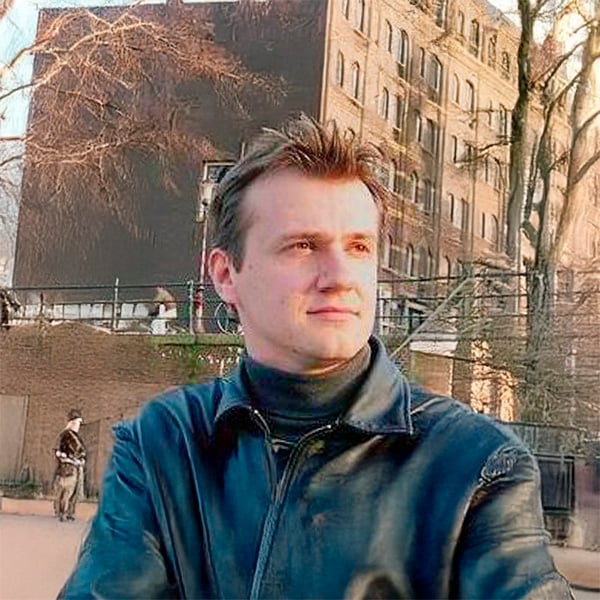
"September 2003 - present: PhD in Journalism and Communications, University of Belgrade. Working on the PhD thesis « Journalistic Responsibility in Crisis Situations : a Case-study Analysis of the Relationship between Media Management and Ethical Reporting ». 1996- 1997: Masters (M.A.) in International Affairs-Conflict Analysis, Carleton University, Ottawa Norman Paterson School of International Affairs, Carleton University, Ottawa. A-level GPA - Defended thesis ""with distinction"": ""Influence of the Media on Preventive Diplomacy: Three Cases from the Yugoslav Conflict"". 1992-1996: Bachelor of Journalism (B.J.) - Highest Honors in Journalism and Political Science, Carleton University, Ottawa"

Related Posts

The agreement is catastrophic both because of what it says and what it doesn’t mention. It reduces further the major asset of security policies: Freedom of action. Jan Oberg TFF director September 25, 2026 A couple of hours before the agreement was signed on September 22, 2026, I published the following 13 hypotheses about what it would most likely contain on TFF Substack (in English). I was wrong on only the first point. Contrary to what Trump had written on his Truth Social platform, it does not appear to come into force immediately. In fact, it turned out to be worse than even I had anticipated. After these hypotheses now come a number of reflections in light of what the agreement actually contains, and does not contain, as well as the way in which it has generally been presented by major media outlets and by the public-service broadcaster DR. My...
Below are TFF-related media mentions, comments, videos and social media posts published elsewhere but not on this homepage. We happen to catch and list only a fraction. Regarding video comments and debates, we recommend that you go to the TFF Video Channel on Substack where many of them are reproduced. Jan Oberg is a contributor to China Daily – 52 million daily clicks – and Global Times, CGTN and CCTV (the national television), China Investment, Xinhua News Agency and several others. Articles and videos on these media very often multiply into countless Chinese (and Western media) that re-post them from these main media. Thanks to The China Academy, his analyses, interviews and comments are frequently posted on YouTube channels such as Thinkers Forum and Wave Media. These videos are often re-posted on Bilibili (China’s YouTube), the China Content Center on TikTok, and on the Chinese edition of TikTok, Douyin.com. This means reaching hundreds of millions of viewers worldwide over a year. While there are too many to catch on all these...
Jan Oberg May 15, 2026 Go to this Fox News page and scroll the whole way down: President Donald Trump tells the world that his meeting with President Xi Jinping yielded a lot of very concrete political and economic results – of course, only where the Chinese side, according to him, agreed with him. He does not mention the Taiwan issue, but Secretary of State, Marco Rubio, says that it did not feature prominently in their talks and that the US policy on Taiwan has not changed. Then go to China Daily – or Global Times – and you will see that for the Chinese it is framework, principles, structure of cooperation etc. that matters – all embedded in the overall idea of “constructive bilateral relationship of strategic stability.” Nowhere is any concrete agreement or deal – all that Trump refers to – mentioned. At the general level, this gives you insights into the very different social...

Recent Articles

Tony Robinson October 4, 2026 Violence is easy to recognise when someone is being beaten, shot or killed. It becomes more difficult when nobody is holding a weapon. Poverty, discrimination, exploitation and repression can restrict a human life just as effectively, although they do so in very different ways and with very different consequences. Simply adding more categories to an ever-growing list of forms of violence does not really solve the problem. The more interesting question is what all these different situations have in common and why it makes sense to describe them using the same word. Human beings do not simply react to what happens around them. They remember the past, imagine things that do not yet exist, make plans and undertake projects. Workers organise because they imagine different working conditions; people migrate because they imagine another life somewhere else; social movements emerge because people refuse to accept the...
It’s a matter of principles, courage, vision and pulling together – while the militarist world is falling apart… Peter Langille October 3, 2026 “Here, then, is the problem which we present to you, stark and dreadful and inescapable: Shall we put an end to the human race; or shall mankind renounce war?”The Bertrand Russell—Albert Einstein Manifesto, July 9, 1955 ⁕ The forecast for what’s ahead is worrisome. The sharp rise in armed conflicts over the past three years is adding to what was already the highest level in over seventy years. Genocides, which should be prevented are supported. A shared climate emergency that jeopardises survival is ignored. Diverse polls now suggest that people are war-weary, worried and interested in a more effective United Nations. And, there are viable policy options for a more secure world! Yet governments are doubling-down, betting on more war and investing heavily. If current trends persist,...
Johan Galtung 1930-2024October 2015 Published here on October 3, 2026 Let us focus on Civilization for conflict analysis and remedies. Major forms of disorder use violence; war is state organized violence. The most belligerent states are the United States of America and Israel, both with civilization roots. National Evangelism, the US Protestant Christian civilization– more national than evangelical–justifies US warfare as exceptionalism of a people chosen by God, with a manifest destiny to run the world. Orthodox Judaism justifies Israeli warfare to conquer and expand from Nile to Euphrates as a religious right and duty to the Eternal One. The third most belligerent country, the UK, no longer believes it is God-chosen but chosen by the USA; not quite the same but something. But the root cause of global disorder lies in the Occident–with Islam–seeing itself as the single, universal civilization valid for all at all times, all others being...

TFF on Substack

Discover and subscribe to more peace materials on TFF Substack

Most Popular

Tony Robinson October 4, 2026 Violence is easy to recognise when someone is being beaten, shot or killed. It becomes more difficult when nobody is holding a weapon. Poverty, discrimination, exploitation and repression can restrict a human life just as effectively, although they do so in very different ways and with very different consequences. Simply adding more categories to an ever-growing list of forms of violence does not really solve the problem. The more interesting question is what all these different situations have in common and why it makes sense to describe them using the same word. Human beings do not simply react to what happens around them. They remember the past, imagine things that do not yet exist, make plans and undertake projects. Workers organise because they imagine different working conditions; people migrate because they imagine another life somewhere else; social movements emerge because people refuse to accept the...
It’s a matter of principles, courage, vision and pulling together – while the militarist world is falling apart… Peter Langille October 3, 2026 “Here, then, is the problem which we present to you, stark and dreadful and inescapable: Shall we put an end to the human race; or shall mankind renounce war?”The Bertrand Russell—Albert Einstein Manifesto, July 9, 1955 ⁕ The forecast for what’s ahead is worrisome. The sharp rise in armed conflicts over the past three years is adding to what was already the highest level in over seventy years. Genocides, which should be prevented are supported. A shared climate emergency that jeopardises survival is ignored. Diverse polls now suggest that people are war-weary, worried and interested in a more effective United Nations. And, there are viable policy options for a more secure world! Yet governments are doubling-down, betting on more war and investing heavily. If current trends persist,...
Johan Galtung 1930-2024October 2015 Published here on October 3, 2026 Let us focus on Civilization for conflict analysis and remedies. Major forms of disorder use violence; war is state organized violence. The most belligerent states are the United States of America and Israel, both with civilization roots. National Evangelism, the US Protestant Christian civilization– more national than evangelical–justifies US warfare as exceptionalism of a people chosen by God, with a manifest destiny to run the world. Orthodox Judaism justifies Israeli warfare to conquer and expand from Nile to Euphrates as a religious right and duty to the Eternal One. The third most belligerent country, the UK, no longer believes it is God-chosen but chosen by the USA; not quite the same but something. But the root cause of global disorder lies in the Occident–with Islam–seeing itself as the single, universal civilization valid for all at all times, all others being...
Read More
Living-Peace-Sign-Budapest-copy
Tony Robinson October 4, 2026 Violence is easy to recognise when someone is being beaten, shot or killed. It becomes more difficult when nobody is holding a weapon. Poverty, discrimination, exploitation and repression can restrict a human life just as effectively, although they do so in very different ways and with very different consequences. Simply adding more categories to an ever-growing list of forms of violence does not really solve the problem. The more interesting question is what all these different situations have in common and why it makes sense to describe them using the same word. Human beings do not simply react to what happens around them. They remember the past, imagine things that do not yet exist, make plans and undertake projects. Workers organise because they imagine different working conditions; people migrate because they imagine another life somewhere else; social movements emerge because people refuse to accept the...
b54a1f10-8c65-4f0b-9dd5-4abc0a7d04cc_2659x2659
It’s a matter of principles, courage, vision and pulling together – while the militarist world is falling apart… Peter Langille October 3, 2026 “Here, then, is the problem which we present to you, stark and dreadful and inescapable: Shall we put an end to the human race; or shall mankind renounce war?”The Bertrand Russell—Albert Einstein Manifesto, July 9, 1955 ⁕ The forecast for what’s ahead is worrisome. The sharp rise in armed conflicts over the past three years is adding to what was already the highest level in over seventy years. Genocides, which should be prevented are supported. A shared climate emergency that jeopardises survival is ignored. Diverse polls now suggest that people are war-weary, worried and interested in a more effective United Nations. And, there are viable policy options for a more secure world! Yet governments are doubling-down, betting on more war and investing heavily. If current trends persist,...
010
Johan Galtung 1930-2024October 2015 Published here on October 3, 2026 Let us focus on Civilization for conflict analysis and remedies. Major forms of disorder use violence; war is state organized violence. The most belligerent states are the United States of America and Israel, both with civilization roots. National Evangelism, the US Protestant Christian civilization– more national than evangelical–justifies US warfare as exceptionalism of a people chosen by God, with a manifest destiny to run the world. Orthodox Judaism justifies Israeli warfare to conquer and expand from Nile to Euphrates as a religious right and duty to the Eternal One. The third most belligerent country, the UK, no longer believes it is God-chosen but chosen by the USA; not quite the same but something. But the root cause of global disorder lies in the Occident–with Islam–seeing itself as the single, universal civilization valid for all at all times, all others being...
Screenshot 2026-10-02 011738
Jan ObergPhD, director, The Transnational Foundation for Peace and Future Research, TFFLund, Sweden October 2, 2026 This is my full original manuscript. The Chinese Academy of Social Science, CASS, makes two publications out if it. 1. China’s Five-year plan emphasized the capabilities of basic research and original innovation. It is regarded as the goal of the future social development, which, as required, should be significantly enhanced. Can you comment on the importance of original innovation in research and academic study? I believe it is easier to define “original innovation” in the natural sciences than in social sciences. The breaking points of what constitutes something new, or innovative, are not quite as sharp in the latter. But in both fields it is about opening up something that was closed, unseen, unexplored before – making manifest what was earlier latent. Innovations come in many forms and shapes – naming something that was not...
arctic-circle-map
The agreement is catastrophic both because of what it says and what it doesn’t mention. It reduces further the major asset of security policies: Freedom of action. Jan Oberg TFF director September 25, 2026 A couple of hours before the agreement was signed on September 22, 2026, I published the following 13 hypotheses about what it would most likely contain on TFF Substack (in English). I was wrong on only the first point. Contrary to what Trump had written on his Truth Social platform, it does not appear to come into force immediately. In fact, it turned out to be worse than even I had anticipated. After these hypotheses now come a number of reflections in light of what the agreement actually contains, and does not contain, as well as the way in which it has generally been presented by major media outlets and by the public-service broadcaster DR. My...
girl-5894831_1280
Below are TFF-related media mentions, comments, videos and social media posts published elsewhere but not on this homepage. We happen to catch and list only a fraction. Regarding video comments and debates, we recommend that you go to the TFF Video Channel on Substack where many of them are reproduced. Jan Oberg is a contributor to China Daily – 52 million daily clicks – and Global Times, CGTN and CCTV (the national television), China Investment, Xinhua News Agency and several others. Articles and videos on these media very often multiply into countless Chinese (and Western media) that re-post them from these main media. Thanks to The China Academy, his analyses, interviews and comments are frequently posted on YouTube channels such as Thinkers Forum and Wave Media. These videos are often re-posted on Bilibili (China’s YouTube), the China Content Center on TikTok, and on the Chinese edition of TikTok, Douyin.com. This means reaching hundreds of millions of viewers worldwide over a year. While there are too many to catch on all these...