In late November 1997 following the dramatic plunge of the Korean won on the foreign exchange market, an IMF team of economists led by Mr. Hubert Neiss was rushed to Seoul. Its mandate: negotiate the terms of a “Mexican-style bail-out” with a view to “restoring economic health and stability”.

An important precedent had been set: the IMF’s standard “economic medicine” (routinely imposed on the Third World and Eastern Europe) had been launched for the first time in an advanced industrial economy… The details of the economic reform programme, however, had already been decided in advance in consultation with the US Treasury, Wall Street’s commercial and merchant banks as well as with major banking interests in Japan and the European Union.

A Letter of Intent (“Memorandum on the Economic Program”) was put together in a hurry on behalf of the government with virtually no analysis of the broader causes of the financial meltdown. (The “policy solutions” had already been decided upon: no analysis was deemed necessary).

A covering letter was drafted with the help of IMF officials dated December 3 and signed by the Governor of the Bank of Korea, Mr. Kyung shik Lee and the Minister of Finance Mr. Chan yuel Lim. The Memorandum included the usual Policy Framework Paper (PFP) imposed by the Bretton Woods institutions on indebted Third World nations. (See International Monetary Fund, Korea, Request for Stand-by Arrangement, Washington, December 3, 1997, The text of the IMF Agreement together with the “Memorandum on the Economic Program” was published by Chosun Korea, Seoul, December 1997 at WWW.chosun.com).

The Managing Director Mr. Michel Camdessus was in Seoul during the final days of negotiation; the IMF’s mission was briskly wrapped up on December 3d after a one week stint; a “proposed decision” on the stand-by arrangement had already been drafted by IMF staff for adoption by the IMF Executive Board on the following day (December 4th). In close consultation with IMF negotiators, the World Bank and the Asian Development Bank had also sent in their own teams. A World Bank package with stringent conditionalities on “financial governance” was announced on December 18th.


A Safety Net for the Creditors
On Christmas Eve December 24th, officials from six leading US commercial banks including Chase, Bank America, Citicorp and J. P. Morgan were called in for talks at the Federal Reserve Bank of New York. The “big five” New York merchant banks (Goldman Sachs, Lehman Brothers, Morgan Stanley and Salomon Smith Harney) were also involved in these discussions on South Korea’s short-term debt. (Financial Times, 27-28 December 1997, p. 3). Almost simultaneously, some 80 European creditor banks under the chairmanship of the Deutsche Bank were meeting behind closed doors in Frankfurt while Japan’s big ten banks (which account for a large portion of Korea’s short term debt) were involved in high level discussions in Tokyo with Mr. Kyong shik Lee, Governor of the Bank of Korea.


No Capital Inflows under the Bailout
The bail-out (to be financed by G7 governments, the IMF, the World Bank and the Asian Development Bank) will evidently not result in capital inflows into Korea: it largely serves the interests of the international banking community, enabling US, European and Japanese banks to cash in on Korea’s short term debt. In turn, Korea will be locked into the servicing of this debt under the Agreement until the year 2006.


The Macro-Economic Agenda
The IMF programme derogates Korea’s economic sovereignty, it plunges the country virtually overnight into a deep recession. The social impact is devastating. The standard of living has collapsed; the IMF programme depresses wages and creates massive unemployment. (Wages expressed in US dollars have already been cut in half as a result of the devaluation). The Agreement also requires the government to introduce “labour market flexibility” including procedures for compressing wages and shedding “surplus workers”.

The IMF Agreement consists in tearing down Korea’s banking system while creating conditions which enable the speedy acquisition of the most profitable industrial assets by foreign capital. The Agreement lifts the ceiling on individual foreign ownership to 50 percent by the end of 1997 and 55 percent by February 1998. The IMF Agreement requires further trade liberalisation as well as the opening up of the domestic bond market to foreign capital. It also marks the demise of central banking in Asia’s most vibrant economy.

Under legislation demanded by the IMF, the Agreement allows for 100 percent ownership by foreign merchant banks: “foreign financial institutions will be allowed to purchase equity in domestic banks without restriction” (Memorandum, para. 32, p. 44).


Derogating Korea’s Sovereignty
A de facto “parallel government” has been installed. The Bank of Korea (BOK) is to be reorganised, the powers of the Ministry of Finance are to be redefined. Under the bail-out, fiscal and monetary policy will be dictated by external creditors. Monetary policy under the IMF’s stewardship will be tightened. Government spending on social programmes and infrastructure will be curtailed.


Enforcing Enabling Legislation through Financial Blackmail
During a special session of the legislature on December 23d “lawmakers endorsed the four government motions concerning the IMF rescue plans”. (Choe Seung chul, Assembly Opens to Legislate Key Financial reforms”, Korea Herald, 23 December 1997). Legislation following IMF guidelines was approved which dismantles the extensive powers of the Ministry of Finance while also stripping the Ministry of its financial regulatory and supervisory functions.

South Korea’s Parliament has been transformed into a “rubber stamp”. Enabling legislation is enforced through “financial blackmail”: if the legislation is not speedily enacted according to the IMF’s deadlines, the disbursements under the bail-out will be suspended with the danger of renewed currency speculation.

The IMF had also demanded the speedy passage of legislation which will provide for “central bank independence”. The latter provision will thwart the financing of economic development “from within” through monetary policy –a process of State supported credit which has largely been instrumental in Korea’s dynamic industrial development over the last 30 years.

The central bank has been crushed. Its foreign exchange reserves have been pillaged by institutional speculators. In late November, the Bank of Korea’s reserves had plunged to an all time low of 7.26 billion dollars. Under the IMF Agreement which freezes the supply of domestic credit, Korean corporations will increasingly rely on foreign lending institutions (para. 28) (The latter are also routinely involved in speculating against the Korean won).


The Newly Elected President Supports the IMF
President elect Kim Dae-jung had warned in a press conference during the electoral campaign on December 5th (following the IMF Executive Board decision of December 4th) that “…now foreign investors can freely buy our entire financial sector, including 26 banks, 27 securities firms, 12 insurance companies and 21 merchant banks, all of which are listed on the Korean Stock Exchange, for just 5.5 trillion won,’ that is, $3.7 billion”. (Michael Hudson, “Draft for Our World”, Dec. 23, 1997). But upon winning the election on Dec. 18th, Kim announced his unbending support for the IMF: “I will boldly open the market. I will make it so that foreign investors will invest with confidence”.


The IMF’s Bankruptcy Programme
The devaluation of the won has generated a deadly chain of bankruptcies affecting both financial and industrial enterprises. The devaluation has also contributed to triggering sharp rises in the prices of consumer necessities.

Ironically, rather than restoring “economic stability”, the IMF programme has served to heighten the impact of the devaluation leading to a further string of bankruptcies. A so-called “exit policy” (ie. bankruptcy programme) has been set in motion: the operations of some nine “troubled” merchant banks were suspended on December 2 prior to the completion of the IMF mission. In consultation with the IMF, the government is to “prepare a comprehensive action programme to strengthen financial supervision and regulation…” (Agreement, para. 25).


Dismantling the Chaebols
The IMF Agreement has created conditions which facilitate so-called “friendly” mergers and acquisitions by foreign capital. The automotive group Kia, among Korea’s largest conglomerates declared insolvency. A similar fate has affected the Halla Group involved in shipbuilding, engineering and auto-parts.

The IMF programme contributes to fracturing the chaebols which are now invited to establish “strategic alliances with foreign firms” (meaning their eventual control by foreign capital). In turn, selected Korean banks will “be made more attractive” to potential foreign buyers by transferring their non performing loans to a public bail out fund: the Korea Asset Management Corporation (KAMC).

The freeze on central bank credit imposed by the IMF prevents the Central Bank from coming to the rescue of “troubled” enterprises or banks. The agreement stipulates that “such merchant banks that are unable to submit to appropriate restructuring plans within 30 days will have their licences revoked (Agreement, para. 20, p. 8).


Crippling Domestic Enterprises
The freeze on credit demanded by the IMF has contributed to crippling the construction industry and the services economy: “banks are increasingly reluctant to provide loans to businesses while bracing for the central bank’s tighter money supply” ( Sah Dong seok, “Credit Woes Cripple Business Sectors”, Korea Times, 28 December 1997). According to one observer, more than 90 percent of construction companies (with combined debts of $20 billion dollars to domestic financial institutions) are in danger of bankruptcy” (Song Jung tae, “Insolvency of Construction Firms rises in 1998”, Korea Herald, 24 December 1997).

The contraction of domestic purchasing power (ie. lower wages and higher unemployment) has also sent “chills through the nations perennially cash-thirsty small businesses”. The government concurs that “quite a number of smaller enterprises [which rely on the internal market] will go under in the coming months”. (Korean Herald, 5 December 1997). Some 15,000 bankruptcies are expected in 1998.


Western Business Goes on a Shopping Spree
Korea’s high tech and manufacturing economy is up for grabs. Western corporations have gone on a shopping spree with a view to buying up industrial assets at rock-bottom prices. The devaluation has already depressed the dollar value of Korean assets, the IMF sponsored reforms should contribute to a further slide.

Already, the Hanwha Group is selling its oil refineries to Royal Dutch/Shell after having sold half its chemical joint venture to BASF of Germany.”( Michael Hudson, op cit). “Samsung Electronics, the world’s largest producer of computer memory chips, has seen its market value fall to $2.4 billion, down from $6.75 billion at the beginning of October before the crash was engineered… It’s now cheaper to buy one of these companies than buy a factory — and you get all the distribution, brand-name recognition and trained labor force free in the bargain”… (Michael Hudson, op cit).

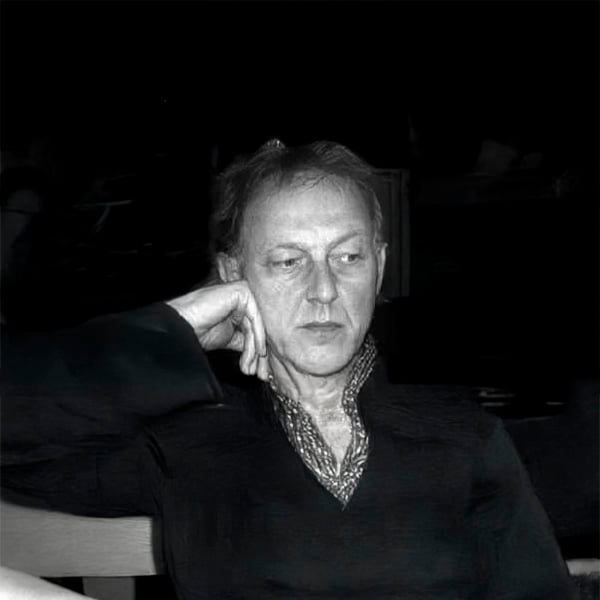
Professor Chossudovsky joined TFF as adviser in 1999.

Related Posts

LONDON – So far so good, at least on the wider level. While internally Iraq seems on the edge of chaos, the much heralded clash of civilizations between the Muslim and Judaeo-Christian worlds has yet to become apparent. We have anger and despair aplenty in the Arab and Muslim worlds. But very little rushing to the standard and there was no great pilgrimage of warriors to join the fight, as happened when the Soviet Union invaded Afghanistan twenty years ago, and then, having driven the Red Army out, were left to ferment in that mountainous redoubt. With the armaments supplied by the CIA the mujahidin were transformed into Al Qaeda that became, for a relatively brief moment as these things go, ‘the greatest threat to the homeland that America has ever known.’ Nevertheless a ‘Cold War’ between much of the Muslim world and the West is certainly in full swing. Winston...
The Challenge of Nuclear Weaponsin the Twenty-first CenturyA Path Forward The peoples and governments of the world face an urgent challenge relating to weaponry of mass destruction and particularly to nuclear weaponry.  At the crossroads of technology, terrorism, geopolitical ambition, and policies of preemption are new and potent dangers for humanity. Despite ending the nuclear standoff of the Cold War era, nuclear weaponry is again menacing the peoples of the world with catastrophic possibilities.  We recognize the need for any government to pursue its security interests in accordance with international law; and further, we recognize that distinctive threats to these interests now exist as a result of an active international terrorist network having declared war on the United States and its allies. Nonetheless, we reject the assessment of the current US administration that upgrading a reliance on nuclear weapons is in any sense justified as a response. We find it...
By Karin Wegestal MP, the Social Democratic Partyon behalf of the Swedish Committee for Solidarity with the Yugoslav People During the last decade, the Federal Republic of Yugoslavia has received more than 500,000 refugees from Croatia and Bosnia, and another 300,000 internally displaced persons, mainly from the province Kosovo and Metohia. For a country with about ten million inhabitants, such an influx of homeless people is obviously a very heavy burden – even under peaceful conditions. But in addition to that, the Federal Republic of Yugoslavia has been the subject to sanctions from the western powers for close to ten years and its infrastructure was badly hurt through Nato’s intense bombardment during 78 days in 1999. The result of all this is that Yugoslavia, once the most developed industrial country in Eastern Europe, is today the poorest country in Europe. In Serbia excluding Kosovo, with about ten million inhabitants and...

Recent Articles

Tony Robinson October 4, 2026 Violence is easy to recognise when someone is being beaten, shot or killed. It becomes more difficult when nobody is holding a weapon. Poverty, discrimination, exploitation and repression can restrict a human life just as effectively, although they do so in very different ways and with very different consequences. Simply adding more categories to an ever-growing list of forms of violence does not really solve the problem. The more interesting question is what all these different situations have in common and why it makes sense to describe them using the same word. Human beings do not simply react to what happens around them. They remember the past, imagine things that do not yet exist, make plans and undertake projects. Workers organise because they imagine different working conditions; people migrate because they imagine another life somewhere else; social movements emerge because people refuse to accept the...
It’s a matter of principles, courage, vision and pulling together – while the militarist world is falling apart… Peter Langille October 3, 2026 “Here, then, is the problem which we present to you, stark and dreadful and inescapable: Shall we put an end to the human race; or shall mankind renounce war?”The Bertrand Russell—Albert Einstein Manifesto, July 9, 1955 ⁕ The forecast for what’s ahead is worrisome. The sharp rise in armed conflicts over the past three years is adding to what was already the highest level in over seventy years. Genocides, which should be prevented are supported. A shared climate emergency that jeopardises survival is ignored. Diverse polls now suggest that people are war-weary, worried and interested in a more effective United Nations. And, there are viable policy options for a more secure world! Yet governments are doubling-down, betting on more war and investing heavily. If current trends persist,...
Johan Galtung 1930-2024October 2015 Published here on October 3, 2026 Let us focus on Civilization for conflict analysis and remedies. Major forms of disorder use violence; war is state organized violence. The most belligerent states are the United States of America and Israel, both with civilization roots. National Evangelism, the US Protestant Christian civilization– more national than evangelical–justifies US warfare as exceptionalism of a people chosen by God, with a manifest destiny to run the world. Orthodox Judaism justifies Israeli warfare to conquer and expand from Nile to Euphrates as a religious right and duty to the Eternal One. The third most belligerent country, the UK, no longer believes it is God-chosen but chosen by the USA; not quite the same but something. But the root cause of global disorder lies in the Occident–with Islam–seeing itself as the single, universal civilization valid for all at all times, all others being...

TFF on Substack

Discover and subscribe to more peace materials on TFF Substack

Most Popular

Tony Robinson October 4, 2026 Violence is easy to recognise when someone is being beaten, shot or killed. It becomes more difficult when nobody is holding a weapon. Poverty, discrimination, exploitation and repression can restrict a human life just as effectively, although they do so in very different ways and with very different consequences. Simply adding more categories to an ever-growing list of forms of violence does not really solve the problem. The more interesting question is what all these different situations have in common and why it makes sense to describe them using the same word. Human beings do not simply react to what happens around them. They remember the past, imagine things that do not yet exist, make plans and undertake projects. Workers organise because they imagine different working conditions; people migrate because they imagine another life somewhere else; social movements emerge because people refuse to accept the...
It’s a matter of principles, courage, vision and pulling together – while the militarist world is falling apart… Peter Langille October 3, 2026 “Here, then, is the problem which we present to you, stark and dreadful and inescapable: Shall we put an end to the human race; or shall mankind renounce war?”The Bertrand Russell—Albert Einstein Manifesto, July 9, 1955 ⁕ The forecast for what’s ahead is worrisome. The sharp rise in armed conflicts over the past three years is adding to what was already the highest level in over seventy years. Genocides, which should be prevented are supported. A shared climate emergency that jeopardises survival is ignored. Diverse polls now suggest that people are war-weary, worried and interested in a more effective United Nations. And, there are viable policy options for a more secure world! Yet governments are doubling-down, betting on more war and investing heavily. If current trends persist,...
Johan Galtung 1930-2024October 2015 Published here on October 3, 2026 Let us focus on Civilization for conflict analysis and remedies. Major forms of disorder use violence; war is state organized violence. The most belligerent states are the United States of America and Israel, both with civilization roots. National Evangelism, the US Protestant Christian civilization– more national than evangelical–justifies US warfare as exceptionalism of a people chosen by God, with a manifest destiny to run the world. Orthodox Judaism justifies Israeli warfare to conquer and expand from Nile to Euphrates as a religious right and duty to the Eternal One. The third most belligerent country, the UK, no longer believes it is God-chosen but chosen by the USA; not quite the same but something. But the root cause of global disorder lies in the Occident–with Islam–seeing itself as the single, universal civilization valid for all at all times, all others being...
Read More
Living-Peace-Sign-Budapest-copy
Tony Robinson October 4, 2026 Violence is easy to recognise when someone is being beaten, shot or killed. It becomes more difficult when nobody is holding a weapon. Poverty, discrimination, exploitation and repression can restrict a human life just as effectively, although they do so in very different ways and with very different consequences. Simply adding more categories to an ever-growing list of forms of violence does not really solve the problem. The more interesting question is what all these different situations have in common and why it makes sense to describe them using the same word. Human beings do not simply react to what happens around them. They remember the past, imagine things that do not yet exist, make plans and undertake projects. Workers organise because they imagine different working conditions; people migrate because they imagine another life somewhere else; social movements emerge because people refuse to accept the...
b54a1f10-8c65-4f0b-9dd5-4abc0a7d04cc_2659x2659
It’s a matter of principles, courage, vision and pulling together – while the militarist world is falling apart… Peter Langille October 3, 2026 “Here, then, is the problem which we present to you, stark and dreadful and inescapable: Shall we put an end to the human race; or shall mankind renounce war?”The Bertrand Russell—Albert Einstein Manifesto, July 9, 1955 ⁕ The forecast for what’s ahead is worrisome. The sharp rise in armed conflicts over the past three years is adding to what was already the highest level in over seventy years. Genocides, which should be prevented are supported. A shared climate emergency that jeopardises survival is ignored. Diverse polls now suggest that people are war-weary, worried and interested in a more effective United Nations. And, there are viable policy options for a more secure world! Yet governments are doubling-down, betting on more war and investing heavily. If current trends persist,...
010
Johan Galtung 1930-2024October 2015 Published here on October 3, 2026 Let us focus on Civilization for conflict analysis and remedies. Major forms of disorder use violence; war is state organized violence. The most belligerent states are the United States of America and Israel, both with civilization roots. National Evangelism, the US Protestant Christian civilization– more national than evangelical–justifies US warfare as exceptionalism of a people chosen by God, with a manifest destiny to run the world. Orthodox Judaism justifies Israeli warfare to conquer and expand from Nile to Euphrates as a religious right and duty to the Eternal One. The third most belligerent country, the UK, no longer believes it is God-chosen but chosen by the USA; not quite the same but something. But the root cause of global disorder lies in the Occident–with Islam–seeing itself as the single, universal civilization valid for all at all times, all others being...
Screenshot 2026-10-02 011738
Jan ObergPhD, director, The Transnational Foundation for Peace and Future Research, TFFLund, Sweden October 2, 2026 This is my full original manuscript. The Chinese Academy of Social Science, CASS, makes two publications out if it. 1. China’s Five-year plan emphasized the capabilities of basic research and original innovation. It is regarded as the goal of the future social development, which, as required, should be significantly enhanced. Can you comment on the importance of original innovation in research and academic study? I believe it is easier to define “original innovation” in the natural sciences than in social sciences. The breaking points of what constitutes something new, or innovative, are not quite as sharp in the latter. But in both fields it is about opening up something that was closed, unseen, unexplored before – making manifest what was earlier latent. Innovations come in many forms and shapes – naming something that was not...
arctic-circle-map
The agreement is catastrophic both because of what it says and what it doesn’t mention. It reduces further the major asset of security policies: Freedom of action. Jan Oberg TFF director September 25, 2026 A couple of hours before the agreement was signed on September 22, 2026, I published the following 13 hypotheses about what it would most likely contain on TFF Substack (in English). I was wrong on only the first point. Contrary to what Trump had written on his Truth Social platform, it does not appear to come into force immediately. In fact, it turned out to be worse than even I had anticipated. After these hypotheses now come a number of reflections in light of what the agreement actually contains, and does not contain, as well as the way in which it has generally been presented by major media outlets and by the public-service broadcaster DR. My...
girl-5894831_1280
Below are TFF-related media mentions, comments, videos and social media posts published elsewhere but not on this homepage. We happen to catch and list only a fraction. Regarding video comments and debates, we recommend that you go to the TFF Video Channel on Substack where many of them are reproduced. Jan Oberg is a contributor to China Daily – 52 million daily clicks – and Global Times, CGTN and CCTV (the national television), China Investment, Xinhua News Agency and several others. Articles and videos on these media very often multiply into countless Chinese (and Western media) that re-post them from these main media. Thanks to The China Academy, his analyses, interviews and comments are frequently posted on YouTube channels such as Thinkers Forum and Wave Media. These videos are often re-posted on Bilibili (China’s YouTube), the China Content Center on TikTok, and on the Chinese edition of TikTok, Douyin.com. This means reaching hundreds of millions of viewers worldwide over a year. While there are too many to catch on all these...





