
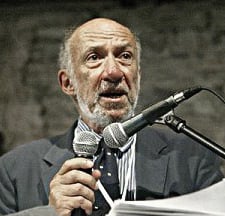
While the headline deals with the Presidential candidates, Falk reflects also on the essence of democracy itself and on whether the US can at all be called a democracy.

The American electorate is facing a presidential election in which there is almost no prospect of a constructive debate. On the Republican side the campaign for the nomination has exhibited the clash of irresponsible and reactionary views, slightly relieved by the libertarian Ron Paul who at least counsel against militarism and the death dance with Israel.

All the Republican presidential hopefuls, except Paul, exhibit a craven distaste for reality when they attack Obama for being insufficiently pro-Israeli, as if 95%+ is insufficient. Such a posture, whether meant seriously or not, expresses contempt for the intelligence and common sense of the American citizenry.

How can an American president show greater deference to Israel than Obama, who never loses an opportunity to speak adoringly to AIPAC’s annual national gatherings. Of course, it is not only the Middle East that discloses such a regressive Republican zone of agreed lunacy.

More disturbing in some respects is the embrace of climate skepticism by all the Republican candidates, rejecting the overwhelming view of the scientific community that global warming is an urgent peril that is already causing extremely harmful effects on weather, oceans, and food security. To refer the matter to God and the Bible is to throw several centuries of trust in reason and scientific understanding of nature and the environment into a toilet of unknowing.

The overwhelming Republican favorite to win the nomination is Mitt Romney, not that the party base loves him, or even trusts him, but because he is thought to be electable. Romney has been convincingly charged with being ‘a vulture capitalist’ in his private sector exploits by Newt Gingrich, who is the most reckless of all the Republican presidential hopefuls, hanging in their by the sturdy thread of his ego. Romney has also reinforced the accusation about his path to fortune by displaying a monumental indifference to the plight of the very poor in America.

Revealingly, Romney has indicated that what he says to gain the Republican nomination about being a ‘true conservative’ will not impede subsequent efforts to win independents to his side by altering policy positions sufficiently to reassert his claims to be a ‘true moderate’ in time to win centrist votes in the November election.

His senior political advisor went further by comparing the struggle to win the nomination to the game ‘etch a sketch,’ which when interpreted means that what has been said so far is erasable as soon as electoral the fight against Obama begins, which will call for a new erasable sketch.

It is sad to note that the best the Republican opposition can come up with is an opportunistic hypocrite ready to change his pitch as often as it seems opportune to do so. But as Republicans appeal to rally beneath the banner of Romney’s electability matters of substance and principle fade from view.

Yet the only conceivable Republican alternative to Romney remains Rick Santorum, whose only prospect of success rests on prayer at this stage, which is fortunate, as he clearly seems worse for the country and the world. Santorum holds fanatical views that would deny women elementary reproductive rights as well as maintain anti-gay discrimination to the extent possible. Both Romney and Santorum converge, along of course with Gingrich, on the desirability of launching an unprovoked military attack on Iran at an early date, and seem utterly unconcerned about the likely dire consequences of such a move.

This naked endorsement of aggression, a major crime in international law, is made even in the face of up to date consensus intelligence reports from the CIA and other sources that uniformly agree that Iran abandoned its nuclear weapons program as long ago as 2003, and that no credible evidence exists that they have revoked this critical decision.

Romney when president is more likely to exhibit the virtues of a hypocrite if we should be so unlucky that he makes it to the White House by changing his mind given a more dispassionate look at the evidence and the consequences. In contrast, Santorum would likely adhere to his fanatical outlook, and would be unwavering in his resolve to start such a war no matter how unrelated to American security and how dangerous in its likely effects. From such a perspective the hypocrite is to be preferred over the fanatic, at least in the setting of the American presidency.

It is pathetic that the main opposition can offer no better alternative to Obama. Arguably, the country needs a third party alternative to the Democratic and Republican Parties, which are both captives of Wall Street and the Pentagon. But if not a third party, at least a second party that talks sufficient sense to enable an instructive debate during a presidential election campaign about the main challenges facing the country.

Democracy is discredited if it cannot do better than this, and calls into question whether it is any longer entirely reasonable to call the United States ‘a democracy.’
Perhaps, more descriptive are labels such as ‘plutocracy,’ ‘pre-fascist,’ and ‘soft authoritarian.’
Democracy to retain credibility has to be about more than elections and a competition to get biggest contributions from the nation’s billionaires.

If the world were to be enfranchised in American elections, there would be less to fear. There is more sense abroad that the challenge of climate change needs to be met, that a war against Iran would be an evil folly, and that a more equitable approach to global economic policy would benefit humanity. And arguably in a globalizing world where people are often deeply affected by the outcome of American national elections they should be entitled to participate in selecting its political leaders.

If the United States acts as if it is a legitimate world state with interests and a military presence throughout the planet then the peoples of the world should have a say in how it acts. Perhaps, in the end the difference between ‘empire’ and ‘democracy’ is whether those affected participate and those in charge are accountable. From such perspectives, it seems more accurate to perceive the United States as an aspiring global empire.

In the end as matters now stand we have little choice, if we believe in rational politics and minimal ethics, to affirm Obama. Such a conclusion seems firmly grounded even for those who are deeply disappointed by his performance in office during the last four years. From the outset of his presidency he signaled his readiness to work with and for the entrenched interests that produced militarism overseas and the financial meltdown at home. Even more discouraging, although he made early gestures about renouncing torture by the American military, was the refusal to allow the rule of law to be applied in relation to those officials responsible for authorizing torture during the Bush presidency and the various moves taken subsequently to abridge the liberties of Americans and to rely on a stringent code of secrecy so as to keep inconvenient truths from the American people.

As well, the refusal to acknowledge failure of the wars in Iraq and Afghanistan sets the stage for future disastrous military interventions and deprives the public of a proper understanding of the limits of military intervention as a means to prevent unwanted political outcomes in the 21st century.

Also, Obama showed no willingness whatsoever to bring into the policy mix even such mainstream dissident voices among economists as Paul Krugman and Joseph Stiglitz. Obama surrounded himself with only those advisors who were associated with the neo-liberal excesses during the Clinton and Bush presidencies that had brought on the worst crisis of global capitalism since the Great Depression.

The unhappy effects of such leadership by Obama has been to demobilize the enthusiastic youth base that did so much to get him the nomination and the victory four years ago while doing nothing at all to lessen the anger of his militant opposition who are prepared to spend billions to make sure he does not win again.

And yet despite all this, Obama remains the best that the United States and the world can hope for in November. Beyond mere success, we have to hope for a crushing victory both to give a second term Obama a strong Congressional mandate that may counter his reluctance to provide leadership on wedge issues and to induce the Republicans to go back to the drawing board and reinvent their oppositional worldview in a more constructive manner.

With Obama as president, we can at least expect a measure of rationality in foreign policy, a degree of empathy in domestic policy, and some respect for knowledge and humanistic ethics as the foundation of public policy.

Sorrowfully, this is the most that we can expect, and more than we are likely to receive, in a global setting that urgently requires far more.
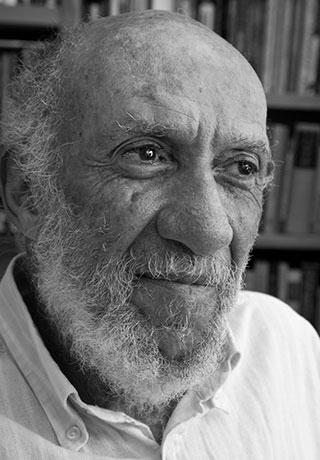

Professor Falk became an adviser to TFF when it was established in 1985.

Related Posts

Johan Galtung 1930-2024October 2015 Published here on October 3, 2026 Let us focus on Civilization for conflict analysis and remedies. Major forms of disorder use violence; war is state organized violence. The most belligerent states are the United States of America and Israel, both with civilization roots. National Evangelism, the US Protestant Christian civilization– more national than evangelical–justifies US warfare as exceptionalism of a people chosen by God, with a manifest destiny to run the world. Orthodox Judaism justifies Israeli warfare to conquer and expand from Nile to Euphrates as a religious right and duty to the Eternal One. The third most belligerent country, the UK, no longer believes it is God-chosen but chosen by the USA; not quite the same but something. But the root cause of global disorder lies in the Occident–with Islam–seeing itself as the single, universal civilization valid for all at all times, all others being...
The agreement is catastrophic both because of what it says and what it doesn’t mention. It reduces further the major asset of security policies: Freedom of action. Jan Oberg TFF director September 25, 2026 A couple of hours before the agreement was signed on September 22, 2026, I published the following 13 hypotheses about what it would most likely contain on TFF Substack (in English). I was wrong on only the first point. Contrary to what Trump had written on his Truth Social platform, it does not appear to come into force immediately. In fact, it turned out to be worse than even I had anticipated. After these hypotheses now come a number of reflections in light of what the agreement actually contains, and does not contain, as well as the way in which it has generally been presented by major media outlets and by the public-service broadcaster DR. My...
Photos © TFF 2000 Read PressInfo 90 “Lift the Sanctions and Bring More Aid to Yugoslavia” See Pictures from Belgrade © TFF 2000 Please reprint, copy, archive, quote or re-post this item, but please retain the source.

Recent Articles

Tony Robinson October 4, 2026 Violence is easy to recognise when someone is being beaten, shot or killed. It becomes more difficult when nobody is holding a weapon. Poverty, discrimination, exploitation and repression can restrict a human life just as effectively, although they do so in very different ways and with very different consequences. Simply adding more categories to an ever-growing list of forms of violence does not really solve the problem. The more interesting question is what all these different situations have in common and why it makes sense to describe them using the same word. Human beings do not simply react to what happens around them. They remember the past, imagine things that do not yet exist, make plans and undertake projects. Workers organise because they imagine different working conditions; people migrate because they imagine another life somewhere else; social movements emerge because people refuse to accept the...
It’s a matter of principles, courage, vision and pulling together – while the militarist world is falling apart… Peter Langille October 3, 2026 “Here, then, is the problem which we present to you, stark and dreadful and inescapable: Shall we put an end to the human race; or shall mankind renounce war?”The Bertrand Russell—Albert Einstein Manifesto, July 9, 1955 ⁕ The forecast for what’s ahead is worrisome. The sharp rise in armed conflicts over the past three years is adding to what was already the highest level in over seventy years. Genocides, which should be prevented are supported. A shared climate emergency that jeopardises survival is ignored. Diverse polls now suggest that people are war-weary, worried and interested in a more effective United Nations. And, there are viable policy options for a more secure world! Yet governments are doubling-down, betting on more war and investing heavily. If current trends persist,...
Johan Galtung 1930-2024October 2015 Published here on October 3, 2026 Let us focus on Civilization for conflict analysis and remedies. Major forms of disorder use violence; war is state organized violence. The most belligerent states are the United States of America and Israel, both with civilization roots. National Evangelism, the US Protestant Christian civilization– more national than evangelical–justifies US warfare as exceptionalism of a people chosen by God, with a manifest destiny to run the world. Orthodox Judaism justifies Israeli warfare to conquer and expand from Nile to Euphrates as a religious right and duty to the Eternal One. The third most belligerent country, the UK, no longer believes it is God-chosen but chosen by the USA; not quite the same but something. But the root cause of global disorder lies in the Occident–with Islam–seeing itself as the single, universal civilization valid for all at all times, all others being...

TFF on Substack

Discover and subscribe to more peace materials on TFF Substack

Most Popular

Tony Robinson October 4, 2026 Violence is easy to recognise when someone is being beaten, shot or killed. It becomes more difficult when nobody is holding a weapon. Poverty, discrimination, exploitation and repression can restrict a human life just as effectively, although they do so in very different ways and with very different consequences. Simply adding more categories to an ever-growing list of forms of violence does not really solve the problem. The more interesting question is what all these different situations have in common and why it makes sense to describe them using the same word. Human beings do not simply react to what happens around them. They remember the past, imagine things that do not yet exist, make plans and undertake projects. Workers organise because they imagine different working conditions; people migrate because they imagine another life somewhere else; social movements emerge because people refuse to accept the...
It’s a matter of principles, courage, vision and pulling together – while the militarist world is falling apart… Peter Langille October 3, 2026 “Here, then, is the problem which we present to you, stark and dreadful and inescapable: Shall we put an end to the human race; or shall mankind renounce war?”The Bertrand Russell—Albert Einstein Manifesto, July 9, 1955 ⁕ The forecast for what’s ahead is worrisome. The sharp rise in armed conflicts over the past three years is adding to what was already the highest level in over seventy years. Genocides, which should be prevented are supported. A shared climate emergency that jeopardises survival is ignored. Diverse polls now suggest that people are war-weary, worried and interested in a more effective United Nations. And, there are viable policy options for a more secure world! Yet governments are doubling-down, betting on more war and investing heavily. If current trends persist,...
Johan Galtung 1930-2024October 2015 Published here on October 3, 2026 Let us focus on Civilization for conflict analysis and remedies. Major forms of disorder use violence; war is state organized violence. The most belligerent states are the United States of America and Israel, both with civilization roots. National Evangelism, the US Protestant Christian civilization– more national than evangelical–justifies US warfare as exceptionalism of a people chosen by God, with a manifest destiny to run the world. Orthodox Judaism justifies Israeli warfare to conquer and expand from Nile to Euphrates as a religious right and duty to the Eternal One. The third most belligerent country, the UK, no longer believes it is God-chosen but chosen by the USA; not quite the same but something. But the root cause of global disorder lies in the Occident–with Islam–seeing itself as the single, universal civilization valid for all at all times, all others being...
Read More
Living-Peace-Sign-Budapest-copy
Tony Robinson October 4, 2026 Violence is easy to recognise when someone is being beaten, shot or killed. It becomes more difficult when nobody is holding a weapon. Poverty, discrimination, exploitation and repression can restrict a human life just as effectively, although they do so in very different ways and with very different consequences. Simply adding more categories to an ever-growing list of forms of violence does not really solve the problem. The more interesting question is what all these different situations have in common and why it makes sense to describe them using the same word. Human beings do not simply react to what happens around them. They remember the past, imagine things that do not yet exist, make plans and undertake projects. Workers organise because they imagine different working conditions; people migrate because they imagine another life somewhere else; social movements emerge because people refuse to accept the...
b54a1f10-8c65-4f0b-9dd5-4abc0a7d04cc_2659x2659
It’s a matter of principles, courage, vision and pulling together – while the militarist world is falling apart… Peter Langille October 3, 2026 “Here, then, is the problem which we present to you, stark and dreadful and inescapable: Shall we put an end to the human race; or shall mankind renounce war?”The Bertrand Russell—Albert Einstein Manifesto, July 9, 1955 ⁕ The forecast for what’s ahead is worrisome. The sharp rise in armed conflicts over the past three years is adding to what was already the highest level in over seventy years. Genocides, which should be prevented are supported. A shared climate emergency that jeopardises survival is ignored. Diverse polls now suggest that people are war-weary, worried and interested in a more effective United Nations. And, there are viable policy options for a more secure world! Yet governments are doubling-down, betting on more war and investing heavily. If current trends persist,...
010
Johan Galtung 1930-2024October 2015 Published here on October 3, 2026 Let us focus on Civilization for conflict analysis and remedies. Major forms of disorder use violence; war is state organized violence. The most belligerent states are the United States of America and Israel, both with civilization roots. National Evangelism, the US Protestant Christian civilization– more national than evangelical–justifies US warfare as exceptionalism of a people chosen by God, with a manifest destiny to run the world. Orthodox Judaism justifies Israeli warfare to conquer and expand from Nile to Euphrates as a religious right and duty to the Eternal One. The third most belligerent country, the UK, no longer believes it is God-chosen but chosen by the USA; not quite the same but something. But the root cause of global disorder lies in the Occident–with Islam–seeing itself as the single, universal civilization valid for all at all times, all others being...
Screenshot 2026-10-02 011738
Jan ObergPhD, director, The Transnational Foundation for Peace and Future Research, TFFLund, Sweden October 2, 2026 This is my full original manuscript. The Chinese Academy of Social Science, CASS, makes two publications out if it. 1. China’s Five-year plan emphasized the capabilities of basic research and original innovation. It is regarded as the goal of the future social development, which, as required, should be significantly enhanced. Can you comment on the importance of original innovation in research and academic study? I believe it is easier to define “original innovation” in the natural sciences than in social sciences. The breaking points of what constitutes something new, or innovative, are not quite as sharp in the latter. But in both fields it is about opening up something that was closed, unseen, unexplored before – making manifest what was earlier latent. Innovations come in many forms and shapes – naming something that was not...
arctic-circle-map
The agreement is catastrophic both because of what it says and what it doesn’t mention. It reduces further the major asset of security policies: Freedom of action. Jan Oberg TFF director September 25, 2026 A couple of hours before the agreement was signed on September 22, 2026, I published the following 13 hypotheses about what it would most likely contain on TFF Substack (in English). I was wrong on only the first point. Contrary to what Trump had written on his Truth Social platform, it does not appear to come into force immediately. In fact, it turned out to be worse than even I had anticipated. After these hypotheses now come a number of reflections in light of what the agreement actually contains, and does not contain, as well as the way in which it has generally been presented by major media outlets and by the public-service broadcaster DR. My...
girl-5894831_1280
Below are TFF-related media mentions, comments, videos and social media posts published elsewhere but not on this homepage. We happen to catch and list only a fraction. Regarding video comments and debates, we recommend that you go to the TFF Video Channel on Substack where many of them are reproduced. Jan Oberg is a contributor to China Daily – 52 million daily clicks – and Global Times, CGTN and CCTV (the national television), China Investment, Xinhua News Agency and several others. Articles and videos on these media very often multiply into countless Chinese (and Western media) that re-post them from these main media. Thanks to The China Academy, his analyses, interviews and comments are frequently posted on YouTube channels such as Thinkers Forum and Wave Media. These videos are often re-posted on Bilibili (China’s YouTube), the China Content Center on TikTok, and on the Chinese edition of TikTok, Douyin.com. This means reaching hundreds of millions of viewers worldwide over a year. While there are too many to catch on all these...




