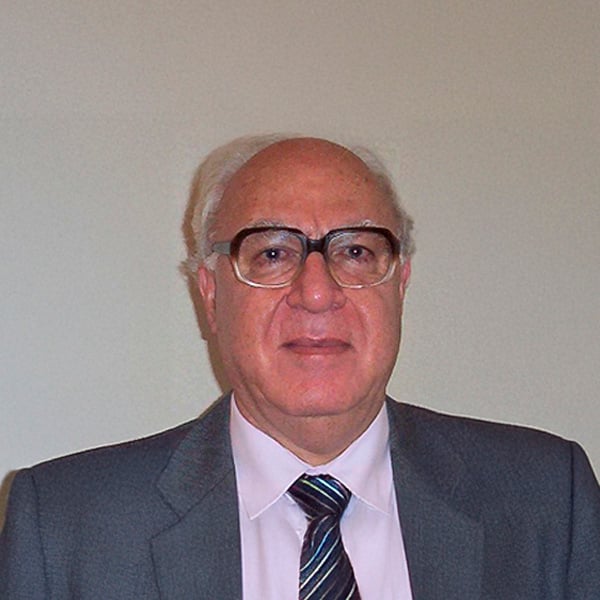

By Farhang Jahanpour
While hailing the so-called “framework agreement” on the nuclear deal with Iran reached in Lausanne on 2 April 2015 as a great political achievement, President Barack Obama also announced that he would invite the Gulf Cooperation Council (GCC) leaders to Washington and to Camp David to inform them about the deal and allay their fears.
Just like the Israeli Prime Minister Benjamin Netanyahu, some Arab leaders had also expressed their opposition to the deal. Netanyahu has often described Iran as an “existential threat” to Israel and has condemned the tentative deal between Iran and six global powers, the so-called P5+1 (the United States, China, Russia, the United Kingdom, France and Germany), as “a very bad deal”.
While not using Netanyahu’s over-the-top rhetoric, nevertheless, some Arab leaders have expressed the view that Iran’s re-entry into the international community after decades of relative isolation would mean that the West’s and particularly Washington’s loyalties would henceforth be divided between them and Iran, and that they would lose their pivotal position that they have held since Iran’s Islamic revolution.
This is why President Obama felt that he had to invite the GCC leaders to America to explain the details of the deal to them and to win their support for it. He organized a lavish dinner for the invited guests at the White House on 14 May 2015, and a rare summit at the Camp David the following day.
The communiqué that was issued after the Camp David summit showed that the Persian Gulf rulers had agreed with President Obama and had accepted the deal. At the top of the issues dealt with by the communiqué was the nuclear deal reached with Iran, and it stated: “They reviewed the status of negotiations between the P5+1 and Iran, and emphasized that a comprehensive, verifiable deal that fully addresses the regional and international concerns about Iran’s nuclear program is in the security interests of GCC member states as well as the United States and the international community.” (1)
However, despite this rather tepid support for the deal, neither side achieved all that they had hoped.
President Obama had invited all the GCC leaders to Washington and Camp David, and up to the point when Secretary of State John Kerry met with the GCC foreign ministers in Paris only two days prior to the summit meeting, the Americans announced that King Salman of Saudi Arabia and other GCC leaders would take part in the summit. However, at the last moment, King Salman declined to attend and sent his Crown Prince instead. He also put pressure on the rest of the GCC states to send low-level delegations, but the Saudi call was only heeded by Bahrain and the UAE, which are almost completely dominated by their big brother. The Sheikh of Bahrain went to a horse race event in Britain instead.
Oman’s king did not attend due to ill health, but also due to the fact that Oman acts as a mediator between the GCC and Iran and has also arranged the first direct meetings between Iranian and US officials in Muscat, which led to the nuclear deal.
Kuwait’s Al Sabah who feels beholden to the United States, and Qatar’s emir who tries to follow a more independent course vis-à-vis Saudi Arabia decided to participate in defiance of Saudi wishes.
So, despite President Obama’s effort to put a brave face on it, the decision of three GCC countries not to be represented at the highest level at Camp David was meant as a clear snub. While for many decades the United States had been the defender of the Gulf monarchies and on occasions had even saved their thrones, as was the case after Saddam Hussein’s invasion of Kuwait in 1990, the GCC monarchs seem to have borrowed a leaf from Netanyahu’s book and have bitten the hand that feeds them.
It should be remembered that the United States has a very large base in Qatar. The headquarters of its Fifth Fleet is in Bahrain and some 35,000 US forces are stationed in Kuwait, UAE and other GCC countries. Had it not been for the United States’ constant support for those monarchies, many of them would have been toppled long ago.
No Special Military Treaty, But a “Strategic Partnership”
For quite some time, the Gulf states had made it clear that they were seeking a special relationship with Washington that would include a security treaty with the GCC states, giving them a NATO-type security guarantee, or extending a nuclear umbrella to them. They alleged that they wanted those watertight guarantees against a potential threat from Iran, but as unstable and undemocratic regimes that have already experienced the tremors of the Arab Spring and various uprisings inside their borders, their main concern is about instability at home.
It was clear that the United States was not interested in a formal defense treaty with those states, which required ratification by Congress and which in any case would have involved the United States in many civil war situations, such as the ones that are raging in Syria, Lebanon, Yemen and Iraq. While declining to sign a security treaty with those states, President Obama stated in a media interview that America would defend the GCC against any external aggression, as she had done in the past. The two sides agreed to describe their relationship as a “strategic partnership” and to follow up on all the verbal pledges that had been made this week.
Indeed, the president had made it clear that the threats that those sheikhdoms faced were not from outside but from within their own borders. In his interview with the New York Times, the president observed that the biggest threats those Arab countries faced “may not be coming from Iran invading. It’s going to be from dissatisfaction inside their own countries” based on “populations that, in some cases, are alienated, youth that are underemployed, an ideology that is destructive and nihilistic, and in some cases, just a belief that there are no legitimate political outlets for grievances.” (2)
What he really was telling them was that instead of looking for foreign enemies, they should put their houses in order.
Of course that’s not an observation that the rulers of those countries wanted to hear, and the president acknowledged that talking about such things was “a tough conversation to have” with those regimes, “but it’s one that we have to have.” The fact of the matter is that the upheavals that have shaken a large number of Arab countries, in Tunisia, Egypt, Bahrain and Yemen, and to a lesser extent in Libya, Syria and Iraq, were not instigated from outside, but were homegrown uprisings for greater democracy and freedom.
Instead of looking for a foreign patron to keep them safe from domestic dissatisfaction, those autocratic rulers would do well to try to initiate some reforms inside their own societies and satisfy the demands of their young and energetic populations.
As Mathew Burrows, director of the Strategic Foresight Initiative at the Atlantic Council, has noted, “one-quarter to one-third of the population in the small Gulf states are between the ages of 15 and 29, with unemployment hovering between 17 and 24 percent.” (3) In Saudi Arabia, the problem is even more acute. More than 60 percent of Saudi Arabia’s population is under the age of 30, but the lucrative jobs go to the thousands of princes and the lower-paid jobs go to foreign workers, often from poorer communities in Pakistan, Bangladesh and some Arab countries. As a result, youth unemployment in Saudi Arabia is 30 percent for men and 35 percent for women.
In the past, these rich monarchies had bought the silence of their subjects through generous social welfare payments, but they have not been able to silence the vast army of the young and more politicized citizens who demand political and social change. Therefore, their only solution to stem the tide of opposition is not to turn to foreign patrons but to modernize their political systems, enable the young and marginalized generation to have a greater say in their affairs and to improve their economies, instead of purchasing more arms.
Arms Galore
For many decades, the GCC countries have been the biggest customers of US arms manufacturers. Due to high oil prices and their small populations, GCC countries have amassed an unbelievably large amount of wealth. The combined sovereign funds of the tiny GCC countries is close to two trillion dollars, much larger than China’s, nearly three times that of Norway and ten times larger than that of Russia. (4)
These six small countries account for over a third of the global sovereign funds. Saudi Arabia alone has reserves of about $800 billion. UAE President Khalifa bin Zayed Al Nahyan is also chairman of Abu Dhabi Investment Authority, which manages over $875 billion in assets, while the Al Nahyan family is believed to have a fortune of $150 billion collectively as a family. (5)
Kuwait has a sovereign fund of $342 billion and tiny Qatar has reserves of $110 billion and huge investments in the West. These are truly astronomical figures that are owned by only a few sheikhs, the members of their families and their close allies.
As the result of such unimaginable wealth, which they have accumulated despite extravagant lifestyles, they have provided lucrative markets for American arms manufacturers. Despite having spent tens of billions of dollars on US arms during the past few years, recently the GCC countries have gone on a bigger spending spree and they intend to increase their purchases in the coming years.
During the past few years, the Obama Administration has entered into formal agreements to transfer over $64 billion in arms to the GCC. New offers have been made for a further $15 billions in 2015. Boeing, Lockheed Martin, and Raytheon have signed deals for 84 Boeing F-15 fighter jets for $29 billion to Saudi Arabia, a $6.5 billion sale of Lockheed Martin’s THAAD missile defense system to Qatar, and Lockheed Martin/Raytheon produced Patriot Air and Missile Defense System to Saudi Arabia for $1.8 billion. A report published last week indicated that Kuwait intends to buy 40 F-18s for $3 billion. (6)
Over the next five years, Saudi Arabia, United Arab Emirates, Kuwait, Qatar and Jordan are expected to spend more than $165 billion on arms.
No wonder that during the Camp David summit, President Obama spoke about “Iran’s destabilizing activities in the region,” and reassured the GCC leaders of US backing for them. Although stopping short of offering a formal defense treaty, Obama told a closing news conference at Camp David: “I am reaffirming our iron-clad commitment to the security of our Gulf partners.” According to a White House fact sheet, the United States and the GCC agreed to develop “a region-wide ballistic missile defense system”, including an early warning system, hold exercises “emphasizing interoperability against asymmetric threats, such as terrorist or cyber-attacks” and increase training in special operations and maritime security. (7)
Put simply, the sky is the limit.
Not to be left out, the Socialist French President Francois Hollande travelled to Riyadh at the beginning of May, to meet with Saudi officials in Riyadh to discuss security issues and the developing nuclear deal with Iran. He became the first Western head of state to participate in a summit of the Gulf Cooperation Council on 5 May, and his trip was part of an effort to bolster France’s position in the Gulf and to support Saudi Arabia’s military intervention in Yemen.
“They wanted us to come so they could say to the Americans, look, we also have France: it’s up to you not to get edged out and to be here with us,” a French diplomat told Reuters.
Meanwhile, Hollande made billions of dollars worth in business deals with Saudi Arabia and signed a $7 billion arms agreement with Qatar. The agreement includes an order for 24 Rafale fighter jets, with an option on a further 12. Saudi Arabia has indicated that she is eager to sign “tens of billions in deals with France.” (8)
Comparing GCC and Iranian Military Expenditure
To put these figures into some sort of perspective, it is useful to compare the military expenditures and the arms purchases of the GCC countries with their alleged nemesis, Iran.
According to Center for Strategic and International Studies, Saudi Arabia alone spent nearly $56.5 billion on its military in 2012, compared to Iran’s $10.6 billion.
Collectively, the GCC spent nearly $98.5 billion on their militaries, outspending Iran nearly 10:1. Last year, the GCC spent nearly $135 billion on their defense. The Saudis spent more than $80 billion, compared to Iran’s less than $15 billion. (9)
SIPRI data shows a similar Arab lead over Iran. Saudi Arabia spends some 4-5 times as much as Iran, and the tiny UAE alone has outspent Iran by many times since 2007. Saudi Arabia and the UAE – the two Arab Gulf states with the most modern Arab Gulf military forces are combined – have consistently spent more than six times as much as Iran.
Data issued by the Congressional Research Service shows that the GCC took $38.5 billion worth of new arms transfers between 2004 and 2011: 35 times Iran’s deliveries of only $1.1 billion. Between 2004-2011 the Gulf states ordered $106.1 billion worth of arms, compared to Iran’s $9 billion – (12:1). Whatever figure one takes, there is a huge disparity in military spending between Iran and its Arab neighbors.
SIPRI data also indicates that the GCC states have a massive lead over Iran in arms imports. The gap is so great in given periods that the GCC states lead Iran by nearly 7:1 during 1997-2007, 10:1 in 2004-2008, 33:1 in 2009-2013, and 27.5:1 in 2007-2014. Yet, Iran is portrayed as the aggressor, despite the fact that for the past 250 years Iran has not invaded a foreign country, while it has been invaded many times, most recently by Saddam Hussein, with massive support from the GCC countries. It is estimated that during the eight-year Iran-Iraq was, the Persian Gulf states contributed close to $100 billion to Saddam’s coffers. (10)
No Mention of Human Rights
While the United States and France have managed to sell mind-boggling amounts of arms to GCC countries, they have totally closed their eyes to human rights abuses in the region.
Just prior to the summit meeting, Saudi Arabia and other members of the coalition had intensified their attacks on Yemen, leaving its poverty-stricken inhabitants without any food, water, electricity or medical facilities. These countries also happen to be the main supporters of the insurgents in Syria that morphed into various Al Qaeda-affiliated terrorist groups, such as Al Nusra Front, ISIS and the so-called Islamic State.
On Thursday 7May 2015, Amnesty International reported that Raif Badawi remains behind bars a year after having been sentenced to 10 years in jail and to 1,000 lashes for a mere tweet that was allegedly disrespectful of Islam.
Said Boumedouha, Deputy Director of Amnesty International’s Middle East and North Africa Program, said: “It is truly tragic that a whole year has passed since Raif Badawi received this cruel and unjust sentence. He is clearly being punished for daring to exercise his right to freedom of expression.” The human rights abuses in the GCC countries are so well known that they do not need to be repeated here.
Yet, it is sad to see that in a long communiqué between the Nobel Prize laureate US president and the GCC rulers there was not a single mention of human rights issues. The Egyptian court has just sentenced the first democratically elected Egyptian president to death, after having killed and wounded thousands of his supporters and having jailed thousands more, yet the GCC countries are the biggest financial backers of the Egyptian military junta.
A missed Opportunity
Instead of organizing an arms bazaar and selling more lethal weapons to an already very unstable region, the summit could have pursued an important mission by trying to create greater regional security and making the Middle East much safer.
The problem in the Middle East is not the shortage of weapons, but the rise of sectarian violence and the emergence of a most horrendous form of terrorism. It is odd that the so-called Gulf Cooperation Council is supposed to be working towards regional peace and stability, yet the two largest Persian Gulf states, namely Iran and Iraq, are not even invited to the summit.
What could have been a game changing event would have been an invitation to all the Persian Gulf littoral states, enabling them with American help and mediation to talk about how to put an end to the scourge of ISIS, and how to bring peace and stability to Syria, Libya, Yemen and Iraq. The conflicts in those countries and in the rest of the Middle East have no military solution, and they can be resolved only through dialog aimed at finding a political solution.
A Word of Caution Both to the GCC and to the United States
One common mistake that most countries make is to think that military might brings security. Yet we saw that the mighty Soviet Union collapsed from within despite being the second most powerful country in the world.
Prior to the Islamic revolution, Mohammad Reza Shah of Iran was the biggest customer of American military equipment and spent figures similar to what the GCC countries are spending today on US arms. Yet all his modern and expensive equipment did not save him from a popular revolution at home.
At the same time, he was America’s staunchest ally in the region and the Americans counted on him to keep the Middle East secure for them and to allow cheap oil to flow. Yet, billions of dollars worth of American weapons did not save his government from domestic opposition, and his collapse was a major setback for America and her plans for the region.
Before it is too late, the Arab countries and their American patron should wake up and realize that what will serve their interests best is moves towards greater democracy and human rights in the region, and the ability of regional countries to stand on their own feet and resolve their differences, rather than rely on outside help and expensive military toys. More arms merely add more fuel to the fire.
Footnotes
1. The White House communiqué: U.S.- Gulf Cooperation Council Camp David Joint Statement.
2. “Iran and the Obama Doctrine”, The New York Times, 15 April 2015.
3- Mathew Burrows, “Guns, Butter, and the Future of the Gulf States”, Atlantic Council, 6 May 2015 quoted by Barbara Slavin in “Camp David Summit Can’t Address Core GCC Problems, VOA news.
4. See “World Economic Situation and Prospects: GCC sovereign wealth funds”.
5. See Abu Dhabi Investment Authority.
6. See William D. Hartung, It’s Not Diplomacy, It’s an Arms Fair, Foreign Policy, 14 May 2015.
7. See: “Annex to U.S.-Gulf Cooperation Council Camp David Joint Statement”, The White House, Office of the Press Secretary, 14 May 2015.
8. See: “Saudi eager to sign tens of billions in deals with France, says French foreign minister”, RFI, 5 May 2014.
9. Anthony H. Cordesman, “Military Spending and Arms Sales in the Gulf”, Center for strategic and International Studies, 16 May 2015.
10. ibid
Farhang Jahanpour, a TFF Associate and Fellow of The Royal Asiatic Society, is a former professor and dean of the Faculty of Foreign Languages at the University of Isfahan and a former Senior Research Fellow at Harvard University. He is a tutor in the Department of Continuing Education and a member of Kellogg College, University of Oxford.