

Photo credit: wsimag.com

Ellyn Kaschak

April 16, 2021

It is definitely nothing that has come before

All of us alive on the planet today are part of the most significant transition in centuries, whether we know it or not, whether it has touched us lightly or heavily and whether we choose to be or not. Not since the Industrial Revolution has such a total and radical social upheaval occurred.

As with most major cultural shifts, this one follows a technological innovation of which we are all aware and that is the invention of the Internet along with its ready accessibility on a handheld ubiquitous device.

Originally published at World Street International

This dependence on technology to spur social change has been the case perhaps since the first person to do so created the wheel.

Automobiles and air travel, movies and recordings changed the lives of those who lived in those later eras; the introduction of safe birth control measures changed the lives of millions of women and the advances in medicine, clean water and vaccinations allowed generations of unborn children to survive and thrive.

Yet they were minor in comparison to the current evolution/revolution.

Internet development and growth have and will continue to lead to perhaps overwhelming changes for our current population. Most of us are aware of some of these changes even if we haven’t identified the cause because we experience them every day, not only culturally, but very personally.

We experience them in our day to day interactions, in our work situations, in our friendships, visiting with each other, etc. We also experience the tools of the internet more personally as convenience and relief, stress, anxiety, and pressure and perhaps even loneliness.

Younger people may not even be aware of these personal effects as they have no basis for comparison if they were born after the introduction of Google and online social networks. They have never not been online. Those of us who have had to make the transition certainly experience it more consciously.

I know I do. During this year of Zoom meetings for business and Zoom meetings with friends and family, I have been both comforted and overwhelmed, experienced intimacy and loneliness. For better or for worse, I have conducted psychotherapy sessions in ways that I had not thought possible.

This current era has presented us with a physical and psychological revolution of enormous magnitude and even more so when combined with the leftover effects of the Industrial Revolution. Living on the cusp of multiple endings and beginnings inordinately stresses our bodies, minds and spirits, whether we are aware of it or not.

If this enormous change is not enough, we contemporary humans face yet another huge challenge from the effects of climate change, among which may be a soon to be uninhabitable planet, a possible scarcity of clean air and water, altered weather patterns and areas of uninhabitability by humans.

These changes are already releasing novel viruses that have been frozen and inactive for eons. The Corona is only the first to travel the planet with ease. From the perspective of these world travelers, we are mere transportation.

Water is about to be traded on the Stock Exchange and we seem to be preparing for increasingly necessary human journeys to other planets, Mars for a start.

As human bodies become less central to us and to work, to travel and to the welfare of the planet, they also become less important in a variety of other ways. They are not needed as much for labor and, when the labor is not physical, not necessarily needed to be transported.

Much work, we have discovered courtesy of Covid, can now be done virtually from any wired location. So can learning. So can physical and psychological therapies. The results of these changes are not identical, but they work well enough to become our future.

Even human rights are affected. At the very same time as we are moving toward equality for women, we are moving toward a non-biological definition of women and men and the removal of many hard earned sex-based rights.

At the same time as we are considering reparations and equity for African-Americans, we are seeing the birth of a White supremacist party of not insignificant numbers.

Sexuality and intimacy are shifting shape as well. Pornography is a click away, as is the practice of sexting. Adolescence is no longer a time of innocent learning if it ever was, but a time of multiple choices concerning sexual practices and sexual identities.

The ready intensity of all this arousing material is wreaking havoc with the sexual practices of their users, largely male, who are left seeking more and more intensity in actual practice.

Finally, there is a tidal wave sweeping men into the category of women and women into the category of men. Biological sex is demoted as secondary, if that, to desire and personal identity.

From childhood through mature adulthood, sex can be changed by the flourishing (5 billion dollars a year) medical-industrial complex. In many cases, a man need only put on a dress and declare himself female.

This is what it’s coming to, as the individual dissociates from their own body.

Science is both denied and centered, technology superseding theory, practice more central than thought. Perhaps that is the tenor of the current era-seeking more and more intensity with identities both more malleable and more fragmented. And always pressure not to think too much, to participate, to belong even when there is nothing left to belong to.

Psychologically these changes induce enormous stress on most of the population. We have until now been fully embodied individuals, defined by sex, skin color and class.

As we are caught up in this transcendent force and reoriented to the physical, to the ways we work, play and love, we are faced with the consequences of this paradigm shift, as well as the consequences of the consequences.

Can we adapt to these changes and, if so, who are we when this adaptation is complete? Are we moving toward a humanistic culmination of rights or a disembodied dystopia? The future is now.

Originally published at World Street International

About the author
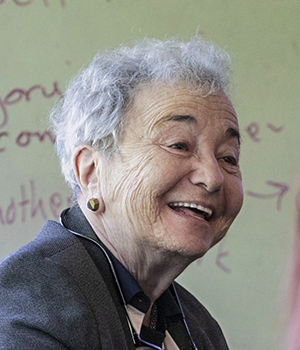
Ellyn Kaschak, PhD is Professor Emerita of Psychology, San Jose State University, Visiting Professor, University for Peace, Costa Rica and the author/editor of numerous articles and 12 books, including Sight Unseen: Gender and Race through Blind Eyes and Engendered Lives: A New Psychology of Women’s Experience. Kaschak is also the founder of The Kaschak Institute for Social Justice for Women and Girls at Bingham University.

Please help TFF remain truly independent by contributing if you benefited from this article

Related Posts

Tony Robinson October 4, 2026 Violence is easy to recognise when someone is being beaten, shot or killed. It becomes more difficult when nobody is holding a weapon. Poverty, discrimination, exploitation and repression can restrict a human life just as effectively, although they do so in very different ways and with very different consequences. Simply adding more categories to an ever-growing list of forms of violence does not really solve the problem. The more interesting question is what all these different situations have in common and why it makes sense to describe them using the same word. Human beings do not simply react to what happens around them. They remember the past, imagine things that do not yet exist, make plans and undertake projects. Workers organise because they imagine different working conditions; people migrate because they imagine another life somewhere else; social movements emerge because people refuse to accept the...
It’s a matter of principles, courage, vision and pulling together – while the militarist world is falling apart… Peter Langille October 3, 2026 “Here, then, is the problem which we present to you, stark and dreadful and inescapable: Shall we put an end to the human race; or shall mankind renounce war?”The Bertrand Russell—Albert Einstein Manifesto, July 9, 1955 ⁕ The forecast for what’s ahead is worrisome. The sharp rise in armed conflicts over the past three years is adding to what was already the highest level in over seventy years. Genocides, which should be prevented are supported. A shared climate emergency that jeopardises survival is ignored. Diverse polls now suggest that people are war-weary, worried and interested in a more effective United Nations. And, there are viable policy options for a more secure world! Yet governments are doubling-down, betting on more war and investing heavily. If current trends persist,...
Johan Galtung 1930-2024October 2015 Published here on October 3, 2026 Let us focus on Civilization for conflict analysis and remedies. Major forms of disorder use violence; war is state organized violence. The most belligerent states are the United States of America and Israel, both with civilization roots. National Evangelism, the US Protestant Christian civilization– more national than evangelical–justifies US warfare as exceptionalism of a people chosen by God, with a manifest destiny to run the world. Orthodox Judaism justifies Israeli warfare to conquer and expand from Nile to Euphrates as a religious right and duty to the Eternal One. The third most belligerent country, the UK, no longer believes it is God-chosen but chosen by the USA; not quite the same but something. But the root cause of global disorder lies in the Occident–with Islam–seeing itself as the single, universal civilization valid for all at all times, all others being...

Recent Articles

Tony Robinson October 4, 2026 Violence is easy to recognise when someone is being beaten, shot or killed. It becomes more difficult when nobody is holding a weapon. Poverty, discrimination, exploitation and repression can restrict a human life just as effectively, although they do so in very different ways and with very different consequences. Simply adding more categories to an ever-growing list of forms of violence does not really solve the problem. The more interesting question is what all these different situations have in common and why it makes sense to describe them using the same word. Human beings do not simply react to what happens around them. They remember the past, imagine things that do not yet exist, make plans and undertake projects. Workers organise because they imagine different working conditions; people migrate because they imagine another life somewhere else; social movements emerge because people refuse to accept the...
It’s a matter of principles, courage, vision and pulling together – while the militarist world is falling apart… Peter Langille October 3, 2026 “Here, then, is the problem which we present to you, stark and dreadful and inescapable: Shall we put an end to the human race; or shall mankind renounce war?”The Bertrand Russell—Albert Einstein Manifesto, July 9, 1955 ⁕ The forecast for what’s ahead is worrisome. The sharp rise in armed conflicts over the past three years is adding to what was already the highest level in over seventy years. Genocides, which should be prevented are supported. A shared climate emergency that jeopardises survival is ignored. Diverse polls now suggest that people are war-weary, worried and interested in a more effective United Nations. And, there are viable policy options for a more secure world! Yet governments are doubling-down, betting on more war and investing heavily. If current trends persist,...
Johan Galtung 1930-2024October 2015 Published here on October 3, 2026 Let us focus on Civilization for conflict analysis and remedies. Major forms of disorder use violence; war is state organized violence. The most belligerent states are the United States of America and Israel, both with civilization roots. National Evangelism, the US Protestant Christian civilization– more national than evangelical–justifies US warfare as exceptionalism of a people chosen by God, with a manifest destiny to run the world. Orthodox Judaism justifies Israeli warfare to conquer and expand from Nile to Euphrates as a religious right and duty to the Eternal One. The third most belligerent country, the UK, no longer believes it is God-chosen but chosen by the USA; not quite the same but something. But the root cause of global disorder lies in the Occident–with Islam–seeing itself as the single, universal civilization valid for all at all times, all others being...

TFF on Substack

Discover and subscribe to more peace materials on TFF Substack

Most Popular

Tony Robinson October 4, 2026 Violence is easy to recognise when someone is being beaten, shot or killed. It becomes more difficult when nobody is holding a weapon. Poverty, discrimination, exploitation and repression can restrict a human life just as effectively, although they do so in very different ways and with very different consequences. Simply adding more categories to an ever-growing list of forms of violence does not really solve the problem. The more interesting question is what all these different situations have in common and why it makes sense to describe them using the same word. Human beings do not simply react to what happens around them. They remember the past, imagine things that do not yet exist, make plans and undertake projects. Workers organise because they imagine different working conditions; people migrate because they imagine another life somewhere else; social movements emerge because people refuse to accept the...
It’s a matter of principles, courage, vision and pulling together – while the militarist world is falling apart… Peter Langille October 3, 2026 “Here, then, is the problem which we present to you, stark and dreadful and inescapable: Shall we put an end to the human race; or shall mankind renounce war?”The Bertrand Russell—Albert Einstein Manifesto, July 9, 1955 ⁕ The forecast for what’s ahead is worrisome. The sharp rise in armed conflicts over the past three years is adding to what was already the highest level in over seventy years. Genocides, which should be prevented are supported. A shared climate emergency that jeopardises survival is ignored. Diverse polls now suggest that people are war-weary, worried and interested in a more effective United Nations. And, there are viable policy options for a more secure world! Yet governments are doubling-down, betting on more war and investing heavily. If current trends persist,...
Johan Galtung 1930-2024October 2015 Published here on October 3, 2026 Let us focus on Civilization for conflict analysis and remedies. Major forms of disorder use violence; war is state organized violence. The most belligerent states are the United States of America and Israel, both with civilization roots. National Evangelism, the US Protestant Christian civilization– more national than evangelical–justifies US warfare as exceptionalism of a people chosen by God, with a manifest destiny to run the world. Orthodox Judaism justifies Israeli warfare to conquer and expand from Nile to Euphrates as a religious right and duty to the Eternal One. The third most belligerent country, the UK, no longer believes it is God-chosen but chosen by the USA; not quite the same but something. But the root cause of global disorder lies in the Occident–with Islam–seeing itself as the single, universal civilization valid for all at all times, all others being...
Read More
Living-Peace-Sign-Budapest-copy
Tony Robinson October 4, 2026 Violence is easy to recognise when someone is being beaten, shot or killed. It becomes more difficult when nobody is holding a weapon. Poverty, discrimination, exploitation and repression can restrict a human life just as effectively, although they do so in very different ways and with very different consequences. Simply adding more categories to an ever-growing list of forms of violence does not really solve the problem. The more interesting question is what all these different situations have in common and why it makes sense to describe them using the same word. Human beings do not simply react to what happens around them. They remember the past, imagine things that do not yet exist, make plans and undertake projects. Workers organise because they imagine different working conditions; people migrate because they imagine another life somewhere else; social movements emerge because people refuse to accept the...
b54a1f10-8c65-4f0b-9dd5-4abc0a7d04cc_2659x2659
It’s a matter of principles, courage, vision and pulling together – while the militarist world is falling apart… Peter Langille October 3, 2026 “Here, then, is the problem which we present to you, stark and dreadful and inescapable: Shall we put an end to the human race; or shall mankind renounce war?”The Bertrand Russell—Albert Einstein Manifesto, July 9, 1955 ⁕ The forecast for what’s ahead is worrisome. The sharp rise in armed conflicts over the past three years is adding to what was already the highest level in over seventy years. Genocides, which should be prevented are supported. A shared climate emergency that jeopardises survival is ignored. Diverse polls now suggest that people are war-weary, worried and interested in a more effective United Nations. And, there are viable policy options for a more secure world! Yet governments are doubling-down, betting on more war and investing heavily. If current trends persist,...
010
Johan Galtung 1930-2024October 2015 Published here on October 3, 2026 Let us focus on Civilization for conflict analysis and remedies. Major forms of disorder use violence; war is state organized violence. The most belligerent states are the United States of America and Israel, both with civilization roots. National Evangelism, the US Protestant Christian civilization– more national than evangelical–justifies US warfare as exceptionalism of a people chosen by God, with a manifest destiny to run the world. Orthodox Judaism justifies Israeli warfare to conquer and expand from Nile to Euphrates as a religious right and duty to the Eternal One. The third most belligerent country, the UK, no longer believes it is God-chosen but chosen by the USA; not quite the same but something. But the root cause of global disorder lies in the Occident–with Islam–seeing itself as the single, universal civilization valid for all at all times, all others being...
Screenshot 2026-10-02 011738
Jan ObergPhD, director, The Transnational Foundation for Peace and Future Research, TFFLund, Sweden October 2, 2026 This is my full original manuscript. The Chinese Academy of Social Science, CASS, makes two publications out if it. 1. China’s Five-year plan emphasized the capabilities of basic research and original innovation. It is regarded as the goal of the future social development, which, as required, should be significantly enhanced. Can you comment on the importance of original innovation in research and academic study? I believe it is easier to define “original innovation” in the natural sciences than in social sciences. The breaking points of what constitutes something new, or innovative, are not quite as sharp in the latter. But in both fields it is about opening up something that was closed, unseen, unexplored before – making manifest what was earlier latent. Innovations come in many forms and shapes – naming something that was not...
arctic-circle-map
The agreement is catastrophic both because of what it says and what it doesn’t mention. It reduces further the major asset of security policies: Freedom of action. Jan Oberg TFF director September 25, 2026 A couple of hours before the agreement was signed on September 22, 2026, I published the following 13 hypotheses about what it would most likely contain on TFF Substack (in English). I was wrong on only the first point. Contrary to what Trump had written on his Truth Social platform, it does not appear to come into force immediately. In fact, it turned out to be worse than even I had anticipated. After these hypotheses now come a number of reflections in light of what the agreement actually contains, and does not contain, as well as the way in which it has generally been presented by major media outlets and by the public-service broadcaster DR. My...
girl-5894831_1280
Below are TFF-related media mentions, comments, videos and social media posts published elsewhere but not on this homepage. We happen to catch and list only a fraction. Regarding video comments and debates, we recommend that you go to the TFF Video Channel on Substack where many of them are reproduced. Jan Oberg is a contributor to China Daily – 52 million daily clicks – and Global Times, CGTN and CCTV (the national television), China Investment, Xinhua News Agency and several others. Articles and videos on these media very often multiply into countless Chinese (and Western media) that re-post them from these main media. Thanks to The China Academy, his analyses, interviews and comments are frequently posted on YouTube channels such as Thinkers Forum and Wave Media. These videos are often re-posted on Bilibili (China’s YouTube), the China Content Center on TikTok, and on the Chinese edition of TikTok, Douyin.com. This means reaching hundreds of millions of viewers worldwide over a year. While there are too many to catch on all these...





