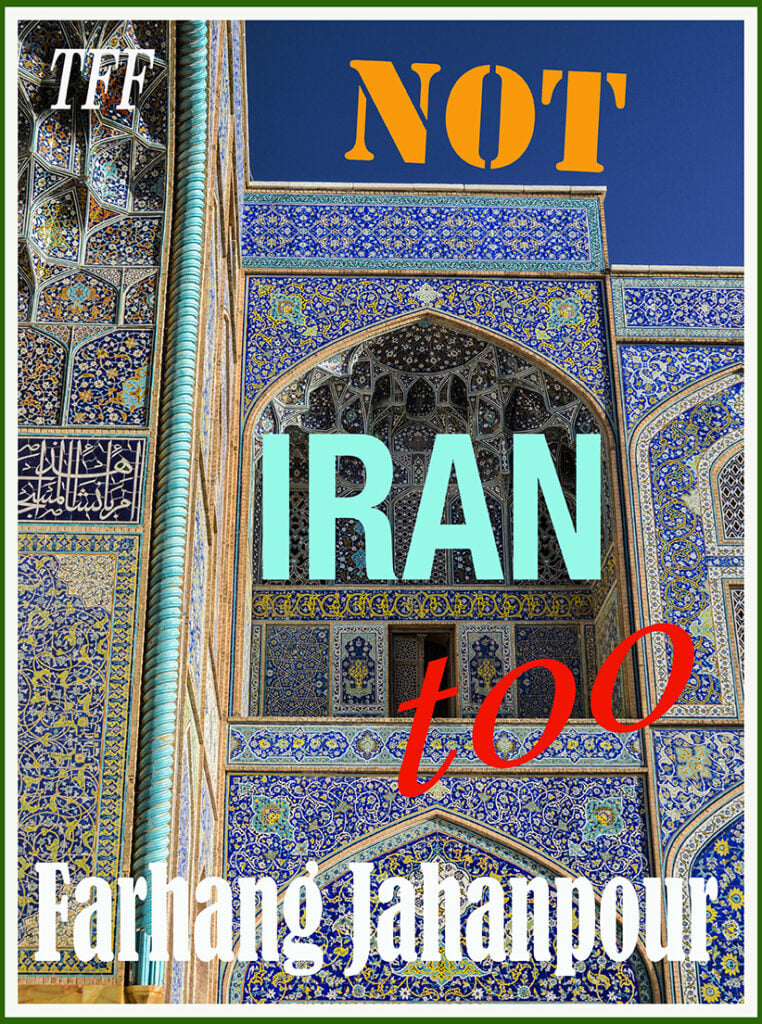
May 7, 2024, marks the seventh-month anniversary of the horrendous attack by Hamas militants on Israel, killing 695 Israeli civilians, 71 foreign nationals, and 373 security forces. Hamas and other militant groups also took 230 Israelis and other foreign nationals as hostages.
 
The temporary ceasefire agreement in November 2023 saw 105 civilians released from Hamas captivity, including 81 Israelis, 23 Thai nationals, and one Filipino. A number of remaining hostages are believed to have been killed as the result of Israeli bombings. Those terrorist attacks have been and must be strongly condemned.
 
In retaliation, Israel launched a major invasion of Gaza. Recent UN reports indicate that since October 7, 34,622 Palestinians have been killed in Gaza and 77,867 Palestinians have been injured. Some 70% of the killed have been women and children. Meanwhile, more than 400 Palestinians have been killed and hundreds injured in the West Bank by Israeli forces and illegal armed settlers. These figures do not cover the number of people killed and wounded during the past week.
 
As the UN secretary general said, Hamas’s attack did not come out of the blue, but was a violent reaction to decades of brutal Israeli occupation, and repeated attacks on Gaza aimed at “mowing the grass”, the Israeli definition of killing and wounding tens of thousands of Palestinians kept in Gaza concentration camp, besieged from land, air and sea.
 
The events of the past few months and years had been clearly anticipated in a number of documents prepared by Israeli and American Zionists. The authors of those reports clearly opposed any form of two-state solution, saying that giving back land for peace would “undermine the legitimacy of the nation and lead Israel into strategic paralysis and the previous government’s ‘peace process.’ That peace process obscured the evidence of eroding national critical mass – including a palpable sense of national exhaustion—and forfeited strategic initiative.”
 
They openly called for invading neighbouring states and changing their governments, and also ethnically cleansing the Palestinians from Israel and the Occupied Territories. The problem is that the world did not want to believe that such inhumane policies were possible in this day and age. However, the events of the past seven months show that Israeli leaders are meticulously implementing those plans.
 
Below is an article that I wrote a few years ago detailing those plans, published by TFF.


1. Israel: The policy’s background

As a small country with a tiny population surrounded by large and hostile countries, Israel’s policy ever since its establishment has been to rely on some external forces, the British Empire at the beginning of its creation and later on the American superpower to protect herself.

It has also involved the creation of a nuclear arsenal in contravention of the Non-Proliferation Treaty (the NPT) and by means of lies and deception, while being the most vociferous opponent of any other country in the Middle East to even have a peaceful nuclear programme for producing energy.

Another aspect of this policy of self-preservation has been to divide and partition the neighbouring countries so that they would lose their advantage of larger size and greater population vis-à-vis Israel.

As early as 1982, the Israeli scholar Oded Yinon authored an essay called “A Strategy for Israel in the Nineteen Eighties”, translated and edited by the late liberal Israeli activist Israel Shahak. (See Shahak, Israel; Yinon Oded, The Zionist Plan for the Middle East: Strategy for Israel in the Nineteen Eighties, World Zionist Organisation, 1982)

The book advocated Israel’s transformation into a regional imperial power via the fragmentation of the Arab world, “into a mosaic of ethnic and confessional groupings that could be more easily manipulated.”

Yinon wanted to encourage discord and feuding within and among Arab nations, destabilizing them, and resulting in their dismemberment into mini-states.

According to him, there were four advantages in that strategy:

1. Divided minorities are easier to exploit. Sunni-Shia conflict can achieve a greater aim by subverting Israel’s main threat which is a secular Arab nationalism united against it.

2. Greater military dominance lets Israel maintain its favoured status as a valued Washington ally.

3. Regional instability may lead to the breakup of the Saudi-dominated OPEC, which would weaken their influence in Washington and diminish its ability to finance Islamic extremists and Palestinian resistance.

4. Finally, Israel becomes freer to expel, ethnically cleanse, Palestinians from Israel and the Occupied Territories.

2. A Clean Break: A New Strategy for Securing the Realm

Later on, Yinon’s ideas formed the basis of the document prepared in 1996 by a group of American pro-Israeli activists for Benjamin Netanyahu, the new prime minister, called “A Clean Break: A New Strategy for Securing the Realm”.

The document provided a new plan for solving Israel’s security problems in the Middle East. It was written by a study group whose members became very active and influential during the lead-up to the Iraq war.

Former US Assistant Secretary of Defence Richard Perle was the “Study Group Leader” and it also included Douglas Feith, James Colbert, Charles H. Fairbanks Jr, Robert Loewnberg, Jonathan Torop, and David and Meyrav Wurmser.

They all occupied influential positions in George W. Bush’s administration and were among the most ardent supporters of war with Iraq and a possible war against Iran.
The authors explicitly rejected the “Peace Process” that had been pursued by the former Prime Minister Yitzhak Rabin who was assassinated by a Jewish fanatic, and instead called for an assertive, aggressive policy that would give Israel the “strategic initiative.”

They wrote:

“Efforts to salvage Israel’s socialist institutions – which include pursuing supranational over national sovereignty and pursuing a peace process that embraces the slogan, ‘New Middle East’ – undermine the legitimacy of the nation and lead Israel into strategic paralysis and the previous government’s ‘peace process.’ That peace process obscured the evidence of eroding national critical mass – including a palpable sense of national exhaustion—and forfeited strategic initiative.”

They continued:

“Benjamin Netanyahu’s government comes in with a new set of ideas. While there are those who will counsel continuity, Israel has the opportunity to make a clean break; it can forge a peace process and strategy based on an entirely new intellectual foundation, one that restores strategic initiative and provides the nation the room to engage every possible energy on rebuilding Zionism, the starting point of which must be economic reform.”

The introduction specifically proposes three new policies:

1. Rather than pursuing a “comprehensive peace” with the entire Arab world, Israel should work jointly with Jordan and Turkey (both countries had very friendly relations with Israel at that time) to “contain, destabilize, and roll-back” those entities that pose threats to it.

2. Israel should change the nature of her relations with the Palestinians, specifically reserving the right of “hot pursuit” anywhere within Palestinian territory, as well as attempting to promote alternatives to Arafat’s leadership.

3. Israel should change the nature of her relations with the United States, stressing self-reliance and strategic cooperation.

Regarding Iraq and Syria, it called for the removal of Saddam Hussein from power, and the containment of Syria by engaging in proxy warfare and highlighting their possession of “weapons of mass destruction”. (See “A Clean Break: A New Strategy for Securing the Realm”, a report prepared by The Institute for Advanced Strategic and Political Studies”, 1996).

On Syria, the report advocated: “Syria challenges Israel on Lebanese soil. An effective approach, and one with which American can sympathize, would be if Israel seized the strategic initiative along its northern borders by engaging Hizballah, Syria and Iran, as the principal agents of aggression in Lebanon…”

The document added:

“Israel can shape its strategic environment, in cooperation with Turkey and Jordan, by weakening, containing, and even rolling back Syria.
This effort can focus on removing Saddam Hussein from power in Iraq — an important Israeli strategic objective in its own right — as a means of foiling Syria’s regional ambitions.”

The expulsion of the Syrians from Lebanon was achieved after the assassination of the Lebanese Prime Minister Rafiq Hariri.

At first, the Syrians were blamed for his assassination and among international clamour and US pressure, the Syrian government was forced to take its forces out of Lebanon, although initially they had gone to Lebanon at the invitation of the Lebanese government to protect the Christians.

Later on, when that mission was accomplished, the finger of accusation turned towards the Lebanese Hizballah, but right up to the present time the real truth about his murderers has not been established, and one is only left to speculate.

The Clean Break also revived the old pre-First World British plan to install the Hashemites as rulers of Iraq and Syria, partly also with the aim of enhancing the influence of Najaf and weakening Iran.

The report pointed out: “Since Iraq’s future could affect the strategic balance in the Middle East profoundly, it would be understandable that Israel has an interest in supporting the Hashemites in their efforts to redefine Iraq.”

The day-dream continued:

“Were the Hashemites to control Iraq, they could use their influence over Najaf to help Israel wean the south Lebanese Shia away from Hizballah, Iran and Syria.”

It even argued that the Shia retain strong ties to the Hashemites, despite the old hostility between the Shiites and the Sunni Hashemites that originated from Saudi Arabia.

In another paper written for the Jerusalem-based Institute for Advanced Strategic and Political Studies, David Wurmser sought to mobilize the far-right wing of Israel’s Likud party, represented by Netanyahu, around a vision of a Greater Israel surrounded by much lesser enemies.

Syria, in Wurmser’s view, was the main target, but the road to Damascus, he contended, had to run though Baghdad. “Whoever inherits Iraq dominates the entire Levant strategically,” he wrote.

The key to Israel’s regional hegemony was in rejecting “land for peace” and creating a “natural axis” consisting of Israel, Jordan, and a Hashemite Iraq that could “squeeze and detach Syria from the Saudi peninsula.” (Quoted in Charles Davis, “Why Did We Invade Iraq?”, LobeLog, April 28, 2015).

This would be “the prelude to redrawing the map of the Middle East” – naturally to Israel’s advantage.

3. A series of war being planned

Of course, Israel could not achieve all this on its own, but by having powerful friends in the US administration it could encourage the US government to implement those plans.

General Wesley Clark, the former Supreme Allied Commander of NATO during the 1999 war in Yugoslavia, has revealed a part of the plan that was implemented under President George W. Bush to invade and destroy various countries in order to strengthen Israel.

He said that he had gone to the Pentagon right after 9/11 to see Secretary of Defence Donald Rumsfeld and Deputy Secretary Paul Wolfowitz.

When he was at the Pentagon, he saw an old friend who told him that a plan had been drawn up to attack Iraq. The friend said: “We’ve made the decision we’re going to war with Iraq.”

When Clark asked him why they wanted to attack Iraq, the friend replied: “I don’t know. I guess they don’t know what else to do.” Clark asked his friend: “Well, did they find some information connecting Saddam to al-Qaeda?” He said, “No, no. There’s nothing new that way. They just made the decision to go to war with Iraq.”

He continued: “I guess it’s like we don’t know what to do about terrorists, but we’ve got a good military and we can take down governments.” He surmised: “I guess if the only tool you have is a hammer, every problem has to look like a nail.” (See “Global Warfare: We’re Going to Take out 7 Countries in 5 Years: Iraq, Syria, Lebanon, Libya, Somalia, Sudan and Iran…” Video Interview with General Wesley Clark, Democracy Now, 2 March 2007).

The friend fetched a memo, saying: “This is a memo that describes how we’re going to take out seven countries in five years, starting with Iraq, and then Syria, Lebanon, Libya, Somalia, Sudan and, finishing off, Iran.”

In that interview, General Wesley Clark called what was happening a coup, organised by a “cabal” against the wider US interests.

The history of American wars and invasions since 9/11 shows that the above-mentioned plan has been almost entirely carried out and only Iran is left to finish off the list.

As a British official told Newsweek shortly before the Iraq war, “Everyone wants to go to Baghdad. Real men want to go to Tehran.” (See Newsweek, 8.18.02).

Now, the real men round President Trump, some of whom like John Bolton have been trying to go to Tehran even before the Iraq war, are trying to complete the list and subject Iran to a violent regime change in order to bring “democracy and freedom” to Iran.

The Clean Break concluded: “Israel – proud, wealthy, solid, and strong – would be the basis of a truly new and peaceful Middle East.”

Sadly, although Israel has moved much further to the right and is seemingly proud and strong, not only has it not led to a truly peaceful Middle East, but Israeli policies have been the cause of massive conflict, destruction, suffering and destabilisation.

3. The Suez debacle

Israel itself also has a long history of invading neighbouring countries and interfering in their affairs, with the aim of weakening them and bringing them under Israeli control.

After the Egyptian government nationalized the Suez Canal Company in 1956 (to which it was legally entitled), the leaders of Britain, France, and Israel colluded in a scheme to topple Egyptian president Gamal Abdel Nasser and replace him with a more subservient leader.

Israel agreed to invade the Sinai Peninsula, providing the pretext for Britain and France to intervene to “protect the canal.” They assumed that Nasser’s defeat would puncture his popularity and would lead to his downfall.

However, not only did Nasser not fall, but the United States and the Soviet Union that did not wish to see the return of new European colonialism in the Middle East forced Britain, France, and Israel to withdraw from the territories they had seized.

As a result, Nasser’s popularity increased and his position was strengthened.

4. Ariel Sharon’s attempt to change the government in Lebanon

After invading southern Lebanon in 1978, Israel launched a massive attack on Lebanon on 6 June 1982, ostensibly in retaliation for the attempted assassination of the Israeli ambassador in London, which was carried out by Abu Nidal, a staunch enemy of the Palestine Liberation Organisation (PLO), but Israel blamed the PLO anyway.

However, the real aim of the invasion, which had been pre-planned, was to force the PLO out, and install a pro-Israel government in Lebanon. Israel invaded with an army of 76,000 troops, 800 tanks, 1,500 armoured personnel carriers and 634 airplanes. Lebanon’s weak government and lightly armed Palestinian guerrilla groups could not hold off the onslaught.

According to International Red Cross, Israeli forces killed 9,583 and injured a further 16,608 during the first week of the invasion. By the end of the second week, at least 14,000 people were killed and 20,000 were injured. (See Robert Fisk, Pity the Nation: Lebanon at War (Oxford University Press, 2001), pp. 255-257).

Lebanese sources have estimated that 17,825 Lebanese and roughly 9,797 Syrian and PLO fighters were killed.

The civilian death toll was very high as well, with at least 2,513 killed outside of the Beirut area. (See Robert Fisk, ibid).

The invasion was accompanied by the massacre of thousands of Palestinian refugees in Sabra and Shatila camps by Israel’s Phalangist allies who were ordered by the Israeli Defence Force (IDF) to clear out the camps.

According to several reports, Sharon gave the Phalangists carte blanche to enter the camps after Israel occupied Beirut. A UN commission described the massacre as a form of genocide.

However, despite all those atrocities, the whole scheme soon unravelled. Ariel Sharon installed Israel’s favourite candidate Bashir Gemayel, a senior member of a Phalange party, as Lebanon’s president. The Israeli Prime Minister Menachem Begin hoped to sign an agreement with him that would give Israel “forty years of peace”.

However, following the assassination of Gemayel in September 1982, Israel’s position in Lebanon became untenable and no such treaty was ever signed.

Following the continued Israeli occupation of South Lebanon and oppressing its mainly Shi’ite population, the Shi’ite Movement the Hezbollah was born, and it eventually forced Israel to leave Southern Lebanon in 2000.

Israel again attacked Lebanon in July 2006, which killed between 1,200-1,300 Lebanese people and displaced nearly one million Lebanese. Israel fired 4.6 million sub-munitions into dozens of towns and villages in southern Lebanon in 962 separate strikes, circa 90% within the final 72 hours of the war, when the conflict already had been largely resolved by UN Security Council Resolution 1701.

Nevertheless, despite this brutality and deliberate damage that it inflicted on the Lebanese people, Israel got a bloody nose by the Lebanese Hezbollah and was forced to retreat.

So, the only outcome of Israel’s attempts at regime change in Lebanon was the creation of Hezbollah, which has proved to be Israel’s most effective enemy in Lebanon.

In Parts 6-9 follows a partial list of the countries that the United States has been directly involved in, partly in order to serve its own geopolitical interests vis-à-vis the former Soviet Union, and in some cases in order to help and protect her ally Israel.

Share and use these hastags

#NotIranToo

#BuildTrustWithIran

#CooperateWithIranNow

Photos

All from today’s Iran by Jan Oberg.
You can see many more here and purchase limited, signed editions here.
© Oberg PhotoGraphics




Related Posts

Johan Galtung 1930-2024October 2015 Published here on October 3, 2026 Let us focus on Civilization for conflict analysis and remedies. Major forms of disorder use violence; war is state organized violence. The most belligerent states are the United States of America and Israel, both with civilization roots. National Evangelism, the US Protestant Christian civilization– more national than evangelical–justifies US warfare as exceptionalism of a people chosen by God, with a manifest destiny to run the world. Orthodox Judaism justifies Israeli warfare to conquer and expand from Nile to Euphrates as a religious right and duty to the Eternal One. The third most belligerent country, the UK, no longer believes it is God-chosen but chosen by the USA; not quite the same but something. But the root cause of global disorder lies in the Occident–with Islam–seeing itself as the single, universal civilization valid for all at all times, all others being...
Jan ObergPhD, director, The Transnational Foundation for Peace and Future Research, TFFLund, Sweden October 2, 2026 This is my full original manuscript. The Chinese Academy of Social Science, CASS, makes two publications out if it. 1. China’s Five-year plan emphasized the capabilities of basic research and original innovation. It is regarded as the goal of the future social development, which, as required, should be significantly enhanced. Can you comment on the importance of original innovation in research and academic study? I believe it is easier to define “original innovation” in the natural sciences than in social sciences. The breaking points of what constitutes something new, or innovative, are not quite as sharp in the latter. But in both fields it is about opening up something that was closed, unseen, unexplored before – making manifest what was earlier latent. Innovations come in many forms and shapes – naming something that was not...
The agreement is catastrophic both because of what it says and what it doesn’t mention. It reduces further the major asset of security policies: Freedom of action. Jan Oberg TFF director September 25, 2026 A couple of hours before the agreement was signed on September 22, 2026, I published the following 13 hypotheses about what it would most likely contain on TFF Substack (in English). I was wrong on only the first point. Contrary to what Trump had written on his Truth Social platform, it does not appear to come into force immediately. In fact, it turned out to be worse than even I had anticipated. After these hypotheses now come a number of reflections in light of what the agreement actually contains, and does not contain, as well as the way in which it has generally been presented by major media outlets and by the public-service broadcaster DR. My...

Recent Articles

Tony Robinson October 4, 2026 Violence is easy to recognise when someone is being beaten, shot or killed. It becomes more difficult when nobody is holding a weapon. Poverty, discrimination, exploitation and repression can restrict a human life just as effectively, although they do so in very different ways and with very different consequences. Simply adding more categories to an ever-growing list of forms of violence does not really solve the problem. The more interesting question is what all these different situations have in common and why it makes sense to describe them using the same word. Human beings do not simply react to what happens around them. They remember the past, imagine things that do not yet exist, make plans and undertake projects. Workers organise because they imagine different working conditions; people migrate because they imagine another life somewhere else; social movements emerge because people refuse to accept the...
It’s a matter of principles, courage, vision and pulling together – while the militarist world is falling apart… Peter Langille October 3, 2026 “Here, then, is the problem which we present to you, stark and dreadful and inescapable: Shall we put an end to the human race; or shall mankind renounce war?”The Bertrand Russell—Albert Einstein Manifesto, July 9, 1955 ⁕ The forecast for what’s ahead is worrisome. The sharp rise in armed conflicts over the past three years is adding to what was already the highest level in over seventy years. Genocides, which should be prevented are supported. A shared climate emergency that jeopardises survival is ignored. Diverse polls now suggest that people are war-weary, worried and interested in a more effective United Nations. And, there are viable policy options for a more secure world! Yet governments are doubling-down, betting on more war and investing heavily. If current trends persist,...
Johan Galtung 1930-2024October 2015 Published here on October 3, 2026 Let us focus on Civilization for conflict analysis and remedies. Major forms of disorder use violence; war is state organized violence. The most belligerent states are the United States of America and Israel, both with civilization roots. National Evangelism, the US Protestant Christian civilization– more national than evangelical–justifies US warfare as exceptionalism of a people chosen by God, with a manifest destiny to run the world. Orthodox Judaism justifies Israeli warfare to conquer and expand from Nile to Euphrates as a religious right and duty to the Eternal One. The third most belligerent country, the UK, no longer believes it is God-chosen but chosen by the USA; not quite the same but something. But the root cause of global disorder lies in the Occident–with Islam–seeing itself as the single, universal civilization valid for all at all times, all others being...

TFF on Substack

Discover and subscribe to more peace materials on TFF Substack

Most Popular

Tony Robinson October 4, 2026 Violence is easy to recognise when someone is being beaten, shot or killed. It becomes more difficult when nobody is holding a weapon. Poverty, discrimination, exploitation and repression can restrict a human life just as effectively, although they do so in very different ways and with very different consequences. Simply adding more categories to an ever-growing list of forms of violence does not really solve the problem. The more interesting question is what all these different situations have in common and why it makes sense to describe them using the same word. Human beings do not simply react to what happens around them. They remember the past, imagine things that do not yet exist, make plans and undertake projects. Workers organise because they imagine different working conditions; people migrate because they imagine another life somewhere else; social movements emerge because people refuse to accept the...
It’s a matter of principles, courage, vision and pulling together – while the militarist world is falling apart… Peter Langille October 3, 2026 “Here, then, is the problem which we present to you, stark and dreadful and inescapable: Shall we put an end to the human race; or shall mankind renounce war?”The Bertrand Russell—Albert Einstein Manifesto, July 9, 1955 ⁕ The forecast for what’s ahead is worrisome. The sharp rise in armed conflicts over the past three years is adding to what was already the highest level in over seventy years. Genocides, which should be prevented are supported. A shared climate emergency that jeopardises survival is ignored. Diverse polls now suggest that people are war-weary, worried and interested in a more effective United Nations. And, there are viable policy options for a more secure world! Yet governments are doubling-down, betting on more war and investing heavily. If current trends persist,...
Johan Galtung 1930-2024October 2015 Published here on October 3, 2026 Let us focus on Civilization for conflict analysis and remedies. Major forms of disorder use violence; war is state organized violence. The most belligerent states are the United States of America and Israel, both with civilization roots. National Evangelism, the US Protestant Christian civilization– more national than evangelical–justifies US warfare as exceptionalism of a people chosen by God, with a manifest destiny to run the world. Orthodox Judaism justifies Israeli warfare to conquer and expand from Nile to Euphrates as a religious right and duty to the Eternal One. The third most belligerent country, the UK, no longer believes it is God-chosen but chosen by the USA; not quite the same but something. But the root cause of global disorder lies in the Occident–with Islam–seeing itself as the single, universal civilization valid for all at all times, all others being...
Read More
Living-Peace-Sign-Budapest-copy
Tony Robinson October 4, 2026 Violence is easy to recognise when someone is being beaten, shot or killed. It becomes more difficult when nobody is holding a weapon. Poverty, discrimination, exploitation and repression can restrict a human life just as effectively, although they do so in very different ways and with very different consequences. Simply adding more categories to an ever-growing list of forms of violence does not really solve the problem. The more interesting question is what all these different situations have in common and why it makes sense to describe them using the same word. Human beings do not simply react to what happens around them. They remember the past, imagine things that do not yet exist, make plans and undertake projects. Workers organise because they imagine different working conditions; people migrate because they imagine another life somewhere else; social movements emerge because people refuse to accept the...
b54a1f10-8c65-4f0b-9dd5-4abc0a7d04cc_2659x2659
It’s a matter of principles, courage, vision and pulling together – while the militarist world is falling apart… Peter Langille October 3, 2026 “Here, then, is the problem which we present to you, stark and dreadful and inescapable: Shall we put an end to the human race; or shall mankind renounce war?”The Bertrand Russell—Albert Einstein Manifesto, July 9, 1955 ⁕ The forecast for what’s ahead is worrisome. The sharp rise in armed conflicts over the past three years is adding to what was already the highest level in over seventy years. Genocides, which should be prevented are supported. A shared climate emergency that jeopardises survival is ignored. Diverse polls now suggest that people are war-weary, worried and interested in a more effective United Nations. And, there are viable policy options for a more secure world! Yet governments are doubling-down, betting on more war and investing heavily. If current trends persist,...
010
Johan Galtung 1930-2024October 2015 Published here on October 3, 2026 Let us focus on Civilization for conflict analysis and remedies. Major forms of disorder use violence; war is state organized violence. The most belligerent states are the United States of America and Israel, both with civilization roots. National Evangelism, the US Protestant Christian civilization– more national than evangelical–justifies US warfare as exceptionalism of a people chosen by God, with a manifest destiny to run the world. Orthodox Judaism justifies Israeli warfare to conquer and expand from Nile to Euphrates as a religious right and duty to the Eternal One. The third most belligerent country, the UK, no longer believes it is God-chosen but chosen by the USA; not quite the same but something. But the root cause of global disorder lies in the Occident–with Islam–seeing itself as the single, universal civilization valid for all at all times, all others being...
Screenshot 2026-10-02 011738
Jan ObergPhD, director, The Transnational Foundation for Peace and Future Research, TFFLund, Sweden October 2, 2026 This is my full original manuscript. The Chinese Academy of Social Science, CASS, makes two publications out if it. 1. China’s Five-year plan emphasized the capabilities of basic research and original innovation. It is regarded as the goal of the future social development, which, as required, should be significantly enhanced. Can you comment on the importance of original innovation in research and academic study? I believe it is easier to define “original innovation” in the natural sciences than in social sciences. The breaking points of what constitutes something new, or innovative, are not quite as sharp in the latter. But in both fields it is about opening up something that was closed, unseen, unexplored before – making manifest what was earlier latent. Innovations come in many forms and shapes – naming something that was not...
arctic-circle-map
The agreement is catastrophic both because of what it says and what it doesn’t mention. It reduces further the major asset of security policies: Freedom of action. Jan Oberg TFF director September 25, 2026 A couple of hours before the agreement was signed on September 22, 2026, I published the following 13 hypotheses about what it would most likely contain on TFF Substack (in English). I was wrong on only the first point. Contrary to what Trump had written on his Truth Social platform, it does not appear to come into force immediately. In fact, it turned out to be worse than even I had anticipated. After these hypotheses now come a number of reflections in light of what the agreement actually contains, and does not contain, as well as the way in which it has generally been presented by major media outlets and by the public-service broadcaster DR. My...
girl-5894831_1280
Below are TFF-related media mentions, comments, videos and social media posts published elsewhere but not on this homepage. We happen to catch and list only a fraction. Regarding video comments and debates, we recommend that you go to the TFF Video Channel on Substack where many of them are reproduced. Jan Oberg is a contributor to China Daily – 52 million daily clicks – and Global Times, CGTN and CCTV (the national television), China Investment, Xinhua News Agency and several others. Articles and videos on these media very often multiply into countless Chinese (and Western media) that re-post them from these main media. Thanks to The China Academy, his analyses, interviews and comments are frequently posted on YouTube channels such as Thinkers Forum and Wave Media. These videos are often re-posted on Bilibili (China’s YouTube), the China Content Center on TikTok, and on the Chinese edition of TikTok, Douyin.com. This means reaching hundreds of millions of viewers worldwide over a year. While there are too many to catch on all these...