
TFF PressInfo: “The human price of the war on Iraq” Hearing Statement

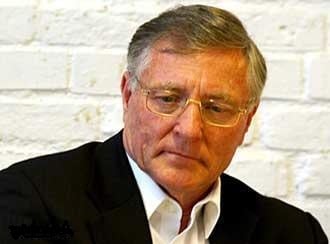
Comments by Hans-C. von Sponeck
Former UN Assistant Secretary General, UN Humanitarian Coordinator for Iraq & TFF Associate

Hearing at the UK House of Commons, London

Intro
1. HoC/HoL have repeatedly held Iraq hearings as have British NGOs such as CASI (Campaign Against Sanctions on Iraq) and Stop the War Coalition/UK. In Europe these are considered models for responsible public action.

2. My contribution at this hearing is not about the crimes of dictatorship or the details of Iraqi suffering. For both well researched data is available. The objective of my participation is to make two detailed observations about externally-driven Iraq politics during the period 1990-2014.

Observation 1

3. Today’s tragic Iraq reality can only be understood if the additive impact of the years before and the years following the US/UK Governments’ illegal invasion and occupation is fully taken into account.

4. Involved are 3 distinct time periods:

1990-2003:
i) 13 years of the most comprehensive economic and financial sanctions ever levied on a country by the UN Security Council (UNSC). Initially the UNSC did not provide any social safety net whatsoever. The Iraqi people were at the mercy of voluntary external donations and these turned out to be well below the minimum estimated by the UN Secretary General to sustain life.
A UN humanitarian exemption, the oil-for-food programme, began only in December 1996. It provided important but severely inadequate subsistence support, amounting to a paltry .51 cents (US) worth of supplies/person/per day.

ii) Not commonly known is that this UN ‘humanitarian’ programme authorized by the UN Security Council was entirely(!) financed from Iraq’s own resources (oil revenue). The word ‘humanitarian’ is therefore a misnomer! One compelling statistic of misery resulting from this reality is the following: During these years of UN sanctions, Iraq’s child mortality rates were as high as 132 of 1000 children dying before reaching 5 years of age, together with Afghanistan these rates were among the highest in the world. (UNICEF)

iii) A sobering conclusion about the irresponsibility of the UN Security Council was presented in 2000 to the Council by the Ambassador of Malaysia to the United Nations, Dato Agam Hasmy:

“How ironic is it that the same policy that is supposed to disarm Iraq from its weapons of mass destruction has itself become a weapon of mass destruction!”

2003-2011:
The 2003 illegal invasion and 8 years of occupation constituted a period of dismantling every fibre of Iraqi society. There is evidence of horrific violations of the Hague and Geneva Conventions by the occupying powers symbolized by the “Iraqi man with the hood” in the Abu Ghraib jail.

People’s courts and tribunals concerning Iraq held in many parts of the world have credibly established the culpability of western leaders, especially former US President Bush and former British Prime Minister Tony Blair. The most detailed evidence has been compiled by the Kuala Lumpur War Crimes Commission (KLWCC) of which Denis Halliday and I are members.

We would like to present to Lord Megginnes of Drumglass of the House of Lords and MPs Jeremy Corbyn and George McDonald as well as other participants two volumes of torture and war-crimes related evidence compiled by the KLWCC.

2012-2014:
i) Since the departure of US and other foreign forces from Iraq, social and political chaos have further intensified in the country. The Kurdish-Arab divide is deeper than ever before. Sectarianism and the danger of disintegration remain. Civil-war like conditions in central Iraq have increased. Terrorism and criminal violence have become part of daily life in many parts of the country. National re-building following wars, sanctions and occupation is far below people’s rightful expectations.

ii) The resulting national human balance sheet in 2014:
Out of an estimated population of 33 million some 23% live in poverty in this immensely oil-rich country.
600.000 children have become street children – something that was unknown before 1990.
Transparency International refers to Iraq’s rampant corruption (178th out of 181 countries).
A staggering 14% of Iraqis are orphans, most since 2003!
Hashish and heroin, not a problem before 2003, are an increasing concern.
In 2007, the World Bank estimated that “almost 23% of Iraqis were illiterate” and 5 million school-age children were not in school.
Serious health problems have arisen because of occupation forces’ use of depleted uranium and white phosphorus.

One must ask how much can a people endure?

Credible data and additional indicators are available from a wide variety of international sources.

Observation 2
i) To build ‘necessary bridges’ (HoL) to facilitate a return to a human-rights minded political climate in Iraq, is wholeheartedly supported. Justice, peace and accelerated nation re-building must be the priority of the moment. There was no UN Security Council commitment in this respect when my colleague and close friend, Denis Halliday, and I served in succession in Iraq. For this reason we resigned.

ii) It is therefore crucial to realize that the Iraq tragedy has also wider implications for the way in which the community of nations lives together. There is great urgency for UN reforms.

iii) The perpetrators of 24 years of continuous mistreatment of a people are known. Large amounts of evidence in this regard has been collected. Sir John Chilcot’s demand to have key evidence of possible war crimes by occupation forces published should be respected. The same applies to other evidence involving years of sanctions and occupation. The United Nations and member countries should no longer be allowed to make excuses to avoid releasing such evidence to the public.

iv)To arraign perpetrators involved during any of the three time periods identified above and the preparation of court cases must no longer be considered utopian. Ending impunity remains a serious demand from civil society. Qualified individuals are available to prepare specific court cases and time lines as well as to mount campaigns to obtain civil society funding.

v) The ICC must be made increasingly aware that their reluctance to accept the mandate and responsibility for hearing Iraq cases against former senior US and UK officials has become unacceptable. The submission by Public Interest Lawyers in the UK of cases of military abuse in southern Iraq is a significant step in challenging the ICC to accept the Iraq file.

vi) Iraq continues to pay compensation for damages resulting from its 1990 invasion into Kuwait. As of April 2014 $46 billion have actually been paid. The UN Compensation Commission must begin to consider counterclaims by Iraqi society for the physical and mental damages afflicted on Iraqi citizens as a result of two wars, sanctions, occupation and the illegal use of munitions.

vii) Continued support from both houses of the UK Parliament will give the credibility a justice-for-Iraq process requires and the respect Iraqi society deserves.

Related Posts

Jan Oberg TFF director October 13, 2026 According to Alfred Nobel’s will, the Nobel Peace Prize shall be awarded: ”to the person who has done the most or best to advance fellowship among nations, the abolition or reduction of standing armies, and the establishment and promotion of peace congresses.” Further down, he also expresses how the prize for the “champions of peace” shall be decided: “that for champions of peace by a committee of five persons to be selected by the Norwegian Storting. Alfred Nobel’s will is remarkably short and clear. But few seem to have read it. Nobel did not say that the committee itself should consist of members of parliament. He entrusted the Storting with appointing five persons. In principle, it could have selected diplomats, mediators, peace researchers, conflict-resolution specialists, or other individuals with recognised expertise in matters of peace from around the world. Instead, the Storting gradually...
The Quest for Humane Survival Richard Falk Professor emeritus, Princeton UniversityTFF Associate since 1986October 12, 2026 After decades of teaching and writing about international law in academic frameworks that were not institutionally situated within law school environments—at Princeton and the University of California, Santa Barbara—I found myself most receptive to the TWAIL outlook. It has been especially illuminating in clarifying the extent to which international law evolved as a dialogical critique of Europe’s efforts to legitimize its colonial undertakings. In particular, TWAIL has exposed how international law has functioned to legalize the subjugation of Third World peoples, securing conditions for exploitative investment and trade relations, the coercive enforcement of public debts, and an ideology of cultural superiority. TWAIL’s exposure of these economic legacies of colonialism has influenced my understanding of the history and development of international law, broadly conceived, as an ideological project of the Western sub-system of the world...
Advocates of nuclear disarmament are regularly dismissed by the champions of nuclear deterrence as naïve and unrealistic, utopian or even irresponsible. Yet this ‘doctrine’ of deterrence, regarded by France as the ‘cornerstone’ of its national security, is based on quasi-religious beliefs, a theory that cannot be proven, risky gambles and fragile assumptions. So much so that one might legitimately ask which side the ‘Care Bears’ are on. Marc FinaudVice-President of Initiatives for Nuclear Disarmament (IDN) October 9, 2026 This article was originally published on Pressenza When it comes to these things being treated as religious concepts, look here. Idealists and realists It was Hubert Védrine, François Mitterrand’s former Foreign Minister, who repeatedly coined the phrase: ‘Europeans are a sort of Care Bears who don’t realise they’re living in Jurassic Park’. He applies this reference to the cartoon for well-behaved children not only to what he regards as weakness or idealism...

Recent Articles

Below are TFF-related media mentions, comments, videos and social media posts published elsewhere but not on this homepage. We happen to catch and list only a fraction. Regarding video comments and debates, we recommend that you go to the TFF Video Channel on Substack where many of them are reproduced. Jan Oberg is a contributor to China Daily – 52 million daily clicks – and Global Times, CGTN and CCTV (the national television), China Investment, Xinhua News Agency and several others. Articles and videos on these media very often multiply into countless Chinese (and Western media) that re-post them from these main media. Thanks to The China Academy, his analyses, interviews and comments are frequently posted on YouTube channels such as Thinkers Forum and Wave Media. These videos are often re-posted on Bilibili (China’s YouTube), the China Content Center on TikTok, and on the Chinese edition of TikTok, Douyin.com. This means reaching hundreds of millions of viewers worldwide over a year. While there are too many to catch on all these...
Jan Oberg TFF director October 13, 2026 According to Alfred Nobel’s will, the Nobel Peace Prize shall be awarded: ”to the person who has done the most or best to advance fellowship among nations, the abolition or reduction of standing armies, and the establishment and promotion of peace congresses.” Further down, he also expresses how the prize for the “champions of peace” shall be decided: “that for champions of peace by a committee of five persons to be selected by the Norwegian Storting. Alfred Nobel’s will is remarkably short and clear. But few seem to have read it. Nobel did not say that the committee itself should consist of members of parliament. He entrusted the Storting with appointing five persons. In principle, it could have selected diplomats, mediators, peace researchers, conflict-resolution specialists, or other individuals with recognised expertise in matters of peace from around the world. Instead, the Storting gradually...
The Quest for Humane Survival Richard Falk Professor emeritus, Princeton UniversityTFF Associate since 1986October 12, 2026 After decades of teaching and writing about international law in academic frameworks that were not institutionally situated within law school environments—at Princeton and the University of California, Santa Barbara—I found myself most receptive to the TWAIL outlook. It has been especially illuminating in clarifying the extent to which international law evolved as a dialogical critique of Europe’s efforts to legitimize its colonial undertakings. In particular, TWAIL has exposed how international law has functioned to legalize the subjugation of Third World peoples, securing conditions for exploitative investment and trade relations, the coercive enforcement of public debts, and an ideology of cultural superiority. TWAIL’s exposure of these economic legacies of colonialism has influenced my understanding of the history and development of international law, broadly conceived, as an ideological project of the Western sub-system of the world...

TFF on Substack

Discover and subscribe to more peace materials on TFF Substack

Most Popular

Below are TFF-related media mentions, comments, videos and social media posts published elsewhere but not on this homepage. We happen to catch and list only a fraction. Regarding video comments and debates, we recommend that you go to the TFF Video Channel on Substack where many of them are reproduced. Jan Oberg is a contributor to China Daily – 52 million daily clicks – and Global Times, CGTN and CCTV (the national television), China Investment, Xinhua News Agency and several others. Articles and videos on these media very often multiply into countless Chinese (and Western media) that re-post them from these main media. Thanks to The China Academy, his analyses, interviews and comments are frequently posted on YouTube channels such as Thinkers Forum and Wave Media. These videos are often re-posted on Bilibili (China’s YouTube), the China Content Center on TikTok, and on the Chinese edition of TikTok, Douyin.com. This means reaching hundreds of millions of viewers worldwide over a year. While there are too many to catch on all these...
Jan Oberg TFF director October 13, 2026 According to Alfred Nobel’s will, the Nobel Peace Prize shall be awarded: ”to the person who has done the most or best to advance fellowship among nations, the abolition or reduction of standing armies, and the establishment and promotion of peace congresses.” Further down, he also expresses how the prize for the “champions of peace” shall be decided: “that for champions of peace by a committee of five persons to be selected by the Norwegian Storting. Alfred Nobel’s will is remarkably short and clear. But few seem to have read it. Nobel did not say that the committee itself should consist of members of parliament. He entrusted the Storting with appointing five persons. In principle, it could have selected diplomats, mediators, peace researchers, conflict-resolution specialists, or other individuals with recognised expertise in matters of peace from around the world. Instead, the Storting gradually...
The Quest for Humane Survival Richard Falk Professor emeritus, Princeton UniversityTFF Associate since 1986October 12, 2026 After decades of teaching and writing about international law in academic frameworks that were not institutionally situated within law school environments—at Princeton and the University of California, Santa Barbara—I found myself most receptive to the TWAIL outlook. It has been especially illuminating in clarifying the extent to which international law evolved as a dialogical critique of Europe’s efforts to legitimize its colonial undertakings. In particular, TWAIL has exposed how international law has functioned to legalize the subjugation of Third World peoples, securing conditions for exploitative investment and trade relations, the coercive enforcement of public debts, and an ideology of cultural superiority. TWAIL’s exposure of these economic legacies of colonialism has influenced my understanding of the history and development of international law, broadly conceived, as an ideological project of the Western sub-system of the world...
Read More
girl-5894831_1280
Below are TFF-related media mentions, comments, videos and social media posts published elsewhere but not on this homepage. We happen to catch and list only a fraction. Regarding video comments and debates, we recommend that you go to the TFF Video Channel on Substack where many of them are reproduced. Jan Oberg is a contributor to China Daily – 52 million daily clicks – and Global Times, CGTN and CCTV (the national television), China Investment, Xinhua News Agency and several others. Articles and videos on these media very often multiply into countless Chinese (and Western media) that re-post them from these main media. Thanks to The China Academy, his analyses, interviews and comments are frequently posted on YouTube channels such as Thinkers Forum and Wave Media. These videos are often re-posted on Bilibili (China’s YouTube), the China Content Center on TikTok, and on the Chinese edition of TikTok, Douyin.com. This means reaching hundreds of millions of viewers worldwide over a year. While there are too many to catch on all these...
Nobel-Prize-Plaque
Jan Oberg TFF director October 13, 2026 According to Alfred Nobel’s will, the Nobel Peace Prize shall be awarded: ”to the person who has done the most or best to advance fellowship among nations, the abolition or reduction of standing armies, and the establishment and promotion of peace congresses.” Further down, he also expresses how the prize for the “champions of peace” shall be decided: “that for champions of peace by a committee of five persons to be selected by the Norwegian Storting. Alfred Nobel’s will is remarkably short and clear. But few seem to have read it. Nobel did not say that the committee itself should consist of members of parliament. He entrusted the Storting with appointing five persons. In principle, it could have selected diplomats, mediators, peace researchers, conflict-resolution specialists, or other individuals with recognised expertise in matters of peace from around the world. Instead, the Storting gradually...
law-419057_1280
The Quest for Humane Survival Richard Falk Professor emeritus, Princeton UniversityTFF Associate since 1986October 12, 2026 After decades of teaching and writing about international law in academic frameworks that were not institutionally situated within law school environments—at Princeton and the University of California, Santa Barbara—I found myself most receptive to the TWAIL outlook. It has been especially illuminating in clarifying the extent to which international law evolved as a dialogical critique of Europe’s efforts to legitimize its colonial undertakings. In particular, TWAIL has exposed how international law has functioned to legalize the subjugation of Third World peoples, securing conditions for exploitative investment and trade relations, the coercive enforcement of public debts, and an ideology of cultural superiority. TWAIL’s exposure of these economic legacies of colonialism has influenced my understanding of the history and development of international law, broadly conceived, as an ideological project of the Western sub-system of the world...
images-2
Advocates of nuclear disarmament are regularly dismissed by the champions of nuclear deterrence as naïve and unrealistic, utopian or even irresponsible. Yet this ‘doctrine’ of deterrence, regarded by France as the ‘cornerstone’ of its national security, is based on quasi-religious beliefs, a theory that cannot be proven, risky gambles and fragile assumptions. So much so that one might legitimately ask which side the ‘Care Bears’ are on. Marc FinaudVice-President of Initiatives for Nuclear Disarmament (IDN) October 9, 2026 This article was originally published on Pressenza When it comes to these things being treated as religious concepts, look here. Idealists and realists It was Hubert Védrine, François Mitterrand’s former Foreign Minister, who repeatedly coined the phrase: ‘Europeans are a sort of Care Bears who don’t realise they’re living in Jurassic Park’. He applies this reference to the cartoon for well-behaved children not only to what he regards as weakness or idealism...
8824b09f-33a5-43f9-9fd0-550f28cda24d_1536x1024
What the West Borrowed from Asia and What It Left Behind Jan Krikke October 8, 2026 The article was originally published here In the late 1960s, the musical Hair announced that the Age of Aquarius was dawning. Its opening anthem promised a transformation of human consciousness: an era of peace, harmony and understanding. Half a century later, a familiar echo of that promise is a meditation app offered by your employer. You can find it in the same list of benefits as the pension plan and the gym discount. How did a spiritual revolution become an employee benefit? The answer lies in the history of the movement known as New Age: where it came from, what it borrowed from Asia, and why the meaning of what it borrowed changed in the process. Two definitions will help. New Age is a loose label for a wide range of spiritual practices and...
Screenshot 2026-10-04 210142
Small and different + among the 10% most active + 9,000 texts + 150 Associates + 60 000 a day — and a stubborn belief that peace is smarter and must be secured by peaceful means. In 2026, the Transnational Foundation for Peace and Future Research (TFF) turns 40. On Monday, October 5, 2026, a new TFF homepage will go live — a new gateway to more than 9,000 articles, analyses, research papers and other contributions produced over four decades of independent peace research. But this is not simply a new website. For four decades, TFF has worked from a simple conviction: peace is smarter than militarism and can be brought about by peaceful means. This is not merely an aspiration. It is the principle expressed in the UN Charter and the Gandhian tradition that has guided our work from the beginning. TFF is a research-based, independent and people-financed foundation....




