TFF PressInfo # 328 – With another approach, we would have a deal with Iran today

By Jan Oberg

There could have been a deal with Iran today – to the benefit of everybody – if the nuclear issue had been approached in a fair, principled and visionary manner from Day One.

If there will be no deal later, one of the most important possible agreements in contemporary international history will have been lost, the risk of war will increase and the Iranians will suffer. And the United States and the EU (here France and Germany) will move further down in terms of relative global power and up in terms of self-isolation.

On the day of no deal, perhaps the Five Ps + Germany should spend a moment on self-reflection: What could we have done differently?

To the trained conflict- and peace-making eye, 99% of the Western commentators have failed to point out the benefits of a deal and, instead, devoted their creativity to find all kinds of possible negative aspects, details and – of course – on how the West should demand even more. They’ve suggested “red lines” at absurdum.

The fundamental a-symmetry of this whole conflict eludes them – or is conveniently left unmentioned.

At the table sit the five largest nuclear weapons powers which have, de facto and de jure, for decades completely and systematically ignored the provisions of the Non-Proliferation Treaty, NPT, and have repeatedly broken international law and conducted wars. They would never allow the type of inspections on their own territory that they demand of Iran. The U.S. issues threats – and plan a war – Iran has never threatened the U.S. And so on and so forth.

Absent from every nuclear discussion is Israel and other nuclear-armed countries which, in contrast to Iran, are not members of the NPT and have a record of warfare and occupation.

Imagine a world in which we had seen negotiations, for real, about reducing the possession of nuclear weapons as a quid pro quo of proliferation – exactly as stated in the NPT.

Imagine that we had required Iran to abstain from getting nuclear weapons as a quid pro quo of a promise by the nuclear “haves” that they would reduce their arsenals. Indeed, imagine that the United States which is Second to None in putting up demands on everybody “or else … and all options remain on the table” had promised the world that it would do something too to further the accepted and UN-based goal of general and complete nuclear disarmament. Imagine the recent NPT Review conference had resulted in something decent in a world order perspective. Indeed, imagine some kind of mutuality, fairness, and equivalence in the whole approach.

The approach was wrong from Day One. It was built on military and structural power, not on intellectual power.

What stands between the parties is a philosophical impossibility: to have one side prove empirically and 100% what it has not done in reply to the demanding side’s accusations. Fact is that there is no way Iran can ever do something without being accused of cheating – thus the ever increasing demands of intrusive, national security-violating demands for all kinds of inspections and knocking doors (which in the case of Iraq was misused to also let foreign agents into the teams).

And what if the West had practised the simple legal norm that no one shall be punished before proven guilty – never applied in the case of Iran.

Secondly, without trust there will never be any productive and sustainable agreement. Here Iran has much more reason to distrust the West, the U.S. in particular – while what you have heard has only been a long list of reasons why Iran cannot be trusted. Here are 19 substantial reasons.

We can completely forget about fair and accurate reporting to the Western public who has been filled with exclusively negative images of everything Iran. As everyone who has been a tourist for a week or two in Iran knows, this standardized image has little, if anything, to do with the real Iran, its civilisation and its welcoming, open-minded, well-educated citizens who – strangely you may say – seem to want nothing more but better relations with the West. And they want this deal.

“Strangely” because the United States has done little but harm to Iran and its people since the coup orchestrated by CIA and the British Secret Intelligence Service that overthrew the democratically elected Prime Minister, Dr. Mohammad Mossadegh, in 1953 – followed by the Shah, puppet of the West with the most militarist policies at the time and introducing nuclear power and contemplating nuclear weapons. But he was OK because he was “our son of a bitch.”

Had the parties set up a truth and reconciliation dialogue process first and then negotiated the nuclear issues, everything would have been easier. Fundamentally, the parties don’t trust each other and each parties have deep conflicts between hardliners and realists seeking mutual benefits.

There is also yet no deal because of a nasty game among the Five Permanent Members + Germany. Look at the media pictures and comments: Most of the time, you have seen only the Iranian negotiators and those of the U.S. Why? Well, France behaves destructively against a deal as the representative of Israel. China and Russia keep a low profile because they don’t mind if the whole process leads to a failure and no deal; they have their understandable and clear interests in opening up anyhow to Iran and seeing the U.S. cash in another diplomatic defeat. Britain trails the U.S. and Germany has its difficult balancing act – e.g. exporting submarines to Israel and wanting trade on the huge Iranian market. So – all would say: Drop the sanctions! – if it wasn’t for the United States that has also lost billions of dollars on the foolish sanctions but believes it’s worth it because of its irrational hatred of everything Iran.

Only sticks have been employed on Iran: killing of its scientists, still un-documented accusations of cheating, constant threats of being bombed if… And sanctions. The main reason of the death of about one million Iraqis over 13 years were the sanctions and they are now in place in Iran. They hit the innocent Iranians and help only the Iranian black economy and hardliners, that is, they are totally counterproductive if you want a mutually beneficial relationship with a future Iran.

Imagine instead that we had used carrots: If you abstain from acquiring nuclear weapons, we’ll help you with your technical-economic reforms, deliver anti-pollution technology to clean up your heavily polluted cities, give you solar and other energy and open up our universities and for all kinds of co-operation, including cultural exchanges. What if?

But we chose to bully, threaten and make unreasonable demands specifically constructed for Iran, not for any other country in the world.

If as a consequence there is no deal, there will be even more problems in the Middle East, including most likely bombing of Iran with very special weapons. The Iranian people may face unspeakable suffering unless – and that is what we must hope – the world just simply ignore these utterly counterproductive sanctions. Everyone will be worse off in terms of economic growth, not to speak of peace. And one more important country will turn away from the West.

But if there is a deal, a new chapter opens in the Middle East because Iran can be seen as the most important country in the region and, potentially, as a positive factor in the future world – including becoming the second “I” in BRIICS. Iran and all the West would gain. And if there is a signed document, there is a basis for punishing Iran in the unlikely event that it would try to go nuclear whereas punishing Iran by bombing it without a deal will make Israel and/or the United States stand out as (more) rogue states in the world’s eyes.

On this day, finally, we should recognise what nobody want to say aloud: What a diplomatic victory for Iran to be alone against the 6 most powerful countries in the world, hundreds of times more militarised than itself – unfriendly threatening, making only accusations and demanding the impossible (100% verified safety that no activity could ever be seen as leading to nuclear weapons) – and negotiating these many years without delivering the desired surrender, without losing its sovereignty, pride and diplomatic dynamic. Indeed, time speaks for Iran, not for its six opponents at the table.

Fact is that Iran’s post-Ahmedinejad political change is remarkable and that it is blessed with having a foreign minister who is in a class of his own and whom these six probably deep down admire and envy that they don’t have. Javad Zarif with his team has – whether there is a deal in the future or not – already inscribed himself in the contemporary history of diplomacy and peace-making.

So, on the day when no deal is signed, isn’t it time for a little intellectual self-reflection: What could the Five P’s + Germany have done differently?

Today, the Iranian side has very good reasons to say with Eric Clapton : “Before you accuse me, take a look at yourself.”


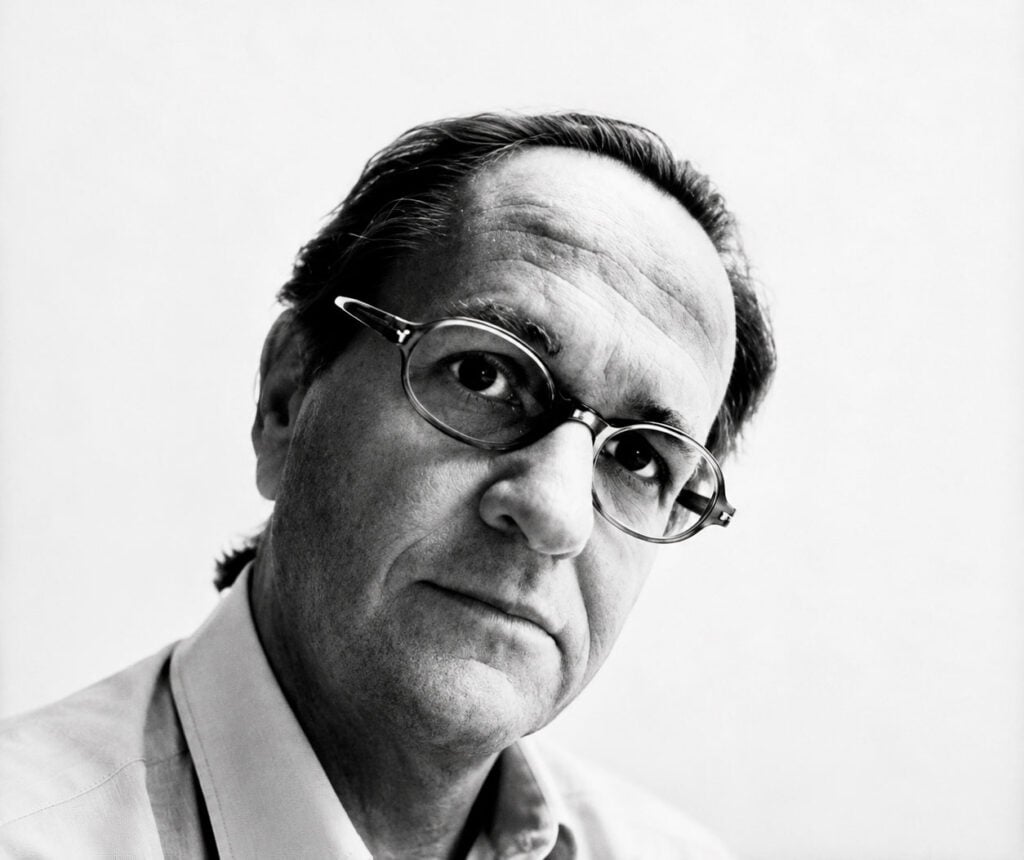
Peace & future researcher + ‌Art Photographer

Related Posts

Tony Robinson October 4, 2026 Violence is easy to recognise when someone is being beaten, shot or killed. It becomes more difficult when nobody is holding a weapon. Poverty, discrimination, exploitation and repression can restrict a human life just as effectively, although they do so in very different ways and with very different consequences. Simply adding more categories to an ever-growing list of forms of violence does not really solve the problem. The more interesting question is what all these different situations have in common and why it makes sense to describe them using the same word. Human beings do not simply react to what happens around them. They remember the past, imagine things that do not yet exist, make plans and undertake projects. Workers organise because they imagine different working conditions; people migrate because they imagine another life somewhere else; social movements emerge because people refuse to accept the...
It’s a matter of principles, courage, vision and pulling together – while the militarist world is falling apart… Peter Langille October 3, 2026 “Here, then, is the problem which we present to you, stark and dreadful and inescapable: Shall we put an end to the human race; or shall mankind renounce war?”The Bertrand Russell—Albert Einstein Manifesto, July 9, 1955 ⁕ The forecast for what’s ahead is worrisome. The sharp rise in armed conflicts over the past three years is adding to what was already the highest level in over seventy years. Genocides, which should be prevented are supported. A shared climate emergency that jeopardises survival is ignored. Diverse polls now suggest that people are war-weary, worried and interested in a more effective United Nations. And, there are viable policy options for a more secure world! Yet governments are doubling-down, betting on more war and investing heavily. If current trends persist,...
Johan Galtung 1930-2024October 2015 Published here on October 3, 2026 Let us focus on Civilization for conflict analysis and remedies. Major forms of disorder use violence; war is state organized violence. The most belligerent states are the United States of America and Israel, both with civilization roots. National Evangelism, the US Protestant Christian civilization– more national than evangelical–justifies US warfare as exceptionalism of a people chosen by God, with a manifest destiny to run the world. Orthodox Judaism justifies Israeli warfare to conquer and expand from Nile to Euphrates as a religious right and duty to the Eternal One. The third most belligerent country, the UK, no longer believes it is God-chosen but chosen by the USA; not quite the same but something. But the root cause of global disorder lies in the Occident–with Islam–seeing itself as the single, universal civilization valid for all at all times, all others being...

Recent Articles

Tony Robinson October 4, 2026 Violence is easy to recognise when someone is being beaten, shot or killed. It becomes more difficult when nobody is holding a weapon. Poverty, discrimination, exploitation and repression can restrict a human life just as effectively, although they do so in very different ways and with very different consequences. Simply adding more categories to an ever-growing list of forms of violence does not really solve the problem. The more interesting question is what all these different situations have in common and why it makes sense to describe them using the same word. Human beings do not simply react to what happens around them. They remember the past, imagine things that do not yet exist, make plans and undertake projects. Workers organise because they imagine different working conditions; people migrate because they imagine another life somewhere else; social movements emerge because people refuse to accept the...
It’s a matter of principles, courage, vision and pulling together – while the militarist world is falling apart… Peter Langille October 3, 2026 “Here, then, is the problem which we present to you, stark and dreadful and inescapable: Shall we put an end to the human race; or shall mankind renounce war?”The Bertrand Russell—Albert Einstein Manifesto, July 9, 1955 ⁕ The forecast for what’s ahead is worrisome. The sharp rise in armed conflicts over the past three years is adding to what was already the highest level in over seventy years. Genocides, which should be prevented are supported. A shared climate emergency that jeopardises survival is ignored. Diverse polls now suggest that people are war-weary, worried and interested in a more effective United Nations. And, there are viable policy options for a more secure world! Yet governments are doubling-down, betting on more war and investing heavily. If current trends persist,...
Johan Galtung 1930-2024October 2015 Published here on October 3, 2026 Let us focus on Civilization for conflict analysis and remedies. Major forms of disorder use violence; war is state organized violence. The most belligerent states are the United States of America and Israel, both with civilization roots. National Evangelism, the US Protestant Christian civilization– more national than evangelical–justifies US warfare as exceptionalism of a people chosen by God, with a manifest destiny to run the world. Orthodox Judaism justifies Israeli warfare to conquer and expand from Nile to Euphrates as a religious right and duty to the Eternal One. The third most belligerent country, the UK, no longer believes it is God-chosen but chosen by the USA; not quite the same but something. But the root cause of global disorder lies in the Occident–with Islam–seeing itself as the single, universal civilization valid for all at all times, all others being...

TFF on Substack

Discover and subscribe to more peace materials on TFF Substack

Most Popular

Tony Robinson October 4, 2026 Violence is easy to recognise when someone is being beaten, shot or killed. It becomes more difficult when nobody is holding a weapon. Poverty, discrimination, exploitation and repression can restrict a human life just as effectively, although they do so in very different ways and with very different consequences. Simply adding more categories to an ever-growing list of forms of violence does not really solve the problem. The more interesting question is what all these different situations have in common and why it makes sense to describe them using the same word. Human beings do not simply react to what happens around them. They remember the past, imagine things that do not yet exist, make plans and undertake projects. Workers organise because they imagine different working conditions; people migrate because they imagine another life somewhere else; social movements emerge because people refuse to accept the...
It’s a matter of principles, courage, vision and pulling together – while the militarist world is falling apart… Peter Langille October 3, 2026 “Here, then, is the problem which we present to you, stark and dreadful and inescapable: Shall we put an end to the human race; or shall mankind renounce war?”The Bertrand Russell—Albert Einstein Manifesto, July 9, 1955 ⁕ The forecast for what’s ahead is worrisome. The sharp rise in armed conflicts over the past three years is adding to what was already the highest level in over seventy years. Genocides, which should be prevented are supported. A shared climate emergency that jeopardises survival is ignored. Diverse polls now suggest that people are war-weary, worried and interested in a more effective United Nations. And, there are viable policy options for a more secure world! Yet governments are doubling-down, betting on more war and investing heavily. If current trends persist,...
Johan Galtung 1930-2024October 2015 Published here on October 3, 2026 Let us focus on Civilization for conflict analysis and remedies. Major forms of disorder use violence; war is state organized violence. The most belligerent states are the United States of America and Israel, both with civilization roots. National Evangelism, the US Protestant Christian civilization– more national than evangelical–justifies US warfare as exceptionalism of a people chosen by God, with a manifest destiny to run the world. Orthodox Judaism justifies Israeli warfare to conquer and expand from Nile to Euphrates as a religious right and duty to the Eternal One. The third most belligerent country, the UK, no longer believes it is God-chosen but chosen by the USA; not quite the same but something. But the root cause of global disorder lies in the Occident–with Islam–seeing itself as the single, universal civilization valid for all at all times, all others being...
Read More
Living-Peace-Sign-Budapest-copy
Tony Robinson October 4, 2026 Violence is easy to recognise when someone is being beaten, shot or killed. It becomes more difficult when nobody is holding a weapon. Poverty, discrimination, exploitation and repression can restrict a human life just as effectively, although they do so in very different ways and with very different consequences. Simply adding more categories to an ever-growing list of forms of violence does not really solve the problem. The more interesting question is what all these different situations have in common and why it makes sense to describe them using the same word. Human beings do not simply react to what happens around them. They remember the past, imagine things that do not yet exist, make plans and undertake projects. Workers organise because they imagine different working conditions; people migrate because they imagine another life somewhere else; social movements emerge because people refuse to accept the...
b54a1f10-8c65-4f0b-9dd5-4abc0a7d04cc_2659x2659
It’s a matter of principles, courage, vision and pulling together – while the militarist world is falling apart… Peter Langille October 3, 2026 “Here, then, is the problem which we present to you, stark and dreadful and inescapable: Shall we put an end to the human race; or shall mankind renounce war?”The Bertrand Russell—Albert Einstein Manifesto, July 9, 1955 ⁕ The forecast for what’s ahead is worrisome. The sharp rise in armed conflicts over the past three years is adding to what was already the highest level in over seventy years. Genocides, which should be prevented are supported. A shared climate emergency that jeopardises survival is ignored. Diverse polls now suggest that people are war-weary, worried and interested in a more effective United Nations. And, there are viable policy options for a more secure world! Yet governments are doubling-down, betting on more war and investing heavily. If current trends persist,...
010
Johan Galtung 1930-2024October 2015 Published here on October 3, 2026 Let us focus on Civilization for conflict analysis and remedies. Major forms of disorder use violence; war is state organized violence. The most belligerent states are the United States of America and Israel, both with civilization roots. National Evangelism, the US Protestant Christian civilization– more national than evangelical–justifies US warfare as exceptionalism of a people chosen by God, with a manifest destiny to run the world. Orthodox Judaism justifies Israeli warfare to conquer and expand from Nile to Euphrates as a religious right and duty to the Eternal One. The third most belligerent country, the UK, no longer believes it is God-chosen but chosen by the USA; not quite the same but something. But the root cause of global disorder lies in the Occident–with Islam–seeing itself as the single, universal civilization valid for all at all times, all others being...
Screenshot 2026-10-02 011738
Jan ObergPhD, director, The Transnational Foundation for Peace and Future Research, TFFLund, Sweden October 2, 2026 This is my full original manuscript. The Chinese Academy of Social Science, CASS, makes two publications out if it. 1. China’s Five-year plan emphasized the capabilities of basic research and original innovation. It is regarded as the goal of the future social development, which, as required, should be significantly enhanced. Can you comment on the importance of original innovation in research and academic study? I believe it is easier to define “original innovation” in the natural sciences than in social sciences. The breaking points of what constitutes something new, or innovative, are not quite as sharp in the latter. But in both fields it is about opening up something that was closed, unseen, unexplored before – making manifest what was earlier latent. Innovations come in many forms and shapes – naming something that was not...
arctic-circle-map
The agreement is catastrophic both because of what it says and what it doesn’t mention. It reduces further the major asset of security policies: Freedom of action. Jan Oberg TFF director September 25, 2026 A couple of hours before the agreement was signed on September 22, 2026, I published the following 13 hypotheses about what it would most likely contain on TFF Substack (in English). I was wrong on only the first point. Contrary to what Trump had written on his Truth Social platform, it does not appear to come into force immediately. In fact, it turned out to be worse than even I had anticipated. After these hypotheses now come a number of reflections in light of what the agreement actually contains, and does not contain, as well as the way in which it has generally been presented by major media outlets and by the public-service broadcaster DR. My...
girl-5894831_1280
Below are TFF-related media mentions, comments, videos and social media posts published elsewhere but not on this homepage. We happen to catch and list only a fraction. Regarding video comments and debates, we recommend that you go to the TFF Video Channel on Substack where many of them are reproduced. Jan Oberg is a contributor to China Daily – 52 million daily clicks – and Global Times, CGTN and CCTV (the national television), China Investment, Xinhua News Agency and several others. Articles and videos on these media very often multiply into countless Chinese (and Western media) that re-post them from these main media. Thanks to The China Academy, his analyses, interviews and comments are frequently posted on YouTube channels such as Thinkers Forum and Wave Media. These videos are often re-posted on Bilibili (China’s YouTube), the China Content Center on TikTok, and on the Chinese edition of TikTok, Douyin.com. This means reaching hundreds of millions of viewers worldwide over a year. While there are too many to catch on all these...