
TFF PressInfo 282: Instead of bombing ISIS – Concrete proposals (Part B)

/10/janoberg.jpg”>[/caption]

Lund, Sweden October 7, 2014

Part A – Some principles (yesterday) here

This two-part PressInfo offers a pro-peace perspective on the present war on ISIS in Iraq and Syria.

First some principles to stimulate another discourse, another way of thinking that is not militarist – and then the concrete proposals below – 27 in all for your deliberation, discussion with friends and perhaps to share through your social and other media.

The proposals are not numbered – there is no linearity, some of it can be done simultaneously.

How to make the bombing and wars irrelevant

Stop the financing of ISIS – sadly it is non-democratic allies of the West – Saudi-Arabia, Qatar, UAE etc – that seem to pay its bills. Joe Biden apologised – for being truthful.

Allegedly, ISIS has an income of US$ 3 million per day from oil resources they now control. Oil fields should have been protected at an early stage. Fire your intelligence service leaders if they did not see this coming.

Instead of starting out with war, declare yourself willing to talk with some representatives of ISIS and other conflict parties. Some of them have been trained by the U.S. so they are obviously possible to talk with. And if not, you take it from there.

Recognise – even apologise – for wrong deeds and mistakes and brutalities you have yourself committed. In the case of Iraq this is particularly relevant because the invasion, occupation and 13 years of world history’s most brutal sanctions have killed about 1 million innocent Iraqis and made 4 millions to flee their homes.

Danish poet and philosopher Piet Hein has said it beautifully: ”The nobel art of losing face may one day save the human race and turn into eternal merit what weaker minds would call a disgrace.” Don’t be that weaker mind – because, if so, you will over time become a mirror image of those terrorists you are fighting – a disgrace.

Deploy a robust, impartial, globally composed UN-led force not to fight ISIS offensively but to defensively protect people, camps, town and villages, oil fields, infrastructure, etc – something like the safe zones in Bosnia-Hercegovina but with the difference that that force is big enough and get the funds that would be needed to make it work.

Safe zones would also enable – at least somewhat – the humanitarian aid that must come in. Humanitarian aid is important but also because it gives us a more positive image than bombs.

Co-operate with Iran and Russia – without them no political solution can be found at all. So, stop intimidating both and develop a mature relationship with both instead of the counterproductive sanctions, confrontational tone and bombing threats.

Learn that we must stop all arms trade to conflict regions!! All these conflicts would never have become this protracted and nasty had you not pumped in weapons to both governments and murky forces for billions and billions of dollars over the years.

Profiteering arms traders must be seen as war criminals – whether merchants and government leaders – and must be held accountable as much as war criminals who use these weapons.

Stop talking about moderate terrorists. It’s a contradiction in terms. Terrorism means killing or harming people who are not party to a conflict in order to achieve a political goal, i.e. civilians. States too are terrorists when they do and so are small groups like Al Qaeda and ISIS, Al-Nusra and all the rest. Nothing to build upon!

Learn from the woefully wrongheaded conflict ”management” of Syria. The clandestine arming of SFA, the Syrian Free Army, and the fake ”Friends of Syria” was utterly counterproductive quackery conflict-management.

So was the use of only sticks and no carrots vis-a-vis the Bashar al-Assad government in a situation that was also caused by structural issues and multi-year environmental factors.

Most of the parties who met in the – predictably failed Geneva talks – should not have been there and the Syrian civil society with its visions, grievances and peace-making capacities should.

The only actor worth supporting in all the non-violent ways is civil society, i.e. 98% of the people in any conflict area who have never touched a weapon. Civil society is everybody else but the state and government – citizens and e.g. associations of human rights, peace, women, educators, cultural workers, teachers etc…

If you want a democratic peace, they should be in focus, be invited to consultations and negotiations – not only the war lords, mass murderers and diplomats who in 90% or more of the cases have caused the conflicts.

Military means may certainly be necessary under special circumstances but only as the last resort. Coalitions of the Killing operating without UN mandate has no place in conflict resolution, problem-solving and peace-building. If the military is used it must be for defined purposes and with a clear exit strategy and as a means to secure the road toward a negotiated solution.

The great mistake of the War on Terror is that its basic idea is to liquidate terrorists and thereby rid the world of terrorism. This is intellectual nonsense resulting in more terrorism/ists as well as a tragic responsibility for mass killings of innocent people.

Open your country to the conflict parties and host consultations, facilitate meetings, mediate and promote negotiations. The world is tragically ill-prepared for civilian peace-making so educate professionals to do such work – exactly as you train soldiers to perform their role.

See to it that you have truly independent research institutes that work with civilian conflict-resolution – institutes that can provide peace-making proposals instead of today’s typical institute and think tanks which deliver reports and arguments that legitimate the policies operated by governments.

And take care that your mind and your experts are not seduced any MIMAC – a Military-Industrial-Media-Academic Complex that serves systematically other interests but peace.

Make extensive use of hearings in say, your national parliament, in the EU parliament and in the UN Assembly. Invite representatives of all conflicting parties to tell the world about two things: What do they fear and what do they want in the future?

To listen carefully to these vices would make media images much less black-and-white and increase the likelihood that intelligent policies were shaped in respect for all and for complexity. If truth is the first casualty in war, as they say, complexity and problem understanding is the second and third. All three would become less manifest through listening to all the conflicting parties (and here embassies are seldom useful).

Demand that your media balances the coverage of violence with coverage of underlying conflicts and always provide space and time for critical questions. Make use of the rich materials on war and peace on the Internet instead of using exclusively Western news bureaus and mainstream media which, regrettably, lacks filters to catch propaganda, deception, false stories and psychological influence efforts which precede most wars.

Think about the Middle East – or wherever the conflict takes place – in innovative ways and be aware of the role of your own culture and country in the history of the conflicts and wars.

Don’t think too much in terms of states – they are getting less and less important in a globalising world – but think in creative structures such as federations, confederations, autonomies, protectorates, shares territories, home rule, cantonisation.

When thinking of the future of the Middle East think of establishing organisations such as the OSCE and EU – but more decentralised – in the region. Shape the co-operative structures and the positive visions out of which peace can be imagined – and think in processes rather than end results.

Think of all the positive things we can achieve with peace. Estimate the human and economic burdens generations ahead will have to carry because of your direct, indirect, cultural, economic, gender-based violence.

Violence closes doors to the future, nonviolence holds the potential to open doors to the future and conflict-resolution is about seeing better futures – much more so than trying to change the past. Catchword: Mutual benefits, trust-building and reconciliation embedded in new co-operative structures.

In the case of the Middle East: Work for what the UN has decided long ago: that the region shall be a zone free from weapons of mass destruction.

Work to establish a moratorium on violence and warfare (easier when the arms trade has stopped) and establish a structure of negotiation for a 3-5 years period – with all relevant parties at government and civil society level, led by the UN, the Arab League, BRICS and similar actors – but not by the US or other NATO countries because they are not and cannot be seen by the parties in the region as impartial which is essential for a successful mediation.

With increasing globaliation and civilisation, war is no longer an option. Most wars and violence will disappear the day people begin to think and educate themselves in using all the more intelligent, rational and humane means.
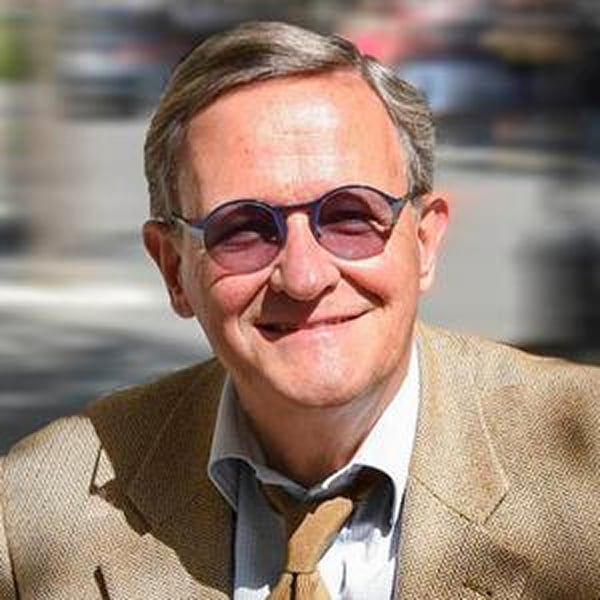

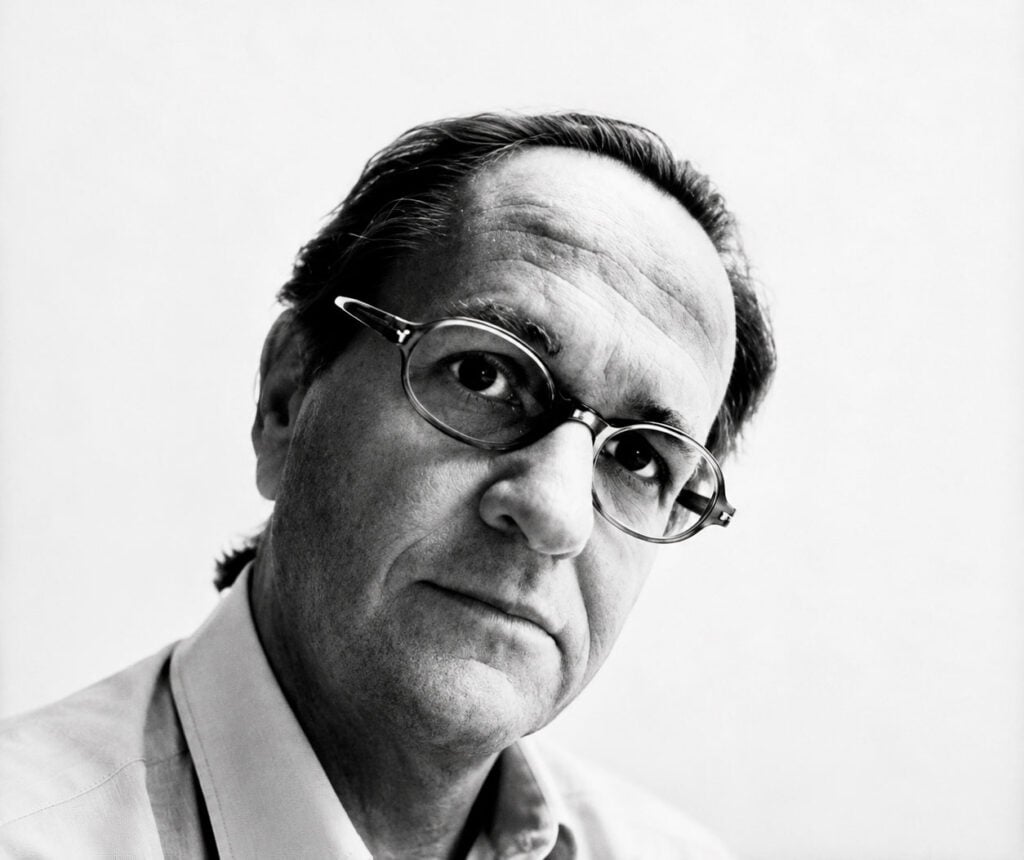
Peace & future researcher + ‌Art Photographer

Related Posts

Tony Robinson October 4, 2026 Violence is easy to recognise when someone is being beaten, shot or killed. It becomes more difficult when nobody is holding a weapon. Poverty, discrimination, exploitation and repression can restrict a human life just as effectively, although they do so in very different ways and with very different consequences. Simply adding more categories to an ever-growing list of forms of violence does not really solve the problem. The more interesting question is what all these different situations have in common and why it makes sense to describe them using the same word. Human beings do not simply react to what happens around them. They remember the past, imagine things that do not yet exist, make plans and undertake projects. Workers organise because they imagine different working conditions; people migrate because they imagine another life somewhere else; social movements emerge because people refuse to accept the...
It’s a matter of principles, courage, vision and pulling together – while the militarist world is falling apart… Peter Langille October 3, 2026 “Here, then, is the problem which we present to you, stark and dreadful and inescapable: Shall we put an end to the human race; or shall mankind renounce war?”The Bertrand Russell—Albert Einstein Manifesto, July 9, 1955 ⁕ The forecast for what’s ahead is worrisome. The sharp rise in armed conflicts over the past three years is adding to what was already the highest level in over seventy years. Genocides, which should be prevented are supported. A shared climate emergency that jeopardises survival is ignored. Diverse polls now suggest that people are war-weary, worried and interested in a more effective United Nations. And, there are viable policy options for a more secure world! Yet governments are doubling-down, betting on more war and investing heavily. If current trends persist,...
Johan Galtung 1930-2024October 2015 Published here on October 3, 2026 Let us focus on Civilization for conflict analysis and remedies. Major forms of disorder use violence; war is state organized violence. The most belligerent states are the United States of America and Israel, both with civilization roots. National Evangelism, the US Protestant Christian civilization– more national than evangelical–justifies US warfare as exceptionalism of a people chosen by God, with a manifest destiny to run the world. Orthodox Judaism justifies Israeli warfare to conquer and expand from Nile to Euphrates as a religious right and duty to the Eternal One. The third most belligerent country, the UK, no longer believes it is God-chosen but chosen by the USA; not quite the same but something. But the root cause of global disorder lies in the Occident–with Islam–seeing itself as the single, universal civilization valid for all at all times, all others being...

Recent Articles

Tony Robinson October 4, 2026 Violence is easy to recognise when someone is being beaten, shot or killed. It becomes more difficult when nobody is holding a weapon. Poverty, discrimination, exploitation and repression can restrict a human life just as effectively, although they do so in very different ways and with very different consequences. Simply adding more categories to an ever-growing list of forms of violence does not really solve the problem. The more interesting question is what all these different situations have in common and why it makes sense to describe them using the same word. Human beings do not simply react to what happens around them. They remember the past, imagine things that do not yet exist, make plans and undertake projects. Workers organise because they imagine different working conditions; people migrate because they imagine another life somewhere else; social movements emerge because people refuse to accept the...
It’s a matter of principles, courage, vision and pulling together – while the militarist world is falling apart… Peter Langille October 3, 2026 “Here, then, is the problem which we present to you, stark and dreadful and inescapable: Shall we put an end to the human race; or shall mankind renounce war?”The Bertrand Russell—Albert Einstein Manifesto, July 9, 1955 ⁕ The forecast for what’s ahead is worrisome. The sharp rise in armed conflicts over the past three years is adding to what was already the highest level in over seventy years. Genocides, which should be prevented are supported. A shared climate emergency that jeopardises survival is ignored. Diverse polls now suggest that people are war-weary, worried and interested in a more effective United Nations. And, there are viable policy options for a more secure world! Yet governments are doubling-down, betting on more war and investing heavily. If current trends persist,...
Johan Galtung 1930-2024October 2015 Published here on October 3, 2026 Let us focus on Civilization for conflict analysis and remedies. Major forms of disorder use violence; war is state organized violence. The most belligerent states are the United States of America and Israel, both with civilization roots. National Evangelism, the US Protestant Christian civilization– more national than evangelical–justifies US warfare as exceptionalism of a people chosen by God, with a manifest destiny to run the world. Orthodox Judaism justifies Israeli warfare to conquer and expand from Nile to Euphrates as a religious right and duty to the Eternal One. The third most belligerent country, the UK, no longer believes it is God-chosen but chosen by the USA; not quite the same but something. But the root cause of global disorder lies in the Occident–with Islam–seeing itself as the single, universal civilization valid for all at all times, all others being...

TFF on Substack

Discover and subscribe to more peace materials on TFF Substack

Most Popular

Tony Robinson October 4, 2026 Violence is easy to recognise when someone is being beaten, shot or killed. It becomes more difficult when nobody is holding a weapon. Poverty, discrimination, exploitation and repression can restrict a human life just as effectively, although they do so in very different ways and with very different consequences. Simply adding more categories to an ever-growing list of forms of violence does not really solve the problem. The more interesting question is what all these different situations have in common and why it makes sense to describe them using the same word. Human beings do not simply react to what happens around them. They remember the past, imagine things that do not yet exist, make plans and undertake projects. Workers organise because they imagine different working conditions; people migrate because they imagine another life somewhere else; social movements emerge because people refuse to accept the...
It’s a matter of principles, courage, vision and pulling together – while the militarist world is falling apart… Peter Langille October 3, 2026 “Here, then, is the problem which we present to you, stark and dreadful and inescapable: Shall we put an end to the human race; or shall mankind renounce war?”The Bertrand Russell—Albert Einstein Manifesto, July 9, 1955 ⁕ The forecast for what’s ahead is worrisome. The sharp rise in armed conflicts over the past three years is adding to what was already the highest level in over seventy years. Genocides, which should be prevented are supported. A shared climate emergency that jeopardises survival is ignored. Diverse polls now suggest that people are war-weary, worried and interested in a more effective United Nations. And, there are viable policy options for a more secure world! Yet governments are doubling-down, betting on more war and investing heavily. If current trends persist,...
Johan Galtung 1930-2024October 2015 Published here on October 3, 2026 Let us focus on Civilization for conflict analysis and remedies. Major forms of disorder use violence; war is state organized violence. The most belligerent states are the United States of America and Israel, both with civilization roots. National Evangelism, the US Protestant Christian civilization– more national than evangelical–justifies US warfare as exceptionalism of a people chosen by God, with a manifest destiny to run the world. Orthodox Judaism justifies Israeli warfare to conquer and expand from Nile to Euphrates as a religious right and duty to the Eternal One. The third most belligerent country, the UK, no longer believes it is God-chosen but chosen by the USA; not quite the same but something. But the root cause of global disorder lies in the Occident–with Islam–seeing itself as the single, universal civilization valid for all at all times, all others being...
Read More
Living-Peace-Sign-Budapest-copy
Tony Robinson October 4, 2026 Violence is easy to recognise when someone is being beaten, shot or killed. It becomes more difficult when nobody is holding a weapon. Poverty, discrimination, exploitation and repression can restrict a human life just as effectively, although they do so in very different ways and with very different consequences. Simply adding more categories to an ever-growing list of forms of violence does not really solve the problem. The more interesting question is what all these different situations have in common and why it makes sense to describe them using the same word. Human beings do not simply react to what happens around them. They remember the past, imagine things that do not yet exist, make plans and undertake projects. Workers organise because they imagine different working conditions; people migrate because they imagine another life somewhere else; social movements emerge because people refuse to accept the...
b54a1f10-8c65-4f0b-9dd5-4abc0a7d04cc_2659x2659
It’s a matter of principles, courage, vision and pulling together – while the militarist world is falling apart… Peter Langille October 3, 2026 “Here, then, is the problem which we present to you, stark and dreadful and inescapable: Shall we put an end to the human race; or shall mankind renounce war?”The Bertrand Russell—Albert Einstein Manifesto, July 9, 1955 ⁕ The forecast for what’s ahead is worrisome. The sharp rise in armed conflicts over the past three years is adding to what was already the highest level in over seventy years. Genocides, which should be prevented are supported. A shared climate emergency that jeopardises survival is ignored. Diverse polls now suggest that people are war-weary, worried and interested in a more effective United Nations. And, there are viable policy options for a more secure world! Yet governments are doubling-down, betting on more war and investing heavily. If current trends persist,...
010
Johan Galtung 1930-2024October 2015 Published here on October 3, 2026 Let us focus on Civilization for conflict analysis and remedies. Major forms of disorder use violence; war is state organized violence. The most belligerent states are the United States of America and Israel, both with civilization roots. National Evangelism, the US Protestant Christian civilization– more national than evangelical–justifies US warfare as exceptionalism of a people chosen by God, with a manifest destiny to run the world. Orthodox Judaism justifies Israeli warfare to conquer and expand from Nile to Euphrates as a religious right and duty to the Eternal One. The third most belligerent country, the UK, no longer believes it is God-chosen but chosen by the USA; not quite the same but something. But the root cause of global disorder lies in the Occident–with Islam–seeing itself as the single, universal civilization valid for all at all times, all others being...
Screenshot 2026-10-02 011738
Jan ObergPhD, director, The Transnational Foundation for Peace and Future Research, TFFLund, Sweden October 2, 2026 This is my full original manuscript. The Chinese Academy of Social Science, CASS, makes two publications out if it. 1. China’s Five-year plan emphasized the capabilities of basic research and original innovation. It is regarded as the goal of the future social development, which, as required, should be significantly enhanced. Can you comment on the importance of original innovation in research and academic study? I believe it is easier to define “original innovation” in the natural sciences than in social sciences. The breaking points of what constitutes something new, or innovative, are not quite as sharp in the latter. But in both fields it is about opening up something that was closed, unseen, unexplored before – making manifest what was earlier latent. Innovations come in many forms and shapes – naming something that was not...
arctic-circle-map
The agreement is catastrophic both because of what it says and what it doesn’t mention. It reduces further the major asset of security policies: Freedom of action. Jan Oberg TFF director September 25, 2026 A couple of hours before the agreement was signed on September 22, 2026, I published the following 13 hypotheses about what it would most likely contain on TFF Substack (in English). I was wrong on only the first point. Contrary to what Trump had written on his Truth Social platform, it does not appear to come into force immediately. In fact, it turned out to be worse than even I had anticipated. After these hypotheses now come a number of reflections in light of what the agreement actually contains, and does not contain, as well as the way in which it has generally been presented by major media outlets and by the public-service broadcaster DR. My...
girl-5894831_1280
Below are TFF-related media mentions, comments, videos and social media posts published elsewhere but not on this homepage. We happen to catch and list only a fraction. Regarding video comments and debates, we recommend that you go to the TFF Video Channel on Substack where many of them are reproduced. Jan Oberg is a contributor to China Daily – 52 million daily clicks – and Global Times, CGTN and CCTV (the national television), China Investment, Xinhua News Agency and several others. Articles and videos on these media very often multiply into countless Chinese (and Western media) that re-post them from these main media. Thanks to The China Academy, his analyses, interviews and comments are frequently posted on YouTube channels such as Thinkers Forum and Wave Media. These videos are often re-posted on Bilibili (China’s YouTube), the China Content Center on TikTok, and on the Chinese edition of TikTok, Douyin.com. This means reaching hundreds of millions of viewers worldwide over a year. While there are too many to catch on all these...