
Syria – Obama’s surprising (and confusing) latest moves

President Obama’s August 31st remarks from the White House Rose Garden will long be remembered for their strangeness, but the final interpretation of their significance will have to await months if not years. There are three dimensions, at least, that are worth pondering:

1) seeking Congressional authorization for a punitive military attack against Syria in support of the treaty prohibition on recourse to chemical weapons in an armed conflict;

2) reconciling any endorsement of an attack by Congress with United States obligations under international law and with respect to the United Nations and its Charter;

3) assessing the degree to which American war making prerogatives continue to operate within an unacceptable domain of American exceptionalism.

In framing the issues at stake Obama set forth the fundamental policy choices in a rather incoherent manner:

• First of all, he asserted that on the basis of evidence available to the United States Government, that the Assad regime was without doubt responsible for the massive chemical weapons attack of August 21st directed at the Ghouta residential neighborhood on the outskirts of Damascus, and causing over 1,000 civilian deaths, including several hundred children.

The Russian president, Vladimir Putin, clearly articulated the grounds for skepticism about this American construction of the Ghouta atrocity. He put forward a strongly worded request that the allegations be confirmed by the release of convincing evidence. This is a reasonable demand. Many around the world have questioned why Assad would launch such a provocative attack to coincide with the arrival of UN inspectors, and when the battlefield balance was tipping in favor of the Damascus regime.

All along such important figures in the Obama administration, especially John Kerry and Joe Biden, have arrogantly dismissed the relevance of any information provided by the UN inspection team. In light of the gigantic deception relating to Saddam Hussein’s supposed weapons of mass destruction (WMD) arsenal, which was more politely described long after the event as an ‘intelligence failure,’ it would have been appropriate for Washington to admit that it has a credibility problem in winning governmental and popular support for an attack on Syria. Its refusal to acknowledge such an issue merely deepens suspicions.

• Secondly, Obama informed listeners that “..after careful deliberation, I have decided that the United States should take military action against Syrian regime targets.” He added that he made this decision “as Commander-in-Chief on what I am convinced are our national security interests.” This conclusion was explained to rest on the importance of punishing such a crime against humanity and deterring future recourse to chemical weapons and other weapons of mass destruction by Syria, as well as sending a message to Iran and North Korea about America’s readiness to use force to uphold such norms of international law.

• Thirdly, there was no effort in Obama’s remarks to show why, absent a UN mandate, the United States in coalition with a few other countries, had the legal authority to attack a sovereign state in a circumstance other than self-defense.

• Fourthly, although the decision against involvement by the British Parliament was noted, there was no consideration as to whether such an outcome should bear on American policy. Nor was the German or Italian unwillingness to join in the attack noted, nor that of the Arab League. But the French support was duly appreciated, including a dig at the United Kingdom, by reminding his listeners around the world that it was France that was America’s “oldest ally.” (It is worth noting that the roles of these two European friends were directly reversed in the context of the Iraq War; then, it was the French more conservative led government that opposed participation, while now a socialist leader in Paris supports an attack against Syria).

• Fifthly, and in the most dramatic passage in the speech, Obama announces that because the United States is a proud democracy he has made “a second decision: I will seek the authorization for the use of force from the American people’s representatives in Congress” by calling for a debate and vote. No mention is made of a time frame, nor how he would react in the event that authorization was not forthcoming.

Such an eventuality would set up a potential tension between his duties to uphold national security and an obligation of deference to a decision by Congress on the vital matter of authority to wage war. Obama touched all the bases by saying, “Yet, while I believe I have the authority to carry out this military action without specific congressional authorization, I know that the country will be stronger if we take this course, and our actions will be even more effective.” In effect, there is no constitutional legal requirement to obtain Congressional authorization, but doing so will create a more effective response. But what if authorization is withheld? Or Congress is split with approval by the Senate, and disapproval by the House?

• Sixthly, there is an implicit endorsement of American exceptionalism. After saying that the case for an attack will be made internationally, as well as domestically, Obama reaffirms a national prerogative of illegal unilateralism. He uses this phrase: “But we are the United States of America, and we cannot and must not turn a blind eye to what happened in Damascus.” That is no matter that others disagree, the United States alone has the duty to act as it sees fit. It is correctly presumed that such discretion is not vested in other sovereign states. Otherwise the world would be in flames. In effect, Syria, Iran, North Korea are bound by international law, as interpreted by the United States, while the United States and its closest allies are guided by assessments of their national security interests.

It is this double standard that is at the core of American exceptionalism, and also underpins the debate as to whether it is more instructive to view the United States as ‘global leader’ or ‘imperial power,’ or possibly some blend.

There is something rather sinister about announcing an intention to strike a vulnerable country with which the United States is not at war, coupled with the announcement that the needed military capabilities are in place, but will not be used until convenient; in effect, a lethal strike against Syria can take place at any point from now on until a time weeks or months from now, depending only on the workings of the internal American political process and the disposition of its Commander-in-Chief. If this is deemed to be in the interest of the Syrian people, I would like to know how.

***********************

Even if the controversy as to the facts is ignored, and the problems associated with double standards as to the relevance of international law to the use of force, there are some other reasons for concern about the approach adopted by President Obama:

• It denies constitutional status to the request for Congressional authorization, making it a discretionary presidential judgment call that is not necessitated by the Constitution, but is an expression of Obama’s belief in democratic procedures. To not rest this request on the Constitution itself is a missed opportunity, and thus amounts to yet another reassertion of excessive authority by the Executive Branch of government;

• It makes no effort to assess what would be of benefit to the people of Syria, and rather makes the case for a narrow strike as a combination of punishing (without intending to displace) the Assad regime and abstract American national security interests in its self-appointed role as preventing the use and spread of WMD;

• It fails to advocate in a serious manner a diplomatic approach to ending the violence of the conflict by calling for a second Geneva conference with the full participation of Iran that would deal with regional peace and security issues, as well as the war in Syria;

• It undermines the authority of the UN and international law by vesting in the U.S. Government the final word on when it is appropriate to use international force in non-defensive modes and fails to make war a matter of ‘last resort’;

• It draws an overly sharp a distinction between this incident involving chemical weapons and other massacres that have occurred during the course of two years of strife in Syria; regardless of the weaponry deployed both forms of violence are crimes against humanity that deserve a serious and effective response, if available.

********************

It is as yet possible that Congress will rescue Obama from having to respect a red line he ill-advisedly proclaimed a year ago. It would be ironic if this one time the anti-Obama Republicans saved him from the worse foreign policy excess of his presidency!

It is possible that Obama will be pushed by pro-interventionists to override a Congressional failure to give authorization. It is also possible that Congress will authorize, and public opinion strongly oppose. And we are left to wonder whether Congress can constitutionally authorize a use of force that violates international treaty law. Of course, we would be unlikely to find out given the passivity of the U.S. Supreme Court when it comes to challenges directed at legally dubious foreign policy and national security matters.

All of the above suggests that the revitalization of American republicanism requires, as a matter of urgency, a constitutional convention with an explicit mandate to restore the separation of powers and checks and balances in relations to war/peace issues. The U.S. Government has longed strayed from this vital pillar of republican democracy.

Nothing would do more to restore confidence in the United States as a global leader! Such a momentous event will not happen without massive grassroots pressure; it will never be decreed from on high.

A final word of blurred appreciation: CNN talking heads are very fond of referring to Obama as epitomizing ‘the reluctant warrior.’ And reluctant he is, but also warrior he has been, and continues to be, casting a rather dark shadow over the Nobel Peace Prize decision process. The reluctance is articulated over and over again in his words and sometimes reflected in his policies, and certainly seems sincere.

And such reluctance may be credited, at least subconsciously, with this welcome move to broaden the domestic authorization process with respect to this non-defensive use of international force. Obama would deserve less ambiguous praise if he had recognized the role of Congress prior to the decision of the British Parliament. And prior the many demands from Congress for a greater role gathering political momentum.
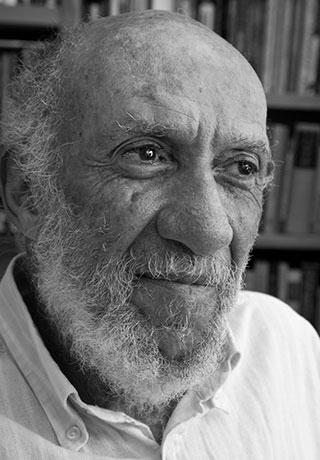

Professor Falk became an adviser to TFF when it was established in 1985.

Related Posts

Johan Galtung 1930-2024October 2015 Published here on October 3, 2026 Let us focus on Civilization for conflict analysis and remedies. Major forms of disorder use violence; war is state organized violence. The most belligerent states are the United States of America and Israel, both with civilization roots. National Evangelism, the US Protestant Christian civilization– more national than evangelical–justifies US warfare as exceptionalism of a people chosen by God, with a manifest destiny to run the world. Orthodox Judaism justifies Israeli warfare to conquer and expand from Nile to Euphrates as a religious right and duty to the Eternal One. The third most belligerent country, the UK, no longer believes it is God-chosen but chosen by the USA; not quite the same but something. But the root cause of global disorder lies in the Occident–with Islam–seeing itself as the single, universal civilization valid for all at all times, all others being...
The agreement is catastrophic both because of what it says and what it doesn’t mention. It reduces further the major asset of security policies: Freedom of action. Jan Oberg TFF director September 25, 2026 A couple of hours before the agreement was signed on September 22, 2026, I published the following 13 hypotheses about what it would most likely contain on TFF Substack (in English). I was wrong on only the first point. Contrary to what Trump had written on his Truth Social platform, it does not appear to come into force immediately. In fact, it turned out to be worse than even I had anticipated. After these hypotheses now come a number of reflections in light of what the agreement actually contains, and does not contain, as well as the way in which it has generally been presented by major media outlets and by the public-service broadcaster DR. My...
This is not another geopolitical commentary on the Arctic. It is a visionary peace proposal that can save the region from militarised rivalry and ecological ruin. A blueprint for shared security, sustainable development, and human dignity — benefitting Greenland, the Arctic, and the rest of us. Jan Oberg TFF director Lund, Sweden, February 17, 2026 I. Four Principles for a New Arctic Vision The Arctic is often framed as a cold arena of rivalry — a place where great powers test each other’s resolve. But this worldview is outdated, unimaginative, and ultimately self‑defeating. The Arctic is not a vacuum waiting to be militarised; it is a living region, a climate stabiliser, and a cultural homeland whose future will shape the future of humanity. If we begin from that understanding, a far more rational Arctic order becomes possible — one that is peaceful, cooperative, and centred on the people who actually live there. This vision rests...

Recent Articles

Tony Robinson October 4, 2026 Violence is easy to recognise when someone is being beaten, shot or killed. It becomes more difficult when nobody is holding a weapon. Poverty, discrimination, exploitation and repression can restrict a human life just as effectively, although they do so in very different ways and with very different consequences. Simply adding more categories to an ever-growing list of forms of violence does not really solve the problem. The more interesting question is what all these different situations have in common and why it makes sense to describe them using the same word. Human beings do not simply react to what happens around them. They remember the past, imagine things that do not yet exist, make plans and undertake projects. Workers organise because they imagine different working conditions; people migrate because they imagine another life somewhere else; social movements emerge because people refuse to accept the...
It’s a matter of principles, courage, vision and pulling together – while the militarist world is falling apart… Peter Langille October 3, 2026 “Here, then, is the problem which we present to you, stark and dreadful and inescapable: Shall we put an end to the human race; or shall mankind renounce war?”The Bertrand Russell—Albert Einstein Manifesto, July 9, 1955 ⁕ The forecast for what’s ahead is worrisome. The sharp rise in armed conflicts over the past three years is adding to what was already the highest level in over seventy years. Genocides, which should be prevented are supported. A shared climate emergency that jeopardises survival is ignored. Diverse polls now suggest that people are war-weary, worried and interested in a more effective United Nations. And, there are viable policy options for a more secure world! Yet governments are doubling-down, betting on more war and investing heavily. If current trends persist,...
Johan Galtung 1930-2024October 2015 Published here on October 3, 2026 Let us focus on Civilization for conflict analysis and remedies. Major forms of disorder use violence; war is state organized violence. The most belligerent states are the United States of America and Israel, both with civilization roots. National Evangelism, the US Protestant Christian civilization– more national than evangelical–justifies US warfare as exceptionalism of a people chosen by God, with a manifest destiny to run the world. Orthodox Judaism justifies Israeli warfare to conquer and expand from Nile to Euphrates as a religious right and duty to the Eternal One. The third most belligerent country, the UK, no longer believes it is God-chosen but chosen by the USA; not quite the same but something. But the root cause of global disorder lies in the Occident–with Islam–seeing itself as the single, universal civilization valid for all at all times, all others being...

TFF on Substack

Discover and subscribe to more peace materials on TFF Substack

Most Popular

Tony Robinson October 4, 2026 Violence is easy to recognise when someone is being beaten, shot or killed. It becomes more difficult when nobody is holding a weapon. Poverty, discrimination, exploitation and repression can restrict a human life just as effectively, although they do so in very different ways and with very different consequences. Simply adding more categories to an ever-growing list of forms of violence does not really solve the problem. The more interesting question is what all these different situations have in common and why it makes sense to describe them using the same word. Human beings do not simply react to what happens around them. They remember the past, imagine things that do not yet exist, make plans and undertake projects. Workers organise because they imagine different working conditions; people migrate because they imagine another life somewhere else; social movements emerge because people refuse to accept the...
It’s a matter of principles, courage, vision and pulling together – while the militarist world is falling apart… Peter Langille October 3, 2026 “Here, then, is the problem which we present to you, stark and dreadful and inescapable: Shall we put an end to the human race; or shall mankind renounce war?”The Bertrand Russell—Albert Einstein Manifesto, July 9, 1955 ⁕ The forecast for what’s ahead is worrisome. The sharp rise in armed conflicts over the past three years is adding to what was already the highest level in over seventy years. Genocides, which should be prevented are supported. A shared climate emergency that jeopardises survival is ignored. Diverse polls now suggest that people are war-weary, worried and interested in a more effective United Nations. And, there are viable policy options for a more secure world! Yet governments are doubling-down, betting on more war and investing heavily. If current trends persist,...
Johan Galtung 1930-2024October 2015 Published here on October 3, 2026 Let us focus on Civilization for conflict analysis and remedies. Major forms of disorder use violence; war is state organized violence. The most belligerent states are the United States of America and Israel, both with civilization roots. National Evangelism, the US Protestant Christian civilization– more national than evangelical–justifies US warfare as exceptionalism of a people chosen by God, with a manifest destiny to run the world. Orthodox Judaism justifies Israeli warfare to conquer and expand from Nile to Euphrates as a religious right and duty to the Eternal One. The third most belligerent country, the UK, no longer believes it is God-chosen but chosen by the USA; not quite the same but something. But the root cause of global disorder lies in the Occident–with Islam–seeing itself as the single, universal civilization valid for all at all times, all others being...
Read More
Living-Peace-Sign-Budapest-copy
Tony Robinson October 4, 2026 Violence is easy to recognise when someone is being beaten, shot or killed. It becomes more difficult when nobody is holding a weapon. Poverty, discrimination, exploitation and repression can restrict a human life just as effectively, although they do so in very different ways and with very different consequences. Simply adding more categories to an ever-growing list of forms of violence does not really solve the problem. The more interesting question is what all these different situations have in common and why it makes sense to describe them using the same word. Human beings do not simply react to what happens around them. They remember the past, imagine things that do not yet exist, make plans and undertake projects. Workers organise because they imagine different working conditions; people migrate because they imagine another life somewhere else; social movements emerge because people refuse to accept the...
b54a1f10-8c65-4f0b-9dd5-4abc0a7d04cc_2659x2659
It’s a matter of principles, courage, vision and pulling together – while the militarist world is falling apart… Peter Langille October 3, 2026 “Here, then, is the problem which we present to you, stark and dreadful and inescapable: Shall we put an end to the human race; or shall mankind renounce war?”The Bertrand Russell—Albert Einstein Manifesto, July 9, 1955 ⁕ The forecast for what’s ahead is worrisome. The sharp rise in armed conflicts over the past three years is adding to what was already the highest level in over seventy years. Genocides, which should be prevented are supported. A shared climate emergency that jeopardises survival is ignored. Diverse polls now suggest that people are war-weary, worried and interested in a more effective United Nations. And, there are viable policy options for a more secure world! Yet governments are doubling-down, betting on more war and investing heavily. If current trends persist,...
010
Johan Galtung 1930-2024October 2015 Published here on October 3, 2026 Let us focus on Civilization for conflict analysis and remedies. Major forms of disorder use violence; war is state organized violence. The most belligerent states are the United States of America and Israel, both with civilization roots. National Evangelism, the US Protestant Christian civilization– more national than evangelical–justifies US warfare as exceptionalism of a people chosen by God, with a manifest destiny to run the world. Orthodox Judaism justifies Israeli warfare to conquer and expand from Nile to Euphrates as a religious right and duty to the Eternal One. The third most belligerent country, the UK, no longer believes it is God-chosen but chosen by the USA; not quite the same but something. But the root cause of global disorder lies in the Occident–with Islam–seeing itself as the single, universal civilization valid for all at all times, all others being...
Screenshot 2026-10-02 011738
Jan ObergPhD, director, The Transnational Foundation for Peace and Future Research, TFFLund, Sweden October 2, 2026 This is my full original manuscript. The Chinese Academy of Social Science, CASS, makes two publications out if it. 1. China’s Five-year plan emphasized the capabilities of basic research and original innovation. It is regarded as the goal of the future social development, which, as required, should be significantly enhanced. Can you comment on the importance of original innovation in research and academic study? I believe it is easier to define “original innovation” in the natural sciences than in social sciences. The breaking points of what constitutes something new, or innovative, are not quite as sharp in the latter. But in both fields it is about opening up something that was closed, unseen, unexplored before – making manifest what was earlier latent. Innovations come in many forms and shapes – naming something that was not...
arctic-circle-map
The agreement is catastrophic both because of what it says and what it doesn’t mention. It reduces further the major asset of security policies: Freedom of action. Jan Oberg TFF director September 25, 2026 A couple of hours before the agreement was signed on September 22, 2026, I published the following 13 hypotheses about what it would most likely contain on TFF Substack (in English). I was wrong on only the first point. Contrary to what Trump had written on his Truth Social platform, it does not appear to come into force immediately. In fact, it turned out to be worse than even I had anticipated. After these hypotheses now come a number of reflections in light of what the agreement actually contains, and does not contain, as well as the way in which it has generally been presented by major media outlets and by the public-service broadcaster DR. My...
girl-5894831_1280
Below are TFF-related media mentions, comments, videos and social media posts published elsewhere but not on this homepage. We happen to catch and list only a fraction. Regarding video comments and debates, we recommend that you go to the TFF Video Channel on Substack where many of them are reproduced. Jan Oberg is a contributor to China Daily – 52 million daily clicks – and Global Times, CGTN and CCTV (the national television), China Investment, Xinhua News Agency and several others. Articles and videos on these media very often multiply into countless Chinese (and Western media) that re-post them from these main media. Thanks to The China Academy, his analyses, interviews and comments are frequently posted on YouTube channels such as Thinkers Forum and Wave Media. These videos are often re-posted on Bilibili (China’s YouTube), the China Content Center on TikTok, and on the Chinese edition of TikTok, Douyin.com. This means reaching hundreds of millions of viewers worldwide over a year. While there are too many to catch on all these...




