PressInfo #74 – Some Ethical Aspects on NATO’s Intervention in Kosovo Part B

Stereotyping and discrimination

Ask yourself whether NATO’s bombing and subsequent occupation could have been done against any other nation in today’s Europe. Whether any other country than Yugoslavia and any other people but Serbs is so despised? The plight of the Albanian refugees is in focus, but how well and how extensive did media cover that of the Serbs, Goranis, Montenegrin, Turks and Gypsies in Kosovo? The refugee camps in Macedonia and Albania entered our living rooms – but did the human suffering of people living in and fleeing to bombed-out Yugoslavia?

Recent Albanian extremist violence against Serbs is reported with “understanding,” presented as (justifiable) revenge for what Serb police, military and paramilitary units did. But the media which told the story this way never “explained” that Serb ethnic cleansing after NATO started bombing could be “understood” as (justifiable) anger at what THEY saw as the destruction of their entire country commissioned or demanded – as it was – by moderate as well as extremist Kosovo-Albanians.

Everybody knows that humanitarian aid should be based on needs only. But people living in Yugoslavia shall not receive any assistance “as long as Milosevic is at the helmet.” One wonders whether the international human rights community is on collective holiday? Since the early 1990s, Serb human and minority rights were never cared for to the extent e.g. Croatian, Bosniak and Albanian rights were.

In social science, stereotyping can be defined as “a one-sided, exaggerated and normally prejudicial view of a group, tribe or class of people, and is usually associated with racism and sexism.” Stereotypes are often resistant to change or correction from countervailing evidence, because they create a sense of social solidarity. Is it so unlikely that the United States and NATO did just a bit of stereotyping to maintain alliance credibility and solidarity?

• Authoritarian politics undermining international democracy. NATO now has a near-monopoly on conflict-management. The UN, the EU, single governments in the region, OSCE and NGOs went out of the region when NATO went in. No NATO government declared war, no parliaments voted about participation in the campaign. (In contrast, the “dictatorship’s parliament” in Belgrade debated both the Rambouillet and the G8 plan). None of the democracies in NATO dared challenge the near-total US military and political dominance in this operation or that of the “Quint” – the five biggest NATO leaders. President Clinton violated the War Powers Act; no non-NATO country was consulted when NATO chopped up Kosovo in “peacekeeping” zones; numerous national and international laws and human rights were violated by NATO decision-makers – impunity now established as a norm for them. Why is this important? Because all these facts are outcomes of moral choices.

From the perspective of world democracy it is a huge setback that the United Nations is now an organisation that is invited to “endorse” NATO action rather than serve as the body that expresses the will of the international community – all of it. Decisions are increasingly debated and made in less transparent forums such as G7, the Contact Group, Davos and, who knows – Bilderberg – and crisis management conducted on cellular phones. The G7 in effect wrote UN SC Resolution 1244.

The term “international community” was part of the propaganda. In fact, it signifies some ten state leaders and foreign ministers, not even all 19 NATO members. IF the international community were truly the actor here, why was the United Nations – with ten times more members than NATO – not the central discussion forum, the central actor, the central negotiator? Why is the present mission not established and run by the UN?

Rhetorics only compounded this slide towards authoritarianism: Suddenly, when the West had no need for Milosevic, he was called a dictator, a serial ethnic cleanser etc., and there is now a draft in the US to designate Yugoslavia status as a terrorist state. Repeatedly, phrases were used like: “The US has stated…” or “We have made it abundantly clear that…” – meaning that everybody else has to agree. “Milosevic knows what he has to do, and he knows which number to call if he wants bombs to stop.” “These conditions must be met before we will even consider stopping the bombing.” The stronger sets the rule of the game, to humiliate.

• Lack of transparency – why the Rambouillet texts are not published. Thus, NATO early defined itself as an organisation that does not negotiate. Rambouillet – being a cheap media-diplomatic manipulation – was a dictate (as everybody who cared to read it knows). The Rambouillet texts – the original, the expanded and the Yugoslav government’s – are undoubtedly the single most important historical documents explaining why NATO went to war, why it is in the Balkans and what is supposed to happen in the future there. But did any NATO government translate and publish it, perhaps with an introduction on how the “negotiations” were conducted? Would it not be reasonable to make it available to citizens – as ministries make so many other treaty texts available as part of their public information policy? Why not give citizens a chance to judge the issues: What’s in the texts? Was there a peace treaty? Was it fair play? Was it fair to start bombing because Belgrade said no?

• NATO’s own premises violated. What indisputably started out as bombing “because they won’t sign the Rambouillet Accord” was rapidly turned into “we bomb because Mr. Milosevic had a plan of ethnic cleansing.” Gone was any mention of the indisputable fact that a civil war had raged in the province for 13 months – a war that broke out only when KLA surfaced.

Conspicuously, virtually all mass graves now found in the Kosovo province are products of atrocities committed AFTER March 24 when NATO started bombing. Contrary to what Western leaders tell us, eager as they are to justify their Balkan bombing blunder, this does not prove that NATO stopped an already ongoing mass expulsion or genocide.

Contrary to what NATO told the world, few today believe that the bombing of Yugoslavia was not a violation of the NATO charter and not an aggression. (Many seem to think that that is OK given the monstrous policies of the Belgrade regime). Few believe that there is more stability in Europe today than before March 24. Few believe that it is right to kill so many innocent civilians and that NATO was not at war. Hard evidence also tells that we were fooled by NATO when its spin doctors presented fantastic military success stories. Funnily enough, many still cling to the belief that NATO did not release a humanitarian catastrophe but, rather, stopped one.

• An increasingly “politically correct” human rights activism. It is a simple ethical principle in both conflict-resolution and human rights work to recognise ALL parties’ human suffering and rights, recognise ALL violations no matter the perpetrator and speak up against them. However, MORE people died and were wounded in Yugoslavia under NATO’s bombs than during the 13-month war between Yugoslav/Serb units and KLA. The destruction of future possibilities for 11 million in FRY achieved – and will achieve – much less attention than that of 800,000 Albanians who are rapidly returning to the Kosovo province. The 650,000+ refugees in Serbia and Montenegro – victims of ethnic cleansing elsewhere since 1995 – have attracted disproportionately little media attention.

The international human rights community has been rightfully attentive to the human rights violations against the Kosovo-Albanians and woefully ignorant (with exceptions such as Amnesty International and the British Helsinki Human Rights Group) about the human rights of Serbs everywhere, including Kosovo. Furthermore, it is particularly deplorable that the human rights community, particularly in the United States and other NATO countries, has had no more to say about NATO’s flagrant, systematic – and much larger – human rights violations. Throughout the Balkan crisis, we have seen human rights organisations and advocates moving dangerously near to “political correctness” either by a) speaking about politics and advocating bombing and political measures outside their field of expertise, b) keeping silent about certain groups’ human rights that did not fit into the conflict-management of the West, or c) keeping equally silent about the human rights violations of NATO.

• The intellectual’s moral imperative is to challenge power. TFF’s director finally touches on a related theme: “I am sure that, when reading the above, some will say: ‘pro-Serb arguments!’ and believe they have said something significant. But this is to reduce complex matters to the equally moralising as irrelevant question (for conflict-resolution), Which side are you on? It SHOULD be intellectually possible to imagine that there can be different diagnoses, different prognoses and different types of treatment in conflict-management and peacekeeping. It should be part of liberal democracy to have them presented also when the powers that be do not consider them politically correct. So you may wonder why those who shaped, promoted and legitimated the West’s unethical conflict (mis)management in the Balkans since 1990 were never accused of being ‘pro-Croat’ or ‘pro-Muslim’ or ‘pro-Albanian.’

In a violent world and a violence-prone time like ours, I do not think that politically correct peace research is peace research. Perhaps, in this case, it was particularly difficult to strive for analytical objectivity because NATO’s project was spearheaded by statesmen and ministers who once upon a time were socialists, peace and anti-NATO activists, liberals and social democrats – some still professing to be. In short, from traditions rather critical to militarist policies.

“The relevant question remains,” ends Oberg, “how we can learn to approach conflicts as complex matters encompassing elements of history, structures, culture and psychology that must be applied specifically to each case. The intellectual and moral challenge remains how to handle conflicts with the least violence possible.”

© TFF 1999

• You are welcome to re-print, copy, archive, quote from or re-post this item, but please retain the source.
• TFF’s website has all the relevant links to Iraq, the Balkans, including media there + peace research, and non-violence
• Teacher, activist, journalist?? You’ll always find something interesting at TFF.
• Get your daily global news from the leading media on TFF’s site, all in one place.
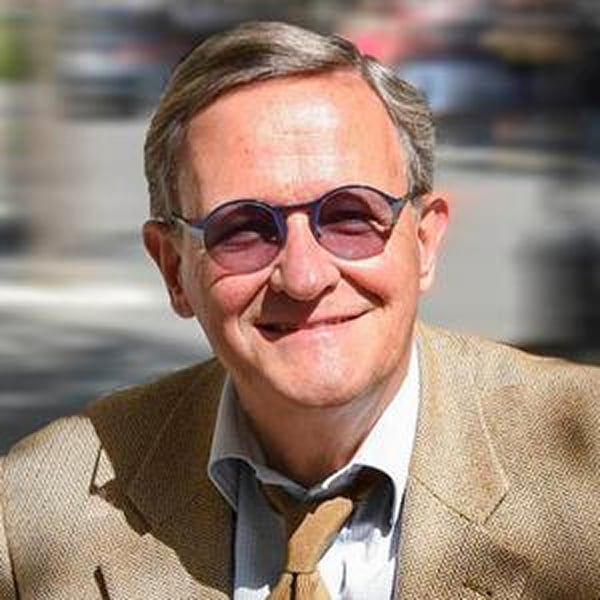

Peace & future researcher + ‌Art Photographer

Related Posts

The agreement is catastrophic both because of what it says and what it doesn’t mention. It reduces further the major asset of security policies: Freedom of action. Jan Oberg TFF director September 25, 2026 A couple of hours before the agreement was signed on September 22, 2026, I published the following 13 hypotheses about what it would most likely contain on TFF Substack (in English). I was wrong on only the first point. Contrary to what Trump had written on his Truth Social platform, it does not appear to come into force immediately. In fact, it turned out to be worse than even I had anticipated. After these hypotheses now come a number of reflections in light of what the agreement actually contains, and does not contain, as well as the way in which it has generally been presented by major media outlets and by the public-service broadcaster DR. My...
Below are TFF-related media mentions, comments, videos and social media posts published elsewhere but not on this homepage. We happen to catch and list only a fraction. Regarding video comments and debates, we recommend that you go to the TFF Video Channel on Substack where many of them are reproduced. Jan Oberg is a contributor to China Daily – 52 million daily clicks – and Global Times, CGTN and CCTV (the national television), China Investment, Xinhua News Agency and several others. Articles and videos on these media very often multiply into countless Chinese (and Western media) that re-post them from these main media. Thanks to The China Academy, his analyses, interviews and comments are frequently posted on YouTube channels such as Thinkers Forum and Wave Media. These videos are often re-posted on Bilibili (China’s YouTube), the China Content Center on TikTok, and on the Chinese edition of TikTok, Douyin.com. This means reaching hundreds of millions of viewers worldwide over a year. While there are too many to catch on all these...
Jan Oberg May 15, 2026 Go to this Fox News page and scroll the whole way down: President Donald Trump tells the world that his meeting with President Xi Jinping yielded a lot of very concrete political and economic results – of course, only where the Chinese side, according to him, agreed with him. He does not mention the Taiwan issue, but Secretary of State, Marco Rubio, says that it did not feature prominently in their talks and that the US policy on Taiwan has not changed. Then go to China Daily – or Global Times – and you will see that for the Chinese it is framework, principles, structure of cooperation etc. that matters – all embedded in the overall idea of “constructive bilateral relationship of strategic stability.” Nowhere is any concrete agreement or deal – all that Trump refers to – mentioned. At the general level, this gives you insights into the very different social...

Recent Articles

Tony Robinson October 4, 2026 Violence is easy to recognise when someone is being beaten, shot or killed. It becomes more difficult when nobody is holding a weapon. Poverty, discrimination, exploitation and repression can restrict a human life just as effectively, although they do so in very different ways and with very different consequences. Simply adding more categories to an ever-growing list of forms of violence does not really solve the problem. The more interesting question is what all these different situations have in common and why it makes sense to describe them using the same word. Human beings do not simply react to what happens around them. They remember the past, imagine things that do not yet exist, make plans and undertake projects. Workers organise because they imagine different working conditions; people migrate because they imagine another life somewhere else; social movements emerge because people refuse to accept the...
It’s a matter of principles, courage, vision and pulling together – while the militarist world is falling apart… Peter Langille October 3, 2026 “Here, then, is the problem which we present to you, stark and dreadful and inescapable: Shall we put an end to the human race; or shall mankind renounce war?”The Bertrand Russell—Albert Einstein Manifesto, July 9, 1955 ⁕ The forecast for what’s ahead is worrisome. The sharp rise in armed conflicts over the past three years is adding to what was already the highest level in over seventy years. Genocides, which should be prevented are supported. A shared climate emergency that jeopardises survival is ignored. Diverse polls now suggest that people are war-weary, worried and interested in a more effective United Nations. And, there are viable policy options for a more secure world! Yet governments are doubling-down, betting on more war and investing heavily. If current trends persist,...
Johan Galtung 1930-2024October 2015 Published here on October 3, 2026 Let us focus on Civilization for conflict analysis and remedies. Major forms of disorder use violence; war is state organized violence. The most belligerent states are the United States of America and Israel, both with civilization roots. National Evangelism, the US Protestant Christian civilization– more national than evangelical–justifies US warfare as exceptionalism of a people chosen by God, with a manifest destiny to run the world. Orthodox Judaism justifies Israeli warfare to conquer and expand from Nile to Euphrates as a religious right and duty to the Eternal One. The third most belligerent country, the UK, no longer believes it is God-chosen but chosen by the USA; not quite the same but something. But the root cause of global disorder lies in the Occident–with Islam–seeing itself as the single, universal civilization valid for all at all times, all others being...

TFF on Substack

Discover and subscribe to more peace materials on TFF Substack

Most Popular

Tony Robinson October 4, 2026 Violence is easy to recognise when someone is being beaten, shot or killed. It becomes more difficult when nobody is holding a weapon. Poverty, discrimination, exploitation and repression can restrict a human life just as effectively, although they do so in very different ways and with very different consequences. Simply adding more categories to an ever-growing list of forms of violence does not really solve the problem. The more interesting question is what all these different situations have in common and why it makes sense to describe them using the same word. Human beings do not simply react to what happens around them. They remember the past, imagine things that do not yet exist, make plans and undertake projects. Workers organise because they imagine different working conditions; people migrate because they imagine another life somewhere else; social movements emerge because people refuse to accept the...
It’s a matter of principles, courage, vision and pulling together – while the militarist world is falling apart… Peter Langille October 3, 2026 “Here, then, is the problem which we present to you, stark and dreadful and inescapable: Shall we put an end to the human race; or shall mankind renounce war?”The Bertrand Russell—Albert Einstein Manifesto, July 9, 1955 ⁕ The forecast for what’s ahead is worrisome. The sharp rise in armed conflicts over the past three years is adding to what was already the highest level in over seventy years. Genocides, which should be prevented are supported. A shared climate emergency that jeopardises survival is ignored. Diverse polls now suggest that people are war-weary, worried and interested in a more effective United Nations. And, there are viable policy options for a more secure world! Yet governments are doubling-down, betting on more war and investing heavily. If current trends persist,...
Johan Galtung 1930-2024October 2015 Published here on October 3, 2026 Let us focus on Civilization for conflict analysis and remedies. Major forms of disorder use violence; war is state organized violence. The most belligerent states are the United States of America and Israel, both with civilization roots. National Evangelism, the US Protestant Christian civilization– more national than evangelical–justifies US warfare as exceptionalism of a people chosen by God, with a manifest destiny to run the world. Orthodox Judaism justifies Israeli warfare to conquer and expand from Nile to Euphrates as a religious right and duty to the Eternal One. The third most belligerent country, the UK, no longer believes it is God-chosen but chosen by the USA; not quite the same but something. But the root cause of global disorder lies in the Occident–with Islam–seeing itself as the single, universal civilization valid for all at all times, all others being...
Read More
Living-Peace-Sign-Budapest-copy
Tony Robinson October 4, 2026 Violence is easy to recognise when someone is being beaten, shot or killed. It becomes more difficult when nobody is holding a weapon. Poverty, discrimination, exploitation and repression can restrict a human life just as effectively, although they do so in very different ways and with very different consequences. Simply adding more categories to an ever-growing list of forms of violence does not really solve the problem. The more interesting question is what all these different situations have in common and why it makes sense to describe them using the same word. Human beings do not simply react to what happens around them. They remember the past, imagine things that do not yet exist, make plans and undertake projects. Workers organise because they imagine different working conditions; people migrate because they imagine another life somewhere else; social movements emerge because people refuse to accept the...
b54a1f10-8c65-4f0b-9dd5-4abc0a7d04cc_2659x2659
It’s a matter of principles, courage, vision and pulling together – while the militarist world is falling apart… Peter Langille October 3, 2026 “Here, then, is the problem which we present to you, stark and dreadful and inescapable: Shall we put an end to the human race; or shall mankind renounce war?”The Bertrand Russell—Albert Einstein Manifesto, July 9, 1955 ⁕ The forecast for what’s ahead is worrisome. The sharp rise in armed conflicts over the past three years is adding to what was already the highest level in over seventy years. Genocides, which should be prevented are supported. A shared climate emergency that jeopardises survival is ignored. Diverse polls now suggest that people are war-weary, worried and interested in a more effective United Nations. And, there are viable policy options for a more secure world! Yet governments are doubling-down, betting on more war and investing heavily. If current trends persist,...
010
Johan Galtung 1930-2024October 2015 Published here on October 3, 2026 Let us focus on Civilization for conflict analysis and remedies. Major forms of disorder use violence; war is state organized violence. The most belligerent states are the United States of America and Israel, both with civilization roots. National Evangelism, the US Protestant Christian civilization– more national than evangelical–justifies US warfare as exceptionalism of a people chosen by God, with a manifest destiny to run the world. Orthodox Judaism justifies Israeli warfare to conquer and expand from Nile to Euphrates as a religious right and duty to the Eternal One. The third most belligerent country, the UK, no longer believes it is God-chosen but chosen by the USA; not quite the same but something. But the root cause of global disorder lies in the Occident–with Islam–seeing itself as the single, universal civilization valid for all at all times, all others being...
Screenshot 2026-10-02 011738
Jan ObergPhD, director, The Transnational Foundation for Peace and Future Research, TFFLund, Sweden October 2, 2026 This is my full original manuscript. The Chinese Academy of Social Science, CASS, makes two publications out if it. 1. China’s Five-year plan emphasized the capabilities of basic research and original innovation. It is regarded as the goal of the future social development, which, as required, should be significantly enhanced. Can you comment on the importance of original innovation in research and academic study? I believe it is easier to define “original innovation” in the natural sciences than in social sciences. The breaking points of what constitutes something new, or innovative, are not quite as sharp in the latter. But in both fields it is about opening up something that was closed, unseen, unexplored before – making manifest what was earlier latent. Innovations come in many forms and shapes – naming something that was not...
arctic-circle-map
The agreement is catastrophic both because of what it says and what it doesn’t mention. It reduces further the major asset of security policies: Freedom of action. Jan Oberg TFF director September 25, 2026 A couple of hours before the agreement was signed on September 22, 2026, I published the following 13 hypotheses about what it would most likely contain on TFF Substack (in English). I was wrong on only the first point. Contrary to what Trump had written on his Truth Social platform, it does not appear to come into force immediately. In fact, it turned out to be worse than even I had anticipated. After these hypotheses now come a number of reflections in light of what the agreement actually contains, and does not contain, as well as the way in which it has generally been presented by major media outlets and by the public-service broadcaster DR. My...
girl-5894831_1280
Below are TFF-related media mentions, comments, videos and social media posts published elsewhere but not on this homepage. We happen to catch and list only a fraction. Regarding video comments and debates, we recommend that you go to the TFF Video Channel on Substack where many of them are reproduced. Jan Oberg is a contributor to China Daily – 52 million daily clicks – and Global Times, CGTN and CCTV (the national television), China Investment, Xinhua News Agency and several others. Articles and videos on these media very often multiply into countless Chinese (and Western media) that re-post them from these main media. Thanks to The China Academy, his analyses, interviews and comments are frequently posted on YouTube channels such as Thinkers Forum and Wave Media. These videos are often re-posted on Bilibili (China’s YouTube), the China Content Center on TikTok, and on the Chinese edition of TikTok, Douyin.com. This means reaching hundreds of millions of viewers worldwide over a year. While there are too many to catch on all these...