Generic thumbnail

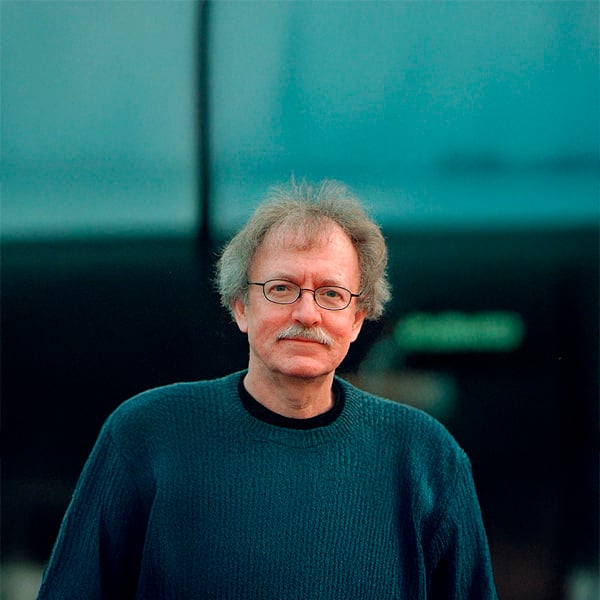
Den turkiske författaren Orhan Pamuk dras har blivit en bricka i spelet om Turkiets medlemskap i den europeiska gemenskapen. På Bokmässan i Göteborg drog han stora skaror med anledning av romanen “Snö”. Sören Sommelius har träffat honom över en kopp te.

Fundamentalister och nationalister med olika förtecken intrigerar, liksom marxister och ex-marxister. Dödande skott avlossas på teatern under staden Kars första direktsända TV-föreställning. Snön faller oavbrutet. Staden är isolerad från omvärlden och varje kapitel i boken inleds med snöflingor.

Orhan Pamuk skapar ett mikrokosmos, ett Turkiet i miniatyr, i den östliga utposten Kars i sin roman “Snö”, som i höst kommit på svenska (Norstedts, översättning Inger Johansson).

Kars är periferi i Turkiet på samma sätt som Istanbul är periferi i Europa.

– Det är en underlig känsla att bo “vid kanten”, säger Orhan Pamuk när jag får en intervjustund med honom under bokmässan i Göteborg. Vi sitter i kanten av mässan på en svårfunnen plats utan brus från alla mässgolvets marknadsutropare.

– Jag pratar fort, säger han, och det är ett understatement. Har du bandspelare?

Pamuks böcker är stora läsupplevelser. Författaren själv är briljant, snabb i repliken, bitande vass ibland.

Vi talar om städer och särskilt om Orhan Pamuks eget Istanbul. En gång var platsen huvudstad i det osmansk/turkiska välde, som långa tider sträckte sig nära nog till Wien i Österrike.

– När Flaubert besökte Istanbul vid mitten av 1800-talet förutspådde han att den inom ett sekel skulle vara världens huvudstad. Så blev det inte.

Det osmanska väldet störtade samman. Och när Orhan Pamuk föddes i Istanbul 1952 var staden fattigare och mera sliten än någonsin under sin tvåtusenåriga historia. I sin senaste bok “Istanbul. Memories of a City” (utgiven i år, på svenska nästa år) skriver Pamuk:

“För mig har den alltid varit en stad av ruiner och melankoli efter imperiets undergång. Jag har under mitt liv antingen kämpat mot denna melankoli eller (som alla Istanbulbor) gjort den till min egen. … Jag har accepterat den stad där jag föddes på samma sätt som jag accepterat min kropp.”

– När jag växte upp i Istanbul var det Ingenstans huvudstad, ler Orhan Pamuk, med en underton av det slags melankoli som på turkiska kallas hüzün.

Hüzün är “inte en ensam persons melankoli utan de svarta känslor som delas av en hel stad”, skriver Orhan Pamuk i sin Istanbulbok. Med en annan färg skulle hüzün kanske kunna kallas Istanbuls blue mood, Istanbul blues.

Istanbul liknar Dublin i Irland däri att båda är städer i den europeiska periferin. När Orhan Pamuk skrev sin “Den svarta boken” var en inspirationskälla just James Joyces Dublinskildring “Odysseus”. Joyce skrev gata för gata om sitt Dublin betraktat på avstånd, från Trieste och Paris. Orhan Pamuk har inte flytt sin stad som Joyce utan blivit den trogen. Han bor i samma hus där han föddes.

– Men “Den svarta boken” skrevs på distans, under en vistelse i New York. Ändå är jag lojal mot stadens gator …* * *

Vi dricker te. Jag undrar varför Orhan Pamuks boktitlar så ofta innehåller färger.

– Färgerna är inte symboler utan just färger. Jag är mycket upptagen av färger. När jag ser tekoppen på bordet tänker jag “vit kopp, med brunt te”.

Länge ville du bli målare, säger jag, för det finns berättat i Istanbulboken.

– I mitt skrivande är jag visuell, för mig är visuella detaljer viktiga. Det var de inte för Dostojevskij, men väl för Tolstoj.

När Orhan Pamuk var 16 – 17 år gammal gick han längs Istanbuls gator med sin kamera och fotograferade. Många av de bilderna finns med i Istanbulboken, som visuella minnesnoteringar.

– Det var på 60-talet. Jag målade som Utrillo och använde fotografierna som förlagor.

Men så blev skrivandet viktigare. Varför blev du författare, undrar jag?

– Det är just det som “Istanbul. Memoires of a City” handlar om. Boken är till hälften en essä om Istanbuls urbana landskap och till den andra hälften en krönika om mitt liv fram tills jag är 23 år gammal med fokus på min önskan att bli målare.* * *

Turkiet är ett land mellan öst och väst. Men det ottomanska väldets europeiska rötter och Kemal Atatürks sekulariserade statsbygge har skapat en europeisk tillhörighet som ställs på sin spets dessa oktoberdagar, när Turkiet slutligen inviteras av EU att inleda förhandlingar med sikte på ett medlemskap om tio eller kanske femton år. Vi träffas en dag innan beslutet fattas.

– Turkiet har under sekler levt i strider och krig. EU kom till som ett fredsprojekt med Frankrike och Tyskland som viktiga aktörer. För mig är hjärtat i EU just fred. Därför hoppas jag att Turkiet till slut får börja knacka på EU:s dörr.

En process mot ett turkiskt EU-medlemskap kommer också att fokusera på frågor som mänskliga rättigheter och yttrandefrihet. Orhan Pamuk hotas nu av åtal i sitt hemland för att han i en schweizisk tidning kommenterat det turkiska folkmordet i Armenien för hundra år sedan. En svensk stödkommitté för Pamuk har bildats med namn som Kurdo Bakshi, Arne Ruth, Kerstin Ekman, P C Jersild och Majgull Axelsson. Det har hetat att Orhan Pamuks situation påminner om Salman Rushdies.

– Många turkiska författare har haft stora problem med myndigheterna. Min situation är helt annorlunda. Jag menar att rättegången mot mig inte ska dramatiseras.

Rättegången hålls i december. Den kan förstås ses som ett politiskt inslag i debatten för och emot EU-medlemskap. Skulle Pamuk trots allt fällas blir det pinsamt för Turkiet och en framgång för landets EU-motståndare. Frias han kan det innebära att mörka inslag i landets historia för första gången kan diskuteras öppet.

– Som ung författare hade jag bestämt mig för att inte skriva politiskt. Så många andra gjorde det och la ner stor energi på att tjäna sitt land politiskt. Jag höll länge mitt löfte. Trots det uppfattas många av mina tidiga böcker i väst som politiska. Jag har så många ämnen, så många romanprojekt som väntat länge på att bli skrivna, i sju år, i tio år. De är inte politiska. Men “Snö” är en politisk roman, min första och sista.

Huvudpersonen i “Snö” heter Ka och är författare och journalist. Han reser till den avlägsna staden Kars för att skriva om den självmordsepidemi som uppstått bland unga beslöjade kvinnor. På liknande sätt reste Orhan Pamuk själv till Kars för att få material till sin roman.

– Liksom min huvudperson reste jag till Kars för att få material. De första 150 sidorna i boken är realistiskt skrivna. Den isolerade staden är en scen för politiska krafter.

Snön faller oavbrutet, den vita snön, också på boksidorna. När jag läser “Snö” sugs jag in i berättelsen, jag blir insnöad i texten och drabbas av Orhan Pamuks förmåga att beskriva de som inte är som han, att förstå “de andra”, flickorna som tar på sig slöja, islamisterna. I en intervju skriven av Nathan Shachar i tidskriften Axess senaste nummer säger Pamuk: “Min utmaning var att identifiera mig med de andra, de som inte tillhör min lilla stam … Jag ville undersöka vad, om alls något, som håller samman vår nation.”* * *

Orhan Pamuk tittar på klockan. Tiden är ute. Jag tar några snabba porträttfotografier innan han skyndar ut i ett snölöst sensommarsoligt Göteborg för ett privat möte med en släkting som han inte träffat på tjugo år. Senare på dagen går hans plan tillbaka till Istanbul efter några intensiva dagar på bokmässan, där intresset för hans person och författarskap fyllt seminariesalarna, också därför att han återkommande nämns som nobelpriskandidat.

Sören Sommelius
sosommelius@hd.se 

Related Posts

Tony Robinson October 4, 2026 Violence is easy to recognise when someone is being beaten, shot or killed. It becomes more difficult when nobody is holding a weapon. Poverty, discrimination, exploitation and repression can restrict a human life just as effectively, although they do so in very different ways and with very different consequences. Simply adding more categories to an ever-growing list of forms of violence does not really solve the problem. The more interesting question is what all these different situations have in common and why it makes sense to describe them using the same word. Human beings do not simply react to what happens around them. They remember the past, imagine things that do not yet exist, make plans and undertake projects. Workers organise because they imagine different working conditions; people migrate because they imagine another life somewhere else; social movements emerge because people refuse to accept the...
It’s a matter of principles, courage, vision and pulling together – while the militarist world is falling apart… Peter Langille October 3, 2026 “Here, then, is the problem which we present to you, stark and dreadful and inescapable: Shall we put an end to the human race; or shall mankind renounce war?”The Bertrand Russell—Albert Einstein Manifesto, July 9, 1955 ⁕ The forecast for what’s ahead is worrisome. The sharp rise in armed conflicts over the past three years is adding to what was already the highest level in over seventy years. Genocides, which should be prevented are supported. A shared climate emergency that jeopardises survival is ignored. Diverse polls now suggest that people are war-weary, worried and interested in a more effective United Nations. And, there are viable policy options for a more secure world! Yet governments are doubling-down, betting on more war and investing heavily. If current trends persist,...
Johan Galtung 1930-2024October 2015 Published here on October 3, 2026 Let us focus on Civilization for conflict analysis and remedies. Major forms of disorder use violence; war is state organized violence. The most belligerent states are the United States of America and Israel, both with civilization roots. National Evangelism, the US Protestant Christian civilization– more national than evangelical–justifies US warfare as exceptionalism of a people chosen by God, with a manifest destiny to run the world. Orthodox Judaism justifies Israeli warfare to conquer and expand from Nile to Euphrates as a religious right and duty to the Eternal One. The third most belligerent country, the UK, no longer believes it is God-chosen but chosen by the USA; not quite the same but something. But the root cause of global disorder lies in the Occident–with Islam–seeing itself as the single, universal civilization valid for all at all times, all others being...

Recent Articles

Tony Robinson October 4, 2026 Violence is easy to recognise when someone is being beaten, shot or killed. It becomes more difficult when nobody is holding a weapon. Poverty, discrimination, exploitation and repression can restrict a human life just as effectively, although they do so in very different ways and with very different consequences. Simply adding more categories to an ever-growing list of forms of violence does not really solve the problem. The more interesting question is what all these different situations have in common and why it makes sense to describe them using the same word. Human beings do not simply react to what happens around them. They remember the past, imagine things that do not yet exist, make plans and undertake projects. Workers organise because they imagine different working conditions; people migrate because they imagine another life somewhere else; social movements emerge because people refuse to accept the...
It’s a matter of principles, courage, vision and pulling together – while the militarist world is falling apart… Peter Langille October 3, 2026 “Here, then, is the problem which we present to you, stark and dreadful and inescapable: Shall we put an end to the human race; or shall mankind renounce war?”The Bertrand Russell—Albert Einstein Manifesto, July 9, 1955 ⁕ The forecast for what’s ahead is worrisome. The sharp rise in armed conflicts over the past three years is adding to what was already the highest level in over seventy years. Genocides, which should be prevented are supported. A shared climate emergency that jeopardises survival is ignored. Diverse polls now suggest that people are war-weary, worried and interested in a more effective United Nations. And, there are viable policy options for a more secure world! Yet governments are doubling-down, betting on more war and investing heavily. If current trends persist,...
Johan Galtung 1930-2024October 2015 Published here on October 3, 2026 Let us focus on Civilization for conflict analysis and remedies. Major forms of disorder use violence; war is state organized violence. The most belligerent states are the United States of America and Israel, both with civilization roots. National Evangelism, the US Protestant Christian civilization– more national than evangelical–justifies US warfare as exceptionalism of a people chosen by God, with a manifest destiny to run the world. Orthodox Judaism justifies Israeli warfare to conquer and expand from Nile to Euphrates as a religious right and duty to the Eternal One. The third most belligerent country, the UK, no longer believes it is God-chosen but chosen by the USA; not quite the same but something. But the root cause of global disorder lies in the Occident–with Islam–seeing itself as the single, universal civilization valid for all at all times, all others being...

TFF on Substack

Discover and subscribe to more peace materials on TFF Substack

Most Popular

Tony Robinson October 4, 2026 Violence is easy to recognise when someone is being beaten, shot or killed. It becomes more difficult when nobody is holding a weapon. Poverty, discrimination, exploitation and repression can restrict a human life just as effectively, although they do so in very different ways and with very different consequences. Simply adding more categories to an ever-growing list of forms of violence does not really solve the problem. The more interesting question is what all these different situations have in common and why it makes sense to describe them using the same word. Human beings do not simply react to what happens around them. They remember the past, imagine things that do not yet exist, make plans and undertake projects. Workers organise because they imagine different working conditions; people migrate because they imagine another life somewhere else; social movements emerge because people refuse to accept the...
It’s a matter of principles, courage, vision and pulling together – while the militarist world is falling apart… Peter Langille October 3, 2026 “Here, then, is the problem which we present to you, stark and dreadful and inescapable: Shall we put an end to the human race; or shall mankind renounce war?”The Bertrand Russell—Albert Einstein Manifesto, July 9, 1955 ⁕ The forecast for what’s ahead is worrisome. The sharp rise in armed conflicts over the past three years is adding to what was already the highest level in over seventy years. Genocides, which should be prevented are supported. A shared climate emergency that jeopardises survival is ignored. Diverse polls now suggest that people are war-weary, worried and interested in a more effective United Nations. And, there are viable policy options for a more secure world! Yet governments are doubling-down, betting on more war and investing heavily. If current trends persist,...
Johan Galtung 1930-2024October 2015 Published here on October 3, 2026 Let us focus on Civilization for conflict analysis and remedies. Major forms of disorder use violence; war is state organized violence. The most belligerent states are the United States of America and Israel, both with civilization roots. National Evangelism, the US Protestant Christian civilization– more national than evangelical–justifies US warfare as exceptionalism of a people chosen by God, with a manifest destiny to run the world. Orthodox Judaism justifies Israeli warfare to conquer and expand from Nile to Euphrates as a religious right and duty to the Eternal One. The third most belligerent country, the UK, no longer believes it is God-chosen but chosen by the USA; not quite the same but something. But the root cause of global disorder lies in the Occident–with Islam–seeing itself as the single, universal civilization valid for all at all times, all others being...
Read More
Living-Peace-Sign-Budapest-copy
Tony Robinson October 4, 2026 Violence is easy to recognise when someone is being beaten, shot or killed. It becomes more difficult when nobody is holding a weapon. Poverty, discrimination, exploitation and repression can restrict a human life just as effectively, although they do so in very different ways and with very different consequences. Simply adding more categories to an ever-growing list of forms of violence does not really solve the problem. The more interesting question is what all these different situations have in common and why it makes sense to describe them using the same word. Human beings do not simply react to what happens around them. They remember the past, imagine things that do not yet exist, make plans and undertake projects. Workers organise because they imagine different working conditions; people migrate because they imagine another life somewhere else; social movements emerge because people refuse to accept the...
b54a1f10-8c65-4f0b-9dd5-4abc0a7d04cc_2659x2659
It’s a matter of principles, courage, vision and pulling together – while the militarist world is falling apart… Peter Langille October 3, 2026 “Here, then, is the problem which we present to you, stark and dreadful and inescapable: Shall we put an end to the human race; or shall mankind renounce war?”The Bertrand Russell—Albert Einstein Manifesto, July 9, 1955 ⁕ The forecast for what’s ahead is worrisome. The sharp rise in armed conflicts over the past three years is adding to what was already the highest level in over seventy years. Genocides, which should be prevented are supported. A shared climate emergency that jeopardises survival is ignored. Diverse polls now suggest that people are war-weary, worried and interested in a more effective United Nations. And, there are viable policy options for a more secure world! Yet governments are doubling-down, betting on more war and investing heavily. If current trends persist,...
010
Johan Galtung 1930-2024October 2015 Published here on October 3, 2026 Let us focus on Civilization for conflict analysis and remedies. Major forms of disorder use violence; war is state organized violence. The most belligerent states are the United States of America and Israel, both with civilization roots. National Evangelism, the US Protestant Christian civilization– more national than evangelical–justifies US warfare as exceptionalism of a people chosen by God, with a manifest destiny to run the world. Orthodox Judaism justifies Israeli warfare to conquer and expand from Nile to Euphrates as a religious right and duty to the Eternal One. The third most belligerent country, the UK, no longer believes it is God-chosen but chosen by the USA; not quite the same but something. But the root cause of global disorder lies in the Occident–with Islam–seeing itself as the single, universal civilization valid for all at all times, all others being...
Screenshot 2026-10-02 011738
Jan ObergPhD, director, The Transnational Foundation for Peace and Future Research, TFFLund, Sweden October 2, 2026 This is my full original manuscript. The Chinese Academy of Social Science, CASS, makes two publications out if it. 1. China’s Five-year plan emphasized the capabilities of basic research and original innovation. It is regarded as the goal of the future social development, which, as required, should be significantly enhanced. Can you comment on the importance of original innovation in research and academic study? I believe it is easier to define “original innovation” in the natural sciences than in social sciences. The breaking points of what constitutes something new, or innovative, are not quite as sharp in the latter. But in both fields it is about opening up something that was closed, unseen, unexplored before – making manifest what was earlier latent. Innovations come in many forms and shapes – naming something that was not...
arctic-circle-map
The agreement is catastrophic both because of what it says and what it doesn’t mention. It reduces further the major asset of security policies: Freedom of action. Jan Oberg TFF director September 25, 2026 A couple of hours before the agreement was signed on September 22, 2026, I published the following 13 hypotheses about what it would most likely contain on TFF Substack (in English). I was wrong on only the first point. Contrary to what Trump had written on his Truth Social platform, it does not appear to come into force immediately. In fact, it turned out to be worse than even I had anticipated. After these hypotheses now come a number of reflections in light of what the agreement actually contains, and does not contain, as well as the way in which it has generally been presented by major media outlets and by the public-service broadcaster DR. My...
girl-5894831_1280
Below are TFF-related media mentions, comments, videos and social media posts published elsewhere but not on this homepage. We happen to catch and list only a fraction. Regarding video comments and debates, we recommend that you go to the TFF Video Channel on Substack where many of them are reproduced. Jan Oberg is a contributor to China Daily – 52 million daily clicks – and Global Times, CGTN and CCTV (the national television), China Investment, Xinhua News Agency and several others. Articles and videos on these media very often multiply into countless Chinese (and Western media) that re-post them from these main media. Thanks to The China Academy, his analyses, interviews and comments are frequently posted on YouTube channels such as Thinkers Forum and Wave Media. These videos are often re-posted on Bilibili (China’s YouTube), the China Content Center on TikTok, and on the Chinese edition of TikTok, Douyin.com. This means reaching hundreds of millions of viewers worldwide over a year. While there are too many to catch on all these...