
Reforming global finance: Don’t leave it to the economists!

The chairman of Britain’s Financial Services Authority argues that in the decades before the collapse of Western financial markets in 2007, too many economists were practicing a wrong-headed kind of economics. Their obsession with designing intricate mathematical models pushed moral, ethical and practical considerations too far into the background. It is high time for that to change.

In a short article in “The Globalist” Lord Turner discusses some of these issues. Due to its significance to our understanding of what has gone wrong, I have reprinted it below for your keen interest.

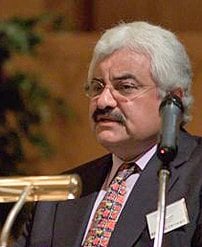
Before you begin to read Lord Turner’s wise words, I want to share something coming from my heart with you. It saddens me that when about 15 years ago, I began to say very similar things to what Lord Turner is saying now, my so-called fellow academic colleagues accused me of having gone mad. They told me, if I carry on like this, talking about ethics, morality, philosophy, theology, spirituality, love, sympathy, empathy, trust, sustainability, love for Mother Earth and the common good, I better consider leaving the economics profession and perhaps become a priest or social worker, or joining the Salvation Army.

I am not bitter, whatsoever. I am only sorry that no body at that time took economists like me seriously. But, who said there is no justice in this world. (See more: http://gcgi.info/how-it-began )

And now, here it is: The Wisdom of Lord Turner

“In the decades before the collapse of Western financial markets in 2007 and the resulting deep recession, too many policymakers, bankers and regulators were influenced by a brand of economics that was better equipped to design intricate mathematical models than to deal with moral, ethic and practical considerations. Adair Turner, head of Britain’s Financial Services Authority, says that needs to change.

Keynes famously wrote that “practical men, who believe themselves to be quite exempt from any intellectual influences, are usually the slaves of some defunct economist.”

It is essential that economics deal with human beings as they actually are rather than assuming the existence of a rational Homo economicus.

I suspect however that the greater danger lies not so much with entirely practical men or women exempt from any intellectual influence, as with the reasonably intellectual men and women who are employed in the policymaking departments of central banks, regulatory bodies and governments, as well as in the risk-management departments of banks.

These individuals are often well aware of intellectual influences, but tend nevertheless to gravitate to simplified versions of the dominant beliefs of establishment economists (who are still very much alive).

It is essential to continually seek to lean against that tendency. It is essential that economics deal with the real world as it is — and in particular with human beings as they actually are — rather than assuming the existence of a rational Homo economicus in order to make economic analysis more mathematically tractable.

In my view, robust thinking about economics must be based on the following three requirements.

First, it must not assume that additional income — above a certain level required to satisfy essential human needs — will necessarily increase utility or happiness, even if only to a marginally declining extent. Instead, we should concern ourselves with the mathematically and empirically imprecise but important issues of how happiness, welfare, utility and income are defined and related.

We may only have imperfect and judgmental techniques to measure success against ultimate objectives such as life, satisfaction and happiness. But we need to remember that these objectives, not income maximization by itself, are what we should be trying to achieve.

Second, the new economics must not assume that people participating in financial markets make rational assessments of future probabilities of potential outcomes. Instead, we should seek to understand how different people actually make decisions in different circumstances, given that human brains are endowed with instinctive elements.

Third, the new economics must accept the reality of unavoidable uncertainty. Much of the old-style economics is devoted to exploring the assumed expectations of economic agents, which are believed to be distributed around the objective probability distribution of future outcomes.

The new economics should recognize the importance of political, philosophical and ethical issues, to which mathematics is incapable of giving precise answers.

That, however, is what is called a philosophical category error, since no probability of future outcomes objectively exists. Therefore, we must accept that all economic and social developments are subject to an inherent, irreducible level of uncertainty.

No mathematical answers.

The logical consequence of these requirements is that the new economics should recognize the importance of political, philosophical and ethical issues, to which mathematics is incapable of giving precise answers.

For example, there is no precise answer to the question “What is the optimal degree of inequality?” It is an issue of politics. Likewise, the case for the market economy — which has been predominantly presented in terms of income-maximization outcomes — should, as Amartya Sen says, be considered in terms of freedom as an end in itself.

As John Hicks (although himself a major figure in the development of mathematical and outcomes-oriented economics) has noted wisely, “The liberal principles of the classical ‘Smithian’ or ‘Ricardian’ economists were not, in the first phase, economic principles; they were an application to economics of principles which were thought to apply in a much wider field. The contention that economic freedom made for economic efficiency was no more than a secondary support.”

A major deficiency of the current conventional wisdom is that it has focused increasingly — and almost exclusively — on this secondary support, instead of on ethical, moral and practical considerations. That is all the more surprising since increasing prosperity has made further improvements in economic efficiency less important to human welfare.

“There is nothing in economics,” wrote the British economist Lionel Robbins, “which relieves us of the obligation to choose.”

Too many policymakers and politicians — who at least thought they were drawing on the insights of economists — forgot or chose to ignore that fact in the several decades of applying conventional wisdom and believing in false certainties that led to the financial crisis.”

Source:
Lord Turner’s original article.
Related Posts

Photos © TFF 2000 Read PressInfo 90 “Lift the Sanctions and Bring More Aid to Yugoslavia” See Pictures from Belgrade © TFF 2000 Please reprint, copy, archive, quote or re-post this item, but please retain the source.
LONDON – So far so good, at least on the wider level. While internally Iraq seems on the edge of chaos, the much heralded clash of civilizations between the Muslim and Judaeo-Christian worlds has yet to become apparent. We have anger and despair aplenty in the Arab and Muslim worlds. But very little rushing to the standard and there was no great pilgrimage of warriors to join the fight, as happened when the Soviet Union invaded Afghanistan twenty years ago, and then, having driven the Red Army out, were left to ferment in that mountainous redoubt. With the armaments supplied by the CIA the mujahidin were transformed into Al Qaeda that became, for a relatively brief moment as these things go, ‘the greatest threat to the homeland that America has ever known.’ Nevertheless a ‘Cold War’ between much of the Muslim world and the West is certainly in full swing. Winston...
Jan Oberg July 26, 2024 In its recent analysis – “How Four US Presidents Unleashed Economic Warfare Across the Globe” – The Washington Post illustrates what I have called “sanctionitis” – the disease of (over)using sanctions as a means to conduct foreign policy and cause great harm to the world economy, the US economy but also to millions of innocent people who suffer from the consequences of them. But the WP merely points out that sanctions are inefficient from a US point of view in that they have not achieved what was intended, indeed sometimes the opposite. It uses various kinds of pejoratives like “dictator” about leaders of states the US sees as enemies. It fails completely to point out that sanctions – particularly long-term sanctions – are, mostly, grossly immoral because of their humanitarian consequences. Be this as it may, something has happened when Washington Post does publish such...

Recent Articles

Photo above: Carl Fredrik Reuterswärd’s Non-Violence outside UN Headquarters in New York. Kirill Levin, CC BY-NC-SA 2. Jan Oberg November 3, 2026 I am happy to be published in Horizons which is produced by the Center for International Relations and Sustainable Development, CIRSD, in Belgrade. My contribution brings out a radical re-thinking of what concepts such as defence, security, deterrence – and peace – may mean if we want to create a more peaceful world. It also summarises a few things I have been working with the last few decades. Please read it here Og her er den på dansk, takket være Johnny Baltzersens lynhurtige oversættelse
UNITE-tillid, DREAM-velstand og andre konstruktive komponenter Normally we publish articles in English here. But this is a translation of a very important TFF document that should reach as many as possible in Denmark since this country’s government has been one of the most hardline in Europe and, up till now at least, has refused to use diplomacy and, instead, spent tremendous sums on arming Ukraine with the express goal of defeating Russia. Thus this – unique – article is in Danish. Vi er Johnny Baltzersen og hans Fælles Sikkerhed – Fælles Fremtid på Substack overmåde taknemmelige for at have oversat og publiceret TFF’s 2025-portfølje for fredsidéer med henblik på Ukraines fremtid. Vi håber den nu kan nå mange flere danskere – som også vil sprede den og skabe debat – nu den danske regerings og folketingspartiernes politik på dette område siden 2022 står nu – forudsigeligt – ved vejs ende....
Jan Oberg TFF director October 28, 2026 Exactly one month has now passed since I published my criticism of the introduction to the special issue on Johan Galtung published by the Journal of Global Security Studies, JoGSS, and of Tor Egil Førland’s chapter about Galtung which serves as a preview to his forthcoming biography of Galtung to be published by PRIO. See the original on The Transnational here and the same article on TFF Substack with many general and critical comments and, in particular, the people who decided to withdraw from the biography project in protest. The special issue itself was extraordinary. It was devoted to the intellectual legacy of one of the founders of peace research and contained a number of strong assessments of his personality, scholarship, intellectual trajectory, and public role. Such assessments are, of course, entirely legitimate. No scholar is beyond criticism, and neither was Johan Galtung....

TFF on Substack

Discover and subscribe to more peace materials on TFF Substack

Most Popular

Photo above: Carl Fredrik Reuterswärd’s Non-Violence outside UN Headquarters in New York. Kirill Levin, CC BY-NC-SA 2. Jan Oberg November 3, 2026 I am happy to be published in Horizons which is produced by the Center for International Relations and Sustainable Development, CIRSD, in Belgrade. My contribution brings out a radical re-thinking of what concepts such as defence, security, deterrence – and peace – may mean if we want to create a more peaceful world. It also summarises a few things I have been working with the last few decades. Please read it here Og her er den på dansk, takket være Johnny Baltzersens lynhurtige oversættelse
UNITE-tillid, DREAM-velstand og andre konstruktive komponenter Normally we publish articles in English here. But this is a translation of a very important TFF document that should reach as many as possible in Denmark since this country’s government has been one of the most hardline in Europe and, up till now at least, has refused to use diplomacy and, instead, spent tremendous sums on arming Ukraine with the express goal of defeating Russia. Thus this – unique – article is in Danish. Vi er Johnny Baltzersen og hans Fælles Sikkerhed – Fælles Fremtid på Substack overmåde taknemmelige for at have oversat og publiceret TFF’s 2025-portfølje for fredsidéer med henblik på Ukraines fremtid. Vi håber den nu kan nå mange flere danskere – som også vil sprede den og skabe debat – nu den danske regerings og folketingspartiernes politik på dette område siden 2022 står nu – forudsigeligt – ved vejs ende....
Jan Oberg TFF director October 28, 2026 Exactly one month has now passed since I published my criticism of the introduction to the special issue on Johan Galtung published by the Journal of Global Security Studies, JoGSS, and of Tor Egil Førland’s chapter about Galtung which serves as a preview to his forthcoming biography of Galtung to be published by PRIO. See the original on The Transnational here and the same article on TFF Substack with many general and critical comments and, in particular, the people who decided to withdraw from the biography project in protest. The special issue itself was extraordinary. It was devoted to the intellectual legacy of one of the founders of peace research and contained a number of strong assessments of his personality, scholarship, intellectual trajectory, and public role. Such assessments are, of course, entirely legitimate. No scholar is beyond criticism, and neither was Johan Galtung....
Read More
knotted gun
Photo above: Carl Fredrik Reuterswärd’s Non-Violence outside UN Headquarters in New York. Kirill Levin, CC BY-NC-SA 2. Jan Oberg November 3, 2026 I am happy to be published in Horizons which is produced by the Center for International Relations and Sustainable Development, CIRSD, in Belgrade. My contribution brings out a radical re-thinking of what concepts such as defence, security, deterrence – and peace – may mean if we want to create a more peaceful world. It also summarises a few things I have been working with the last few decades. Please read it here Og her er den på dansk, takket være Johnny Baltzersens lynhurtige oversættelse
TFFPortfolioVign
UNITE-tillid, DREAM-velstand og andre konstruktive komponenter Normally we publish articles in English here. But this is a translation of a very important TFF document that should reach as many as possible in Denmark since this country’s government has been one of the most hardline in Europe and, up till now at least, has refused to use diplomacy and, instead, spent tremendous sums on arming Ukraine with the express goal of defeating Russia. Thus this – unique – article is in Danish. Vi er Johnny Baltzersen og hans Fælles Sikkerhed – Fælles Fremtid på Substack overmåde taknemmelige for at have oversat og publiceret TFF’s 2025-portfølje for fredsidéer med henblik på Ukraines fremtid. Vi håber den nu kan nå mange flere danskere – som også vil sprede den og skabe debat – nu den danske regerings og folketingspartiernes politik på dette område siden 2022 står nu – forudsigeligt – ved vejs ende....
JoGSS-Silent
Jan Oberg TFF director October 28, 2026 Exactly one month has now passed since I published my criticism of the introduction to the special issue on Johan Galtung published by the Journal of Global Security Studies, JoGSS, and of Tor Egil Førland’s chapter about Galtung which serves as a preview to his forthcoming biography of Galtung to be published by PRIO. See the original on The Transnational here and the same article on TFF Substack with many general and critical comments and, in particular, the people who decided to withdraw from the biography project in protest. The special issue itself was extraordinary. It was devoted to the intellectual legacy of one of the founders of peace research and contained a number of strong assessments of his personality, scholarship, intellectual trajectory, and public role. Such assessments are, of course, entirely legitimate. No scholar is beyond criticism, and neither was Johan Galtung....
Screenshot 2026-10-26 115647
An aspect of Iran’s culture and civilisation you’ve probably never heard about. Don’t be surprised if the US and Israel also try to bomb them. Jan ObergTFF director October 26, 2026 Today – under the “USraeli” threat of new “annihilating” bombings – opens the 7th International Conference on Peace and Conflict Resolution at Tehran’s University. As far as I can tell, this is the only permanent, advanced peace research institution in West Asia/the Middle East. Perhaps more countries in that region could be inspired? I mean, how many military “security” institutes and military academies do they have? Many peace research institutes and university departments have been established since the 1950s in the West. They are now all under attack; some have closed down, some have gone mainstream, yet others kept the name but do nothing to research peace and disseminate results or advice; instead, they cooperate with militarism’s platforms such...
Screenshot 2026-10-15 141837
Let’s discuss using AI to create peace – in contrast to boring geopolitics devoid of creative healing and visions. Jan Oberg TFF director October 15, 2026 I asked VEED to create a short video exemplifying how peace is preferable to war, then chose the lady as a template. Simple as that. In less than a minute, it produced this video, which any peace-loving person would appreciate. The only problem is that human intelligence (HI), at least the one that exists among Western decision-makers, isn’t half as moral or smart as AI. I have used AI to dialogue about peace and peace plans, creative conflict resolution and visions of a better future for humankind. It so happens that I am having more stimulating, intelligent, creative and moral discussions with AI than I could possibly have with any EU or NATO leader today. Yes, AI has very problematic and dangerous aspects; used...
girl-5894831_1280
Below are TFF-related media mentions, comments, videos and social media posts published elsewhere but not on this homepage. We happen to catch and list only a fraction. Regarding video comments and debates, we recommend that you go to the TFF Video Channel on Substack where many of them are reproduced. Jan Oberg is a contributor to China Daily – 52 million daily clicks – and Global Times, CGTN and CCTV (the national television), China Investment, Xinhua News Agency and several others. Articles and videos on these media very often multiply into countless Chinese (and Western media) that re-post them from these main media. Thanks to The China Academy, his analyses, interviews and comments are frequently posted on YouTube channels such as Thinkers Forum and Wave Media. These videos are often re-posted on Bilibili (China’s YouTube), the China Content Center on TikTok, and on the Chinese edition of TikTok, Douyin.com. This means reaching hundreds of millions of viewers worldwide over a year. While there are too many to catch on all these...





