
PressInfo #58 – Read the Military Kosovo Agreement !

“The military provisions in the Kosovo Agreement on
the table in Paris has nothing to do with peacekeeping.
Neither the civilian nor the military provisions will help
bring about peace among Serbs and Albanians. It will further
antagonize the 10 million citizens of Yugoslavia and the
international community. There is simply nothing in it for
the Yugoslavs and that’s why I am deeply afraid that we are
likely to see something very bad happen very soon. This
whole affair has nothing to do with violence prevention, the
appropriate term would be: peace-prevention.

Leading media, commentators, scholars and diplomats
join in condemning the Yugoslav side in the Paris talks on
Kosovo and thus legitimate subsequent NATO bombing and de
facto NATO control over the territory. Who can be so
ungrateful, stubborn or scoundrelly to refuse an offer of
peace? However, no one asks: what does the Kosovo Agreement
in Paris, the “peace” plan, actually contain?

I don’t think this is necessarily deliberate,” says
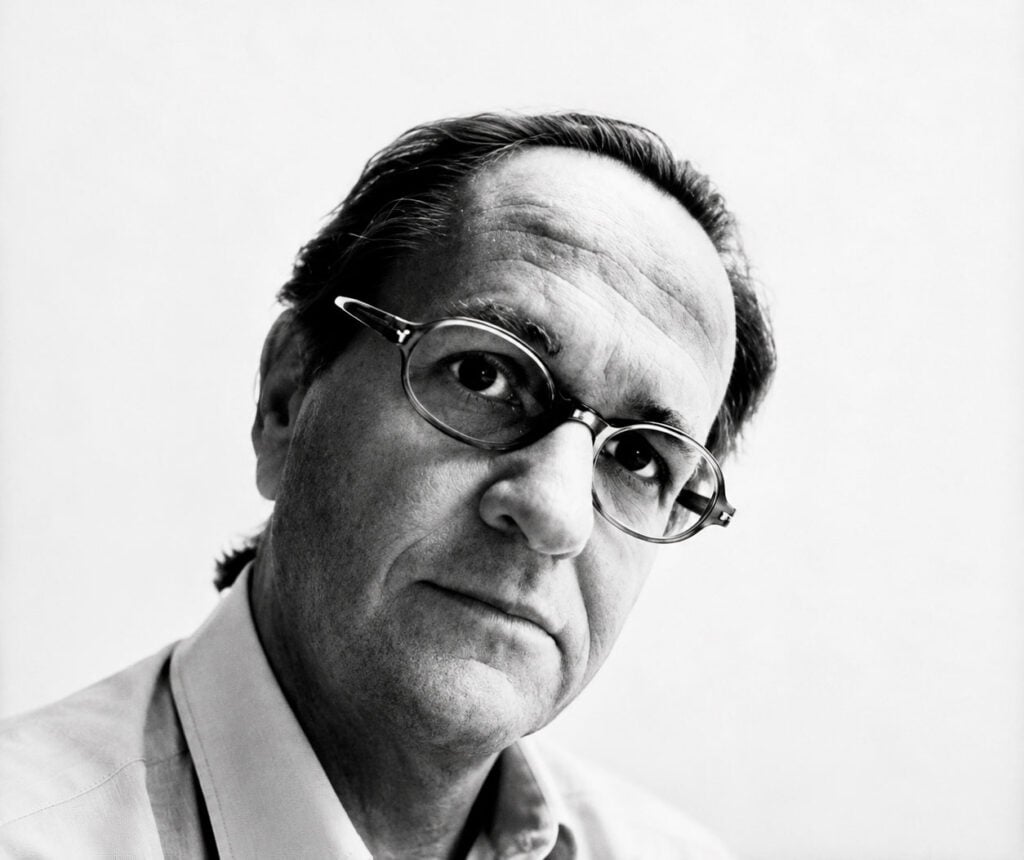
Dr. Jan Oberg, head of TFF’s conflict-mitigation team in
ex-Yugoslavia since 1991. “Rather, it proves that
professional knowledge about conflict-resolution,
negotiation, mediation and peace politics in general is
virtually non-existing in the international discourse and
media.

When someone presents an economic plan, economists can
discuss its pros and cons. When a document is presented as a
“peace” plan, everyone takes it for granted as such without
even asking: What’s in it? What are the weak and the
strong aspects? Why seems one side to say yes and the other
no? Will its implementation help the parties to live in
peace? What kind of peace, if any?

I have studied the early versions of the Agreement and
the version of February 23. The document has undergone
remarkable changes over time. My hypothesis is simple: this
document has been adapted to be acceptable to the Albanian
delegates to such an extent that the Yugoslav side – ready
to accept the political parts at an earlier stage – now find
the changed document unacceptable both in terms of political
and military aspects. Why this change? Because worst case
for the international community would be Yugoslavia saying
yes and the Albanians saying no.

Did your media tell you that the document does not even
mention KLA, the Kosovo (Albanian) Liberation Army? It it
called “Other Forces” throughout the Agreement. You may
wonder how parties can be held accountable if they are not
mentioned by name or actor in the document. Worse, could it
be that there is a KLA, or a fraction of it, that is not
represented at Paris and will NOT feel bound by this
document?”

Jan Oberg is puzzled: “As you will see below, the
text gives plenty of arguments for FRY President Milosevic
to say no thanks, and for Yugoslavia to mobilize and feel
threatened, humiliated, isolated and misunderstood. It will
weld together everybody in Yugoslavia behind President
Milosevic policies – which is the opposite of what the
international community says it wants. However, could it be
that Milosevic anyhow says yes, last minute? In spite of his
mastery of brinkmanship, I don’t find that likely anymore.
If however he does, he will sell that move to the people by
saying that that was needed to save the country from being
bombed and then keep most of the provisions of the Agreement
secret or reinterpret them via loyal media for the vast
majority of citizens in Yugoslavia.

You see, no state wants to have foreign masters and sign
a blind date,” says TFF’s director. “If the international
wanted Yugoslavia to say yes, why is the maximum NATO
presence in the sovereign state of Yugoslavia not mentioned?
Why is the 25.000 to 30.000 troops circulating in the media?
What is this figure based on? It’s way more than is
necessary to secure the implementation of this Agreement IF
signed by both sides in good faith. In Eastern Slavonia, the
United Nations robust military forces of 5.000 disarmed some
17.000 Serb regular troops as well as Serb and Croatian
paramilitaries.

So, either 30.000 NATO troops + 10.000 in Macedonia and
some 300 fighter planes around the country is a) a show of
force before NATO’s 50th Anniversary, b) a fighting force to
secure occupation of Kosovo if Yugoslavia says no, or c) a
force that is aimed, sooner or later, to move into other
trouble spots such as the Voivodina province and Sandzak,
leading to the de facto dissolution of present
Yugoslavia.”

Here follows some examples of what I see as highly problematic provisions in the February 23 Agreement text:

• In the document NATO is welcomed by the Parties to
help ensure compliance by establishing a force – KFOR –
which may be composed of ground, air, and maritime units
from NATO and non-NATO countries; neither the maximum number
nor the countries is specified; KFOR is headed by a
Commander, COMKFOR, and is subject to the direction and
political control of the North Atlantic Council.

• The UN plays no role except that the Security
Council is “invited” to pass a resolution endorsing the
Agreement – which can be seen as a gross humiliation of the
classical peacekeeper with much longer experience and a
highly successful mission in neighbouring Macedonia.

• NATO shall control the use of airspace over
Kosovo.

• All aircraft, radars, surface-to-air missiles and
anti-aircraft artillery in Kosovo shall be relocated
immediately to Serbia proper; as KLA does not possess
aircraft this provision is aimed to prevent Yugoslavia from
threatening NATO forces.

• A 5 kilometer Border Zone shall be set up around
Kosovo including with the rest of FRY and the border marked
on the ground; apart from border guards there shall be no
soldiers on the border.

• Within 180 days “offensive” forces of the Federal
Republic of Yugoslavia, FRY, shall be completely withdrawn
to other locations in Serbia; the Border Guard is limited to
1500 members and up to 1000 C2 and logistics forces in
predetermined cantonment sites. COMKFOR can require further
reductions. This means that Yugoslavia can no longer decide
for itself how it will defend the Kosovo part of the border
around its territory. A maximum of 2500 Ministry of Interior
forces shall be disarmed to have only civil police
functions.

• Conspicuously, the Agreement holds no provisions
as to prevent or reduce military activity in neighbouring
countries such as Macedonia or Albania from where the KLA
has operated, trained and received its supplies.

• Throughout the document there is no mention of
KLA, the Kosovo (Albanian) Liberation Army. It comes under
the designation “Other Forces.” You may wonder how parties
can be held accountable if they are not mentioned by name or
actor in the document. Worse, could it be that there is a
KLA, or a fraction of it, that is not represented at Paris
and will NOT feel bound by this document?

• While there is a very substantial demilitarization
of the Yugoslav forces, the KLA, or ‘Other Forces,’ must at
the entry into force of the Agreement “PUBLICLY COMMIT
THEMSELVES to demilitarize
ON TERMS TO BE DETERMINED by COMKFOR,
renounce violence, guarantee security of international
personnel, and respect the international borders of FRY.”
(Our emphasis). In other words, the real commitment of the
Albanian side comes AFTER the signature in Paris and what
they shall demilitarize and how is a matter between them and
the COMKFOR, later.

• It is true that, by signing, they commit
themselves to refrain from hostile action and to complete
demilitarization; 30 days after the agreement has entered
into force all prohibited weapons shall be stored and they
shall stop wearing uniforms.But the difference between
demilitarization procedures for the two sides leaves the FRY
without what it may reasonably require in terms of
guarantees – whereas the Albanian side can be completely
safe with the provisions for FRY demilitarization.

• It is emphasized twice: “COMKFOR WILL (our
emphasis, in the future, that is) establish procedures for
demilitarization and monitoring of Other Forces in Kosovo
and for the further regulation of their activities…” Why
are the exact procedures not stated in the document?

• While FRY forces and weapons shall be taken out of
Kosovo, there is no mention that KLA/Other Forces weapons
shall be taken out of the region to where at least some if
it may have come from. KLA weapons will be brought to and
registered in storage sites on the territory. Only Other
Forces personnel ‘not of local origin’ shall be
withdrawn.

• It is characteristic of the KLA that it is a
military force and a structure of armed civilians; many Serb
civilians have weapons, too. This problem is not addressed
in the document which only mentions formal military Forces.
Thus, localized violence and terrorist actions – so typical
for the region – is outside the scope of the Agreement.

Article VIII of Chapter 7 deals with the Operations and
Authority of the KFOR – mind you operating under strict
respect for FRY sovereignty and territorial
integrity: 

• KFOR will “operate without hindrance” and can take
“all necessary steps” to ensure compliance by the Parties.
Nothing is said about what defines NECESSARY steps and
force. That is decided solely by NATO and its
commanders.

• FRY, again, has no say over this force on its
territory but must accept “that further directives from the
North Atlantic Council may establish additional duties and
responsibilities for the KFOR in implementing the
Agreement.” In other words, if the “international community”
agrees to expand the authority and military power of NATO,
no one can prevent it from doing so.

• “COMKFOR shall have the authority, without
interference or permission of any Party, to do ALL (our
emphasis) he judges necessary and proper, including the use
of military force, to protect KFOR…” Likewise, he can
order or bring about the cessation of any activity he judges
to constitute a threat or potential threat to KFOR or any
Party.

• NATO’s commander furthermore has the sole
authority to control the airspace over Kosovo and the
airspace within 25 kilometers outward from the boundary of
Kosovo with others parts of FRY.

• A Joint Military Commission is set up with Parties
“to address any military complaints, questions, or problems
that require resolution by the COMKFOR” – that is, not by
common decision-making.

• To be sure, when disputes about the interpretation
of the Agreement arise, “the KFOR Commander is the final
authority in theater” – as is the Chief of Implementation
Mission on the civilian side.

• When the document refers to “NATO” it can mean all
kinds of forces “whether or not they are from a NATO member
country and whether or not they are under NATO or national
command and control.” For the host country this is not
exactly ideal; it’s rather a blind date not knowing who you
host or how many “guests” will arrive.

• As to the behaviour or performance of the
international military forces: according to the Agreement
they are not liable for any damages to public or private
property that they may cause in the course of duties; NATO
shall be immune from ALL legal process and “under all
circumstances and at all times, shall be immune from the
Parties jurisdiction.” They are ensured free and
unrestricted passage and unimpeded access throughout the FRY
including airspace and territorial waters.”

• In contrast to the UN elsewhere, NATO shall not
pay anything to the host country. It is exempt from duties
and taxes and shall pay no charges for navigation, landing
etc. The Parties shall provide, free of costs, such public
facilities as NATO shall require to prepare for and execute
the operation.

• Finally, who is supposed to sign this Agreement? A
representative for the FRY, for Serbia and “for Kosovo.”
Given the composition around the table this means that only
civilian and military representatives of the Albanians in
Kosovo – and no other communities in that province – will
sign this future about their future.

Go to http://www.transnational.org, “Highlight”
or
“Links”
to find the Kosovo Interim Agreement!

© TFF 1999

• You are welcome to re-print, copy, archive, quote
from or re-post this item, but please retain the source.

• TFF’s website has all the relevant links to Iraq,
the Balkans, including media there + peace research, and
non-violence

• Teacher, activist, journalist?? You’ll always find
something interesting at TFF.

• Get your daily global news from the leading media
on TFF’s site, all in one place.
Peace & future researcher + ‌Art Photographer

Related Posts

The agreement is catastrophic both because of what it says and what it doesn’t mention. It reduces further the major asset of security policies: Freedom of action. Jan Oberg TFF director September 25, 2026 A couple of hours before the agreement was signed on September 22, 2026, I published the following 13 hypotheses about what it would most likely contain on TFF Substack (in English). I was wrong on only the first point. Contrary to what Trump had written on his Truth Social platform, it does not appear to come into force immediately. In fact, it turned out to be worse than even I had anticipated. After these hypotheses now come a number of reflections in light of what the agreement actually contains, and does not contain, as well as the way in which it has generally been presented by major media outlets and by the public-service broadcaster DR. My...
Below are TFF-related media mentions, comments, videos and social media posts published elsewhere but not on this homepage. We happen to catch and list only a fraction. Regarding video comments and debates, we recommend that you go to the TFF Video Channel on Substack where many of them are reproduced. Jan Oberg is a contributor to China Daily – 52 million daily clicks – and Global Times, CGTN and CCTV (the national television), China Investment, Xinhua News Agency and several others. Articles and videos on these media very often multiply into countless Chinese (and Western media) that re-post them from these main media. Thanks to The China Academy, his analyses, interviews and comments are frequently posted on YouTube channels such as Thinkers Forum and Wave Media. These videos are often re-posted on Bilibili (China’s YouTube), the China Content Center on TikTok, and on the Chinese edition of TikTok, Douyin.com. This means reaching hundreds of millions of viewers worldwide over a year. While there are too many to catch on all these...
Jan Oberg May 15, 2026 Go to this Fox News page and scroll the whole way down: President Donald Trump tells the world that his meeting with President Xi Jinping yielded a lot of very concrete political and economic results – of course, only where the Chinese side, according to him, agreed with him. He does not mention the Taiwan issue, but Secretary of State, Marco Rubio, says that it did not feature prominently in their talks and that the US policy on Taiwan has not changed. Then go to China Daily – or Global Times – and you will see that for the Chinese it is framework, principles, structure of cooperation etc. that matters – all embedded in the overall idea of “constructive bilateral relationship of strategic stability.” Nowhere is any concrete agreement or deal – all that Trump refers to – mentioned. At the general level, this gives you insights into the very different social...

Recent Articles

Tony Robinson October 4, 2026 Violence is easy to recognise when someone is being beaten, shot or killed. It becomes more difficult when nobody is holding a weapon. Poverty, discrimination, exploitation and repression can restrict a human life just as effectively, although they do so in very different ways and with very different consequences. Simply adding more categories to an ever-growing list of forms of violence does not really solve the problem. The more interesting question is what all these different situations have in common and why it makes sense to describe them using the same word. Human beings do not simply react to what happens around them. They remember the past, imagine things that do not yet exist, make plans and undertake projects. Workers organise because they imagine different working conditions; people migrate because they imagine another life somewhere else; social movements emerge because people refuse to accept the...
It’s a matter of principles, courage, vision and pulling together – while the militarist world is falling apart… Peter Langille October 3, 2026 “Here, then, is the problem which we present to you, stark and dreadful and inescapable: Shall we put an end to the human race; or shall mankind renounce war?”The Bertrand Russell—Albert Einstein Manifesto, July 9, 1955 ⁕ The forecast for what’s ahead is worrisome. The sharp rise in armed conflicts over the past three years is adding to what was already the highest level in over seventy years. Genocides, which should be prevented are supported. A shared climate emergency that jeopardises survival is ignored. Diverse polls now suggest that people are war-weary, worried and interested in a more effective United Nations. And, there are viable policy options for a more secure world! Yet governments are doubling-down, betting on more war and investing heavily. If current trends persist,...
Johan Galtung 1930-2024October 2015 Published here on October 3, 2026 Let us focus on Civilization for conflict analysis and remedies. Major forms of disorder use violence; war is state organized violence. The most belligerent states are the United States of America and Israel, both with civilization roots. National Evangelism, the US Protestant Christian civilization– more national than evangelical–justifies US warfare as exceptionalism of a people chosen by God, with a manifest destiny to run the world. Orthodox Judaism justifies Israeli warfare to conquer and expand from Nile to Euphrates as a religious right and duty to the Eternal One. The third most belligerent country, the UK, no longer believes it is God-chosen but chosen by the USA; not quite the same but something. But the root cause of global disorder lies in the Occident–with Islam–seeing itself as the single, universal civilization valid for all at all times, all others being...

TFF on Substack

Discover and subscribe to more peace materials on TFF Substack

Most Popular

Tony Robinson October 4, 2026 Violence is easy to recognise when someone is being beaten, shot or killed. It becomes more difficult when nobody is holding a weapon. Poverty, discrimination, exploitation and repression can restrict a human life just as effectively, although they do so in very different ways and with very different consequences. Simply adding more categories to an ever-growing list of forms of violence does not really solve the problem. The more interesting question is what all these different situations have in common and why it makes sense to describe them using the same word. Human beings do not simply react to what happens around them. They remember the past, imagine things that do not yet exist, make plans and undertake projects. Workers organise because they imagine different working conditions; people migrate because they imagine another life somewhere else; social movements emerge because people refuse to accept the...
It’s a matter of principles, courage, vision and pulling together – while the militarist world is falling apart… Peter Langille October 3, 2026 “Here, then, is the problem which we present to you, stark and dreadful and inescapable: Shall we put an end to the human race; or shall mankind renounce war?”The Bertrand Russell—Albert Einstein Manifesto, July 9, 1955 ⁕ The forecast for what’s ahead is worrisome. The sharp rise in armed conflicts over the past three years is adding to what was already the highest level in over seventy years. Genocides, which should be prevented are supported. A shared climate emergency that jeopardises survival is ignored. Diverse polls now suggest that people are war-weary, worried and interested in a more effective United Nations. And, there are viable policy options for a more secure world! Yet governments are doubling-down, betting on more war and investing heavily. If current trends persist,...
Johan Galtung 1930-2024October 2015 Published here on October 3, 2026 Let us focus on Civilization for conflict analysis and remedies. Major forms of disorder use violence; war is state organized violence. The most belligerent states are the United States of America and Israel, both with civilization roots. National Evangelism, the US Protestant Christian civilization– more national than evangelical–justifies US warfare as exceptionalism of a people chosen by God, with a manifest destiny to run the world. Orthodox Judaism justifies Israeli warfare to conquer and expand from Nile to Euphrates as a religious right and duty to the Eternal One. The third most belligerent country, the UK, no longer believes it is God-chosen but chosen by the USA; not quite the same but something. But the root cause of global disorder lies in the Occident–with Islam–seeing itself as the single, universal civilization valid for all at all times, all others being...
Read More
Living-Peace-Sign-Budapest-copy
Tony Robinson October 4, 2026 Violence is easy to recognise when someone is being beaten, shot or killed. It becomes more difficult when nobody is holding a weapon. Poverty, discrimination, exploitation and repression can restrict a human life just as effectively, although they do so in very different ways and with very different consequences. Simply adding more categories to an ever-growing list of forms of violence does not really solve the problem. The more interesting question is what all these different situations have in common and why it makes sense to describe them using the same word. Human beings do not simply react to what happens around them. They remember the past, imagine things that do not yet exist, make plans and undertake projects. Workers organise because they imagine different working conditions; people migrate because they imagine another life somewhere else; social movements emerge because people refuse to accept the...
b54a1f10-8c65-4f0b-9dd5-4abc0a7d04cc_2659x2659
It’s a matter of principles, courage, vision and pulling together – while the militarist world is falling apart… Peter Langille October 3, 2026 “Here, then, is the problem which we present to you, stark and dreadful and inescapable: Shall we put an end to the human race; or shall mankind renounce war?”The Bertrand Russell—Albert Einstein Manifesto, July 9, 1955 ⁕ The forecast for what’s ahead is worrisome. The sharp rise in armed conflicts over the past three years is adding to what was already the highest level in over seventy years. Genocides, which should be prevented are supported. A shared climate emergency that jeopardises survival is ignored. Diverse polls now suggest that people are war-weary, worried and interested in a more effective United Nations. And, there are viable policy options for a more secure world! Yet governments are doubling-down, betting on more war and investing heavily. If current trends persist,...
010
Johan Galtung 1930-2024October 2015 Published here on October 3, 2026 Let us focus on Civilization for conflict analysis and remedies. Major forms of disorder use violence; war is state organized violence. The most belligerent states are the United States of America and Israel, both with civilization roots. National Evangelism, the US Protestant Christian civilization– more national than evangelical–justifies US warfare as exceptionalism of a people chosen by God, with a manifest destiny to run the world. Orthodox Judaism justifies Israeli warfare to conquer and expand from Nile to Euphrates as a religious right and duty to the Eternal One. The third most belligerent country, the UK, no longer believes it is God-chosen but chosen by the USA; not quite the same but something. But the root cause of global disorder lies in the Occident–with Islam–seeing itself as the single, universal civilization valid for all at all times, all others being...
Screenshot 2026-10-02 011738
Jan ObergPhD, director, The Transnational Foundation for Peace and Future Research, TFFLund, Sweden October 2, 2026 This is my full original manuscript. The Chinese Academy of Social Science, CASS, makes two publications out if it. 1. China’s Five-year plan emphasized the capabilities of basic research and original innovation. It is regarded as the goal of the future social development, which, as required, should be significantly enhanced. Can you comment on the importance of original innovation in research and academic study? I believe it is easier to define “original innovation” in the natural sciences than in social sciences. The breaking points of what constitutes something new, or innovative, are not quite as sharp in the latter. But in both fields it is about opening up something that was closed, unseen, unexplored before – making manifest what was earlier latent. Innovations come in many forms and shapes – naming something that was not...
arctic-circle-map
The agreement is catastrophic both because of what it says and what it doesn’t mention. It reduces further the major asset of security policies: Freedom of action. Jan Oberg TFF director September 25, 2026 A couple of hours before the agreement was signed on September 22, 2026, I published the following 13 hypotheses about what it would most likely contain on TFF Substack (in English). I was wrong on only the first point. Contrary to what Trump had written on his Truth Social platform, it does not appear to come into force immediately. In fact, it turned out to be worse than even I had anticipated. After these hypotheses now come a number of reflections in light of what the agreement actually contains, and does not contain, as well as the way in which it has generally been presented by major media outlets and by the public-service broadcaster DR. My...
girl-5894831_1280
Below are TFF-related media mentions, comments, videos and social media posts published elsewhere but not on this homepage. We happen to catch and list only a fraction. Regarding video comments and debates, we recommend that you go to the TFF Video Channel on Substack where many of them are reproduced. Jan Oberg is a contributor to China Daily – 52 million daily clicks – and Global Times, CGTN and CCTV (the national television), China Investment, Xinhua News Agency and several others. Articles and videos on these media very often multiply into countless Chinese (and Western media) that re-post them from these main media. Thanks to The China Academy, his analyses, interviews and comments are frequently posted on YouTube channels such as Thinkers Forum and Wave Media. These videos are often re-posted on Bilibili (China’s YouTube), the China Content Center on TikTok, and on the Chinese edition of TikTok, Douyin.com. This means reaching hundreds of millions of viewers worldwide over a year. While there are too many to catch on all these...





