
It was a welcome move, but only in some respects. The new center-left Swedish Prime Minister, Stefan Lofven, in his inaugural speech to Parliament indicated on October 3rd the intention of the Swedish government to recognize Palestinian statehood.

He explained that such a move mentioned in the platform of his party is in accord with promoting a two-state solution, and more significantly, that is to be “negotiated in accordance with international law.” The call for adherence to international law in future diplomacy is actually more of a step forward than is the announced intention of future recognition, which has so far received all the media attention and incurred the wrath of Tel Aviv.

To bring international law into future negotiations would amount to a radical modification of the ‘peace process’ that came into being with the Oslo Declaration of Principles in 1993.

The Israel/United States view was to allow any agreements between the parties to arise from a bargaining process, which is a shorthand for acknowledging the primacy of power, taking account of ‘facts on the ground’ (that is, the unlawful settlements) and diplomatic leverage (allowing the United States to fake the role of ‘honest broker’ while at the same time making sure that Israel’s interests are protected).

I suspect that this hopeful language suggesting the relevance of international law was inserted without any awareness of its importance or relevance. Such an interpretation is in line with Swedish official explanations of their initiative as a way of helping ‘moderate’ Palestinian leaders gain control of diplomacy, thereby facilitating the eventual goal of mutual coexistence based on two states.

It was presumed by Stockholm without any supportive reasoning, and against the weight of evidence and experience, that a Palestine state could emerge from a reinvigorated diplomacy. No mention was made of the settlements, separation wall, road network that have cut so deeply into the Palestinian remnant, which as of the 1967 borders was already 22% of historic Palestine, and less than half of what the UN partition plan had offered the Palestinians in 1947, which at the time seemed unfair and inconsistent with Palestinian rights under international law.

The United States Government spokesperson, Jan Paski, was careful to confirm the Oslo approach adopted by Washington that has been so harmful to Palestinian prospects for a viable state: “We certainly support Palestinian statehood, but it can come only through a negotiated outcome, a resolution of final status issues and mutual recognition by both parties.” Note the pointed absence of any reference to international law.

Beyond this, there is less and less reason to suppose that the Israeli government supports a process that leads to Palestinian statehood in any meaningful sense, although Netanyahu repeats in international settings the sterile mantra of saying that any such results can only come from direct negotiations between the parties, and he adds the Swedish initiative if carried out, is declared to be an obstacle to such an outcome.

So as not to arouse hopes, Netanyahu adds that no agreement will be reached that does not protect the national interests of Israel and ensure the security of Israeli citizens. When he speaks at home in Hebrew the prospect of a Palestinian state becomes as remote as the establishment of world government.

Unsurprisingly, the head of Israel’s opposition Labor Party, Isaac Herzog, was active in reinforcing Netanyahu’s objection to Sweden’s proposed course of action. Herzog in conversation with Lofven sought to dissuade Sweden from acting ‘unilaterally,’ suggesting that such a move was likely to produce undisclosed ‘undesirable consequences.’

So much for the Israeli ‘peace camp’ that now seems content to act as errand boy for state policy as led by the right-wing Likud.

The Palestinian Authority, short on good news since the Gaza attacks, at its highest levels (Abbas, Erakat) greeted the Swedish move as ‘remarkable and courageous,’ as well as ‘great.’ The PA leadership even suggested that recognition of Palestinian statehood could build pressure for a resumption of talks on a two-state solution as if that would be beneficial for Palestine.

Such sentiments turn a blind eye toward the Oslo record of failure from a Palestinian point of view, and quite the opposite for Israel.

What is the value of the Swedish proposed step, assuming that it takes place?

Israel and the United States seemed poised to use full court pressure to persuade Sweden to delay indefinitely making the move, and Sweden has retreated to the extent that it has reassured the world that it is not planning to act ‘tomorrow morning’ and hopes to listen to the views of all interested governments and engage in dialogue before moving forward.

At the same time, the British Parliament is set to vote on October 13 on a non-binding resolution urging recognition by Britain of Palestinian statehood.

Even proposing recognition of Palestinian statehood is definitely a psychological boost for the Palestinian Authority, but it changes nothing on the ground, and likely makes Israel take some defiant steps such as provocatively issuing permits for additional housing units in the settlements, which it did in 2012 as retaliation for Palestine’s successful bid to be recognized by the UN General Assembly as a non-member observer state (similar to the status enjoyed by the Vatican).

Recognition also gives Palestine potential access to the International Criminal Court, which again worries Israel as it should, although the Palestinian Authority has so far held back from seeking to become a party to the ICC, and by so doing gain the capacity to request the prosecutor to investigate various allegations of Israeli war crimes, including the settlements.

In international law diplomatic recognition by states has been traditionally viewed as largely a matter of discretion. The United States withheld recognition from mainland China for decades after it had consolidated its governmental control over the territory and its population.

Palestine has been long recognized by at least 125 states, and enjoys diplomatic relations as if a state. UN membership presupposes statehood, but it is also highly politicized and subject to the veto by any permanent member of the Security Council. Indications are that, if necessary, the United States will stand alone in using its veto to block Palestine from becoming a member.

But why does Israel care so much as nothing changes on the ground?

There would seem to be three reasons, none very persuasive. Firstly, since Palestine badly wants to be a sovereign state and a UN member, it would make further concessions to Israel to obtain such a status in the event of further negotiations.

Secondly, Israel seems eager to have the formal capacity to deny Palestinian statehood in a full sense so as to allow for the future likely incorporation the West Bank into Israel when the opportune moment arrives. This is a course of action favored by the recently elected Israeli president, Reuven Rivlin, who offers Palestinians a supposedly benevolent ‘economic peace’ in exchange if they swallow their political pride.

Thirdly, recognition might give the Palestinian Authority more leverage at the UN and the ICC, and self-esteem in Palestinian circles, especially if other European Union members would follow the Swedish example. At some point down the line Israel’s prolonged occupation of Palestine would under these conditions come under increasing legal, moral, and political fire.

Yet from the perspective of the Palestinian people as distinct from the Palestinian Authority, does it make sense at this stage in their struggle to continue to act as if the two-state solution could still bring peace?

Israel’s feverish settlement activity of recent years seems to be a clear message that a viable sovereign Palestinian state is no longer in the cards.

In fact, Sweden seems to be playing the Oslo game after the game has ended for all practical purposes.

In other words, if Sweden’s act of recognition had been linked to Oslo’s failure it would be pointing the way toward a constructive turn in peace diplomacy, but to justify it as a step toward the two-state solution achieved by direct negotiations of the sort that has failed repeatedly for more than 20 years seems an ill-considered expression of political innocence on the part of the inexperienced new leadership in Stockholm, a gesture for peace undoubtedly meant in good faith, but seemingly without any awareness that the sick patient died years ago.
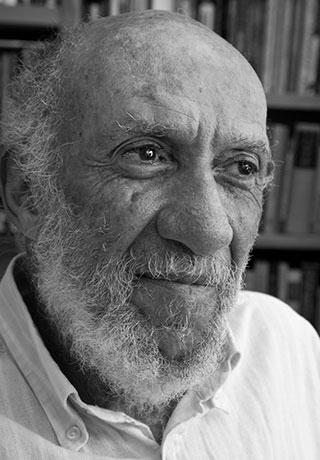

Professor Falk became an adviser to TFF when it was established in 1985.

Related Posts

Photos © TFF 2000 Read PressInfo 90 “Lift the Sanctions and Bring More Aid to Yugoslavia” See Pictures from Belgrade © TFF 2000 Please reprint, copy, archive, quote or re-post this item, but please retain the source.
LONDON – So far so good, at least on the wider level. While internally Iraq seems on the edge of chaos, the much heralded clash of civilizations between the Muslim and Judaeo-Christian worlds has yet to become apparent. We have anger and despair aplenty in the Arab and Muslim worlds. But very little rushing to the standard and there was no great pilgrimage of warriors to join the fight, as happened when the Soviet Union invaded Afghanistan twenty years ago, and then, having driven the Red Army out, were left to ferment in that mountainous redoubt. With the armaments supplied by the CIA the mujahidin were transformed into Al Qaeda that became, for a relatively brief moment as these things go, ‘the greatest threat to the homeland that America has ever known.’ Nevertheless a ‘Cold War’ between much of the Muslim world and the West is certainly in full swing. Winston...
The Challenge of Nuclear Weaponsin the Twenty-first CenturyA Path Forward The peoples and governments of the world face an urgent challenge relating to weaponry of mass destruction and particularly to nuclear weaponry.  At the crossroads of technology, terrorism, geopolitical ambition, and policies of preemption are new and potent dangers for humanity. Despite ending the nuclear standoff of the Cold War era, nuclear weaponry is again menacing the peoples of the world with catastrophic possibilities.  We recognize the need for any government to pursue its security interests in accordance with international law; and further, we recognize that distinctive threats to these interests now exist as a result of an active international terrorist network having declared war on the United States and its allies. Nonetheless, we reject the assessment of the current US administration that upgrading a reliance on nuclear weapons is in any sense justified as a response. We find it...

Recent Articles

Tony Robinson October 4, 2026 Violence is easy to recognise when someone is being beaten, shot or killed. It becomes more difficult when nobody is holding a weapon. Poverty, discrimination, exploitation and repression can restrict a human life just as effectively, although they do so in very different ways and with very different consequences. Simply adding more categories to an ever-growing list of forms of violence does not really solve the problem. The more interesting question is what all these different situations have in common and why it makes sense to describe them using the same word. Human beings do not simply react to what happens around them. They remember the past, imagine things that do not yet exist, make plans and undertake projects. Workers organise because they imagine different working conditions; people migrate because they imagine another life somewhere else; social movements emerge because people refuse to accept the...
It’s a matter of principles, courage, vision and pulling together – while the militarist world is falling apart… Peter Langille October 3, 2026 “Here, then, is the problem which we present to you, stark and dreadful and inescapable: Shall we put an end to the human race; or shall mankind renounce war?”The Bertrand Russell—Albert Einstein Manifesto, July 9, 1955 ⁕ The forecast for what’s ahead is worrisome. The sharp rise in armed conflicts over the past three years is adding to what was already the highest level in over seventy years. Genocides, which should be prevented are supported. A shared climate emergency that jeopardises survival is ignored. Diverse polls now suggest that people are war-weary, worried and interested in a more effective United Nations. And, there are viable policy options for a more secure world! Yet governments are doubling-down, betting on more war and investing heavily. If current trends persist,...
Johan Galtung 1930-2024October 2015 Published here on October 3, 2026 Let us focus on Civilization for conflict analysis and remedies. Major forms of disorder use violence; war is state organized violence. The most belligerent states are the United States of America and Israel, both with civilization roots. National Evangelism, the US Protestant Christian civilization– more national than evangelical–justifies US warfare as exceptionalism of a people chosen by God, with a manifest destiny to run the world. Orthodox Judaism justifies Israeli warfare to conquer and expand from Nile to Euphrates as a religious right and duty to the Eternal One. The third most belligerent country, the UK, no longer believes it is God-chosen but chosen by the USA; not quite the same but something. But the root cause of global disorder lies in the Occident–with Islam–seeing itself as the single, universal civilization valid for all at all times, all others being...

TFF on Substack

Discover and subscribe to more peace materials on TFF Substack

Most Popular

Tony Robinson October 4, 2026 Violence is easy to recognise when someone is being beaten, shot or killed. It becomes more difficult when nobody is holding a weapon. Poverty, discrimination, exploitation and repression can restrict a human life just as effectively, although they do so in very different ways and with very different consequences. Simply adding more categories to an ever-growing list of forms of violence does not really solve the problem. The more interesting question is what all these different situations have in common and why it makes sense to describe them using the same word. Human beings do not simply react to what happens around them. They remember the past, imagine things that do not yet exist, make plans and undertake projects. Workers organise because they imagine different working conditions; people migrate because they imagine another life somewhere else; social movements emerge because people refuse to accept the...
It’s a matter of principles, courage, vision and pulling together – while the militarist world is falling apart… Peter Langille October 3, 2026 “Here, then, is the problem which we present to you, stark and dreadful and inescapable: Shall we put an end to the human race; or shall mankind renounce war?”The Bertrand Russell—Albert Einstein Manifesto, July 9, 1955 ⁕ The forecast for what’s ahead is worrisome. The sharp rise in armed conflicts over the past three years is adding to what was already the highest level in over seventy years. Genocides, which should be prevented are supported. A shared climate emergency that jeopardises survival is ignored. Diverse polls now suggest that people are war-weary, worried and interested in a more effective United Nations. And, there are viable policy options for a more secure world! Yet governments are doubling-down, betting on more war and investing heavily. If current trends persist,...
Johan Galtung 1930-2024October 2015 Published here on October 3, 2026 Let us focus on Civilization for conflict analysis and remedies. Major forms of disorder use violence; war is state organized violence. The most belligerent states are the United States of America and Israel, both with civilization roots. National Evangelism, the US Protestant Christian civilization– more national than evangelical–justifies US warfare as exceptionalism of a people chosen by God, with a manifest destiny to run the world. Orthodox Judaism justifies Israeli warfare to conquer and expand from Nile to Euphrates as a religious right and duty to the Eternal One. The third most belligerent country, the UK, no longer believes it is God-chosen but chosen by the USA; not quite the same but something. But the root cause of global disorder lies in the Occident–with Islam–seeing itself as the single, universal civilization valid for all at all times, all others being...
Read More
Living-Peace-Sign-Budapest-copy
Tony Robinson October 4, 2026 Violence is easy to recognise when someone is being beaten, shot or killed. It becomes more difficult when nobody is holding a weapon. Poverty, discrimination, exploitation and repression can restrict a human life just as effectively, although they do so in very different ways and with very different consequences. Simply adding more categories to an ever-growing list of forms of violence does not really solve the problem. The more interesting question is what all these different situations have in common and why it makes sense to describe them using the same word. Human beings do not simply react to what happens around them. They remember the past, imagine things that do not yet exist, make plans and undertake projects. Workers organise because they imagine different working conditions; people migrate because they imagine another life somewhere else; social movements emerge because people refuse to accept the...
b54a1f10-8c65-4f0b-9dd5-4abc0a7d04cc_2659x2659
It’s a matter of principles, courage, vision and pulling together – while the militarist world is falling apart… Peter Langille October 3, 2026 “Here, then, is the problem which we present to you, stark and dreadful and inescapable: Shall we put an end to the human race; or shall mankind renounce war?”The Bertrand Russell—Albert Einstein Manifesto, July 9, 1955 ⁕ The forecast for what’s ahead is worrisome. The sharp rise in armed conflicts over the past three years is adding to what was already the highest level in over seventy years. Genocides, which should be prevented are supported. A shared climate emergency that jeopardises survival is ignored. Diverse polls now suggest that people are war-weary, worried and interested in a more effective United Nations. And, there are viable policy options for a more secure world! Yet governments are doubling-down, betting on more war and investing heavily. If current trends persist,...
010
Johan Galtung 1930-2024October 2015 Published here on October 3, 2026 Let us focus on Civilization for conflict analysis and remedies. Major forms of disorder use violence; war is state organized violence. The most belligerent states are the United States of America and Israel, both with civilization roots. National Evangelism, the US Protestant Christian civilization– more national than evangelical–justifies US warfare as exceptionalism of a people chosen by God, with a manifest destiny to run the world. Orthodox Judaism justifies Israeli warfare to conquer and expand from Nile to Euphrates as a religious right and duty to the Eternal One. The third most belligerent country, the UK, no longer believes it is God-chosen but chosen by the USA; not quite the same but something. But the root cause of global disorder lies in the Occident–with Islam–seeing itself as the single, universal civilization valid for all at all times, all others being...
Screenshot 2026-10-02 011738
Jan ObergPhD, director, The Transnational Foundation for Peace and Future Research, TFFLund, Sweden October 2, 2026 This is my full original manuscript. The Chinese Academy of Social Science, CASS, makes two publications out if it. 1. China’s Five-year plan emphasized the capabilities of basic research and original innovation. It is regarded as the goal of the future social development, which, as required, should be significantly enhanced. Can you comment on the importance of original innovation in research and academic study? I believe it is easier to define “original innovation” in the natural sciences than in social sciences. The breaking points of what constitutes something new, or innovative, are not quite as sharp in the latter. But in both fields it is about opening up something that was closed, unseen, unexplored before – making manifest what was earlier latent. Innovations come in many forms and shapes – naming something that was not...
arctic-circle-map
The agreement is catastrophic both because of what it says and what it doesn’t mention. It reduces further the major asset of security policies: Freedom of action. Jan Oberg TFF director September 25, 2026 A couple of hours before the agreement was signed on September 22, 2026, I published the following 13 hypotheses about what it would most likely contain on TFF Substack (in English). I was wrong on only the first point. Contrary to what Trump had written on his Truth Social platform, it does not appear to come into force immediately. In fact, it turned out to be worse than even I had anticipated. After these hypotheses now come a number of reflections in light of what the agreement actually contains, and does not contain, as well as the way in which it has generally been presented by major media outlets and by the public-service broadcaster DR. My...
girl-5894831_1280
Below are TFF-related media mentions, comments, videos and social media posts published elsewhere but not on this homepage. We happen to catch and list only a fraction. Regarding video comments and debates, we recommend that you go to the TFF Video Channel on Substack where many of them are reproduced. Jan Oberg is a contributor to China Daily – 52 million daily clicks – and Global Times, CGTN and CCTV (the national television), China Investment, Xinhua News Agency and several others. Articles and videos on these media very often multiply into countless Chinese (and Western media) that re-post them from these main media. Thanks to The China Academy, his analyses, interviews and comments are frequently posted on YouTube channels such as Thinkers Forum and Wave Media. These videos are often re-posted on Bilibili (China’s YouTube), the China Content Center on TikTok, and on the Chinese edition of TikTok, Douyin.com. This means reaching hundreds of millions of viewers worldwide over a year. While there are too many to catch on all these...




