
A major undertaking of the victorious powers in World War II was to impose individual criminal accountability upon political and military leaders for alleged crimes committed during wartime before a tribunal convened by the victors that gave those accused a fair opportunity to present a defense.

This application of this idea of accountability to German and Japanese surviving leaders at trials held in Nuremberg and Tokyo was hailed at the time as a major step in the direction of a ‘just peace.’

International law was treated as binding upon sovereign states and those that represented the government, conceived to be a major step in the direction of a global rule of law. The final decisions of these tribunals also produced a narrative as to why World War II was a necessary and just war. Such an outcome was both a vindication of the victory on the battlefield and a punitive repudiation of those who fought and lost. Significantly, this criminal process was formally initiated only after the combat phase of the war had ended and Germany and Japan had surrendered.

There were skeptics in 1945 that whispered ‘victors’ justice,’ and insisted that this ‘Nuremberg experience’ was a partisan exercise in truth-telling. Above the courtroom hung an invisible sign reading ‘only losers need enter here.’ The Nuremberg goddess of ‘war justice’ wore no blindfold, assessed with one eye the crimes of the losers and averted her other eye so as not to see the crimes of the winners.

In the actual trials those whose criminality was being assessed were not accused of any crimes that resembled the practices of the winners, and were not allowed by the tribunal bring up in their defense any of their alleged crimes.

Many wanted to overlook this flaw and moved on to create a justice system that would indeed operate on the basis of the nature of the act as criminal or not, and not make criminality depend on the identity of the actor. But moving toward the ideal of equality before the law has not been easy. It requires elevating international criminal law above the precepts of geopolitics. Yet the impulse to do so in form has surfaced strongly in the aftermath of the Cold War, but we have yet to see any corresponding substantive transformation that must occur if equals are to be treated equally in international criminal law.

Against such a background, the attempts to hold individuals, whether acting on behalf of governments or insurgencies, individually accountable for war crimes is treated as a core element of global justice.

Since the International Criminal Court (ICC) was established in 2002, an institutional mechanism exists on a global level by which to apply international criminal law in an objective and authoritative manner. Further there exists convincing proof that horrifying atrocities have been committed in the course of the Syrian civil war, principally by the government and armed forces of Syria, and to a far lesser extent by various factions among the fragmented opposing rebel forces. In these circumstances, it would certainly seem appropriate to charge both Syrian government officials, including military commanders, and members of the insurgent opposition, with such crimes.

France presented a resolution to the UN Security Council on 22 May calling upon the ICC to investigate allegations of war crimes in Syria, and to proceed with prosecutions to the extent possible. The resolution was supported by a 13-2 vote, yet it failed to pass because the two dissenting votes were cast by Russia and China, countries enjoying a right of veto. As might be expected, there have been angry explanations of the result given by both sides.

According to the Russian delegate, the French initiative was nothing more than ‘a publicity stunt’ that would hamper, or even preclude, the difficult search for a diplomatic end to the strife. The Western reaction, significantly endorsed by the UN Secretary General’s office, declared that such a use of the veto was ‘irresponsible,’ even ‘disgraceful.’ It amounted to a de facto grant of impunity to the worst perpetrators of state crime active on the planet at this time.

I believe that both of these contrasting reactions are understandable, and can be given a qualified endorsement despite seeming to contradict one another.

The Russian reaction reflects a view that the main motivations for such a resolution is to weaken the legitimacy of the Damascus regime in the midst of an unresolved struggle for control of the country, and in this sense is better interpreted geopolitically as an irresponsible propaganda move rather than as a genuine attempt to promote criminal justice.

As well, it has been Moscow’s insistence all along that the only way to end the violence in Syria is by way of diplomatic compromise. Thus, any attempt to indict Syrian leaders as war criminals while the fighting persists weakens the already dim prospects of resolving the conflict by diplomacy. It gives Assad and other Syrian leaders, the circle of those that likely would have been indicted, strong incentives to rely on combat rather than take their chances with diplomacy.

The French approach, strongly supported by the Western powers, especially the United States, focuses on the clear evidence of criminality attributable to the Damascus regime. Such behavior deserves to be formally criminalized, and the fact that the Assad regime remains in power enhances the urgency of doing so. There is no need to look beyond these facts, and taking such action may increase the pressure on the Syrian government to seek accommodation.

Further along these lines, the argument that recourse to the ICC will end diplomatic efforts to end the violence is specious. Conventional diplomacy has been given many chances, and has failed. They claim that diplomacy has been repeatedly tried and failed, including reliance at the highest levels on the good offices of the UN and Arab League through the determined efforts by Special Envoys, first, Kofi Annan and the Lakhdar Brahimi.

To act as if diplomacy might succeed in the future is mainly a diversionary tactic to discourage taking immediate steps that might bring the war to an end in ways that are helpful to the aspirations of the majority of Syrians. The supporters of the French resolution argue that activating the ICC will produce public indignation, swing support to the insurgent side, and produce a more politically and morally desirable end game to the conflict by discrediting the Damascus regime and empowering the opposition within Syria, the region, and the world.

There are many uncertainties exposed by this debate. It is difficult to reach a clear conclusion as to which side is more persuasive, but there are a series of considerations that should be taken into account, and add weight to those who voice skepticism about the French initiative.

Motivation. There are reasons to think that this effort at this time is mainly an expression of frustration and desperation, and as such a misuse of the ICC by Western powers.

True, the crimes of the insurgent rebels as well as those of the Syrian government were included in the proposed resolution, but the motivation was to delegitimize the Damascus government. Yet the rationale for initiating a criminal investigation directed at the leadership of all participants in the midst of a civil war for the control of the country seems like a misdirected move that is made in the face of the failure of earlier Western efforts to intervene sufficiently on the insurgent side .to produce regime change

Timing. To use the ICC in the midst of an ongoing civil war in Syria is to take sides, and thus interfere with an ongoing internal struggle for control of the state and society. Mentioned above, even the Allied Powers in World War II waited until the guns fell silent before initiating any criminal process.

As such, acting in the present setting interferes with the right of self-determination enjoyed by the people of Syria. Yet since there has been already considerable interference through funding and material support, the preconditions for self-determination do not exist, making an end to the violence that has been so devastating for the population of the country a primary goal.

This makes it seem that the most important question to ask is whether criminal indictments while the war rages is likely to hasten or delay an ending of the conflict. And since neither side has shown the ability to prevail, the Russians seem right in their insistence that despite disappointments with earlier efforts, diplomacy continues to be the only path forward, although it is admittedly narrow.

Justice. Is justice served when the authority of the ICC is invoked as a political instrument to influence the outcome of a civil war? There are reasons to worry about the discrediting impact of double standards. Why was there never any initiative to pursue leaders of the United States and the United Kingdom during the course of the Iraq War, which also included many incidents that seemed to qualify as crimes against humanity?

This question takes on greater weight when added to earlier criticisms of the profile of the ICC, which has pursued a variety of sub-Saharan African leaders, but few others. It is also relevant to recall that the Serbian leader, Slobodan Milosevic, was indicted in the midst of the Kosovo War in 1999 undertaken without UN authorization by NATO, again seemingly motivated by the urge to strengthen public support for the justness of a legally controversial military effort to end Serbian administration of Kosovo.

Again in the NATO led military operation against the Libyan regime, the ICC issued arrest warrants for the Qaddafi leadership while NATO planes were bombing Tripoli. In effect, the allegation being made by critics of such war crimes prosecutions is that the whole undertaking has been politicized in ways that lead to a selective application of the law that seems inconsistent with claims of justice. In effect, the criticism of Nuremberg still applies – only losers and the weak are accountable. For the others, impunity.

Feasibility. The unlikelihood of obtaining personal jurisdiction in relation to the principal perpetrators of war crimes in Syria, especially Bashar al-Assad and major political officials and military commanders, makes the claimed rationale for seeking indictments at this stage also suspect.

Proceeding now seems to have as its main justification a means to add moral weight to the position of pro-insurgency governments that something more should be done to stop the criminality of the Assad-led government. Reinforcing this reasoning is a consensus that since military intervention is not feasible and diplomacy has failed, the only option left is to charge Syrian leaders with crimes against humanity.

The ICC provides a venue to mobilize pressure for giving additional help to the rebels, and at the same time depriving the Damascus government of whatever is left of its legitimacy. The fact that the French resolution calls also for an investigation of possible crimes against humanity committed by the opposition, while not being frivolous, is nevertheless certain to receive far less attention in the event that the UNSC had given the ICC a green light.

There is a serious question as to whether it is appropriate to use the ICC to gather evidence and prepare an indictment in circumstances where prospects of prosecution are remote and an ongoing struggle for control of the Syrian state remains unresolved.

Such limitations also would seem to reinforce concerns about the timing of this initiative. It makes recourse to ICC not only ineffectual as a means to pursue criminal justice, but damaging to the credibility of this fledgling international institution that was created, it should be remembered, to overcome the vagaries of geopolitics, not to serve as their instrument for engaging in maneuvers.

Concluding Comment. There are two intertwined concerns: First, whether seeking criminal indictments of Syrians accused of crimes against humanity is on balance helpful or harmful in relation to the search for peace that has so far proved fruitless.
This issue should be considered in relation to prospects for resolving the devastating conflict in Syria that has already lasted for more than three years.

And secondly, whether such recourse to the ICC would strengthen or weaken this judicial institution, and its need to overcome the strong impression of operating on the basis of double standards in relation to criminal accountability. So far all efforts to use the ICC in response to crimes alleged against Western countries have been rebuffed, and Western leaders have enjoyed impunity and have minimized their own participation in the activities of the ICC except when it serves their interests in going after adversaries.

A tiny opening is the recent indication that the ICC is formally investigating criminal charges relating to the abuse of Iraqi detainees by United Kingdom occupying forces in the years after 2003. Perhaps, the times are changing, after all!


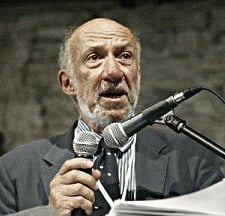
Professor Falk became an adviser to TFF when it was established in 1985.

Related Posts

Photo above: Carl Fredrik Reuterswärd’s Non-Violence outside UN Headquarters in New York. Kirill Levin, CC BY-NC-SA 2. Jan Oberg November 3, 2026 I am happy to be published in Horizons which is produced by the Center for International Relations and Sustainable Development, CIRSD, in Belgrade. My contribution brings out a radical re-thinking of what concepts such as defence, security, deterrence – and peace – may mean if we want to create a more peaceful world. It also summarises a few things I have been working with the last few decades. Please read it here Og her er den på dansk, takket være Johnny Baltzersens lynhurtige oversættelse
UNITE-tillid, DREAM-velstand og andre konstruktive komponenter Normally we publish articles in English here. But this is a translation of a very important TFF document that should reach as many as possible in Denmark since this country’s government has been one of the most hardline in Europe and, up till now at least, has refused to use diplomacy and, instead, spent tremendous sums on arming Ukraine with the express goal of defeating Russia. Thus this – unique – article is in Danish. Vi er Johnny Baltzersen og hans Fælles Sikkerhed – Fælles Fremtid på Substack overmåde taknemmelige for at have oversat og publiceret TFF’s 2025-portfølje for fredsidéer med henblik på Ukraines fremtid. Vi håber den nu kan nå mange flere danskere – som også vil sprede den og skabe debat – nu den danske regerings og folketingspartiernes politik på dette område siden 2022 står nu – forudsigeligt – ved vejs ende....
Jan Oberg TFF director October 28, 2026 Exactly one month has now passed since I published my criticism of the introduction to the special issue on Johan Galtung published by the Journal of Global Security Studies, JoGSS, and of Tor Egil Førland’s chapter about Galtung which serves as a preview to his forthcoming biography of Galtung to be published by PRIO. See the original on The Transnational here and the same article on TFF Substack with many general and critical comments and, in particular, the people who decided to withdraw from the biography project in protest. The special issue itself was extraordinary. It was devoted to the intellectual legacy of one of the founders of peace research and contained a number of strong assessments of his personality, scholarship, intellectual trajectory, and public role. Such assessments are, of course, entirely legitimate. No scholar is beyond criticism, and neither was Johan Galtung....

Recent Articles

Photo above: Carl Fredrik Reuterswärd’s Non-Violence outside UN Headquarters in New York. Kirill Levin, CC BY-NC-SA 2. Jan Oberg November 3, 2026 I am happy to be published in Horizons which is produced by the Center for International Relations and Sustainable Development, CIRSD, in Belgrade. My contribution brings out a radical re-thinking of what concepts such as defence, security, deterrence – and peace – may mean if we want to create a more peaceful world. It also summarises a few things I have been working with the last few decades. Please read it here Og her er den på dansk, takket være Johnny Baltzersens lynhurtige oversættelse
UNITE-tillid, DREAM-velstand og andre konstruktive komponenter Normally we publish articles in English here. But this is a translation of a very important TFF document that should reach as many as possible in Denmark since this country’s government has been one of the most hardline in Europe and, up till now at least, has refused to use diplomacy and, instead, spent tremendous sums on arming Ukraine with the express goal of defeating Russia. Thus this – unique – article is in Danish. Vi er Johnny Baltzersen og hans Fælles Sikkerhed – Fælles Fremtid på Substack overmåde taknemmelige for at have oversat og publiceret TFF’s 2025-portfølje for fredsidéer med henblik på Ukraines fremtid. Vi håber den nu kan nå mange flere danskere – som også vil sprede den og skabe debat – nu den danske regerings og folketingspartiernes politik på dette område siden 2022 står nu – forudsigeligt – ved vejs ende....
Jan Oberg TFF director October 28, 2026 Exactly one month has now passed since I published my criticism of the introduction to the special issue on Johan Galtung published by the Journal of Global Security Studies, JoGSS, and of Tor Egil Førland’s chapter about Galtung which serves as a preview to his forthcoming biography of Galtung to be published by PRIO. See the original on The Transnational here and the same article on TFF Substack with many general and critical comments and, in particular, the people who decided to withdraw from the biography project in protest. The special issue itself was extraordinary. It was devoted to the intellectual legacy of one of the founders of peace research and contained a number of strong assessments of his personality, scholarship, intellectual trajectory, and public role. Such assessments are, of course, entirely legitimate. No scholar is beyond criticism, and neither was Johan Galtung....

TFF on Substack

Discover and subscribe to more peace materials on TFF Substack

Most Popular

Photo above: Carl Fredrik Reuterswärd’s Non-Violence outside UN Headquarters in New York. Kirill Levin, CC BY-NC-SA 2. Jan Oberg November 3, 2026 I am happy to be published in Horizons which is produced by the Center for International Relations and Sustainable Development, CIRSD, in Belgrade. My contribution brings out a radical re-thinking of what concepts such as defence, security, deterrence – and peace – may mean if we want to create a more peaceful world. It also summarises a few things I have been working with the last few decades. Please read it here Og her er den på dansk, takket være Johnny Baltzersens lynhurtige oversættelse
UNITE-tillid, DREAM-velstand og andre konstruktive komponenter Normally we publish articles in English here. But this is a translation of a very important TFF document that should reach as many as possible in Denmark since this country’s government has been one of the most hardline in Europe and, up till now at least, has refused to use diplomacy and, instead, spent tremendous sums on arming Ukraine with the express goal of defeating Russia. Thus this – unique – article is in Danish. Vi er Johnny Baltzersen og hans Fælles Sikkerhed – Fælles Fremtid på Substack overmåde taknemmelige for at have oversat og publiceret TFF’s 2025-portfølje for fredsidéer med henblik på Ukraines fremtid. Vi håber den nu kan nå mange flere danskere – som også vil sprede den og skabe debat – nu den danske regerings og folketingspartiernes politik på dette område siden 2022 står nu – forudsigeligt – ved vejs ende....
Jan Oberg TFF director October 28, 2026 Exactly one month has now passed since I published my criticism of the introduction to the special issue on Johan Galtung published by the Journal of Global Security Studies, JoGSS, and of Tor Egil Førland’s chapter about Galtung which serves as a preview to his forthcoming biography of Galtung to be published by PRIO. See the original on The Transnational here and the same article on TFF Substack with many general and critical comments and, in particular, the people who decided to withdraw from the biography project in protest. The special issue itself was extraordinary. It was devoted to the intellectual legacy of one of the founders of peace research and contained a number of strong assessments of his personality, scholarship, intellectual trajectory, and public role. Such assessments are, of course, entirely legitimate. No scholar is beyond criticism, and neither was Johan Galtung....
Read More
knotted gun
Photo above: Carl Fredrik Reuterswärd’s Non-Violence outside UN Headquarters in New York. Kirill Levin, CC BY-NC-SA 2. Jan Oberg November 3, 2026 I am happy to be published in Horizons which is produced by the Center for International Relations and Sustainable Development, CIRSD, in Belgrade. My contribution brings out a radical re-thinking of what concepts such as defence, security, deterrence – and peace – may mean if we want to create a more peaceful world. It also summarises a few things I have been working with the last few decades. Please read it here Og her er den på dansk, takket være Johnny Baltzersens lynhurtige oversættelse
TFFPortfolioVign
UNITE-tillid, DREAM-velstand og andre konstruktive komponenter Normally we publish articles in English here. But this is a translation of a very important TFF document that should reach as many as possible in Denmark since this country’s government has been one of the most hardline in Europe and, up till now at least, has refused to use diplomacy and, instead, spent tremendous sums on arming Ukraine with the express goal of defeating Russia. Thus this – unique – article is in Danish. Vi er Johnny Baltzersen og hans Fælles Sikkerhed – Fælles Fremtid på Substack overmåde taknemmelige for at have oversat og publiceret TFF’s 2025-portfølje for fredsidéer med henblik på Ukraines fremtid. Vi håber den nu kan nå mange flere danskere – som også vil sprede den og skabe debat – nu den danske regerings og folketingspartiernes politik på dette område siden 2022 står nu – forudsigeligt – ved vejs ende....
JoGSS-Silent
Jan Oberg TFF director October 28, 2026 Exactly one month has now passed since I published my criticism of the introduction to the special issue on Johan Galtung published by the Journal of Global Security Studies, JoGSS, and of Tor Egil Førland’s chapter about Galtung which serves as a preview to his forthcoming biography of Galtung to be published by PRIO. See the original on The Transnational here and the same article on TFF Substack with many general and critical comments and, in particular, the people who decided to withdraw from the biography project in protest. The special issue itself was extraordinary. It was devoted to the intellectual legacy of one of the founders of peace research and contained a number of strong assessments of his personality, scholarship, intellectual trajectory, and public role. Such assessments are, of course, entirely legitimate. No scholar is beyond criticism, and neither was Johan Galtung....
Screenshot 2026-10-26 115647
An aspect of Iran’s culture and civilisation you’ve probably never heard about. Don’t be surprised if the US and Israel also try to bomb them. Jan ObergTFF director October 26, 2026 Today – under the “USraeli” threat of new “annihilating” bombings – opens the 7th International Conference on Peace and Conflict Resolution at Tehran’s University. As far as I can tell, this is the only permanent, advanced peace research institution in West Asia/the Middle East. Perhaps more countries in that region could be inspired? I mean, how many military “security” institutes and military academies do they have? Many peace research institutes and university departments have been established since the 1950s in the West. They are now all under attack; some have closed down, some have gone mainstream, yet others kept the name but do nothing to research peace and disseminate results or advice; instead, they cooperate with militarism’s platforms such...
Screenshot 2026-10-15 141837
Let’s discuss using AI to create peace – in contrast to boring geopolitics devoid of creative healing and visions. Jan Oberg TFF director October 15, 2026 I asked VEED to create a short video exemplifying how peace is preferable to war, then chose the lady as a template. Simple as that. In less than a minute, it produced this video, which any peace-loving person would appreciate. The only problem is that human intelligence (HI), at least the one that exists among Western decision-makers, isn’t half as moral or smart as AI. I have used AI to dialogue about peace and peace plans, creative conflict resolution and visions of a better future for humankind. It so happens that I am having more stimulating, intelligent, creative and moral discussions with AI than I could possibly have with any EU or NATO leader today. Yes, AI has very problematic and dangerous aspects; used...
girl-5894831_1280
Below are TFF-related media mentions, comments, videos and social media posts published elsewhere but not on this homepage. We happen to catch and list only a fraction. Regarding video comments and debates, we recommend that you go to the TFF Video Channel on Substack where many of them are reproduced. Jan Oberg is a contributor to China Daily – 52 million daily clicks – and Global Times, CGTN and CCTV (the national television), China Investment, Xinhua News Agency and several others. Articles and videos on these media very often multiply into countless Chinese (and Western media) that re-post them from these main media. Thanks to The China Academy, his analyses, interviews and comments are frequently posted on YouTube channels such as Thinkers Forum and Wave Media. These videos are often re-posted on Bilibili (China’s YouTube), the China Content Center on TikTok, and on the Chinese edition of TikTok, Douyin.com. This means reaching hundreds of millions of viewers worldwide over a year. While there are too many to catch on all these...




