PressInfo #233 – The Muhammad Caricatures (2) But there is a context!

The general media coverage in the West focuses on the 12 caricatures of the Prophet in the Danish daily Jyllands-Posten. This focus is too narrow in both time and space; it makes the outrage in the Arab “street” incomprehensible and exaggerated.

The Danish Television and other media have now angled the affair in a particular direction: Denmark and the Danish government is almost innocent, Denmark has been misunderstood and is a victim of mean propaganda; the reaction is unreasonable and the protesters throughout the Muslim world are uneducated mobsters while their moderate leaders actually understand the situation and want co-operation, Danish export goods and stability.

We are told, so too on CNN, how Denmark’s diplomacy is working 24/7 to make it all good again, George W. Bush supports Denmark and soon the case will – it is implied – hopefully be forgotten and business resume again.

Just a couple of question that are left unasked: Why Denmark? Why now and what could the “exaggerated” Muslim reaction be indicative of?

There was a time when Denmark, together with other Nordic countries, were seen as model societies by many around the world: humanitarian, welcoming of and in solidarity with suffering people, democratic, welfare-, gender- and equality-oriented and with a strong commitment to international law and the norms of the United Nations.

They had good will in the world.

The Denmark that has changed so much

With the end of the Cold War and the decay of the Social Democratic movement – you may say that it was victorious unto death a neo-liberal, interventionist one-way-only policy took hold. Prime Minister Fogh Rasmussen spearheaded what he called a “cultural struggle” to make up with what the new government perceived as earlier government’s socialist and pro-Soviet/anti-American leanings and the alleged pro-Soviet “footnote” role of Denmark in NATO.

Next, it turned to gain control of free research and destroyed a series of reasonably independent institutes dealing with global affairs, including the well-respected Copenhagen Peace Research Institute. The board of its newly created Danish Institute of International Studies is chaired by a former Minister of Foreign Affairs; all its security and defence research is financed by the Danish Ministry of Defence.

One may say that this neo-liberal-conservative leadership of Denmark sought systematically to eliminate opposition, relied upon the populist Danish People’s Party and took a revenge inspired by both Bolshevism (integrated party and state functions, centralised leadership and spin-doctor propaganda), interventionism with a mission civilisatrice – remember it had declared a cultural revolution! – and fundamentalism in the sense of negating constructive ideals such as unity in diversity and classically liberal ideas of freedom.

Under the Social Democratic leadership, Denmark participated in bombing Yugoslavia. Without even an attempt at independent analysis, it stood “shoulder to shoulder” with George Bush’s war on terror and the 7th of October destruction of Afghanistan.

With the Soviet Union long gone, triumphalism reigned, no moderation needed. The other side had been wrong, so – by definition – we are right. The West and little Denmark with it would now rule the world under U.S. leadership. Some of us were surprised to learn that, according to opinion polls, a comfortable majority of the Danes stood behind all of this, turned their backs to the larger world and their faces to the new consumerism made possible by the thriving Danish economy.

Denmark at war in more than one way

The present government took Denmark into the moral and political catastrophe called the war on Iraq. The largest Danish corporation, A.P. Møller-Mærsk is heavily involved in war-related business, not the least in the war on Iraq. Denmark has recently had its military industry generously rewarded by huge contracts for the Ballistic Missile Defence. Secretary Rumsfeld has decorated the Danish Minister of Defence with a medal.

Right after the invasion of Iraq the Danish prime minister received an honorary doctoral degree in the US.

In the eyes of quite a few around the world, the Danish government comes across as a far too loyal henchman of Washington, regrettably the government most despised at the moment in the Muslim world, if not the whole world. The friend of my enemy is my enemy too, as the saying goes.

Finally, there is Denmark’s drift towards xenophobia in general and Islamophobia in particular – the latter consisting of various mixtures of elements such as the condemnation of the Islam and its history as extremist, ignoring the moderate Muslim majority, regarding Islam as a problem for the world, treating conflicts involving Muslims as necessarily their own fault, insisting that Muslims make changes to their religion and society, believing that the Christian West has a special right to bring reforms to Muslim society and inciting war against Islam as a whole.

The way Denmark and other Western countries have treated the Iraqi and Palestinian peoples is based on one or more of these ingredients of Islamophobia. Had anything similar been done to Jews, it would immediately have been condemned as anti-Semitism.

These features of contemporary Danish society need no elaboration here. Over the last decades or so it has been a deliberate political philosophy driven by, among others, the Danish People’s Party – top-down you may say – but it has also resonated in considerable segments of the populace. Ever increasing opportunities for material consumption combined with a turning their backs on the larger world and with the virtual demise of the social democratic influence may – may – serve as central features in this development.

Thus, in the age of globalization Denmark and the Danes appear surprisingly complacent and self-oriented – self-asserting if not self-righteous. Compared with the past, there is surprisingly little debate about, say, world poverty or the Millennium Goals. None of these Danish policies nor the military presence in Iraq causes debate the way we witness in, say, the U.S., the U.K., or Italy.

The Danish economy has developed extremely well; for most Danes consumerism is the most important or the only “ism” cherished. When they and their parliamentarians think of the world they think the European Union – 8% of the world’s citizens. Like in the United States, what is outside the Union is uncharted, foreign and dangerous. The word solidarity – meaning a commitment also to humanity outside Europe – has virtually disappeared from the political discourse. The famous Danish ability to “hygge sig” – to have a nice, cosy time – has transformed itself into convenient disregard for the larger world.

Innocent and with surprised, Denmark now discusses “why they hate us” – not what has happened in Denmark.

Information travel fast around the world. People have noticed that Denmark has changed.

And Denmark now does have bad will in the world.

Denmark can still choose

To summarize, there is a context to the Muhammad caricatures. If that context is addressed, Denmark – its government and people – would have to ask: What have we done wrong in the eyes of so many during the last 10-15 years? That would open for some kind of learning and long-term reconciliation with the perceived enemies.

But if that context is ignored, Denmark will react only with self-pity, feeling misunderstood and sink deeper into it cultural insensitivity and institutionalized lack of self-criticism and empathy. This means more conflict in Denmark and more conflict between Denmark and the Muslim world.

So far the Danish government and the Danish media – yes, of course there are some exceptions – have taken the latter, context-free, road. It bodes ill. It provides no opening to healing. It will, whether intended or not, enrage even more of our fellow world citizens.

So, what offers hope in this darkness? Well, that so many Danish citizens discuss the issue like never before. And there are three websites where they express their disagreement with their government and act for peace. I hope millions in the Muslim world will see it and dialogue with these – constructive – Danes.

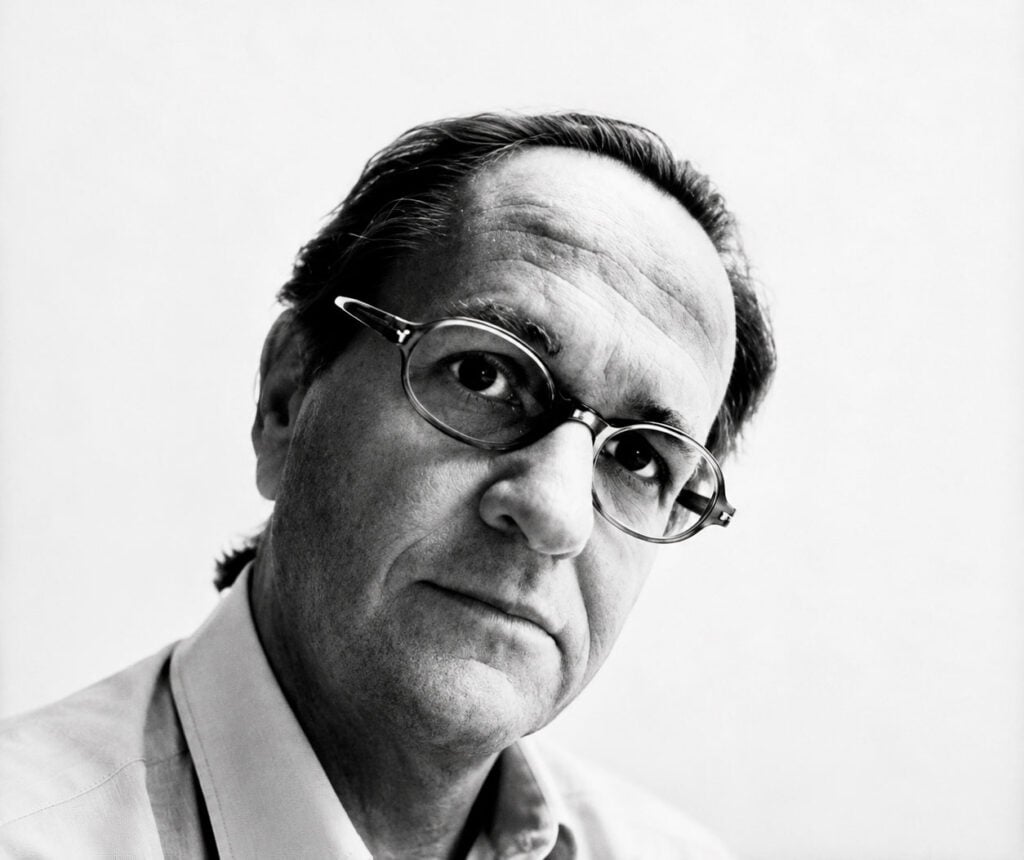
Peace & future researcher + ‌Art Photographer

Related Posts

The agreement is catastrophic both because of what it says and what it doesn’t mention. It reduces further the major asset of security policies: Freedom of action. Jan Oberg TFF director September 25, 2026 A couple of hours before the agreement was signed on September 22, 2026, I published the following 13 hypotheses about what it would most likely contain on TFF Substack (in English). I was wrong on only the first point. Contrary to what Trump had written on his Truth Social platform, it does not appear to come into force immediately. In fact, it turned out to be worse than even I had anticipated. After these hypotheses now come a number of reflections in light of what the agreement actually contains, and does not contain, as well as the way in which it has generally been presented by major media outlets and by the public-service broadcaster DR. My...
Below are TFF-related media mentions, comments, videos and social media posts published elsewhere but not on this homepage. We happen to catch and list only a fraction. Regarding video comments and debates, we recommend that you go to the TFF Video Channel on Substack where many of them are reproduced. Jan Oberg is a contributor to China Daily – 52 million daily clicks – and Global Times, CGTN and CCTV (the national television), China Investment, Xinhua News Agency and several others. Articles and videos on these media very often multiply into countless Chinese (and Western media) that re-post them from these main media. Thanks to The China Academy, his analyses, interviews and comments are frequently posted on YouTube channels such as Thinkers Forum and Wave Media. These videos are often re-posted on Bilibili (China’s YouTube), the China Content Center on TikTok, and on the Chinese edition of TikTok, Douyin.com. This means reaching hundreds of millions of viewers worldwide over a year. While there are too many to catch on all these...
Jan Oberg May 15, 2026 Go to this Fox News page and scroll the whole way down: President Donald Trump tells the world that his meeting with President Xi Jinping yielded a lot of very concrete political and economic results – of course, only where the Chinese side, according to him, agreed with him. He does not mention the Taiwan issue, but Secretary of State, Marco Rubio, says that it did not feature prominently in their talks and that the US policy on Taiwan has not changed. Then go to China Daily – or Global Times – and you will see that for the Chinese it is framework, principles, structure of cooperation etc. that matters – all embedded in the overall idea of “constructive bilateral relationship of strategic stability.” Nowhere is any concrete agreement or deal – all that Trump refers to – mentioned. At the general level, this gives you insights into the very different social...

Recent Articles

Tony Robinson October 4, 2026 Violence is easy to recognise when someone is being beaten, shot or killed. It becomes more difficult when nobody is holding a weapon. Poverty, discrimination, exploitation and repression can restrict a human life just as effectively, although they do so in very different ways and with very different consequences. Simply adding more categories to an ever-growing list of forms of violence does not really solve the problem. The more interesting question is what all these different situations have in common and why it makes sense to describe them using the same word. Human beings do not simply react to what happens around them. They remember the past, imagine things that do not yet exist, make plans and undertake projects. Workers organise because they imagine different working conditions; people migrate because they imagine another life somewhere else; social movements emerge because people refuse to accept the...
It’s a matter of principles, courage, vision and pulling together – while the militarist world is falling apart… Peter Langille October 3, 2026 “Here, then, is the problem which we present to you, stark and dreadful and inescapable: Shall we put an end to the human race; or shall mankind renounce war?”The Bertrand Russell—Albert Einstein Manifesto, July 9, 1955 ⁕ The forecast for what’s ahead is worrisome. The sharp rise in armed conflicts over the past three years is adding to what was already the highest level in over seventy years. Genocides, which should be prevented are supported. A shared climate emergency that jeopardises survival is ignored. Diverse polls now suggest that people are war-weary, worried and interested in a more effective United Nations. And, there are viable policy options for a more secure world! Yet governments are doubling-down, betting on more war and investing heavily. If current trends persist,...
Johan Galtung 1930-2024October 2015 Published here on October 3, 2026 Let us focus on Civilization for conflict analysis and remedies. Major forms of disorder use violence; war is state organized violence. The most belligerent states are the United States of America and Israel, both with civilization roots. National Evangelism, the US Protestant Christian civilization– more national than evangelical–justifies US warfare as exceptionalism of a people chosen by God, with a manifest destiny to run the world. Orthodox Judaism justifies Israeli warfare to conquer and expand from Nile to Euphrates as a religious right and duty to the Eternal One. The third most belligerent country, the UK, no longer believes it is God-chosen but chosen by the USA; not quite the same but something. But the root cause of global disorder lies in the Occident–with Islam–seeing itself as the single, universal civilization valid for all at all times, all others being...

TFF on Substack

Discover and subscribe to more peace materials on TFF Substack

Most Popular

Tony Robinson October 4, 2026 Violence is easy to recognise when someone is being beaten, shot or killed. It becomes more difficult when nobody is holding a weapon. Poverty, discrimination, exploitation and repression can restrict a human life just as effectively, although they do so in very different ways and with very different consequences. Simply adding more categories to an ever-growing list of forms of violence does not really solve the problem. The more interesting question is what all these different situations have in common and why it makes sense to describe them using the same word. Human beings do not simply react to what happens around them. They remember the past, imagine things that do not yet exist, make plans and undertake projects. Workers organise because they imagine different working conditions; people migrate because they imagine another life somewhere else; social movements emerge because people refuse to accept the...
It’s a matter of principles, courage, vision and pulling together – while the militarist world is falling apart… Peter Langille October 3, 2026 “Here, then, is the problem which we present to you, stark and dreadful and inescapable: Shall we put an end to the human race; or shall mankind renounce war?”The Bertrand Russell—Albert Einstein Manifesto, July 9, 1955 ⁕ The forecast for what’s ahead is worrisome. The sharp rise in armed conflicts over the past three years is adding to what was already the highest level in over seventy years. Genocides, which should be prevented are supported. A shared climate emergency that jeopardises survival is ignored. Diverse polls now suggest that people are war-weary, worried and interested in a more effective United Nations. And, there are viable policy options for a more secure world! Yet governments are doubling-down, betting on more war and investing heavily. If current trends persist,...
Johan Galtung 1930-2024October 2015 Published here on October 3, 2026 Let us focus on Civilization for conflict analysis and remedies. Major forms of disorder use violence; war is state organized violence. The most belligerent states are the United States of America and Israel, both with civilization roots. National Evangelism, the US Protestant Christian civilization– more national than evangelical–justifies US warfare as exceptionalism of a people chosen by God, with a manifest destiny to run the world. Orthodox Judaism justifies Israeli warfare to conquer and expand from Nile to Euphrates as a religious right and duty to the Eternal One. The third most belligerent country, the UK, no longer believes it is God-chosen but chosen by the USA; not quite the same but something. But the root cause of global disorder lies in the Occident–with Islam–seeing itself as the single, universal civilization valid for all at all times, all others being...
Read More
Living-Peace-Sign-Budapest-copy
Tony Robinson October 4, 2026 Violence is easy to recognise when someone is being beaten, shot or killed. It becomes more difficult when nobody is holding a weapon. Poverty, discrimination, exploitation and repression can restrict a human life just as effectively, although they do so in very different ways and with very different consequences. Simply adding more categories to an ever-growing list of forms of violence does not really solve the problem. The more interesting question is what all these different situations have in common and why it makes sense to describe them using the same word. Human beings do not simply react to what happens around them. They remember the past, imagine things that do not yet exist, make plans and undertake projects. Workers organise because they imagine different working conditions; people migrate because they imagine another life somewhere else; social movements emerge because people refuse to accept the...
b54a1f10-8c65-4f0b-9dd5-4abc0a7d04cc_2659x2659
It’s a matter of principles, courage, vision and pulling together – while the militarist world is falling apart… Peter Langille October 3, 2026 “Here, then, is the problem which we present to you, stark and dreadful and inescapable: Shall we put an end to the human race; or shall mankind renounce war?”The Bertrand Russell—Albert Einstein Manifesto, July 9, 1955 ⁕ The forecast for what’s ahead is worrisome. The sharp rise in armed conflicts over the past three years is adding to what was already the highest level in over seventy years. Genocides, which should be prevented are supported. A shared climate emergency that jeopardises survival is ignored. Diverse polls now suggest that people are war-weary, worried and interested in a more effective United Nations. And, there are viable policy options for a more secure world! Yet governments are doubling-down, betting on more war and investing heavily. If current trends persist,...
010
Johan Galtung 1930-2024October 2015 Published here on October 3, 2026 Let us focus on Civilization for conflict analysis and remedies. Major forms of disorder use violence; war is state organized violence. The most belligerent states are the United States of America and Israel, both with civilization roots. National Evangelism, the US Protestant Christian civilization– more national than evangelical–justifies US warfare as exceptionalism of a people chosen by God, with a manifest destiny to run the world. Orthodox Judaism justifies Israeli warfare to conquer and expand from Nile to Euphrates as a religious right and duty to the Eternal One. The third most belligerent country, the UK, no longer believes it is God-chosen but chosen by the USA; not quite the same but something. But the root cause of global disorder lies in the Occident–with Islam–seeing itself as the single, universal civilization valid for all at all times, all others being...
Screenshot 2026-10-02 011738
Jan ObergPhD, director, The Transnational Foundation for Peace and Future Research, TFFLund, Sweden October 2, 2026 This is my full original manuscript. The Chinese Academy of Social Science, CASS, makes two publications out if it. 1. China’s Five-year plan emphasized the capabilities of basic research and original innovation. It is regarded as the goal of the future social development, which, as required, should be significantly enhanced. Can you comment on the importance of original innovation in research and academic study? I believe it is easier to define “original innovation” in the natural sciences than in social sciences. The breaking points of what constitutes something new, or innovative, are not quite as sharp in the latter. But in both fields it is about opening up something that was closed, unseen, unexplored before – making manifest what was earlier latent. Innovations come in many forms and shapes – naming something that was not...
arctic-circle-map
The agreement is catastrophic both because of what it says and what it doesn’t mention. It reduces further the major asset of security policies: Freedom of action. Jan Oberg TFF director September 25, 2026 A couple of hours before the agreement was signed on September 22, 2026, I published the following 13 hypotheses about what it would most likely contain on TFF Substack (in English). I was wrong on only the first point. Contrary to what Trump had written on his Truth Social platform, it does not appear to come into force immediately. In fact, it turned out to be worse than even I had anticipated. After these hypotheses now come a number of reflections in light of what the agreement actually contains, and does not contain, as well as the way in which it has generally been presented by major media outlets and by the public-service broadcaster DR. My...
girl-5894831_1280
Below are TFF-related media mentions, comments, videos and social media posts published elsewhere but not on this homepage. We happen to catch and list only a fraction. Regarding video comments and debates, we recommend that you go to the TFF Video Channel on Substack where many of them are reproduced. Jan Oberg is a contributor to China Daily – 52 million daily clicks – and Global Times, CGTN and CCTV (the national television), China Investment, Xinhua News Agency and several others. Articles and videos on these media very often multiply into countless Chinese (and Western media) that re-post them from these main media. Thanks to The China Academy, his analyses, interviews and comments are frequently posted on YouTube channels such as Thinkers Forum and Wave Media. These videos are often re-posted on Bilibili (China’s YouTube), the China Content Center on TikTok, and on the Chinese edition of TikTok, Douyin.com. This means reaching hundreds of millions of viewers worldwide over a year. While there are too many to catch on all these...