
PressInfo #193 – Give Burundi’s Peacea Chance

A donors’ conference, co-sponsered by the Burundian government, the Belgian government and UNDP will be held in Brussels January 12-13, 2004. This PressInfo offers a perspective on its urgency. See also TFF’s new Burundi Forum.

Imagine for a moment that politics is about goodness and generosity. Where could a few million dollars of government aid and a few civil society organisations – guaranteed – win the hearts of extremely poor millions who want peace and already work hard to achieve it after 10 years of war and genocide?

The answer is Burundi, the heart-shaped country in the heart of Africa. Burundi makes a good story from Africa. But what does the world know about Burundi, its problems and struggles?

Burundi’s tough reality

Here are the basic facts. Burundi’s population is about 7 million and it is number 171 out of the 175 countries on the UNDP’s human development index. Their life expectancy is 41 years. 69 per cent of its people are under-nourished. It has 290,000 internally displaced citizens and there are about 800,000 Burundian refugees outside of the country waiting to get home. The GNP per capita is US $145. While half of the people are illiterate, 50 per cent of primary school kids don’t have access to schools and those who have lack some 80-100 per cent of the textbooks needed.

There is one (1) doctor per 100,000 citizens and one single psychiatrist in the whole country. The health system has collapsed and 70 per cent of its hospital beds are occupied by AIDS patients. 40,000 die annually because of AIDS; that is13 times the victims of September 11. There are a quarter of a million AIDS orphans in the country. So, humanists of the world, Burundi is your best choice this year!

There is extreme poverty, rampant emotional, social and sexual violence; there is increasing corruption. There is an extremely unequal distribution of wealth and power. The infrastructure is virtually non-existent; travelling to certain provinces requires special security; there is no railway and the country does not have any national museum. And, yes, there is still some fighting because a rebel movement, said to number less than 1,000 soldiers-cum-looters, refuses to join the peace process. Burundi last hit the front pages in July 2003 when these rebels managed to launch an attack on the capital, Bujumbura, in the so-called Tutsi-Hutu ethnic conflict. It is far from only an ethnic conflict – if at all – but that’s the generalised interpretation by people who are more interested in violence and war than in the underlying conflicts.

The good story – wanting peace

So much for the sad facts about Burundi. Fortunately, there is a much better story to tell from this former “Oasis of Peace” in Africa: it could become such an oasis again. The good news is that, with the exception of the mentioned few rebel fighters, all parties are now inside the framework of the Arusha Peace and Reconciliation Agreement and they all participate in the peace process, the second-last rebel movement joining in August 2003.

Burundi is one of few countries in the world that has a minister for peace and reconciliation, and a minister for human rights and good governance, the latter a former rebel leader. There is an African peace-monitoring mission that works. Any visitor who meets politicians and intellectuals will find out that there is a surprising number of open-minded, simply good-hearted, women and men who have both good visions and good will.

Irrespective of all this, the peace process will invariably fail without an international community – EU countries in particular – that shows similar qualities: good hearts, vision and the will to do something. Burundi does not have diamonds or oil – perhaps a good thing so it won’t be the object of some “humanitarian” intervention – but it has a good climate, excellent natural conditions for feeding its people and, being exceptionally beautiful, an indisputable potential for tourism.

Most important of all, the people are now completely exhausted – neither Hutus (84 percent) nor Tutsis (15 per cent) nor Twas (1 per cent) want one day more of fighting. That is a marked difference from when I visited Burundi four years ago. The Burundians have learned the hard way that war, genocide and other violence only brought grief and devastation on everybody except for a few corrupted politicians and looters (who, as usual, also got rich here through ill-conceived international sanctions hitting only the wrong people). Few people could work with deeper conviction for peace and development after the hell on earth they have gone through.
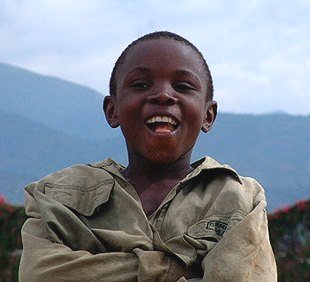
How to survive 2004 and beyond?

So, what are the immediate challenges in 2004? There is demobilisation and a military that will have to find civilian jobs. During the war years, the army swelled to perhaps 60,000 soldiers; it has to transform into a unified military of maximum 20,000. It desperately needs to secure that demobilised soldiers, returning refugees and the rest of the people have something to eat, something to do, schools to send their kids to and somewhere to get medical treatment.

In 11 months from now, the present transitional government and parliament shall be replaced by new ones through elections. I ask how on earth they will be able to carry through fair, honest and reliable elections on top of all the other problems and without a census and election law. Top level politicians tell me that the country simply must, that it is stipulated in the Arusha Agreement and that even bad elections are better than none.

Another huge issue is that of reconciliation and trust-building. Some tell me that the country should establish a Truth and Reconciliation Commission like that in South Africa. Some tell me that Burundi is different and special and that such a process could do more harm than good. Also, there were simply too many who committed crimes to be given legal processes in court rooms – not to mention that the legal system itself is in ruins. Thus, the only thing that is likely to work constructively seems to be informal, everyday people-to-people, municipality-to-municipality reconciliation and forgiveness.

I met many peace heroes in Burundi. There are excellent, visionary intellectuals; there are devoted, hard-working NGOs; there is an emerging civil society gaining strength and trying with inhumanly small resources to anchor and solidify the elite and the party system’s peace agreement among the millions of destitute. It is common knowledge that this peace agreement leaves very much to be desired. And it is common recognition that there is no faster or better road to the future.

Can the madness return? Where to turn when you want peace aid?

But I am afraid that, if we don’t assist Burundi now, many will be so frustrated that they will likely return to the mountains and resume their fighting and their genocidal policies. That does not have to happen.

If a new genocide happens, you will hear about it. But you won’t hear that we – the “international community” – caused it by not doing what easily could be done. Such is the angle on Africa. It is not fair, it is not objective journalism, and it certainly does not increase the willingness of governments and development agencies to get involved when time is ripe. And the time is ripe now! Not helping Burundi through 2004 could be a recipe for a new hell in Africa.

When countries have natural resources we want or when extremist groups inside a country take to violent methods, various groups in the international community stand ready to provide arms, ammunition, mercenaries, propaganda and media attention. But to whom can countries turn for empathy, assistance and compassion when they struggle to get out of war and maldevelopment? Where shall they turn to obtain peace assistance on their own terms?

Get the priorities right and help make Burundi an Oasis of Peace

Here is an African country that ought to hit our headlines for its struggle towards development and peace. What human folly and what wrong priorities in our world that powerful countries in Europe and the US itself try to create impossible peace where they are not wanted and ignore the places where peace is perfectly possible! The Bush administration spends US $1 billion a week in Iraq without, it seems, winning the hearts of the 24 million Iraqis.

The fact is that it would be very cheap to help Burundi. The UN Consolidated Appeals Process, CAP, calls for US $72 million to meet the immediate humanitarian needs for 2004. The country has an accumulated debt of US $1.2 billion. In global terms, this is peanuts! Of course, true development over the next decade would require much more aid and investment. But the first precondition is that people survive and kids get to school. They will if we help them.

Let’s reward the Burundians because they turned to peace, give them that humanitarian assistance and cancel that debt in full. That would be conflict-management, violence prevention and humanitarianism in one. It would show others that peace pays.

Here is a good story in the making! This is the place where you can win 7 million hearts. This is where people and governments who are serious about their wish to see a better world have a golden opportunity. Let’s work with the Burundians to re-create their desired Oasis of Peace!

© TFF 2004
Peace & future researcher + ‌Art Photographer

Related Posts

The agreement is catastrophic both because of what it says and what it doesn’t mention. It reduces further the major asset of security policies: Freedom of action. Jan Oberg TFF director September 25, 2026 A couple of hours before the agreement was signed on September 22, 2026, I published the following 13 hypotheses about what it would most likely contain on TFF Substack (in English). I was wrong on only the first point. Contrary to what Trump had written on his Truth Social platform, it does not appear to come into force immediately. In fact, it turned out to be worse than even I had anticipated. After these hypotheses now come a number of reflections in light of what the agreement actually contains, and does not contain, as well as the way in which it has generally been presented by major media outlets and by the public-service broadcaster DR. My...
Below are TFF-related media mentions, comments, videos and social media posts published elsewhere but not on this homepage. We happen to catch and list only a fraction. Regarding video comments and debates, we recommend that you go to the TFF Video Channel on Substack where many of them are reproduced. Jan Oberg is a contributor to China Daily – 52 million daily clicks – and Global Times, CGTN and CCTV (the national television), China Investment, Xinhua News Agency and several others. Articles and videos on these media very often multiply into countless Chinese (and Western media) that re-post them from these main media. Thanks to The China Academy, his analyses, interviews and comments are frequently posted on YouTube channels such as Thinkers Forum and Wave Media. These videos are often re-posted on Bilibili (China’s YouTube), the China Content Center on TikTok, and on the Chinese edition of TikTok, Douyin.com. This means reaching hundreds of millions of viewers worldwide over a year. While there are too many to catch on all these...
Jan Oberg May 15, 2026 Go to this Fox News page and scroll the whole way down: President Donald Trump tells the world that his meeting with President Xi Jinping yielded a lot of very concrete political and economic results – of course, only where the Chinese side, according to him, agreed with him. He does not mention the Taiwan issue, but Secretary of State, Marco Rubio, says that it did not feature prominently in their talks and that the US policy on Taiwan has not changed. Then go to China Daily – or Global Times – and you will see that for the Chinese it is framework, principles, structure of cooperation etc. that matters – all embedded in the overall idea of “constructive bilateral relationship of strategic stability.” Nowhere is any concrete agreement or deal – all that Trump refers to – mentioned. At the general level, this gives you insights into the very different social...

Recent Articles

Tony Robinson October 4, 2026 Violence is easy to recognise when someone is being beaten, shot or killed. It becomes more difficult when nobody is holding a weapon. Poverty, discrimination, exploitation and repression can restrict a human life just as effectively, although they do so in very different ways and with very different consequences. Simply adding more categories to an ever-growing list of forms of violence does not really solve the problem. The more interesting question is what all these different situations have in common and why it makes sense to describe them using the same word. Human beings do not simply react to what happens around them. They remember the past, imagine things that do not yet exist, make plans and undertake projects. Workers organise because they imagine different working conditions; people migrate because they imagine another life somewhere else; social movements emerge because people refuse to accept the...
It’s a matter of principles, courage, vision and pulling together – while the militarist world is falling apart… Peter Langille October 3, 2026 “Here, then, is the problem which we present to you, stark and dreadful and inescapable: Shall we put an end to the human race; or shall mankind renounce war?”The Bertrand Russell—Albert Einstein Manifesto, July 9, 1955 ⁕ The forecast for what’s ahead is worrisome. The sharp rise in armed conflicts over the past three years is adding to what was already the highest level in over seventy years. Genocides, which should be prevented are supported. A shared climate emergency that jeopardises survival is ignored. Diverse polls now suggest that people are war-weary, worried and interested in a more effective United Nations. And, there are viable policy options for a more secure world! Yet governments are doubling-down, betting on more war and investing heavily. If current trends persist,...
Johan Galtung 1930-2024October 2015 Published here on October 3, 2026 Let us focus on Civilization for conflict analysis and remedies. Major forms of disorder use violence; war is state organized violence. The most belligerent states are the United States of America and Israel, both with civilization roots. National Evangelism, the US Protestant Christian civilization– more national than evangelical–justifies US warfare as exceptionalism of a people chosen by God, with a manifest destiny to run the world. Orthodox Judaism justifies Israeli warfare to conquer and expand from Nile to Euphrates as a religious right and duty to the Eternal One. The third most belligerent country, the UK, no longer believes it is God-chosen but chosen by the USA; not quite the same but something. But the root cause of global disorder lies in the Occident–with Islam–seeing itself as the single, universal civilization valid for all at all times, all others being...

TFF on Substack

Discover and subscribe to more peace materials on TFF Substack

Most Popular

Tony Robinson October 4, 2026 Violence is easy to recognise when someone is being beaten, shot or killed. It becomes more difficult when nobody is holding a weapon. Poverty, discrimination, exploitation and repression can restrict a human life just as effectively, although they do so in very different ways and with very different consequences. Simply adding more categories to an ever-growing list of forms of violence does not really solve the problem. The more interesting question is what all these different situations have in common and why it makes sense to describe them using the same word. Human beings do not simply react to what happens around them. They remember the past, imagine things that do not yet exist, make plans and undertake projects. Workers organise because they imagine different working conditions; people migrate because they imagine another life somewhere else; social movements emerge because people refuse to accept the...
It’s a matter of principles, courage, vision and pulling together – while the militarist world is falling apart… Peter Langille October 3, 2026 “Here, then, is the problem which we present to you, stark and dreadful and inescapable: Shall we put an end to the human race; or shall mankind renounce war?”The Bertrand Russell—Albert Einstein Manifesto, July 9, 1955 ⁕ The forecast for what’s ahead is worrisome. The sharp rise in armed conflicts over the past three years is adding to what was already the highest level in over seventy years. Genocides, which should be prevented are supported. A shared climate emergency that jeopardises survival is ignored. Diverse polls now suggest that people are war-weary, worried and interested in a more effective United Nations. And, there are viable policy options for a more secure world! Yet governments are doubling-down, betting on more war and investing heavily. If current trends persist,...
Johan Galtung 1930-2024October 2015 Published here on October 3, 2026 Let us focus on Civilization for conflict analysis and remedies. Major forms of disorder use violence; war is state organized violence. The most belligerent states are the United States of America and Israel, both with civilization roots. National Evangelism, the US Protestant Christian civilization– more national than evangelical–justifies US warfare as exceptionalism of a people chosen by God, with a manifest destiny to run the world. Orthodox Judaism justifies Israeli warfare to conquer and expand from Nile to Euphrates as a religious right and duty to the Eternal One. The third most belligerent country, the UK, no longer believes it is God-chosen but chosen by the USA; not quite the same but something. But the root cause of global disorder lies in the Occident–with Islam–seeing itself as the single, universal civilization valid for all at all times, all others being...
Read More
Living-Peace-Sign-Budapest-copy
Tony Robinson October 4, 2026 Violence is easy to recognise when someone is being beaten, shot or killed. It becomes more difficult when nobody is holding a weapon. Poverty, discrimination, exploitation and repression can restrict a human life just as effectively, although they do so in very different ways and with very different consequences. Simply adding more categories to an ever-growing list of forms of violence does not really solve the problem. The more interesting question is what all these different situations have in common and why it makes sense to describe them using the same word. Human beings do not simply react to what happens around them. They remember the past, imagine things that do not yet exist, make plans and undertake projects. Workers organise because they imagine different working conditions; people migrate because they imagine another life somewhere else; social movements emerge because people refuse to accept the...
b54a1f10-8c65-4f0b-9dd5-4abc0a7d04cc_2659x2659
It’s a matter of principles, courage, vision and pulling together – while the militarist world is falling apart… Peter Langille October 3, 2026 “Here, then, is the problem which we present to you, stark and dreadful and inescapable: Shall we put an end to the human race; or shall mankind renounce war?”The Bertrand Russell—Albert Einstein Manifesto, July 9, 1955 ⁕ The forecast for what’s ahead is worrisome. The sharp rise in armed conflicts over the past three years is adding to what was already the highest level in over seventy years. Genocides, which should be prevented are supported. A shared climate emergency that jeopardises survival is ignored. Diverse polls now suggest that people are war-weary, worried and interested in a more effective United Nations. And, there are viable policy options for a more secure world! Yet governments are doubling-down, betting on more war and investing heavily. If current trends persist,...
010
Johan Galtung 1930-2024October 2015 Published here on October 3, 2026 Let us focus on Civilization for conflict analysis and remedies. Major forms of disorder use violence; war is state organized violence. The most belligerent states are the United States of America and Israel, both with civilization roots. National Evangelism, the US Protestant Christian civilization– more national than evangelical–justifies US warfare as exceptionalism of a people chosen by God, with a manifest destiny to run the world. Orthodox Judaism justifies Israeli warfare to conquer and expand from Nile to Euphrates as a religious right and duty to the Eternal One. The third most belligerent country, the UK, no longer believes it is God-chosen but chosen by the USA; not quite the same but something. But the root cause of global disorder lies in the Occident–with Islam–seeing itself as the single, universal civilization valid for all at all times, all others being...
Screenshot 2026-10-02 011738
Jan ObergPhD, director, The Transnational Foundation for Peace and Future Research, TFFLund, Sweden October 2, 2026 This is my full original manuscript. The Chinese Academy of Social Science, CASS, makes two publications out if it. 1. China’s Five-year plan emphasized the capabilities of basic research and original innovation. It is regarded as the goal of the future social development, which, as required, should be significantly enhanced. Can you comment on the importance of original innovation in research and academic study? I believe it is easier to define “original innovation” in the natural sciences than in social sciences. The breaking points of what constitutes something new, or innovative, are not quite as sharp in the latter. But in both fields it is about opening up something that was closed, unseen, unexplored before – making manifest what was earlier latent. Innovations come in many forms and shapes – naming something that was not...
arctic-circle-map
The agreement is catastrophic both because of what it says and what it doesn’t mention. It reduces further the major asset of security policies: Freedom of action. Jan Oberg TFF director September 25, 2026 A couple of hours before the agreement was signed on September 22, 2026, I published the following 13 hypotheses about what it would most likely contain on TFF Substack (in English). I was wrong on only the first point. Contrary to what Trump had written on his Truth Social platform, it does not appear to come into force immediately. In fact, it turned out to be worse than even I had anticipated. After these hypotheses now come a number of reflections in light of what the agreement actually contains, and does not contain, as well as the way in which it has generally been presented by major media outlets and by the public-service broadcaster DR. My...
girl-5894831_1280
Below are TFF-related media mentions, comments, videos and social media posts published elsewhere but not on this homepage. We happen to catch and list only a fraction. Regarding video comments and debates, we recommend that you go to the TFF Video Channel on Substack where many of them are reproduced. Jan Oberg is a contributor to China Daily – 52 million daily clicks – and Global Times, CGTN and CCTV (the national television), China Investment, Xinhua News Agency and several others. Articles and videos on these media very often multiply into countless Chinese (and Western media) that re-post them from these main media. Thanks to The China Academy, his analyses, interviews and comments are frequently posted on YouTube channels such as Thinkers Forum and Wave Media. These videos are often re-posted on Bilibili (China’s YouTube), the China Content Center on TikTok, and on the Chinese edition of TikTok, Douyin.com. This means reaching hundreds of millions of viewers worldwide over a year. While there are too many to catch on all these...