

Den irakiske fiasko åbner for en historisk chanse for at gennemføre en længe savnet, bredt støttet reform, som FN behøver for at kunne sikre sin uafhængighed og sin vitale rolle i dette nye århundrede.

Sammenbruddet i Sikkerhedsrådet på grund af USA’s krig mod Irak, giver et godt billede af de forældede rutiner. En overleveret arv fra efterkrigstiden (de fem stående medlemmer: USA, Stor Britanien, Frankrig, Kina og Rusland med hver deres vetoret) viser til syvende og sidst alle de ubrugelige aspekter i en nøddeskal.

De fleste reformivrere er enige om Sikkerhedsrådets uundværlighed – og også om hvilken form og retning forbedringerne skal have. Rådet må definitivt gøre en ende på vetoretten – et relikie der i sin tid blev givet til vinderne af Den 2.Verdenskrig. Så der skal møbleres om på de permanente stole så der kan blive plads til vigtige nye medsiddere ved det globale bord, deriblandt Indien, Brasilien, Japan, Sydafrika og det nyligt demokratiserede Indonesien, der har verdens største muslimske befolkning. For at holde rådets størrelse på et håndterligt niveau, kunne Englands og Frankrigs stole slås sammen til én der går på skift og istedet repræsenterer hele EU.

En anden længe savnet sikkerhedsreform – vigtigere nu end nogensinde i en verden med terrorisme og asymmetriske trusler – er en stående FN-fredsbevarende og humanitær styrke, veluddannet og i stand til at møde trusler mod sikkerheden samt naturkatastrofer. Sammen med Interpol kunne en sådan professionel enhed overvåge terroristgrupper.

Finansiering af disse funktioner og alle FN’s humanitære og udviklingsfremmende operationer, behøver ikke længere afhænge bare af medlemslandendes kontingent. Modstridigheden fra USA, der stadig skylder FN over 500 millioner dollars i ubetalte afgifter, har vist at nye, mere pålidelige finansieringskilder er nødvendige. Det er ønskværdigt med et lavere bidrag fra USA for at muliggøre en mindsket amerikansk indflydelse.

FN, med dets minimale årlige budget på 1.25 milliarder dollars (en fjerdedel af New York City’s), kan udnytte en række nye finansielle ressourcer. Mange af disse promoveres af et globalt NGO-samfund og civilpolitiske netverk med voksende magt. Mange blev forelagt og dokumenteret i PrepCom-rapporten fra FN-topmødet om finansiering af udvikling i Monterey, Mexico, i 2002. Der talte man bl.a. om meget lave indbetalinger (1% eller mindre) af de 1.5 trillioner dollars der dagligt omsættes i pengetransaktioner, hvilket kunne komme op på adskillige hundrede milliarder dollars årligt. Dette system ville samtidig kunne opfylde yderligere et formål, nemlig at sætte en bremse på den spekulation som udgør 90% af alle transaktioner, og således begrænse den destruktive strøm af “varme penge” der destabiliserer medlemslandenes indenrigsøkonomi.

Andre, ligeledes mulige og vel undersøgte, forslag går ud på at beskatte global transport og flyvebilletter (som ofte ikke dækker de sociale og miljømæssige omkostninger), og tillade FN at sælge obligationer i lighed med Verdensbankens funktioner. Mangen en bedsteforælder kunne på denne måde hjælpe til med at sikre en fredeligere fremtid for sine børnebørn. Indsigten om atsikkerhedsspørgsmål, fra ensidigt at ses som et militært anliggende, lægges over på forsikrings- og risikovejende institutioner – mere i stil med vore dages informationsverden – har åbnet for det udmærkede forslag til et FN-forsikringsselskab (United Nations Insurance Agency, UNSIA) som en gren af Sikkerhedsrådet.

UNSIA ville kunne give en ny forretningsplatform til gavn for forsikringsindustrien: Bedømme risici, udskrive regler der garanterer fredsbevarende støtte og humanitær hjælp, inden det er for sent, til lande der ansøger derom når de er truet såvel indefra som udefra. Mange lande har indset hvilke fordele det var for Costa Rica at afskaffe militæret i 1947. At overføre disse udgifter til investering i social- og humankapital har slynget Costa Rica op på “1.verden”- status på FN’s register for menneskelig udvikling. Premierne fra en sådan forsikringspolitik ville kunne bekoste Sikkerhedsrådets behov for hurtig ekspansion, fredsbevarende beredskab og humanitære insatser. Disse opgaver vil fortsat blive holdt i vigør og tilført midler fra villige medlemslande som bl.a.Canada.

Alle sådanne bæredygtige forslag til at sprede FN‚s økonomiske grundlag er grundigt blevet undersøgt, og mange af dem, f.eks. UNSIA, er blevet støttet af adskillige freds-nobelpristagere.

Hvorfor har de ligget hen i så mange år, ja årtier, uden at blive sat i værk? Først var det kold-krigspolitikken, og senere stødte de på senator Jesse Helms og andre højrepolitikeres energiske modstand i USA. Stærke økonomiske interesser kæmpede imod en fordeling af magt mellem FN og dets to finansagenturer, Verdensbanken og den Internationale Monetære Fond, der fik en styrkende “Washingtonkonsensus” for en økonomisk politi, som blev trukket ned over hovedet på udviklingslandene. Den type modstand er nu i miskredit!

Selv om mange af disse fond-forslag igen fik bifald af globale NGO’er og udviklingslande fra G-77-gruppen i FN’s Finansering af Udvikling PrepComs, blev de i al stilfærdighed nedlagt ved veto af USA’s FN-ambassadør, John Negroponte, efter ordre fra Bush-administrationen. I dag er Bush‚ popularitet hastigt dalende, 54% af USA’s befolkning mener at han har gjort et temmelig usselt arbejde (Reuters-Zogby, sep.2003)

Henved en majoritet forkaster den unilaterale, forebyggende-angrebspolitik indgået af Bush og hans neokonservative kabinet: Dick Cheney, Donald Rumsfeld, Paul Wolfowitz og deres “entreprenøriske grå eminence”, Richard Perle (stadig medlem af Det forsvarspolitiske Nævn, trods mængden af hans åbenlyse finansielle interessekonflikter). Den underskudsbefængte USA-økonomi, med dens høje niveau af arbejdsløshed, er nu de stemmeberettigedes hovedbekymring. Bush’s katastrofale politik har ført til en genkomst af Taliban og krigsherrementaliteten i Afghanistan, og til en yderligere fordybning af det irakiske morads.

Verden indser igen hvilken uundværlig rolle FN spiller som det eneste forum der kan forene alle nationer. Selv Bush-regeringen, nu dybt splittet, beder om hjælp i FN. USA ansøger om at få tildelt “byrdefordeling”, økonomisk hjælp til dets ilde sete irakiske eventyr. Bare FN kan legitimere uvillige medlemslandes involvering i genopbygningen af Irak.

Præsident Georg W.Bush’s far, George H.W. Bush, kunne måske hjælpe sin søn til at indse at FN aldrig vil være “irrelevant”. Generalsekretær Kofi Annan har styret FN gennem denne sidste tids storme med sikker hånd, trods anklagerne om at give for meget efter for USA’s påtrykninger. Annan har indført mange fornyelser, bl.a. hans FN Global Compact’s “Ni Principper for god Aktieselskabsmoral” omkring menneskerettigheder, arbejdsretlige instanser og miljø, indtil nu underskrevet af 1000 virksomheder over hele verden.

I dag, trods dysterheden, ser vi en ny era som åbner for muligheder til revitalisering af FN. Disse mange nye finansielle ressourcer og en fornyet global goodwill kan atter få verdens tillid til at vokse. Hele 63% af den amerikanske offentlighed står solidt bag et FN i spidsen for den globale sikkerhed og for fredsbevarende aktioner. At sætte disse reformer i gang måtte forekomme de tusinder afghanere, irakere, liberianere og andre uskyldige at være en passende dødsrune på den gamle orden, ligesom en attribut til de mange flygtninge spredt for alle vinde, de mishandlede kvinder og de sultne børn.

Det er ikke sådan at der mangler penge i verden – det handler om fejlagtige prioriteringer, ikke levedygtige økonomiske ideologier og infekterede våbenbudgetter. En fjerdedel af verdens våbenudgifter – sammen med nogle af de internationelle skatter på spekulation og anden misbrug af verdenssamfundets fælles ejendom – kan forsyne verden med de nødvendige offentlige goder som

fredsbevarelse, sundhed og uddannelse til alle, renere luft og vand, forbedring af miljøet og millioner af nye arbejdspladser og mulighed for mennesker til at forsørge sig selv. Globaliseringen kan få et menneskeligt ansigt. World Social Forum (den verdensomspændende sociale forum-bevægelse) har vist at en anden verden er mulig – og opnåelig!

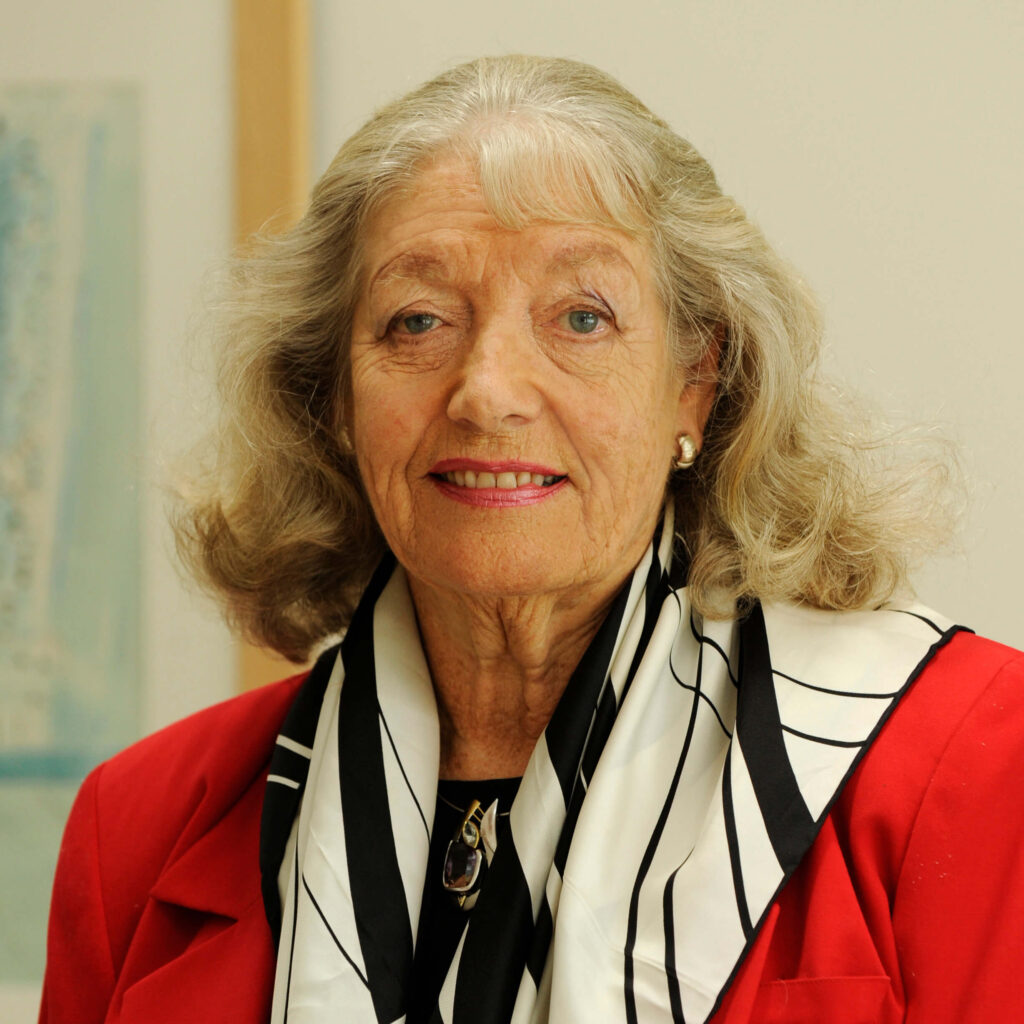
Hazel Henderson har skrevet “Beyond Globalization” og andre bøger. Hun var medudgiver af “FN: Politik og finansiering af alternativer“, Elsevier, UK (1995), sammen med Harlan Cleveland og Inge Kaul, hvor disse forslag er analyseret i detaljer.

© TFF 2003
Related Posts

Small and different + among the 10% most active + 9,000 texts + 150 Associates + 60 000 a day — and a stubborn belief that peace is smarter and must be secured by peaceful means. In 2026, the Transnational Foundation for Peace and Future Research (TFF) turns 40. On Monday, October 5, 2026, a new TFF homepage will go live — a new gateway to more than 9,000 articles, analyses, research papers and other contributions produced over four decades of independent peace research. But this is not simply a new website. For four decades, TFF has worked from a simple conviction: peace is smarter than militarism and can be brought about by peaceful means. This is not merely an aspiration. It is the principle expressed in the UN Charter and the Gandhian tradition that has guided our work from the beginning. TFF is a research-based, independent and people-financed foundation....
The agreement is catastrophic both because of what it says and what it doesn’t mention. It reduces further the major asset of security policies: Freedom of action. Jan Oberg TFF director September 25, 2026 A couple of hours before the agreement was signed on September 22, 2026, I published the following 13 hypotheses about what it would most likely contain on TFF Substack (in English). I was wrong on only the first point. Contrary to what Trump had written on his Truth Social platform, it does not appear to come into force immediately. In fact, it turned out to be worse than even I had anticipated. After these hypotheses now come a number of reflections in light of what the agreement actually contains, and does not contain, as well as the way in which it has generally been presented by major media outlets and by the public-service broadcaster DR. My...
Jan Oberg May 15, 2026 Go to this Fox News page and scroll the whole way down: President Donald Trump tells the world that his meeting with President Xi Jinping yielded a lot of very concrete political and economic results – of course, only where the Chinese side, according to him, agreed with him. He does not mention the Taiwan issue, but Secretary of State, Marco Rubio, says that it did not feature prominently in their talks and that the US policy on Taiwan has not changed. Then go to China Daily – or Global Times – and you will see that for the Chinese it is framework, principles, structure of cooperation etc. that matters – all embedded in the overall idea of “constructive bilateral relationship of strategic stability.” Nowhere is any concrete agreement or deal – all that Trump refers to – mentioned. At the general level, this gives you insights into the very different social...

Recent Articles

Below are TFF-related media mentions, comments, videos and social media posts published elsewhere but not on this homepage. We happen to catch and list only a fraction. Regarding video comments and debates, we recommend that you go to the TFF Video Channel on Substack where many of them are reproduced. Jan Oberg is a contributor to China Daily – 52 million daily clicks – and Global Times, CGTN and CCTV (the national television), China Investment, Xinhua News Agency and several others. Articles and videos on these media very often multiply into countless Chinese (and Western media) that re-post them from these main media. Thanks to The China Academy, his analyses, interviews and comments are frequently posted on YouTube channels such as Thinkers Forum and Wave Media. These videos are often re-posted on Bilibili (China’s YouTube), the China Content Center on TikTok, and on the Chinese edition of TikTok, Douyin.com. This means reaching hundreds of millions of viewers worldwide over a year. While there are too many to catch on all these...
Jan Oberg TFF director October 13, 2026 According to Alfred Nobel’s will, the Nobel Peace Prize shall be awarded: ”to the person who has done the most or best to advance fellowship among nations, the abolition or reduction of standing armies, and the establishment and promotion of peace congresses.” Further down, he also expresses how the prize for the “champions of peace” shall be decided: “that for champions of peace by a committee of five persons to be selected by the Norwegian Storting. Alfred Nobel’s will is remarkably short and clear. But few seem to have read it. Nobel did not say that the committee itself should consist of members of parliament. He entrusted the Storting with appointing five persons. In principle, it could have selected diplomats, mediators, peace researchers, conflict-resolution specialists, or other individuals with recognised expertise in matters of peace from around the world. Instead, the Storting gradually...
The Quest for Humane Survival Richard Falk Professor emeritus, Princeton UniversityTFF Associate since 1986October 12, 2026 After decades of teaching and writing about international law in academic frameworks that were not institutionally situated within law school environments—at Princeton and the University of California, Santa Barbara—I found myself most receptive to the TWAIL outlook. It has been especially illuminating in clarifying the extent to which international law evolved as a dialogical critique of Europe’s efforts to legitimize its colonial undertakings. In particular, TWAIL has exposed how international law has functioned to legalize the subjugation of Third World peoples, securing conditions for exploitative investment and trade relations, the coercive enforcement of public debts, and an ideology of cultural superiority. TWAIL’s exposure of these economic legacies of colonialism has influenced my understanding of the history and development of international law, broadly conceived, as an ideological project of the Western sub-system of the world...

TFF on Substack

Discover and subscribe to more peace materials on TFF Substack

Most Popular

Below are TFF-related media mentions, comments, videos and social media posts published elsewhere but not on this homepage. We happen to catch and list only a fraction. Regarding video comments and debates, we recommend that you go to the TFF Video Channel on Substack where many of them are reproduced. Jan Oberg is a contributor to China Daily – 52 million daily clicks – and Global Times, CGTN and CCTV (the national television), China Investment, Xinhua News Agency and several others. Articles and videos on these media very often multiply into countless Chinese (and Western media) that re-post them from these main media. Thanks to The China Academy, his analyses, interviews and comments are frequently posted on YouTube channels such as Thinkers Forum and Wave Media. These videos are often re-posted on Bilibili (China’s YouTube), the China Content Center on TikTok, and on the Chinese edition of TikTok, Douyin.com. This means reaching hundreds of millions of viewers worldwide over a year. While there are too many to catch on all these...
Jan Oberg TFF director October 13, 2026 According to Alfred Nobel’s will, the Nobel Peace Prize shall be awarded: ”to the person who has done the most or best to advance fellowship among nations, the abolition or reduction of standing armies, and the establishment and promotion of peace congresses.” Further down, he also expresses how the prize for the “champions of peace” shall be decided: “that for champions of peace by a committee of five persons to be selected by the Norwegian Storting. Alfred Nobel’s will is remarkably short and clear. But few seem to have read it. Nobel did not say that the committee itself should consist of members of parliament. He entrusted the Storting with appointing five persons. In principle, it could have selected diplomats, mediators, peace researchers, conflict-resolution specialists, or other individuals with recognised expertise in matters of peace from around the world. Instead, the Storting gradually...
The Quest for Humane Survival Richard Falk Professor emeritus, Princeton UniversityTFF Associate since 1986October 12, 2026 After decades of teaching and writing about international law in academic frameworks that were not institutionally situated within law school environments—at Princeton and the University of California, Santa Barbara—I found myself most receptive to the TWAIL outlook. It has been especially illuminating in clarifying the extent to which international law evolved as a dialogical critique of Europe’s efforts to legitimize its colonial undertakings. In particular, TWAIL has exposed how international law has functioned to legalize the subjugation of Third World peoples, securing conditions for exploitative investment and trade relations, the coercive enforcement of public debts, and an ideology of cultural superiority. TWAIL’s exposure of these economic legacies of colonialism has influenced my understanding of the history and development of international law, broadly conceived, as an ideological project of the Western sub-system of the world...
Read More
girl-5894831_1280
Below are TFF-related media mentions, comments, videos and social media posts published elsewhere but not on this homepage. We happen to catch and list only a fraction. Regarding video comments and debates, we recommend that you go to the TFF Video Channel on Substack where many of them are reproduced. Jan Oberg is a contributor to China Daily – 52 million daily clicks – and Global Times, CGTN and CCTV (the national television), China Investment, Xinhua News Agency and several others. Articles and videos on these media very often multiply into countless Chinese (and Western media) that re-post them from these main media. Thanks to The China Academy, his analyses, interviews and comments are frequently posted on YouTube channels such as Thinkers Forum and Wave Media. These videos are often re-posted on Bilibili (China’s YouTube), the China Content Center on TikTok, and on the Chinese edition of TikTok, Douyin.com. This means reaching hundreds of millions of viewers worldwide over a year. While there are too many to catch on all these...
Nobel-Prize-Plaque
Jan Oberg TFF director October 13, 2026 According to Alfred Nobel’s will, the Nobel Peace Prize shall be awarded: ”to the person who has done the most or best to advance fellowship among nations, the abolition or reduction of standing armies, and the establishment and promotion of peace congresses.” Further down, he also expresses how the prize for the “champions of peace” shall be decided: “that for champions of peace by a committee of five persons to be selected by the Norwegian Storting. Alfred Nobel’s will is remarkably short and clear. But few seem to have read it. Nobel did not say that the committee itself should consist of members of parliament. He entrusted the Storting with appointing five persons. In principle, it could have selected diplomats, mediators, peace researchers, conflict-resolution specialists, or other individuals with recognised expertise in matters of peace from around the world. Instead, the Storting gradually...
law-419057_1280
The Quest for Humane Survival Richard Falk Professor emeritus, Princeton UniversityTFF Associate since 1986October 12, 2026 After decades of teaching and writing about international law in academic frameworks that were not institutionally situated within law school environments—at Princeton and the University of California, Santa Barbara—I found myself most receptive to the TWAIL outlook. It has been especially illuminating in clarifying the extent to which international law evolved as a dialogical critique of Europe’s efforts to legitimize its colonial undertakings. In particular, TWAIL has exposed how international law has functioned to legalize the subjugation of Third World peoples, securing conditions for exploitative investment and trade relations, the coercive enforcement of public debts, and an ideology of cultural superiority. TWAIL’s exposure of these economic legacies of colonialism has influenced my understanding of the history and development of international law, broadly conceived, as an ideological project of the Western sub-system of the world...
images-2
Advocates of nuclear disarmament are regularly dismissed by the champions of nuclear deterrence as naïve and unrealistic, utopian or even irresponsible. Yet this ‘doctrine’ of deterrence, regarded by France as the ‘cornerstone’ of its national security, is based on quasi-religious beliefs, a theory that cannot be proven, risky gambles and fragile assumptions. So much so that one might legitimately ask which side the ‘Care Bears’ are on. Marc FinaudVice-President of Initiatives for Nuclear Disarmament (IDN) October 9, 2026 This article was originally published on Pressenza When it comes to these things being treated as religious concepts, look here. Idealists and realists It was Hubert Védrine, François Mitterrand’s former Foreign Minister, who repeatedly coined the phrase: ‘Europeans are a sort of Care Bears who don’t realise they’re living in Jurassic Park’. He applies this reference to the cartoon for well-behaved children not only to what he regards as weakness or idealism...
8824b09f-33a5-43f9-9fd0-550f28cda24d_1536x1024
What the West Borrowed from Asia and What It Left Behind Jan Krikke October 8, 2026 The article was originally published here In the late 1960s, the musical Hair announced that the Age of Aquarius was dawning. Its opening anthem promised a transformation of human consciousness: an era of peace, harmony and understanding. Half a century later, a familiar echo of that promise is a meditation app offered by your employer. You can find it in the same list of benefits as the pension plan and the gym discount. How did a spiritual revolution become an employee benefit? The answer lies in the history of the movement known as New Age: where it came from, what it borrowed from Asia, and why the meaning of what it borrowed changed in the process. Two definitions will help. New Age is a loose label for a wide range of spiritual practices and...
Screenshot 2026-10-04 210142
Small and different + among the 10% most active + 9,000 texts + 150 Associates + 60 000 a day — and a stubborn belief that peace is smarter and must be secured by peaceful means. In 2026, the Transnational Foundation for Peace and Future Research (TFF) turns 40. On Monday, October 5, 2026, a new TFF homepage will go live — a new gateway to more than 9,000 articles, analyses, research papers and other contributions produced over four decades of independent peace research. But this is not simply a new website. For four decades, TFF has worked from a simple conviction: peace is smarter than militarism and can be brought about by peaceful means. This is not merely an aspiration. It is the principle expressed in the UN Charter and the Gandhian tradition that has guided our work from the beginning. TFF is a research-based, independent and people-financed foundation....





