PressInfo #172 – Iraq and the Failures of Democracy

There is no decision in foreign policy more serious than recourse to war. As the Bush administration prods the country toward an unpopular and illegal war with Iraq, it is a matter of national urgency to question whether our constitutional system of government is providing adequate protection to the American people against the scourge of war. Given the turbulence of the current world scene and considering America’s military primacy on the global stage, what the United States does affects the well-being, and possibly the survival, of others throughout the world. So we must question whether our system of representative democracy is currently working in relation to this momentous question of war or peace.

Without doubt the events of September 11 were a test of the viability of our institutions under a form of stress never before experienced, the menace of a mega-terrorist enemy lurking in the concealed recesses of dozens of countries, including possibly our own. To respond effectively without losing our democratic identity in the process required wise and sensitive leadership. It required as well a display of political and moral imagination to devise a strategy capable of dealing effectively with mega-terrorism while remaining ethical and in keeping with our values as a nation. At this point, on the brink of a war against Iraq, a country that has not been persuasively linked to the terrorist attacks of September 11, it is impossible to conclude that our government is meeting this unprecedented challenge. Indeed, the Bush administration appears likely to intensify the danger while further widening the orbit of death and destruction.

The American system of constitutional government depends on a system of checks and balances. Such checks and balances among the three main branches of government is a fundamental principle, and never more so than in relation to war and peace. At the very least, Congress has the responsibility of restraining a rush to war by engaging in serious public debate. To date Congress has only held low profile hearings some months back. No opponents of the approach taken by the Bush administration were invited to participate in the hearings, which almost exclusively analyzed the costs and benefits of the war option as applied to Iraq. There was no consideration of alternatives to war, no reflections on the dubious legality of the preemptive war doctrine, no discussion of the absence of urgency and necessity that undermined the argument that there was no time to waste in achieving “disarmament” and “regime change” in Iraq.

Congress has so far failed in its constitutional responsibilities. In passing the USA Patriot Act shortly after the September 11, 2001 terrorist attacks, Congress seriously eroded traditional American guarantees of freedom and privacy found in the Bill of Rights. The Act allows the government to conduct secret searches, provides for FBI access to extensive personal and financial records of individuals without court order or even probable cause of a crime, and creates a new, broad definition of “domestic terrorism” that could subject individuals who engage in public protest to wiretapping and enhanced penalties.

The open-ended resolution of Congress authorizing the president to resort to force only accentuates its failure to uphold these responsibilities. It would seem that the patriotic mood that followed the terrorist attacks, along with shortsighted anxieties about challenging a popular president, has dulled the critical faculties of Congress as a whole despite the willingness of a small number of senators and congressmen to raise their voices in opposition. As a republic, the US Government cannot function properly if Congress fails to exercise its constitutional responsibilities in relation to the ultimate issues of war and peace, and simply gives spineless deference to the president. 

Closely connected with this institutional breakdown, is the lamentable behavior of the Democratic Party, particularly its leadership. They have failed in the role of an opposition party to raise issues of principle, especially when so much is at stake. The passivity of the Democratic Party in these circumstances can only be explained by its ill-considered opportunism with regard to domestic politics, including an inappropriate pretension of patriotism. Given the importance of the party system, our governing procedures cannot protect the citizenry against unacceptable policies if the opposition party becomes mute and hides in the face of anticipated controversy.

These issues have been compounded by a compliant mainstream media, especially the corporate-owned news networks. The media has largely viewed its role in terms of promoting patriotic obedience to the government and mobilizing the country for war against Iraq rather than illuminating the debate about whether such a war is justified and necessary. The media has focused its attention on when the war will begin, how it will be fought, and what kind of occupation policy and exit strategy will be attempted. It has refrained from considering the question of why the US should or should not engage in war or from examining the many serious possible consequences to the Middle East and to the US itself of engaging in this war.

There are numerous qualified critics among the American citizenry, as well as overseas, and yet their voices are virtually never heard in the mainstream media. The media tends to orient its analysis around compliant “military analysts” and conservative think tank policy wonks. Even when prominent military figures, such as General Norman Schwartzkopf or General Anthony Zinni, express doubts about the rush to war, their objections are given virtually no attention. This spectacle of a self-indoctrinated and self-censored media weakens our democratic fabric, depriving the citizenry of information and perspectives that are needed to reach intelligent conclusions as to support or opposition.

Most important of all, the Bush administration seems to be moving toward a non-defensive war against Iraq without providing a coherent account to the American public. It has presented evidence to the UN Security Council suggesting that Iraq retains unreported stocks of biological and chemical weaponry, but has provided no convincing proof of this and certainly no rationale on this basis for war. The American people need to realize that there are at least twenty countries with greater capabilities than Iraq with respect to such weaponry. A number of these countries are far more likely to be a conduit for such weaponry to pass into the hands of al Qaeda or other terrorist operatives, which is the greatest danger.

It is also important for the American people to understand that in the course of an American attack on Iraq, its leadership would only then have an incentive, in their helplessness, to turn such weaponry as they possess over to al Qaeda or to use it against American troops. Without such an incentive, Iraq is likely to remain the most deterred country on the planet, fully aware that any provocative step involving deployment or threats of weapons of mass destruction would bring about the instant annihilation of the Baghdad regime and Iraq as an independent country.

Under these circumstances, we must wonder why the Bush administration, with pro forma Congressional support, is plunging ahead with a war that seems so contrary to reason. There are two lines of explanation, both raising disturbing questions about the legitimacy of governance under the leadership of the Bush administration.

The first explanation is that the shock impact of September 11 has upset the rationality of the policy process to such an extent that an unwarranted war is being undertaken. Part of this explanation is the frustration experienced by the Bush administration in the aftermath of the Afghanistan War. Not knowing what to do next has led the administration irrationally to treat Saddam Hussein as if he were Osama Bin Laden and to treat Iraq as if it were al Qaeda. Such irrationality overlooks the radical difference between responding to a terrorist network that cannot be deterred and dealing with a hostile and unpalatable minor state. War is neither needed nor acceptable in the latter case.

The second line of explanation, the more likely in our judgment, is that the American people and the other governments of the world are not being told the main reasons behind the US war policy. From this perspective, the alleged preoccupation with Iraqi weaponry of mass destruction is largely diversionary, as is the emphasis on Saddam’s brutality. The real reasons for the war are oil and regional strategic control, a military beachhead in relation to the volatile Middle East. Such justifications for war make strategic sense if, and only if, America is pursuing global dominance to ensure that its current economic and military preeminence is sustained into the future. But it is undoubtedly impolitic for the Bush administration to reveal such motives for war. The American people are overwhelmingly unwilling to spill blood for oil or empire. And most of the international community would certainly oppose the war if Washington‚s strategic goals were made explicit.

The suspicion that the underlying reasons for war are not being disclosed is not based on adherence to a conspiracy theory of government. If we examine closely the worldview expressed years before September 11 by the Pentagon hawks and Vice President Cheney, this understanding of American goals in the world becomes more transparent. What September 11 did was to provide an anti-terrorist banner under which these grandiose schemes could be realized without public acknowledgement. Again, this is not a paranoid fantasy. President Bush explicitly endorsed this vision of America’s world role in his West Point commencement address last June, and more subtly, in the major document issued by the White House in September 2002 under the title The National Security Strategy of the United States of America.

We are left then with two related problems. The first is that of concealment from the American people, and the second is the substantive issue of whether the United States should initiate a war to promote this grand design of American power and empire. It seems reasonable to assume that the motives for concealment are connected with the administration‚s assessment of the political unacceptability of their undisclosed motives for war. This double image of our democratic crisis is particularly troublesome in the face of the breakdown of our constitutional reliance on checks and balances.

But all is not lost. There are many indications that opposition to the war is growing at the grassroots level in America, and has been robust all along among the peoples of the world. In the United States, polling information shows that more than 70 percent of the people do not support a unilateral preemptive war led by the United States. More than 70 city councils across the country have registered their opposition to a war against Iraq, and the number continues to grow. Recently over forty American Nobel Laureates went on record opposing a US preventive war against Iraq. More and more Americans are taking to the streets in opposition to the Bush administration’s plans for aggressive warfare. These numbers can be expected to grow and the voices of protesters become angrier as the administration moves ever closer to war.

It seems doubtful that this resistance at the level of the citizenry can operate as a check in the short run on White House zeal, but perhaps it can both strengthen the resolve of Congress and the Democratic Party, and convey the wider message that we need to recover trust in government if our constitutional system is to uphold our security and our values as a democratic republic. Already in the US Senate, Senators Edward Kennedy and Robert Byrd have introduced a resolution (S. Res. 32) calling on the president to provide full support to the UN weapons inspectors to facilitate their ongoing disarmament work and obtain a new resolution of approval by Congress before using military force against Iraq without the broad support of the international community.

The stakes are extremely high. It is not only the prospect of war against Iraq, but it is the whole relationship of the United States to the world. Continuing down the path along which the Bush administration is leading is likely to produce a climate of perpetual fear and war. It is also likely to undermine further our security and our freedoms at home, even moving us in the direction of a police state. Already, American consulates around the world are warning Americans of the heightened dangers that they are likely to face in reaction to the Iraq War. At home, the color-coded alert system created by the Department of Homeland Security seems designed to keep Americans in a state of fear without providing them with any positive steps they can take to increase their security.

With each passing week the government moves ahead with its claims to exercise sweeping powers that erode our civil liberties while arousing our fears that terrorists are poised to strike at the American heartland. We do not need to have such a future, but it will be difficult to avoid unless the American people exercise their democratic prerogatives and rise in defense of their civil liberties, as well as in support of peace, international law and constitutional government.

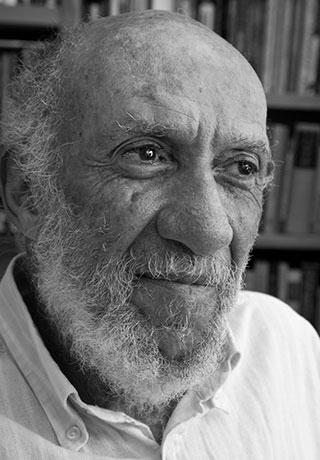
Richard Falk, a Distinguished Visiting Professor at the University of California at Santa Barbara, is chair of the Nuclear Age Peace Foundation. David Krieger is a founder and president of the Foundation (www.wagingpeace.org). They are the co-editors of a recent Foundation Briefing Booklet, The Iraq Crisis and International Law. 

© TFF 2003

Professor Falk became an adviser to TFF when it was established in 1985.

Related Posts

The agreement is catastrophic both because of what it says and what it doesn’t mention. It reduces further the major asset of security policies: Freedom of action. Jan Oberg TFF director September 25, 2026 A couple of hours before the agreement was signed on September 22, 2026, I published the following 13 hypotheses about what it would most likely contain on TFF Substack (in English). I was wrong on only the first point. Contrary to what Trump had written on his Truth Social platform, it does not appear to come into force immediately. In fact, it turned out to be worse than even I had anticipated. After these hypotheses now come a number of reflections in light of what the agreement actually contains, and does not contain, as well as the way in which it has generally been presented by major media outlets and by the public-service broadcaster DR. My...
Below are TFF-related media mentions, comments, videos and social media posts published elsewhere but not on this homepage. We happen to catch and list only a fraction. Regarding video comments and debates, we recommend that you go to the TFF Video Channel on Substack where many of them are reproduced. Jan Oberg is a contributor to China Daily – 52 million daily clicks – and Global Times, CGTN and CCTV (the national television), China Investment, Xinhua News Agency and several others. Articles and videos on these media very often multiply into countless Chinese (and Western media) that re-post them from these main media. Thanks to The China Academy, his analyses, interviews and comments are frequently posted on YouTube channels such as Thinkers Forum and Wave Media. These videos are often re-posted on Bilibili (China’s YouTube), the China Content Center on TikTok, and on the Chinese edition of TikTok, Douyin.com. This means reaching hundreds of millions of viewers worldwide over a year. While there are too many to catch on all these...
Jan Oberg May 15, 2026 Go to this Fox News page and scroll the whole way down: President Donald Trump tells the world that his meeting with President Xi Jinping yielded a lot of very concrete political and economic results – of course, only where the Chinese side, according to him, agreed with him. He does not mention the Taiwan issue, but Secretary of State, Marco Rubio, says that it did not feature prominently in their talks and that the US policy on Taiwan has not changed. Then go to China Daily – or Global Times – and you will see that for the Chinese it is framework, principles, structure of cooperation etc. that matters – all embedded in the overall idea of “constructive bilateral relationship of strategic stability.” Nowhere is any concrete agreement or deal – all that Trump refers to – mentioned. At the general level, this gives you insights into the very different social...

Recent Articles

Tony Robinson October 4, 2026 Violence is easy to recognise when someone is being beaten, shot or killed. It becomes more difficult when nobody is holding a weapon. Poverty, discrimination, exploitation and repression can restrict a human life just as effectively, although they do so in very different ways and with very different consequences. Simply adding more categories to an ever-growing list of forms of violence does not really solve the problem. The more interesting question is what all these different situations have in common and why it makes sense to describe them using the same word. Human beings do not simply react to what happens around them. They remember the past, imagine things that do not yet exist, make plans and undertake projects. Workers organise because they imagine different working conditions; people migrate because they imagine another life somewhere else; social movements emerge because people refuse to accept the...
It’s a matter of principles, courage, vision and pulling together – while the militarist world is falling apart… Peter Langille October 3, 2026 “Here, then, is the problem which we present to you, stark and dreadful and inescapable: Shall we put an end to the human race; or shall mankind renounce war?”The Bertrand Russell—Albert Einstein Manifesto, July 9, 1955 ⁕ The forecast for what’s ahead is worrisome. The sharp rise in armed conflicts over the past three years is adding to what was already the highest level in over seventy years. Genocides, which should be prevented are supported. A shared climate emergency that jeopardises survival is ignored. Diverse polls now suggest that people are war-weary, worried and interested in a more effective United Nations. And, there are viable policy options for a more secure world! Yet governments are doubling-down, betting on more war and investing heavily. If current trends persist,...
Johan Galtung 1930-2024October 2015 Published here on October 3, 2026 Let us focus on Civilization for conflict analysis and remedies. Major forms of disorder use violence; war is state organized violence. The most belligerent states are the United States of America and Israel, both with civilization roots. National Evangelism, the US Protestant Christian civilization– more national than evangelical–justifies US warfare as exceptionalism of a people chosen by God, with a manifest destiny to run the world. Orthodox Judaism justifies Israeli warfare to conquer and expand from Nile to Euphrates as a religious right and duty to the Eternal One. The third most belligerent country, the UK, no longer believes it is God-chosen but chosen by the USA; not quite the same but something. But the root cause of global disorder lies in the Occident–with Islam–seeing itself as the single, universal civilization valid for all at all times, all others being...

TFF on Substack

Discover and subscribe to more peace materials on TFF Substack

Most Popular

Tony Robinson October 4, 2026 Violence is easy to recognise when someone is being beaten, shot or killed. It becomes more difficult when nobody is holding a weapon. Poverty, discrimination, exploitation and repression can restrict a human life just as effectively, although they do so in very different ways and with very different consequences. Simply adding more categories to an ever-growing list of forms of violence does not really solve the problem. The more interesting question is what all these different situations have in common and why it makes sense to describe them using the same word. Human beings do not simply react to what happens around them. They remember the past, imagine things that do not yet exist, make plans and undertake projects. Workers organise because they imagine different working conditions; people migrate because they imagine another life somewhere else; social movements emerge because people refuse to accept the...
It’s a matter of principles, courage, vision and pulling together – while the militarist world is falling apart… Peter Langille October 3, 2026 “Here, then, is the problem which we present to you, stark and dreadful and inescapable: Shall we put an end to the human race; or shall mankind renounce war?”The Bertrand Russell—Albert Einstein Manifesto, July 9, 1955 ⁕ The forecast for what’s ahead is worrisome. The sharp rise in armed conflicts over the past three years is adding to what was already the highest level in over seventy years. Genocides, which should be prevented are supported. A shared climate emergency that jeopardises survival is ignored. Diverse polls now suggest that people are war-weary, worried and interested in a more effective United Nations. And, there are viable policy options for a more secure world! Yet governments are doubling-down, betting on more war and investing heavily. If current trends persist,...
Johan Galtung 1930-2024October 2015 Published here on October 3, 2026 Let us focus on Civilization for conflict analysis and remedies. Major forms of disorder use violence; war is state organized violence. The most belligerent states are the United States of America and Israel, both with civilization roots. National Evangelism, the US Protestant Christian civilization– more national than evangelical–justifies US warfare as exceptionalism of a people chosen by God, with a manifest destiny to run the world. Orthodox Judaism justifies Israeli warfare to conquer and expand from Nile to Euphrates as a religious right and duty to the Eternal One. The third most belligerent country, the UK, no longer believes it is God-chosen but chosen by the USA; not quite the same but something. But the root cause of global disorder lies in the Occident–with Islam–seeing itself as the single, universal civilization valid for all at all times, all others being...
Read More
Living-Peace-Sign-Budapest-copy
Tony Robinson October 4, 2026 Violence is easy to recognise when someone is being beaten, shot or killed. It becomes more difficult when nobody is holding a weapon. Poverty, discrimination, exploitation and repression can restrict a human life just as effectively, although they do so in very different ways and with very different consequences. Simply adding more categories to an ever-growing list of forms of violence does not really solve the problem. The more interesting question is what all these different situations have in common and why it makes sense to describe them using the same word. Human beings do not simply react to what happens around them. They remember the past, imagine things that do not yet exist, make plans and undertake projects. Workers organise because they imagine different working conditions; people migrate because they imagine another life somewhere else; social movements emerge because people refuse to accept the...
b54a1f10-8c65-4f0b-9dd5-4abc0a7d04cc_2659x2659
It’s a matter of principles, courage, vision and pulling together – while the militarist world is falling apart… Peter Langille October 3, 2026 “Here, then, is the problem which we present to you, stark and dreadful and inescapable: Shall we put an end to the human race; or shall mankind renounce war?”The Bertrand Russell—Albert Einstein Manifesto, July 9, 1955 ⁕ The forecast for what’s ahead is worrisome. The sharp rise in armed conflicts over the past three years is adding to what was already the highest level in over seventy years. Genocides, which should be prevented are supported. A shared climate emergency that jeopardises survival is ignored. Diverse polls now suggest that people are war-weary, worried and interested in a more effective United Nations. And, there are viable policy options for a more secure world! Yet governments are doubling-down, betting on more war and investing heavily. If current trends persist,...
010
Johan Galtung 1930-2024October 2015 Published here on October 3, 2026 Let us focus on Civilization for conflict analysis and remedies. Major forms of disorder use violence; war is state organized violence. The most belligerent states are the United States of America and Israel, both with civilization roots. National Evangelism, the US Protestant Christian civilization– more national than evangelical–justifies US warfare as exceptionalism of a people chosen by God, with a manifest destiny to run the world. Orthodox Judaism justifies Israeli warfare to conquer and expand from Nile to Euphrates as a religious right and duty to the Eternal One. The third most belligerent country, the UK, no longer believes it is God-chosen but chosen by the USA; not quite the same but something. But the root cause of global disorder lies in the Occident–with Islam–seeing itself as the single, universal civilization valid for all at all times, all others being...
Screenshot 2026-10-02 011738
Jan ObergPhD, director, The Transnational Foundation for Peace and Future Research, TFFLund, Sweden October 2, 2026 This is my full original manuscript. The Chinese Academy of Social Science, CASS, makes two publications out if it. 1. China’s Five-year plan emphasized the capabilities of basic research and original innovation. It is regarded as the goal of the future social development, which, as required, should be significantly enhanced. Can you comment on the importance of original innovation in research and academic study? I believe it is easier to define “original innovation” in the natural sciences than in social sciences. The breaking points of what constitutes something new, or innovative, are not quite as sharp in the latter. But in both fields it is about opening up something that was closed, unseen, unexplored before – making manifest what was earlier latent. Innovations come in many forms and shapes – naming something that was not...
arctic-circle-map
The agreement is catastrophic both because of what it says and what it doesn’t mention. It reduces further the major asset of security policies: Freedom of action. Jan Oberg TFF director September 25, 2026 A couple of hours before the agreement was signed on September 22, 2026, I published the following 13 hypotheses about what it would most likely contain on TFF Substack (in English). I was wrong on only the first point. Contrary to what Trump had written on his Truth Social platform, it does not appear to come into force immediately. In fact, it turned out to be worse than even I had anticipated. After these hypotheses now come a number of reflections in light of what the agreement actually contains, and does not contain, as well as the way in which it has generally been presented by major media outlets and by the public-service broadcaster DR. My...
girl-5894831_1280
Below are TFF-related media mentions, comments, videos and social media posts published elsewhere but not on this homepage. We happen to catch and list only a fraction. Regarding video comments and debates, we recommend that you go to the TFF Video Channel on Substack where many of them are reproduced. Jan Oberg is a contributor to China Daily – 52 million daily clicks – and Global Times, CGTN and CCTV (the national television), China Investment, Xinhua News Agency and several others. Articles and videos on these media very often multiply into countless Chinese (and Western media) that re-post them from these main media. Thanks to The China Academy, his analyses, interviews and comments are frequently posted on YouTube channels such as Thinkers Forum and Wave Media. These videos are often re-posted on Bilibili (China’s YouTube), the China Content Center on TikTok, and on the Chinese edition of TikTok, Douyin.com. This means reaching hundreds of millions of viewers worldwide over a year. While there are too many to catch on all these...