PressInfo #166 – The West does not understand Iraq: Perhaps we need an intellectual Intifada?

The demonising of the enemy before the war is intense. The Swedish media, for instance, take for granted that a war against Iraq will take place. No alternatives to war are mentioned. Iraq has become a synonym for Saddam Hussein in the Swedish media, leaving 23 million human beings in oblivion. Iraq as a society and culture, from now on, belongs to the zone of silence.

It is above all very important that not even the tiniest element of humanness affects our perception of the country. Iraqis must not be pictured as human beings, mothers, fathers, children with hopes and fears, poverty or wealth. We must only imagine Saddam and his palaces that we will pulverize in a technological inferno. None of the potential consequences of a full-fledged war are being discussed. Millions of refugees; tens of thousands of dead and injured (both Iraqis and Americans, especially if chemical weapons are used); environmental disaster; a sky rocketing price of oil; possible spreading of the conflict to Israel-Palestine; the need for hundreds of billions of dollars for reconstruction that could take ten or even twenty years; eventual partition of Iraq in three; war in Turkey against the Kurds; and so on. Can anyone guarantee that none of that will happen?

No, we are supposed to accept the war because it will bring democracy, peace, stability, a market economy and gender equity. But then not a word about the possibility that it is all about taking control of Iraq’s oil, not to mention the oil of Saudi Arabia, who is no longer a reliable ally.

Thanks to TFF’s e-mail services, all the relevant Swedish media know that our team is one of the few in the Nordic region to have been there. But not a single one of them thought that it would be interesting to do an interview. TFF is against the war, and has provided propositions for a non-violent resolution of the conflict, in other words, the “wrong” point of view. Instead, journalists from various media sources (including “Dagens Eko”) call us up because they want to know how to travel there and get a visa, which hotel to stay in and how dangerous it is. Unfortunately, we are not a travel agency.

Bush wants to make us think that all is black in Iraq and that all is white in the United States, that it is the bad guys threatening the good guys. Most of the people who believe that do not have the intellectual capacity to see more than a two-fold matrix when what we need is a four-fold matrix: there are good things and bad things in Iraq just like there are good things and bad things in the United States and in the West.

According to that logic, because they are the evil ones, all that we do is by definition good. That way, we are free to impose several unilateral demands on Iraq (the United States will not promise anything in return), and if Iraq does not comply it has made its own choice to be bombed. So the West has no responsibility whatsoever for what it does or how it chooses to influence and answer to Iraq’s politics.

The Swedish Foreign Minister Anna Lindh is getting dangerously close to that war-legitimising logic in a recent TT telegram following her meeting with Iraq’s Foreign Minister at the UN: “Iraq must give access to all facilities, and I insist to all facilities. I pointed out that the responsibility is now in the Iraqi camp – – it is up to them to decide if military actions will be taken or not.” Literally, this means that the United States and Sweden are thereby no longer responsible for their own actions. Even if we unilaterally dictate the conditions, Saddam alone is responsible for our actions.

This is obviously philosophical nonsense and it is totally immoral. Such reasoning could only be plausible if there were a pre-established mutual agreement about the rules of the game. It is absurd to claim that the US is not responsible for the decision to bomb or not. It has the freedom to choose to do something other than war. To cling to such views is to distance oneself from one’s moral responsibility, not to mention eventually closing the borders to the traumatised Iraqis who will begin to come knocking on our doors after the war.

In addition to the actual substance of the conflict we have a gigantic communication problem with prejudice, stereotypes and huge differences in the meaning of words. Above all, we have a Christian and a Muslim political fundamentalism that match one another perfectly.

Ofra Begio’s book “Saddam’s Word; Political Discourse in Iraq” is an extremely useful tool for those who want to understand the influence of culture and language on this conflict. Among many other things, what I have learned from Begio is that the Arabic language, through its politeness, ceremony, its talking around the core of the matter, and its many repetitions with tiny differences is very suitable for both diplomatic and manipulative purposes. Further, the line between rhetoric and action is rather fuzzy in the Arabic language. Rhetoric can be so powerful that, when repeated many times and with sufficient energy, a threat of war can replace a real war. It has a collective self-absorbing function. Arabic, spoken by Saddam, is full of code words and references to concrete past events that lead individuals to interpret their own situation in a historical context.

Let us for example take the word “intifada”, which became known during the first intifada in Palestine in 1987. An Arabic dictionary from the 15th Century defines the word as “Give me a stone so that I can save my soul with it.” The word describes a situation in which one runs from an oppressor and tries to keep him at distance by throwing stones. It became a core concept in the Iraqi Baath party ideology during the 1960’s. Little by little, the meaning of the word changed to “uprising,” to “make a revolution,” to “lead Iraq towards unity, socialism and freedom.” The word intifada was also used in the context of the invasion of Kuwait. It was argued that the invasion was in support of the Kuwaiti intifada against the corrupted Sabah family, Kuwait’s sovereign dynasty.

Another example is the concept of “thawra.” It is associated with “revolutionism” but has become synonym with the highest, almost holy order in society. The word can mean war or fight, but it can also mean to get the cows moving and drinking water. Other meanings of that word are “a fight against a foreign occupying power” or “a coup against one’s own regime if it is corrupted.” When the Iraqi people have had enough of war, revolutions, coups and political murders the political content of the concept of thawra was oriented towards “the highest good,”towards order and stability rather than change.

In Arabic, words have a ‘magical’ and emotional connotation that we do not really understand in the West. There is nothing really magical about what comes out of the mouth of our politicians. Arabic is an ocean of meanings, associations and images. It is said about the Arabs that they like words for their own sake, for the sake of poetry, sound and eloquence. One can listen to people talk for hours without even saying anything, it sounds so beautiful, just like music. From what I understand, where we draw a sharp line between abstractions, description of reality and fantasy, Arab countries do not make such clear distinctions.

Such a language is perfectly shaped for manipulation. Whoever is in power can decide that a certain word will now have a new nuance and represent something that is not clearly understood by all. For example, the word “yellow” can appear harmless but it was used politically in reference to the Mongol invasion 800 years ago and about Iran during the war. Words are thus not only symbolic but they are also charged emotionally: they enhance the mobilisation of strong positive or negative feelings of belonging against “the others.”

What we can be sure of is that what the Iraqis are saying in this ongoing pie throwing contest with the West is a lot more sophisticated than it seems to be in the English translation. We should not believe that all the rhetoric and statements about war and combat are in fact meant as concrete war declarations: they can downright replace them. By saying this or that and repeating it often enough, the promised actions do not always have to be actually taken. It is the case for example with all the speeches on Arab unity that concludes all Arab States meetings.

One may hope that the war rhetoric of the United States and Iraq will lead to similar results. But I fear that we understand each other’s culture so little that we are on the course of collision. Perhaps what we need is an intellectual and moral intifada in the entire Western world to stop the war against Iraq!

Translation from Swedish

Jean-Francois Drolet
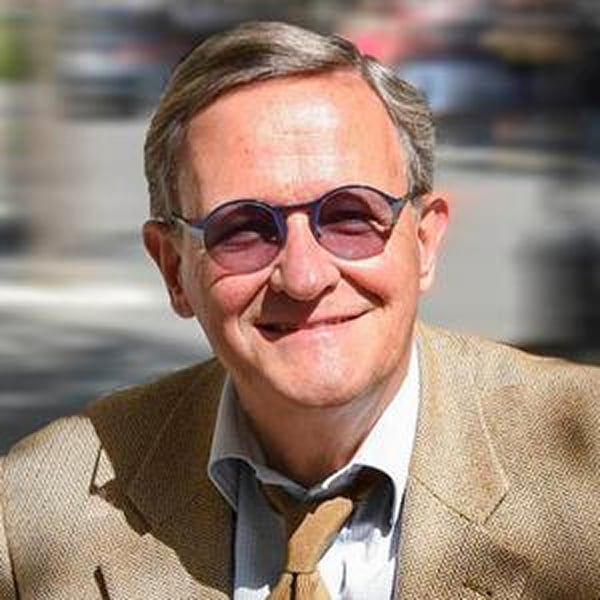
Peace & future researcher + ‌Art Photographer

Related Posts

The agreement is catastrophic both because of what it says and what it doesn’t mention. It reduces further the major asset of security policies: Freedom of action. Jan Oberg TFF director September 25, 2026 A couple of hours before the agreement was signed on September 22, 2026, I published the following 13 hypotheses about what it would most likely contain on TFF Substack (in English). I was wrong on only the first point. Contrary to what Trump had written on his Truth Social platform, it does not appear to come into force immediately. In fact, it turned out to be worse than even I had anticipated. After these hypotheses now come a number of reflections in light of what the agreement actually contains, and does not contain, as well as the way in which it has generally been presented by major media outlets and by the public-service broadcaster DR. My...
Below are TFF-related media mentions, comments, videos and social media posts published elsewhere but not on this homepage. We happen to catch and list only a fraction. Regarding video comments and debates, we recommend that you go to the TFF Video Channel on Substack where many of them are reproduced. Jan Oberg is a contributor to China Daily – 52 million daily clicks – and Global Times, CGTN and CCTV (the national television), China Investment, Xinhua News Agency and several others. Articles and videos on these media very often multiply into countless Chinese (and Western media) that re-post them from these main media. Thanks to The China Academy, his analyses, interviews and comments are frequently posted on YouTube channels such as Thinkers Forum and Wave Media. These videos are often re-posted on Bilibili (China’s YouTube), the China Content Center on TikTok, and on the Chinese edition of TikTok, Douyin.com. This means reaching hundreds of millions of viewers worldwide over a year. While there are too many to catch on all these...
Jan Oberg May 15, 2026 Go to this Fox News page and scroll the whole way down: President Donald Trump tells the world that his meeting with President Xi Jinping yielded a lot of very concrete political and economic results – of course, only where the Chinese side, according to him, agreed with him. He does not mention the Taiwan issue, but Secretary of State, Marco Rubio, says that it did not feature prominently in their talks and that the US policy on Taiwan has not changed. Then go to China Daily – or Global Times – and you will see that for the Chinese it is framework, principles, structure of cooperation etc. that matters – all embedded in the overall idea of “constructive bilateral relationship of strategic stability.” Nowhere is any concrete agreement or deal – all that Trump refers to – mentioned. At the general level, this gives you insights into the very different social...

Recent Articles

Tony Robinson October 4, 2026 Violence is easy to recognise when someone is being beaten, shot or killed. It becomes more difficult when nobody is holding a weapon. Poverty, discrimination, exploitation and repression can restrict a human life just as effectively, although they do so in very different ways and with very different consequences. Simply adding more categories to an ever-growing list of forms of violence does not really solve the problem. The more interesting question is what all these different situations have in common and why it makes sense to describe them using the same word. Human beings do not simply react to what happens around them. They remember the past, imagine things that do not yet exist, make plans and undertake projects. Workers organise because they imagine different working conditions; people migrate because they imagine another life somewhere else; social movements emerge because people refuse to accept the...
It’s a matter of principles, courage, vision and pulling together – while the militarist world is falling apart… Peter Langille October 3, 2026 “Here, then, is the problem which we present to you, stark and dreadful and inescapable: Shall we put an end to the human race; or shall mankind renounce war?”The Bertrand Russell—Albert Einstein Manifesto, July 9, 1955 ⁕ The forecast for what’s ahead is worrisome. The sharp rise in armed conflicts over the past three years is adding to what was already the highest level in over seventy years. Genocides, which should be prevented are supported. A shared climate emergency that jeopardises survival is ignored. Diverse polls now suggest that people are war-weary, worried and interested in a more effective United Nations. And, there are viable policy options for a more secure world! Yet governments are doubling-down, betting on more war and investing heavily. If current trends persist,...
Johan Galtung 1930-2024October 2015 Published here on October 3, 2026 Let us focus on Civilization for conflict analysis and remedies. Major forms of disorder use violence; war is state organized violence. The most belligerent states are the United States of America and Israel, both with civilization roots. National Evangelism, the US Protestant Christian civilization– more national than evangelical–justifies US warfare as exceptionalism of a people chosen by God, with a manifest destiny to run the world. Orthodox Judaism justifies Israeli warfare to conquer and expand from Nile to Euphrates as a religious right and duty to the Eternal One. The third most belligerent country, the UK, no longer believes it is God-chosen but chosen by the USA; not quite the same but something. But the root cause of global disorder lies in the Occident–with Islam–seeing itself as the single, universal civilization valid for all at all times, all others being...

TFF on Substack

Discover and subscribe to more peace materials on TFF Substack

Most Popular

Tony Robinson October 4, 2026 Violence is easy to recognise when someone is being beaten, shot or killed. It becomes more difficult when nobody is holding a weapon. Poverty, discrimination, exploitation and repression can restrict a human life just as effectively, although they do so in very different ways and with very different consequences. Simply adding more categories to an ever-growing list of forms of violence does not really solve the problem. The more interesting question is what all these different situations have in common and why it makes sense to describe them using the same word. Human beings do not simply react to what happens around them. They remember the past, imagine things that do not yet exist, make plans and undertake projects. Workers organise because they imagine different working conditions; people migrate because they imagine another life somewhere else; social movements emerge because people refuse to accept the...
It’s a matter of principles, courage, vision and pulling together – while the militarist world is falling apart… Peter Langille October 3, 2026 “Here, then, is the problem which we present to you, stark and dreadful and inescapable: Shall we put an end to the human race; or shall mankind renounce war?”The Bertrand Russell—Albert Einstein Manifesto, July 9, 1955 ⁕ The forecast for what’s ahead is worrisome. The sharp rise in armed conflicts over the past three years is adding to what was already the highest level in over seventy years. Genocides, which should be prevented are supported. A shared climate emergency that jeopardises survival is ignored. Diverse polls now suggest that people are war-weary, worried and interested in a more effective United Nations. And, there are viable policy options for a more secure world! Yet governments are doubling-down, betting on more war and investing heavily. If current trends persist,...
Johan Galtung 1930-2024October 2015 Published here on October 3, 2026 Let us focus on Civilization for conflict analysis and remedies. Major forms of disorder use violence; war is state organized violence. The most belligerent states are the United States of America and Israel, both with civilization roots. National Evangelism, the US Protestant Christian civilization– more national than evangelical–justifies US warfare as exceptionalism of a people chosen by God, with a manifest destiny to run the world. Orthodox Judaism justifies Israeli warfare to conquer and expand from Nile to Euphrates as a religious right and duty to the Eternal One. The third most belligerent country, the UK, no longer believes it is God-chosen but chosen by the USA; not quite the same but something. But the root cause of global disorder lies in the Occident–with Islam–seeing itself as the single, universal civilization valid for all at all times, all others being...
Read More
Living-Peace-Sign-Budapest-copy
Tony Robinson October 4, 2026 Violence is easy to recognise when someone is being beaten, shot or killed. It becomes more difficult when nobody is holding a weapon. Poverty, discrimination, exploitation and repression can restrict a human life just as effectively, although they do so in very different ways and with very different consequences. Simply adding more categories to an ever-growing list of forms of violence does not really solve the problem. The more interesting question is what all these different situations have in common and why it makes sense to describe them using the same word. Human beings do not simply react to what happens around them. They remember the past, imagine things that do not yet exist, make plans and undertake projects. Workers organise because they imagine different working conditions; people migrate because they imagine another life somewhere else; social movements emerge because people refuse to accept the...
b54a1f10-8c65-4f0b-9dd5-4abc0a7d04cc_2659x2659
It’s a matter of principles, courage, vision and pulling together – while the militarist world is falling apart… Peter Langille October 3, 2026 “Here, then, is the problem which we present to you, stark and dreadful and inescapable: Shall we put an end to the human race; or shall mankind renounce war?”The Bertrand Russell—Albert Einstein Manifesto, July 9, 1955 ⁕ The forecast for what’s ahead is worrisome. The sharp rise in armed conflicts over the past three years is adding to what was already the highest level in over seventy years. Genocides, which should be prevented are supported. A shared climate emergency that jeopardises survival is ignored. Diverse polls now suggest that people are war-weary, worried and interested in a more effective United Nations. And, there are viable policy options for a more secure world! Yet governments are doubling-down, betting on more war and investing heavily. If current trends persist,...
010
Johan Galtung 1930-2024October 2015 Published here on October 3, 2026 Let us focus on Civilization for conflict analysis and remedies. Major forms of disorder use violence; war is state organized violence. The most belligerent states are the United States of America and Israel, both with civilization roots. National Evangelism, the US Protestant Christian civilization– more national than evangelical–justifies US warfare as exceptionalism of a people chosen by God, with a manifest destiny to run the world. Orthodox Judaism justifies Israeli warfare to conquer and expand from Nile to Euphrates as a religious right and duty to the Eternal One. The third most belligerent country, the UK, no longer believes it is God-chosen but chosen by the USA; not quite the same but something. But the root cause of global disorder lies in the Occident–with Islam–seeing itself as the single, universal civilization valid for all at all times, all others being...
Screenshot 2026-10-02 011738
Jan ObergPhD, director, The Transnational Foundation for Peace and Future Research, TFFLund, Sweden October 2, 2026 This is my full original manuscript. The Chinese Academy of Social Science, CASS, makes two publications out if it. 1. China’s Five-year plan emphasized the capabilities of basic research and original innovation. It is regarded as the goal of the future social development, which, as required, should be significantly enhanced. Can you comment on the importance of original innovation in research and academic study? I believe it is easier to define “original innovation” in the natural sciences than in social sciences. The breaking points of what constitutes something new, or innovative, are not quite as sharp in the latter. But in both fields it is about opening up something that was closed, unseen, unexplored before – making manifest what was earlier latent. Innovations come in many forms and shapes – naming something that was not...
arctic-circle-map
The agreement is catastrophic both because of what it says and what it doesn’t mention. It reduces further the major asset of security policies: Freedom of action. Jan Oberg TFF director September 25, 2026 A couple of hours before the agreement was signed on September 22, 2026, I published the following 13 hypotheses about what it would most likely contain on TFF Substack (in English). I was wrong on only the first point. Contrary to what Trump had written on his Truth Social platform, it does not appear to come into force immediately. In fact, it turned out to be worse than even I had anticipated. After these hypotheses now come a number of reflections in light of what the agreement actually contains, and does not contain, as well as the way in which it has generally been presented by major media outlets and by the public-service broadcaster DR. My...
girl-5894831_1280
Below are TFF-related media mentions, comments, videos and social media posts published elsewhere but not on this homepage. We happen to catch and list only a fraction. Regarding video comments and debates, we recommend that you go to the TFF Video Channel on Substack where many of them are reproduced. Jan Oberg is a contributor to China Daily – 52 million daily clicks – and Global Times, CGTN and CCTV (the national television), China Investment, Xinhua News Agency and several others. Articles and videos on these media very often multiply into countless Chinese (and Western media) that re-post them from these main media. Thanks to The China Academy, his analyses, interviews and comments are frequently posted on YouTube channels such as Thinkers Forum and Wave Media. These videos are often re-posted on Bilibili (China’s YouTube), the China Content Center on TikTok, and on the Chinese edition of TikTok, Douyin.com. This means reaching hundreds of millions of viewers worldwide over a year. While there are too many to catch on all these...