Post-Corona thoughts from Beijing: ‘There is and will be no going back to normal’

Photo – Jan Oberg

Gordon Dumoulin

May 5, 2020

People from abroad ask me lately how it is to be ‘back to normal’ in Beijing after the lockdown?

A little introduction

First of all we have not witnessed a strict lockdown here in Beijing such as in Wuhan, Hubei province, some other cities in China e.g. Hangzhou or even in Lombardy or Paris and Madrid.

Even though we have not been forced to stay at home since the beginning, public life had been minimized in Beijing and we have resiliently stayed inside most of the time for our own safety, minimizing the risk of further outbreak and in solidarity with the people fighting at the battlefield.

We have been subject to intense measure and data organisations to provide a bigger picture of the pandemic and virus, both through on-site checks of temperature and whereabouts and through high-tech with apps checking your whereabouts in relation to possible infections or drones checking your temperature.

Photo by the author

The latest measures are slowly easing with business, retail and public places cautiously opening up again but people remain very careful and alert, and families stay closely together with children remaining at home as schools keep closed until further notice.

Originally published on Gordon Dumoulin on Linkedin

This careful easing up will naturally actualize the question by others “how is life in Beijing being back to normal?” Well, let us get one thing straight: there is and will be no going back to normal in Beijing or any other place in the world due to, at least, the following four circumstances. 

Four circumstances which close the door to going back to normal

1. Human psychology: The Pause-and-Reflect Button

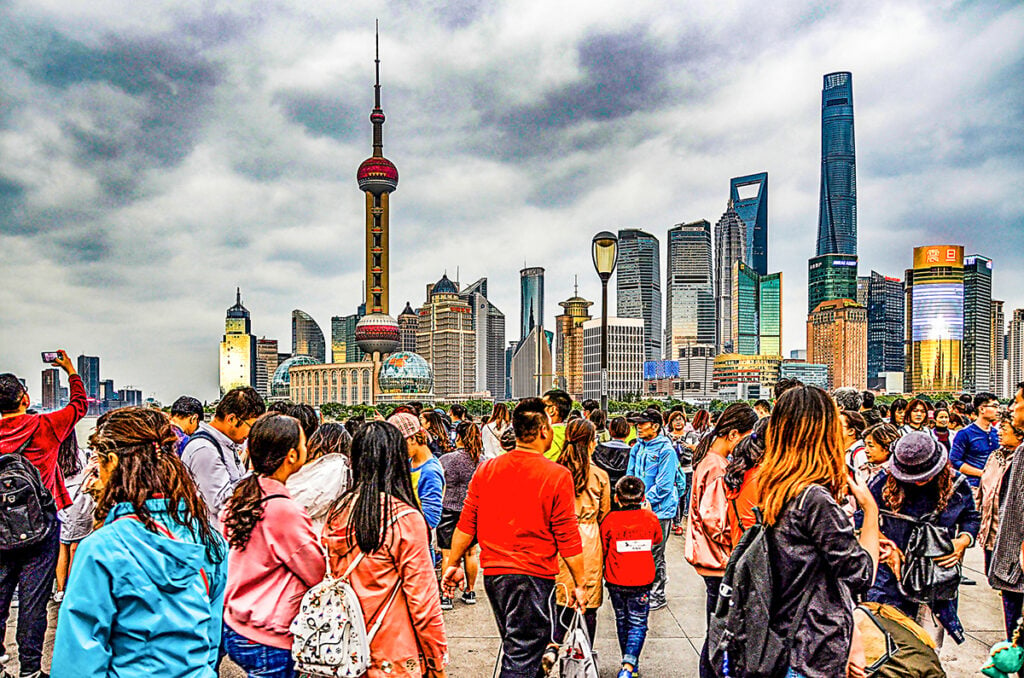
The pause-and-reflect button has changed people’s thoughts and behaviors with new lifestyles, needs and mindsets all over the world. Why would people anywhere long for traffic jams, pollution and stressful rat races in the current economic models ?

Author’s insert from The Sixth Tone

Resistance to change and adaptation would express a kind of longing back to “the good, old times” in the first phase but this desire will (and should) not last. The human behavioural change might be mistakenly underrated, but it will be a prime force from bottom-up towards a New Normal.

2. Transforming societies: High-tech breaking grounds

Technology has been breaking grounds in societies all over the world since the pandemic to assist humanity during the virus outbreak. High-tech and Big Data will be here to stay and rapidly breaking more grounds and transforming societies worldwide in the near future with more severe battles for humanity coming up (see below).

TV screening – photo by and of the author

It will not be a question if humanity accepts the technology but about how to manage technology implementations in a positive New Normal as one humanity all over the world.

3. The worse battle still to come: Economic hardship

While people are hoping for a soon victory over the Coronavirus, the worst sacrifice is yet to come – namely the global economic hardship in which people, societies and governments will have to be pro-active in battle, instead of being defensive and passive as they are now during the pandemic.

Author’s photo

The global economic disaster will demand very much from people in terms of sacrifice, adaptation and raising questions, considerations and consciousness about the pre-Corona lifestyles and economic models.

4. Humanity: the Naked Truth coming out

The naked truth of the pandemic is that humanity is outright miserable and failing to fight and sacrifice together as one humanity in solidarity. In fact, on the contrary, ‘tribes’ – by which I mean countries, societies, races, people – are drifting apart with politicizing the outbreak and straightforward blaming and harassing each other, often with a narcissist touch.

Photo from Unsplash

In recent months and fueled by mainstream and social media, we have all witnessed through media, or personally, a mass-activation of racial, national, political or economical biases by people and tribes towards others, physical attacks as well as verbal abuse.

These things will certainly not be forgotten. They will have a major impact for a long time; geopolitics and international communities will not be the same in the post-Corona era.

What could the post-Corona era look like?

I am not going to speculate here about different alternatives or pretend to have the right march forward clear in my mind but the following considerations should be kept clearly in mind during the coming time:

• The Coronavirus is drastically shaking humanity and its role on Mother Earth since recent months. Naked truths are coming out, different people and tribes are pushed to corners, baring and unfolding primal instincts and cognitive biases as the pandemic does not allow people to take theie time anymore for diplomatic or political considerations.

• The Coronavirus is certainly happy with the miserable disaster created by how humanity is tackling the pandemic as they waste a lot of time tackling each other without a unified battle strategy with shared resources as one humanity.

People do close – but should not close – their eyes to the symptoms and changes appearing in front of us during the pandemic which unconditionally demands a trustful, transparent, respectful and equal collaboration of humankind all over the world.
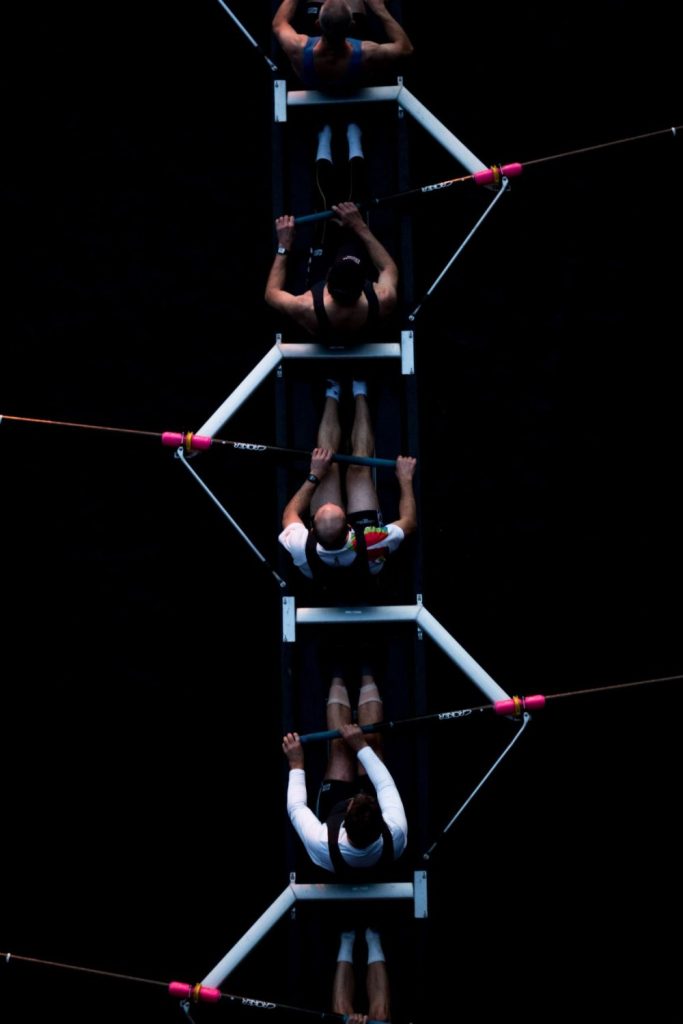
Photo from Unsplash

This collaboration of humankind requires a huge and unprecedented effort by humanity to organize themselves as one determined species for survival, equality and harmony. Unprecedented efforts in mutual solidarity, sacrifice, adaptation, cross-cultural intelligence, co-existence, acceptance and respect with the objective to settle on synergistic common grounds which affect all of us worldwide.

One might claim that these demands for humanity are exaggerated for this pandemic. But the coronavirus is just a ‘small’ trigger for testing humanity in which ‘only’ a unified and solidary defense against a common enemy is needed.

In a natural sense, it would be expected that a common enemy would bring humanity together in defence, but paradoxically the common enemy is rapidly exposing the vulnerability and weakness of humanity.

The real battles lie in front of us; economic hardship and transformation while the environment is also knocking on the doors of humanity demanding full sustainability and respect with immediate notice.

Photo from Unsplash

As people are not even being able to handle the pandemic efficiently as one species, drifting apart with senses of hostility and separation, how can we expect to be able to handle bigger future battles in which humanity needs to be pro-active towards themselves and stand as one instead of being defensive against a common enemy?

Economic hardships, changing geopolitical perspectives, tribes decoupling in the short term, politically and economically selfish visions and narcissism, senses of hostility and racism – all are symptoms which humanity has seen before on similar crossroads in history leading to unimaginable man-made disasters against themselves.

Yes, we are talking about the possibility of war here, and to be clear not about a trade war.

Photo from Unsplash

People seem to subconsciously forget history, hide their fears for the worst by telling it is not that bad and this can never happen to us humans today.

But today’s symptoms are stronger than ever having been in similar historical crash roads which had lead to man-made human disasters.

It only takes a little spark by the size of a match.

OK, this for the worst-case thoughts. I think it is very important that the word war is being spoken out as it is a reality looking at human history and today’s symptoms. Dialoguing with each other about the possibility and danger of war might decrease the risk and enhance the chances of collaboration.

International media and politicizing entities are bashing around about all the symptoms but the discussions about possible outcomes are carefully avoided.

How could we create a better post-corona era than the old world?

Collaboration, collaboration… and more collaboration with mutual solidarity, understanding, respect and acceptance in a peaceful co-existence. People, governments and societies need to change drastically and adapt to a new world where environment is being respected, basic human rights are being respected (as laid upon in UDHR – United Declaration of Human Rights), and different cultures within the framework are being respected.

Cross-cultural competence and Social Intelligence.

Crucially important is being able and human enough to support and sacrifice for others without conditions but solely for the strength and respect of being human.

Photo by the author

If this would not be possible and no more true inspirational and respected leadership would pop up within the current traditional configuration of national governments and international global agencies, people should be looking into developing new ecosystems with possible new economic and sustainable processes and social environments.

This can either go in harmony with traditional borders or otherwise some traditional borders might become irrelevant in time.

To put it crudely:

There is no going back to normal! And we should not want to go back to normal.

Immense challenges with immense opportunities and risks are laying ahead of humanity. And not very far away.

It is up to us whether to make the world a better place as a whole but it requires drastic change and adaptation from all of us.

It requires unconditional mutual solidarity and sacrifices to tackle a) the virus and – more radically thereafter – b) the economic hardship (with possibly changing, disrupting models for more equality and poverty reduction) and c) the environmental degradation. And the last-mentioned is not a pandemic curve but a straight line moving fast and steep downwards, dragging humanity down with it.

Challenging times ahead! Are we up for this?

杜墨 Gordon Dumoulin

Beijing, April 2020

‘Reboot and critical update for 20th century humanity in the 21th century world’

#reboothumanity #reboothumanity2020 #reboot2020 #reboothumanintelligence #humanitycriticalupdate

About Reboot Humanity

REBOOT Humanity • Critical update 2020 (RHC) is a think tank initiative aiming to raise questions and considerations from a pure humanity perspective. Independent from currently embedded systems, processes, cultures or politics, RHC is looking into the human intelligence software which is all about economic and social processes, cross-cultural competences and the role and compatibility of humanity in relation to the hardware; among others the environment and technology. 

Recent developments in past decades such as environmental degradation and economic and social tensions – and now adding the coronavirus pandemic impact on humanity – emphasizes the need for a reboot and for critical updates of the software on which humanity operates.

If you find thoughts like these important – perhaps necessary – reward TFF for making them available to you. Just like a cup of coffee…

Related Posts

The agreement is catastrophic both because of what it says and what it doesn’t mention. It reduces further the major asset of security policies: Freedom of action. Jan Oberg TFF director September 25, 2026 A couple of hours before the agreement was signed on September 22, 2026, I published the following 13 hypotheses about what it would most likely contain on TFF Substack (in English). I was wrong on only the first point. Contrary to what Trump had written on his Truth Social platform, it does not appear to come into force immediately. In fact, it turned out to be worse than even I had anticipated. After these hypotheses now come a number of reflections in light of what the agreement actually contains, and does not contain, as well as the way in which it has generally been presented by major media outlets and by the public-service broadcaster DR. My...
Below are TFF-related media mentions, comments, videos and social media posts published elsewhere but not on this homepage. We happen to catch and list only a fraction. Regarding video comments and debates, we recommend that you go to the TFF Video Channel on Substack where many of them are reproduced. Jan Oberg is a contributor to China Daily – 52 million daily clicks – and Global Times, CGTN and CCTV (the national television), China Investment, Xinhua News Agency and several others. Articles and videos on these media very often multiply into countless Chinese (and Western media) that re-post them from these main media. Thanks to The China Academy, his analyses, interviews and comments are frequently posted on YouTube channels such as Thinkers Forum and Wave Media. These videos are often re-posted on Bilibili (China’s YouTube), the China Content Center on TikTok, and on the Chinese edition of TikTok, Douyin.com. This means reaching hundreds of millions of viewers worldwide over a year. While there are too many to catch on all these...
Jan Oberg May 15, 2026 Go to this Fox News page and scroll the whole way down: President Donald Trump tells the world that his meeting with President Xi Jinping yielded a lot of very concrete political and economic results – of course, only where the Chinese side, according to him, agreed with him. He does not mention the Taiwan issue, but Secretary of State, Marco Rubio, says that it did not feature prominently in their talks and that the US policy on Taiwan has not changed. Then go to China Daily – or Global Times – and you will see that for the Chinese it is framework, principles, structure of cooperation etc. that matters – all embedded in the overall idea of “constructive bilateral relationship of strategic stability.” Nowhere is any concrete agreement or deal – all that Trump refers to – mentioned. At the general level, this gives you insights into the very different social...

Recent Articles

Tony Robinson October 4, 2026 Violence is easy to recognise when someone is being beaten, shot or killed. It becomes more difficult when nobody is holding a weapon. Poverty, discrimination, exploitation and repression can restrict a human life just as effectively, although they do so in very different ways and with very different consequences. Simply adding more categories to an ever-growing list of forms of violence does not really solve the problem. The more interesting question is what all these different situations have in common and why it makes sense to describe them using the same word. Human beings do not simply react to what happens around them. They remember the past, imagine things that do not yet exist, make plans and undertake projects. Workers organise because they imagine different working conditions; people migrate because they imagine another life somewhere else; social movements emerge because people refuse to accept the...
It’s a matter of principles, courage, vision and pulling together – while the militarist world is falling apart… Peter Langille October 3, 2026 “Here, then, is the problem which we present to you, stark and dreadful and inescapable: Shall we put an end to the human race; or shall mankind renounce war?”The Bertrand Russell—Albert Einstein Manifesto, July 9, 1955 ⁕ The forecast for what’s ahead is worrisome. The sharp rise in armed conflicts over the past three years is adding to what was already the highest level in over seventy years. Genocides, which should be prevented are supported. A shared climate emergency that jeopardises survival is ignored. Diverse polls now suggest that people are war-weary, worried and interested in a more effective United Nations. And, there are viable policy options for a more secure world! Yet governments are doubling-down, betting on more war and investing heavily. If current trends persist,...
Johan Galtung 1930-2024October 2015 Published here on October 3, 2026 Let us focus on Civilization for conflict analysis and remedies. Major forms of disorder use violence; war is state organized violence. The most belligerent states are the United States of America and Israel, both with civilization roots. National Evangelism, the US Protestant Christian civilization– more national than evangelical–justifies US warfare as exceptionalism of a people chosen by God, with a manifest destiny to run the world. Orthodox Judaism justifies Israeli warfare to conquer and expand from Nile to Euphrates as a religious right and duty to the Eternal One. The third most belligerent country, the UK, no longer believes it is God-chosen but chosen by the USA; not quite the same but something. But the root cause of global disorder lies in the Occident–with Islam–seeing itself as the single, universal civilization valid for all at all times, all others being...

TFF on Substack

Discover and subscribe to more peace materials on TFF Substack

Most Popular

Tony Robinson October 4, 2026 Violence is easy to recognise when someone is being beaten, shot or killed. It becomes more difficult when nobody is holding a weapon. Poverty, discrimination, exploitation and repression can restrict a human life just as effectively, although they do so in very different ways and with very different consequences. Simply adding more categories to an ever-growing list of forms of violence does not really solve the problem. The more interesting question is what all these different situations have in common and why it makes sense to describe them using the same word. Human beings do not simply react to what happens around them. They remember the past, imagine things that do not yet exist, make plans and undertake projects. Workers organise because they imagine different working conditions; people migrate because they imagine another life somewhere else; social movements emerge because people refuse to accept the...
It’s a matter of principles, courage, vision and pulling together – while the militarist world is falling apart… Peter Langille October 3, 2026 “Here, then, is the problem which we present to you, stark and dreadful and inescapable: Shall we put an end to the human race; or shall mankind renounce war?”The Bertrand Russell—Albert Einstein Manifesto, July 9, 1955 ⁕ The forecast for what’s ahead is worrisome. The sharp rise in armed conflicts over the past three years is adding to what was already the highest level in over seventy years. Genocides, which should be prevented are supported. A shared climate emergency that jeopardises survival is ignored. Diverse polls now suggest that people are war-weary, worried and interested in a more effective United Nations. And, there are viable policy options for a more secure world! Yet governments are doubling-down, betting on more war and investing heavily. If current trends persist,...
Johan Galtung 1930-2024October 2015 Published here on October 3, 2026 Let us focus on Civilization for conflict analysis and remedies. Major forms of disorder use violence; war is state organized violence. The most belligerent states are the United States of America and Israel, both with civilization roots. National Evangelism, the US Protestant Christian civilization– more national than evangelical–justifies US warfare as exceptionalism of a people chosen by God, with a manifest destiny to run the world. Orthodox Judaism justifies Israeli warfare to conquer and expand from Nile to Euphrates as a religious right and duty to the Eternal One. The third most belligerent country, the UK, no longer believes it is God-chosen but chosen by the USA; not quite the same but something. But the root cause of global disorder lies in the Occident–with Islam–seeing itself as the single, universal civilization valid for all at all times, all others being...
Read More
Living-Peace-Sign-Budapest-copy
Tony Robinson October 4, 2026 Violence is easy to recognise when someone is being beaten, shot or killed. It becomes more difficult when nobody is holding a weapon. Poverty, discrimination, exploitation and repression can restrict a human life just as effectively, although they do so in very different ways and with very different consequences. Simply adding more categories to an ever-growing list of forms of violence does not really solve the problem. The more interesting question is what all these different situations have in common and why it makes sense to describe them using the same word. Human beings do not simply react to what happens around them. They remember the past, imagine things that do not yet exist, make plans and undertake projects. Workers organise because they imagine different working conditions; people migrate because they imagine another life somewhere else; social movements emerge because people refuse to accept the...
b54a1f10-8c65-4f0b-9dd5-4abc0a7d04cc_2659x2659
It’s a matter of principles, courage, vision and pulling together – while the militarist world is falling apart… Peter Langille October 3, 2026 “Here, then, is the problem which we present to you, stark and dreadful and inescapable: Shall we put an end to the human race; or shall mankind renounce war?”The Bertrand Russell—Albert Einstein Manifesto, July 9, 1955 ⁕ The forecast for what’s ahead is worrisome. The sharp rise in armed conflicts over the past three years is adding to what was already the highest level in over seventy years. Genocides, which should be prevented are supported. A shared climate emergency that jeopardises survival is ignored. Diverse polls now suggest that people are war-weary, worried and interested in a more effective United Nations. And, there are viable policy options for a more secure world! Yet governments are doubling-down, betting on more war and investing heavily. If current trends persist,...
010
Johan Galtung 1930-2024October 2015 Published here on October 3, 2026 Let us focus on Civilization for conflict analysis and remedies. Major forms of disorder use violence; war is state organized violence. The most belligerent states are the United States of America and Israel, both with civilization roots. National Evangelism, the US Protestant Christian civilization– more national than evangelical–justifies US warfare as exceptionalism of a people chosen by God, with a manifest destiny to run the world. Orthodox Judaism justifies Israeli warfare to conquer and expand from Nile to Euphrates as a religious right and duty to the Eternal One. The third most belligerent country, the UK, no longer believes it is God-chosen but chosen by the USA; not quite the same but something. But the root cause of global disorder lies in the Occident–with Islam–seeing itself as the single, universal civilization valid for all at all times, all others being...
Screenshot 2026-10-02 011738
Jan ObergPhD, director, The Transnational Foundation for Peace and Future Research, TFFLund, Sweden October 2, 2026 This is my full original manuscript. The Chinese Academy of Social Science, CASS, makes two publications out if it. 1. China’s Five-year plan emphasized the capabilities of basic research and original innovation. It is regarded as the goal of the future social development, which, as required, should be significantly enhanced. Can you comment on the importance of original innovation in research and academic study? I believe it is easier to define “original innovation” in the natural sciences than in social sciences. The breaking points of what constitutes something new, or innovative, are not quite as sharp in the latter. But in both fields it is about opening up something that was closed, unseen, unexplored before – making manifest what was earlier latent. Innovations come in many forms and shapes – naming something that was not...
arctic-circle-map
The agreement is catastrophic both because of what it says and what it doesn’t mention. It reduces further the major asset of security policies: Freedom of action. Jan Oberg TFF director September 25, 2026 A couple of hours before the agreement was signed on September 22, 2026, I published the following 13 hypotheses about what it would most likely contain on TFF Substack (in English). I was wrong on only the first point. Contrary to what Trump had written on his Truth Social platform, it does not appear to come into force immediately. In fact, it turned out to be worse than even I had anticipated. After these hypotheses now come a number of reflections in light of what the agreement actually contains, and does not contain, as well as the way in which it has generally been presented by major media outlets and by the public-service broadcaster DR. My...
girl-5894831_1280
Below are TFF-related media mentions, comments, videos and social media posts published elsewhere but not on this homepage. We happen to catch and list only a fraction. Regarding video comments and debates, we recommend that you go to the TFF Video Channel on Substack where many of them are reproduced. Jan Oberg is a contributor to China Daily – 52 million daily clicks – and Global Times, CGTN and CCTV (the national television), China Investment, Xinhua News Agency and several others. Articles and videos on these media very often multiply into countless Chinese (and Western media) that re-post them from these main media. Thanks to The China Academy, his analyses, interviews and comments are frequently posted on YouTube channels such as Thinkers Forum and Wave Media. These videos are often re-posted on Bilibili (China’s YouTube), the China Content Center on TikTok, and on the Chinese edition of TikTok, Douyin.com. This means reaching hundreds of millions of viewers worldwide over a year. While there are too many to catch on all these...