
PressInfo #48 – Peace Proposal: Forums for Human Rights and Peace Education in Eastern Slavonia – and elsewhere

“This is a modest proposal for institutionalisation of
peace-related teaching in regions of conflict. It’s a
Citizens Forum for Human Rights and Peace Education,
HR&PE. It mentions Croatia but is equally relevant for,
let’s say, Kosovo or Macedonia, or any other trouble spot.
You may think that this is relevant only after war, but I
strongly believe that forums like this should be created
wherever the situation threatens to erupt into violence. If
the trigger-happy international “community” had invested in
such projects – both in their own ministries of foreign
affairs, in international organisations and in trouble spots
such as Kosovo – 5 or 10 years ago, people on all sides
would begin to realise the utter futility of using weapons
to achieve their goals,” says TFF director Jan
Oberg.

“You see, there are no limits to what can be done to help
people coexist in postwar communities. The international
community has no specialised competence or organisations in
this field. Post-war reconciliation is the most important
measure to prevent future outbreaks of violence – and we
must focus particularly on children and youth,” says TFF
director Jan Oberg.

“TFF has been working for more than one year with
reconciliation issues in Eastern Slavonia, Croatia. We have
analysed problems of co-operation in many schools, served as
resource persons at three UN/Council of Europe seminars for
principals and teachers, helped about 120 Croat and Serb
gymnasium students to see a better future together and we’ve
supported local Serb media in their wish to contribute to
reconciliation. Just a couple of weeks ago, TFF conducted a
seminar with CINES – the Citizens Initiative Network Eastern
Slavonia that we helped create in June, an effort to bring
mixed groups of teachers, media people and all NGOs together
as they are all educators.”

BACKGROUND

• The wish of the Croatian government and the UN to
promote and develop human rights including peace education
within Croatia especially in multi-ethnic regions like
Eastern Slavonia. This will help to fulfil, for instance,
the goals of the Education for Citizenship programme of the
Council of Europe, and those of the earlier UN mission ‘to
retain the multi-ethnic character of the region’, ‘promote
an atmosphere of confidence among all local residents
irrespective of their ethnic origin’, ‘enable all refugees
and displaced persons to enjoy the right of return freely to
their homes and to live there in conditions of security’.
and ‘promote respect for the highest standards of human
rights and fundamental freedoms.’

PURPOSES

• INFORMATION – Information on all issues
relevant for human rights and peace education must be
gathered, links between schools established, public
information made reliable.

• EMPOWERMENT – Build on local resources, to local citizens more self-reliant and society more democratic.

• SKILLS IN RECONCILIATION AND
FORGIVENESS
– Through participative processes help
locals themselves train their peers and develop teaching
materials in conflict understanding, -resolution and civil
society democratization.

• COOPERATION – Between principals, teachers,
pupils and parents and between them and the surrounding
society, particularly domestic NGOs and international
organisations.

• CIVIL SOCIETY RESTORATION – To help schools
play a much needed role as community centres and
public/civic education institutions.

• INNOVATION – Schools in Eastern Slavonia
could pioneer new subjects, methods and curricula for the
rest of Croatia, and thereby turn a disadvantage into an
advantage.

• PROFESSIONALIZATION – To help principals,
teachers and students to develop their identity as both
educators and learners.

• TO HELP CREATE BETTER SCHOOLS where real
educational issues rather than ethnic politics, grievances
and symbols dominate and which serve as centres of community
transformation.

ORGANISATION

• NETWORK – Breaking away from the former
Yugoslav and present pyramid-shaped organisation; no
“President” should be elected and the people running it
should be devoted school people, chosen by their peers for
their competence and vision. No one who is also a politician
or state/municipal employee should be responsible for the
Forum’s daily work. Horizontally structured, dynamic, open
for creativity and do-it-yourself.

• LIAISON PERSONS – Aim to appoint committed liaison person(s) in each school.

• RESPONSIBILITY – A small board is responsible to grant-makers and the ministry, but the activity is self-governing.

• INNOVATORS – Take some, perhaps about five,
of the most open-minded participants in the Council of
Europe seminars, find some Student Council representatives
and some NGO leaders whose organisations work with issues
relevant for human rights and peace and education in a broad
sense.

• COORDINATORS – Help them establish a small
secretariat or clearing house that communicates – phones,
fax, e-mail – with, in principle, all schools in the region.
Best if this group of coordinators is recognised within a
Croatian professional organisations of teachers.

• ADVISERS – Ask Council of Europe, OSCE, UN,
TFF and others to serve as advisory group, but only when
asked by people in the region.

ACTIVITIES

In principle unlimited, here are some:

• Newsletter/journal
A simple mono-lingual product where general human rights and
peace education (HR&PE) issues can be discussed and
where each school – principal, teacher and pupil – can tell
others what goes on in their schools and what they want to
do, draw on the experience of others in the field. HR&PE
in other countries could be reviewed, too.

• Seminars
Workshops and training for the many who did not have a
chance to go to the three 1997 seminars, spreading the
message, building momentum.

• Educational materials
Develop teaching materials, serving as a pedagogical centre,
perhaps build a small library, translate and edit important
international texts for teaching human rights and peace,
such as those of UNESCO.

• Pilot studies and experimental
curricula

Propose and develop them, in consultation with the Ministry,
so that practical experience can be gathered; experimenting
with and introducing modern equipment such as computers,
video, Internet etc, facilitating later contacts with global
trends.

• Spearheading Croatia’s development
Eastern Slavonian schools could become pedagogical learning
centres, inspiring schools all over Croatia – and the region
needs to be seen as useful, strong and as a vital part of
Croatia.

• Reforms in schools and their management
To introduce HR&PE, a democratic spirit, decision-making
and dialogue into the daily management of the schools as
well as into the formal and the hidden curriculum, to secure
that the subjects are practised and not just taught as
texts.

• Education-related social activities
Aiming at democracy, reconciliation and community
development, such as e.g. gathering citizens to rebuild
schools, paint them, make gardens (memorial gardens too)
attached to the schools, suggest cultural activities etc –
all to further a sense a community across whatever divisions
that exist.

• Outreach to the larger world
Serve as a link to the educational community in Croatia,
other former Yugoslav countries and the international
community, including linking up with interest associations,
professional societies and teachers’ unions.

• Media education
Another important group to reach out to – as educators – is
media. The Forum could conduct seminars with educational,
human rights and peace NGOs for and with media people and do
educational programs for radio and television.

• Small research projects
Conduct a survey of attitudes, norms, wishes and future
perceptions of relevance to the schools, in the educational
sector as well as outside it.

• Later on – a local history commission to
write what happened in that part of the country and why –
and what to learn from it. Three versions: one from a Croat
perspective, one from a Serb, perspective (and perhaps other
minorities), one written together, specifying where
agreement can be reached, where mutual understanding is
possible and where no mutuality exist. If published the
materials here would have a healing effect, suffering of
citizens on all sides would be recognised, it would be
psychologically helpful to victims. If transformed into
school books, it could have a considerable educational value
for children and youth by offering reconciliation rather
than hate speech.

“What a pity that such, rather simple, ideas are never
presented in government circles and among diplomats
shuttling around to make what they and the media mistakenly
call peace. Why is a Forum like this not even mentioned in
the Dayton Accords for Bosnia or in “Interim Agreement”
brokered by US ambassador Christopher Hill now for
Kosovo?

Does anyone really believe that peace can be “engineered”
by foreigners and enforced by military pressure, tough talk
and some legal provisions – or that such a peace would be
sustainable without involving the people in the conflict
areas? Such an attitude lacks every ethos of democracy that
the same diplomats normally preach.

I don’t believe that any peace accord will hold if
enforced without the informed consent of the citizens. And
would it not be wonderful if they were well educated in
conflict-resolution and could inspire and challenge the
international ‘conflict-managers’ who keep on making peace
as if people didn’t matter,” Dr. Oberg wonders.
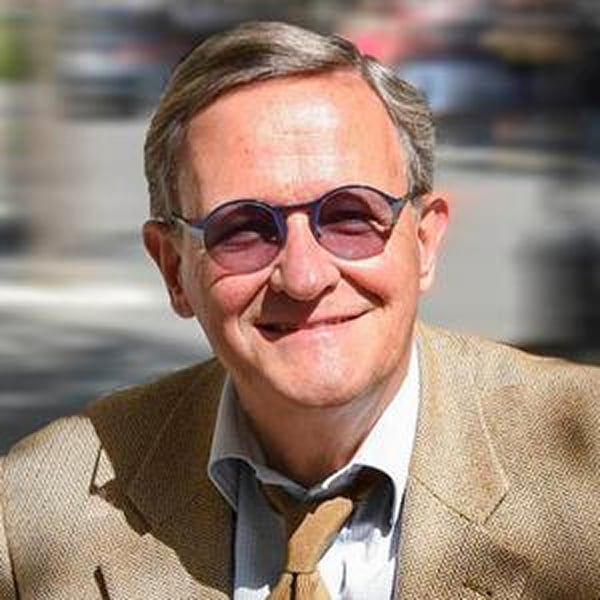

Peace & future researcher + ‌Art Photographer

Related Posts

The agreement is catastrophic both because of what it says and what it doesn’t mention. It reduces further the major asset of security policies: Freedom of action. Jan Oberg TFF director September 25, 2026 A couple of hours before the agreement was signed on September 22, 2026, I published the following 13 hypotheses about what it would most likely contain on TFF Substack (in English). I was wrong on only the first point. Contrary to what Trump had written on his Truth Social platform, it does not appear to come into force immediately. In fact, it turned out to be worse than even I had anticipated. After these hypotheses now come a number of reflections in light of what the agreement actually contains, and does not contain, as well as the way in which it has generally been presented by major media outlets and by the public-service broadcaster DR. My...
Below are TFF-related media mentions, comments, videos and social media posts published elsewhere but not on this homepage. We happen to catch and list only a fraction. Regarding video comments and debates, we recommend that you go to the TFF Video Channel on Substack where many of them are reproduced. Jan Oberg is a contributor to China Daily – 52 million daily clicks – and Global Times, CGTN and CCTV (the national television), China Investment, Xinhua News Agency and several others. Articles and videos on these media very often multiply into countless Chinese (and Western media) that re-post them from these main media. Thanks to The China Academy, his analyses, interviews and comments are frequently posted on YouTube channels such as Thinkers Forum and Wave Media. These videos are often re-posted on Bilibili (China’s YouTube), the China Content Center on TikTok, and on the Chinese edition of TikTok, Douyin.com. This means reaching hundreds of millions of viewers worldwide over a year. While there are too many to catch on all these...
Jan Oberg May 15, 2026 Go to this Fox News page and scroll the whole way down: President Donald Trump tells the world that his meeting with President Xi Jinping yielded a lot of very concrete political and economic results – of course, only where the Chinese side, according to him, agreed with him. He does not mention the Taiwan issue, but Secretary of State, Marco Rubio, says that it did not feature prominently in their talks and that the US policy on Taiwan has not changed. Then go to China Daily – or Global Times – and you will see that for the Chinese it is framework, principles, structure of cooperation etc. that matters – all embedded in the overall idea of “constructive bilateral relationship of strategic stability.” Nowhere is any concrete agreement or deal – all that Trump refers to – mentioned. At the general level, this gives you insights into the very different social...

Recent Articles

Tony Robinson October 4, 2026 Violence is easy to recognise when someone is being beaten, shot or killed. It becomes more difficult when nobody is holding a weapon. Poverty, discrimination, exploitation and repression can restrict a human life just as effectively, although they do so in very different ways and with very different consequences. Simply adding more categories to an ever-growing list of forms of violence does not really solve the problem. The more interesting question is what all these different situations have in common and why it makes sense to describe them using the same word. Human beings do not simply react to what happens around them. They remember the past, imagine things that do not yet exist, make plans and undertake projects. Workers organise because they imagine different working conditions; people migrate because they imagine another life somewhere else; social movements emerge because people refuse to accept the...
It’s a matter of principles, courage, vision and pulling together – while the militarist world is falling apart… Peter Langille October 3, 2026 “Here, then, is the problem which we present to you, stark and dreadful and inescapable: Shall we put an end to the human race; or shall mankind renounce war?”The Bertrand Russell—Albert Einstein Manifesto, July 9, 1955 ⁕ The forecast for what’s ahead is worrisome. The sharp rise in armed conflicts over the past three years is adding to what was already the highest level in over seventy years. Genocides, which should be prevented are supported. A shared climate emergency that jeopardises survival is ignored. Diverse polls now suggest that people are war-weary, worried and interested in a more effective United Nations. And, there are viable policy options for a more secure world! Yet governments are doubling-down, betting on more war and investing heavily. If current trends persist,...
Johan Galtung 1930-2024October 2015 Published here on October 3, 2026 Let us focus on Civilization for conflict analysis and remedies. Major forms of disorder use violence; war is state organized violence. The most belligerent states are the United States of America and Israel, both with civilization roots. National Evangelism, the US Protestant Christian civilization– more national than evangelical–justifies US warfare as exceptionalism of a people chosen by God, with a manifest destiny to run the world. Orthodox Judaism justifies Israeli warfare to conquer and expand from Nile to Euphrates as a religious right and duty to the Eternal One. The third most belligerent country, the UK, no longer believes it is God-chosen but chosen by the USA; not quite the same but something. But the root cause of global disorder lies in the Occident–with Islam–seeing itself as the single, universal civilization valid for all at all times, all others being...

TFF on Substack

Discover and subscribe to more peace materials on TFF Substack

Most Popular

Tony Robinson October 4, 2026 Violence is easy to recognise when someone is being beaten, shot or killed. It becomes more difficult when nobody is holding a weapon. Poverty, discrimination, exploitation and repression can restrict a human life just as effectively, although they do so in very different ways and with very different consequences. Simply adding more categories to an ever-growing list of forms of violence does not really solve the problem. The more interesting question is what all these different situations have in common and why it makes sense to describe them using the same word. Human beings do not simply react to what happens around them. They remember the past, imagine things that do not yet exist, make plans and undertake projects. Workers organise because they imagine different working conditions; people migrate because they imagine another life somewhere else; social movements emerge because people refuse to accept the...
It’s a matter of principles, courage, vision and pulling together – while the militarist world is falling apart… Peter Langille October 3, 2026 “Here, then, is the problem which we present to you, stark and dreadful and inescapable: Shall we put an end to the human race; or shall mankind renounce war?”The Bertrand Russell—Albert Einstein Manifesto, July 9, 1955 ⁕ The forecast for what’s ahead is worrisome. The sharp rise in armed conflicts over the past three years is adding to what was already the highest level in over seventy years. Genocides, which should be prevented are supported. A shared climate emergency that jeopardises survival is ignored. Diverse polls now suggest that people are war-weary, worried and interested in a more effective United Nations. And, there are viable policy options for a more secure world! Yet governments are doubling-down, betting on more war and investing heavily. If current trends persist,...
Johan Galtung 1930-2024October 2015 Published here on October 3, 2026 Let us focus on Civilization for conflict analysis and remedies. Major forms of disorder use violence; war is state organized violence. The most belligerent states are the United States of America and Israel, both with civilization roots. National Evangelism, the US Protestant Christian civilization– more national than evangelical–justifies US warfare as exceptionalism of a people chosen by God, with a manifest destiny to run the world. Orthodox Judaism justifies Israeli warfare to conquer and expand from Nile to Euphrates as a religious right and duty to the Eternal One. The third most belligerent country, the UK, no longer believes it is God-chosen but chosen by the USA; not quite the same but something. But the root cause of global disorder lies in the Occident–with Islam–seeing itself as the single, universal civilization valid for all at all times, all others being...
Read More
Living-Peace-Sign-Budapest-copy
Tony Robinson October 4, 2026 Violence is easy to recognise when someone is being beaten, shot or killed. It becomes more difficult when nobody is holding a weapon. Poverty, discrimination, exploitation and repression can restrict a human life just as effectively, although they do so in very different ways and with very different consequences. Simply adding more categories to an ever-growing list of forms of violence does not really solve the problem. The more interesting question is what all these different situations have in common and why it makes sense to describe them using the same word. Human beings do not simply react to what happens around them. They remember the past, imagine things that do not yet exist, make plans and undertake projects. Workers organise because they imagine different working conditions; people migrate because they imagine another life somewhere else; social movements emerge because people refuse to accept the...
b54a1f10-8c65-4f0b-9dd5-4abc0a7d04cc_2659x2659
It’s a matter of principles, courage, vision and pulling together – while the militarist world is falling apart… Peter Langille October 3, 2026 “Here, then, is the problem which we present to you, stark and dreadful and inescapable: Shall we put an end to the human race; or shall mankind renounce war?”The Bertrand Russell—Albert Einstein Manifesto, July 9, 1955 ⁕ The forecast for what’s ahead is worrisome. The sharp rise in armed conflicts over the past three years is adding to what was already the highest level in over seventy years. Genocides, which should be prevented are supported. A shared climate emergency that jeopardises survival is ignored. Diverse polls now suggest that people are war-weary, worried and interested in a more effective United Nations. And, there are viable policy options for a more secure world! Yet governments are doubling-down, betting on more war and investing heavily. If current trends persist,...
010
Johan Galtung 1930-2024October 2015 Published here on October 3, 2026 Let us focus on Civilization for conflict analysis and remedies. Major forms of disorder use violence; war is state organized violence. The most belligerent states are the United States of America and Israel, both with civilization roots. National Evangelism, the US Protestant Christian civilization– more national than evangelical–justifies US warfare as exceptionalism of a people chosen by God, with a manifest destiny to run the world. Orthodox Judaism justifies Israeli warfare to conquer and expand from Nile to Euphrates as a religious right and duty to the Eternal One. The third most belligerent country, the UK, no longer believes it is God-chosen but chosen by the USA; not quite the same but something. But the root cause of global disorder lies in the Occident–with Islam–seeing itself as the single, universal civilization valid for all at all times, all others being...
Screenshot 2026-10-02 011738
Jan ObergPhD, director, The Transnational Foundation for Peace and Future Research, TFFLund, Sweden October 2, 2026 This is my full original manuscript. The Chinese Academy of Social Science, CASS, makes two publications out if it. 1. China’s Five-year plan emphasized the capabilities of basic research and original innovation. It is regarded as the goal of the future social development, which, as required, should be significantly enhanced. Can you comment on the importance of original innovation in research and academic study? I believe it is easier to define “original innovation” in the natural sciences than in social sciences. The breaking points of what constitutes something new, or innovative, are not quite as sharp in the latter. But in both fields it is about opening up something that was closed, unseen, unexplored before – making manifest what was earlier latent. Innovations come in many forms and shapes – naming something that was not...
arctic-circle-map
The agreement is catastrophic both because of what it says and what it doesn’t mention. It reduces further the major asset of security policies: Freedom of action. Jan Oberg TFF director September 25, 2026 A couple of hours before the agreement was signed on September 22, 2026, I published the following 13 hypotheses about what it would most likely contain on TFF Substack (in English). I was wrong on only the first point. Contrary to what Trump had written on his Truth Social platform, it does not appear to come into force immediately. In fact, it turned out to be worse than even I had anticipated. After these hypotheses now come a number of reflections in light of what the agreement actually contains, and does not contain, as well as the way in which it has generally been presented by major media outlets and by the public-service broadcaster DR. My...
girl-5894831_1280
Below are TFF-related media mentions, comments, videos and social media posts published elsewhere but not on this homepage. We happen to catch and list only a fraction. Regarding video comments and debates, we recommend that you go to the TFF Video Channel on Substack where many of them are reproduced. Jan Oberg is a contributor to China Daily – 52 million daily clicks – and Global Times, CGTN and CCTV (the national television), China Investment, Xinhua News Agency and several others. Articles and videos on these media very often multiply into countless Chinese (and Western media) that re-post them from these main media. Thanks to The China Academy, his analyses, interviews and comments are frequently posted on YouTube channels such as Thinkers Forum and Wave Media. These videos are often re-posted on Bilibili (China’s YouTube), the China Content Center on TikTok, and on the Chinese edition of TikTok, Douyin.com. This means reaching hundreds of millions of viewers worldwide over a year. While there are too many to catch on all these...




