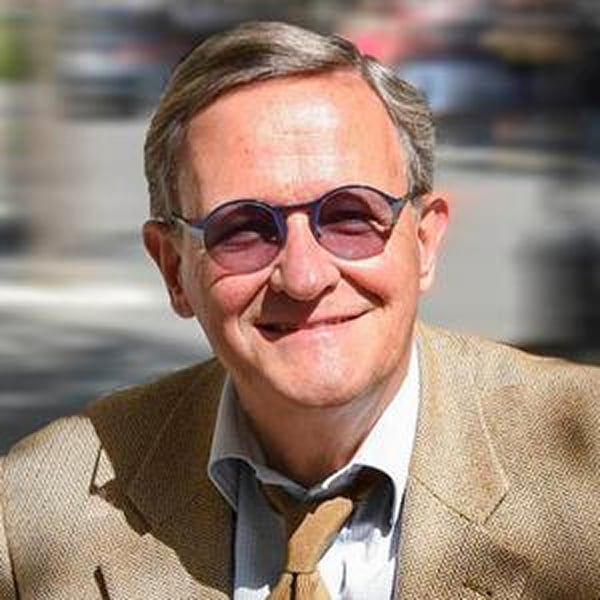
I was among a handful of people worldwide who criticised the Nobel Committee’s choice of former Finnish President Martti Ahtisaari as Nobel Peace Prize Laureate and characterized it as a scandal
I had two main reasons. I consider his work as “peace mediator” – a term used repeatedly – in Kosovo incompatible with peace and with Alfred Nobel’s three criteria, but I deliberately did not mention his work in Aceh or Namibia of which I have no knowledge myself. Kosovo and other parts of former Yugoslav have been something I have tried to understand since my first visit there 34 years ago.
Independent Kosovo is the result of a military-based conflict management or, rather, mismanagement. It militates against two of Nobel’s criteria in that it has not lead to fraternity between peoples and it has not reduced armaments in the world. Kosovo declared itself independent in February this year (probably one reason why Ahtisaari received it this year) and is the result of the Kosovo Liberation Army, KLA, on the one hand and NATO’s 78 days of merciless bombings in 1999. That bombing – indisputably 100% on the side of the Albanian hardliners – is the main reason why Kosovo’s independence is supported by the US and a few EU countries. And with a new army in Kosovo there will be more rather than less armies and weapons in the world.
Secondly, it can be argued – and I do – that the Nobel Committee has been established in a doubtful way in that it consists of Norwegian parliamentarians whereas Nobel in his will states that the Committee shall be appointed by the Norwegian Parliament but not necessarily be composed of parliamentarians.
It ought not be possible that a prestigious peace prize can be decided by people who have no professional background or education and no particular competence in the field of peace. It would be inconceivable that a group of parliamentarians anywhere would been seen as an authority on, say, economics, literature or medicine. But when it comes to peace, it seems that anyone can be an expert!
With very few exceptions, the media, commentators, fellow politicians, even peace movement people applauded this year’s choice by the Nobel Committee. Presumably, they never checked what Ahtisaari actually did, neither did it occur to them to read Nobel’s will. For what reasons has the Nobel institution achieved such a prestigious status that it is – and it seems itself to believe to be – beyond debate?
In summary, my two overriding arguments were:
- Specifically, Ahtisaari’s work in the specific Kosovo case militates against Nobel’s criteria. As a sub-argument you may add that he by no means did impartial, open mediation; he conducted commissioned work: Make this province an independent state one way or the other, see to it that Serbia keeps on being punished for what it did during the Milosevic years!
- Generally, the Nobel Committee has been established in a way that is not necessarily in line with Nobel’s will since it does not state that parliamentarians shall be seen as experts in the field of peace.
Given that there are no lack of relevant people around the world whose work for peace genuinely merits a Nobel Prize, these arguments must be seen as rather fundamental and strong against Martti Ahtisaari’s as a Laureate.
Incidentally, the International Herald Tribune of October 14, published an excellent article on the growth of peace education and research worldwide.
It supports my argument that peace is a professional field as good as law, economics, medicine, literature or any other science-study-research field, albeit admittedly younger. It states that there are now 400 universities and colleges worldwide that offer courses. The field has several professional associations and attracts many with different scholarly background. The peace research department at Bradford University in England, one of the larger and oldest, has 300 students and staff.
If you need more evidence, consult the recently published 2665-page Encyclopedia of Violence, Peace and Conflict.
In addition, there are thousands of scientists who do research on problems vitally important to peace, conflict-resolution, reconciliation etc. who do not necessarily see themselves as peace researchers. Given these facts, is there any single argument that prizes in peace as the only one shall continue to be decided by amateurs in the literal sense of that word?
We can now add a few more – and this is also my answer to those who thought I was too hard in my judgement.
So:
3. Peace belongs to a substantive academic field like the other Nobel prizes and ought not be decided by people who have no competence in peace, peace research and peace politics.
Next – and much worse – Ahtisaari was involved in Kosovo not only by being involved in the issue of Kosovo’s future status. He was also instrumental in NATO’s ending its bombing in 1999. Which is good, isn’t it? Wait, it depends a little on how it was done.
How it was done is described in an article by Gregory Elich, How the Nobel Peace Prize Was Won at CounterPunch:
NATO’s terror bombings had had little effect on the Yugoslav/Serb military – something that surprised everybody when it withdrew from Kosovo almost unscathed.
The US, the EU and NATO had believed that Milosevic’s forces would give in after a few days of ruthless bombings (I know a bit about its brutality because I was in Belgrade and Novi Sad during that bombing). After 78 days, NATO seemed to be in need of some kind of victory and to force Serbia to accept that the Kosovo province was occupied and no longer under Serbia’s jurisdiction.
Martti Ahtisaari was the man chosen by the U.S. (Madeleine Albright) to go there and deliver an ultimatum – with Yeltsin’s envoy Chernomyrdin as a kind of silent accompaniment. Here is an excerpt from Ehlich’s article about what happened on June 2, 1999 in Belgrade in President Milosevic’s office. It gives you the flavour of Ahtisaari’s role as US/NATO spokesman and his “peace mediation” technique at least in this case:
“Ahtisaari opened the meeting by declaring, “We are not here to discuss or negotiate,” after which Chernomyrdin read aloud the text of the plan. Ahtisaari says that Milosevic asked about the possibility of modifying the plan, to which he replied, “No. This is the best that Viktor and I have managed to do. You have to agree to it in every part.” Ristic reports that as Milosevic listened to the reading of the text, he realized that the “Russians and the Europeans had put us in the hands of the British and the Americans.”
Milosevic took the papers and asked, “What will happen if I do not sign?” In answer, “Ahtisaari made a gesture on the table,” and then moved aside the flower centerpiece. Then Ahtisaari said, “Belgrade will be like this table. We will immediately begin carpet-bombing Belgrade.” Repeating the gesture of sweeping the table, Ahtisaari threatened, “This is what we will do to Belgrade.” A moment of silence passed, and then he added, “There will be half a million dead within a week.” Chernomyrdin’s silence confirmed that the Russian government would do nothing to discourage carpet-bombing. The meaning was clear. To refuse the ultimatum would lead to the deaths of large numbers of civilians and total devastation. President Milosevic summoned the leaders of the parties in the governing coalition and explained the situation to them. “A few things are not logical, but the main thing is, we have no choice. I personally think we should accept…To reject the document means the destruction of our state and nation.”
The article’s revelation is sensational. Investigative reporting would have found it. Now it is one of the many stories that Western journalists know (or perhaps not?) but choose – oh, freedom of the press – to not refer to, do research on or make a story of.
I wanted to be sure it was not a hoax. I was in contact with a lawyer whom I knew from the 1990s as engaged in Balkan affairs. I knew he had met Milosevic in his cell. This lawyer is Christopher Black, of Toronto, Canada, international criminal lawyer, presently lead counsel at the Rwanda War Crimes Tribunal and formerly chair of the legal committee of the International Committee for the Defence of Slobodan Milosevic and a vice chair of that committee, and a member of the National Lawyer’s Guild in the United States and the American Association of Jurists. I asked him to read Ehlich’s article and he confirms it: It is exactly what Milosevic himself had told Christopher Black there in his cell in the Hague.
So, the 2008 Nobel Peace Prize winner brought the message that those he represented were willing to flatten Belgrade and to kill 500 000 people in a week. The threat was made only to make NATO look like a winner of a war game Western politicians had started because they ignored every opportunity since 1991 to find a mediated, negotiated solution to the Kosovo problem – something some of us devoted our lives to at the time. Additionally, they had done it without UN Security Council mandate. And Ahtisaari was the man called upon to be the ‘fixer’ for this bunch of – well, non-convicted NATO war criminals.
I believe there is a word for the act of threatening to kill 500 000 innocent people to achieve a political goal. I believe that that word is terrorism. Mr. Ahtisaari was an envoy for terrorist policies, and since you can say no thanks to such a role, he must have endorsed it, i.e. been supporting that 500 000 would be killed if…
True, Milosevic gave in and the bombing stopped. NATO occupied Kosovo and then followed the OSCE, the EU and the UN as the figurehead, the fig leaf. Wasn’t it good that Ahtisaari contributed to stopping that war and prevent NATO’s madness? Yes, it was better than if the carpet bombing had taken place, of course.
But is this sort of ultimatum, the threat of mass-murder of innocent citizens, compatible with peace work? To threaten the death of 500 000 in a week only to save one’s own face? To work as envoy for a mass-killing organization that wrought such terrible destruction – far underestimated and far too quickly and conveniently forgotten by the West – on a small country that had not threatened any NATO country or any other country for that matter? Is it compatible with Nobel’s will to carry out the dirty work for an organization that conducted such a dirty war without UN mandate and killed scores or civilians and violated, in the process, a series of international laws, human rights and used depleted uranium all over the place?
Ahtisaari answered these questions himself right after he received the Peace Prize. You just have to read his short statement to the Finnish Broadcasting YLE here in which he manages to praise NATO, supports that Finland joins NATO (with the low-level argument that everybody else is there…), offends Russia by characterising it as a developing country that has attacked Georgia for lack of self-confidence (!). No wonder most of the television footage on October 10 showed Ahtisaari giving a press conference with NATO’s Secretary-General in front of the organization’s symbol.
And does he regret anything about Kosovo?
Well, it was a difficult part of his career, he admits, but here is what he said to the Kosovo-Albanian Koha Ditore newspaper according to UNMIK’s Media Monitoring Service of October 18, 2008:
Ahtisaari: I wouldn’t change a thing in Kosovo’s proposal (Koha Ditore)
The former UN Envoy for Kosovo Status and Nobel Peace Prize winner, Martti Ahtisaari, said in London that he would not change anything in his status proposal for Kosovo. “It is a concrete plan and, most likely, one of the best solutions we could come to, since it sends a clear message that no dictator in the world can treat its citizens they way former Serb leaders did and not bear consequences,” Ahtisaari said.
And to The Guardian he states that Serbia shall not join the EU unless it accepts Kosovo as independent – a blackmail statement – and that the important thing is not that Kosovo has only been recognized by 51 countries out of 192. “What is important is that Kosovo has been recognized by over 65 per cent of the world’s wealth,” he maintains. The Nobel Laureate teaches us a brand new principle in international affairs here: wealth makes right!
So, the Nobel Peace Prize winner reiterates the sheer propaganda that the West was fighting a dictator in Kosovo and that no other dictator can go safe. All nationalist separatism can be explained by the existence of “dictators”? All NATO’s democratic countries are only fighting noble causes?
The Nobel Peace Laureate just forgot to mention the largest military base built by the U.S. between the Vietnam war and Iraq, the Bondsteel base – where? In Kosovo! He forgot to mention other “dictators” in the Balkans who came to power thanks to the stupid urgings of the West that multiparty-systems should be introduced immediately everywhere in the midst of constitutional and economic breakdowns.
The Peace Laureate has nothing to say about the complexities of former Yugoslavia or the fact that a few other actors did a few bad things too – or that Western countries created the KLA? Not a word about gas and oil pipelines from Central Asia going through the Southern Balkans to secure oil to the West – the main reason we are so committed to a tiny place called Kosovo.
And, of course, not a word about how the EU and every self-appointed mediators did virtually nothing during 8 years to mitigate and find a negotiated solution for the Kosovo conflict before they started bombing. (The Rambouillet meetings were also not negotiation or mediation).
4. The amateur Nobel Committee implicitly gave its Prize this year to the opposite of Nobel’s will and vision as well as the opposite of the UN Charter norm of peace by peaceful means. It gave it to a man who worked for an organization committed in practise to “peace” by extreme violence and sheer terror (killing of innocent for a political goal) and an extremely unjust far-too-late and non-mediated solution to the Kosovo conflict.
Mr. Ahtisaari is a man of peace? Absolutely! In a world where peace is war and war is peace.
PS
Eight days before he received the Nobel Peace Prize, Mr Ahtisaari received the UNESCO Peace Prize.
It is awarded “to honour living people who have contributed significantly to the promotion, research or safeguarding of peace while complying with the Charter of the United Nations and UNESCO’s constitution.”
NATO’s bombing and the ultimatum…complying with the UN Charter?! If so, UNESCO’s intellectual and moral decay is obviously in a class of its own.