

“It’s clear a long-term success in Afghanistan will require significantly more troops and we welcome those additional troops, no matter what the source”. So said Australian Defence Minister Joel Fitzgibbon when seven people were killed, earlier this year, in a bomb attack on the luxury hotel in Kabul which housed the Australian embassy. Strengthening the Nato-led “International Security Assistance Force” would be an “essential ingredient”, the Minister went on, in defeating terrorism in Afghanistan.

What to make of this proposed remedy? Well, it depends on how we diagnose the problem. And Fitzgibbon was pitching his statement into a media narrative for the Afghanistan story which constantly reiterates a simple proposition – ‘these evil men are out to get us’. Go back to the reports in the Australian press from the day of the attack, in mid-January, and search them for the six vital pieces of information that journalists are supposed to provide – who, what, where, when, why and how, the famous ‘five w’s and h’. You’ll find there’s one missing – the ‘why’.

Why are the Taliban still a factor? Why do people in Afghanistan support them? Such questions are very rarely posed or answered in the media of countries whose troops are in Afghanistan. Instead, their portrayal generally bears out what the novelist, Gore Vidal said about Americans’ stock view of their enemies – that they are driven to oppose the US simply out of “motiveless malignity”. Where there was an explanation, in reports of the Kabul attack, it was the kind that immediately begs another question. They did it to prove they could, we were told. Hmm, OK – why would they want to do that?

If we see, hear or read reports of political violence taking place for no intrinsic reason, we are likely to infer that the perpetrators are unreasonable (‘evil’). Hence it makes no sense to attempt to reason with them (negotiations). So the only possible response is more violence – the Fitzgibbon plan.

Any exploration of that question, ‘why’, would call this into question. I recently spoke to Patricia Garcia, a highly experienced Australian humanitarian worker who’s just given up on Afghanistan after many years. She was trying to foster community development in projects funded by the Asian Development Bank – including the provision of income-generating alternatives to opium production. But she left because aid workers these days are “concentrating on their own protection” – and travelling around in heavily guarded convoys of plush 4x4s makes them a symbol of the inequalities and mounting grievances that are driving more and more of the country into the arms of the Taliban.

It was, Patricia reckoned, “only a matter of time” before an attack in Kabul on a symbol of the international presence in Afghanistan. The battle for hearts and minds in the countryside was being lost because the military refused to coordinate with humanitarian efforts. Whenever US or Nato troops shot or bombed civilians, President Karzai would wring his hands, but was literally powerless to stop it. That contributed to his lack of authority in the country, so diminishing security, so in turn causing internationals to be surrounded by ever more security provision and alienating them from communities. A classic vicious circle.

It’s a very different diagnosis of the problem, and it suggests that the deployment of more troops would certainly not represent an effective remedy. It springs from observations on the ground by an aid worker who knows the country intimately. So why do we so seldom get to hear about it? Why, when reporters get reactions from ministers, to events like the Kabul bombing, do they not also consult people like Patricia Garcia?

It’s a prime convention of ‘War Journalism’. It arises from economic and political imperatives of the news industry. Concentrate on ‘official sources’ and you are less likely to be thought of as biased, so your newspaper – and the advertising in it – will appeal to potential readers of all political views and none, or your TV program will avoid flak. It goes hand in glove with another characteristic, presenting violence as its own cause – meriting the term, war journalism, because it serves to legitimise further violence, as in this case.

The alternative is peace journalism. It’s based on distinctions in the representation of conflict which draw, in turn, on research built up over the years in Peace and Conflict Studies. As a reporter for Sky News, the Independent and the BBC, I applied them to my coverage of conflicts in former Yugoslavia, the Middle East and South East Asia – to name but a few – and later, as a BBC World presenter, in interviews with studio guests.

Peace journalism entails exploring the reasons for violent incidents; the stew of tensions, fears and grievances that underlie the visible effects of conflict. In doing so, it reaches out to many sources, including those with suggestions for peace initiatives. The Kabul bombing was an opportunity to remind readers that the British and the Canadians have both been thinking aloud about talking to the Taliban, and to seek out perspectives on what they might talk about.

Patricia’s suggestion that military and humanitarian efforts be better coordinated would represent a starting point; at a conference in Melbourne late last year I met Najib Lafraie, an Afghan politics professor from Otago University in New Zealand and a native of Afghanistan. He set out very clearly the contradictions that will prevent Nato from achieving anything resembling success in Afghanistan, and he set out a plan for involving community representatives to re-build the country on a transparent, accountable basis. If any journalist asked me who to interview about Afghanistan, I would suggest him.

We are now in a post-Cold War, post-‘9/11’ and post-Iraq world. There’s no need for journalists to line up on either side of an ideological divide, and no need to take official statements at face value. That’s why we’re seeing more and more peace journalism, even if editors and reporters don’t often call it that. It’s an idea whose time has come.

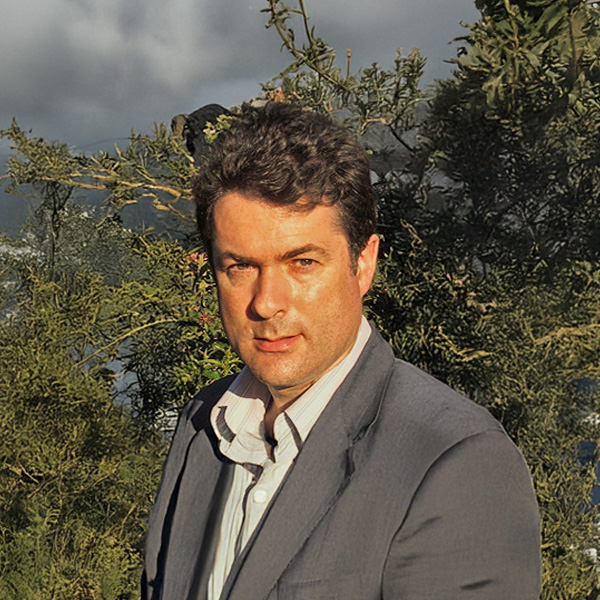
Associate Professor Jake Lynch is Director of the Centre for Peace and Conflict Studies at the University of Sydney

Related Posts

Tony Robinson October 4, 2026 Violence is easy to recognise when someone is being beaten, shot or killed. It becomes more difficult when nobody is holding a weapon. Poverty, discrimination, exploitation and repression can restrict a human life just as effectively, although they do so in very different ways and with very different consequences. Simply adding more categories to an ever-growing list of forms of violence does not really solve the problem. The more interesting question is what all these different situations have in common and why it makes sense to describe them using the same word. Human beings do not simply react to what happens around them. They remember the past, imagine things that do not yet exist, make plans and undertake projects. Workers organise because they imagine different working conditions; people migrate because they imagine another life somewhere else; social movements emerge because people refuse to accept the...
It’s a matter of principles, courage, vision and pulling together – while the militarist world is falling apart… Peter Langille October 3, 2026 “Here, then, is the problem which we present to you, stark and dreadful and inescapable: Shall we put an end to the human race; or shall mankind renounce war?”The Bertrand Russell—Albert Einstein Manifesto, July 9, 1955 ⁕ The forecast for what’s ahead is worrisome. The sharp rise in armed conflicts over the past three years is adding to what was already the highest level in over seventy years. Genocides, which should be prevented are supported. A shared climate emergency that jeopardises survival is ignored. Diverse polls now suggest that people are war-weary, worried and interested in a more effective United Nations. And, there are viable policy options for a more secure world! Yet governments are doubling-down, betting on more war and investing heavily. If current trends persist,...
Johan Galtung 1930-2024October 2015 Published here on October 3, 2026 Let us focus on Civilization for conflict analysis and remedies. Major forms of disorder use violence; war is state organized violence. The most belligerent states are the United States of America and Israel, both with civilization roots. National Evangelism, the US Protestant Christian civilization– more national than evangelical–justifies US warfare as exceptionalism of a people chosen by God, with a manifest destiny to run the world. Orthodox Judaism justifies Israeli warfare to conquer and expand from Nile to Euphrates as a religious right and duty to the Eternal One. The third most belligerent country, the UK, no longer believes it is God-chosen but chosen by the USA; not quite the same but something. But the root cause of global disorder lies in the Occident–with Islam–seeing itself as the single, universal civilization valid for all at all times, all others being...

Recent Articles

Tony Robinson October 4, 2026 Violence is easy to recognise when someone is being beaten, shot or killed. It becomes more difficult when nobody is holding a weapon. Poverty, discrimination, exploitation and repression can restrict a human life just as effectively, although they do so in very different ways and with very different consequences. Simply adding more categories to an ever-growing list of forms of violence does not really solve the problem. The more interesting question is what all these different situations have in common and why it makes sense to describe them using the same word. Human beings do not simply react to what happens around them. They remember the past, imagine things that do not yet exist, make plans and undertake projects. Workers organise because they imagine different working conditions; people migrate because they imagine another life somewhere else; social movements emerge because people refuse to accept the...
It’s a matter of principles, courage, vision and pulling together – while the militarist world is falling apart… Peter Langille October 3, 2026 “Here, then, is the problem which we present to you, stark and dreadful and inescapable: Shall we put an end to the human race; or shall mankind renounce war?”The Bertrand Russell—Albert Einstein Manifesto, July 9, 1955 ⁕ The forecast for what’s ahead is worrisome. The sharp rise in armed conflicts over the past three years is adding to what was already the highest level in over seventy years. Genocides, which should be prevented are supported. A shared climate emergency that jeopardises survival is ignored. Diverse polls now suggest that people are war-weary, worried and interested in a more effective United Nations. And, there are viable policy options for a more secure world! Yet governments are doubling-down, betting on more war and investing heavily. If current trends persist,...
Johan Galtung 1930-2024October 2015 Published here on October 3, 2026 Let us focus on Civilization for conflict analysis and remedies. Major forms of disorder use violence; war is state organized violence. The most belligerent states are the United States of America and Israel, both with civilization roots. National Evangelism, the US Protestant Christian civilization– more national than evangelical–justifies US warfare as exceptionalism of a people chosen by God, with a manifest destiny to run the world. Orthodox Judaism justifies Israeli warfare to conquer and expand from Nile to Euphrates as a religious right and duty to the Eternal One. The third most belligerent country, the UK, no longer believes it is God-chosen but chosen by the USA; not quite the same but something. But the root cause of global disorder lies in the Occident–with Islam–seeing itself as the single, universal civilization valid for all at all times, all others being...

TFF on Substack

Discover and subscribe to more peace materials on TFF Substack

Most Popular

Tony Robinson October 4, 2026 Violence is easy to recognise when someone is being beaten, shot or killed. It becomes more difficult when nobody is holding a weapon. Poverty, discrimination, exploitation and repression can restrict a human life just as effectively, although they do so in very different ways and with very different consequences. Simply adding more categories to an ever-growing list of forms of violence does not really solve the problem. The more interesting question is what all these different situations have in common and why it makes sense to describe them using the same word. Human beings do not simply react to what happens around them. They remember the past, imagine things that do not yet exist, make plans and undertake projects. Workers organise because they imagine different working conditions; people migrate because they imagine another life somewhere else; social movements emerge because people refuse to accept the...
It’s a matter of principles, courage, vision and pulling together – while the militarist world is falling apart… Peter Langille October 3, 2026 “Here, then, is the problem which we present to you, stark and dreadful and inescapable: Shall we put an end to the human race; or shall mankind renounce war?”The Bertrand Russell—Albert Einstein Manifesto, July 9, 1955 ⁕ The forecast for what’s ahead is worrisome. The sharp rise in armed conflicts over the past three years is adding to what was already the highest level in over seventy years. Genocides, which should be prevented are supported. A shared climate emergency that jeopardises survival is ignored. Diverse polls now suggest that people are war-weary, worried and interested in a more effective United Nations. And, there are viable policy options for a more secure world! Yet governments are doubling-down, betting on more war and investing heavily. If current trends persist,...
Johan Galtung 1930-2024October 2015 Published here on October 3, 2026 Let us focus on Civilization for conflict analysis and remedies. Major forms of disorder use violence; war is state organized violence. The most belligerent states are the United States of America and Israel, both with civilization roots. National Evangelism, the US Protestant Christian civilization– more national than evangelical–justifies US warfare as exceptionalism of a people chosen by God, with a manifest destiny to run the world. Orthodox Judaism justifies Israeli warfare to conquer and expand from Nile to Euphrates as a religious right and duty to the Eternal One. The third most belligerent country, the UK, no longer believes it is God-chosen but chosen by the USA; not quite the same but something. But the root cause of global disorder lies in the Occident–with Islam–seeing itself as the single, universal civilization valid for all at all times, all others being...
Read More
Living-Peace-Sign-Budapest-copy
Tony Robinson October 4, 2026 Violence is easy to recognise when someone is being beaten, shot or killed. It becomes more difficult when nobody is holding a weapon. Poverty, discrimination, exploitation and repression can restrict a human life just as effectively, although they do so in very different ways and with very different consequences. Simply adding more categories to an ever-growing list of forms of violence does not really solve the problem. The more interesting question is what all these different situations have in common and why it makes sense to describe them using the same word. Human beings do not simply react to what happens around them. They remember the past, imagine things that do not yet exist, make plans and undertake projects. Workers organise because they imagine different working conditions; people migrate because they imagine another life somewhere else; social movements emerge because people refuse to accept the...
b54a1f10-8c65-4f0b-9dd5-4abc0a7d04cc_2659x2659
It’s a matter of principles, courage, vision and pulling together – while the militarist world is falling apart… Peter Langille October 3, 2026 “Here, then, is the problem which we present to you, stark and dreadful and inescapable: Shall we put an end to the human race; or shall mankind renounce war?”The Bertrand Russell—Albert Einstein Manifesto, July 9, 1955 ⁕ The forecast for what’s ahead is worrisome. The sharp rise in armed conflicts over the past three years is adding to what was already the highest level in over seventy years. Genocides, which should be prevented are supported. A shared climate emergency that jeopardises survival is ignored. Diverse polls now suggest that people are war-weary, worried and interested in a more effective United Nations. And, there are viable policy options for a more secure world! Yet governments are doubling-down, betting on more war and investing heavily. If current trends persist,...
010
Johan Galtung 1930-2024October 2015 Published here on October 3, 2026 Let us focus on Civilization for conflict analysis and remedies. Major forms of disorder use violence; war is state organized violence. The most belligerent states are the United States of America and Israel, both with civilization roots. National Evangelism, the US Protestant Christian civilization– more national than evangelical–justifies US warfare as exceptionalism of a people chosen by God, with a manifest destiny to run the world. Orthodox Judaism justifies Israeli warfare to conquer and expand from Nile to Euphrates as a religious right and duty to the Eternal One. The third most belligerent country, the UK, no longer believes it is God-chosen but chosen by the USA; not quite the same but something. But the root cause of global disorder lies in the Occident–with Islam–seeing itself as the single, universal civilization valid for all at all times, all others being...
Screenshot 2026-10-02 011738
Jan ObergPhD, director, The Transnational Foundation for Peace and Future Research, TFFLund, Sweden October 2, 2026 This is my full original manuscript. The Chinese Academy of Social Science, CASS, makes two publications out if it. 1. China’s Five-year plan emphasized the capabilities of basic research and original innovation. It is regarded as the goal of the future social development, which, as required, should be significantly enhanced. Can you comment on the importance of original innovation in research and academic study? I believe it is easier to define “original innovation” in the natural sciences than in social sciences. The breaking points of what constitutes something new, or innovative, are not quite as sharp in the latter. But in both fields it is about opening up something that was closed, unseen, unexplored before – making manifest what was earlier latent. Innovations come in many forms and shapes – naming something that was not...
arctic-circle-map
The agreement is catastrophic both because of what it says and what it doesn’t mention. It reduces further the major asset of security policies: Freedom of action. Jan Oberg TFF director September 25, 2026 A couple of hours before the agreement was signed on September 22, 2026, I published the following 13 hypotheses about what it would most likely contain on TFF Substack (in English). I was wrong on only the first point. Contrary to what Trump had written on his Truth Social platform, it does not appear to come into force immediately. In fact, it turned out to be worse than even I had anticipated. After these hypotheses now come a number of reflections in light of what the agreement actually contains, and does not contain, as well as the way in which it has generally been presented by major media outlets and by the public-service broadcaster DR. My...
girl-5894831_1280
Below are TFF-related media mentions, comments, videos and social media posts published elsewhere but not on this homepage. We happen to catch and list only a fraction. Regarding video comments and debates, we recommend that you go to the TFF Video Channel on Substack where many of them are reproduced. Jan Oberg is a contributor to China Daily – 52 million daily clicks – and Global Times, CGTN and CCTV (the national television), China Investment, Xinhua News Agency and several others. Articles and videos on these media very often multiply into countless Chinese (and Western media) that re-post them from these main media. Thanks to The China Academy, his analyses, interviews and comments are frequently posted on YouTube channels such as Thinkers Forum and Wave Media. These videos are often re-posted on Bilibili (China’s YouTube), the China Content Center on TikTok, and on the Chinese edition of TikTok, Douyin.com. This means reaching hundreds of millions of viewers worldwide over a year. While there are too many to catch on all these...




