

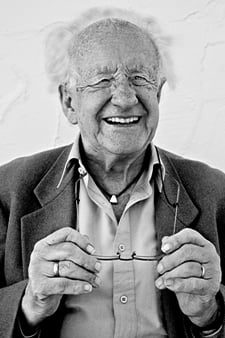
johangaltung

Bogotá, Dirección de Inteligencia Policial, Ministerio de Defensa

Generals, Colonels, Conference Participants,

In June 1998 your President’s Office wanted proposals for peace, and I offered peace education, peace journalism and the guiding moral-ethical light, human rights, a holon of civil-political-socio-economic-cultural rights. Colombia is short on the latter, with flagrant injustices and a deep culture of violence.

In this conference a highly counter-productive word is being used: postconflict, instead of post-violence. Do not confuse them: violence means hurting-harming; conflicts are incompatible goals. Conflict may lead to frustration-aggression-violence, but personal and social maturity lead to progress bridging goals, to conflict solution. “Postconflict” sounds like all is solved with the end of violence, oblivious to reducing flagrant inequality, to harmony through empathy, trauma reconciliation, and capacity for ongoing conflict resolution.

Prognosis: violence returns, with a vengeance. Like in Colombia.

In the 1960s major uprisings took place in many parts of the world. There was the anti-Confucian cultural revolution in China for the rights of women, the young, the uneducated, and Western China; the Naxalites uprising in India, low caste and casteless tribals against the sellout to multinationals; the Khmer Rouge against the Vietnamese in Phnom Penh, in opposition to the French used to colonize Cambodia, and against the capital-city exploiting landless peasants. All three against millennia of solid structural violence.

As also in Nepal with Maoists fighting huge injustices related to caste and nation; like in the Philippines, classes but also Moros vs Christians; and in Sri Lanka, not classes but nations, Tamils vs Sinhalese.

And in Latin America, classes, domestic and imperial–starting with Cuba–in Colombia as FARC-Fuerzas Armadas Revolucionarias de Colombia and ELN-Ejército de Liberación Nacional against the poderes fácticos latifundista-military-clergy complex and the USA-Colombia military alliance.

What came out of these Zeitgeist revolts in six Asia countries?

Only one country, China, benefitted from conflict resolution; the others, under strong Western pressure, suffered postconflict treatment. The Cultural Revolution was denounced abroad and in China; yet today there are women, young and educated people all over China and West China is blossoming. There are some moves in the same direction in Cambodia.

In the other five: status quo. With foreign advisors democratic constitutions were drafted as the US enters the post-democratic stage with easily corruptible legislators accountable to banks and business, not to the people. The real focus was to restore the government’s army monopoly through the DDR formula Dissolution Disarmament Reintegration; in India and Sri Lanka through mass murder, in the Philippines on again-off-again conferences, in Nepal post-democracy with heavy corruption.

Sending mediators who could facilitate hundreds, thousands of local dialogues between the parties in mutual search for solutions would have been better than sending ceasefire monitors. Ceasefires without visions of solutions mean rest-regroup for fighters, smuggling of arms, redeployment.

Better than waiting for an end to violence would be practicing visions; better than one big agreement for the country would be many for local zones, learning and serving as models; better than verbal agreements would be facts. Menos pactos, mas hechos. But both-and is best.

And even better than best: direct talks of landless with landowners, Moros with Christians, workers with capitalists-facilitated by the government. But, caution: the government is many-headed; a team in La Habana is only ears and mouth, the brains are in Bogotá. The legislature may vote No; the executive may give the military green light for victory rather than compromise, if needed, by a coup; the judiciary may declare an agreement unconstitutional and use prisons rather than battles. Nevertheless, with the declared end to the Monroe Doctrine: US intervention is out.

The prognosis for “postconflict” Colombia is dim. However, using the six points on the Habana agenda, what a therapy for peace would look like?

[1] Integral Agrarian Development. Use it to reduce the inequality by lifting the bottom up, making the economy grow by their participation. Start with the poorest in the poorest communities, give them micro-credit for basic needs-oriented cooperatives with sales points employing the most miserable for dignity, not efficiency, for labor-intensive 3-dimensional agriculture with aquaculture, not small, isolated private plots. Include clothing, housing, polyclinics and schools with local material, generic drugs, medical personnel knowing enough to treat the most common diseases, referring others to specialists; by helicopter.

[2] Political participation is a human right, not a bargaining pawn in return for laying down arms (“Colombia Moves Closer to Peace With FARC” Washington Post, 11 Nov 2013). Better a FARC TV-channel and a political party than 50 years of mutual killing and a battlefield. Better human rights.

[3] Narcotraffic–also used for social justice; 40,000 attended narco king Pablo Escobar’s funeral–calls for co-operation and co-responsibility to reduce Colombian supply and US demand, with both reporting to the Organization of American States-OAS.

[4] An end to the conflict. DDR. But do it symmetrically, reduce the anti-guerilla elements in the army. Decriminalize, there are crimes on all sides, guerrillas, para-military, military. Colombia would benefit more from declaring a New Beginning with a general amnesty–

[5] The Victims. –if accompanied by reconciliation, using both the South African and German models: confession, contrition, compensation and joint writing of the dark history and pledges for a bright Colombia.

[6] Implementation and Verification. Yes, of course, but this agenda is not linear; start again improving # [1], work on all simultaneously.

And the police? Learn from the Japanese and Indian police: add mediation and empathy to the usual approach to security; reduce violence by building bridges between the parties rather than punishing; have dialogues with people to understand better the Colombia they want. Not to spy on them, but to enable all Colombians to build a better Colombia.

Originally published by Transcend Media Service here.

Related Posts

Photo above: Carl Fredrik Reuterswärd’s Non-Violence outside UN Headquarters in New York. Kirill Levin, CC BY-NC-SA 2. Jan Oberg November 3, 2026 I am happy to be published in Horizons which is produced by the Center for International Relations and Sustainable Development, CIRSD, in Belgrade. My contribution brings out a radical re-thinking of what concepts such as defence, security, deterrence – and peace – may mean if we want to create a more peaceful world. It also summarises a few things I have been working with the last few decades. Please read it here Og her er den på dansk, takket være Johnny Baltzersens lynhurtige oversættelse
UNITE-tillid, DREAM-velstand og andre konstruktive komponenter Normally we publish articles in English here. But this is a translation of a very important TFF document that should reach as many as possible in Denmark since this country’s government has been one of the most hardline in Europe and, up till now at least, has refused to use diplomacy and, instead, spent tremendous sums on arming Ukraine with the express goal of defeating Russia. Thus this – unique – article is in Danish. Vi er Johnny Baltzersen og hans Fælles Sikkerhed – Fælles Fremtid på Substack overmåde taknemmelige for at have oversat og publiceret TFF’s 2025-portfølje for fredsidéer med henblik på Ukraines fremtid. Vi håber den nu kan nå mange flere danskere – som også vil sprede den og skabe debat – nu den danske regerings og folketingspartiernes politik på dette område siden 2022 står nu – forudsigeligt – ved vejs ende....
Jan Oberg TFF director October 28, 2026 Exactly one month has now passed since I published my criticism of the introduction to the special issue on Johan Galtung published by the Journal of Global Security Studies, JoGSS, and of Tor Egil Førland’s chapter about Galtung which serves as a preview to his forthcoming biography of Galtung to be published by PRIO. See the original on The Transnational here and the same article on TFF Substack with many general and critical comments and, in particular, the people who decided to withdraw from the biography project in protest. The special issue itself was extraordinary. It was devoted to the intellectual legacy of one of the founders of peace research and contained a number of strong assessments of his personality, scholarship, intellectual trajectory, and public role. Such assessments are, of course, entirely legitimate. No scholar is beyond criticism, and neither was Johan Galtung....

Recent Articles

Photo above: Carl Fredrik Reuterswärd’s Non-Violence outside UN Headquarters in New York. Kirill Levin, CC BY-NC-SA 2. Jan Oberg November 3, 2026 I am happy to be published in Horizons which is produced by the Center for International Relations and Sustainable Development, CIRSD, in Belgrade. My contribution brings out a radical re-thinking of what concepts such as defence, security, deterrence – and peace – may mean if we want to create a more peaceful world. It also summarises a few things I have been working with the last few decades. Please read it here Og her er den på dansk, takket være Johnny Baltzersens lynhurtige oversættelse
UNITE-tillid, DREAM-velstand og andre konstruktive komponenter Normally we publish articles in English here. But this is a translation of a very important TFF document that should reach as many as possible in Denmark since this country’s government has been one of the most hardline in Europe and, up till now at least, has refused to use diplomacy and, instead, spent tremendous sums on arming Ukraine with the express goal of defeating Russia. Thus this – unique – article is in Danish. Vi er Johnny Baltzersen og hans Fælles Sikkerhed – Fælles Fremtid på Substack overmåde taknemmelige for at have oversat og publiceret TFF’s 2025-portfølje for fredsidéer med henblik på Ukraines fremtid. Vi håber den nu kan nå mange flere danskere – som også vil sprede den og skabe debat – nu den danske regerings og folketingspartiernes politik på dette område siden 2022 står nu – forudsigeligt – ved vejs ende....
Jan Oberg TFF director October 28, 2026 Exactly one month has now passed since I published my criticism of the introduction to the special issue on Johan Galtung published by the Journal of Global Security Studies, JoGSS, and of Tor Egil Førland’s chapter about Galtung which serves as a preview to his forthcoming biography of Galtung to be published by PRIO. See the original on The Transnational here and the same article on TFF Substack with many general and critical comments and, in particular, the people who decided to withdraw from the biography project in protest. The special issue itself was extraordinary. It was devoted to the intellectual legacy of one of the founders of peace research and contained a number of strong assessments of his personality, scholarship, intellectual trajectory, and public role. Such assessments are, of course, entirely legitimate. No scholar is beyond criticism, and neither was Johan Galtung....

TFF on Substack

Discover and subscribe to more peace materials on TFF Substack

Most Popular

Photo above: Carl Fredrik Reuterswärd’s Non-Violence outside UN Headquarters in New York. Kirill Levin, CC BY-NC-SA 2. Jan Oberg November 3, 2026 I am happy to be published in Horizons which is produced by the Center for International Relations and Sustainable Development, CIRSD, in Belgrade. My contribution brings out a radical re-thinking of what concepts such as defence, security, deterrence – and peace – may mean if we want to create a more peaceful world. It also summarises a few things I have been working with the last few decades. Please read it here Og her er den på dansk, takket være Johnny Baltzersens lynhurtige oversættelse
UNITE-tillid, DREAM-velstand og andre konstruktive komponenter Normally we publish articles in English here. But this is a translation of a very important TFF document that should reach as many as possible in Denmark since this country’s government has been one of the most hardline in Europe and, up till now at least, has refused to use diplomacy and, instead, spent tremendous sums on arming Ukraine with the express goal of defeating Russia. Thus this – unique – article is in Danish. Vi er Johnny Baltzersen og hans Fælles Sikkerhed – Fælles Fremtid på Substack overmåde taknemmelige for at have oversat og publiceret TFF’s 2025-portfølje for fredsidéer med henblik på Ukraines fremtid. Vi håber den nu kan nå mange flere danskere – som også vil sprede den og skabe debat – nu den danske regerings og folketingspartiernes politik på dette område siden 2022 står nu – forudsigeligt – ved vejs ende....
Jan Oberg TFF director October 28, 2026 Exactly one month has now passed since I published my criticism of the introduction to the special issue on Johan Galtung published by the Journal of Global Security Studies, JoGSS, and of Tor Egil Førland’s chapter about Galtung which serves as a preview to his forthcoming biography of Galtung to be published by PRIO. See the original on The Transnational here and the same article on TFF Substack with many general and critical comments and, in particular, the people who decided to withdraw from the biography project in protest. The special issue itself was extraordinary. It was devoted to the intellectual legacy of one of the founders of peace research and contained a number of strong assessments of his personality, scholarship, intellectual trajectory, and public role. Such assessments are, of course, entirely legitimate. No scholar is beyond criticism, and neither was Johan Galtung....
Read More
knotted gun
Photo above: Carl Fredrik Reuterswärd’s Non-Violence outside UN Headquarters in New York. Kirill Levin, CC BY-NC-SA 2. Jan Oberg November 3, 2026 I am happy to be published in Horizons which is produced by the Center for International Relations and Sustainable Development, CIRSD, in Belgrade. My contribution brings out a radical re-thinking of what concepts such as defence, security, deterrence – and peace – may mean if we want to create a more peaceful world. It also summarises a few things I have been working with the last few decades. Please read it here Og her er den på dansk, takket være Johnny Baltzersens lynhurtige oversættelse
TFFPortfolioVign
UNITE-tillid, DREAM-velstand og andre konstruktive komponenter Normally we publish articles in English here. But this is a translation of a very important TFF document that should reach as many as possible in Denmark since this country’s government has been one of the most hardline in Europe and, up till now at least, has refused to use diplomacy and, instead, spent tremendous sums on arming Ukraine with the express goal of defeating Russia. Thus this – unique – article is in Danish. Vi er Johnny Baltzersen og hans Fælles Sikkerhed – Fælles Fremtid på Substack overmåde taknemmelige for at have oversat og publiceret TFF’s 2025-portfølje for fredsidéer med henblik på Ukraines fremtid. Vi håber den nu kan nå mange flere danskere – som også vil sprede den og skabe debat – nu den danske regerings og folketingspartiernes politik på dette område siden 2022 står nu – forudsigeligt – ved vejs ende....
JoGSS-Silent
Jan Oberg TFF director October 28, 2026 Exactly one month has now passed since I published my criticism of the introduction to the special issue on Johan Galtung published by the Journal of Global Security Studies, JoGSS, and of Tor Egil Førland’s chapter about Galtung which serves as a preview to his forthcoming biography of Galtung to be published by PRIO. See the original on The Transnational here and the same article on TFF Substack with many general and critical comments and, in particular, the people who decided to withdraw from the biography project in protest. The special issue itself was extraordinary. It was devoted to the intellectual legacy of one of the founders of peace research and contained a number of strong assessments of his personality, scholarship, intellectual trajectory, and public role. Such assessments are, of course, entirely legitimate. No scholar is beyond criticism, and neither was Johan Galtung....
Screenshot 2026-10-26 115647
An aspect of Iran’s culture and civilisation you’ve probably never heard about. Don’t be surprised if the US and Israel also try to bomb them. Jan ObergTFF director October 26, 2026 Today – under the “USraeli” threat of new “annihilating” bombings – opens the 7th International Conference on Peace and Conflict Resolution at Tehran’s University. As far as I can tell, this is the only permanent, advanced peace research institution in West Asia/the Middle East. Perhaps more countries in that region could be inspired? I mean, how many military “security” institutes and military academies do they have? Many peace research institutes and university departments have been established since the 1950s in the West. They are now all under attack; some have closed down, some have gone mainstream, yet others kept the name but do nothing to research peace and disseminate results or advice; instead, they cooperate with militarism’s platforms such...
Screenshot 2026-10-15 141837
Let’s discuss using AI to create peace – in contrast to boring geopolitics devoid of creative healing and visions. Jan Oberg TFF director October 15, 2026 I asked VEED to create a short video exemplifying how peace is preferable to war, then chose the lady as a template. Simple as that. In less than a minute, it produced this video, which any peace-loving person would appreciate. The only problem is that human intelligence (HI), at least the one that exists among Western decision-makers, isn’t half as moral or smart as AI. I have used AI to dialogue about peace and peace plans, creative conflict resolution and visions of a better future for humankind. It so happens that I am having more stimulating, intelligent, creative and moral discussions with AI than I could possibly have with any EU or NATO leader today. Yes, AI has very problematic and dangerous aspects; used...
girl-5894831_1280
Below are TFF-related media mentions, comments, videos and social media posts published elsewhere but not on this homepage. We happen to catch and list only a fraction. Regarding video comments and debates, we recommend that you go to the TFF Video Channel on Substack where many of them are reproduced. Jan Oberg is a contributor to China Daily – 52 million daily clicks – and Global Times, CGTN and CCTV (the national television), China Investment, Xinhua News Agency and several others. Articles and videos on these media very often multiply into countless Chinese (and Western media) that re-post them from these main media. Thanks to The China Academy, his analyses, interviews and comments are frequently posted on YouTube channels such as Thinkers Forum and Wave Media. These videos are often re-posted on Bilibili (China’s YouTube), the China Content Center on TikTok, and on the Chinese edition of TikTok, Douyin.com. This means reaching hundreds of millions of viewers worldwide over a year. While there are too many to catch on all these...





