Peace, human rights and development in multi-polar and evolving world

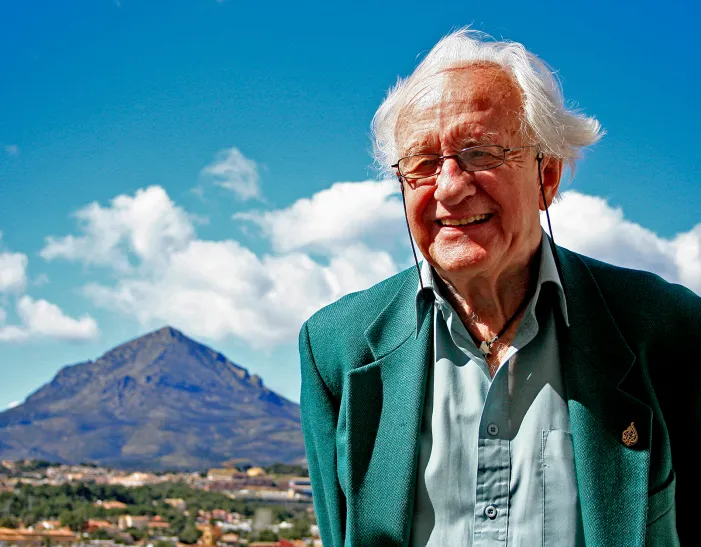
johangaltung

Keynote Speech at the UN Human Rights Council SOCIAL FORUM 

Your Excellencies!

The title for this Sixth Social Forum – in the context of the 10 Articles of the UN Declaration on the Right to Development of 4 December 1986 – is very well chosen. The focus is on people-centered development – as opposed to system – centered economic growth. And on globalization, a challenging process involving all states and regions, nations and civilizations, humans and nature – as opposed to a globalized market with only three free flows, of capital, goods and services, not labor; increasing the global economic gap.

And this in the context of rampant poverty, widening domestic inequalities, economic crises due to the disconnect between real and finance economies and greedy speculation, rising unemployment and popular unrest. Yesterday’s map dividing the world in developed and developing countries makes little sense when many of the developed are de-developing, declining, and many of the developing, emerging, on the way up–like BRICS–pass them on their way down. A new world.

Permit me Twelve Theses addressing this serious situation.

Thesis 1: Meeting people’s basic human needs is possible, but the basic unit of development is neither the single individual given a fellowship, nor the whole country by subsidizing the budget. The basic unit is the local level of neighboring villages; starting with the poorest; and within them starting with the most needy, lifting the bottom up. “Trickling down” does not work; “pumping up” may.

Thesis 2: But socio-economic rights should not be met at the expense of civil-political rights. From the inside the communities have to organize democratically in the sense of transparency of the development processes, dialogues toward consensus, and debates toward voting. Democracy is not only a right, but also a need for self-expression and dignity; “my voice makes a difference”.

Thesis 3: The outside the public, private, civil society and technical sectors that enter with capital and technical resources have to dialogue with the inside. Coordination is a joint task, by elected or administrative bodies, NGOs, temples, etc. in everlasting dialogue.

Thesis 4: Micro-credits are not given to individuals but to local micro-companies provided [1] that the company produces basic needs satisfiers, and [2] that those employed are the most needy, hungry, thirsty, badly clad and housed, ailing and/or illiterate. The name of the game is not efficiency but decency and dignity for the most needy.

Thesis 5: Meeting basic needs, even quickly, is feasible:

* food, by growing the food needed on publicly owned, but privately used land, by cooperatives with sales points, using old and new technologies (combining agri- and aquaculture, 3-dimensionally), short transportation distances for a sustainable environment, if possible producing not only the food but also the means of production locally;

* water, by distilling ocean water with solar energy and focused mirrors, adding minerals, using pipelines for water, not only for oil;

* housing by easily assembled-disassembled inexpensive building-blocks like standardized, cubic containers, local materials, adaptable to changing family needs, on publicly owned, privately used, land;

* health by making clean water available to all, by having a dense network of polyclinics, “barefoot” doctors-nurses, generic medicines, and regional hospitals and helicopters for emergencies;

* education by offering everybody, not only children, alphabetization, for membership in the symbolic culture; by inviting students or officers to live half a year or so in needy villages, a dense network of internet-connected schools, and cheap bus transportation.

Thesis 6: Beyond this, as the Millennium Goals stipulate:

* a focus on gender parity: education is a proven approach, making it obligatory, beyond elementary school, assumes that it also is free, and in principle guarantees parity far beyond school age:

* a focus on the environment: a massive switch is needed from depleting/polluting oil/gas/coal-based technologies to sun/wind/water (falls, tidal, waves)-bio- and geo- and hydro-thermal based energy conversion, using fines and incentives, equalizing the energy access;

* a focus on global equity: increased local, national and regional self-reliance in the production of goods-services for basic needs and for normal consumption–necessities and normalities–not luxuries; intra- rather than inter-sector trade for equity (resources against resources, processed against processed, services against services); tariff protection for weak sectors; canceling debts not primarily intended to meet basic needs, and incurred non-democratically.

Thesis 7: Meeting basic needs of the most needy is a non-negotiable rock bottom of the Right to Development. What are the obstacles to be eliminated? Social and global pathologies, such as capital being unavailable for the low returns from the most needy with no buying power; democracy may malfunction when the majority becomes middle class with no solidarity with the poor; ideological obsession with the market system; a wish to keep people in misery willing to do menial jobs; minorities afraid of losing their privileges; those high up feeling less high when the gap narrows; and then the basic fear:

They will treat us the same way as we treated them if they come up. Hence: lift those at the bottom up without threatening those at the top, while pointing out the advantages to all of an equitable society.

Thesis 5 policies meet this. In homogeneous countries taxing the rich to promote the poor may work, but most countries are not homogeneous.

Those high up must be prepared to live in societies with parity for both genders, all colors, for the older-middle aged-younger, with many nations; no longer run by ruling elites of male, white, middle-aged from one dominant nation only. But others must learn that those high up are also human beings, not just “parasites”. A focus only on the rights of the deprived excludes preparing the privileged for the inevitable and for the pleasures of living in diversity and parity.

Thesis 8: These obstacles lead many to two conclusions: domestically, revolution to give the bottom half a chance unimpeded by the upper half; and globally, decoupling from the dominant system. Understandable but implementing the Right to Development bypasses such policies through more equality within by lifting the bottom up, and more equity between states by self-reliance and trade for mutual and equal benefit. The two Human Rights covenants of 16 December 1966 can be realized together. As the Right to Development states several times: the rights are indivisible, and interdependent.

Thesis 9: There are basic needs beyond survival and physical wellness; freedom and identity are also basic to human wellbeing. Meeting basic somatic needs is a must, but so are the mental needs for freedom to choose development model to feel identity, to be at home. To impose Western development models, liberal (growth, with Western law, individual human rights, democracy by multi-party election and majority rule), Marxist (basic somatic needs), or both (growth and distribution, like Nordic welfare states) as the only, universal model is an insult to the world’s globalizing 7 billion population.

There are Islamic models focused on “togetherness, we-culture, sharing (zakat, ramadan)”, and Buddhist models based on “neither too little (floor with basic needs met) nor too much (ceiling), liberating people from economic worries, for spiritual development.” There are eclectic Japanese and Chinese models high on overcoming false Western dichotomies like labor vs capital and capital vs state, more focused on social and world harmony.

To impose one model is not globalization but Westernization, in the old spirit of missionary, colonialist and imperial mentalities, today unacceptable. These models do not exclude but complement each other. They may focus on good acts of omission, not only rule out bad acts of commission like Western law, may promote collective peoples’ rights, not only individual rights, and democracy by dialogue-consensus, not only by debate-voting-majority rule. Wise policy: take the best from all, select, eclect, use globalization positively! There are good ideas everywhere.

Thesis 10: We have indicators for economic growth (GNP) and for basic needs (HDI based on health and education); we need indicators to promote and monitor the implementation of human rights. Fortunately the Office of the High Commissioner for Human Rights has made path-breaking work in that direction (hrindicators@ohchr.org). Right to Development indicators should be at least as well known as GNP.

Thesis 11: People-centered development will change domestic society; reducing structural violence–the exploitation, penetration, segmentation, fragmentation, marginalization–and building structural peace, meaning equity, mutuality, integration, solidarity, inclusion. Many societies have much structural peace already, but sometimes threatened, even destroyed by imposing Western development models based on individualism and competition.

Lifting the bottom up without threatening the top would move a society toward structural peace, without direct revolutionary violence from below, or direct counter-revolutionary violence from above. But there has to be dialogue, and the top has to be prepared when gender, race and class gaps decrease. The rights of the underprivileged come with the duty to prepare the privileged to share power and privilege. A right is vested in a party but is also part of a conflict between those wanting the right to be met and those opposed. Persuasion and bargaining make people-centered development compatible with peace; force does not.

Thesis 12: Globalization implies changes in global society, also in the direction of reducing structural violence – the exploitation, the self-colonization often found in dependent countries, the absurd division of labor specializing in resources and commodities, the poor countries relating to the rich and not to each other, exclusive clubs only for rich countries. Global structural peace implies equitable exchanges for mutual and equal benefit, equitable challenges to develop and for the environment, autonomy, integration, less division of labor, solidarity with those at the same level and those that are not, like with those living in misery anywhere, regionalization also for developing countries, using the UN for dialogues. Persuasion and bargaining make globalization compatible with peace; force does not.

The old order is gone. The problem is not who is now on top, but how to arrive at a global, equitable, order with nobody on top.

Published first here

Related Posts

Tony Robinson October 4, 2026 Violence is easy to recognise when someone is being beaten, shot or killed. It becomes more difficult when nobody is holding a weapon. Poverty, discrimination, exploitation and repression can restrict a human life just as effectively, although they do so in very different ways and with very different consequences. Simply adding more categories to an ever-growing list of forms of violence does not really solve the problem. The more interesting question is what all these different situations have in common and why it makes sense to describe them using the same word. Human beings do not simply react to what happens around them. They remember the past, imagine things that do not yet exist, make plans and undertake projects. Workers organise because they imagine different working conditions; people migrate because they imagine another life somewhere else; social movements emerge because people refuse to accept the...
It’s a matter of principles, courage, vision and pulling together – while the militarist world is falling apart… Peter Langille October 3, 2026 “Here, then, is the problem which we present to you, stark and dreadful and inescapable: Shall we put an end to the human race; or shall mankind renounce war?”The Bertrand Russell—Albert Einstein Manifesto, July 9, 1955 ⁕ The forecast for what’s ahead is worrisome. The sharp rise in armed conflicts over the past three years is adding to what was already the highest level in over seventy years. Genocides, which should be prevented are supported. A shared climate emergency that jeopardises survival is ignored. Diverse polls now suggest that people are war-weary, worried and interested in a more effective United Nations. And, there are viable policy options for a more secure world! Yet governments are doubling-down, betting on more war and investing heavily. If current trends persist,...
Johan Galtung 1930-2024October 2015 Published here on October 3, 2026 Let us focus on Civilization for conflict analysis and remedies. Major forms of disorder use violence; war is state organized violence. The most belligerent states are the United States of America and Israel, both with civilization roots. National Evangelism, the US Protestant Christian civilization– more national than evangelical–justifies US warfare as exceptionalism of a people chosen by God, with a manifest destiny to run the world. Orthodox Judaism justifies Israeli warfare to conquer and expand from Nile to Euphrates as a religious right and duty to the Eternal One. The third most belligerent country, the UK, no longer believes it is God-chosen but chosen by the USA; not quite the same but something. But the root cause of global disorder lies in the Occident–with Islam–seeing itself as the single, universal civilization valid for all at all times, all others being...

Recent Articles

Tony Robinson October 4, 2026 Violence is easy to recognise when someone is being beaten, shot or killed. It becomes more difficult when nobody is holding a weapon. Poverty, discrimination, exploitation and repression can restrict a human life just as effectively, although they do so in very different ways and with very different consequences. Simply adding more categories to an ever-growing list of forms of violence does not really solve the problem. The more interesting question is what all these different situations have in common and why it makes sense to describe them using the same word. Human beings do not simply react to what happens around them. They remember the past, imagine things that do not yet exist, make plans and undertake projects. Workers organise because they imagine different working conditions; people migrate because they imagine another life somewhere else; social movements emerge because people refuse to accept the...
It’s a matter of principles, courage, vision and pulling together – while the militarist world is falling apart… Peter Langille October 3, 2026 “Here, then, is the problem which we present to you, stark and dreadful and inescapable: Shall we put an end to the human race; or shall mankind renounce war?”The Bertrand Russell—Albert Einstein Manifesto, July 9, 1955 ⁕ The forecast for what’s ahead is worrisome. The sharp rise in armed conflicts over the past three years is adding to what was already the highest level in over seventy years. Genocides, which should be prevented are supported. A shared climate emergency that jeopardises survival is ignored. Diverse polls now suggest that people are war-weary, worried and interested in a more effective United Nations. And, there are viable policy options for a more secure world! Yet governments are doubling-down, betting on more war and investing heavily. If current trends persist,...
Johan Galtung 1930-2024October 2015 Published here on October 3, 2026 Let us focus on Civilization for conflict analysis and remedies. Major forms of disorder use violence; war is state organized violence. The most belligerent states are the United States of America and Israel, both with civilization roots. National Evangelism, the US Protestant Christian civilization– more national than evangelical–justifies US warfare as exceptionalism of a people chosen by God, with a manifest destiny to run the world. Orthodox Judaism justifies Israeli warfare to conquer and expand from Nile to Euphrates as a religious right and duty to the Eternal One. The third most belligerent country, the UK, no longer believes it is God-chosen but chosen by the USA; not quite the same but something. But the root cause of global disorder lies in the Occident–with Islam–seeing itself as the single, universal civilization valid for all at all times, all others being...

TFF on Substack

Discover and subscribe to more peace materials on TFF Substack

Most Popular

Tony Robinson October 4, 2026 Violence is easy to recognise when someone is being beaten, shot or killed. It becomes more difficult when nobody is holding a weapon. Poverty, discrimination, exploitation and repression can restrict a human life just as effectively, although they do so in very different ways and with very different consequences. Simply adding more categories to an ever-growing list of forms of violence does not really solve the problem. The more interesting question is what all these different situations have in common and why it makes sense to describe them using the same word. Human beings do not simply react to what happens around them. They remember the past, imagine things that do not yet exist, make plans and undertake projects. Workers organise because they imagine different working conditions; people migrate because they imagine another life somewhere else; social movements emerge because people refuse to accept the...
It’s a matter of principles, courage, vision and pulling together – while the militarist world is falling apart… Peter Langille October 3, 2026 “Here, then, is the problem which we present to you, stark and dreadful and inescapable: Shall we put an end to the human race; or shall mankind renounce war?”The Bertrand Russell—Albert Einstein Manifesto, July 9, 1955 ⁕ The forecast for what’s ahead is worrisome. The sharp rise in armed conflicts over the past three years is adding to what was already the highest level in over seventy years. Genocides, which should be prevented are supported. A shared climate emergency that jeopardises survival is ignored. Diverse polls now suggest that people are war-weary, worried and interested in a more effective United Nations. And, there are viable policy options for a more secure world! Yet governments are doubling-down, betting on more war and investing heavily. If current trends persist,...
Johan Galtung 1930-2024October 2015 Published here on October 3, 2026 Let us focus on Civilization for conflict analysis and remedies. Major forms of disorder use violence; war is state organized violence. The most belligerent states are the United States of America and Israel, both with civilization roots. National Evangelism, the US Protestant Christian civilization– more national than evangelical–justifies US warfare as exceptionalism of a people chosen by God, with a manifest destiny to run the world. Orthodox Judaism justifies Israeli warfare to conquer and expand from Nile to Euphrates as a religious right and duty to the Eternal One. The third most belligerent country, the UK, no longer believes it is God-chosen but chosen by the USA; not quite the same but something. But the root cause of global disorder lies in the Occident–with Islam–seeing itself as the single, universal civilization valid for all at all times, all others being...
Read More
Living-Peace-Sign-Budapest-copy
Tony Robinson October 4, 2026 Violence is easy to recognise when someone is being beaten, shot or killed. It becomes more difficult when nobody is holding a weapon. Poverty, discrimination, exploitation and repression can restrict a human life just as effectively, although they do so in very different ways and with very different consequences. Simply adding more categories to an ever-growing list of forms of violence does not really solve the problem. The more interesting question is what all these different situations have in common and why it makes sense to describe them using the same word. Human beings do not simply react to what happens around them. They remember the past, imagine things that do not yet exist, make plans and undertake projects. Workers organise because they imagine different working conditions; people migrate because they imagine another life somewhere else; social movements emerge because people refuse to accept the...
b54a1f10-8c65-4f0b-9dd5-4abc0a7d04cc_2659x2659
It’s a matter of principles, courage, vision and pulling together – while the militarist world is falling apart… Peter Langille October 3, 2026 “Here, then, is the problem which we present to you, stark and dreadful and inescapable: Shall we put an end to the human race; or shall mankind renounce war?”The Bertrand Russell—Albert Einstein Manifesto, July 9, 1955 ⁕ The forecast for what’s ahead is worrisome. The sharp rise in armed conflicts over the past three years is adding to what was already the highest level in over seventy years. Genocides, which should be prevented are supported. A shared climate emergency that jeopardises survival is ignored. Diverse polls now suggest that people are war-weary, worried and interested in a more effective United Nations. And, there are viable policy options for a more secure world! Yet governments are doubling-down, betting on more war and investing heavily. If current trends persist,...
010
Johan Galtung 1930-2024October 2015 Published here on October 3, 2026 Let us focus on Civilization for conflict analysis and remedies. Major forms of disorder use violence; war is state organized violence. The most belligerent states are the United States of America and Israel, both with civilization roots. National Evangelism, the US Protestant Christian civilization– more national than evangelical–justifies US warfare as exceptionalism of a people chosen by God, with a manifest destiny to run the world. Orthodox Judaism justifies Israeli warfare to conquer and expand from Nile to Euphrates as a religious right and duty to the Eternal One. The third most belligerent country, the UK, no longer believes it is God-chosen but chosen by the USA; not quite the same but something. But the root cause of global disorder lies in the Occident–with Islam–seeing itself as the single, universal civilization valid for all at all times, all others being...
Screenshot 2026-10-02 011738
Jan ObergPhD, director, The Transnational Foundation for Peace and Future Research, TFFLund, Sweden October 2, 2026 This is my full original manuscript. The Chinese Academy of Social Science, CASS, makes two publications out if it. 1. China’s Five-year plan emphasized the capabilities of basic research and original innovation. It is regarded as the goal of the future social development, which, as required, should be significantly enhanced. Can you comment on the importance of original innovation in research and academic study? I believe it is easier to define “original innovation” in the natural sciences than in social sciences. The breaking points of what constitutes something new, or innovative, are not quite as sharp in the latter. But in both fields it is about opening up something that was closed, unseen, unexplored before – making manifest what was earlier latent. Innovations come in many forms and shapes – naming something that was not...
arctic-circle-map
The agreement is catastrophic both because of what it says and what it doesn’t mention. It reduces further the major asset of security policies: Freedom of action. Jan Oberg TFF director September 25, 2026 A couple of hours before the agreement was signed on September 22, 2026, I published the following 13 hypotheses about what it would most likely contain on TFF Substack (in English). I was wrong on only the first point. Contrary to what Trump had written on his Truth Social platform, it does not appear to come into force immediately. In fact, it turned out to be worse than even I had anticipated. After these hypotheses now come a number of reflections in light of what the agreement actually contains, and does not contain, as well as the way in which it has generally been presented by major media outlets and by the public-service broadcaster DR. My...
girl-5894831_1280
Below are TFF-related media mentions, comments, videos and social media posts published elsewhere but not on this homepage. We happen to catch and list only a fraction. Regarding video comments and debates, we recommend that you go to the TFF Video Channel on Substack where many of them are reproduced. Jan Oberg is a contributor to China Daily – 52 million daily clicks – and Global Times, CGTN and CCTV (the national television), China Investment, Xinhua News Agency and several others. Articles and videos on these media very often multiply into countless Chinese (and Western media) that re-post them from these main media. Thanks to The China Academy, his analyses, interviews and comments are frequently posted on YouTube channels such as Thinkers Forum and Wave Media. These videos are often re-posted on Bilibili (China’s YouTube), the China Content Center on TikTok, and on the Chinese edition of TikTok, Douyin.com. This means reaching hundreds of millions of viewers worldwide over a year. While there are too many to catch on all these...